
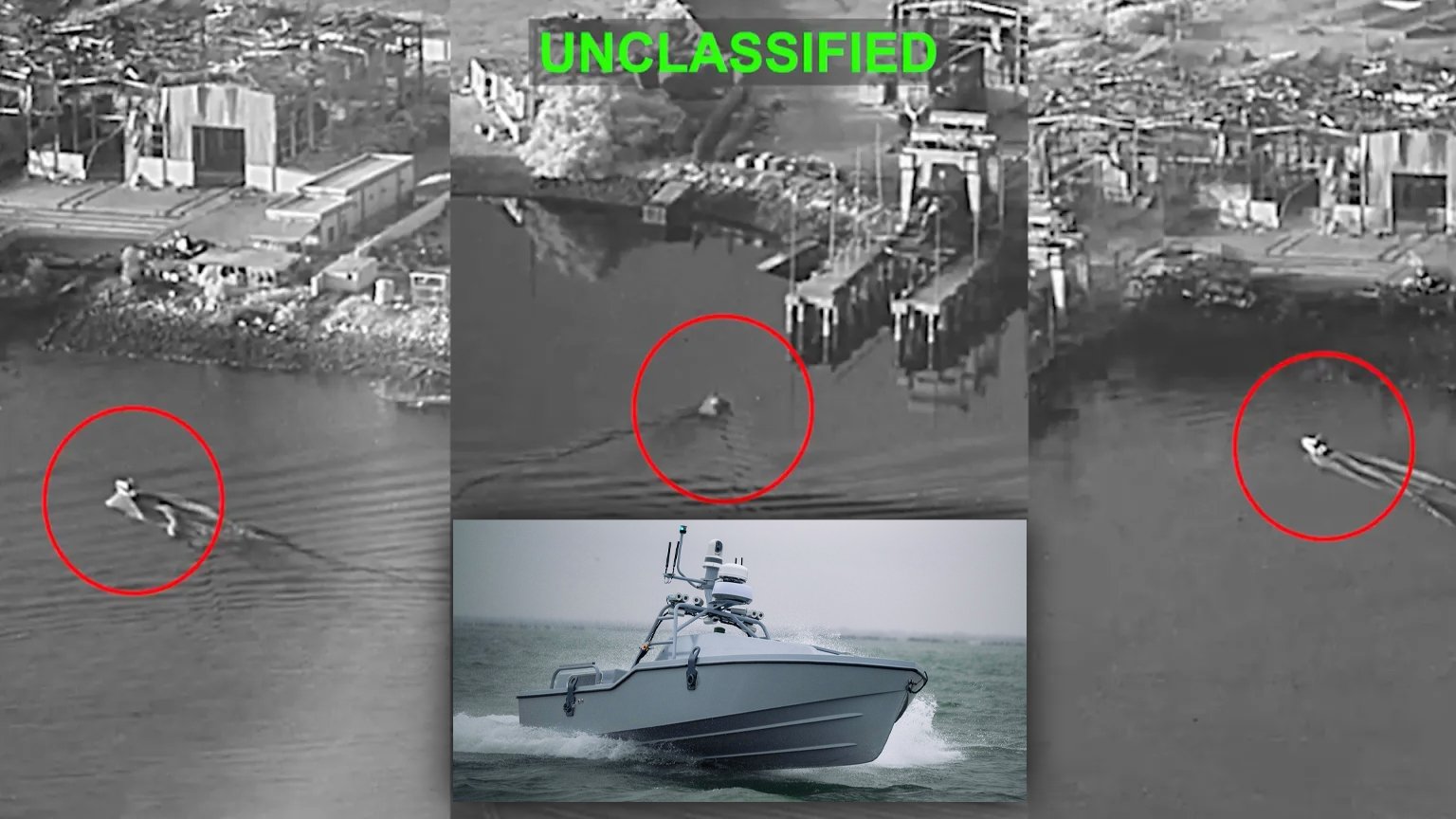
For the first time in U.S. military history, uncrewed surface vessels (USVs) were used as a strike weapon in combat. The use of Saronic Corsair USVs took place July 12 during a series of attacks against “dozens” of Iranian targets, according to U.S. Central Command (CENTCOM). It came as the U.S. and Iran have continued to trade strikes primarily related to control over the Strait of Hormuz, with President Donald Trump proclaiming he wants to take over the strategic chokepoint and reinstate the naval blockade on Iranian ports. Meanwhile, Iran has also been launching attacks against several Arab nations in the most recent flare-up of hostilities as a shaky ceasefire continues to disintegrate.
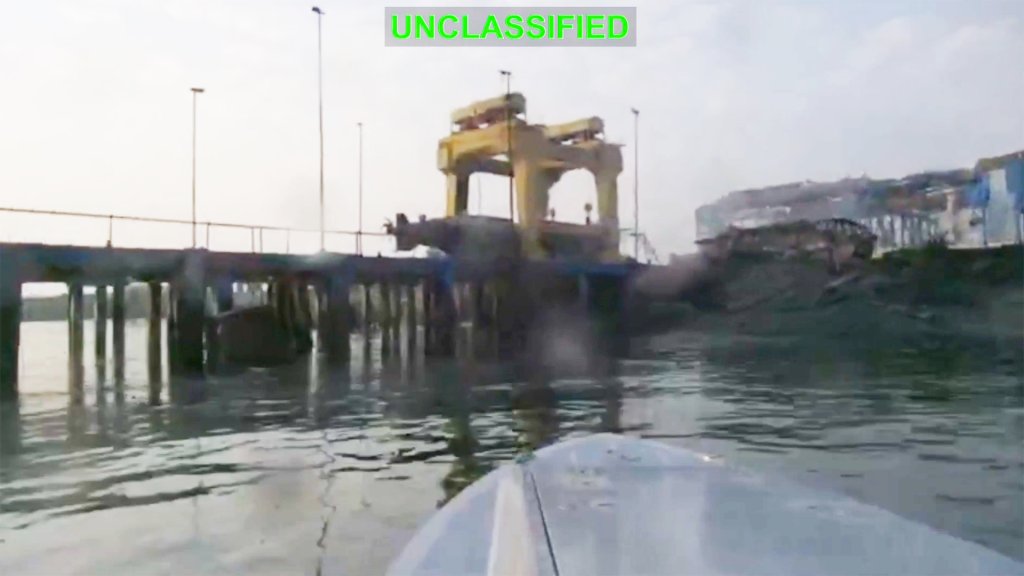
“Yesterday, using multiple one-way attack surface drones, CENTCOM forces successfully struck a submarine and ship maintenance facility in Iran,” the command stated on X Monday morning. “Three Corsair unmanned surface vessels hit the port at Bandar Abbas Naval Base, marking the first time American forces have employed sea drones in combat operations. Last night’s strikes degraded Iran’s ability to continue attacking commercial shipping.”
This attack is the latest iteration of the U.S. Navy’s use of drone boats in combat. Last month, a Saronic Corsair USV rescued the crew of a U.S. Army AH-64 Apache that crashed in the Gulf of Oman after it was downed by Iran. That was the first known instance of a drone boat being used to recover personnel as part of a search and rescue mission, and has major implications for these operations going forward.
“The surface drone that assisted in last night’s rescue of the Apache crew off the coast of Oman was a U.S. Navy Corsair unmanned surface vessel operated by U.S. 5th Fleet’s Task Force 59,” U.S. Navy Capt. Tim Hawkins, a CENTCOM spokesman, told TWZ at the time. “The task force began fielding these drones in theater in late March.”

Established in 2021, Task Force 59 is a testbed unit that is tasked with experimenting with the integration of new uncrewed and artificial intelligence (AI) capabilities into day-to-day naval operations across the Middle East. It appears that the task force is starting to operationalize those technologies more broadly. Using USVs in an attack role could help reduce the burden on aircraft and crews for strikes, at least against certain targets out to sea and along the coast. Above all else, it creates another vector for kinetic operations against the enemy, which complicates their defensive plans.
In a recent interview with TWZ, Saronic co-founder Rob Lehman declined to provide any details about this mission set or any others Corsair was conducting in the region. However, he did say its success will reverberate across the USV industry.
“I think the tangible impact to the industry is that autonomous systems are now perceived as real credible capabilities rather than a science and technology kind of sideshow where we’re desperately trying to prove that the tech can play a role in these types of operations,” Lehman told us. “So my hope is that not just for Saronic, but all of our partners on the commercial side, that it’s an accelerant to getting more of these capabilities in the war fighters’ hands.”
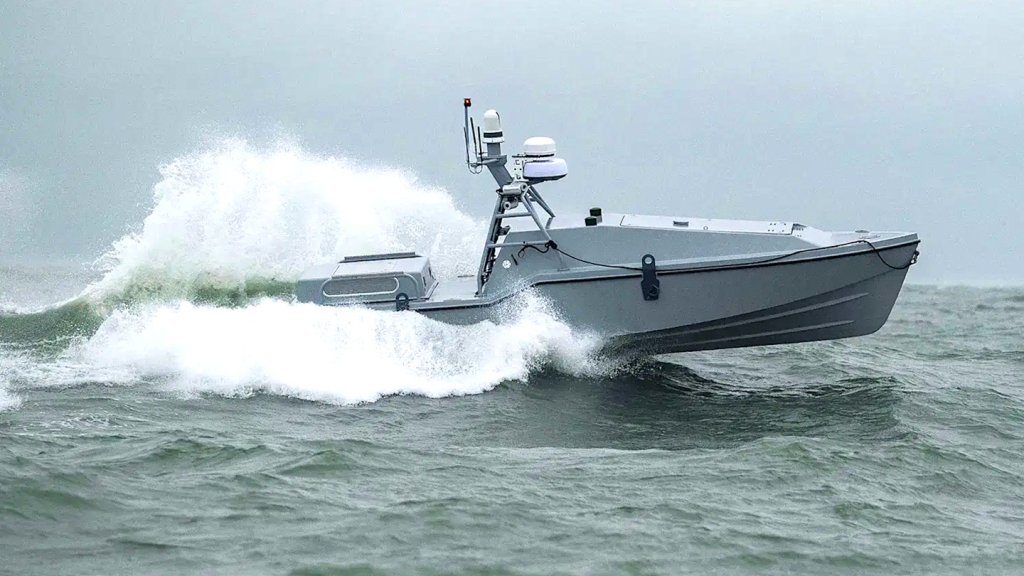
As we have frequently reported, Ukraine has used USVs to devastating effect on the Russian Black Sea Fleet. The Magura line of drones, among others, has played a key role in this campaign.
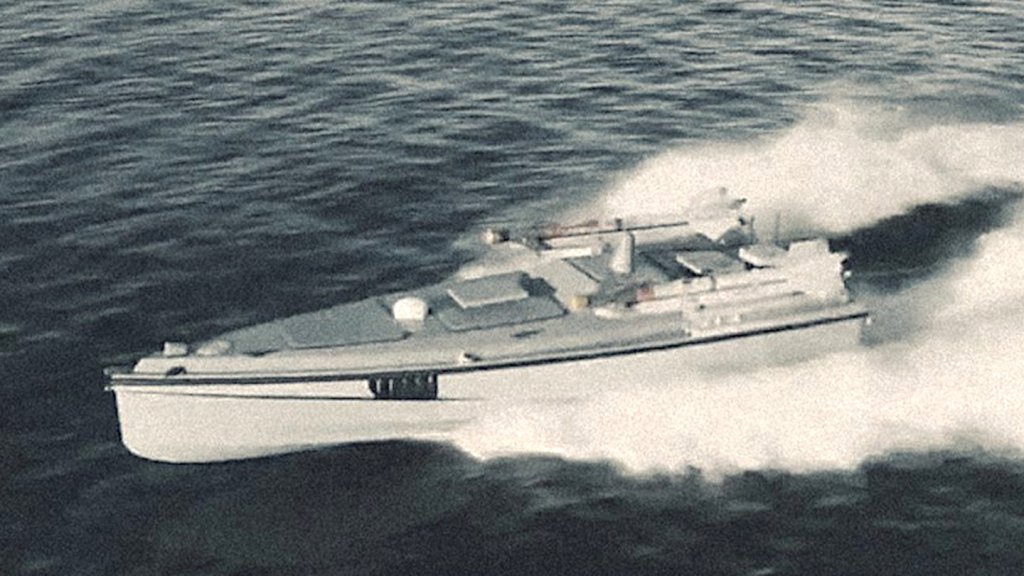
Many successful attacks have been recorded against Black Sea Fleet vessels and facilities, forcing the general evacuation of Russian naval assets from occupied Crimea to bases in Russia proper.
The Houthi rebels of Yemen actually pioneered the operational use of kamikaze USVs years ago. We first reported about this capability in January 2017, when an explosive-laden Houthi USV struck a Saudi frigate. Before that, Iran developed various crude kamikaze USVs and those capabilities soon migrated to their Houthi proxies, which put them to use in the Red Sea for the first time.
You can see the January 2017 attack in the video below.

As we have frequently noted, the U.S. and Iran signed a 14-point Memorandum of Understanding (MoU) on June 17. The MoU provided a 60-day extension of the ceasefire to iron out an agreement to end fighting throughout the region, including Lebanon, prevent Iran from seeking nuclear weapons, end U.S. sanctions and resume the flow of traffic through the Strait of Hormuz, among other points.
Control over the Strait has proven to be the biggest flashpoint, as evidenced by the aforementioned flare-up of fighting.
The Islamic Revolutionary Guard Corps (IRGC) has continued to claim it controls the Strait.
As we noted earlier in this piece, Trump just proclaimed that the U.S. would take over the Strait.
“We hit them very hard last night,” Trump told Fox News. “Every time they send a drone, we hit them very hard. But we had a deal. What nobody knows, we had a deal. It was a done deal, and then they broke it. They always break it. We’ve had 10 deals with these people, and so we’re just going to hit them very hard, and we’re going to keep the Strait, and we’ll probably run it.”
“We’ll become the guardian of the Strait,” the American leader added. “Maybe we’ll call it the guardian angel of the Strait.”
Trump suggested that the U.S. be paid for this effort.
“And we should be reimbursed for that,” he posited. “When we do that, we’re going to be reimbursed because the other nations are very wealthy.”
Trump also took to his Truth Social network to say that he is reinstating the naval blockade on Iranian ports that was removed when the MoU was signed last month. He added that the U.S. will impose a toll on shipping.
“The U.S.A. will be, from this point forward, known as “THE GUARDIAN OF THE HORMUZ STRAIT,” but as such, and as a matter of FAIRNESS, will be reimbursed, at the rate of 20% on all cargo shipped, for any and all costs necessary to do the job of providing safety and security to this very volatile section of the World,” the president proffered. “The process and formation will begin immediately.”
The U.S. military using drone boats in a kinetic strike role sets a new precedent not just for operations in the CENTCOM region, but also those in other flashpoints, including the Pacific. It comes as the Pentagon has adopted a number of other capabilities that have been ‘borrowed’ from other conflicts, including the first use of one-way attack drones loosely based on Iran’s Shahed-136, for instance. But it is interesting that these kamikaze drone boats were not deployed at the start of the war, when sea and shore targets were plentiful. That points to the Pentagon still racing to catch-up with some weapons developments from conflict zones overseas or at least at opening the aperture for how and when those technologies are used operationally.
UPDATE: 12:26 PM EDT –
The video released by CENTCOM this morning appears to show one of the Corsair USVs attacking what looks to be a Ghadir class diesel-electric midget submarine.
Given the frequency of U.S. airstrikes on Iran’s key naval base at Bandar Abbas during this conflict, it is unclear how Iran still had any of these vessels left.
As we previously reported, U.S. forces apparently sunk another Ghadir class boat in March. It was struck by an AGM-114 Hellfire missile, a U.S. official told TWZ. At the time, we questioned how many Ghadir class submarines were in Iran’s inventory before the current conflict. However, prior estimates had generally put the size of that fleet at between 16 and 20 hulls.
The Ghadir class boat in the new CENTCOM video was sitting on the dock, so it is possible Iran pulled it out after the ceasefire went into effect.
UPDATE: 1:01 PM EDT –
Saronic released a statement.
“The U.S. military has confirmed that Saronic Corsairs were used by U.S. Central Command in operations against Iran. According to CENTCOM, three military variant Corsair unmanned surface vessels (USVs) struck a submarine and ship maintenance facility at Bandar Abbas Naval Base — the first time American forces have employed sea drones in combat operations,” the company stated. “We are proud that our technology supported this mission and helped degrade threats to commercial shipping. Saronic remains committed to delivering autonomous maritime systems that strengthen the security of the United States and its allies.”
UPDATE 2:38 PM EDT –
CENTCOM provided an update on the blockade.
“At the Commander in Chief’s direction, U.S. Central Command (CENTCOM) forces will resume blockading maritime traffic entering and exiting Iranian ports on July 14 at 4 p.m. ET,” the command stated on X. “CENTCOM forces will enforce the blockade against vessels transiting to or from Iranian ports and coastal areas. The U.S. military continues to support traffic flow through regional waters for all vessels not violating the blockade.”
“The resumption of the U.S. blockade against Iran follows the initial implementation from April 13 to June 18,” the command added. “CENTCOM forces redirected more than 140 compliant vessels, disabled nine non-compliant ships, and allowed over 50 commercial vessels supporting humanitarian aid to pass through the blockade during the two-month period.”
“All mariners are advised to monitor Notice to Mariners broadcasts and contact U.S. naval forces on bridge-to-bridge channel 16 when operating in the Gulf of Oman and Strait of Hormuz approaches,” CENTCOM noted. “Additional information will be provided to commercial mariners through a formal notice.”
Contact the author: howard@twz.com
Loading comments…
Comments couldn’t be loaded. Please refresh the page.