
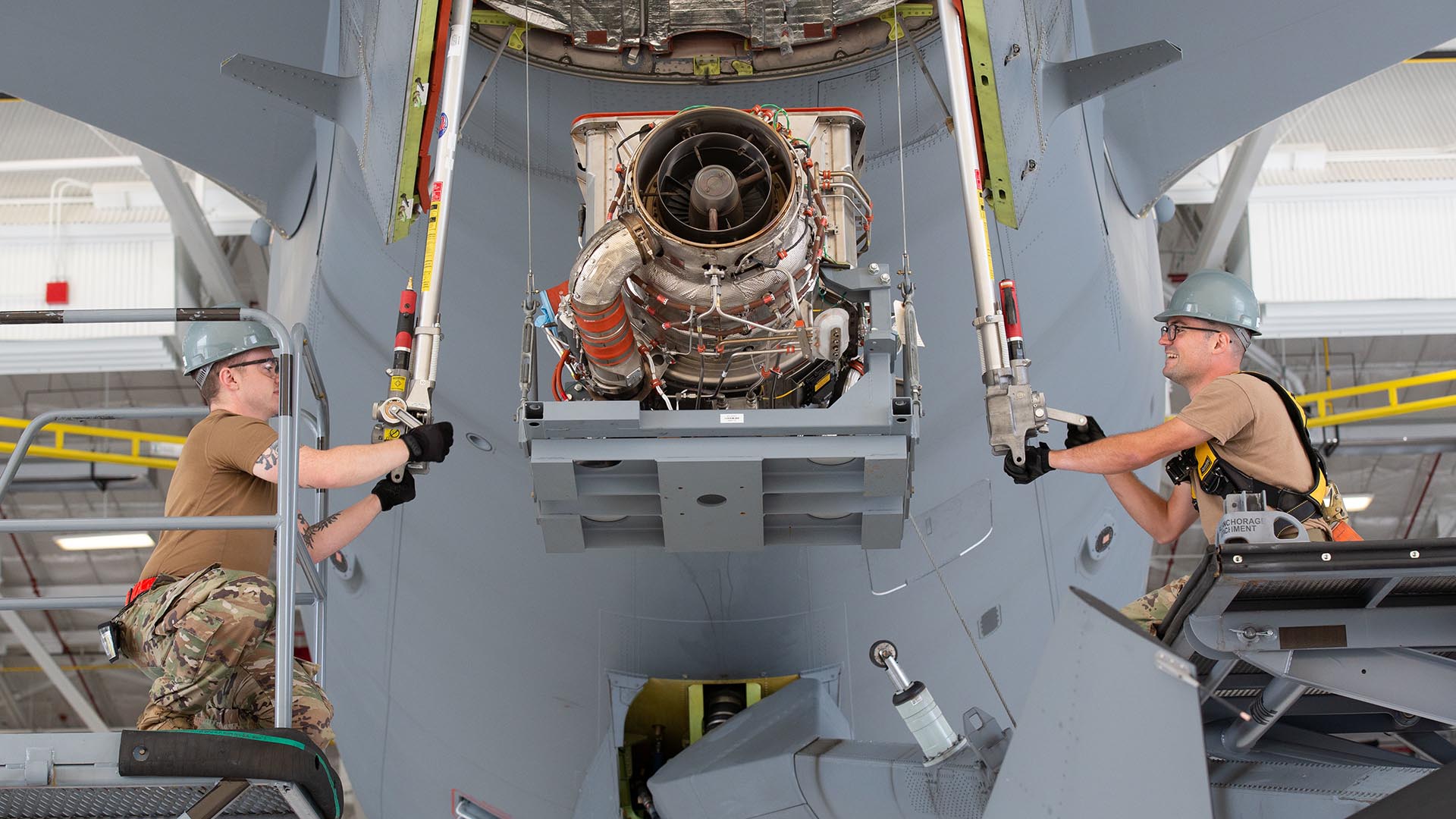
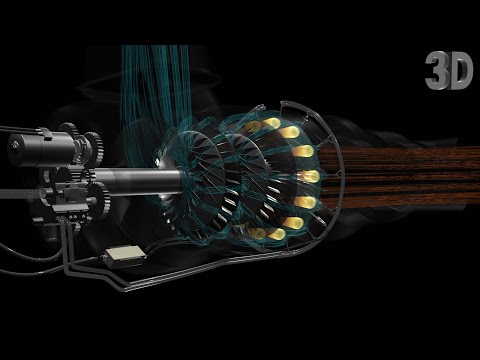
The U.S. Air Force’s KC-46 Pegasus air refueling tanker fleet is experiencing problems with its auxiliary power unit (APU), a small secondary turbine engine at the back of the plane that primarily provides electricity to run systems prior to the startup of the main engines. It is also used to self-start the aircraft on the ground without the need for cumbersome ground support equipment. The problem has gotten so bad, Air Mobility Command (AMC) recently sent out a memo curtailing the use of the KC-46’s APU, The War Zone has learned.
The APUs are intended to make the KC-46s less reliant on ground crews and equipment prior to takeoff, but the issue is having the opposite effect, the Air Force told us.
“AMC has seen some premature failures of APUs we’re working with the (Original Equipment Manufacturer) OEM to resolve,” an AMC spokesperson confirmed to us Monday afternoon. “This memo ensures our maintenance team uses ground support equipment whenever possible to reduce APU wear-and-tear, giving us the best availability while we work through repairs.”
It isn’t clear when the problem was discovered or how long the workaround will be in place.
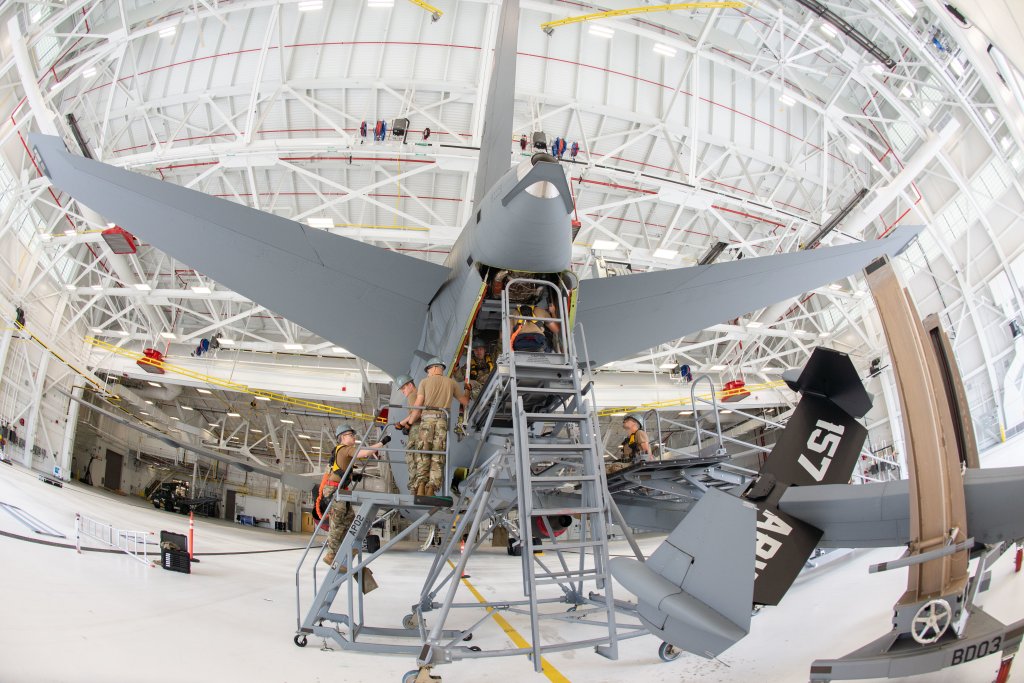
Having to rely on ground systems, including power carts for accessory power and huffers carts for engine start, requires a larger logistical footprint and more personnel on the ground. It’s also an inconvenience to the crew. Above all else, it diminishes the aircraft’s ability to operate in austere conditions, a key component of the Air Force’s Agile Combat Employment (ACE) program. ACE currently refers to a set of concepts for distributed and disaggregated operations centered heavily on short notice and otherwise irregular deployments, often to remote, austere, or otherwise non-traditional locales.

The APU issue is the latest in a long string of problems for the Pegasus, both systemic and incidental. Last week, we told you about a KC -46 that lost its boom during an incident off the coast of Virginia. The Pegasus had been on a F-22 Raptor fighters refueling mission at the time. You can see images of the aftermath of that mishap below.
The recent incident is one of several involving KC-46 booms. Last year, another Pegasus lost its boom while refueling an F-15E Strike Eagle off the coast of California. The boom and the control system for it have been a source of serious and persistent technical issues for the Pegasus fleet for years now. A fix for the KC-46’s particularly troublesome remote vision system (RVS), which boom operators in the tanker’s main cabin use to perform their work, is now unlikely to be finished before summer 2027, roughly three years behind schedule, according to Defense News.
The APU problems come as the KC-46 fleet has been in heavy use. Last month, they were part of an armada of refuelers, which also included the KC-135 Stratotankers, that took part in the U.S. buildup of forces in the region as tensions with Iran rose to a fever pitch. They helped refuel the B-2 Spirit stealth bombers that struck Iranian nuclear sites during Operation Midnight Hammer last month. The bombers dropped 14 30,000-pound GBU-57/B Massive Ordnance Penetrator (MOP) bunker buster bombs on Iran’s Fordow and Natanz nuclear facilities, marking the first combat use of those weapons.
We reached out to Air Mobility Command Monday evening to find more details about the APU curtailment and will update this story with any pertinent information provided.
In the meantime, the Air Force is working to fix yet another problem on its newest tanker.
Update: 5:58 PM Eastern July 15 –
An Air Mobility Command spokesperson provided additional details about the KC-46 APU problems.
“The updated guidance on the use of the KC-46A’s Auxiliary Power Units is in place for the entire KC-46A fleet as each aircraft has an APU. As described in the original response, the updated guidance is intended to reduce unnecessary wear on the APUs during ground operations & training when a Powered Aerospace Ground Equipment (AGE) system can be used, particularly in light of an uptick in demand associated with increased operations and training tempos within our KC-46A units. The Program Office, Air Mobility Command, Boeing, and Honeywell are working to address normal reliability concerns and repair pipelines for the APUs as soon as possible. The situation does not affect the delivery process, nor does it constitute a new deficiency against the platform.”
Contact the author: howard@thewarzone.com
Loading comments…
Comments couldn’t be loaded. Please refresh the page.