
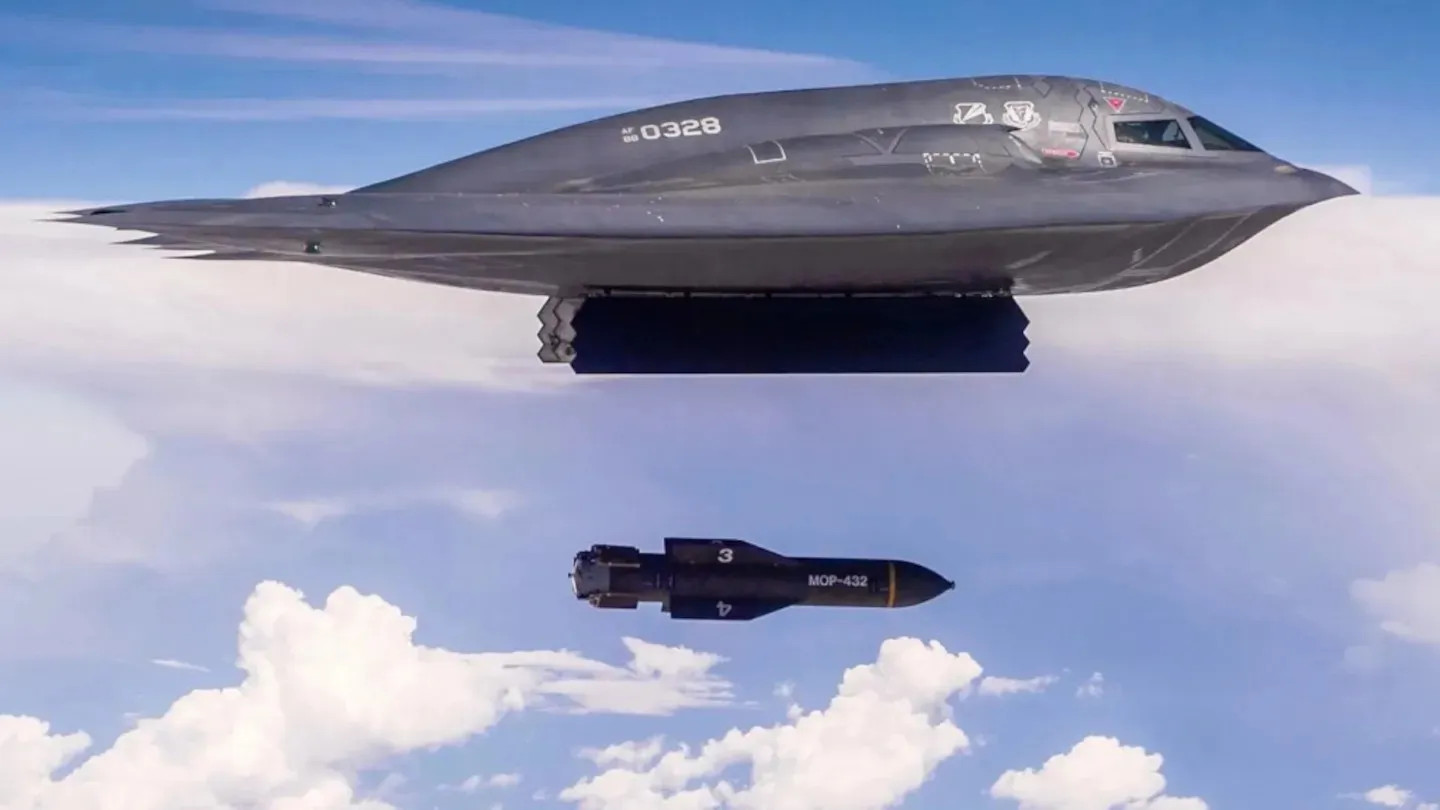
The U.S. Air Force is already moving to lay groundwork for fielding the replacement of its GBU-57/B Massive Ordnance Penetrator (MOP) bunker buster bomb. In the process, it has also revealed that the follow-on Next Generation Penetrator (NGP) has now been designated as the GBU-76/B. The service also has plans to continue upgrading the MOP, which became a household name after the first-ever combat use of the bombs against deeply buried Iranian nuclear facilities during Operation Midnight Hammer last year.
“The Air Force Life Cycle Management Center, Armament Directorate, Attack Division (AFLCMC/EBD) is conducting market research for an industry analysis of capabilities,” according to a contracting notice posted online yesterday. “AFLCMC/EBD is seeking to award a Multiple Award Indefinite Delivery Indefinite Quantity (IDIQ) contract to support all aspects of research & development, production, testing, and delivery of the Next Generation Penetrator (NGP), GBU-76/B weapon system.”
“All interested vendors shall submit a response demonstrating their capability to support the design, production, testing, and bed down of components and specific activities related to the development, performance and sustainment of the GBU-76/B weapon system,” the notice adds. It also stresses that information is only being gathered currently for “planning purposes.”
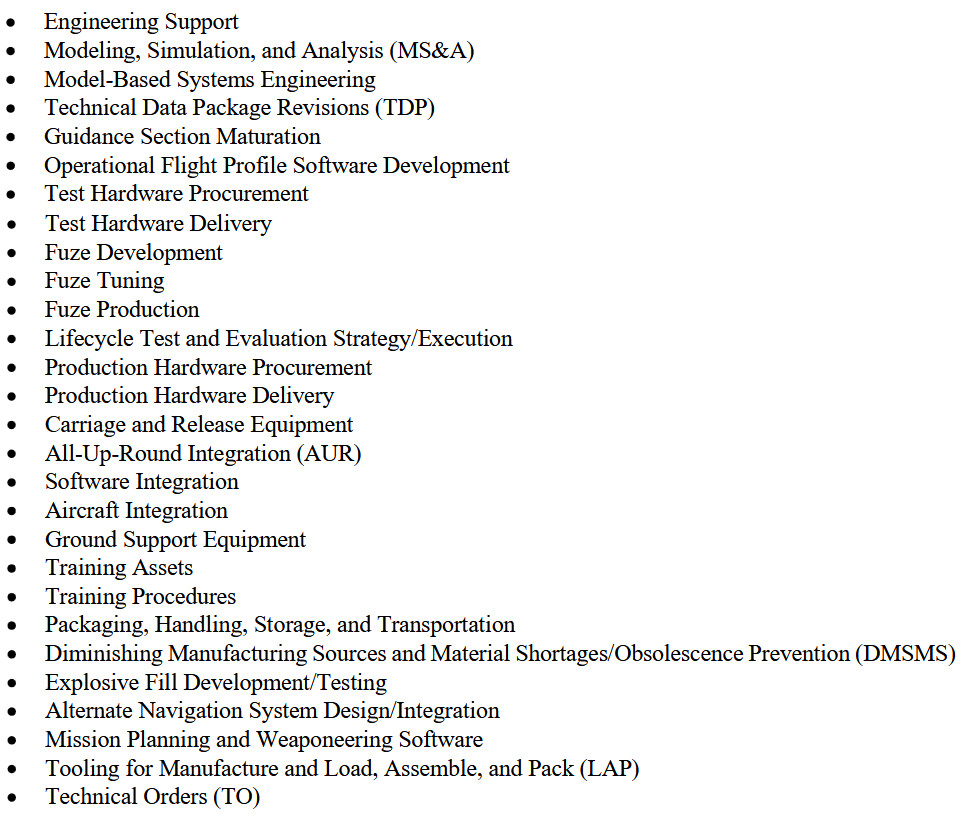
The notice lists a wide range of “tasks that may be pertinent to this effort.” This includes fuze development and production, the development and testing of the explosive filler, the design and integration of an “Alternate Navigation System” to help guide the bomb to its target, and integration of all components into complete bombs. The full list is reproduced below.
As TWZ regularly notes, fuzing is a critical element of the design of deep-penetrating munitions. These weapons are designed to be employed against targets that are underground or otherwise present inherent challenges when it comes to establishing their exact location and layout. As such, advanced fuzes that ‘count’ floors to determine depth and/or sense the ‘voids’ of underground mission spaces help maximize the damage from a weapon like MOP or NGP. These fuzes also just need to be highly reliable in order to function after impacting very hard surfaces at high speeds and then drilling even further down into them.
The Air Force has also said in past NGP contracting notices that it “will consider novel, demonstrated, or fielded Guidance, Navigation & Control (GNC) technologies with viability for integration into a warhead guidance system design that can achieve repeatable, high accuracy performance in GPS aided, degraded, and/or denied environments.” The MOP uses a GPS-assisted inertial navigation system (INS) guidance package contained within its tail unit.
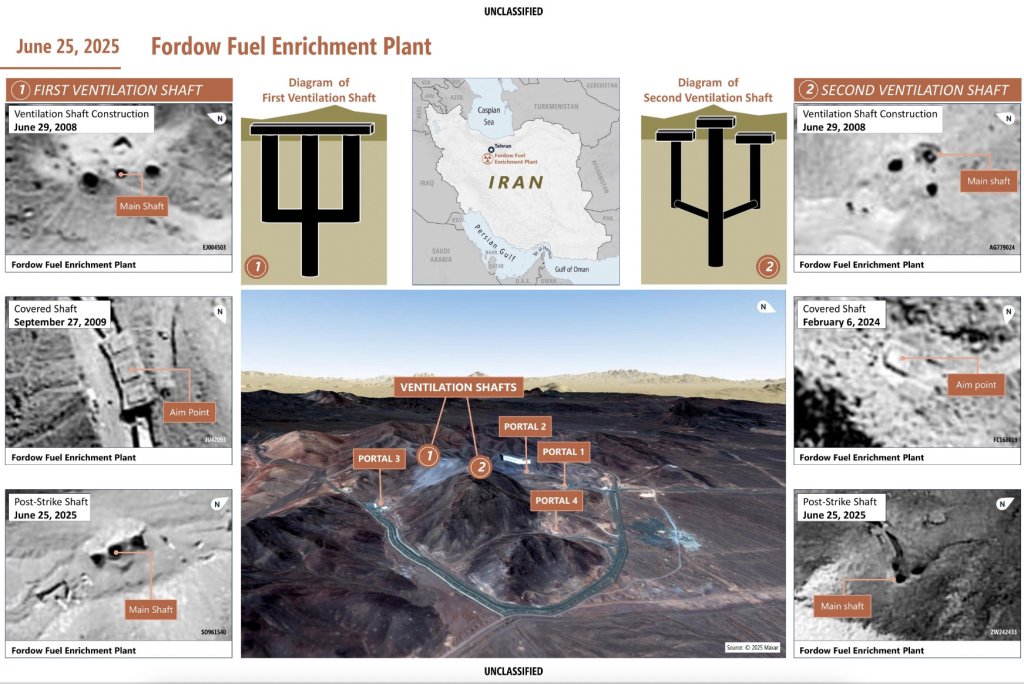
Being able to reliably hit a very specific impact point is also essential for bunker buster bombs, especially ones designed for very deep penetration. During Operation Midnight Hammer, Air Force B-2 bombers dropped six MOPs in rapid succession on each of two ventilation shafts – 12 bombs in total – at Iran’s Fordow nuclear site in order to drill down into the facility below.
Many details about the planned design of the NGP remain unknown, including its expected total weight. The Air Force has previously said that the bomb’s “warhead” is set to tip the scales at around 22,000 pounds, but the complete weapon could be heavier. The contracting notice from yesterday says prospective vendors need to show general understanding of “tasks associated with the lifecycle of Large Penetrator Warhead Systems weighing approximately 20,000 to 30,000 lbs.” The MOP is a 30,000-pound-class bomb that includes a BLU-127/B warhead with a nominal weight of approximately 27,125 pounds.
The GBU-76/B could incorporate other advanced or novel features. The Air Force has raised the possibility of a powered design offering extended reach in past discussions about MOP replacements. An add-on rocket booster could also help further improve the weapon’s penetration characteristics.
As an aside, the B-2 is the only aircraft currently certified to employ MOPs operationally, and each of the bombers can carry just two of the bombs at a time. Making the GBU-76/B lighter and/or smaller than MOP could be beneficial for future integration on the B-21 Raider. The Raider is smaller than the B-2, and is only expected to be able to carry a single MOP at a time. The smaller payload capacity of each B-21, in general, is also set to be offset by a far larger fleet size of at least 100 bombers, and likely more. Only 21 B-2s were ever built, and 19 of them remain in service today.

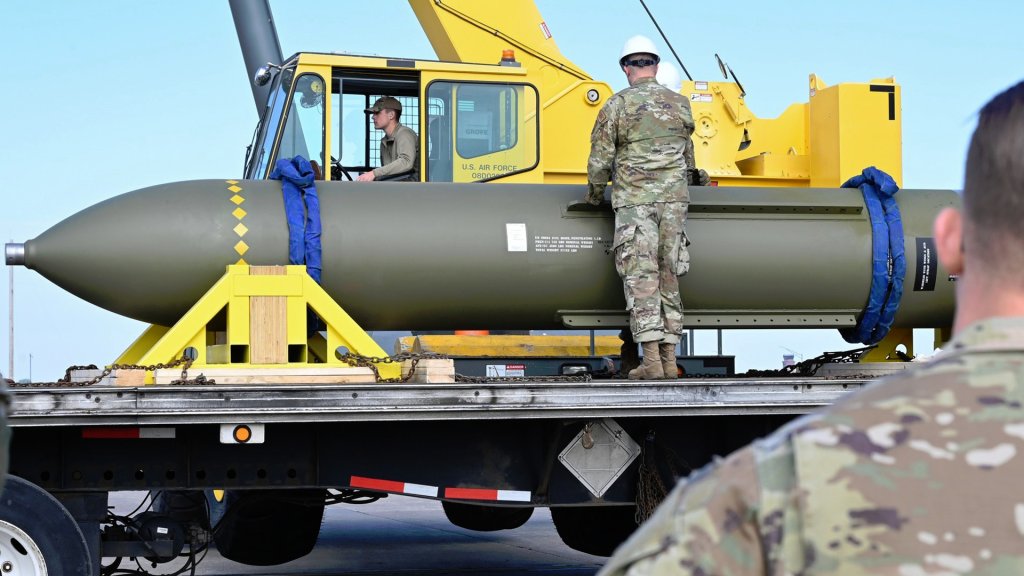
In line with evolving plans to actually field the new bunker busters, the NGP contracting notice the Air Force put out yesterday also asks prospective vendors to outline their ability to provide other related support. This includes supplying mission planning and weaponeering software, training assets and procedures to go along with them, and just the means of getting the bombs from point A to point B and then into waiting aircraft. The Air Force already has specialized equipment to train ground personnel on the movement and loading of MOPs on B-2 bombers, including a full-size mock bomb bay.
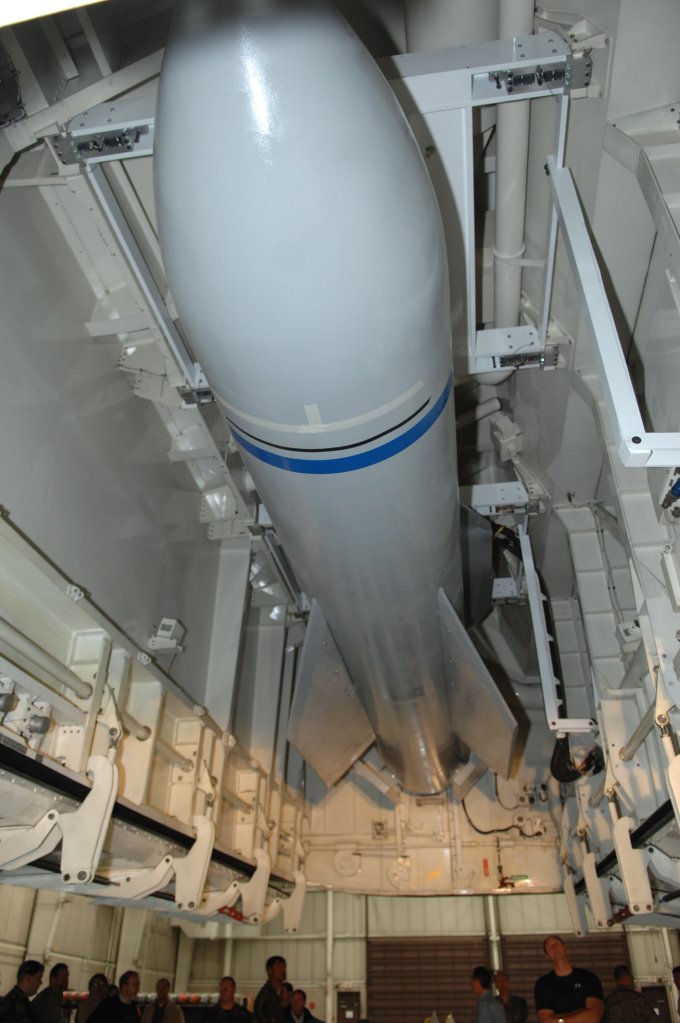
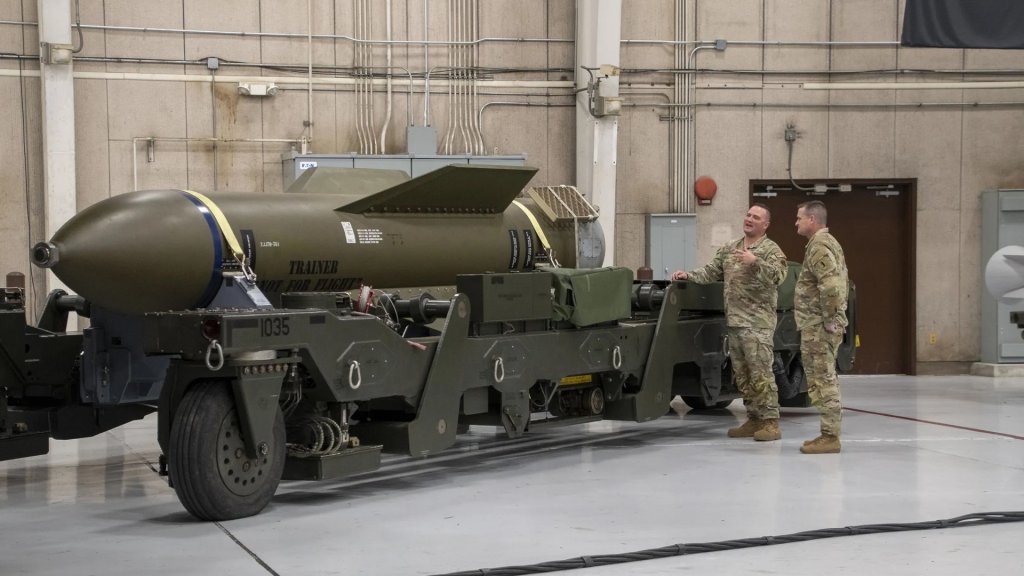
When the Air Force expects to start fielding its first operational GBU-76/Bs is unclear. The Air Force’s 2027 Fiscal Year budget request says that “Next Generation Penetrator Prototype Demonstration including Modeling and Simulation, Design, Product Development, and Test” is set to wrap up at the end of Fiscal Year 2028. It also says, unsurprisingly, that the goal of current prototyping efforts is to demonstrate an “Air to Ground penetrator with equivalent or better MOP performance.”
In September 2025, Applied Research Associates, Inc. (ARA) announced it had received a contract for work on NGP to include the production and delivery of full-scale prototypes. ARA also said at that time that “Boeing will drive tail kit development and support all-up-round integration.” Boeing is the prime contractor behind the MOP.
The start of fielding of the GBU-76/B is also unlikely to lead to the immediate retirement of GBU-57/B, and the Air Force is continuing to work on improving that bomb’s capabilities in the interim. The service’s 2027 Fiscal Year budget proposal outlines plans for additional upgrades to the MOP’s tail kit and fuze. After Operation Midnight Hammer, the Pentagon also moved to help the Air Force replenish and potentially expand its stockpile of GBU-57/Bs. How many MOPs have been procured to date is unknown. Boeing has reportedly expanded its capacity to make the bombs in the past, but total production is still understood to be relatively limited.
The budget documents also note that MOP funding has been supporting the construction of a new test target, referred to as MS-34, further details about which are not provided. While significant weaponeering work can be done today in the virtual space, testing against real-world targets continues to be an important aspect of the development of munitions, in general. They are especially important for validating the capabilities of highly specialized weapons like the MOP and NGP. You can read more about this in the context of the development of MOP here.

The ability to defeat very deeply buried and otherwise hardened targets continues to be a top priority for the U.S. military, broadly speaking. Though successfully executed, Operation Midnight Hammer underscored challenges just in holding relevant targets in Iran at risk. There have been reports in the past that some Iranian nuclear facilities might be beyond the reach even of MOP.
Other U.S. competitors and adversaries globally, including China, Russia, and North Korea, already have extensive subterranean and other hardened military infrastructure, including underground naval and air bases, as well as missile silos and command and control bunkers. Those target sets are only continuing to expand, particularly in China, where there has been major work to construct vast new fields of silos for intercontinental ballistic missiles and hardened command and control facilities in recent years.
This is also driving U.S. development of a new deep-penetrating nuclear bunker buster bomb, currently referred to as the Nuclear Deterrent System-Air-delivered (NDS-A). The Air Force’s stockpile of MOPs currently offers the only real conventional alternative to those weapons in many cases. A nuclear weapon would still be required to realistically destroy certain especially deeply buried facilities.
Fielding the NGP bunker buster, now designated GBU-76/B, in the coming years will give commanders a new conventional option for prosecuting strikes on hardened facilities very deep underground.
Contact the author: joe@twz.com
Loading comments…
Comments couldn’t be loaded. Please refresh the page.