
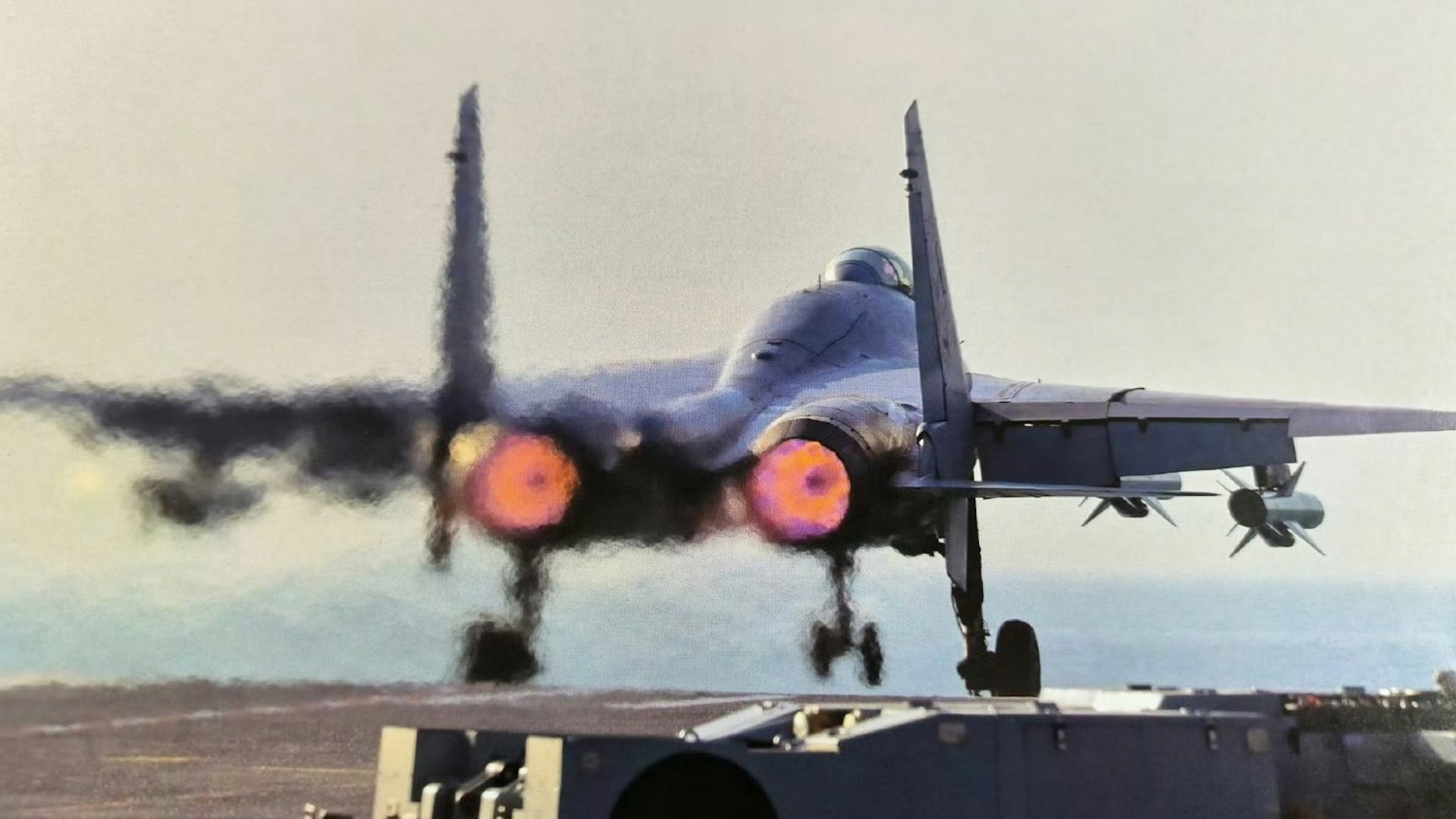
An image has appeared, apparently for the first time, showing a Chinese J-15T carrier-based fighter launching while carrying four anti-ship missiles. The photo offers the clearest indication yet that China’s rapidly evolving carrier force is overcoming one of its longstanding operational constraints: getting heavily loaded strike fighters airborne from its flattops.
The image, at the top of this story, shows a J-15T in full afterburner moments before leaving the deck of the Fujian, the first People’s Liberation Army Navy (PLAN) carrier equipped with catapults. The fighter is armed with four YJ-83K anti-ship missiles — double the number previously seen carried by a J-15 — amounting to a weapons load of roughly 6,400 pounds before accounting for any additional stores that may not be visible.
Previously, in fact, it seems that the latest J-15T version has only ever been seen with a single YJ-83K training round, while the aircraft was still in prototype form.
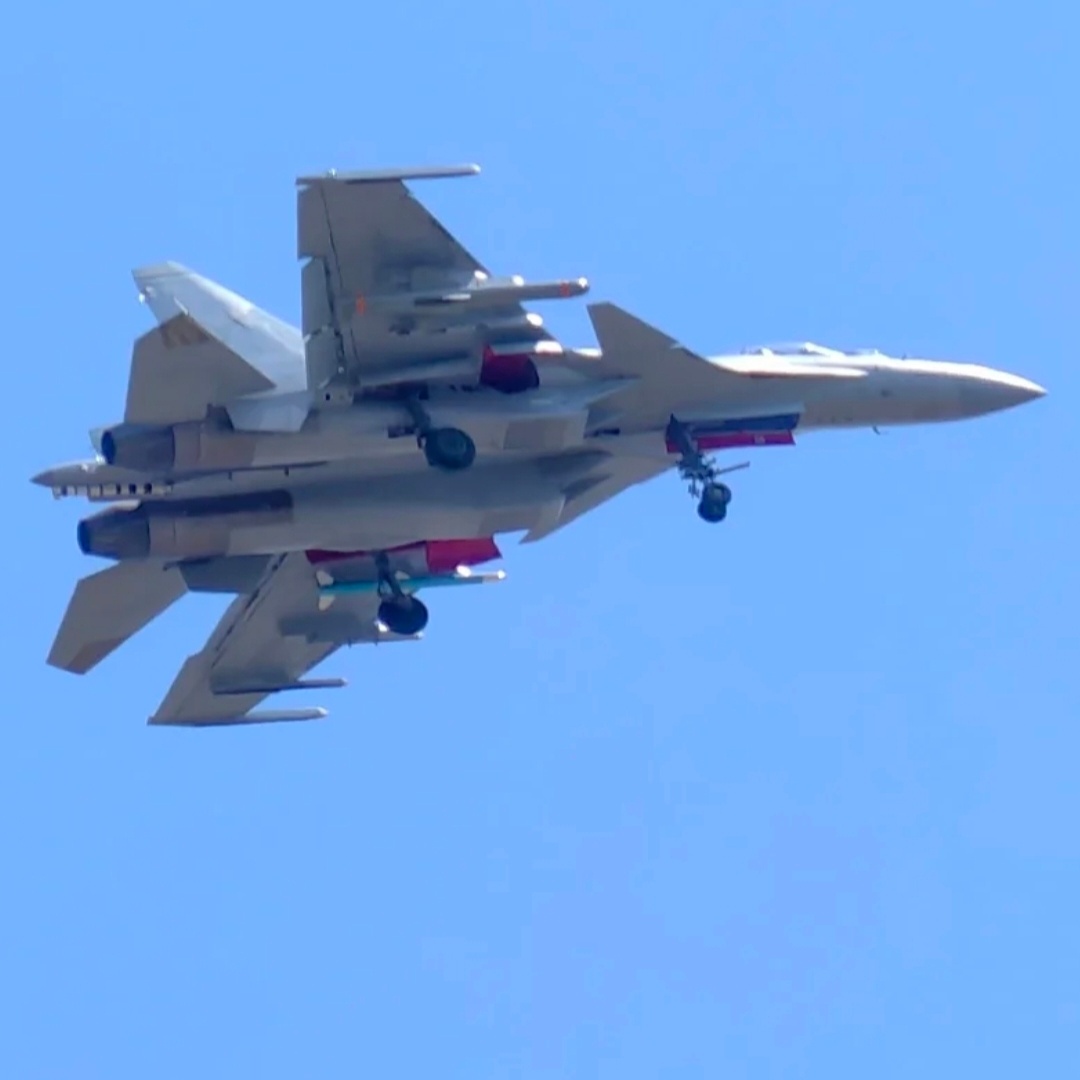
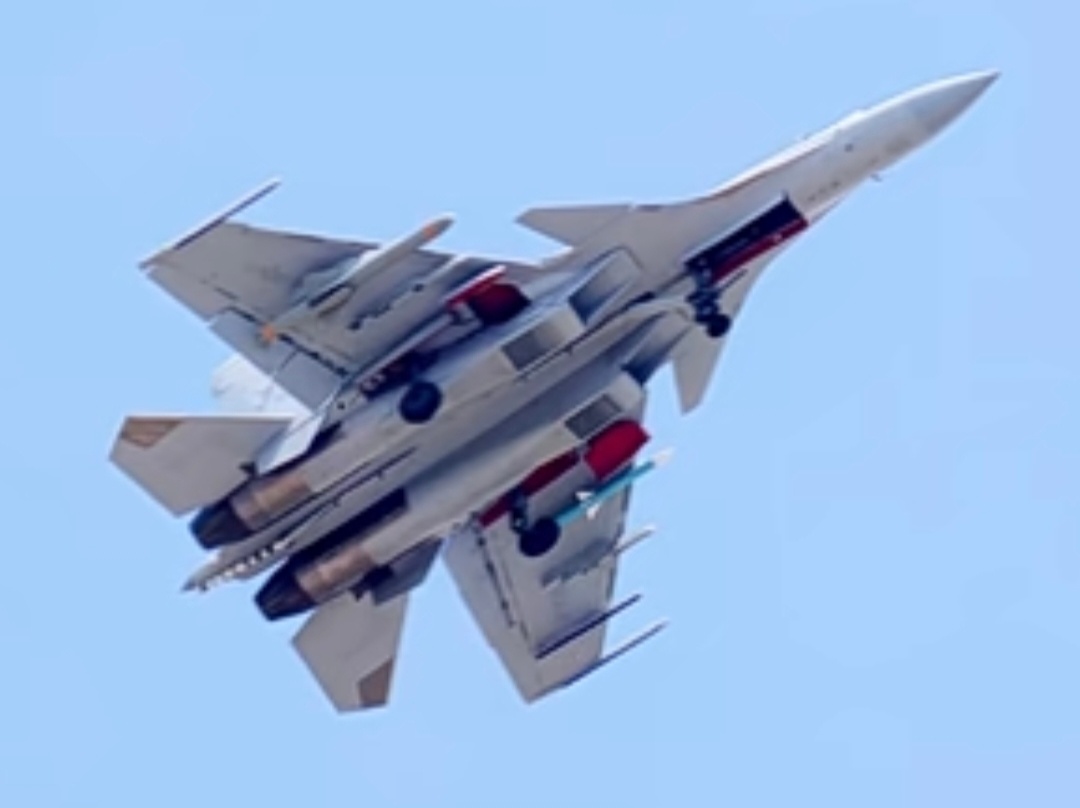
The YJ-83K is a widely used subsonic anti-ship missile, broadly equivalent to the U.S.-made AGM-84 Harpoon. The radar-guided, turbojet-powered weapon has a reported range of around 112 miles and is armed with a 360-pound high-explosive, semi-armor-piercing warhead. The YJ-83K is a sea-skimming missile cruising at an altitude of 65-100 feet, before dropping down to 16-24 feet during the terminal phase. Most significantly, each of these weapons weighs around 1,600 pounds.
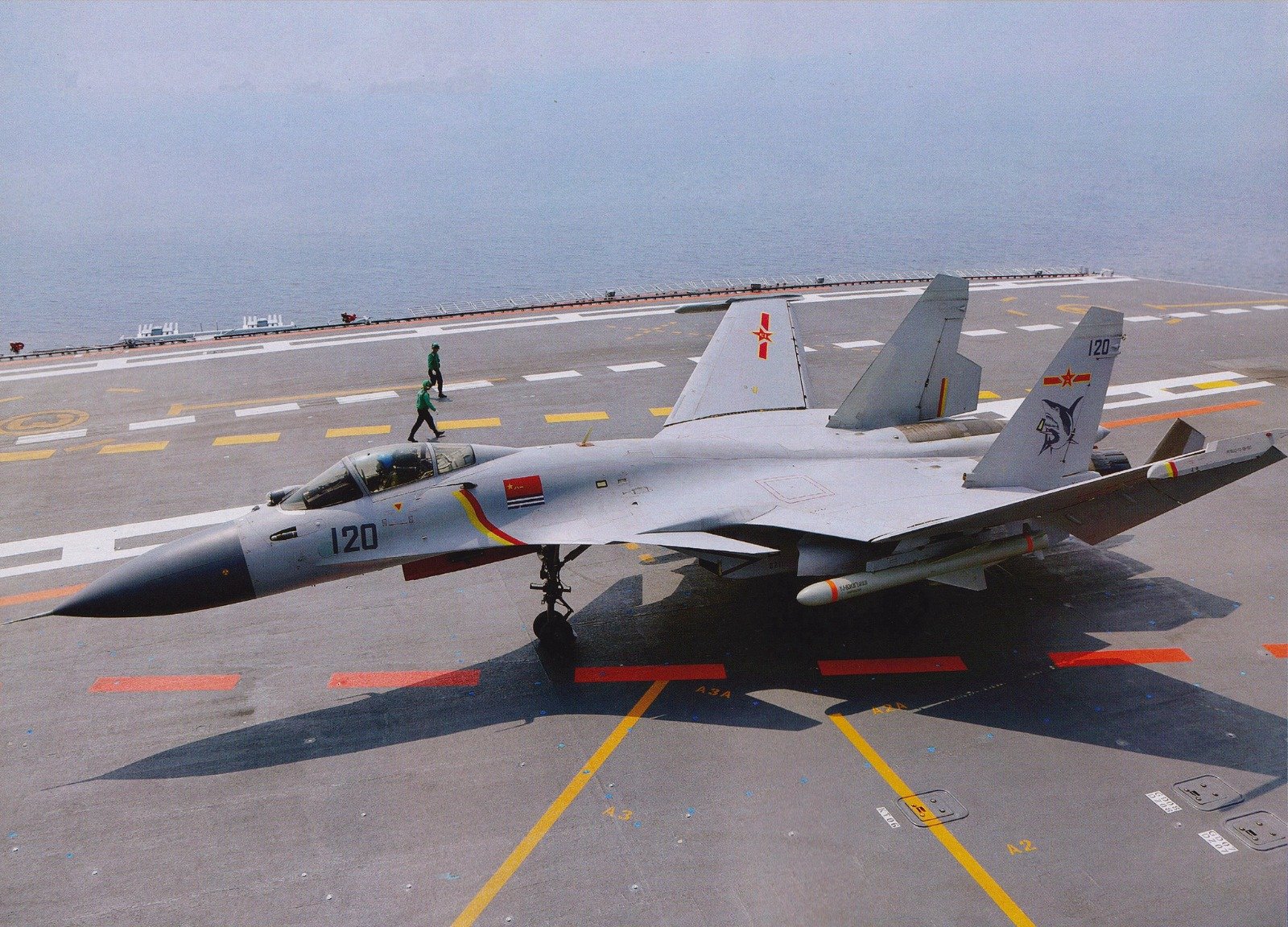
The very reason behind the development of the J-15T was to maximize the potential of Flanker operations from the Fujian, which is equipped with an electromagnetic aircraft launch system (EMALS), and subsequent carriers. As such, the J-15T is primarily distinguished from the original J-15 in being equipped for catapult assisted takeoff but arrested recovery (CATOBAR) operations, as well as short takeoff but arrested recovery (STOBAR) operations.
Videos provide a comparison of a STOBAR J-15 carrier launch and a CATOBAR J-15T launch from Fujian:
The previous two PLAN aircraft carriers, the Liaoning and Shandong, both employ ‘ski-jump’ takeoff ramps to launch fixed-wing STOBAR aircraft.
As we have discussed in the past, the primary benefit of the J-15T is its ability to be catapult-launched from a carrier with a heavier payload of fuel and weapons. After all, the Flanker airframe has always been able to carry impressive fuel and weapons loads, but this has been strictly limited when configured for STOBAR operations. This is something that has hampered Russian Navy carrier operations, as much as Chinese ones.
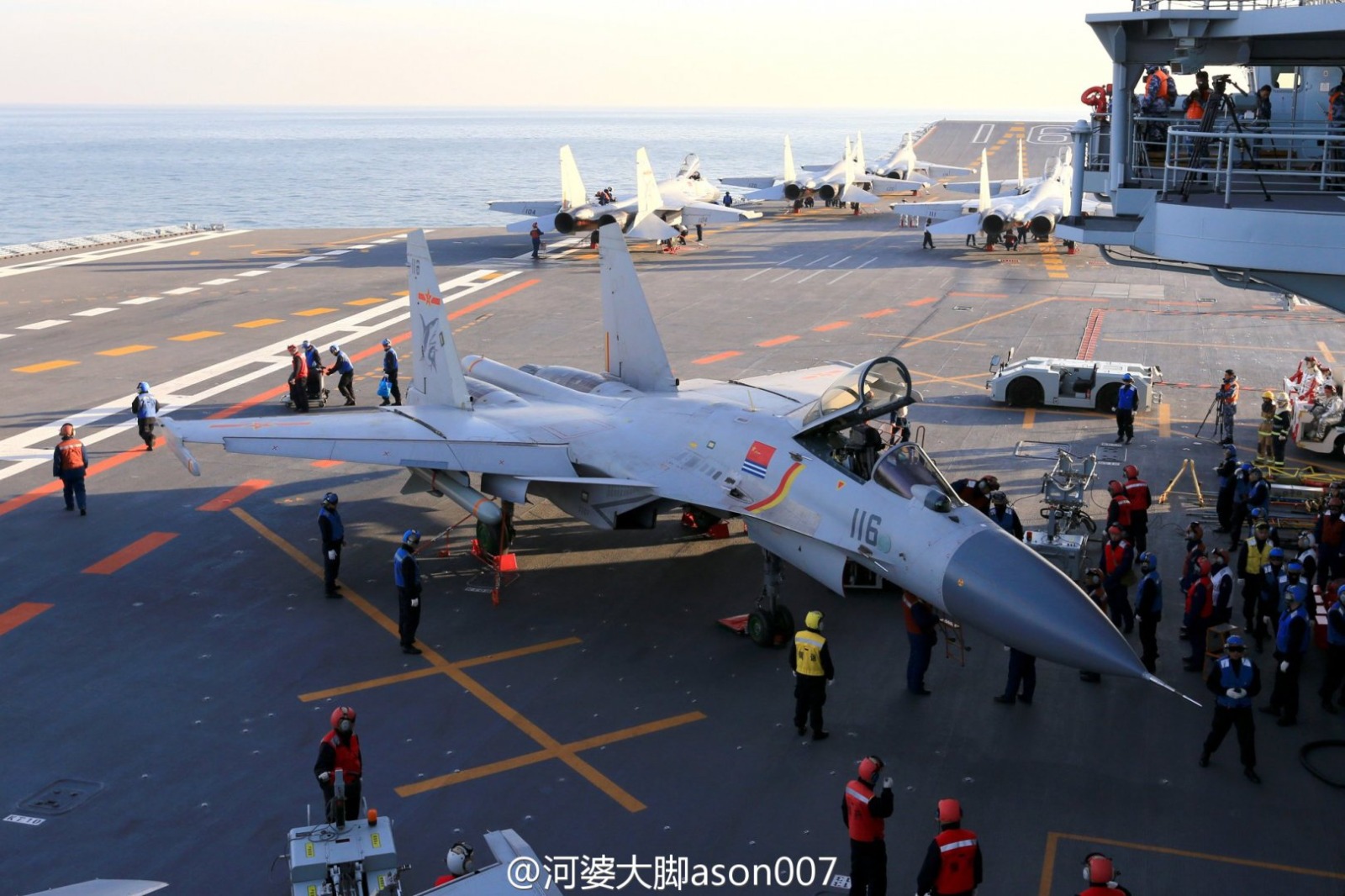
Also significant is the fact that the J-15T has started to introduce domestically produced WS-10H turbofans in place of the Russian-made AL-31F engines previously found on production J-15s.
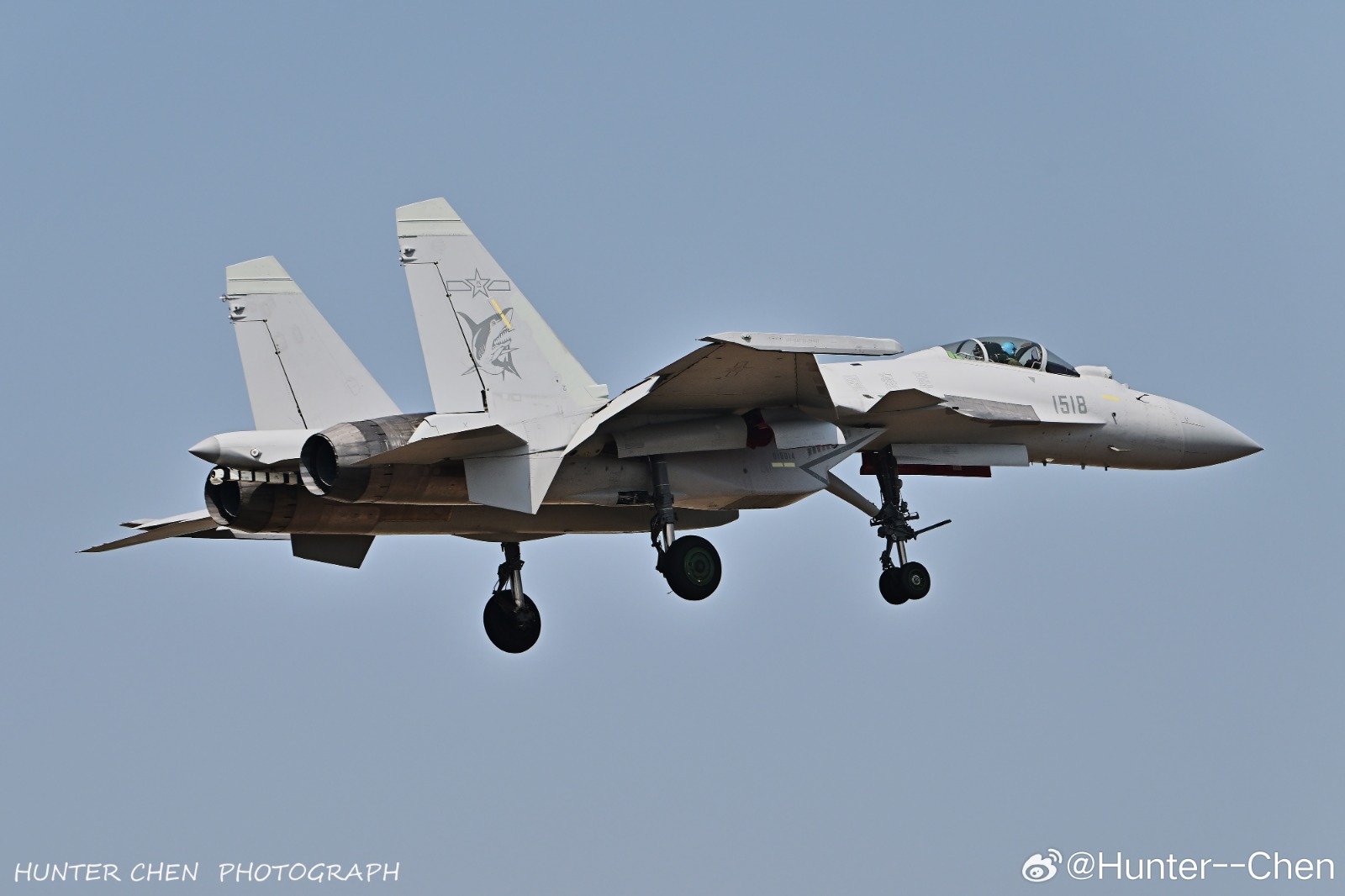
In the past, it appears that the heaviest loads seen carried by STOBAR J-15s launched from the Liaoning or Shandong comprised two YJ-83Ks and four air-to-air missiles, or, for air defense, four PL-12 medium-range air-to-air missiles and two short-range PL-8B air-to-air missiles.
Regardless, the fact that J-15Ts are now launching from the carrier with weapons loads of around 6,400 pounds is significant.
As well as increasing the anti-shipping potential of the J-15T, the same payload could be translated into additional fuel or other weapons loads.
Among the other weapons options for the jet are the more advanced PL-10 short-range and PL-15 medium-range air-to-air missiles. The J-15T has also been noted with the long-range YJ-15 anti-ship missile, and with a ‘buddy’ refueling pod. Other versions of the YJ-83K that could find their way onto the J-15 include the improved YJ-83KH, which features an imaging-infrared seeker and extended range.
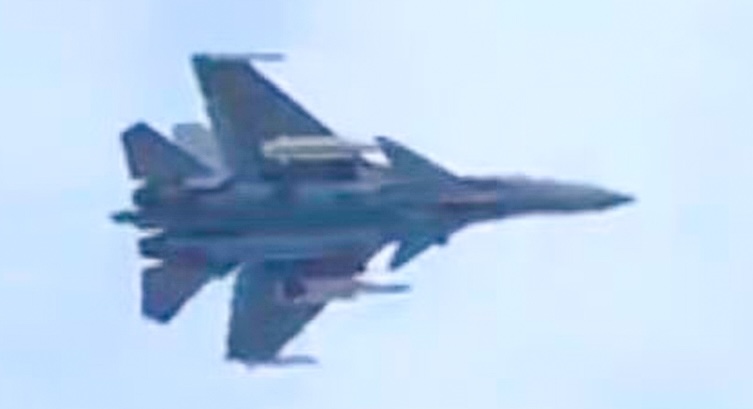
The ability for the J-15T to launch from a catapult-equipped carrier with a heavier payload doesn’t just impact the potential of the strike fighter. It will also translate to the two-seat carrier-compatible J-15 versions, intended to take on additional roles. Chief among these is the CATOBAR-capable J-15DT electronic warfare aircraft, intended to operate in a role similar to the U.S. Navy’s EA-18G Growler. With its array of external jamming pods, the J-15DT also needs to launch (and recover) at heavier weights to make the most of its potential.
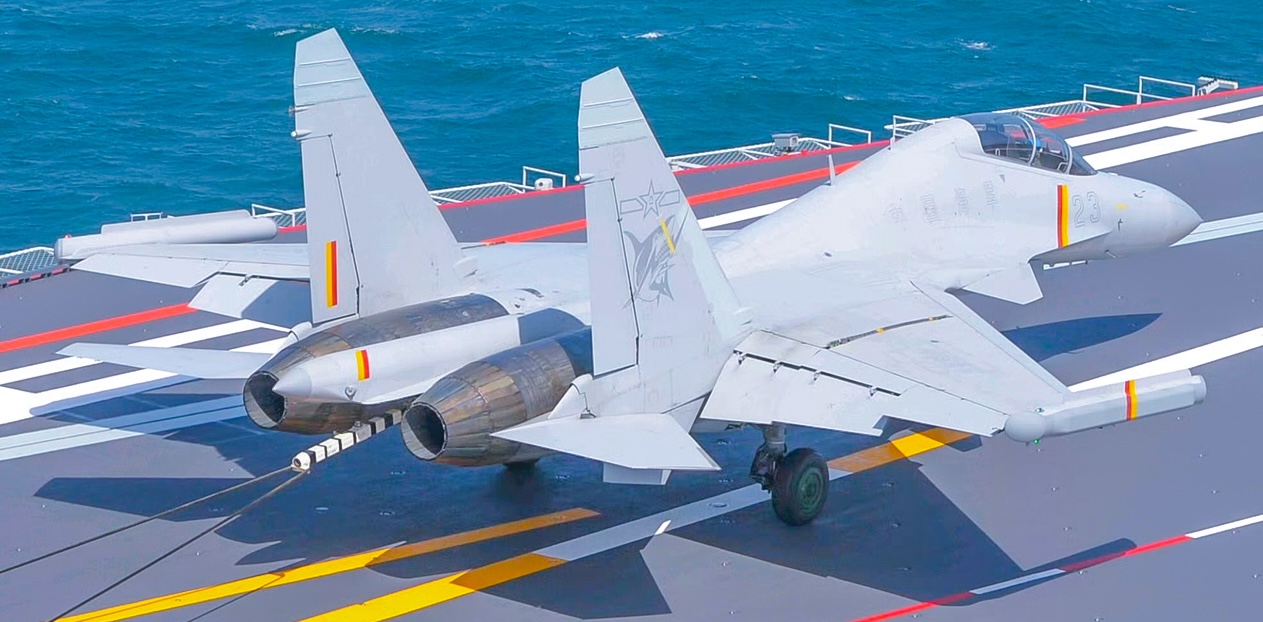
There are also rumors concerning a CATOBAR version of the two-seat J-15S, which could serve as a carrier trainer and/or as a multirole strike platform equivalent to the F/A-18F. Here, again, the EMALS will greatly enhance its capabilities.
Beyond marking another milestone in the rapid evolution of China’s carrier aviation capabilities, the new image suggests that the combination of the J-15T and the catapult-equipped carrier Fujian is beginning to deliver the kind of fully armed launch performance that its ski-jump carriers have long struggled to achieve.
Contact the author: thomas@thewarzone.com
Loading comments…
Comments couldn’t be loaded. Please refresh the page.