

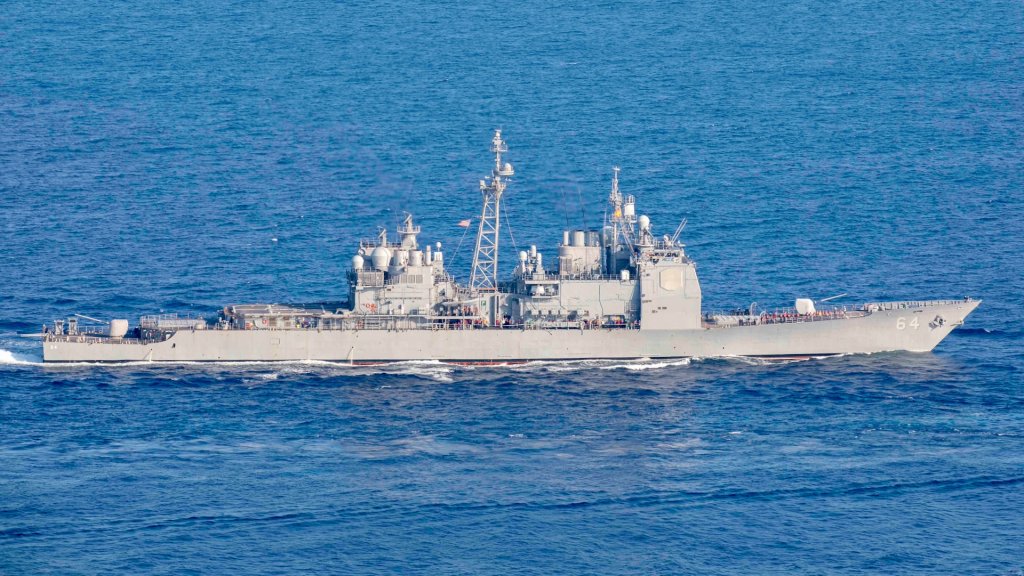
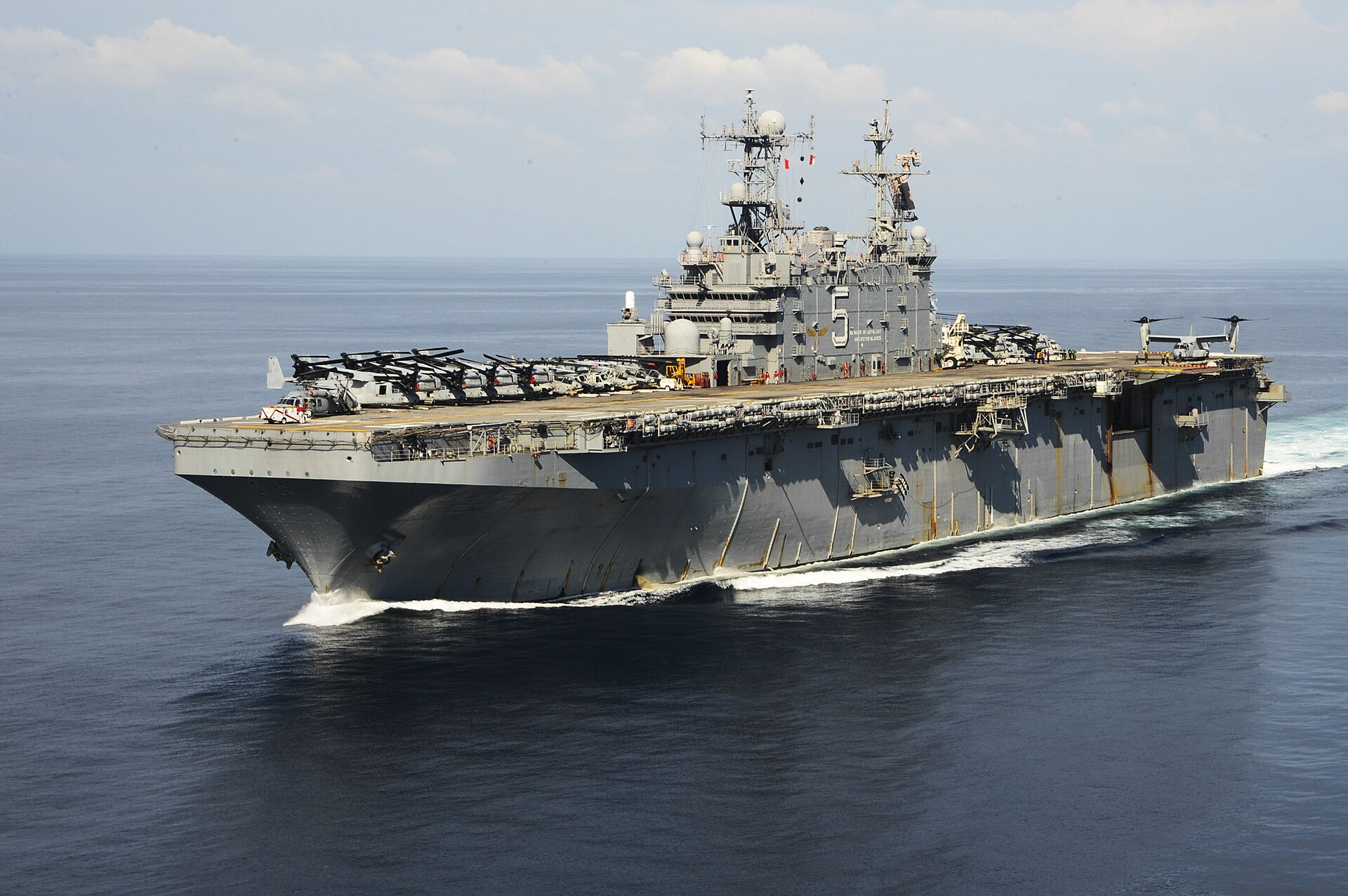
Sometime in the next few weeks, the decommissioned Ticonderoga class guided missile cruiser ex-USS Mobile Bay, the 7th example of her class built, will be sent to the bottom of the Pacific Ocean by friendly forces, according to the San Diego Union-Tribune. The Tarawa class ex-USS Peleliu (LHA-5) amphibious assault ship will also be pummeled to its doom by friendly fire. These are two very high-profile and vastly different targets, which will make for a uniquely interesting pair of SINKEX drills. The event will take place during the 30th Rim of the Pacific (RIMPAC) biennial international maritime exercise.
RIMPAC 2026 began June 24 and runs through July 31; however, the date and manner of the sinking are not yet known. The sinking exercise (SINKEX) is the capstone event at each RIMPAC, though the type of surplus ship used varies.

Mobile Bay was decommissioned in 2023 and determined ineligible to be placed on the National Register of Historic Places a year later, sealing its fate.

Commissioned on Feb. 27, 1987, Mobile Bay took part in a number of major events during its 36 years in service.
“The ship’s operational history includes the 1989 evacuation of the U.S. Embassy in Beirut, Lebanon; launching 22 Tomahawk Land Attack Missiles (TLAMs) in support of Operation Desert Storm and the evacuation of thousands of people displaced by the volcanic eruption of Mt. Pinatubo in the vicinity of Subic Bay, Republic of the Philippines during Operation Fiery Vigil in 1991,” according to the Navy. It also participated in the “U.S. Coast Guard Law Enforcement Detachment (CGLED) seizure of 10.5 metric tons of cocaine approximately 800 miles southwest of Acapulco, Mexico, and launching TLAMS in support of Operation Iraqi Freedom in 2003.”

In addition to the date of its sinking being so far unknown, we also do not know how Mobile Bay will be struck. These events are used to test out a variety of weapons systems and crews to see how they perform. This often includes the ship being hit by many different kinds of weapons.
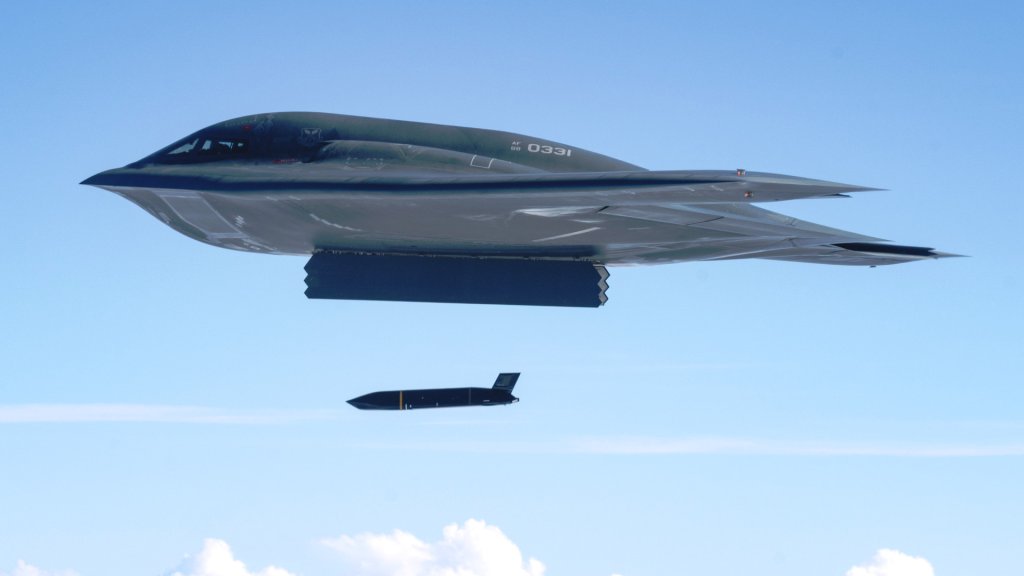
In the most recent SINKEX, for instance, we wrote that a U.S. Air Force B-2A Spirit bomber fired an AGM-158C Long Range Anti-Ship Missile (LRASM) at the ex-USS Juneau during Valiant Shield 2026 in the Western Pacific. You can read more about that in our story about that here. Oftentimes everything from torpedoes to short-range missiles to rocket artillery to airborne gunfire is used to maximize the sacrifice of the retired hull.
Mobile Bay, which took part in RIMPAC 2022, is one of four Ticonderoga class cruisers set to be disposed of by a SINKEX. In addition, the ex-USS Vella Gulf, the ex-USS Antietam and the ex-USS Port Royal are all facing the same fate, according to Navy records.
The ex-USS Valley Forge was the first of the decommissioned Ticonderogas to be sunk, during target practice in Hawaii in November 2006.
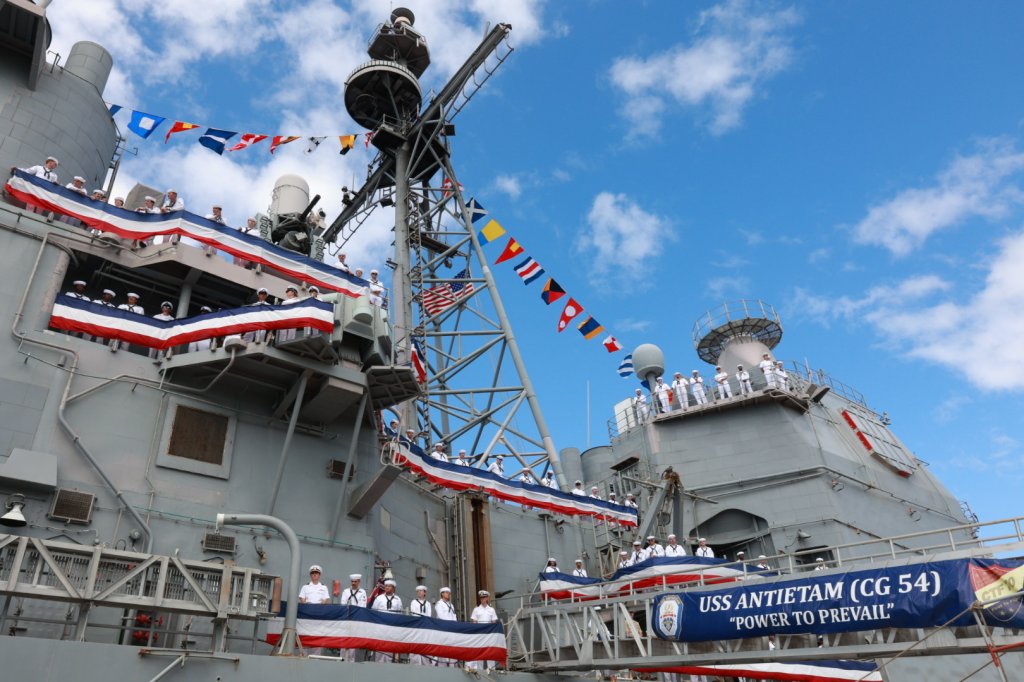
The Ticonderogas carry Tomahawk Land Attack Missiles (TLAM) and serve as air and missile defense batteries and command and control platforms. They are also equipped with Harpoon anti-ship missiles and MH-60R Sea Hawk helicopters, and execute anti-submarine warfare operations.
Built in the 1980s and early 1990s, these cruisers primarily provide the backbone of a carrier strike group’s air warfare capabilities.
There are nine ships in this class still serving in the Navy. Of those, a half dozen are slated to be decommissioned in the coming years, while the remainder — USS Gettysburg, USS Chosin and USS Cape St. George — have been modernized or are close to finishing modernization and will serve out toward the end of the decade.
The effort to keep these ships afloat has been costly and controversial, which you can read more about in our story about the process here.
The Navy is billing RIMPAC 2026 as the largest in the history of these exercises.
“Thirty nations, over 30 surface ships, five submarines, 15 national land forces, more than 206 aircraft and 30,000 personnel will train and operate in and around the Hawaiian Islands during the exercise,” the Navy said in a release. “RIMPAC provides a unique training opportunity while fostering and sustaining cooperative relationships among participants that are critical to ensuring the security of sea lanes and stability across the region.”
It will be interesting to see how the ex-Mobile Bay is ultimately disposed of. We will provide an update when more information is available.
Contact the author: howard@twz.com
Loading comments…
Comments couldn’t be loaded. Please refresh the page.