
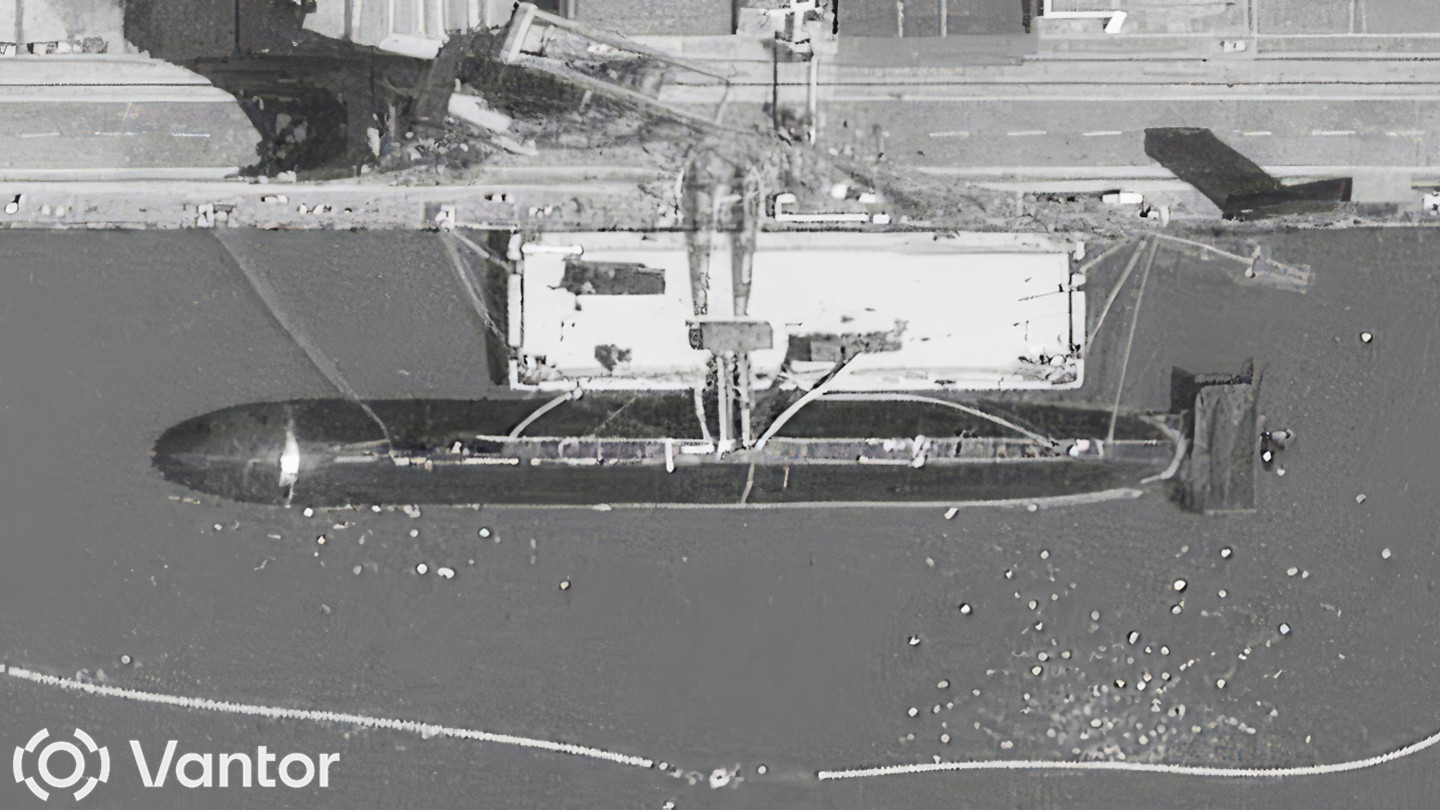
A new type of submarine that appears to lack a traditional sail has emerged in China. The same shipyard launched a smaller ‘sailless’ submarine — a technology demonstrator — eight years ago. More recently, a top Chinese shipbuilding conglomerate put forward a concept for an uncrewed underwater vehicle (UUV) with a broadly comparable hullform. Designs of this kind can offer benefits in terms of speed, maneuverability, and reduced acoustic signature, but also have major drawbacks.
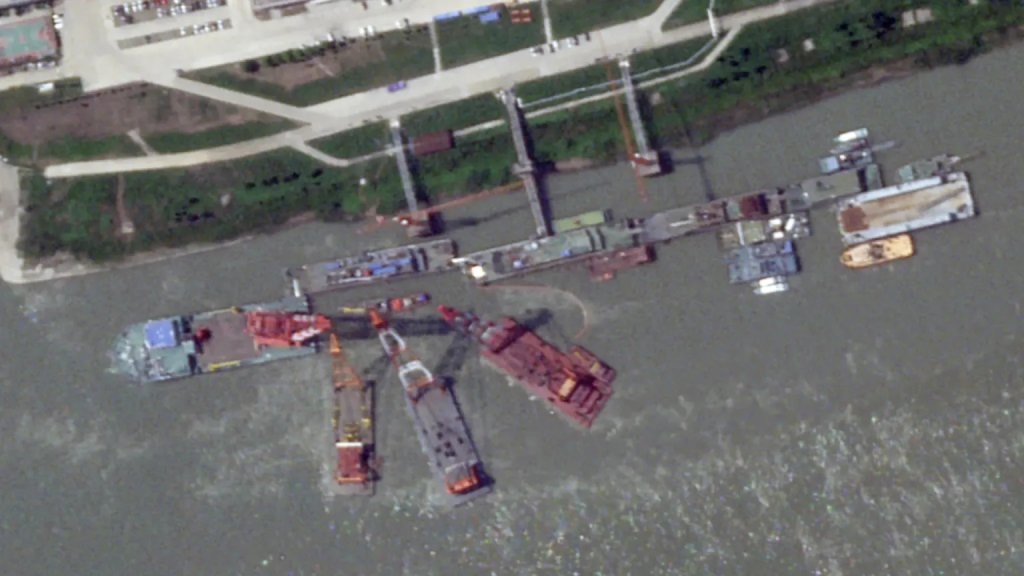
TWZ has obtained imagery of the submarine in question at JN (Jiangnan) Shipyard in Shanghai on June 1, as seen at the top of this story and below, from Vantor (previously Maxar Technologies). The boat, the name and/or designation of which are currently unknown, first appeared there sometime at the end of May, according to Naval News. That outlet was first to report on this development.
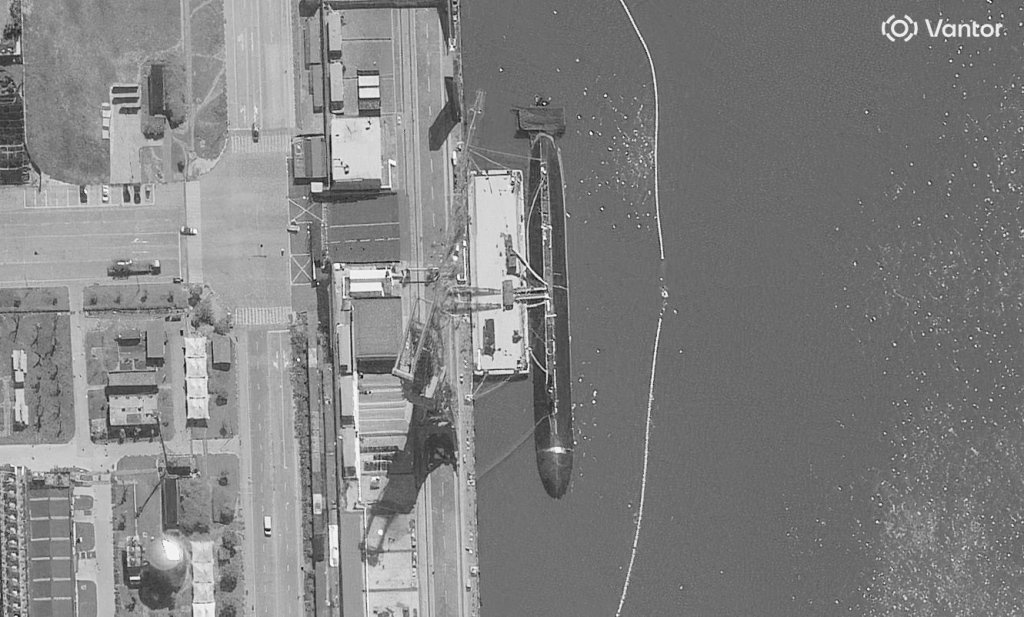
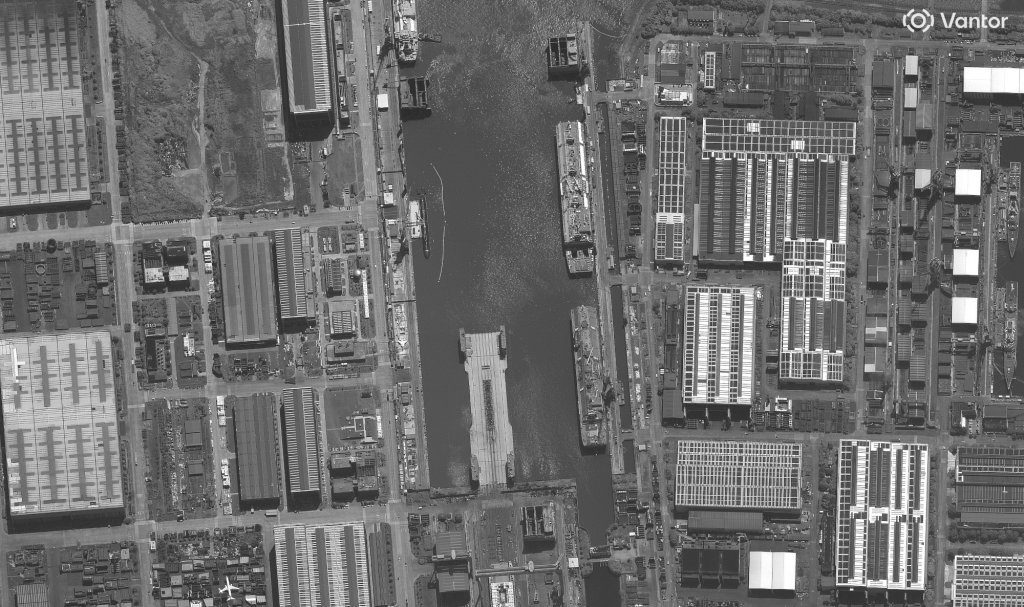
From the imagery, the submarine does not have a traditional sail. However, the exact shaping of what is present is also not entirely clear from the view that is currently available. As noted, JN Shipyard is known to have built at least one other ‘sailless’ submarine in the past, which we will come back to later on.
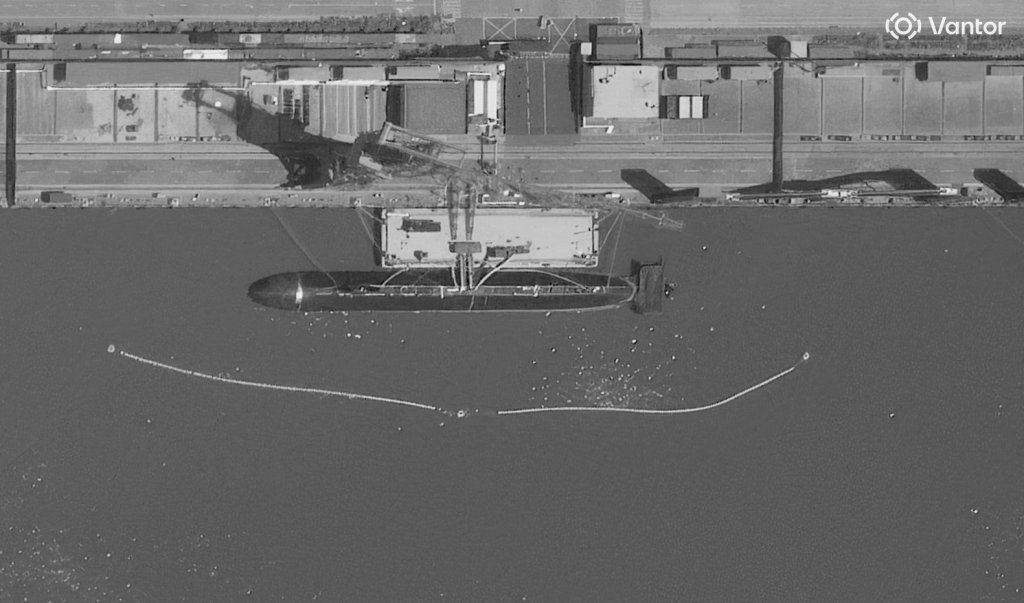
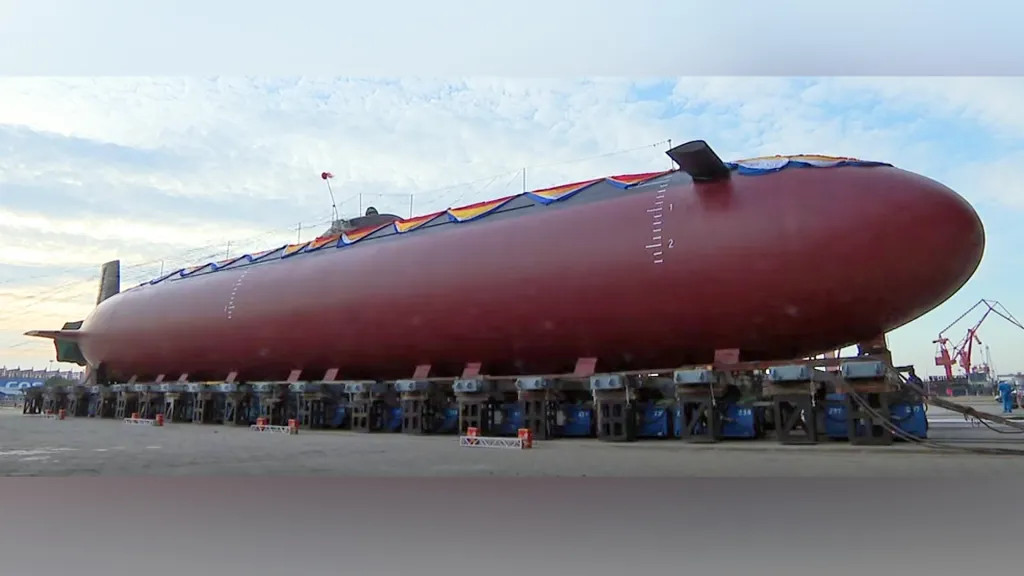
Writing for Naval News, undersea warfare analyst H.I. Sutton has assessed the design to be roughly 394 feet (120 meters) long and to be between 33 and 36 feet (10 and 11 meters) wide. What its intended missions might be are unknown, but this is certainly larger than common diesel-electric submarines (SSK) and even longer than most nuclear fast attack submarines. For comparison, variants of China’s Type 093 nuclear-powered attack submarine (SSN), some of the most modern submarines in People’s Liberation Army Navy (PLAN) service today, are approximately 356 to 360 feet (108 to 110 meters long) and 36 feet wide. The official stated length and width of the U.S. Navy’s Virginia class SSNs, across all existing subvariants, are 377 feet (114.8 meters) and 34 feet (10.36 meters), respectively.
We can also see that the submarine at JN Shipyard has an X-form rudder configuration, something that first appeared on a submarine in China in 2024. This offers advantages over cruciform stern arrangements with horizontal and vertical rudders when it comes to maneuverability, efficiency, and safety.
An X-shaped stern is a feature now further associated with a next-generation Chinese attack submarine design commonly, but still unofficially, referred to as the Type 095. Naval News also reported today on the recent launch of what may be another Type 095, which has a traditional sail, at the Bohai Shipyard in Huludao, hundreds of miles to the north of Shanghai. This may have caused some confusion online, with some mistaking a boat at Bohai for a ‘sailless’ type.
The newly emerged submarine at JN Shipyard may also have a shrouded propulsor, which could be a pumpjet type. Pumpjets offer further benefits for quieter operation, especially at higher submerged speeds.
The absence of a traditional sail is still the most notable aspect of the new submarine at JN Shipyard. Omitting a large structure sticking out of the top of the hull helps significantly with streamlining the overall design. Eliminating that drag can allow greater optimization for speed and maneuverability while submerged. It can also help make the submarine quieter and, by extension, harder to detect, even while transiting through an area at higher speeds. This can be especially useful when racing out to threats, even those far away.
Not having a traditional sail could impose certain design constraints. Traditionally, naval submarines have used their sails to mount periscopes and other sensor masts, as well as extendable communication antennas and snorkels to help cycle air without fully resurfacing. That is space that can be used for other purposes, including launchers for countermeasures and general storage.
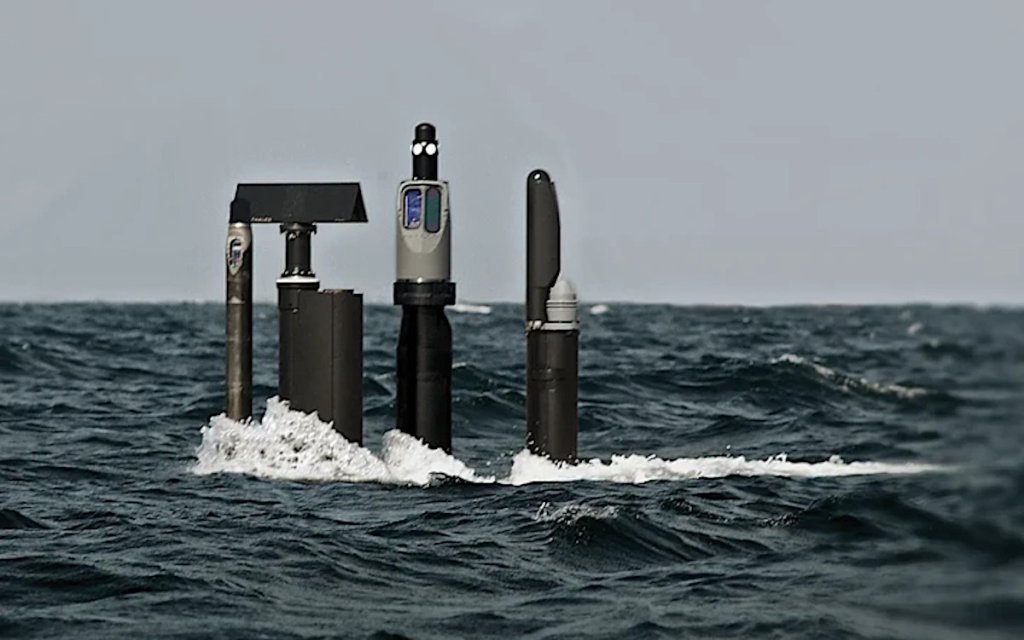
Above all else, while running on the surface, the sail is key for general navigation and situational awareness. It can also provide an elevated position for local force protection or supporting vertical replenishment (VERTREP) operations. If sufficiently hardened, it can even break through feet of ice during operations in and around the polar regions.
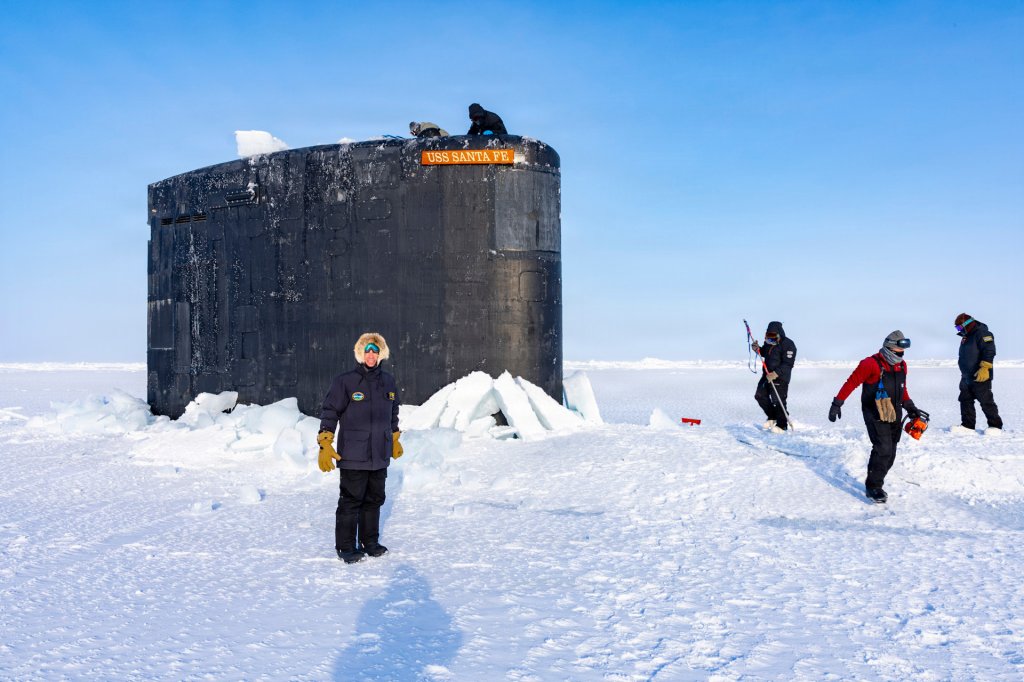
The lack of a sail might reflect a focus on seabed operations far from the surface where mast deployment and other considerations might be less pressing. At the same time, the design’s features could just as easily be centered on improving performance, including the ability to make transits as quickly as possible during blue water operations. It could also offer benefits for shallow-water operations, though we have noted that, overall, it is very large compared to SSKs.
As mentioned, a smaller ‘sailless’ submarine had already emerged at JN Shipyard in 2018. H.I. Sutton previously estimated that design to be around 150 feet (45 meters) long and 15 feet (four to four-and-a-half meters) wide. That submarine also had a non-X-shaped rudder arrangement and what appeared to be an unshrouded propeller. The exact reasons for building that boat and how it has been utilized over the years remain unknown, but it would have at least provided a testbed and technology demonstration platform to explore this design concept, and potentially other capabilities. Whether it was designed for crewed or uncrewed operation, or to be optionally crewed, is not clear, either. The same is true of this new submarine, though it seems unlikely it is uncrewed.
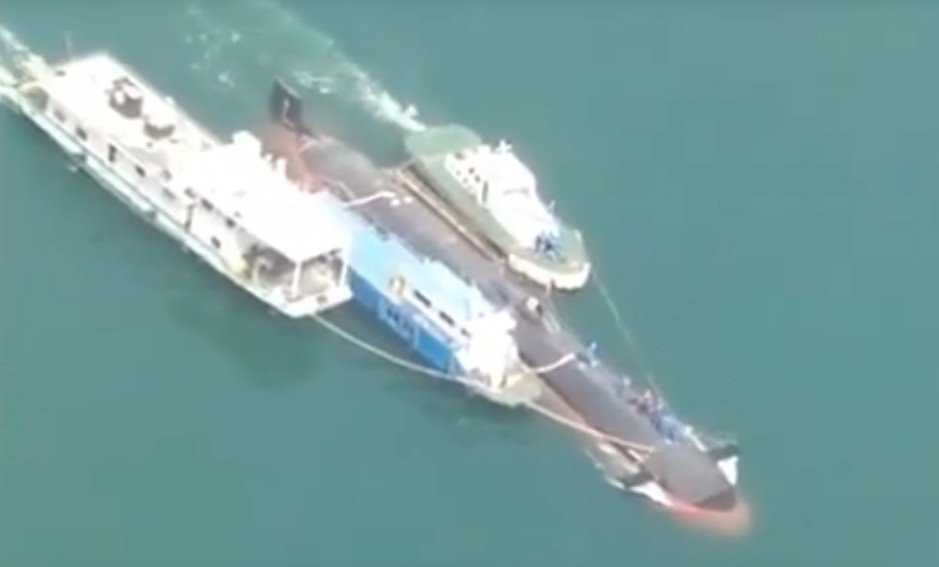
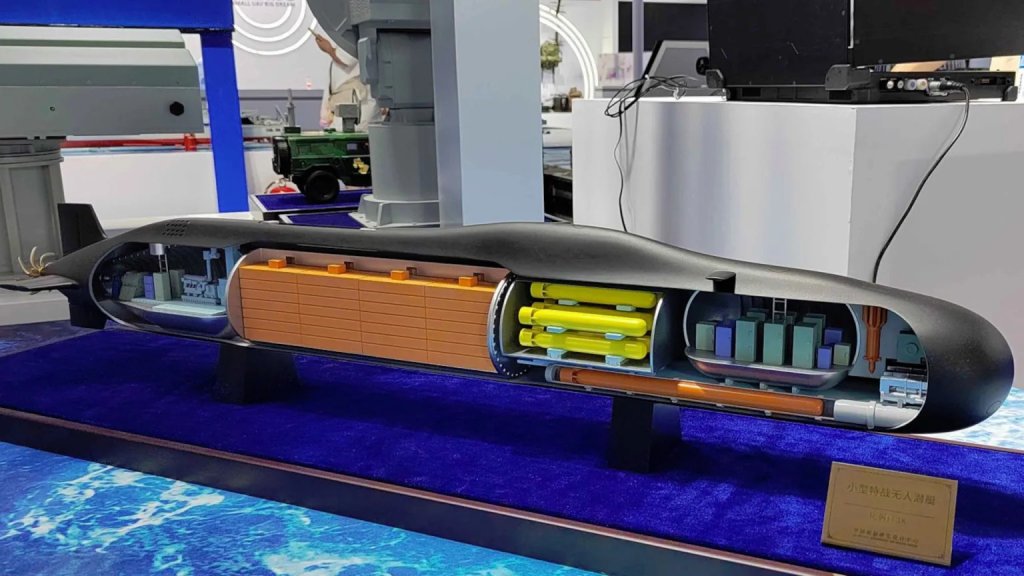
At the Zhuhai Airshow in 2024, the state-run China State Shipbuilding Corporation (CSSC) did show a model of an unprecedentedly large, diesel-electric UUV. Its overall design was highly reminiscent, at least in broad strokes, of JN Shipyard’s original ‘sailless’ submarine, as TWZ noted at the time. JN Shipyard is one of many subsidiaries of CSSC.
CSSC said at the time that the drone submarine could be configured to perform a wide array of missions, including launching attacks on enemy vessels, laying mines, supporting special operations forces, and serving as a mothership for smaller uncrewed underwater vehicles (UUV). You can read more about all of this here.
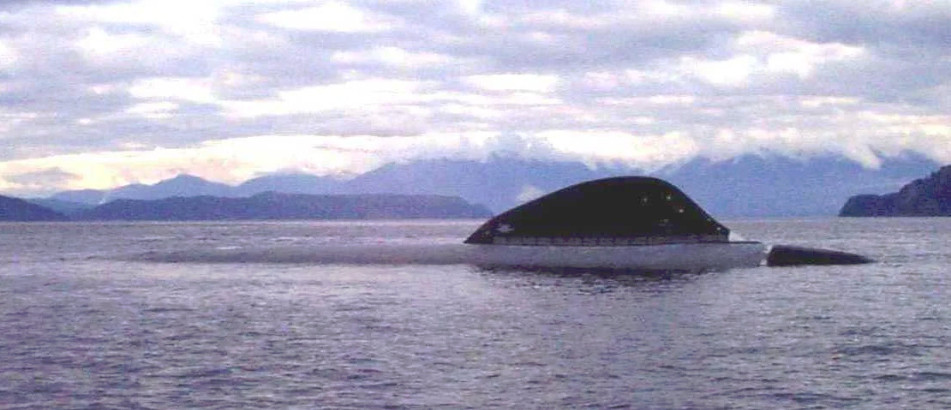
Other shipyards and navies around the world have explored low-profile submarine designs in the past, but designs have generally been consigned to the world of paper concepts and limited experimentation. The U.S. Navy, for instance, previously tested a Large Scale Vehicle Range (LSVR) subscale demonstrator submarine with a novel sail structure. The Navy’s Acoustic Research Detachment (ARD) conducted that work in a lake in Bayview, Idaho.
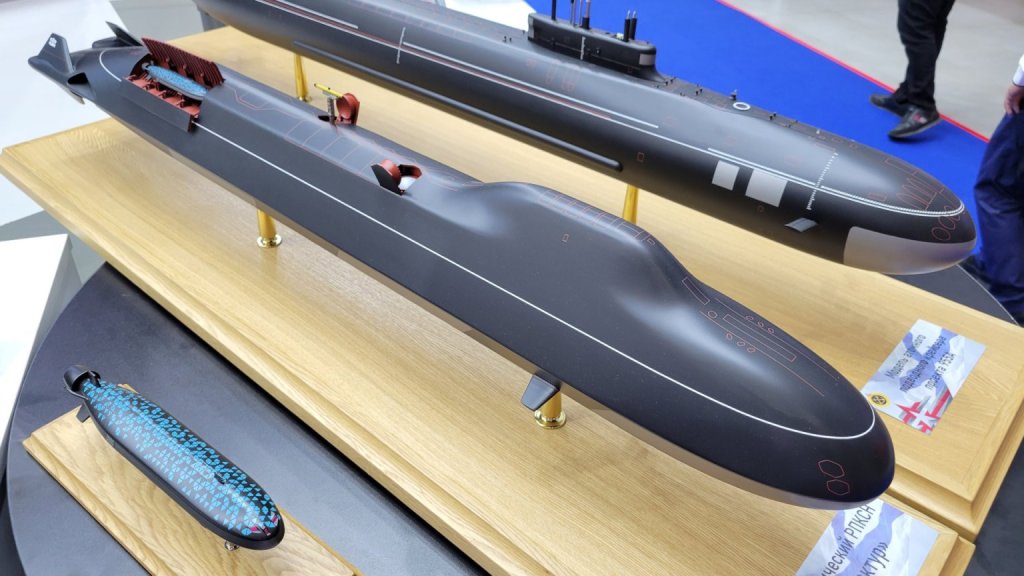
In 2021, the Navy also notably put out a contracting notice calling for concepts for inflatable sail structures, which could combine the benefits of traditional sails and low-profile designs. What degree of work the service may have conducted since then on this Inflatable Deployable Sail System (IDSS) is unclear, but it underscores how important a sail is for general operations on the surface.
The PLAN’s submarine force otherwise continues to grow in terms of capability and capacity, with an increasing number of more modern types. U.S. officials have openly said in the past that the quality of newer Chinese submarines has been getting closer in parity to American designs. All of this is further underscored by the recent appearance of the other new submarine at Bohai. In addition to new nuclear-power designs, China is also understood to be developing at least one design with a hybrid nuclear/conventional propulsion system, referred to as the Type 041 or Zhou class. The first known example of the Type 041 came to light after it looked to have sunk in a shipyard in 2024.
Greater use of nuclear propulsion promises to extend the reach of Chinese submarines in the Pacific and beyond, and is clearly part of the PLAN’s larger vision for naval power projection going forward.
“The PLA Navy is executing a significant strategic shift from diesel-electric to all-nuclear construction, representing a fundamental departure from historical construction patterns,” U.S. Navy Rear Adm. Mike Brookes, head of the Office of Naval Intelligence, wrote in prepared remarks ahead of a hearing before members of the U.S.-China Economic and Security Review Commission in March.
Brookes also highlighted how the hybrid Type 041, specifically, could offer “greater endurance, potentially filling regional patrol and presence missions more economically than full-size SSNs [attack submarines] and SSGN [guided missile submarines].”
China has significant demands for naval presence, in general, especially to assert its extensive and widely disputed maritime territorial claims in the South China Sea and elsewhere. The PLAN continues to expand the scale and scope of its combat fleets, overall, at a pace that far exceeds that of other navies globally. This includes the U.S. Navy, where the disparity has become increasingly concerning, as TWZ routinely highlights.
More remains to be learned about the newly emerged submarine at JN Shipyard, but it could point to new low-profile designs without traditional sails, possibly to act as the PLAN’s underwater high-speed interceptor, being part of China’s larger future submarine future.
Contact the author: joe@twz.com
Loading comments…
Comments couldn’t be loaded. Please refresh the page.