
The first European troops have arrived in Greenland ahead of exercises that are intended to show the willingness of Denmark and its allies to defend the strategically important island. Greenland is currently the object of intense interest, as President Donald Trump continues to stress its critical role in the defense of the United States. Increasingly, the White House is arguing that U.S. ownership of Greenland is the only alternative to eventual domination by China or Russia. For now, the number of European troops involved is very small and largely symbolic, but that could change in the future.
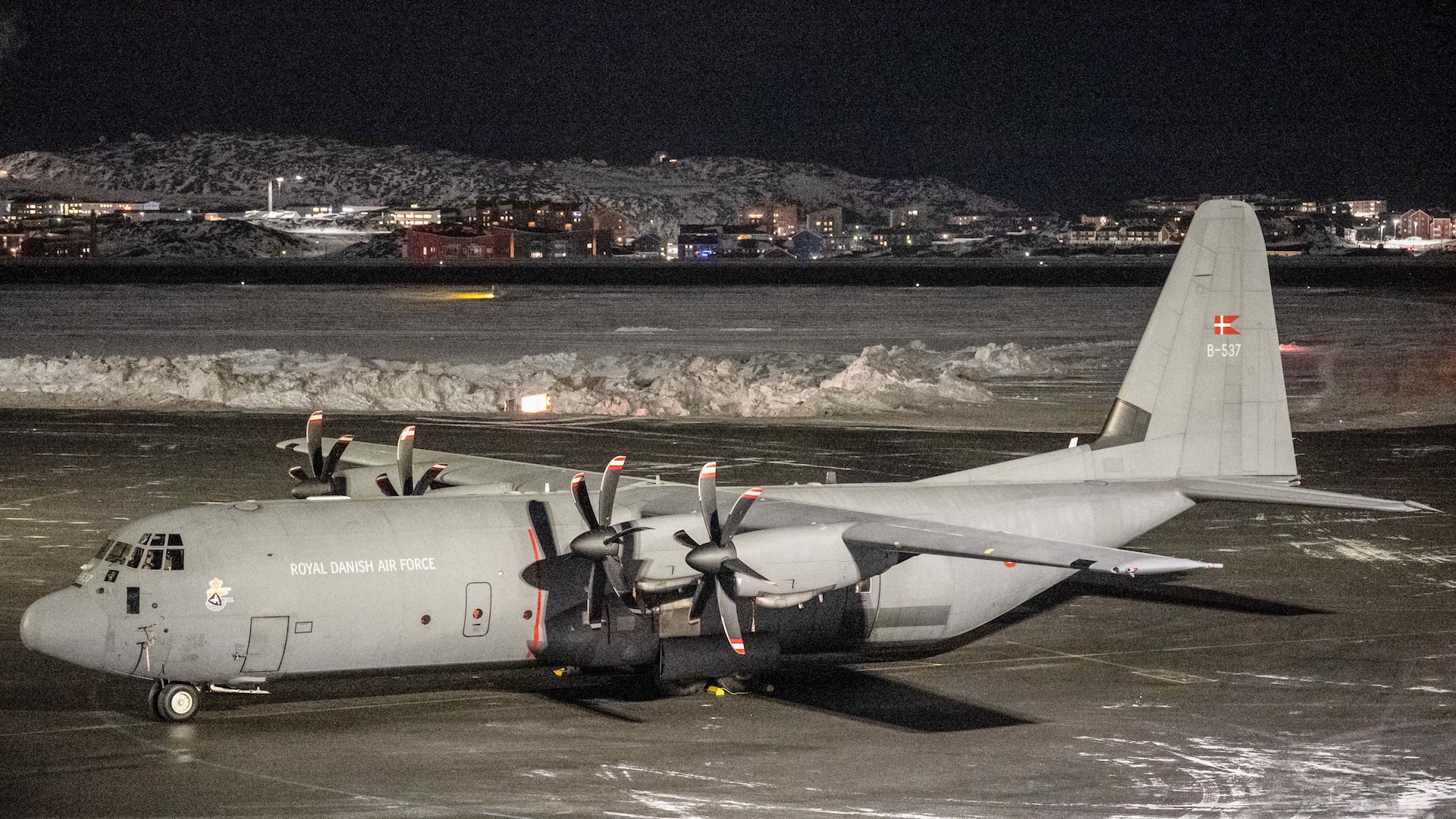
Late last night, local time, a Royal Danish Air Force C-130J transport landed at Nuuk Airport, where it disembarked an undisclosed number of Danish military personnel, as seen at the top of this story. This advance party will soon be followed by small numbers of troops from France, Germany, Norway, Sweden, and the United Kingdom. They will not be deployed under NATO auspices.
France has said it will deploy around 15 “mountain specialists” to Greenland.
The German Armed Forces is deploying a reconnaissance team of 13 personnel, initially to Copenhagen, before moving on to Greenland alongside Danish personnel.
Norway and Sweden will send two and three officers, respectively.
Finally, a single British officer will be embedded in the group.
More European military personnel could follow, with the Dutch foreign minister having said that the country is willing to send staff. A decision is due before the end of the week.
Together, the European troops will establish the groundwork for larger-scale exercises that are primarily meant to send a signal to Washington that it is ready and able to defend Greenland.
“The Danish Armed Forces, together with a number of Arctic and European allies, will explore in the coming weeks how an increased presence and exercise activity in the Arctic can be implemented in practice,” the Danish Ministry of Defense said of the upcoming maneuvers.
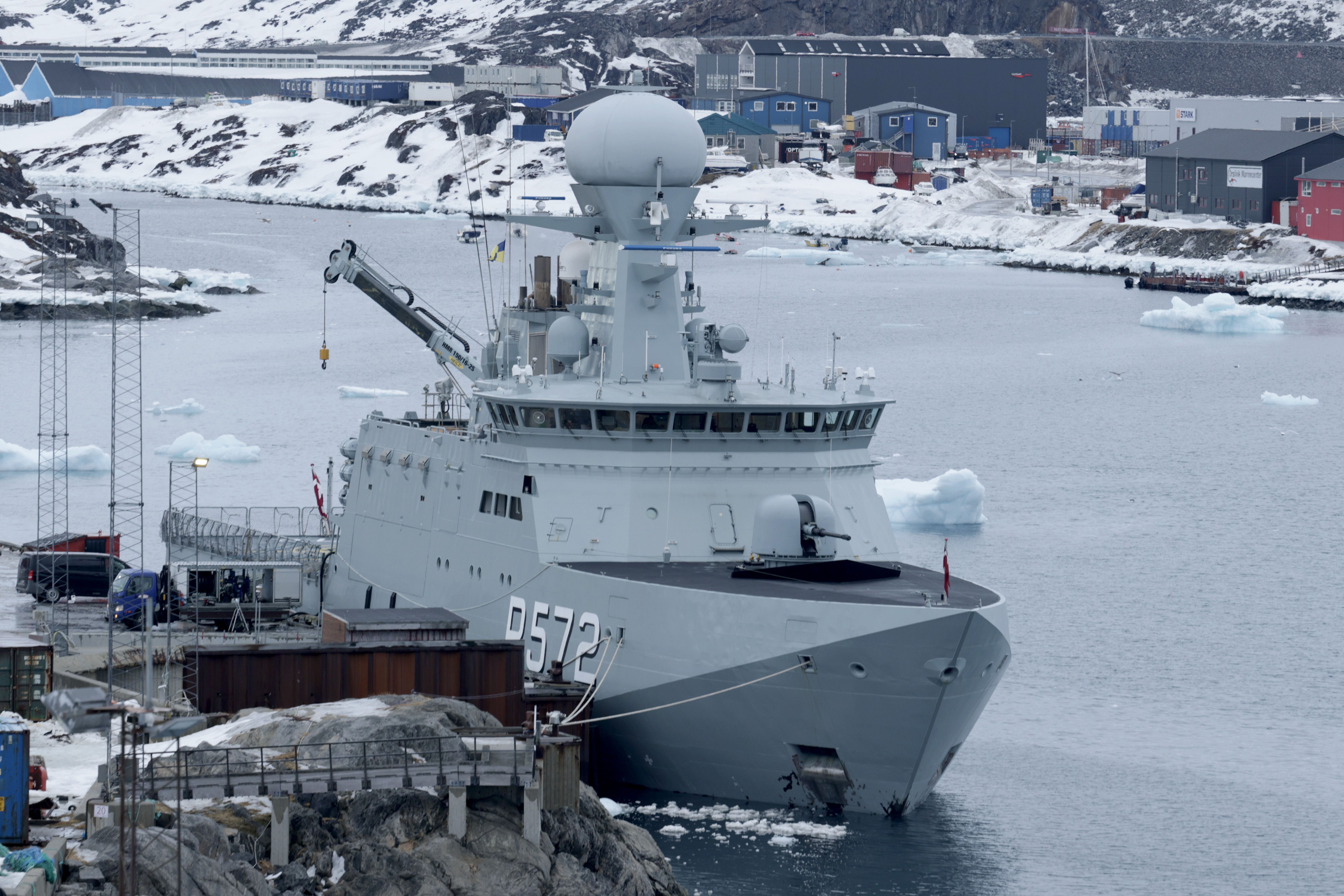
While the deployment is meant to show strength and resolve, its tiny size, at least initially, could lead Washington to come to the opposite conclusion.
The military security of the island is at the center of Trump’s rhetoric surrounding it.
Greenland and Denmark — of which the island is an autonomous territory — have both repeatedly said the island is not for sale and have expressed alarm about threats of the potential use of U.S. force to acquire Greenland.
Trump’s interest in Greenland is far from new. Back in 2019, TWZ reported on Trump’s claim that his administration was considering attempting to purchase Greenland from Denmark, the U.S. leader noting at the time that the idea was “strategically interesting.”
The topic came back to the forefront at the beginning of the second Trump administration. In early 2025, Trump said he wouldn’t categorically rule out using the U.S. military to take control of Greenland, saying that America needs it — as well as the Panama Canal — for “economic security.”
“The American ambition to take over Greenland is intact,” Danish Prime Minister Mette Frederiksen said today, in comments to Reuters. Frederiksen talked of a “fundamental disagreement,” as he reflected on the meeting of officials from Denmark, Greenland, and the United States at the White House yesterday.

Those talks apparently ended with no solution in sight.
“That is, of course, serious, and therefore we continue our efforts to prevent this scenario from becoming a reality,” Frederiksen added.
Increasingly, Trump is now stating that the future of the island is threatened by China’s and Russia’s ambitions on it. The U.S. president has not ruled out any options to secure it, while stating that, as it stands, Denmark is not strong enough to dissuade Chinese or Russian aggression in the High North.
While China and especially Russia are increasingly projecting their power in the Arctic region, there is little evidence of particular activity around Greenland.
Having said that, as well as its strategic location, the island is also rich in natural resources, with extensive mineral reserves.
For its part, Russia has said that attempts to identify it as a threat to Greenland are part of anti-Kremlin hysteria and has warned of escalating confrontation in the wider region.
Regardless, there are growing fears in Europe that the standoff over Greenland could threaten the fabric of the NATO alliance.
Several European NATO members have already stated that NATO could be at risk if the United States were to make any kind of effort to seize Greenland.
The U.S. troop presence on the island is currently also fairly small.
Around 200 U.S. troops are stationed in Greenland as of now, according to Danish Foreign Minister Lars Lokke Rasmussen.
Aside from this, the United States also operates one of its most strategic military outposts in Greenland. This is spearheaded by Pituffik Space Base, the U.S. military’s northernmost installation, a critical node in the U.S. ballistic missile early warning system, and also the world’s northernmost deep-water seaport. You can read in more detail about the U.S. military presence on the island here.
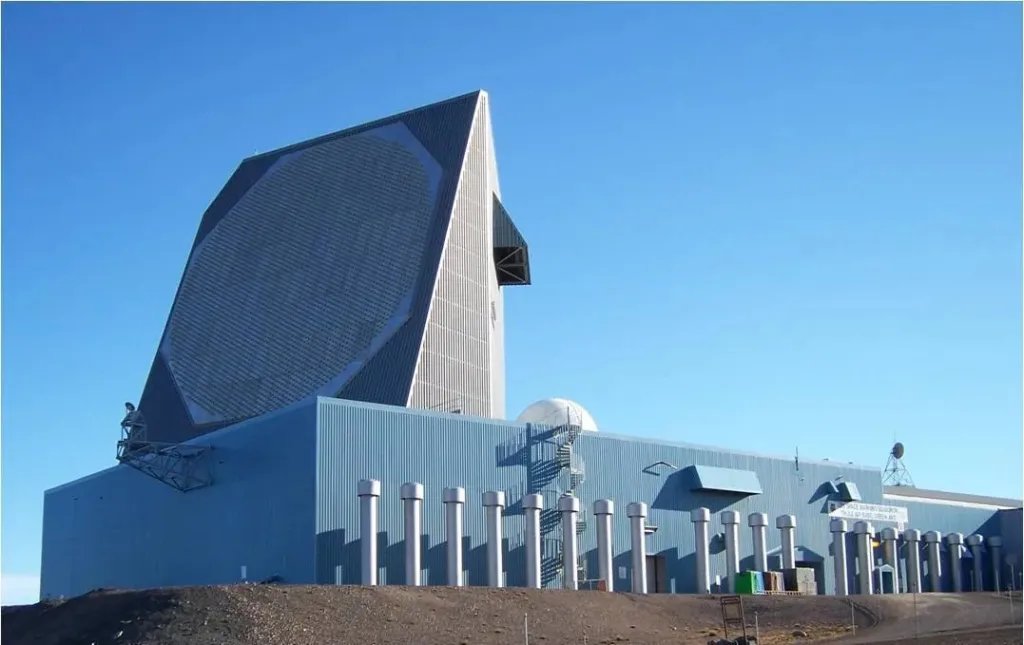
Under a 1951 agreement, the United States can establish military bases in Greenland, something that has also made sense for Denmark, since it benefits from the U.S. capability to defend the island.
The new European military presence on the island is even smaller, at least for now, but with larger maneuvers planned there later this year, it could be set to grow. Denmark has said that it plans to increase the number of its own troops permanently based on the island, with these potentially being boosted by rotational deployments by other allies, as in similar initiatives in the Baltic region.
The symbolic value of the initial European troop deployments should not be discounted entirely, however.
It seems clear that the upcoming maneuvers are intended to deliver two messages.
First, that Europe, even outside of the NATO framework, intends to defend Greenland against any kind of military aggression.
Second, Denmark, in particular, is showing the United States that it is responding to its criticism about its limited capacity to protect the island.
Exactly what kinds of maneuvers are going to take place, and on what scale, and what will come after, will depend heavily on the fallout of yesterday’s meeting at the White House.
One outcome of that meeting, which involved U.S. Secretary of State Marco Rubio, U.S. Vice President JD Vance, Rasmussen, and Greenland’s Foreign Minister Vivian Motzfeldt, was a plan to establish a working group to discuss issues relating to the island.
For now, Greenland remains insistent that it has no wish to be governed by, or owned by, the United States. Its future, the government says, remains with Denmark and NATO.
But as long as the United States continues to eye the territory, the more likely it becomes that Denmark and its regional allies will move to beef up their military presence there. Exactly how much military might will be needed to show the capability to effectively defend the island, at least in the eyes of the White House, is unknown.
Contact the author: thomas@thewarzone.com
Loading comments…
Comments couldn’t be loaded. Please refresh the page.