
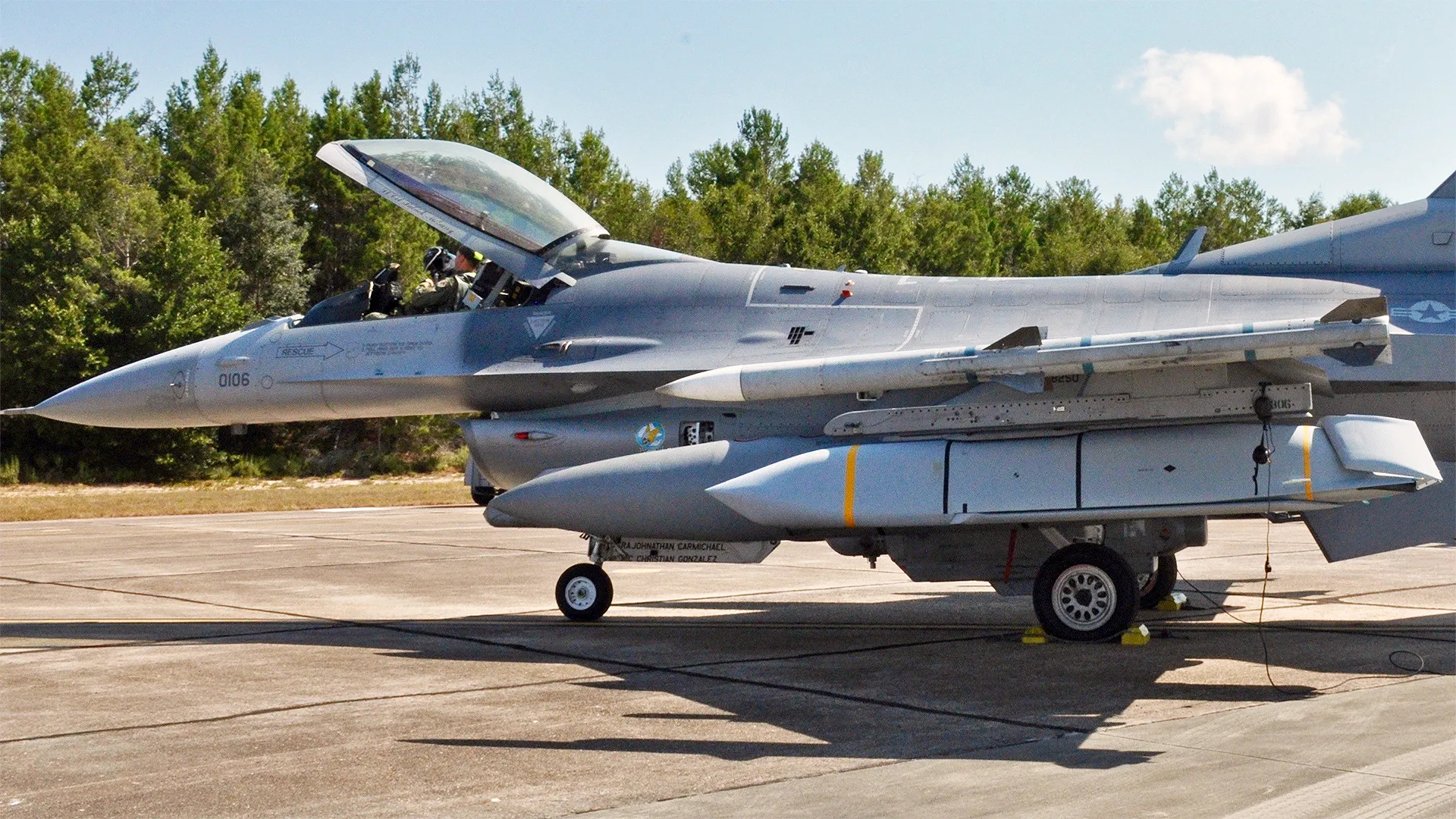
U.S. President Donald Trump squashed rumors on Tuesday that he would provide Ukraine with long-range missiles. His comments to reporters come after speculation that Kyiv could receive munitions with a greater range than those Ukraine currently possesses. A recent report stated that Ukraine could receive missiles able to strike Moscow, some 300 miles from the border. One such munition is the AGM-158 Joint Air-to-Surface Standoff Missiles (JASSM), which could be used to equip Ukraine’s F-16s. We raised the possibility this could happen more than two years ago, but deemed it highly unlikely. Another is the ground-launched Precision Strike Missile (PrSM) short-range ballistic missile, which is brand new to the U.S. inventory.
“No, we’re not looking to do that,” Trump exclaimed when asked if he would give these kinds of missiles to Ukraine.
Trump also urged Ukrainian President Volodymyr Zelensky to refrain from striking the Russian capital. Ukraine has launched long-range drones toward Moscow and has talked about using indigenous long-range missiles as well. In June, Yehor Chernev, the chairman of Ukraine’s delegation to NATO, announced that Ukraine’s Hrim-2 missile is nearly ready to be used. The Hrim-2 has enough range to strike Moscow, Ukrainian officials claim.
“No, he shouldn’t target Moscow,” the U.S. president cautioned Zelensky.
The discussion about weapons for Ukraine follows the announcement Trump and NATO Secretary General Mark Rutte made yesterday that Kyiv will receive additional Patriot air defense batteries it badly needs to fight off Russian aerial threats. Trump said that several European nations will pay for the batteries and that, in some cases, those systems will be shipped from existing European stockpiles to be back-filled by new ones from America. You can read more about that in our recent report linked here. Trump also said he would impose new secondary sanctions on Russia if its president, Vladimir Putin, did not agree to stop attacking Ukraine within 50 days.
The White House announcement is part of a much larger deal to arm Ukraine. The U.S. will sell around $10 billion in weapons to NATO allies in the first wave, including missiles, more air defenses and artillery shells, Axios reported on Monday, citing an informed source.
Though Trump said that long-range missiles were off the table for Ukraine, the president did suggest that a small batch of additional U.S.-made MGM-140 Army Tactical Missile System (ATACMS) short-range ballistic missiles could be used to strike deep inside Russia, according to Washington Post columnist David Ignatius. Some variants of these missiles, which were provided to Ukraine, have a maximum range of about 200 miles, much less than the aforementioned JASSMs or PrSMs.
Under the Biden administration, the use of ATACMS inside Russia was limited to sections of Russia’s Kursk and Belgorod regions close to the Ukrainian border. Ukraine used these weapons to good effect in Russia and occupied territory.
“I’m told by a source involved in the decision that this is likely to include permission to use the 18 long-range ATACMS missiles now in Ukraine at their full range of 300 kilometers (about 190 miles),” he suggested. “That wouldn’t reach all the way to Moscow or St. Petersburg, but it would strike military bases, airfields and supply depots deep inside Russia that are now out of range. The package might also include more ATACMS.”
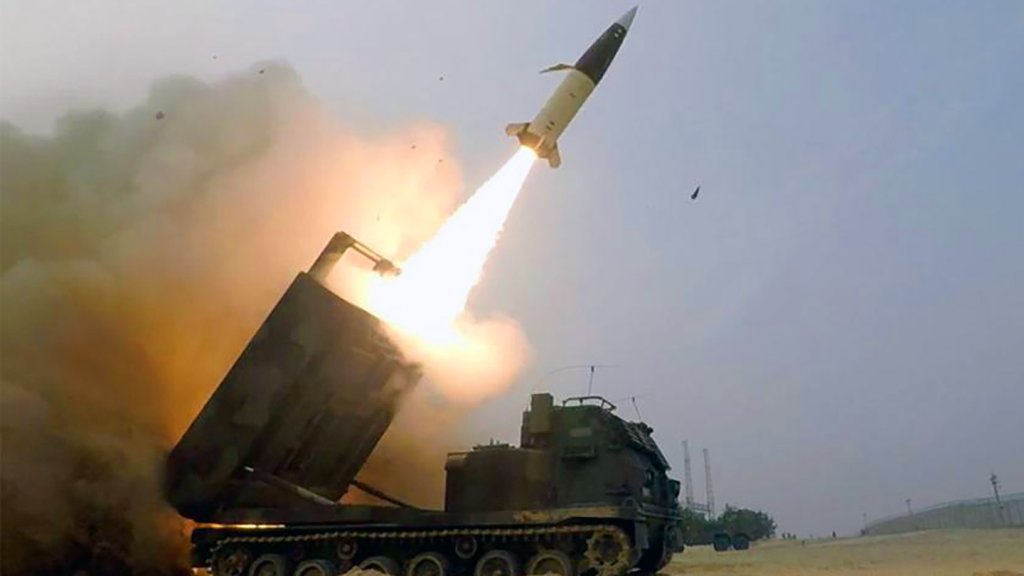
Beyond JASSMs and PrSMs, there was more fanciful discussion about how to arm Ukraine.
Ignatius and others said that at one point, Trump was considering providing Ukraine with Tomahawk cruise missiles. Those were most recently used by the U.S. last month against Iran’s Isfahan nuclear facility during Operation Midnight Hammer.
With a range of about 1,000 miles, Tomahawks could easily hit Moscow or St. Petersburg. They were “included in discussion as late as Friday,” Ignatius explained. “But the Tomahawks are off the delivery list for now, I’m told. They could be deployed later if Trump wants even more leverage.”
However, launching Tomahawks would require Ukraine to have ground launchers based on the U.S. Typhon system, making this an even more challenging decision to reach. The idea that the U.S. would supply such a heavy hitting long-range weapon to Ukraine would be a drastic escalation, to say the least. This is something we questioned yesterday.
“I’m very skeptical of these JASSM for Ukraine reports via the US,” TWZ editor-in-chief Tyler Rogoway suggested on X. “Possible euro users could give them some and US sells replacements to backfill… maybe. It’s possible. Lots of claims….”
The Latest
On the battlefield, fierce fighting continues with no real territorial gains or losses for either side. Ukraine, however, has made some small advances in the eastern region of Donetsk, while both sides are making pushes in the western part of Zaporizhzhia. Here are the key takeaways from the latest Institute for the Study of War assessment:
- Kursk: Russian forces continued offensive operations in unspecified areas of Kursk Oblast on July 13 and 14 but did not advance.
- Sumy: Russian forces recently advanced in northern Sumy Oblast. Geolocated footage published on July 14 indicates that Russian forces recently advanced in western Yunakivka (northeast of Sumy City).
- Kharkiv: Russian forces continued offensive operations in northern Kharkiv Oblast on July 14 but did not make confirmed advances.
- Luhansk: Russian forces continued offensive operations in the Borova, Kupiansk and Velykyi Burluk directions on July 14 but did not make confirmed advances.
- Donetsk: Ukrainian forces recently advanced in the Novopavlivka and Siversk directions, while Russian forces advanced in the Pokrovsk and Toretsk directions. Russians continued offensive operations in the Chasiv Yar and Velyka Novosilka directions on July 14 but did not advance.
- Zaporizhzhia: Both Ukrainian and Russian forces recently advanced in western Zaporizhia Oblast.
- Kherson: Russian forces continued limited attacks in the Kherson direction on July 13 and 14 but did not advance.
In his evening message on Sunday, Zelensky claimed Russia’s summer offensive into the Sumy region has been a failure so far.
After a meeting with military leaders on July 13, Zelensky said that the Russian army “has significantly fallen behind the expectations of its command for this summer. Our units will continue to destroy the occupier and do everything to transfer the war to Russian territory. We are preparing our new long-range strikes. We will also respond invariably harshly to every Russian strike on Ukrainians.”
As we previously reported, Russia has amassed about 50,000 troops in an attempt to wrest control of Sumy, which borders Russia’s Kursk and Belgorod regions. Sumy served as a staging ground for the Kursk offensive.
Zelensky also said Ukraine is “preparing our new long-range strikes.” While he did not elaborate, Ukraine has repeatedly attacked military targets deep inside Russia.
Meanwhile, Zelensky is shaking up his government, replacing the prime minister, defense minister, and ambassador to the U.S., among other moves. The shuffle is aimed at increasing domestic weapons production, improving the situation on the battlefield and maintaining better relations with Washington.
On Tuesday, Ukrainian Prime Minister Denys Shmyhal said he had submitted a resignation letter. On Monday, Zelensky nominated him to become the next defense minister, replacing Rustem Umerov. Umerov, meanwhile, will be tabbed as the new ambassador to the U.S., replacing Oksana Markarova.
Zelensky also nominated close ally and technocrat First Deputy Prime Minister Yulia Svyrydenko to replace Shmyhal as prime minister.
All these moves are pending the approval of Ukraine’s parliament.
Russia is increasingly using chemical weapons in Ukraine, Europe’s top diplomat Kaja Kallas told reporters on Tuesday.
Speaking after a gathering of foreign ministers in Brussels, Kallas cited German and Dutch intelligence reports showing that Moscow has used chemical weapons at least 9,000 times since the start of its full-scale invasion of Ukraine — and was now ramping up their use, Politico noted.
“As the intelligence services are saying this is intensifying, I think it’s [Russia’s use of chemical weapons] of great, great concern,” Kallas said. “It shows that Russia wants to cause as much pain and suffering so that Ukraine would surrender. And, you know, it’s really … unbearable.”
“Most countries around the world, including Russia, have signed a 1993 international convention banning the use, production, development or stockpiling of chemical weapons,” the outlet added. “Russia is one of 65 countries to have not only signed the Chemical Weapons Convention, but also ratified it.”
A plant that makes batteries for Russian weapons was reportedly struck by Ukrainian drones early on the morning of July 15. Smoke was seen rising near Russia’s Energia plant in the city of Yelets in Lipetsk Oblast following the attack, according to the Kyiv Independent.
“The facility reportedly manufactures batteries for missile guidance and glider modules, including for the Iskander system and cruise missiles, which Russia has been increasingly using to target Ukrainian cities,” the publication reported.
Andrii Kovalenko, head of the Counter-Disinformation Center at Ukraine’s National Security and Defense Council, has previously called Energia “one of the most critical targets” in Russia.
Lipetsk Oblast Governor Igor Artamonov confirmed an attack against the region, saying that a drone fell in the industrial zone of Yelets, injuring one person.
The independent Russian media outlet Astra reported that smoke was visible near the Energia factory, which has been targeted in previous drone attacks, though the exact site of the fire remains unclear.
Russia’s Defense Ministry claimed its air defenses intercepted and destroyed 55 drones overnight across multiple regions, including 32 over Belgorod Oblast, 12 over Voronezh Oblast, three over Lipetsk Oblast, one each over Rostov and Kursk Oblasts, and six over the Black Sea.
A Ukrainian drone strike on the Russian city of Voronezh early Tuesday morning wounded at least 22 people, the Moscow Times reported, citing local officials.
Voronezh region Governor Alexander Gusev said a teenager was among those wounded in the attack, with 17 people being hospitalized overall.
You can see part of that attack in the following video.
A young Russian let loose a string of invectives as he reportedly watched a Russian helicopter fire into residential neighborhoods in Voronezh in an attempt to down Ukrainian drones.
Meanwhile, Russian forces injured five people, including a 14-year-old girl in attacks on Sumy and Donetsk oblasts overnight on 15 July, according to Euromaidan Press, citing regional authorities.
During a pitched battle near the Donetsk Oblast city of Toretsk, Ukrainian soldiers fought to clear Russian troops from a bunker where they were hiding. The following video shows one of the Ukrainian soldiers tossing grenades into the bunker as the other laid down covering fire.
Russia now has 700,000 troops fighting Ukraine, an increase of about 60,000 troops since May, according to the Ukrainian Foreign Intelligence Service (SVR). Those figures were released to the Ukrainian LIGA media outlet.
The most recent tabulation also represents a huge leap of about 120,000 troops that were deployed as of November 2024, LIGA reported.
Russia is concentrating the largest number of its forces around the city of Pokrovsk in the Donetsk region. There are about 110,000 Russian troops there, LIGA claimed.
North Korea is continuing to support the Russian war effort. Pyongyang provided Moscow with more than 12 million rounds of 152 mm shells, the South Korean Yonhap News Agency reported. The outlet cited South Korea’s military intelligence authorities.
“North Korea is believed to have provided around 28,000 containers containing weapons and artillery shells to date, according to a report by the Defense Intelligence Agency (DIA) submitted to a lawmaker of the main opposition party,” Yonhap explained.
“If calculated with 152 mm single shells, (the number of supplied shells) are presumed to have reached more than 12 million,” the DIA said.
Faced with an increasing onslaught of Russian drones and missiles, Ukraine has contracted to obtain “tens of thousands” of interceptor drones, Ukrainian Defense Procurement Agency Director Arsen Zhumadilov, said in an interview published on July 14.
Zhumadilov told the Ukrainian Babel news outlet that interceptor drones have now entered mass production.
The technology is critical for Ukraine’s air defense as Russia’s aerial attacks have escalated significantly over the past few months. During just the last week, Russia launched over 1,800 drones against Ukraine, Zelensky said on July 13.
“Tens of thousands (drones). This is what we have already contracted and will continue to contract. Our contracting now, on the one hand, depends on the manufacturer’s capacity, and on the other hand, on the state budget’s capacity,” Zhumadilov said.
“We will definitely contract everything that the state budget can afford,” he added.
Ukraine’s Brave1 defense technology incubator is touting what it calls the success of a thermal imaging camera that debuted at one of its demonstrations.
The Oko Camera, which secured a Brave1 grant and won the Defense Tech Startup Competition in 2024, is now installed on more than 50 aerial, ground and naval drones, according to Brave1. It is a thermal imaging camera allowing operators to see at night and through fog and rain.
A video produced by Brave1 shows the camera and some of the video collected through its use.
The Ukrainian Defense Ministry (MoD) released a video showing its German-donated Skynex air defense system destroying Russian drones with volleys from its 35mm main gun.
Made by Rheinmetall, the Skynex system comprises a 35mm anti-aircraft turret firing AHEAD ammunition based on an HX 6×6 truck chassis and integrated with an X-TAR3D acquisition radar and the Skymaster battle management system.
“Target hit. Target destroyed,” a Ukrainian Skynex operator repeated as the mobile gun made contact with at least seven Russian Shahed-type drones, the Kyiv Independent noted.
The Air Force praised the ability of Skynex to defend Ukraine’s skies, calling its results “inspiring.”
“Rheinmetall’s Skynex anti-aircraft artillery complex in service with the Air Force shows impeccable results in destroying enemy strike UAVs (unmanned aerial vehicles),” the Air Force wrote via Telegram.
An increase in Russian GPS jamming of military systems, as well as civilian aviation and maritime traffic across Europe’s eastern flank, is raising concerns about a potential disaster. Should that happen, the response could be a NATO attack on the Russian electronic warfare systems located in its Kaliningrad exclave.
“Civilian aircraft flying over these regions are regularly forced to switch to backup systems, and in more severe cases, divert or abort landings altogether, with Finnair already canceling all flights to Estonia for over a month due to safety concerns,” Euromaidan Press reported. “Disruptions have been traced back to military installations in Kaliningrad, including the Okunevo antenna and jamming systems such as Borisoglebsk-2 and Murmansk-BN, also used in Ukraine.”
If hundreds of civilians die in a GPS-jamming-related crash, NATO could potentially target Kaliningrad’s jamming installations directly, the publication suggested.
“Kaliningrad’s jamming systems might be targeted through cyberattacks or covert sabotage of the electronic warfare nodes with secret operatives. In a worst-case scenario, NATO countries could take direct individual military action to eliminate the Russian GPS jamming threat,” Euromaidan Press posited. “These measures remain unlikely for now, but they are no longer theoretical, as Russia is operating near the line, and every near miss brings the region closer to a tipping point.”
Belarus shot down a Russian strike drone in its airspace during an attack on Ukraine over the weekend, a source in Ukraine’s Defense Intelligence Directorate (GUR) told the Kyiv Independent on Monday.
At least three Russian drones were flying over the country at the time, the publication said its source told them. A Belarusian Mi-24 helicopter on an “airspace control mission” detected and destroyed one of the drones.
“It is reported that the wreckage of the downed (drone) fell in the Homel region,” the GUR sources added.
Russian Shahed-type drones regularly breach Belarusian airspace as they fly towards Ukrainian cities during mass attacks, which have escalated significantly over recent weeks. One of Russia’s closest allies, Belarus has allowed Moscow to use its territory for military operations against Ukraine.
There are claims that Russia downed and captured a British jet-powered naval target drone converted into an attack or decoy weapon.
The drone is claimed to have a nearly 18-pound warhead, travel at a maximum altitude of about 300 feet and can reach speeds of up to about 140 mph in its terminal phase.
Ukraine is using these drones to attack Russian targets as well as overwhelm enemy defenses, according to the Russia News X account. The War Zone cannot independently verify these details.
Last year, a British-designed Banshee jet-powered naval drone, or a design identical to it, appeared in the conflict in Ukraine for the first time.
An upgraded Russian BTR-80 armored personnel carrier equipped with a new “Boomerang-Burevestnik” remotely operated weapon system (RWS) was destroyed by Ukrainian first-person view (FPV) drones, according to the Defense Blog. The vehicle was reportedly undergoing field trials at the time.
The Boomerang-Burevestnik RWS featured a 12.7mm NSVT “Utyos” heavy machine gun and advanced optics, Defense Blog stated.
More than two years after being captured by Russia, the city of Bakhmut in the Donetsk region remains a rubbled ruins. Bakhmut fell into Russian hands on May 21, 2023, after a long battle with heavy casualties on both sides.
Wild new video emerged of a Ukrainian MiG-29 Fulcrum lobbing GBU-39/B Small Diameter Bombs (SDB) toward a Russian drone control center in Zaporizhzhia Oblast. The video shows the Fulcrum zooming low over the ground to avoid radar detection before swiftly increasing altitude to lob the munitions. The video then cuts to a drone view of the claimed Russian drone control center in a forest belt being destroyed.
The Air Fighter Telegram channel also released video of another Fulcrum SDB attack.
Throughout the course of this all-out war, Russia has used a variety of vehicles to battle Ukrainian forces. Now it appears they are turning to American ones. Images have emerged of Russians using U.S.-built Dodge pickups to launch Shahed-type drones.
And finally, Russian soldiers unsuccessfully tried to shoot down a thermite-spewing so-called dragon drone hovering over their position. However, as you can see in this video below, the drone was unaffected by the small arms fire and continued dropping its load.
Thermite is a combination of oxidized iron and aluminum that burns at about 4,440 degrees Fahrenheit. The drones attack by dispersing the compound over tree lines and other foliage under which Russians seek cover, as well as into trenches. Burning growth away reduces where the enemy can hide, increasing their exposure, and deploying it where troops are hiding, including into trenches, can kill anything exposed inside and can choke off oxygen to and burn those not directly in contact with it.
The dragon drones first emerged on the battlefield in September 2024. One Ukrainian drone commander told us that these weapons have limited value because of the small amount of thermite they can carry. Still, they can cause a great deal of fear among those on the receiving end, that commander noted.
That’s it for now.
Contact the author: howard@thewarzone.com
Loading comments…
Comments couldn’t be loaded. Please refresh the page.