
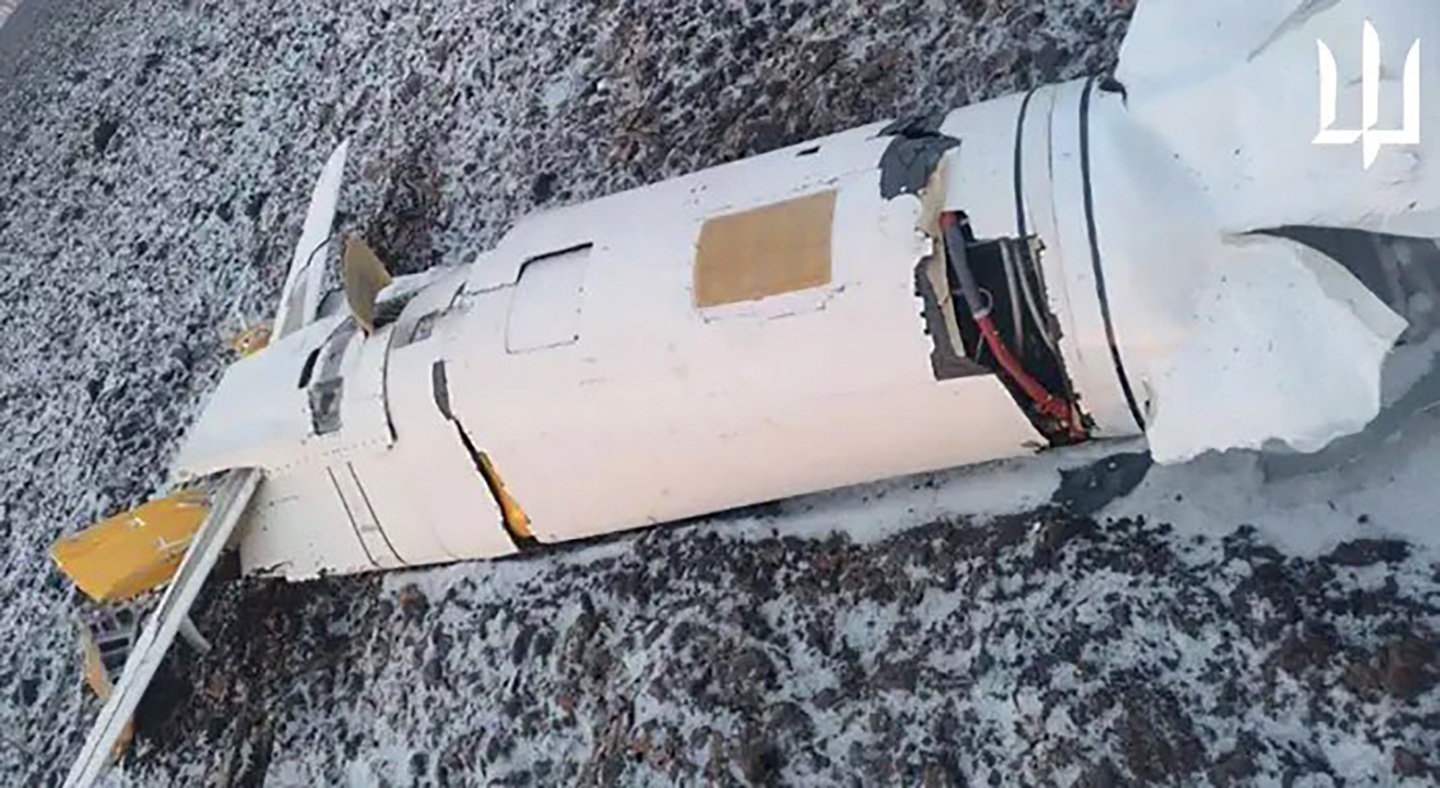
Russia is using a new kind of air-launched cruise missile in its war in Ukraine, the Izdeliye 30, based on analysis of recovered wreckage. The new development further underscores the fact that Russia is running low on its stocks of ‘legacy’ air-launched cruise missiles and new production cannot meet its wartime demand. As a result, it is seeking to field weapons in this class that are cheaper to produce and better suited to the nature of the conflict.
The Ukrainian Ministry of Defense’s Main Directorate of Intelligence (GUR) was the first to publicly release information on the new missile, which it says has been used in the war since the end of 2025.
Providing an interactive 3D model, based on found wreckage, as well as photos of the wreckage itself, the GUR describes the missile as having folding wings with a span of about 10 feet, a warhead weighing 1,760 pounds, and a range of at least 930 miles. It is powered by a new compact turbojet engine providing a cruising speed of 450 miles per hour.

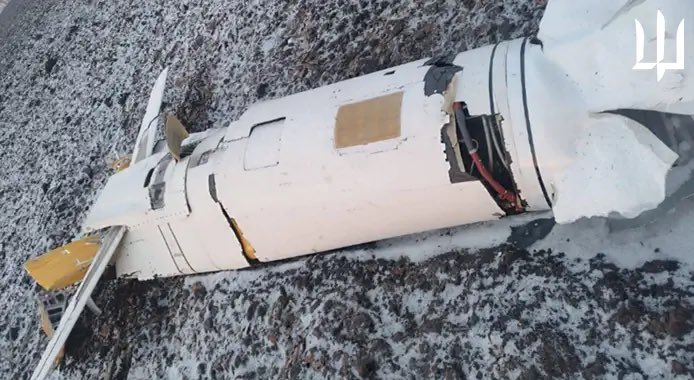
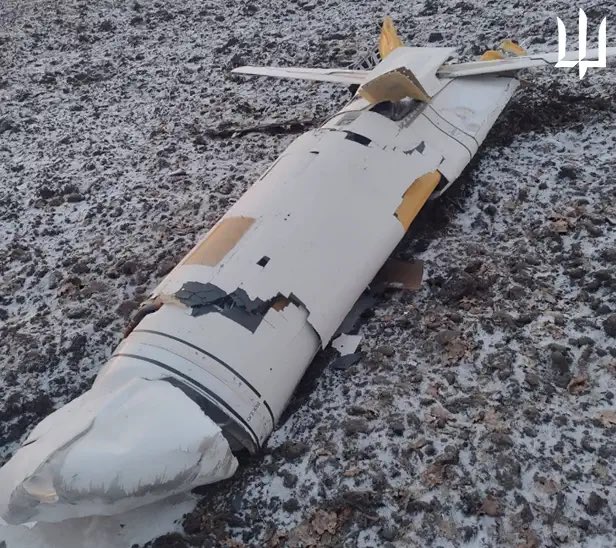
Based on “markings and design features,” the GUR identifies the new missile as coming from the Zvezda Design Bureau. The missile also bears a superficial similarity to Zvezda’s Kh-35 anti-ship cruise missile, known to NATO as the SS-N-25 Switchblade, in its surface-launched application.
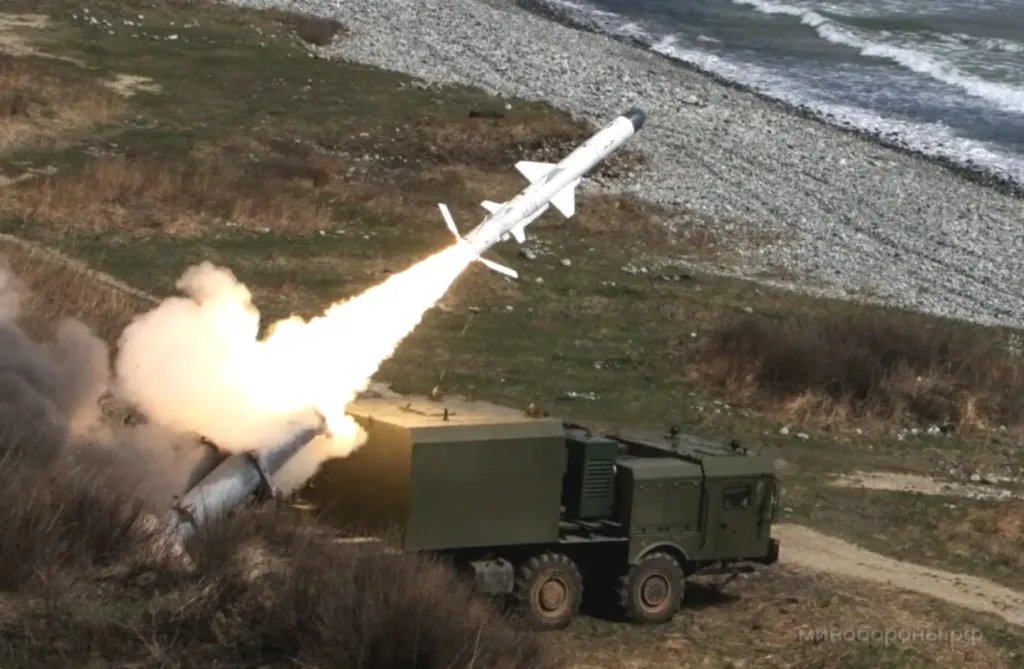
Certain components on the Izdeliye 30 are said to be identical to those used on the air-launched Kh-35U (AS-20 Kayak), including parts of the pneumatic system. Meanwhile, the aircraft interface is similar to those used to launch Kh-101, Kh-55, and Kh-555 ‘legacy’ air-launched cruise missiles from strategic bombers like the Tu-95MS Bear-H and Tu-160 Blackjack.
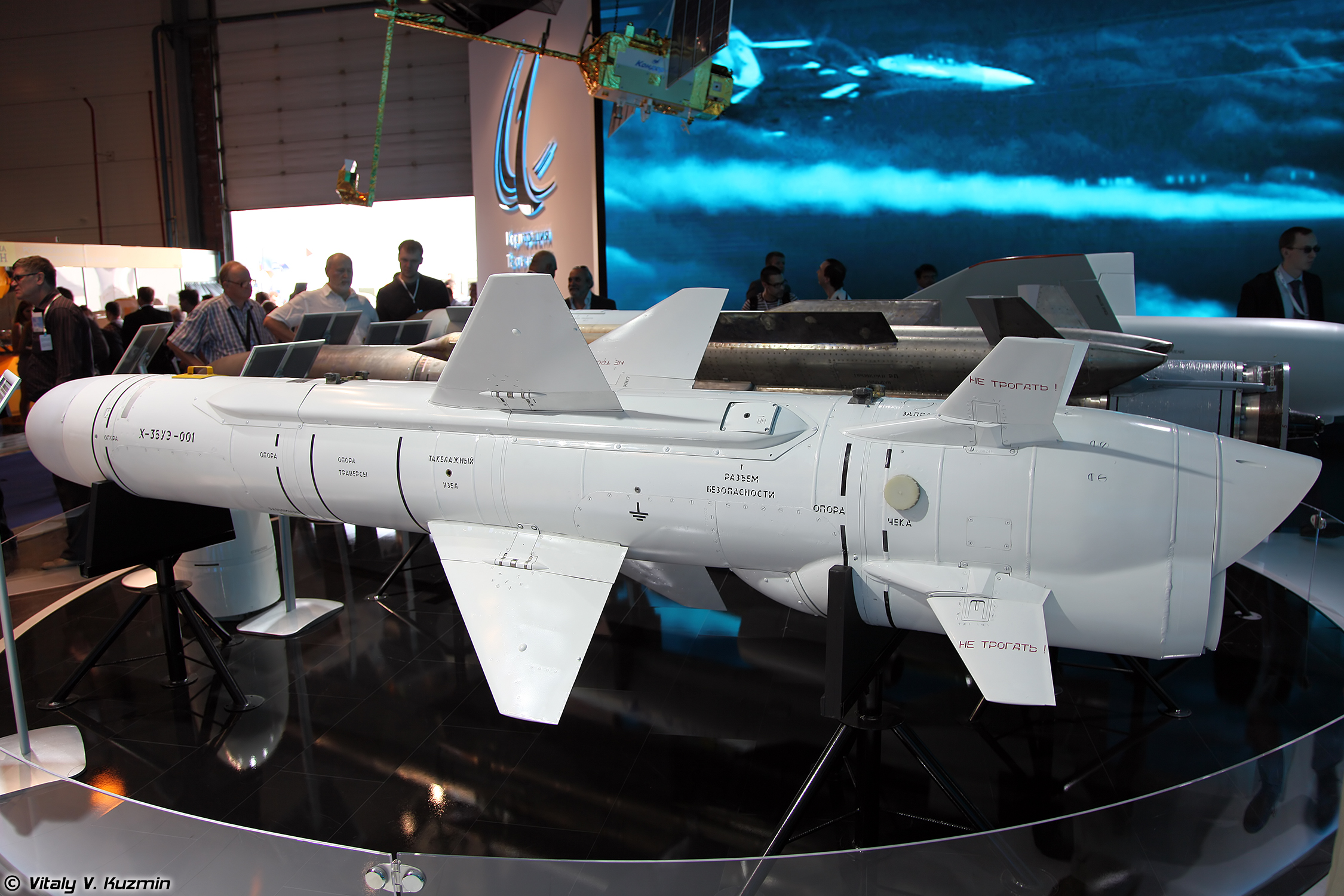
Other components in the missile appear to have been reused from existing weapons, reducing cost and complexity and speeding development.
The satellite navigation system includes a jam-resistant satellite signal receiver combined with a digital satellite receiver, the GUR states. The navigation system is integrated with the flight control system using the same technology as found in Russia’s guided aerial bombs. The intelligence directorate also notes that components from the navigation system are sourced from foreign manufacturers in China, the Netherlands, Switzerland, and the United States.

The existence of the Izdeliye 30 has also been confirmed by the Moscow-based Center for Analysis of Strategy and Technologies (CAST) think tank.
CAST assesses that the new weapon is intended as a cheaper, simpler alternative to the air-launched cruise missiles otherwise used by Tu-95MS and Tu-160 bombers, namely the Kh-101 and Kh-555 (the Kh-55 carries a nuclear warhead).
Compared to Russia’s conventionally armed air-launched cruise missiles, the Izdeliye 30 also has a more powerful warhead, CAST said.
The Kh-101 (AS-23A Kodiak) is a modern, stealthy, subsonic cruise missile, with a reported maximum range of between around 1,870 and 2,480 miles. According to the GUR, the Kh-101 has a warhead weighing around 880 pounds, roughly half the size of that understood to be fitted in the Izdeliye 30. It should be noted that some Kh-101s also appear to have been fitted with cluster warheads, as you can read about here.
Firm evidence of a Kh-101 modified with a second warhead appeared in May 2024, as you can read about here. This also suggests that Russia may not be altogether happy with the destructive power of the basic Kh-101, at least for certain types of targets.
The Russian think tank also assesses that the Izdeliye 30 was likely designed on the basis of the existing Kh-35, scaled up.
That would provide a very interesting parallel with Ukraine’s Neptune series of cruise missiles.
The most capable of these is the Long Neptune, an extended-range derivative of the previous land-attack version of the Neptune anti-ship missile, which is also powered by a small turbofan engine.
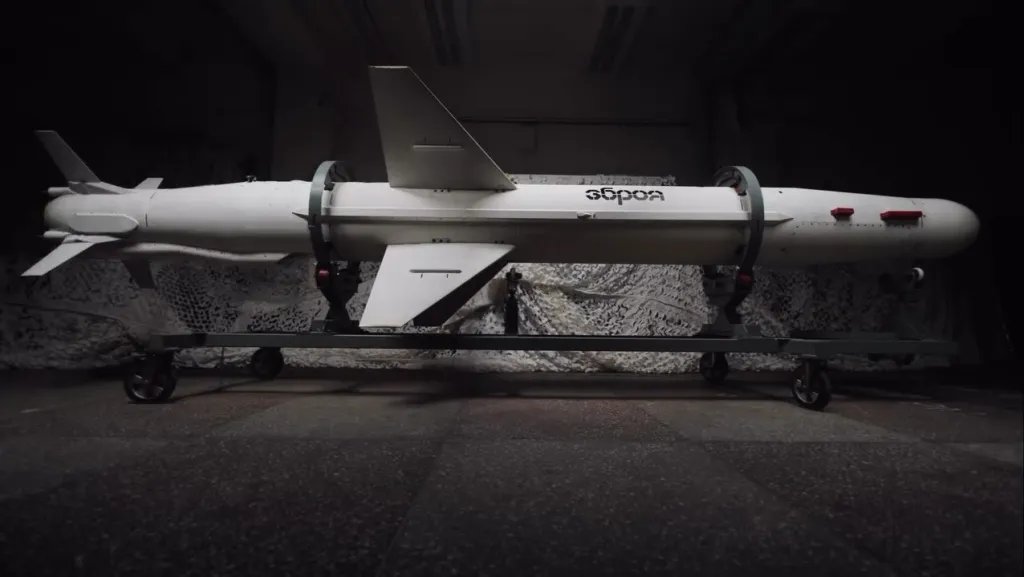
Ukraine famously used Neptune missiles to sink the Russian Navy’s Slava class cruiser Moskva in 2022 and reportedly began developing a new land-attack version in 2023.
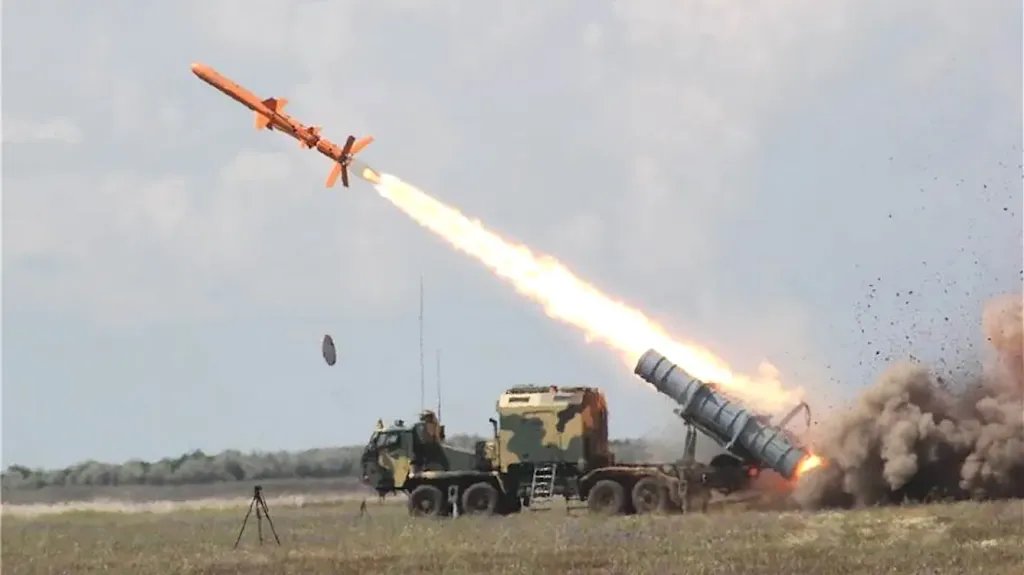
The anti-ship Neptune is, in turn, a Ukrainian development of the Soviet-era Kh-35.
In some ways, then, the Kh-35 may have been further developed, in parallel, by both Russia and Ukraine, with the aim of producing a longer-range land-attack cruise missile. However, the Ukrainian land-attack Neptunes are, as far as is known, only available for ground launch, while the Russian Izdeliye 30 is intended for air launch, at least in its initial iteration.
Douglas Barrie, senior fellow for Military Aerospace at the International Institute for Strategic Studies (IISS) think-tank, told TWZ that he considered that the Izdeliye 30 may well have been developed as a lower-cost supplement to Russia’s larger air-launched cruise missiles but with a longer range than the Kh-69.
As you can read about here, the Kh-69 is widely associated with the Su-57 Felon new-generation fighter, although it can also be launched by ‘legacy’ Russian tactical aircraft.
The Kh-69 is primarily intended to hit hardened targets with known coordinates and is said to have a range of at least 186 miles. It has not been adapted for carriage on long-range bombers, however.
While it remains to be seen exactly how the Izdeliye 30 will be used going forward, it’s clear that Russia has a need for a cheaper, easier-to-produce air-launched cruise missile for its bomber fleet. Russia routinely launches its Tu-95MS and Tu-160 bombers to strike Ukraine without a full load of munitions (up to eight Kh-101s in the Tu-95MS, or 12 Kh-101s in the Tu-160). The availability of the Izdeliye 30 could make it easier for these bombers to be used closer to their full potential in terms of weapons loads.

At least one Kh-101 reportedly downed by Ukrainian air defenses in January was manufactured in the first quarter of 2026. The use of such a recent missile highlights the degree to which Russia has depleted its stocks of older weapons, a situation that we have discussed in the past and which is exacerbated by sanctions that have disrupted its ability to produce precision weapons at scale. It certainly appears that Russia is using its Kh-101 in a ‘just in time’ fashion, as soon as they roll off the production line.
The Izdeliye 30 would appear to offer something of a solution to that problem. After all, if Russia is to use its bombers to launch ‘factory-fresh’ missiles, it makes sense to ensure that these missiles can be produced more cheaply and at scale. These are, meanwhile, also issues that the United States is increasingly grappling with, as it looks to prepare itself for a future conflict with China, in which air-launched cruise missiles are expected to play a hugely important role.
At the same time, the Izdeliye 30 will come with certain disadvantages compared to more sophisticated missiles like the Kh-101. In particular, the new missile is less survivable. It doesn’t have the low-observable features of the Kh-101, and it very likely lacks the option to add countermeasures of the kind we’ve seen in the past on the previous missile. It could also be more limited in terms of its navigation capabilities.
At the very least, the appearance of the Izdeliye 30 in combat will provide another headache for Ukraine’s hard-pressed air defenders. This is a particular concern when the supply of Western-supplied ground-based air defense systems remains strictly limited.
Contact the author: thomas@thewarzone.com
Loading comments…
Comments couldn’t be loaded. Please refresh the page.