
U.S. President Donald Trump on Tuesday ruled out putting U.S. troops on the ground in Ukraine to take part in any post-war peacekeeping effort. However, he said America could instead provide some unspecified type of aerial support. His statement clarifies remarks he made Monday during a White House press conference with Ukrainian President Volodymyr Zelensky, where he seemingly left the option for a ground presence open.
“You have my assurance — and I’m president. I’m just trying to stop people from being killed,” Trump told Fox & Friends Tuesday morning when asked what assurances he would give that “it won’t be American boots on the ground defending that border.”
The president added that the onus would be on European allies to deploy ground troops stationed to prevent further Russian attacks.
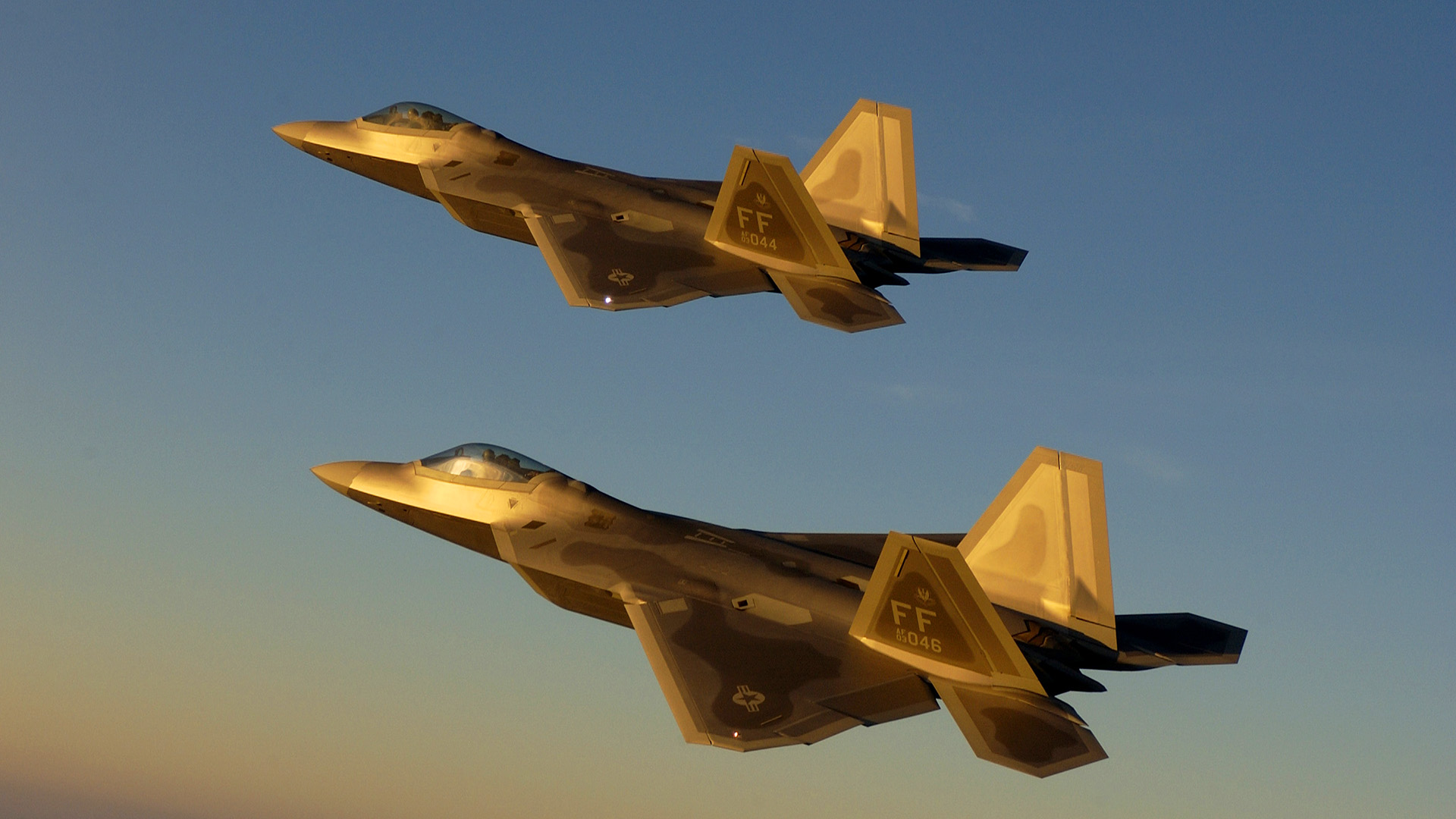
“When it comes to security, they’re willing to put people on the ground,” Trump explained. “We’re willing to help them with things, especially, probably, if you talk about by air, because nobody has the kind of stuff we have.”
Trump did not elaborate on what he meant by that statement, and was not pushed on the issue by the hosts. We reached out to the White House for clarification, which deferred us to White House Press Secretary Karoline Leavitt’s Tuesday afternoon press briefing. She declined to rule out the U.S. providing combat aircraft as part of any peacekeeping effort.
“Look, that was something the president mentioned on his interview this morning,” she explained. “It is an option and a possibility. I won’t certainly rule out anything as far as military options that the president has at his disposal. I’ll let him do that. I can’t tell you he’s definitely ruled out boots on the ground.”
The concept of providing some kind of air support for Ukraine is not new. Early in the war, Ukraine requested that NATO impose a “no-fly zone” over its airspace. That request was quickly denied, given the likelihood that flying combat aircraft over an active conflict zone could quickly turn into NATO aircraft exchanging fire with Russian forces.
“We are not part of this conflict, and we have a responsibility to ensure it does not escalate and spread beyond Ukraine,” then-NATO Secretary General Jens Stoltenberg said in March 2022 after a request by Zelensky. “We understand the desperation but we also believe that if we did that [a no-fly zone] we would end up with something that could lead to a full-fledged war in Europe involving much more countries and much more suffering.”
A no-fly zone over Ukraine would explicitly require the willingness to shoot down intruding Russian aircraft, as well as be prepared to take action against ground-based air defense threats aimed at its planes. This, in turn, would run a very real risk of sparking a much larger conflict with Russia.
The likelihood of the U.S. being willing to take part in a no-fly zone during open conflict, leading to the possibility of having to shoot down Russian aircraft or strike its forces on the ground, is almost assuredly nil. But during a time of peace, even a tense one, protecting Ukrainian airspace is an option. An air policing mission is primarily a peacetime effort that provides surveillance as well as fighter aircraft that can rapidly respond to possible airspace violations and other contingencies. The U.S. has long taken part in such missions in Europe, adjacent to Ukraine, but not over it.
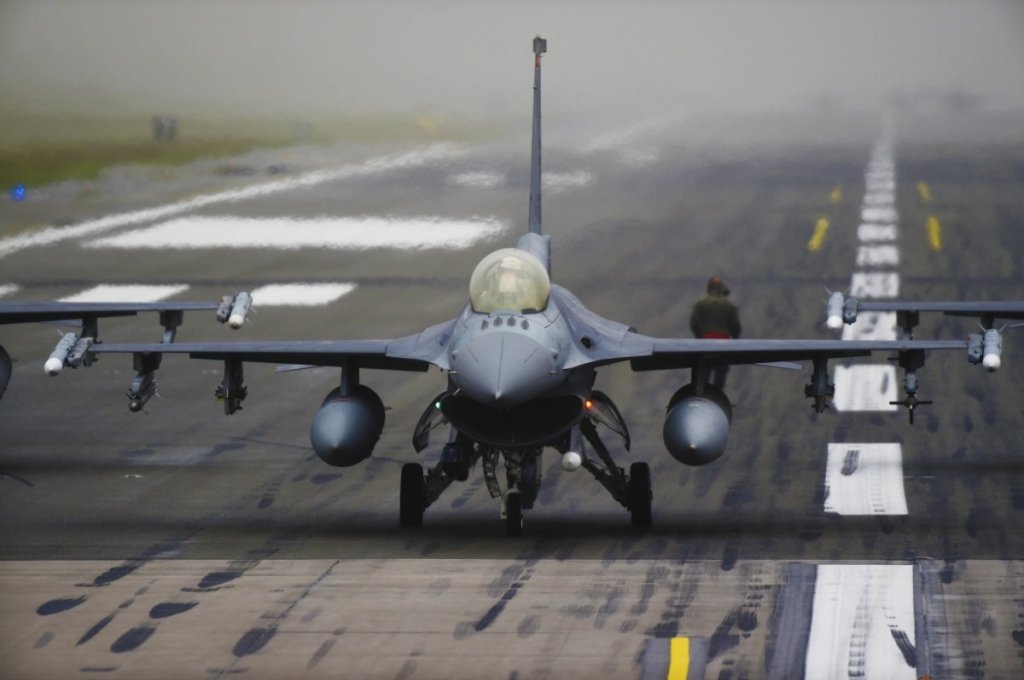
Earlier this year, officials in the U.K. reportedly suggested they were prepared to deploy Typhoon fighters to support a future air policing mission over Ukraine. The Times of London cited a “senior government source” as saying that an “air policing” mission for Ukraine would make sense, although also warning that it would need significant numbers of aircraft, as well as ground-based air defense systems to protect the jets on the ground.
Still, the nature of any such response would depend on a host of operational considerations, but it could extend to engaging an aircraft if it was determined to be undertaking a hostile action.
Protecting the skies over Ukraine would involve a round-the-clock, multi-national presence on a relatively large scale. The Ukrainian front is very large and the situation would remain extremely tense. Even a single mistake or rogue action could set off a dangerous chain of events, pitting NATO and Russian assets against each other in a kinetic exchange. It would be more costly and resource-intensive than the kinds of short-term peacetime deployments the U.S. Air Force currently makes for NATO air policing missions. This operation could last many years, as well. Such an operation would require assets in the air, on the ground, at sea and in space to monitor the situation, provide for many contingencies, and support an active response if need be. The U.S. could also opt to only provide non-kinetic capabilities, such as airborne early warning and control, airborne reconnaissance, airborne refueling, and more.
All this, of course, depends on what, if any kind of deal, Trump can work out between Moscow, Kyiv and the European capitals. You can read much more about how an air policing mission over Ukraine could look in our deep dive into the topic here.
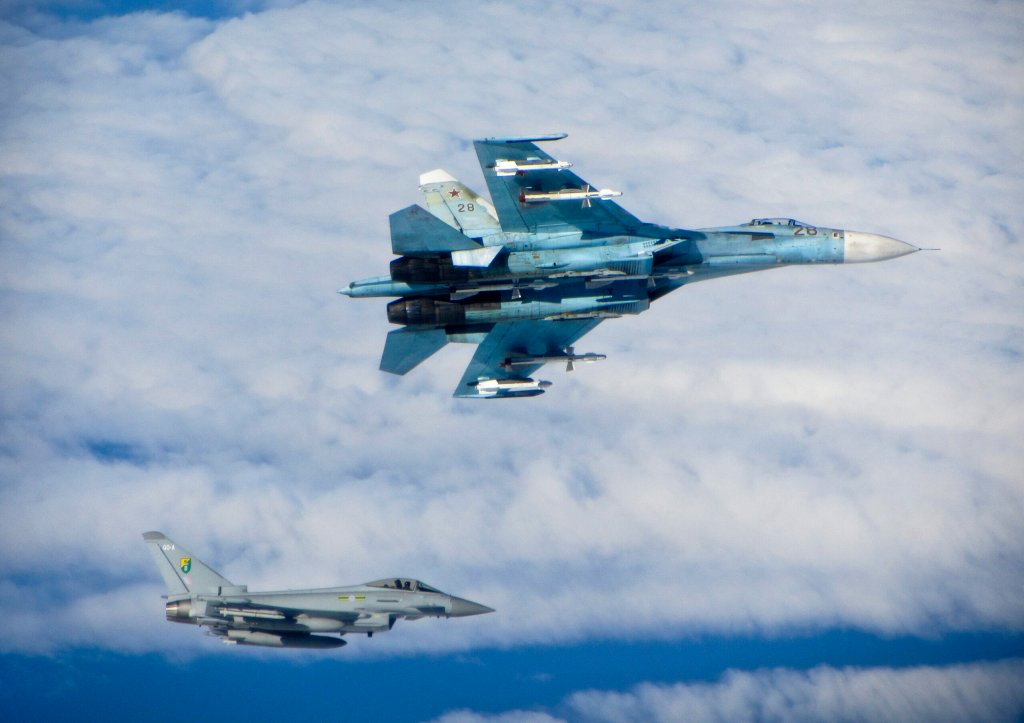
It is also possible that Trump could provide Ukraine with flyable fighter aircraft from its stocks or new-build models as a longer-term solution to the problem. While the U.S. to date has refused to do so, the Biden administration did sign off on countries with F-16 Vipers giving them to Ukraine. They have been operational since April 2024. Zelensky on Tuesday said a future package of security guarantees would include Kyiv buying $90 billion worth of weapons from the U.S. through Europe. While no details about the types of weapons were provided, Zelensky has made no secret more F-16s are at the top of his wish list. We were the first to report that the U.S. has already been providing Ukraine with non-operational F-16s from the boneyard at Davis-Monthan Air Force Base to use for spare parts.
Trump’s ruling out having U.S. boots on the ground in Ukraine seemingly closes the door he left open yesterday. Before the private part of his meeting with Zelensky and a later one with the European leaders, Trump said such a presence was under consideration.
“We’ll let you know that maybe later today,” he told reporters when asked if American boots would be on the ground to help guarantee Ukraine’s security should a deal be reached to end the war. “We’re meeting with seven great leaders of great countries also, and we’ll be talking about that. They’ll all be involved. But there’ll be a lot of help when it comes to security. There’s going to be a lot of help. It’s going to be good. They are first line of defense, because they’re there, they’re Europe, but we’re going to help them out also. We’ll be involved.”

All this comes as Trump is trying to engineer a halt to the fighting. Following a meeting with Russian President Vladimir Putin in Alaska last week, Trump met yesterday with Zelensky as well as European Commission President Ursula von der Leyen, French President Emmanuel Macron, British Prime Minister Keir Starmer, German Chancellor Friedrich Merz, Italian Premier Giorgia Meloni, Finnish President Alexander Stubb and NATO Secretary-General Mark Rutte. You can read more about these meetings in our story about them here.
The leaders expressed support for providing Ukraine with security guarantees to ensure any peace deal signed holds, but no specifics were offered. Previously, there was talk about putting about 25,000 to 30,000 European troops in Ukraine, but that has yet to solidify into action.
Russia, meanwhile, opposes peacekeeping troops in Ukraine. Regardless, before any action providing security guarantees kicks off, there has to be some kind of deal in place.
Trump on Tuesday suggested that Zelensky and Putin are getting closer to having direct talks, which would then be followed by trilateral meetings including him. The U.S. president said he called Putin during a break in yesterday’s meetings to set up future talks.
“And I told him that we’re going to set up a meeting with President Zelensky, and you and he will meet, and then after that meeting, if everything works out, okay, I’ll, I’ll meet, and we’ll wrap it up,” Trump explained to Fox & Friends.
The White House is planning for a possible trilateral meeting between the three presidents in the Hungarian capital of Budapest, Politico reported, citing a Trump administration official and a person close to the administration.
Meanwhile, underscoring the difficulty of obtaining a peace deal, Russia launched another massive attack on Ukrainian cities, and Ukraine continued to attack Russian military and energy infrastructure while fierce fighting is taking place across 600 miles of front lines.
It remains unknown what Trump will order when it comes to providing security for a Ukraine peace process. However, his statement today, murky as it was, is the strongest indication yet that America could have a direct presence in any such mission.
Contact the author: howard@thewarzone.com
Loading comments…
Comments couldn’t be loaded. Please refresh the page.