
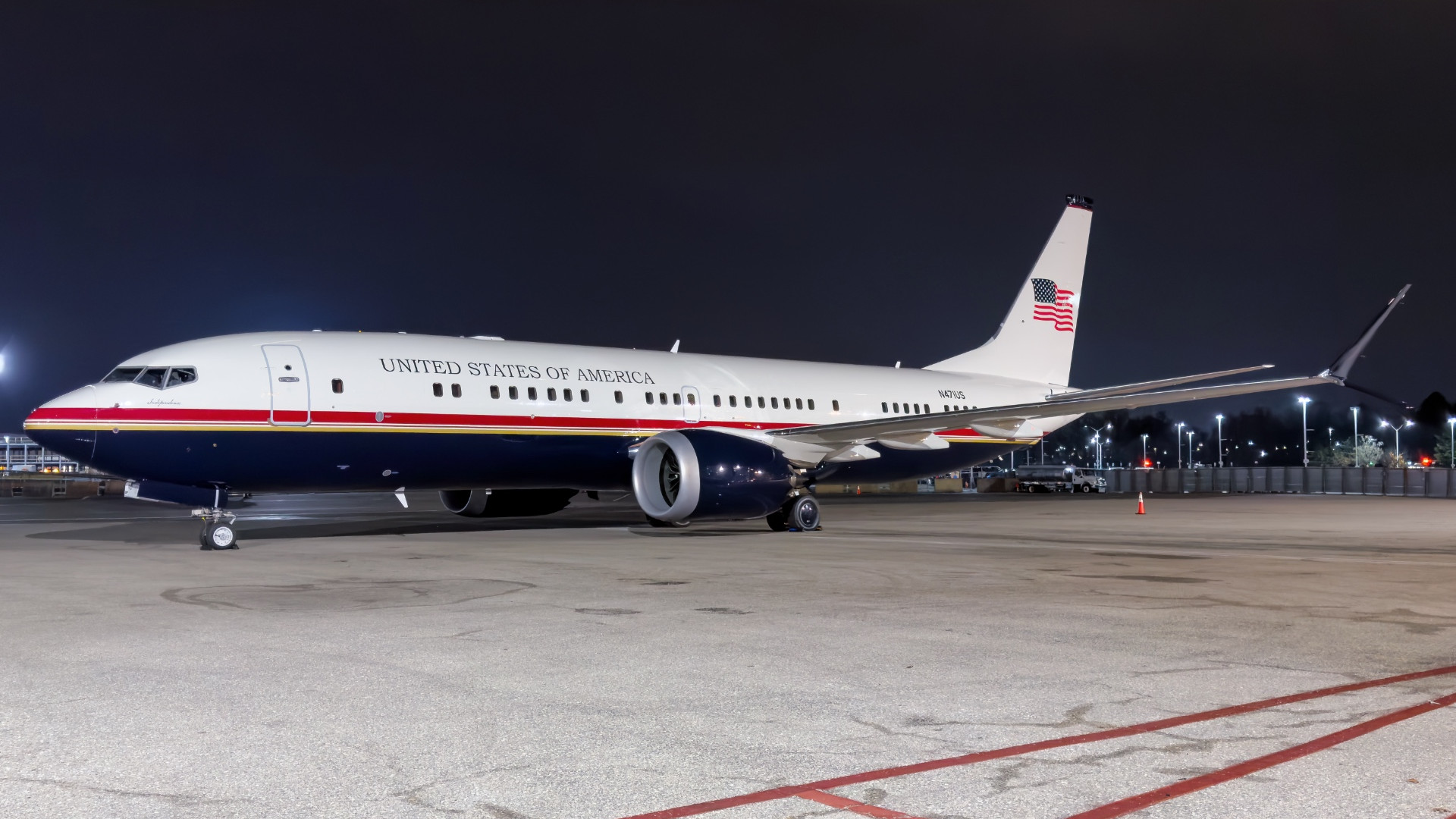
A 737 Boeing Business Jet (BBJ) with a luxurious VVIP interior has re-emerged unexpectedly tied to the Department of Homeland Security (DHS), as evidenced by a large departmental seal in the main cabin. The aircraft’s appearance follows news that DHS recently signed a contract to buy six 737s, ostensibly to support U.S. Immigration and Customs Enforcement’s (ICE) deportation efforts. However, the BBJ, which also wears a paint scheme that is very similar to one President Donald Trump had previously selected for the U.S. Air Force’s two future VC-25B presidential aircraft, looks to have a very different role.
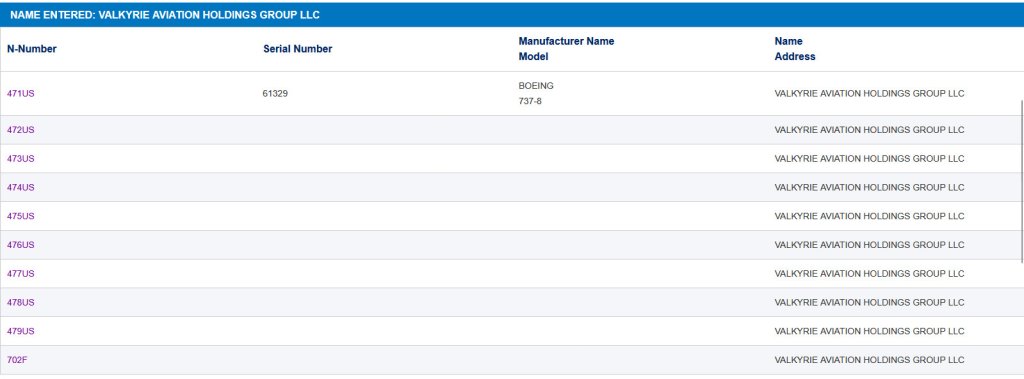
The 737 BBJ in question, a 737-8 model, currently has the U.S. civil registration number N471US. The Federal Aviation Administration’s (FAA) public database shows the jet has been registered with that number to a company called Valkyrie Aviation Holding Group, LLC, since October. The address given for Valkyrie in the database is an office in Arlington, Virginia, just across the Potomac River from Washington, D.C.
As seen in pictures at the top of this story and below, which were taken this past weekend at Washington’s Ronald Reagan Washington National Airport, N471US currently has a red, white, and blue livery. “United States of America” is written prominently in large lettering on either side of the forward fuselage. “Independence” is also written in much smaller font on both sides of the fuselage, right under the cockpit, a spot where aircraft nicknames are often printed. A large American flag, depicted blowing in the wind, is featured on both sides of the tail.
As noted already, a relatively large DHS seal fitted to a bulkhead inside the cabin is visible through an open door in one picture. The jet’s exact internal configuration at present is unknown, something we will come back to later on.
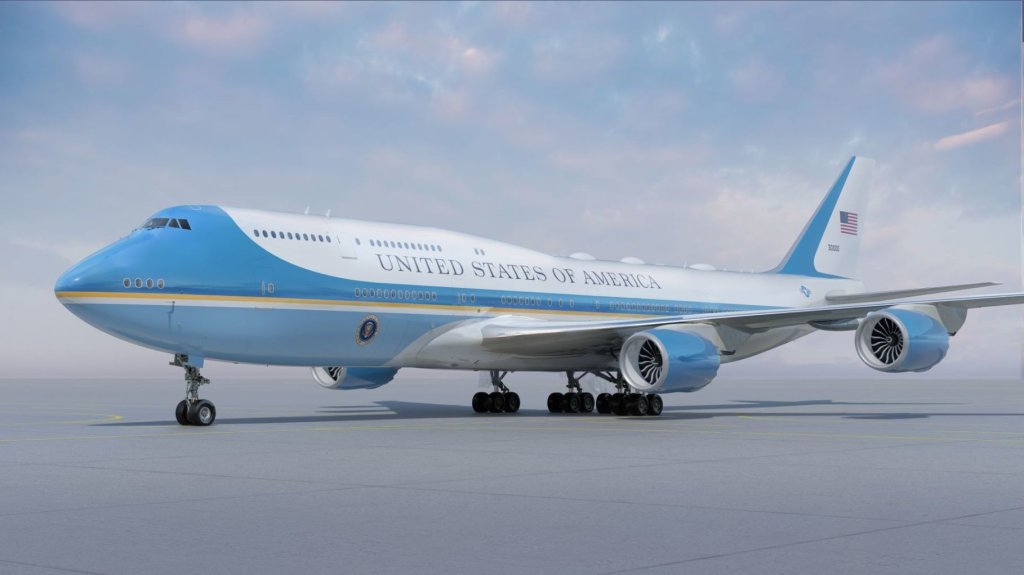
As mentioned, N471US’s general external look is very much in line with what President Donald Trump had picked for the pair of forthcoming Boeing 747-8i-based VC-25B Air Force One aircraft during his first term. President Joe Biden subsequently reversed that decision, bringing back plans to paint those jets in the same iconic, Kennedy-era livery as the current VC-25A Air Force Ones. In August, the Air Force told Inside Defense it was “implementing a new livery requirement for VC-25B,” but did not elaborate.

Almost as quickly as it emerged at National Airport in D.C., N471US departed for points overseas, according to online flight tracking data. The jet arrived in Jordan’s capital Amman yesterday, having made at least one stop at Chania International Airport on the Greek island of Crete along the way. Chania International Airport also serves as an important hub for U.S. military forces operating in Europe and the Middle East, with facilities there under the oversight of the U.S. Navy’s Naval Support Activity Souda Bay.
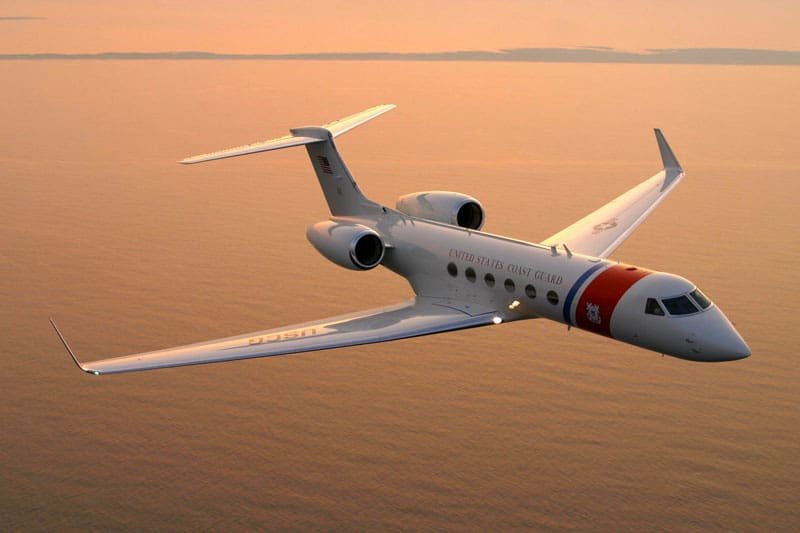
The U.S. Coast Guard’s lone C-37B, a version of the Gulfstream G550 business jet, also departed from National Airport in D.C. on December 14 and arrived in Amman yesterday after stopping in Chania. That aircraft had arrived in both locations just ahead of N471US, lending credence to a direct connection between the two flights, and underscoring the 737 BBJ’s links to DHS.
The Coast Guard currently falls under the purview of DHS. The service’s C-37B, also known as a Long Range Command and Control Aircraft (LRCCA), is regularly used as a VIP transport for the Secretary of Homeland Security and other senior departmental leaders, as well as top Coast Guard leadership. The LRCCA is based at Coast Guard Air Station Washington, which is collocated with National Airport.

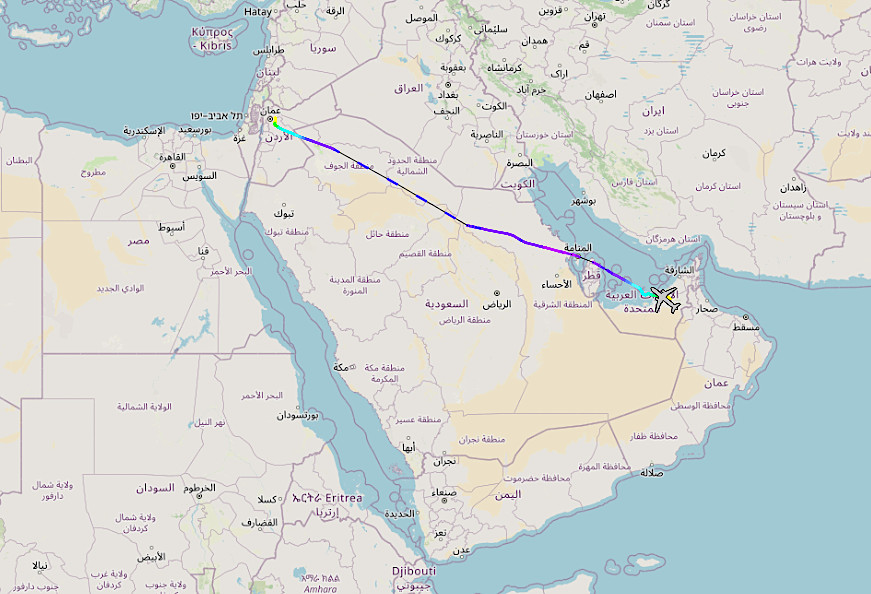
Flight tracking data shows N471US left Amman today and flew to Zayed International Airport in Abu Dhabi in the United Arab Emirates (UAE). The Coast Guard’s C-37B also made the same trip. Who has been flying on either aircraft since they left D.C. on Sunday, and why, is unknown. TWZ reached out to DHS yesterday morning for more information about N471US, but we have not yet received a response. We have also reached out to the White House.
N471US itself, which has the Boeing manufacturer serial number 61329, is a known quantity. The jet, which has been flying since July 2021, is curiously still listed for sale on Avjet Global’s website at the time of writing. Avjet’s site and an accompanying brochure show the plane in a previous taupe-over-brown paint scheme. It is also described as having “low hours with 672 TT [hours total time]” and “154 landings.”
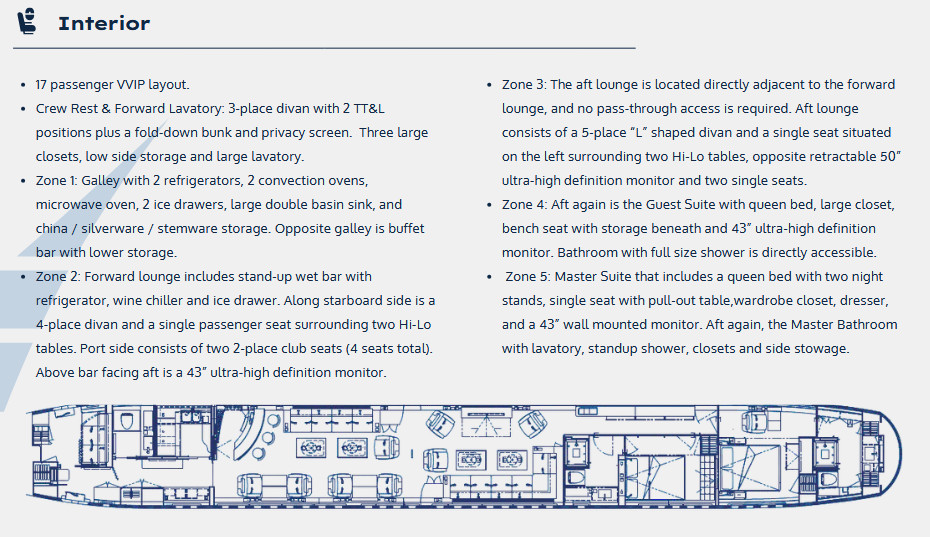
Avjet’s brochure says the jet has a “5 zone VVIP cabin configuration” designed to accommodate 17 passengers. Accompanying pictures show an extremely luxurious interior layout that includes two suites with full-size beds and a master bathroom with a shower stall, among many other amenities. Whether any changes have since been made to the aircraft’s internal configuration is unknown, but there are no indications that it has. It would be expensive and time-consuming to make major changes to the core internal layout. Doing so would also call into question the basic rationale for any buyer to select this particular low-time VIP aircraft rather than a 737 in a more basic configuration, to begin with.


The 737 BBJ, then flying with the civil registration number N702F, was tracked flying from Harry Reid International Airport in Las Vegas, Nevada, to Dallas Love Field in Texas, between September 23 and 24. It then flew to Ardmore Municipal Airport in Oklahoma, to the north of Dallas. It has been pointed out that Ardmore is home to a branch of King Aerospace, which has a long history of heavy maintenance and deep modification work, with a particular focus on the 737 family. King offers a variety of services related to VVIP 737s. The company also routinely secures U.S. government contracts for maintenance and other support for other 737-based aircraft with more specialized configurations.
The jet was not tracked again until October 31, when it flew with the N471US registration number from Ardmore to Chennault International Airport in Lake Charles, Louisiana. This airport has also been tied to the maintenance and repainting of U.S. government aircraft.
N471US returned to Ardmore on November 21. The aircraft conducted multiple local flights to and from the airport on December 10, according to Flightradar24. Observers have already noted this could have been for flight testing and/or crew training purposes.
Flight tracking data shows N471US flew to Joint Base Andrews just outside Washington, D.C., home to the VC-25A Air Force One jets and other members of the Air Force’s VIP aircraft fleets, on December 11. It is worth noting here that the U.S. Air Force, as well as the U.S. Navy and U.S. Marine Corps, operate militarized 737 variants as personnel transports, which are often used by senior leaders, as well as Congressional delegations.
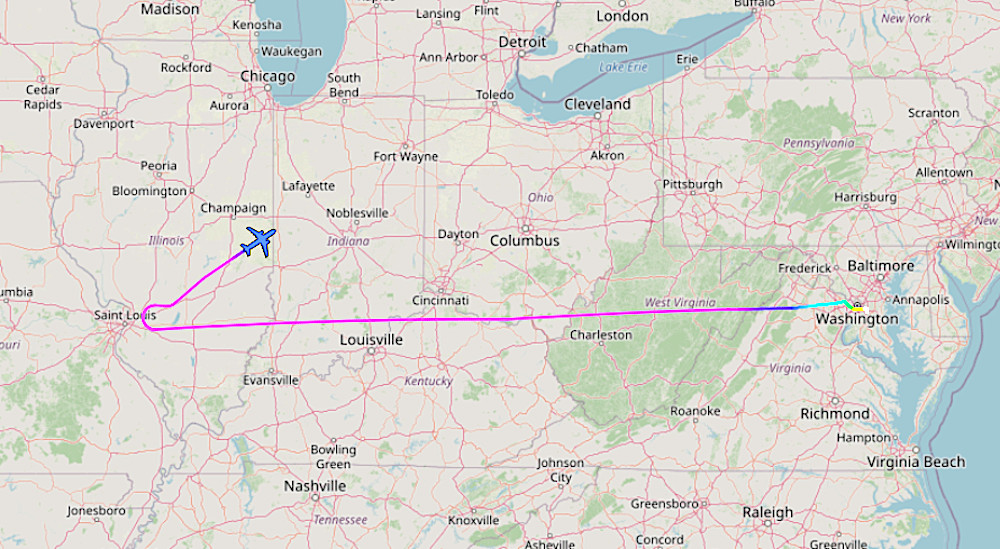
On December 12, N471US then made a circuitous trip to the Grissom Aeroplex in Peru, Indiana, by way of the St. Louis, Missouri, area, much further to the west, where it did not land. The Grissom Aeroplex is collocated with Grissom Air Reserve Base, a major hub for Air Force Reserve aerial refueling tankers. It then returned to the Washington, D.C. area on December 13, where it was spotted at National Airport.
Altgoether, there are clear signs that N471US is now flying as a VIP transport for one or more entities under the DHS umbrella, possibly as part of a contractor-owned and/or operated arrangement. The U.S. federal government as a whole has historically operated a mix of government and contractor-owned and operated aircraft to support the travel demands of senior officials.
It had emerged earlier in the year that the U.S. Coast Guard was looking to replace its older Gulfstream V-based C-37A jet, which the service has been flying since 2002. Like its C-37B, the Coast Guard also refers to its C-37A as a Long Range Command and Control Aircraft (LRCCA), and performs the same general slate of missions. The service received the C-37B second-hand from the Air Force in 2022 after a deep refurbishment.
DHS subsequently confirmed plans to supplant both of the Coast Guard’s C-37s with newer Gulfstream 700-series jets modified with the requisite secure communications suite and other systems needed for their VIP mission. The total price tag for both of those aircraft has been pegged at between $170 and $200 million. DHS, and particularly Secretary Kristi Noem, has faced criticism for these plans for various reasons, including disputes over funding and for entering into the contract to buy the jets during the recent government shutdown. DHS has pushed back on that criticism, saying that acquiring newer jets is critical to meeting current and future mission requirements, and doing so safely and reliably. DHS’s top leadership does have particular demands to travel with access to specialized and secure communications, given the role the department has in larger continuity of government plans. The U.S. government has various measures in place to ensure it can continue to function in the event of any number of severe contingency scenarios, including major hostile attacks or severe natural disasters.

As a general observation, complaints about the misuse of U.S. government aircraft are leveled at senior federal officials, as well as members of Congress from both parties, with some regularity.
There have been no reports previously of DHS plans to acquire a 737 to further expand its VIP transport capacity. However, DHS confirmed to The Washington Post just last week that it had recently entered into a $140 million contract with a company called Daedalus Aviation for the purchase of six 737s to support ICE deportation activities. This followed a report from The Wall Street Journal in November that ICE attempted to buy 10 737s via Spirit Airlines for this purpose earlier in the year. That plan is said to have fallen through when it became apparent that Spirit did not actually own the aircraft in question, which also had no engines.
More broadly speaking, President Donald Trump’s administration has faced intense legal and other scrutiny, as well as broader criticism and controversy, over how it has been carrying out deportation flights, as well as its overall immigration policies. Public polling in the United States has consistently shown general support for stauncher measures against illegal immigration, but not necessarily for how the Trump administration is proceeding at present.
What connection Daedalus Aviation may or may not have to Valkyrie Aviation is unknown, but the latter company did reserve seven other N numbers (N473US, N474US, N475US, N476US, N477US, N478US, and N479US) on October 27, according to the FAA’s database. A search of entries tied to Valkyrie in the database also turns up N472US, a Gulfstream G650 business jet, which is now said to be registered to a company called Vigilant Aviation Holdings LLC with an address in Lewes, Delaware. Valkyrie also interestingly reserved N702F, the registration number previously applied to N471US, on November 13.
Overall, observers have already pointed out that N471US looks to have a configuration ill-suited to conducting deportation flights, just from a practical perspective, and a VIP role for that jet still seems far more likely. At the same time, rolling it in with the acquisition of a fleet of less luxurious 737s intended primarily to serve in the deportation role would not necessarily be surprising. Whatever deal DHS may have with Valkyrie could also be an entirely separate arrangement from the one it has with Daedalus. Regardless, all of this could easily fuel new criticism around DHS’s recent aviation acquisition efforts.
In the meantime, N471US is continuing its trip overseas on what looks to be its first major flight in its present role, and more details about the plane and how it is being utilized may now start to emerge. From what we’re seeing now, it certainly looks like DHS’s new 737 fleet includes at least one aircraft fully equipped as a luxurious VIP transport.
Special thanks to David Lee for sharing pictures he took of N471US at Ronald Reagan Washington National Airport this past weekend with us.
Editor’s Note: The feature image originally at the top of this story was swapped with another at the request of the source.
Contact the author: joe@twz.com
Loading comments…
Comments couldn’t be loaded. Please refresh the page.