
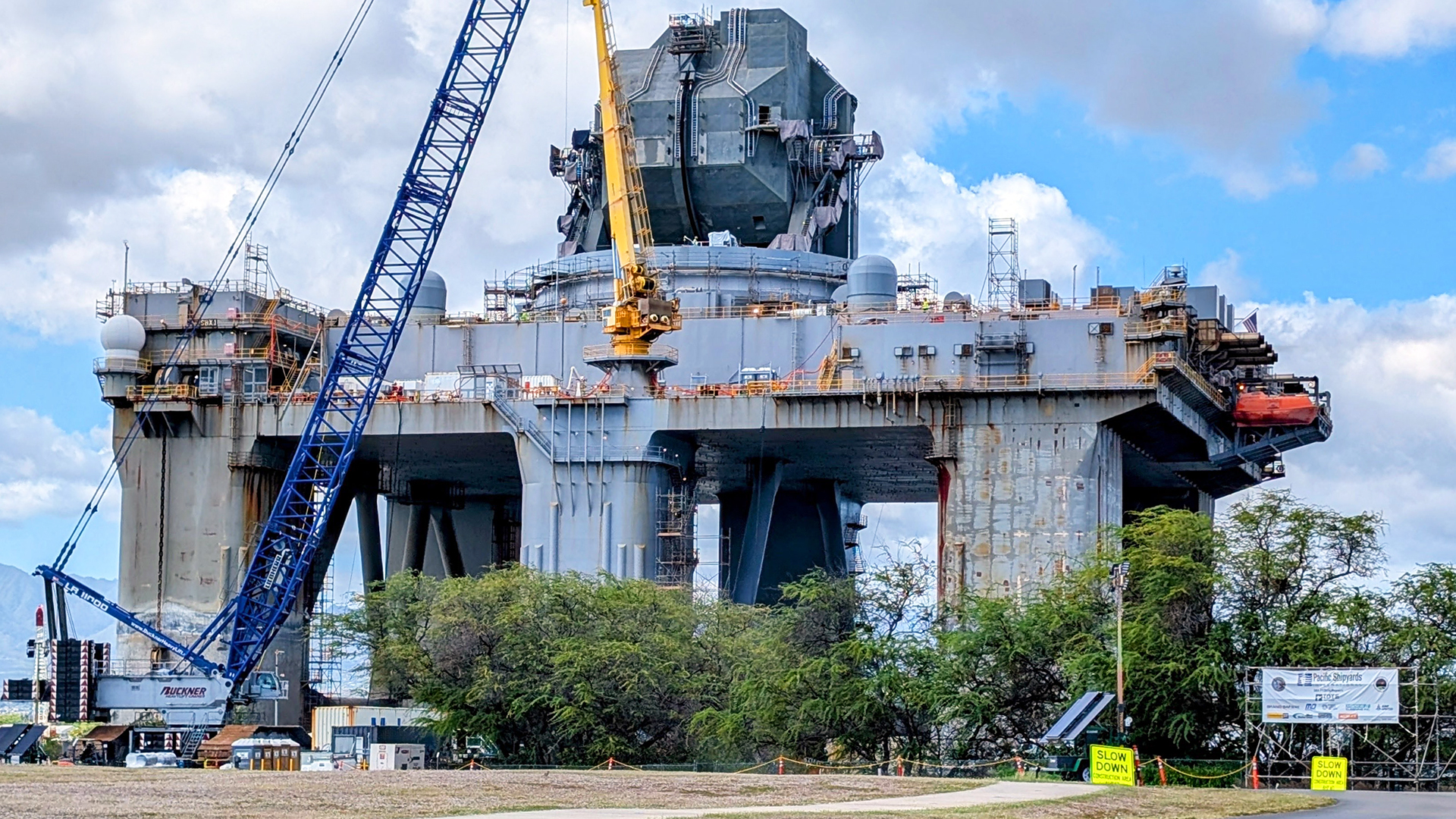
One of the world’s most imposing vessels looks even more so with a major feature missing. Sea-Based X-band radar (SBX-1), the Missile Defense Agency’s massive floating X-band radar system, gives straight-up Death Star vibes with its huge, golf-ball-looking white radome removed and its massive turreted array sitting stout like a super weapon of The Empire atop its deck. SBX-1 is the largest seagoing radar on the planet.
SBX-1’s presence in Pearl Harbor, Hawaii, is anything but irregular. The self-propelled drilling platform turned ballistic missile tracking sensor ship regularly calls on Pearl for extended periods. Its homeport is Adak Island in Alaska.
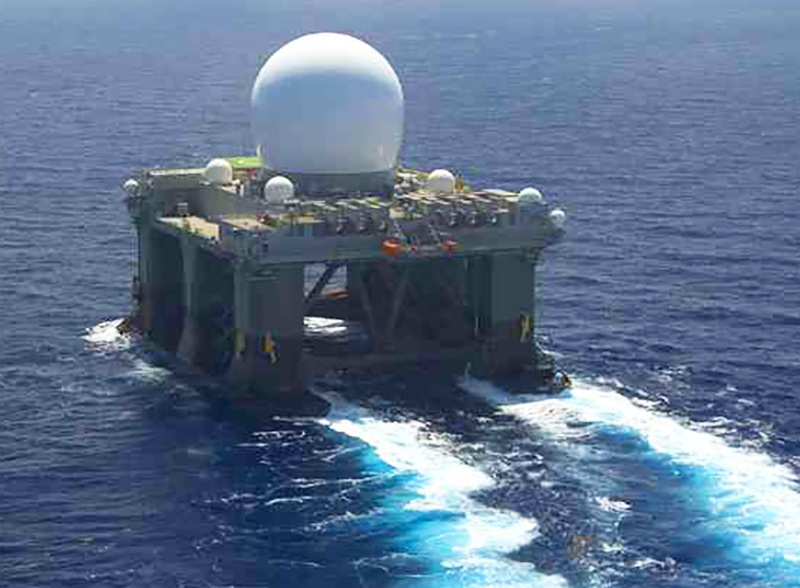
What’s drawing attention, even among locals who are used to seeing the bizarre-looking engineering marvel jutting up out of Pearl Harbor, is its centerpiece radar being exposed to the elements — which is a very rare occurrence.
The SBX-1 goes into Ford Island, which sits across from the Navy’s prime port facility, every 12 to 18 months, Joseph Davila, a Military Sealift Command spokesman, told us. However, the protective dome has never previously been deflated, according to Davila.
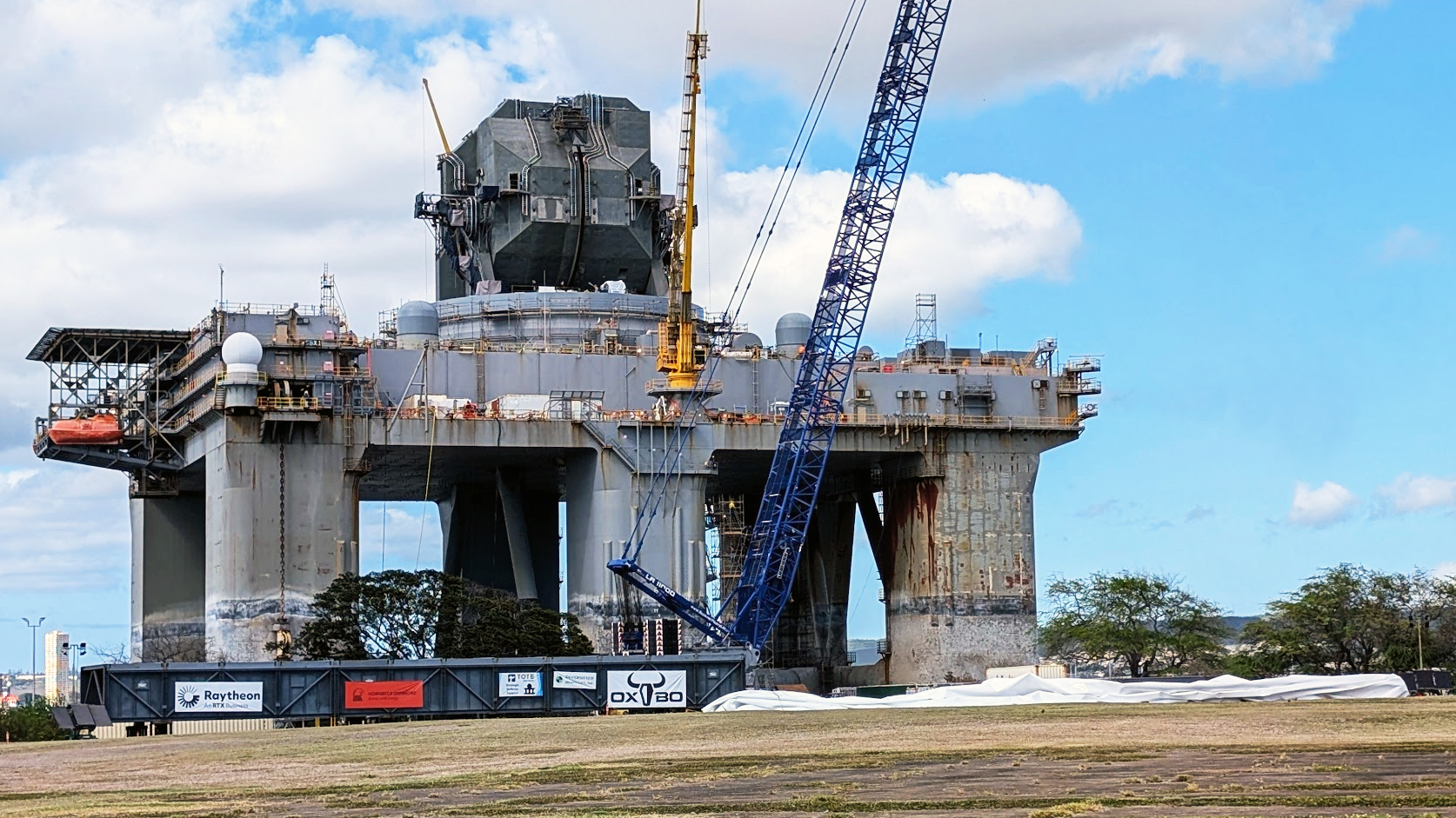
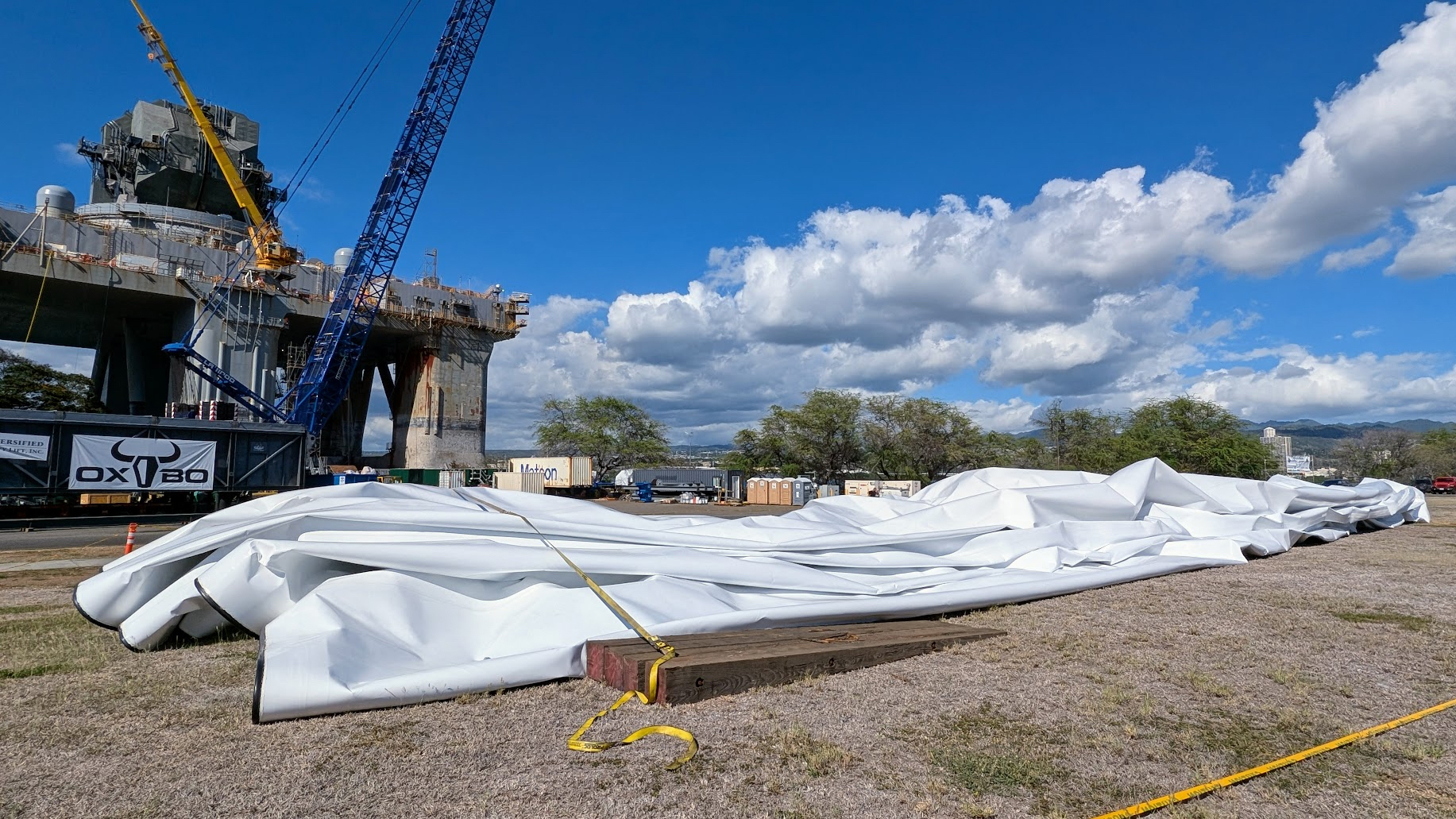
“This was the first time the dome was collapsed since it went into operation about 20 years ago,” he said. “It reached the end of its life cycle, and they were looking to replace it.”
Images of SBX-1 with its gargantuan high-tech sensor exposed come to us from @RobertHapp on X, one of the many people who have snapped shots of the SBX-1 in the raw. In the images, the old inflatable radome can be seen lying next to the vessel on the ground.
It’s hard to think that the once-experimental SBX-1 is now 20 years old. It was built by the MDA to provide precise telemetry on launched ballistic missiles all the way through warhead separation. Its ability to discern decoys from actual warheads is a key capability it provides to the MDA’s patchwork of networked sensors that work together to detect and help engage incoming ballistic missiles. Data derived from SBX-1 would be used in the kill chain that leverages Ground-Based Interceptors (GBIs) located primarily in Fort Greely, Alaska, for instance. This missile defense architecture was recently featured in a not-so-flattering light in the Netflix thriller House of Dynamite.

The radome itself measures roughly 100 feet by 120 feet. The massive phased array radar it protects is made up of 45,000 transmit and receive modules. It requires an elaborate cooling system that circulates nearly a thousand gallons of propylene glycol a minute.
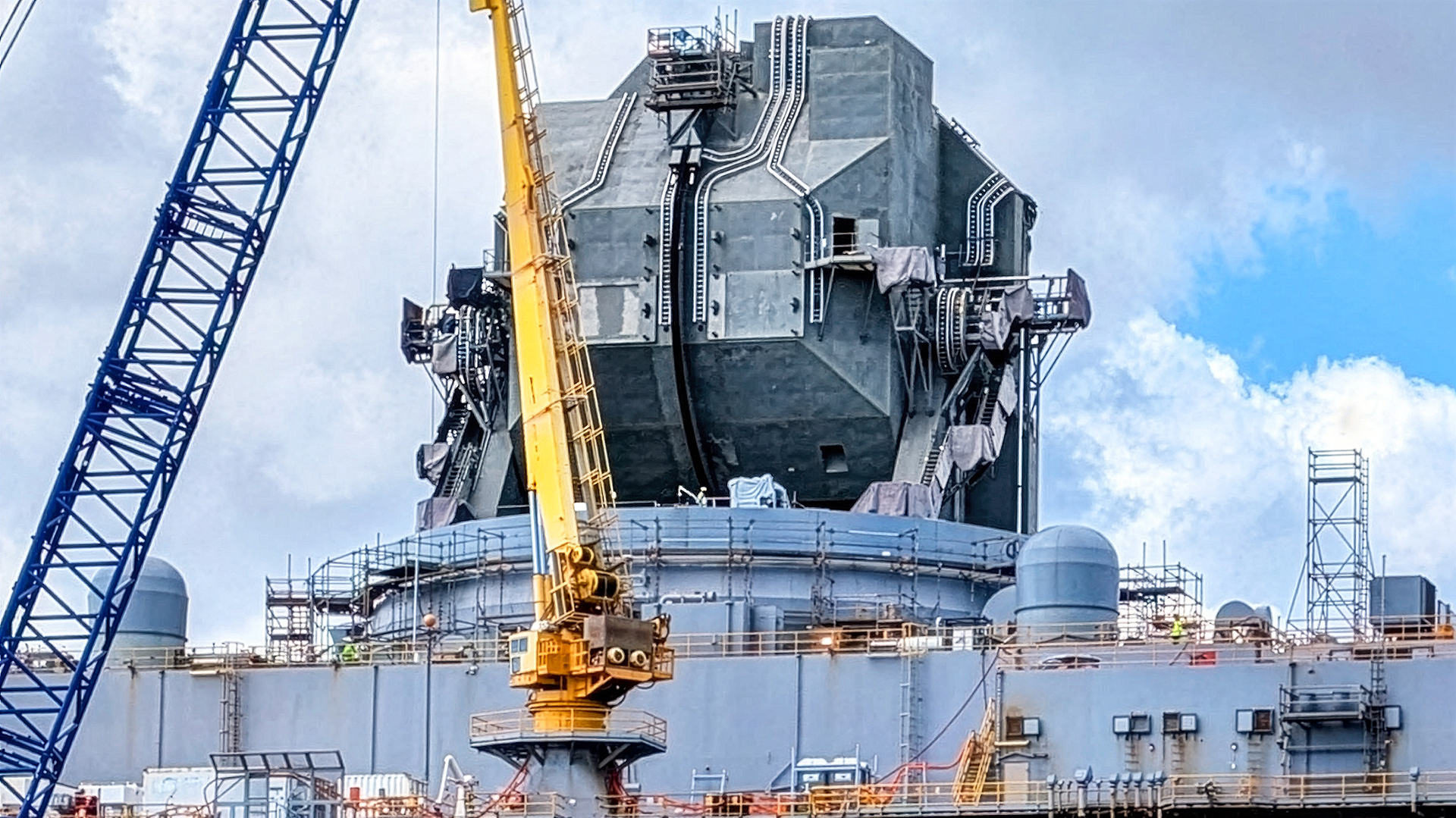
Overall, the self-propelled platform measures 389 feet by 238 feet, and its height is 279 feet. It has a crew of around 85 people during normal operations. It can operate for roughly two months without resupply, and it has racked up continuous deployments of nearly two years before. The platform itself was built in Russia and converted to its current, very unique role in Texas.
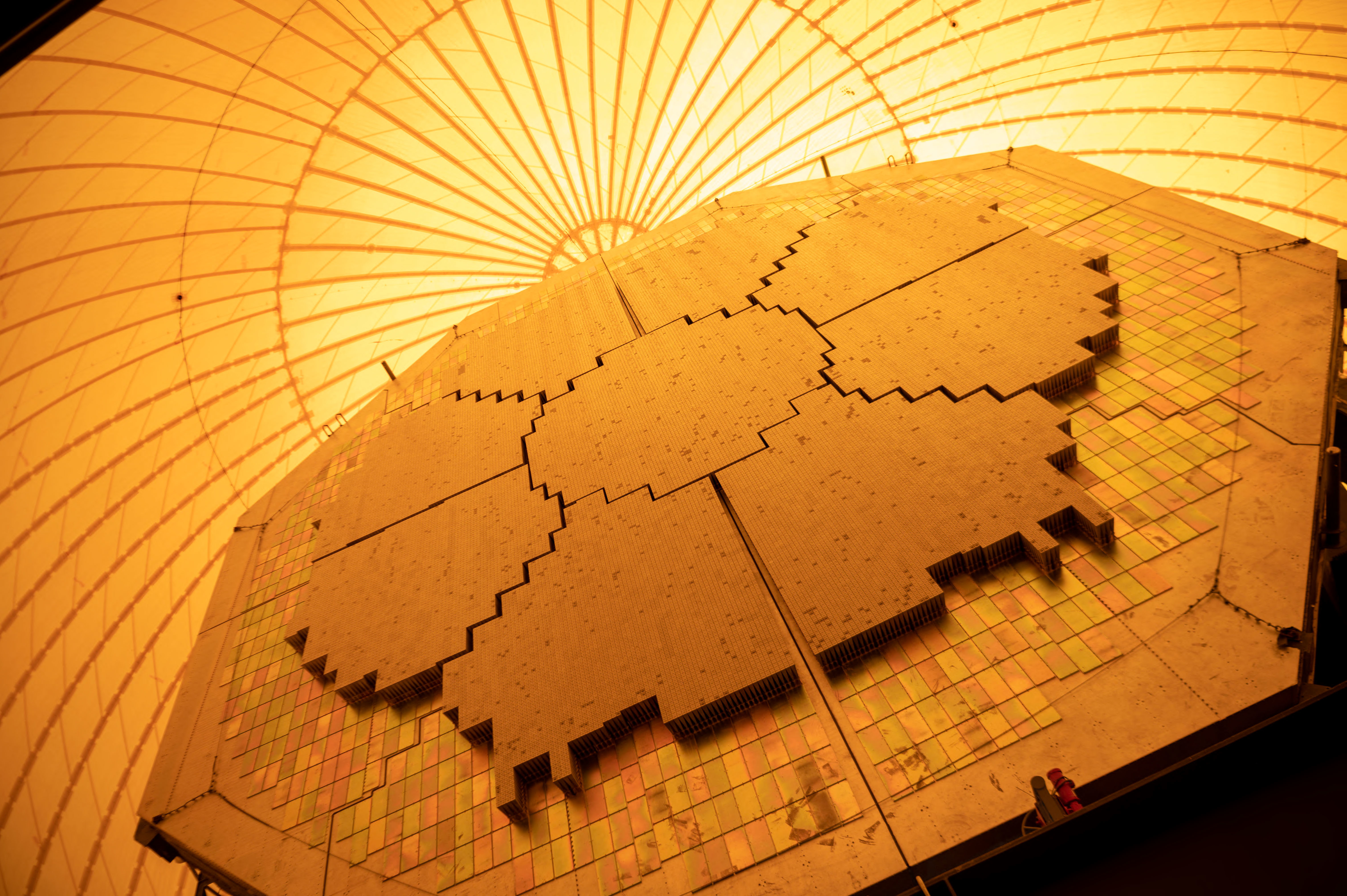
SBX-1 remains a one-of-a-kind asset, although early on, there was talk that more would be made to keep a certain number on patrol while others were undergoing maintenance. This never happened. When SBX-1 is offline, like right now, other systems step in to help fill the gaps. New sensors, such as the Long-Range Discrimination Radar, have also provided additional capabilities that didn’t exist when SBX-1 was built. Still, SBX-1’s ability to reposition itself forward to overcome the limits of the radar horizon is prized.

The future of missile tracking and early warning is pivoting to a focus on less vulnerable space-based assets. This includes new constellations that will be able to track and discriminate persistently and over a much larger area than terrestrial-based systems. This includes being better able to track hypersonic missile threats. America’s Golden Dome initiative will only see these changes accelerate as new sensor layers are needed to support new weapons, including space-based interceptors.
With these changes on the horizon, it isn’t clear how long SBX-1 will be around, but for now, it remains a prized asset for the MDA.
A big thanks to @RobertHapp for sharing his images with our readers and to @warshipcam for posting them originally.
Contact the author: Tyler@twz.com
Loading comments…
Comments couldn’t be loaded. Please refresh the page.