
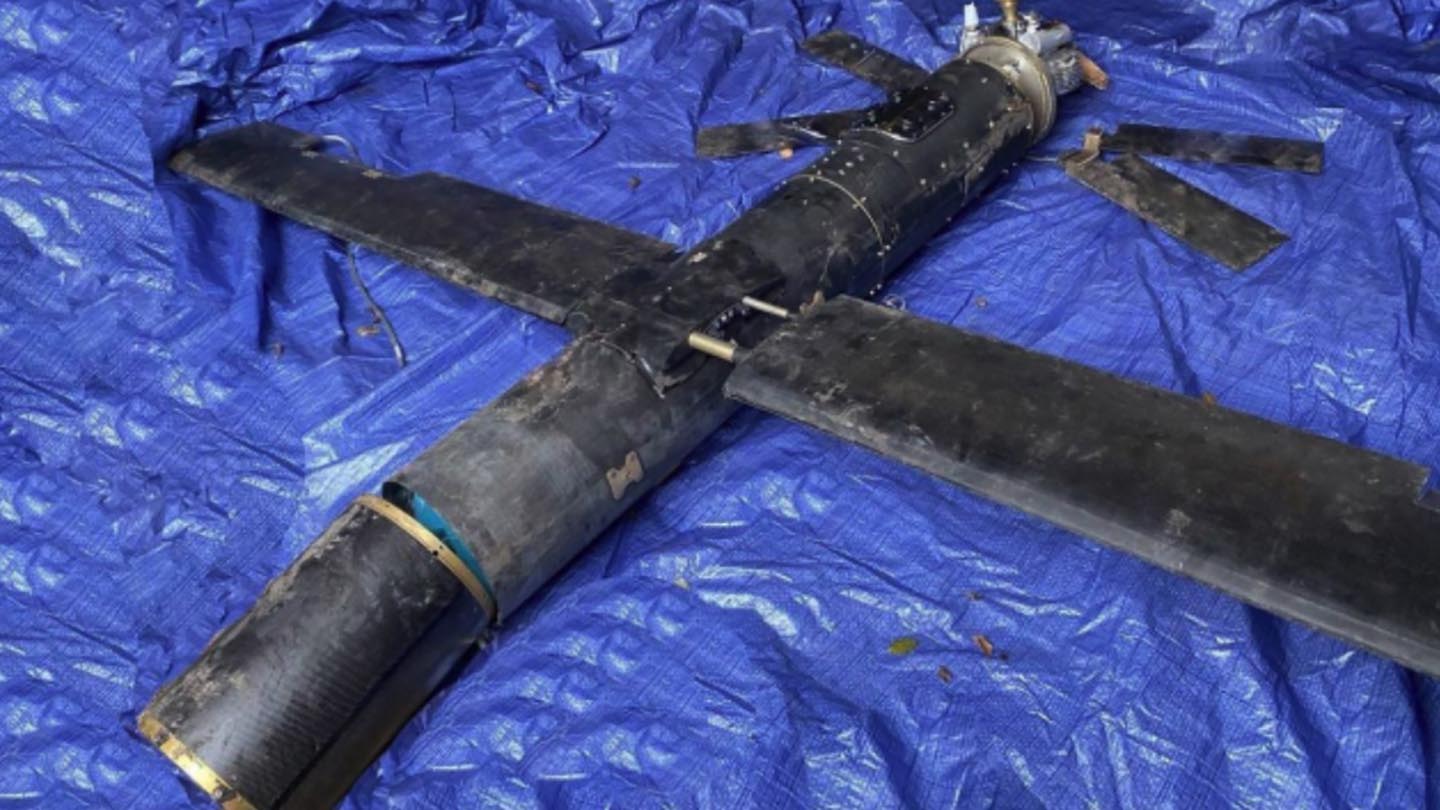
Russia appears to be using an updated version of another Iranian-designed drone against Ukrainian forces, according to Ukrainian electronic warfare expert Serhii “Flash” Beskrestnov. Dubbed the Shahed-107, it seems clear that it’s intended to provide an affordable means of conducting mid-range precision drone strikes beyond the immediate front lines, filling a major hole in Russian offensive strike capabilities.
While not every detail is known about the Shahed-107, it is a loitering/standoff strike munition that can travel a sizeable distance and persist over a target before attacking. Its deployment comes as Russia is stepping up its use of lower-end drones with greater endurance than their smaller FPV-like counterparts to put Ukrainian targets, and especially logistics hubs, well behind the forward line of troops (FLOT) under major threat.
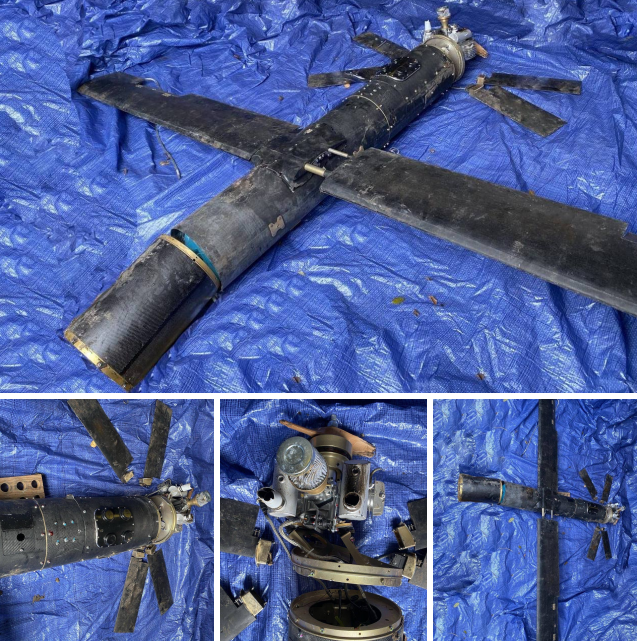
“Increasingly, the use of a new type of Shahed-107 is being recorded in frontline zones,” Beskrestnov wrote on Telegram Monday. “The UAVs were produced in 2024 in Iran and it can be assumed that the Russians will continue to produce this UAV on the territory of Russia.”
That’s a similar production trajectory to the Iranian-made Shahed-136 long-range one-way attack drones, which have become Russia’s go-to standoff strike weapon. As we have reported in the past, they were first designed and produced in Iran, but Russia established a factory aiming to produce 6,000 Shahed-136 drones per month. The Shahed-107 is a smaller and simpler weapon, making it easier to produce and more free to use, although it does not have the range or punch of a Shahed-136.
John Hardie, deputy director of the Russia program for the Foundation for the Defense of Democracies, noted on X that based on leaked documents, Moscow indicated its interest in producing the Shahed-107 at its Alabuga plant. As we noted earlier in this story, that’s where it is making the larger, delta-winged Shahed-136 drones.
A short video reportedly showing one of these munitions can be seen below.
Beskrestnov acknowledged that the Shahed-107 “has not yet been fully studied.”
What is known, he said, is that it has a warhead weighing between 8 and 9 kilograms (about 18 to 20 pounds) with a “flight range of several hundred kilometers.”
“The UAV is navigated based on a 4-element CRPA [Controlled Reception Pattern Antenna for GPS/GLONASS],” Beskrestnov noted.
Landmines and Coffee, a Ukrainian Telegram channel focusing on weapons development, offered a few more details about the Shahed-107, which it calls the Shahed-101. The images posted on that channel on Nov. 14 match what Beskrestnov published.
The Shahed-107 is a more advanced version of the Shahed-101 that Iranian proxy Hezbollah began to use against Israeli forces in June 2024 and appeared a year earlier in Iraq.
The “new” Shahed “is usually launched using a static launch system (catapult),” Landmines and Coffee noted. “It is also reported to have a flight range of 800 km (about 500 miles)…a maximum altitude of 3,000 m (about 9,800 feet), and a cruising speed of 120 km/h (about 75 mph). The maximum speed is “currently unknown,” Landmines and Coffee suggested.
“The guidance method is also unknown but is assumed to be a combination of inertial guidance and GPS,” the Telegram channel noted.
Landmines and Coffee said that the Shahed-107 is about five feet long, has a wingspan of about eight feet and weighs a total of about 60 pounds.
We cannot independently verify any of the claims about the Shahed-107 and clearly, the range figures differ greatly based on the source.
The images posted online show that this drone has a cylindrical fuselage with rectangular wings mounted on top about midway between the nose and tail. It has a distinctive rear tail fin mounted in an X configuration. Unlike the earlier variant, which has an electric motor, the Shahed-107 uses a piston engine. While that increases the weapon’s range, it also increases its acoustic and thermal signature, making it easier to detect.
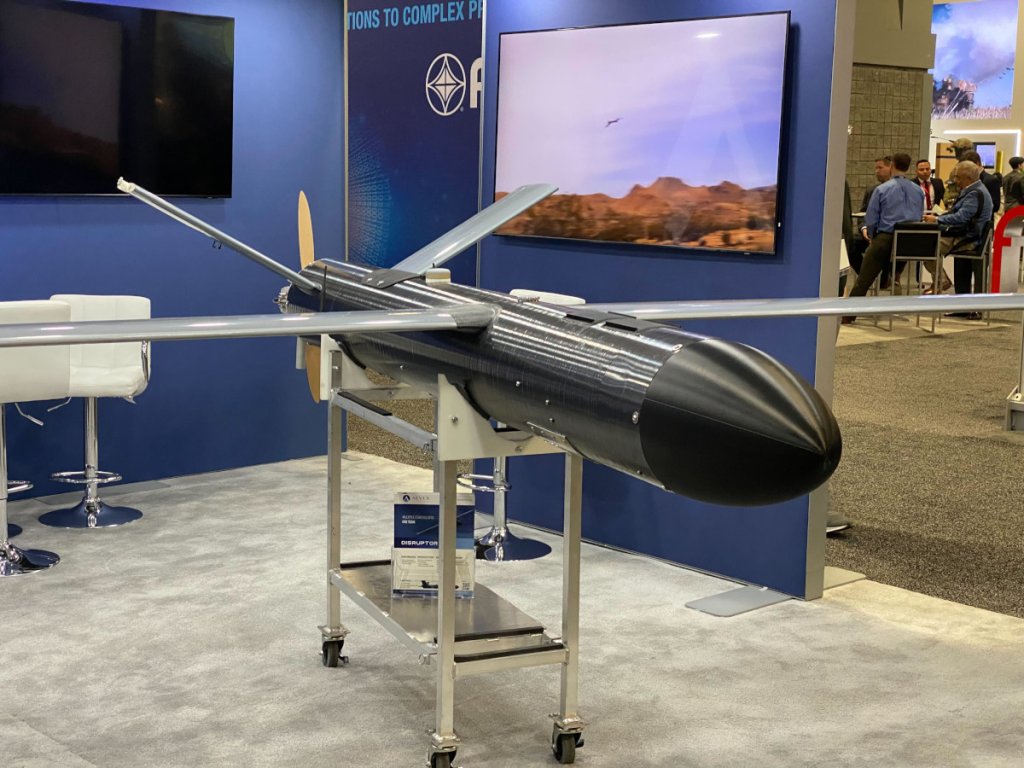
The images of the Shahed-107 bear a similarity in configuration to a number of fixed-wing drone systems, including the U.S.-made Disruptor drone. It was part of the secretive Aevex Phoenix Ghost family of loitering munitions first developed for the U.S. Air Force and supplied to Ukraine in its ongoing fight against Russia. You can read more about these munitions in our story here.
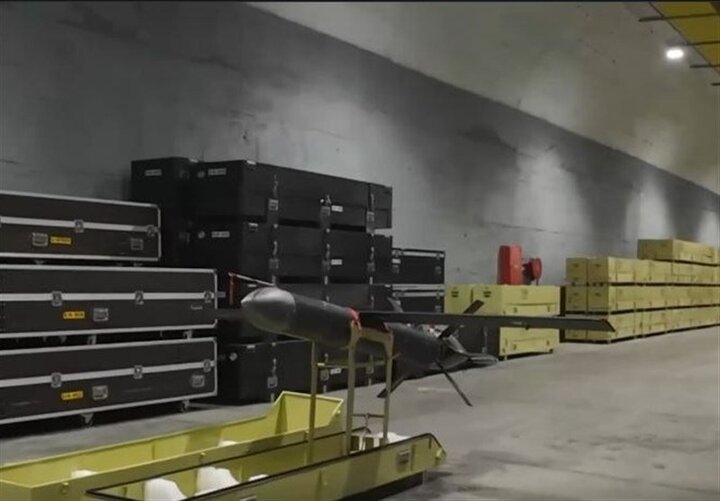
The official Iranian Mehr news outlet reported that officials in Tehran unveiled the Shahed-107 in June.
“Images of Shahed-107 indicate that it is equipped with a piston engine that allows the aircraft to fly at a range of over 1,500 kilometers (about 930 miles),” Mehr claimed, a figure that far exceeds the estimated range suggested by Beskrestnov and Landmines and Coffee. “The employment of a swarm of Shahed-107 drones can cause significant harm to the Zionist regime’s air defense capabilities.”
Interestingly, it appears that Shahed-101/107s, or similarly configured drones, were part of a massive haul of Iranian weapons bound for the Houthis but interdicted by the Yemeni National Resistance Forces in June.
News about the increased sightings of the Shahed-107s comes as Russia is focusing greater attention on using one-way attack drones to strike over medium ranges, beyond the FLOT.
“Until mid-2025, Russian UAV activity focused mainly on targeting Ukrainian troops near the FLOT, while Ukrainians tried to strike Russian forces before they could engage,” independent defense analyst Konrad Muzyka recently noted.
The elite Russian Rubicon drone unit “changed this pattern entirely: operating 10–20 km into the rear, it now targets not only support elements—many of which rely heavily on UAVs—but also the core capabilities Ukraine depends on for its defense,” Muzyka posited. “Since then, Russian employment of drones has continued to evolve. Maneuver formations now use better-organized UAV-supported tactics, engaging Ukrainian units up to 10 km deep while Rubicon maintains pressure on the rear. This has created a dynamic in which Ukrainian losses among logistics personnel and drone crews now exceed those among infantry — though it must be stressed that infantry numbers are heavily depleted.”
As we wrote recently, Russia has started to use larger, longer-range Shahed-136s against dynamic targets, like trains, beyond the FLOT in a limited capacity. These Shaheds have been modified for these missions, including the use of man-in-the-loop guidance to hunt for and kill targets of opportunity and those that are on the move. Traditionally, the Shahed-136s are used to hit static targets over great distances using ‘fire and forget’ GPS/INS navigation. The Shahed-107 bridges the gap between the long-range Shahed-136s and shorter-range FPVs and ‘bomber’ drones.
If Shahed-107s become more widely used, Russia will have a weapon tailored for these midrange attacks that can be configured for going after dynamic or static targets and that can be produced en masse far cheaper and more easily deployed than the Shahed-136. That reduces the need to commit the larger and more costly drones, which are still highly valued, or other standoff weapons, for certain targets.
Compounding the problems for Ukraine, the Shahed-107s will likely become far more dangerous as AI gets more deeply infused in lower-end drones, allowing them to search for targets of opportunity autonomously without anyone at the controls.
Ukrainian military officials acknowledge that Russia has increased its drone targeting beyond the FLOT. This is particularly true in and around the embattled eastern Ukraine city of Pokrovsk.
“The Russian army is actively working to disrupt the logistics of the Defense Forces on the Pokrovsk direction in the Donetsk region,” Yulia Stepanyuk, spokesperson for the 117th Separate Heavy Mechanized Brigade, said Sunday. “Reconnaissance drones monitor the movement routes of Ukrainian units; near the roads, loitering munitions drones are deployed that await transport to strike.”
We will have to see if Russia expands its use of Shahed-107s and in what manner, although it will likely seek to do so. It would fill a glaring capability gap that could become a major problem for Ukraine in areas that have historically been less vulnerable to aerial attacks.
Contact the author: howard@thewarzone.com
Loading comments…
Comments couldn’t be loaded. Please refresh the page.