
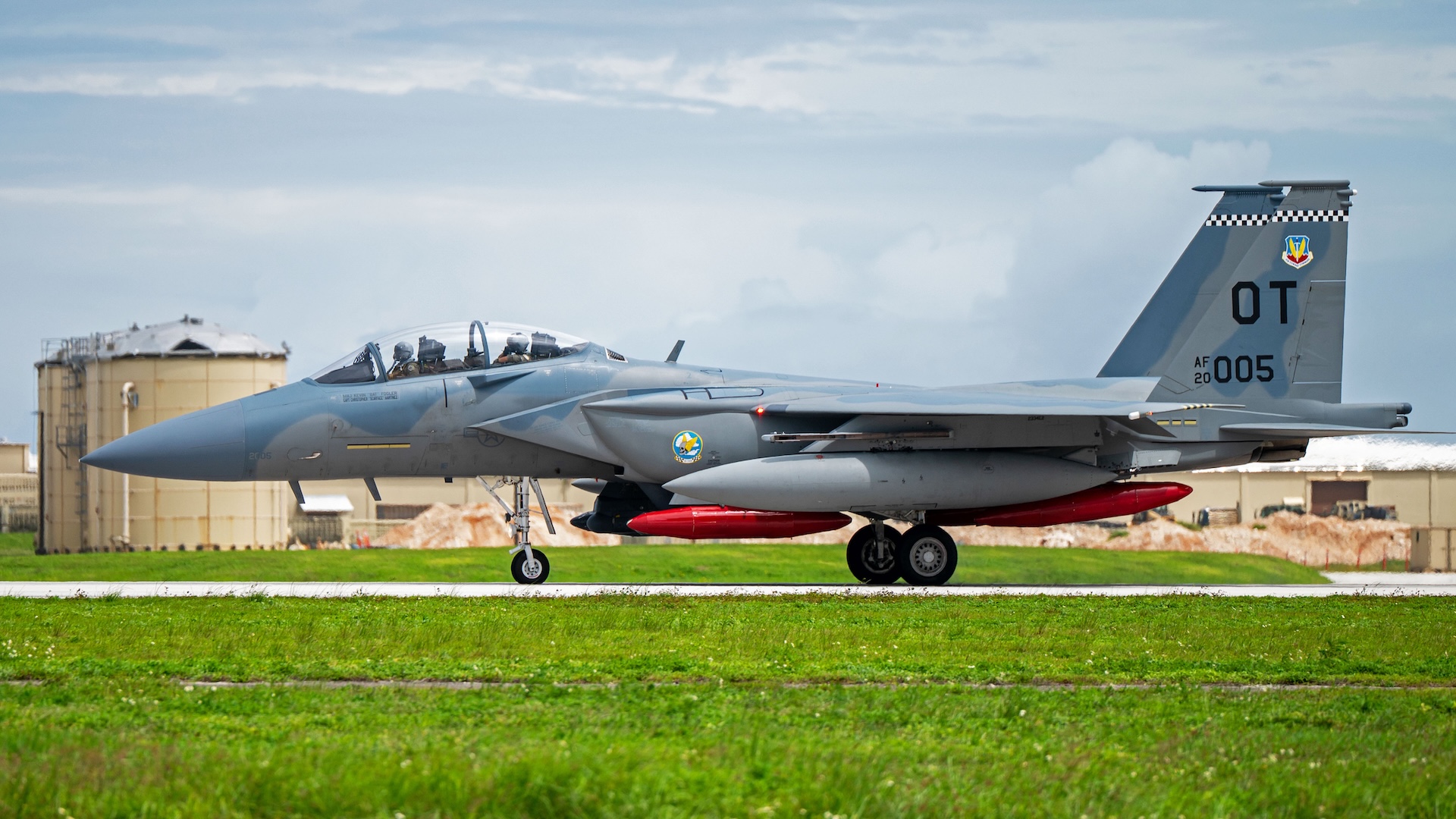
Two examples of the F-15EX touched down at Kadena Air Base, Japan, recently, for a period of advanced training in the Pacific. The jets will take part in Resolute Force Pacific 2025, which the Air Force describes as its biggest-ever contingency response exercise in the region. It marks the first foreign deployment of the F-15EX, which began equipping its first operational squadron last year. Moreover, the deployment comes ahead of the introduction of a permanent F-15EX presence in Japan, where the aircraft’s specific capabilities are seen as hugely relevant in a potential future conflict with China.
The two F-15EX aircraft arrived at Kadena on July 12, following a stopover at Andersen Air Force Base, Guam. The jets are from the 85th Test and Evaluation Squadron (TES) “Skulls” at Eglin Air Force Base, Florida, a unit you can read more about here.
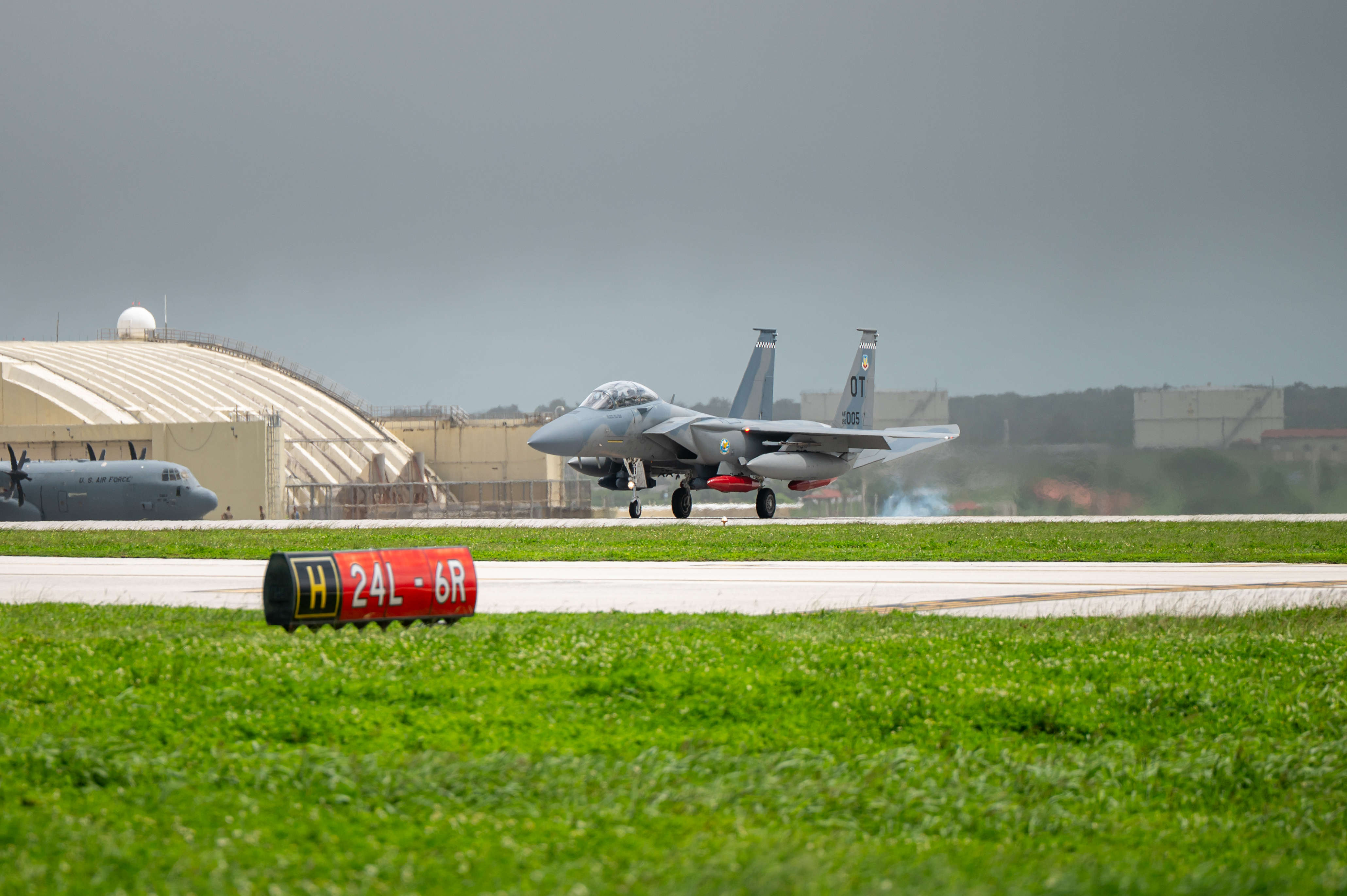
According to Kadena’s 18th Wing, the F-15EX aircraft are in Japan to “conduct integration and familiarization training with local units.”
“This short-term visit marks a key milestone in the Department of Defense’s ongoing effort to modernize U.S. airpower in the region and deter against evolving threats,” the wing’s release added. “It also prepares Kadena personnel for the arrival and future sustainment of the F-15EX in spring 2026.”
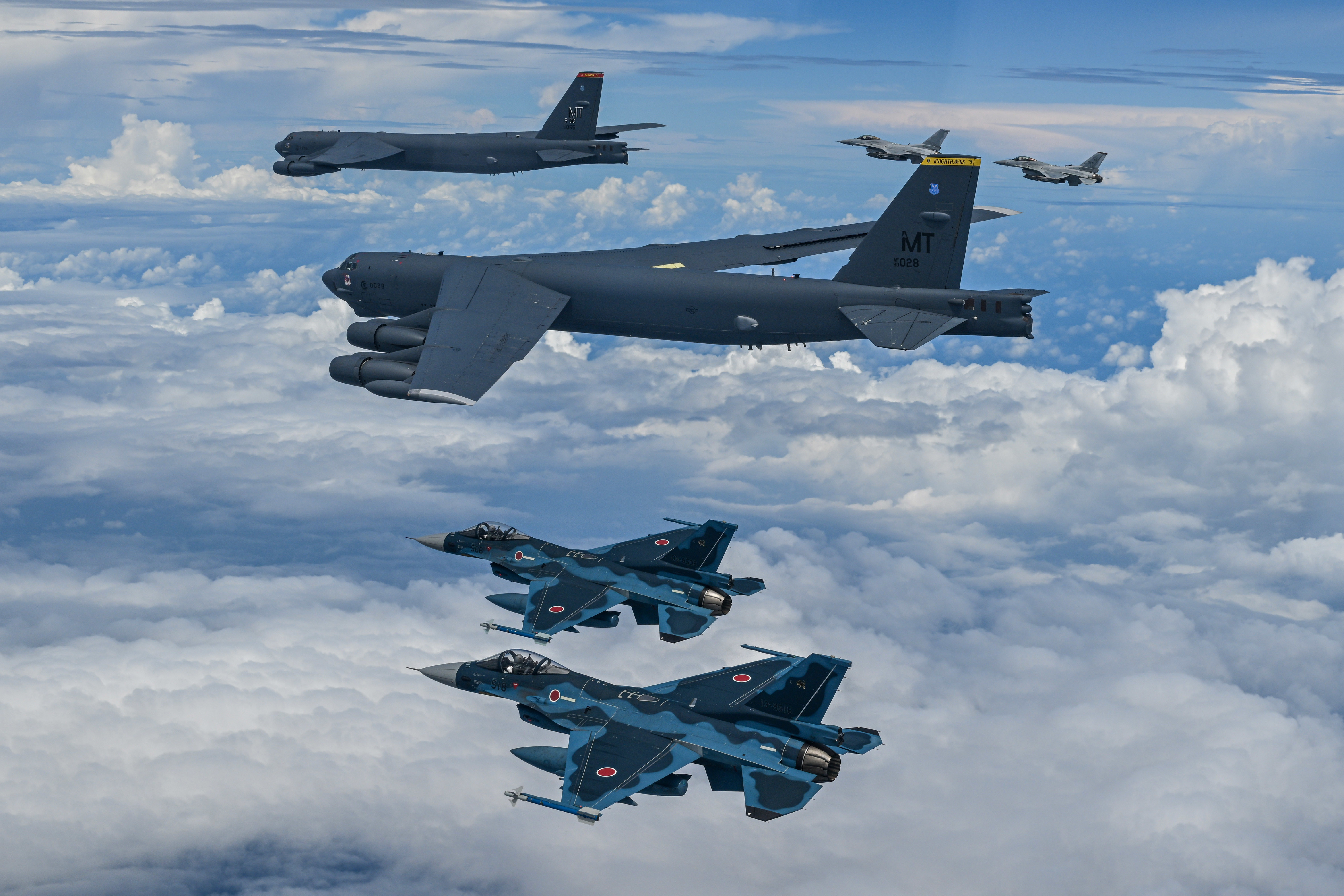
The Air Force has since confirmed that the F-15EX aircraft will be participating in Resolute Force Pacific, or REFORPAC. These maneuvers began on July 11 and involve the U.S. military and partners, which, between them, are fielding more than 300 aircraft.
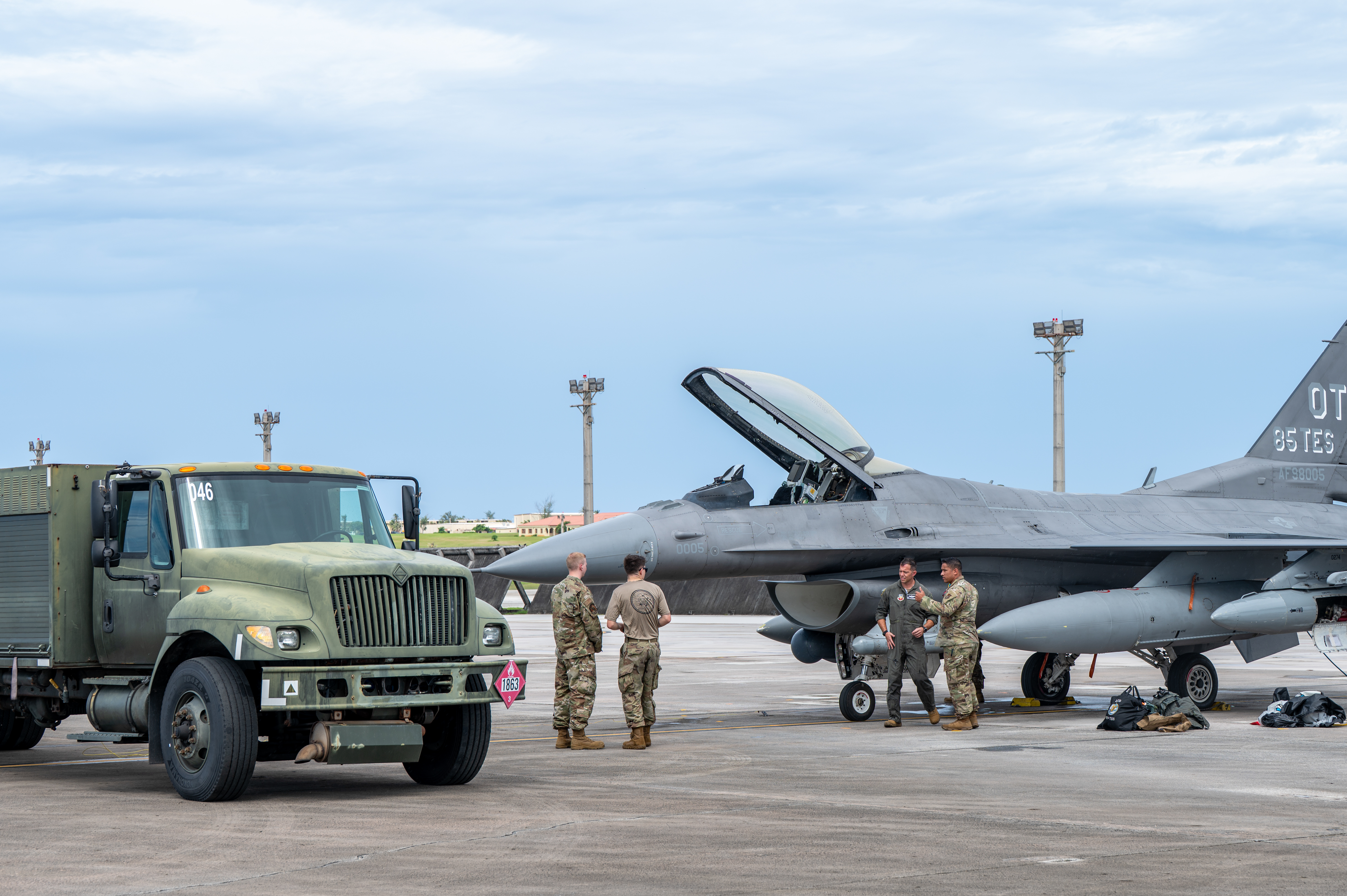
As well as the two examples of the F-15EX, the 85th TES also brought single examples of the F-15E and F-16C to the exercise.
With an eye on possible future contingencies involving a hostile China, REFORPAC is stress-testing the ability of the U.S. military to generate and sustain airpower in the Pacific, while working alongside regional allies.
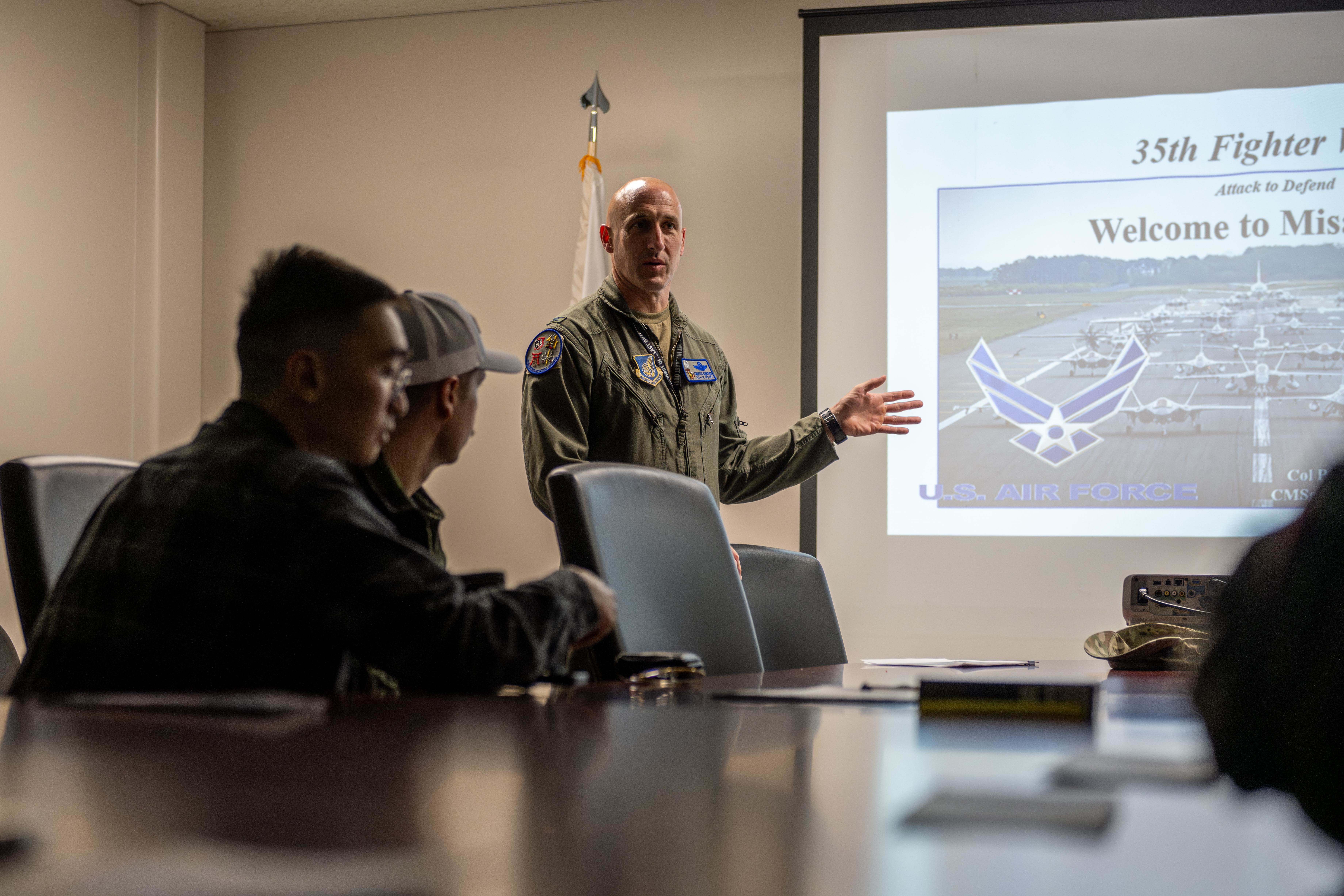
“This exercise is about sharpening our edge and proving that our airmen can project combat airpower anytime, anywhere, alongside our allies,” said Col. Paul Davidson, commander of the 35th Fighter Wing at Misawa Air Base in Japan. “This wing is all-in, showing what contingency readiness looks like in the Pacific theater.”
For the purpose of REFORPAC, the 35th Air Expeditionary Wing has been established at Misawa, in the same way that such a formation would be set up in times of crisis or conflict, drawing personnel and aircraft from multiple bases around the globe.
Central to REFORPAC will be the Agile Combat Employment (ACE) concepts, developed for contested warfare, especially in the Indo-Pacific and including hot-pit refueling, combat search and rescue, and distributed logistics support. ACE stresses the ability to fight under degraded conditions, including moving forces around quickly to remote locales for their own survival and sustaining missions even when there’s no access to traditional logistics and infrastructure.
Ensuring that the F-15EX is also able to meet the demands of ACE in the Indo-Pacific is critical, considering that the aircraft will be fielded at Kadena and that Air Force commanders expect it to play an outsize role in any future conflict in the region.
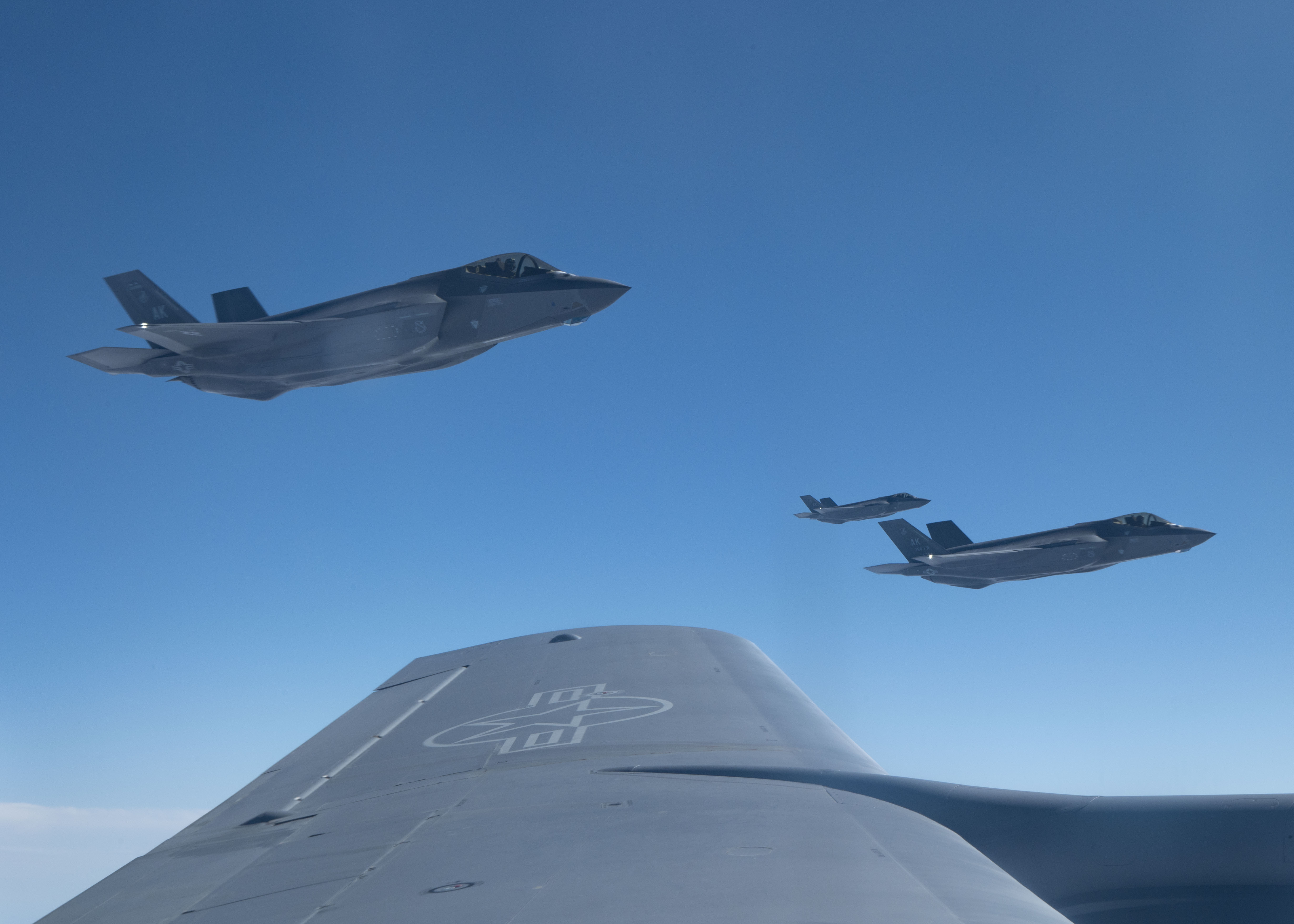
REFORPAC is, in turn, part of a broader series of exercises organized by the Air Force at multiple locations across the United States and Indo-Pacific, with a focus on the latter theater. In all, the Department-Level Exercise (DLE) is planned to involve more than 350 aircraft. The DLE incorporates multiple command exercises into one overall threat deterrence scenario, including REFORPAC, Resolute Space, Mobility Guardian, Emerald Warrior, and Bamboo Eagle 25-3.
Bamboo Eagle, which you can learn more about in this past TWZ feature, has quickly become one of the most important for the U.S. military, and also has a clear eye on preparing for a future coalition fight in the Pacific with China.
You can read more about the aims of these drills within the wider Indo-Pacific context in this previous article.
As we reported in the past, the F-15EX is headed to Kadena on a permanent basis, with 36 aircraft earmarked for Okinawa.
Referring to the current temporary deployment by the 85th TES, Brig. Gen. Nicholas Evans, the outgoing 18th Wing commander, said: “Bringing the F-15EX here gives our pilots and maintainers the chance to train in the environment where they’ll operate it daily. This visit ensures we can seamlessly integrate the aircraft into our mission sets and maintain the airpower advantages needed in this region.”
Meanwhile, the 18th Wing further outlined some of the advances that the F-15EX will bring to Kadena starting next year:
“Outfitted with cutting-edge avionics, advanced weapon systems, and expanded offensive and defensive capabilities, the F-15EX ensures Kadena remains postured to address the dynamic security environment in the Indo-Pacific region.”
The 142nd Fighter Wing in Portland, Oregon — the first operational unit to receive the F-15EX — is playing a critical role in standing-up Kadena’s F-15EX force, which you can read about in detail here.
Previously, Kadena played home to F-15C/Ds, but, as we reported at the time, in October 2022, the Air Force decided to wind-down the type’s operation at the base. This came as the USAF made the decision to retire the aging F-15C/D force, which had been in service for more than 40 years. The Air Force’s last active-duty F-15C made its final flight at Kadena earlier this year.
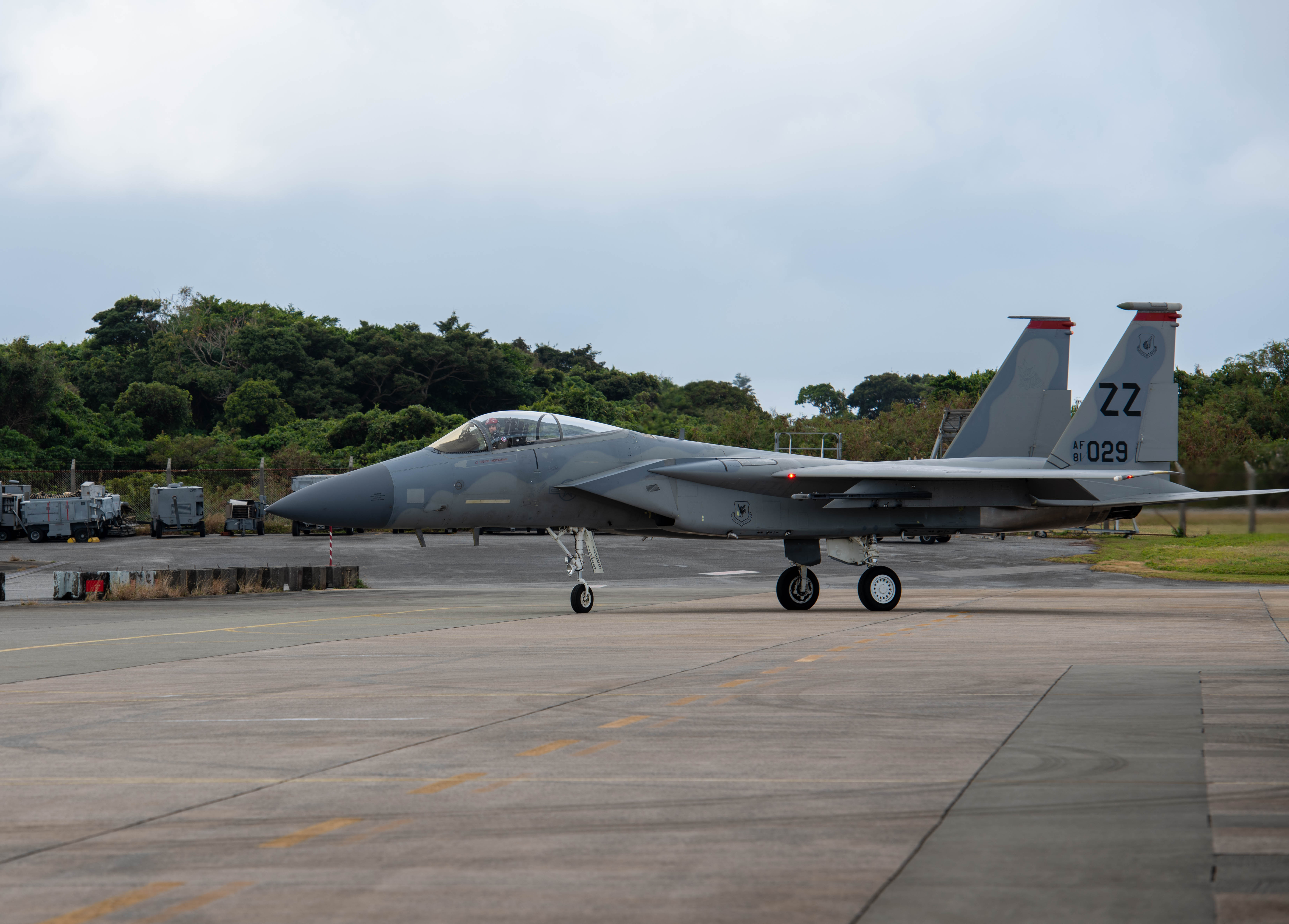
Without the permanently based F-15C/Ds, the Air Force has been sending F-35s, F-22s, and other fighters to Kadena as part of a rotational force, as a temporary gap-filling measure.
In the past, Gen. Kenneth Wilsbach, the commander of Air Combat Command who was then-head of U.S. Pacific Air Forces (PACAF), had outlined the importance of the F-15EX in the Indo-Pacific theater and at Kadena specifically.
“What we intend to use it for there [at Kadena], if we’re so fortunate to get that replacement, is air superiority and some long-range weapons capabilities that you can conduct on the F-15EX,” Wilsbach explained in 2022.
Wilsbach also said he considered that Kadena “is becoming even more important,” due to its strategic Asia-Pacific location. This would allow for a more rapid response to contingencies in the region involving China, with Wilsbach seeing this proximity to a potential aggressor as an advantage, rather than a disadvantage. The latter argument comes from China’s increasing ability to strike targets — especially airbases and other critical military infrastructure — at short notice and using a growing variety of advanced standoff weapons.
“If they’re shooting weapons at us at Kadena, then we could be projecting power from Kadena Air Base,” Wilsbach argued. Using the ACE concept, the F-15EX fleet based there would use Kadena as a point from which to relocate to other, more dispersed locations in the region. It would be hoped to be enough to escape a first wave of Chinese missile strikes, for example.
Once bedded down at Kadena, the F-15EX will offer some niche capabilities that will have particular relevance in the Indo-Pacific region.
The ability of the F-15EX to carry outsized weapons is well known and would likely be called upon during any kind of shooting war with China. As well as air-to-ground weapons, including hypersonic missiles, which are invariably larger than most regular air-launched missiles, the F-15EX has been identified as an ideal platform to carry very long-range air-to-air missiles, as well. This is especially important considering China’s development of long-range air-to-air weapons, which pose a major threat to the previous dominance of the AIM-120 AMRAAM family.
Aside from potentially exotic missiles, the F-15EX is also noteworthy for the number of external stores it can carry. One loadout option for the F-15EX comprises 12 AIM-120 Advanced Medium-Range Air-to-Air Missiles (AMRAAM) as well as two 600-gallon drop tanks and two conformal fuel tanks (CFTs). This is made possible by two additional underwing weapon stations on the F-15EX, known as Stations 1 and 9, that are not found on the F-15C or F-15E, coupled with an advanced ‘fly-by-wire’ flight control system. This can be expanded in the future to nearly double that size using specialized racks, but the USAF has not perused that option at this time. The F-15EX will also be able to carry dozens of laser-guided rockets for anti-drone missions.

While there have been some questions about the provision of CFTs for the F-15EX, at least initially, it’s very clear that the aircraft offers an impressive combination of long range and stores-carrying capabilities. This would be especially valuable for operations across the vast expanses of the Pacific, including during any future high-end conflict in the region against China.
Meanwhile, in our story that broke the news that the F-15X (now EX) was in the works, we laid out how it would be an ideal platform for drone control. Key factors in this respect include its two-person cockpit, wide-area displays, networking, easy adaptability, and long range. The Air Force’s future Collaborative Combat Aircraft (CCAs) will be especially needed in the Indo-Pacific, where the Chinese People’s Liberation Air Force is rapidly growing in both size and capabilities.
Wilsbach also previously talked about the importance of CCAs, among other advanced uncrewed platforms, in the Indo-Pacific. He said that the Air Force was “absolutely” considering fielding CCA drones at Kadena, where they would be a perfect adjunct to the F-15EX.
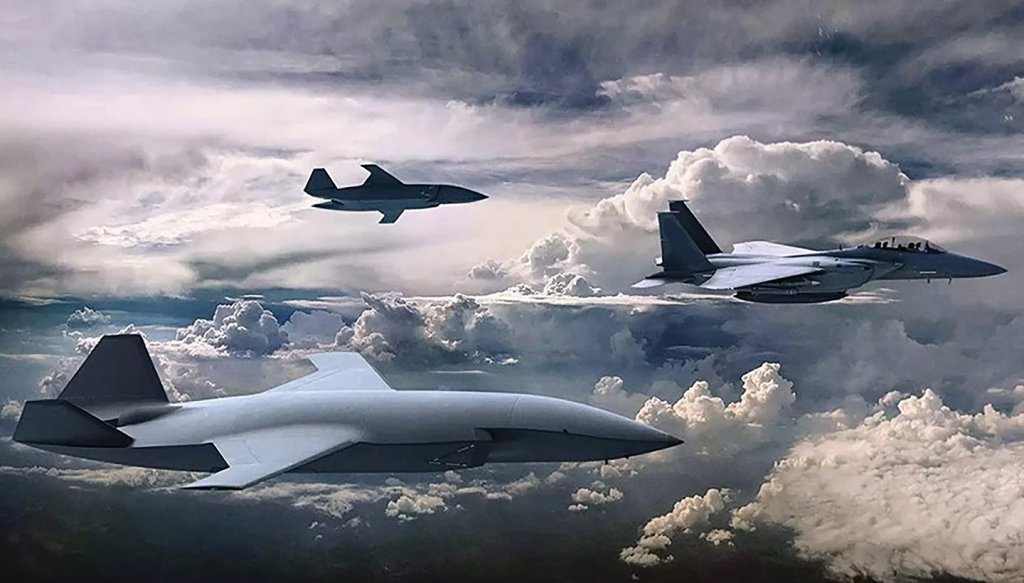
Meanwhile, having CCAs based at other locations in the region, but potentially still controlled by F-15EX fighters, would “complicate the battlespace and create chaos for your adversary,” Wilsbach contended.
It’s worth noting that the forthcoming introduction of the F-15EX is only one part of the Air Force’s fighter modernization effort in Japan.
Next spring, as the F-15EX is due to go to Kadena, Misawa Air Base is set to receive a total of 48 F-35As. Ahead of this, F-16s began transferring from Misawa to Osan Air Base in South Korea last month. At Osan, the F-16s are taking the place of the A-10C ground-attack aircraft, a type widely considered to no longer be survivable enough for a high-end fight.
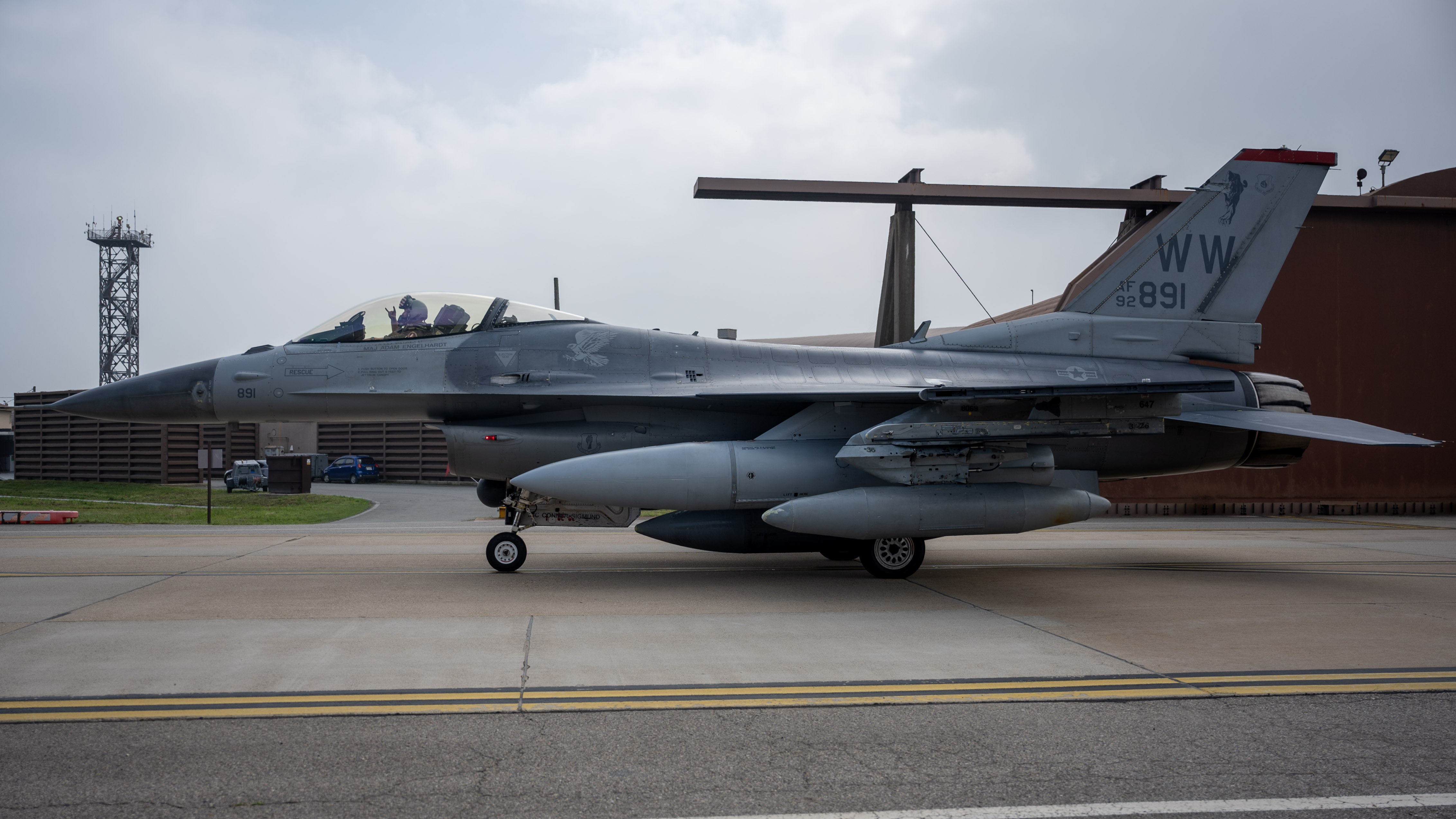
Misawa will be only the second overseas Air Force base to permanently host F-35s, after RAF Lakenheath in the United Kingdom. This underlines just how important the F-35’s low-observable and sensor fusion capabilities are in the context of a potential Indo-Pacific fight, especially with China’s extensive efforts to develop its own stealth platforms.
Returning to the F-15EX, under the Fiscal Year 2026 budget proposal, the F-15EX’s program of record is now set to grow from 98 to 129 aircraft, with the addition of at least one more squadron, which will be converting from the A-10. It seems quite possible that further growth of the program could occur. Originally, the USAF had a minimum number of 144 jets to replace the F-15C/D force. Some of the Eagle units have switched to other platforms since then, but units that fly A-10s, F-16s, and even F-15Es could end up getting F-15EX if the USAF chooses to go such a route.
The current deployment of two F-15EX aircraft at Kadena may only be temporary, but it remains a significant milestone for the Eagle II and the Air Force. As well as being the first time the aircraft has been deployed overseas for an exercise, it will help pave the way for the permanent basing of the F-15EX in the Indo-Pacific region, which is planned to start less than a year from now.
Contact the author: thomas@thewarzone.com
Loading comments…
Comments couldn’t be loaded. Please refresh the page.