

Thailand carried out airstrikes on targets in Cambodia overnight as weeks of tensions between the two countries boiled over into clashes. At least one Thai F-16 fighter jet bombed Cambodia, a fact confirmed by the defense ministries of both countries. The violence is the latest in a long-running border dispute between Thailand and Cambodia, which share a land frontier that’s more than 500 miles long. Now, there are growing fears that the rapidly escalating border conflict could spiral further out of control.
The Thai military confirmed that an F-16 had struck what it described as a military target in Cambodia and said that it had several more aircraft ready to be deployed.
An image purportedly showing a bomb loaded on a Thai F-16, with the inscription “Hello Hun Sen,” referring to the former prime minister of Cambodia and current president of the Cambodian Senate:
“We have used airpower against military targets as planned,” Royal Thai Army deputy spokesperson Richa Suksuwanon told reporters. The Royal Thai Army also released imagery that it said showed precision F-16 airstrikes against Cambodian military command posts.
The Cambodian Ministry of Defense said that Thai jets dropped bombs on a road near the ancient Preah Vihear temple, in the Preah Vihear province of Cambodia.
Thailand is a major U.S. ally in the region, and there have been unconfirmed reports that Washington approved the use of the F-16s against Cambodia. This remains unclear for now, but TWZ has approached the U.S. government for clarity on the matter.
The Royal Thai Air Force (RTAF) has a relevant fleet of F-16s, comprising 36 single-seat F-16As and 14 two-seat F-16Bs. These are the survivors from a total of 52 F-16A/Bs that were delivered by the United States under four separate orders plus seven more F-16A/Bs that were donated by Singapore.
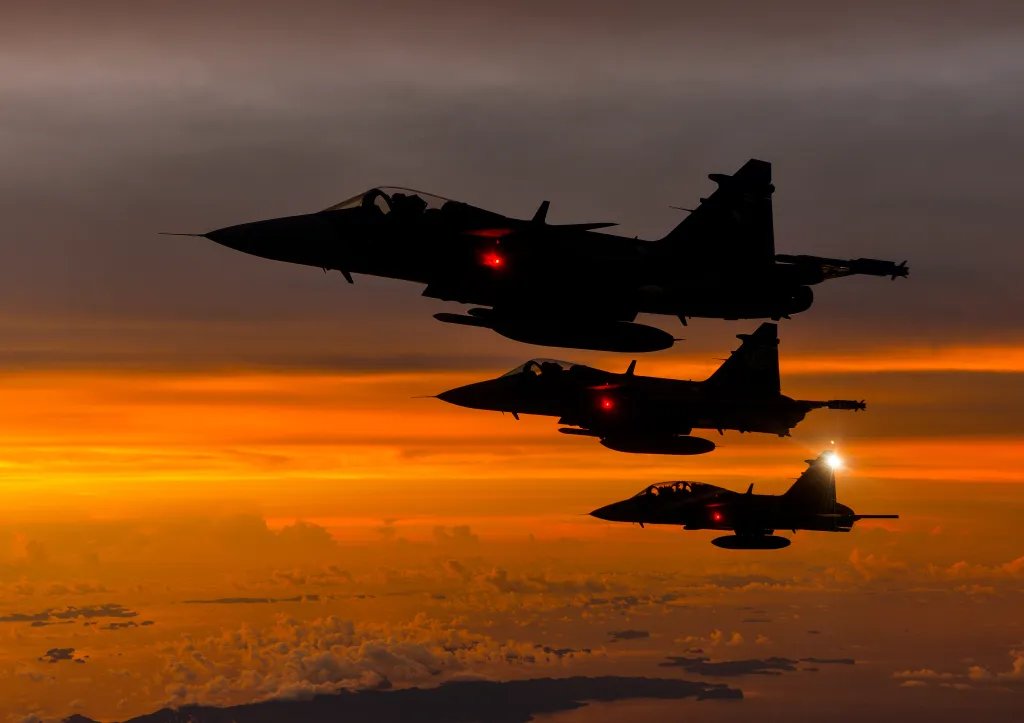
The most modern of the RTAF’s fighters are its 11 Gripens (seven single-seat Gripen Cs and four two-seat Gripen Ds), and the service also still operates around 31 single-seat F-5E and three two-seat F-5F Tiger II jets.
There are also unconfirmed reports suggesting that the Royal Thai Army has, for the first time, deployed in combat its Ukrainian-made T-84 Oplot tanks. Local media and defense observers reported that the tanks were being used to assault Cambodian positions close to the border.
One leading Thai military blogger posted online: “Oplot cavalry — the knights of the battlefield — have now entered the fight. This afternoon, the Royal Thai Army deployed Oplot tanks to fire on Cambodian forces near the base of Phra Wihan.”
The T-84 Oplot is a significantly upgraded derivative of the Soviet-era T-80, developed and manufactured in Ukraine. Thailand ordered 49 examples in 2011.
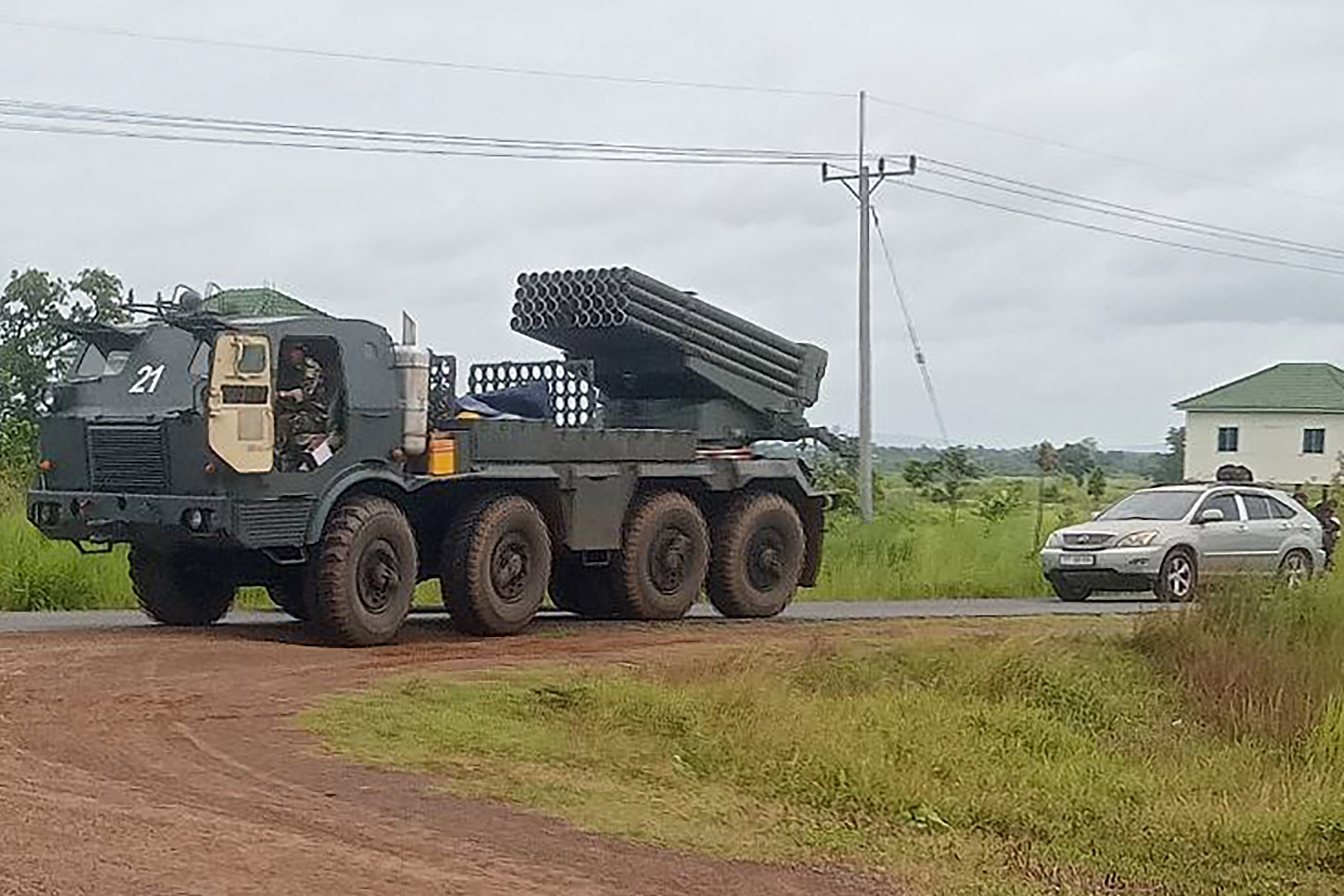
Meanwhile, Cambodia has been striking targets in Thailand, including using Czechoslovak-made RM-70 multiple rocket launchers. According to Thailand’s health minister, Somsak Thepsuthin, at least 12 people have been killed by artillery fire from Cambodian forces. The 12 killed include 11 civilians and one soldier, while another 24 civilians and seven military personnel have been wounded, the minister said.
In a statement, Thailand’s Ministry of Foreign Affairs accused Cambodia of laying landmines that have injured Thai military personnel over recent days, and of attacking Thai military bases and civilian areas on Thursday.
“On the morning of July 24, 2025, heavy artillery was fired into the Thai military base and continued throughout the morning,” the ministry said. “The attacks also targeted Thai civilian areas, including a hospital, resulting in civilian casualties and fatalities.”
According to Thai officials, clashes were ongoing in at least six areas along the border as of this morning, local time.
Among the objectives struck by Cambodia was a gas station in Kantharalak district, Sisaket province, where six civilian fatalities were reported, with another 10 civilians injured.
Another two civilians were killed in Kap Choeng district, Surin province, where at least two more civilians were hospitalized.
One more fatality was reported in Nam Yuen district, Ubon Ratchathani province, where unverified video footage posted to social media purports to show Cambodian troops operating on Thai territory.
The Thai military said in a statement: “The Royal Thai Army condemns these violent acts against civilian targets by the Cambodian side and is prepared to undertake military operations to defend our sovereignty and citizens from these acts that violate humanitarian principles to the fullest extent.”
Cambodia, for its part, has blamed Thailand for the situation, accusing its neighbor of “unprovoked military aggression.” The Cambodian Foreign Ministry said it condemned “in the strongest possible terms this reckless and hostile act by Thailand.”
The Thai government’s handling of the crisis has already led to some fallout, most notably the suspension of Paetongtarn Shinawatra, Thailand’s prime minister, after criticism of her handling of the border dispute. Thailand’s constitutional court suspended Paetongtarn earlier this month, following a discussion with former Cambodian Prime Minister Hun Sen, in which she described him, a family friend, as “uncle.” She also voiced criticism of a senior Thai military commander.
Paetongtarn has meanwhile taken to social media to condemn Cambodia’s latest actions:
“All along, Thailand has made every effort to engage in diplomatic dialogue in order to avoid confrontation, prevent further escalation of the situation, and avoid losses by exercising patience and restraint while remaining committed to peaceful means,” Paetongtarn said. “We firmly believe that peace is the best path to resolving conflicts between nations.”
Paetongtarn continued: “I fully support all responsive actions taken by the government, the Armed Forces, and the Ministry of Foreign Affairs within the framework of international law and principles. I send my moral support to all officers who are currently defending our national integrity and sovereignty, as well as to the people in the affected areas. I also express my deepest concern and heartfelt support for everyone’s safety. As a highest priority, I urge all citizens to follow the government’s safety protocols to preserve lives and property.”
International organizations and other nations have called for an end to the hostilities.
The United Nations Children’s Fund (UNICEF) has asked for all parties involved in the conflict to “exercise maximum constraint,” after the reports of civilian casualties.
The U.N. organization said in a statement today: “UNICEF is deeply concerned by the escalating violence along the Thailand–Cambodia border, which has reportedly resulted in civilian casualties, including the killing of children, and the temporary closure of hundreds of schools in affected areas.”
Malaysian Prime Minister Anwar Ibrahim today also expressed concern about the conflict. Malaysia is the current chair of the Southeast Asian bloc ASEAN, which also includes Thailand and Cambodia.
Anwar today spoke with the leaders of both countries and told reporters: “The least we can expect from them is to just stand down and hopefully to try and enter into negotiations.”
So far, the Thai government has downgraded its diplomatic relations and recalled the Thai ambassador to Cambodia, and has requested that Cambodia recall its ambassador to Thailand.
Thailand’s Ministry of Foreign Affairs has called upon Cambodia to cease attacks against civilian and military targets and stop all actions that violate Thailand’s sovereignty. “The Royal Thai Government is prepared to intensify our self-defense measures if Cambodia persists in its armed attack and violations upon Thailand’s sovereignty in accordance with international law and principles,” the ministry said.
Footage said to be released by the Thai Ministry of Defense purportedly showing the use of drones by the Royal Thai Army to drop munitions on Cambodian positions:
As well as the potential for escalating violence between the two countries, the current conflict has the potential to draw in other regional players.
In particular, Cambodia has long been a close ally of China, receiving billions of dollars in investments and relying on it as its primary source of arms.
On the other hand, China has also initiated a deeper military cooperation with Thailand, including joint air exercises and increased arms transfers. This has happened partly as a response to some friction in U.S.-Thailand relations, especially after the coups d’état of 2006 and 2014.
A spokesperson for the Chinese Foreign Ministry, Guo Jiakun, said: “We are deeply concerned over the current developments [and] hope both sides can properly resolve issues through dialogue and consultations. Good-neighbourliness and properly handling differences are in line with the fundamental and long-term interests of both sides.”
Guo added that China would adopt a “fair and impartial position” in the clashes, despite its historic close ties to Cambodia.
Beijing “has and will continue to, in its own way, do its best to promote peace and dialogue, and play a constructive role in promoting the easing and cooling down of the situation,” Guo added.
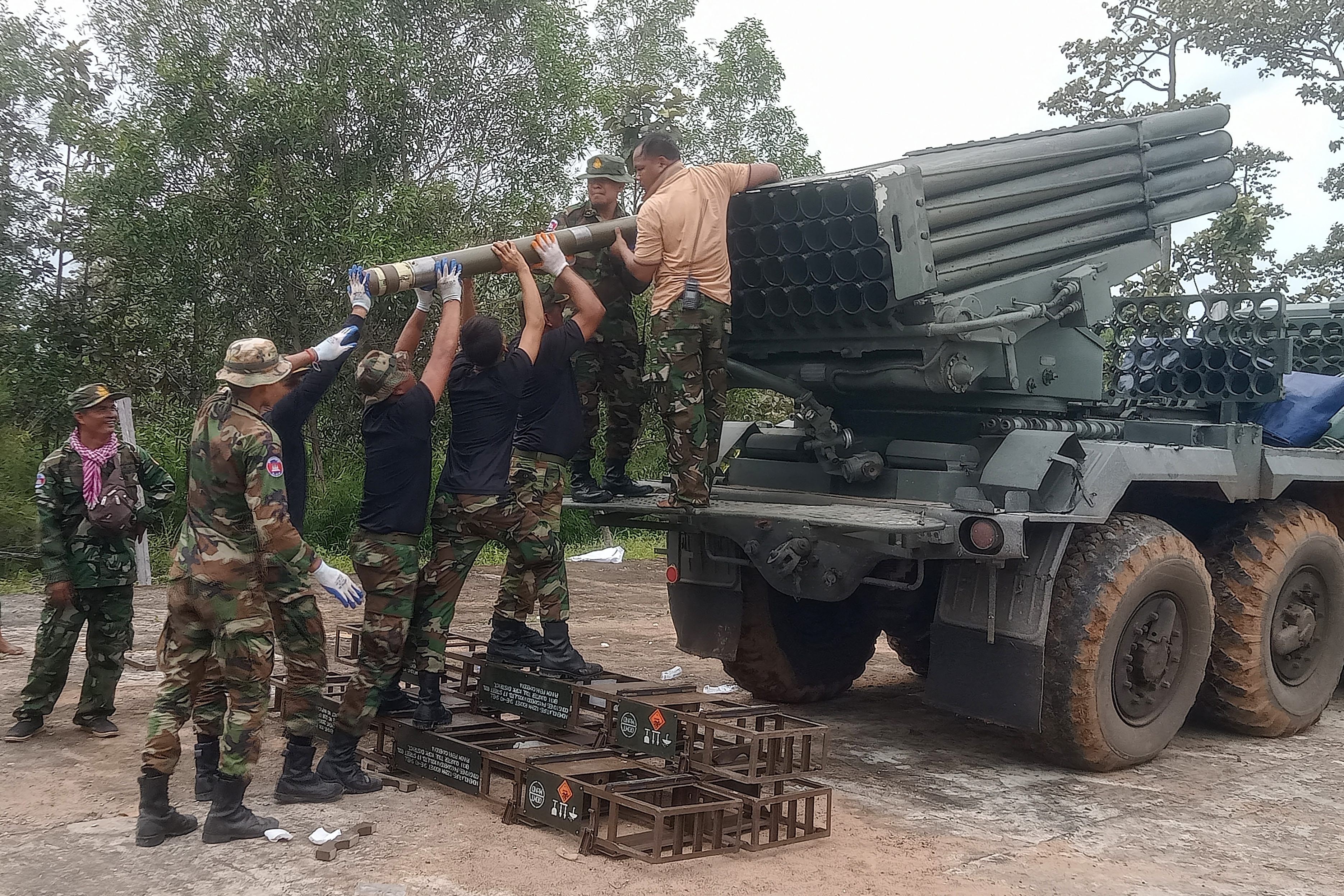
While the border dispute is long-running, the current hostilities can be traced back to May, when a Cambodian soldier was killed in an armed confrontation in a disputed area on the border. In the past, there have been periodic tensions between the two countries, the result of competing claims dating from the period of French colonial rule, at the beginning of the 20th century, when a boundary was drawn up to separate Cambodia from Thailand.
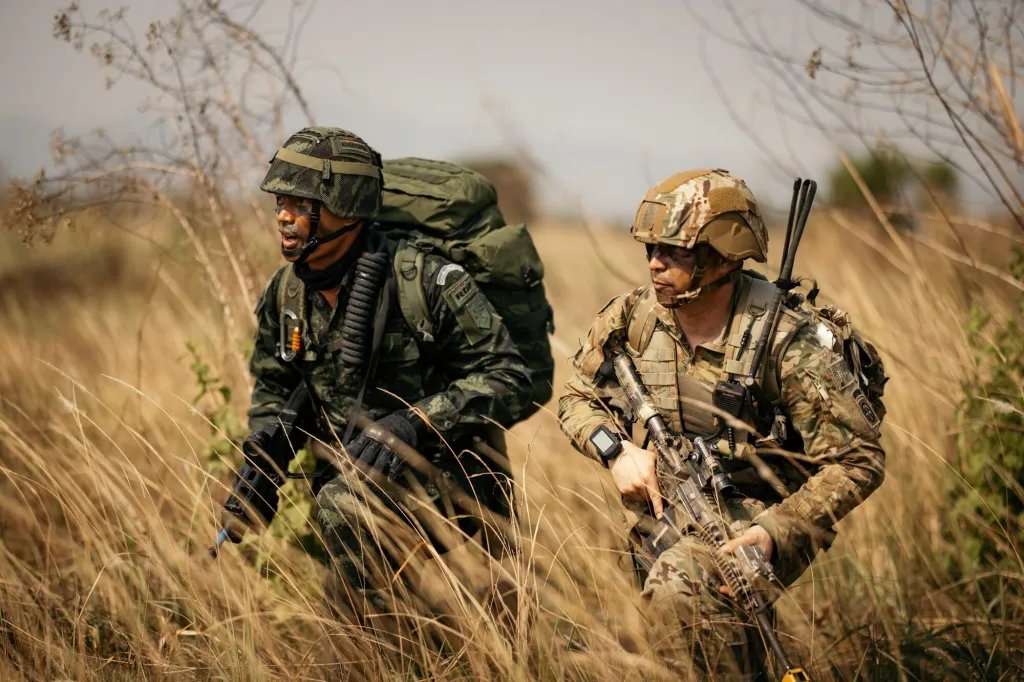
Whatever happens next, the balance of military power is very much in Thailand’s favor, at least on paper.
According to data from the International Institute for Strategic Studies (IISS), the Thai defense budget of $5.73 billion dwarfs that of Cambodia, which is around $1.3 billion. Thailand has more than 360,000 active armed forces personnel, while Cambodia has less than half that, with 124,300 active military personnel.
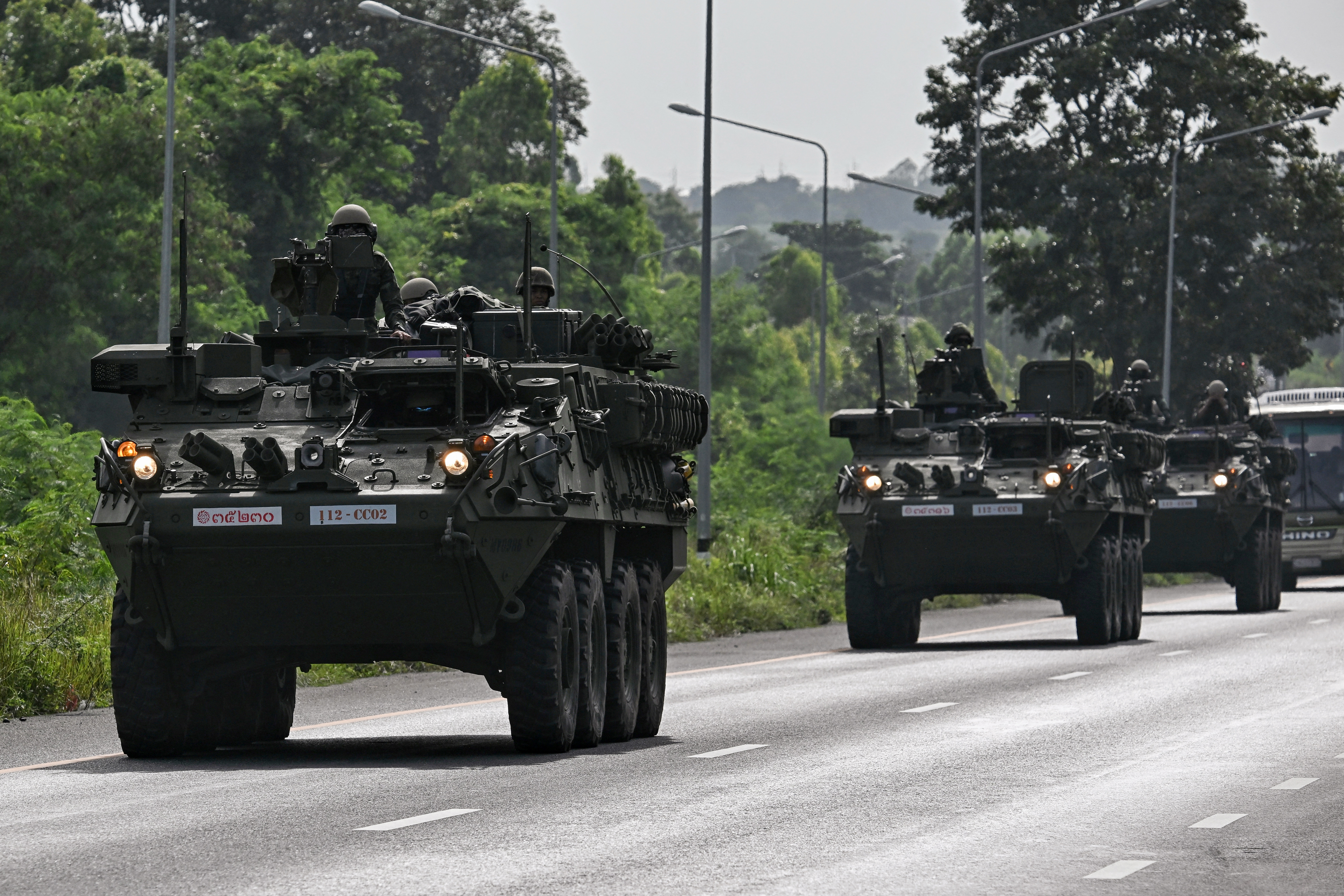
The Cambodian Army numbers around 75,000 soldiers, more than 200 tanks, and around 480 pieces of artillery. The Royal Thai Army has 245,000 personnel, 400 tanks, more than 1,200 armored personnel carriers, and 2,600 artillery pieces. It also has its organic airpower, with fixed-wing aircraft, helicopters, and drones.
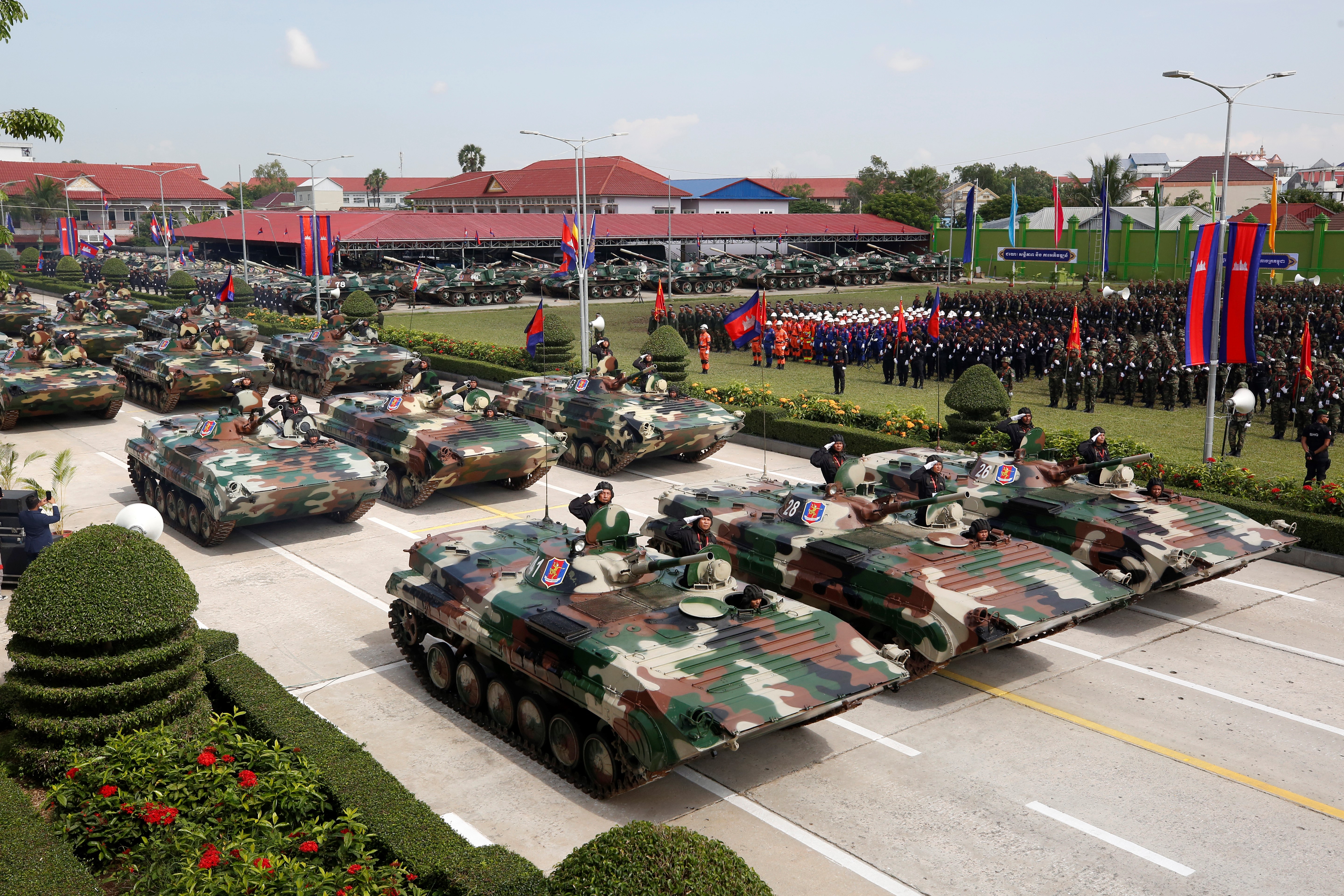
As well as the aforementioned fighters, the Royal Thai Air Force operates a significant fleet of helicopters and is qualitatively far superior to the much smaller Cambodian Air Force, which is primarily made up of Russian- and Chinese-supplied helicopters, and small numbers of fixed-wing transports, with no fighter jets in its inventory. The RTAF has repeatedly taken part in military drills with the United States and other regional partners and is considered one of the best-trained in Southeast Asia.
The Royal Thai Navy is also a major regional player, with a relatively powerful surface fleet including seven frigates, around 70 patrol and coastal combat vessels, plus amphibious vessels. It also has its own naval aviation division and a marine corps. In contrast, the much smaller Cambodian Navy is spearheaded by about a dozen patrol and coastal combat vessels and one amphibious landing craft.
Independent of whether or not China becomes more deeply involved in the current conflict, the potential for the fighting between the two countries to escalate remains high, especially as the nationalist feelings on both sides continue to be inflamed.
Contact the author: thomas@thewarzone.com
Loading comments…
Comments couldn’t be loaded. Please refresh the page.