

Looking like a scene in a sci-fi movie, and in what is clearly a unique mission, dubbed Operation Windlord, USAF C-17s have been tasked with transporting a micro nuclear reactor. The U.S. military’s role is to transport the elements of the Ward250 reactor, made by Valar Atomics, from March Air Reserve Base in Southern California to Hill Air Force Base in Utah. Once on the ground in Utah, it will be moved to Utah San Rafael Energy Lab (USREL) in Orangeville for extensive testing. Beyond its direct utility, this operation may very well serve as a glimpse of what’s to come as the Department of Defense looks to integrate micro nuclear reactors into the power grids of critical installations.
A total of three C-17s will bring the components of the Ward250, eight modules in total, to Utah. This is said to be the first time a nuclear reactor has been moved via Globemaster III. The delivery of the Ward250 to USREL is part of the U.S. Department of Energy’s (DOE) Nuclear Reactor Pilot Program, established in response to President Donald Trump’s Executive Order 14301 last year.
DOE’s pilot program is looking to advance developments that could have commercial and military applications. The U.S. military has been pursuing its own micro-reactor efforts in recent years to help bring a resilient, safe, and scalable supply of electricity that is independent from local power grids to its bases. The vulnerability of America’s grid is palpable, and many military facilities are largely reliant on it. The use of micro reactors could also help remote installations that are dependent on their own power plants and future austere bases overseas that may have no direct access to a power grid at all.
You can read all about the Pentagon’s micro-reactor initiatives in our recent feature linked here.
The commercial aspects of micro reactors are also what Valar Atomics, and the associated scalable nuclear energy concepts it is perusing, seeks to address under executive order 14301, which jumpstarts a ‘nuclear renaissance’ of sorts for U.S. energy, including powering commercial industries. This could be especially relevant for helping to quench what is becoming an insatiable thirst for electricity from data centers spurred on by the artificial intelligence (AI) boom.
Valar Atomics’ Ward250 is a next-generation reactor design that uses helium coolant and graphite moderators. At its core is so-called tri-structural isotropic (TRISO) fuel that consists of “uranium kernels encased in ceramic layers,” according to a previous press release from USREL.
Using TRISO nuclear fuels is often described as a way to produce higher performance than would be offered by comparable amounts of traditional fissile material used in power plants today. It is also said to be safer to use and handle. Past reports have said that Valar is aiming for Ward250 to be capable of reaching a 100-kWt (kilowatts of thermal energy) power rating.
The combination of TRISO fuel, helium-cooling, and graphite moderation “enable safer operations over past nuclear technologies and offer the ability to operate at higher temperatures than traditional plants,” according to USREL.
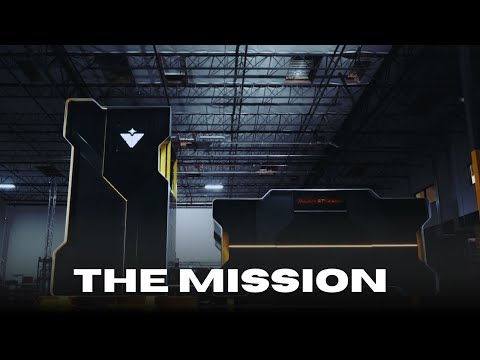

Isaiah Taylor, the founder of Valar Atomics, also stated the following about the company’s vision and its very aggressive timelines:
“For four decades, the United States has underinvested in domestic energy production while exporting energy-intensive industries overseas. This strategic error has left us vulnerable precisely when energy demand is accelerating at unprecedented rates. Now, as we work to reshore critical manufacturing and compete in the energy-demanding field of artificial intelligence, we face power requirements that dwarf anything in our industrial history.
The scale of this challenge cannot be overstated. Training a single large language model can consume as much electricity as a small city. Advanced manufacturing requires constant, reliable power measured in gigawatts. The industrial processes needed to compete with China in critical materials and manufacturing are extraordinarily energy-intensive. Meanwhile, our existing grid infrastructure, much of it built decades ago, strains even under current demands.
Renewable sources cannot meet these baseload demands with the reliability and density required. While extremely valuable assets which also should be allowed to grow, natural gas and coal lack the speed and fundamental economics needed to counter China. Only nuclear power offers the combination of low cost, rapid timeline, and operational reliability necessary to power America’s technological and industrial renaissance.
For the first time in decades, nuclear energy is being treated as what it truly is: a strategic national asset essential to our prosperity, security, and global influence.
…
We are honored to announce that Valar Atomics has been selected by the U.S. Department of Energy to achieve criticality on American soil by July 4th, 2026.”
It appears that this airlift mission is crucial to realizing that goal.
We first got wind of the air transport mission when Taylor started posting from the flightline at March ARB yesterday. The images he posted show the sci-fi-looking reactor being rolled onto the C-17, along with other containers and support equipment.
The Pentagon has since posted about the operation:
A Pentagon release on Operation Windlord reads, in part:
“This groundbreaking collaboration with Valar Atomics is directly aligned with President Trump’s Executive Order to reshape and modernize America’s nuclear energy landscape.
On Sunday, February 15, 2026, a next-generation nuclear reactor will be transported via C-17 from March Air Reserve Base in California to Hill Air Force Base in Utah. The reactor will then be transported to Utah San Rafael Energy Lab (USREL) in Orangeville, Utah, for testing and evaluation.
The successful delivery and installation of this reactor will unlock significant possibilities for the future of energy resilience and strategic independence for our nation’s defense, showcasing an agile, innovative, and commercial-first approach to solving critical infrastructure challenges. By harnessing the power of advanced nuclear technology, we are not only enhancing our national security but championing a future of American energy dominance.”
As to why the reactor was not transported to Utah on the ground, that is not clear. Security is a glaring issue with anything nuclear, so that was likely a factor. Then there is the Pentagon’s push for nuclear reactors, which could see movements like this become commonplace. As an aside, the USAF unit involved in the transport, the 62nd Airlift Wing, is the only one currently known to be certified to ferry routine nuclear weapons shipments. As a result, the 62nd is often involved in the movement of other kinds of nuclear material in cooperation with DOE.
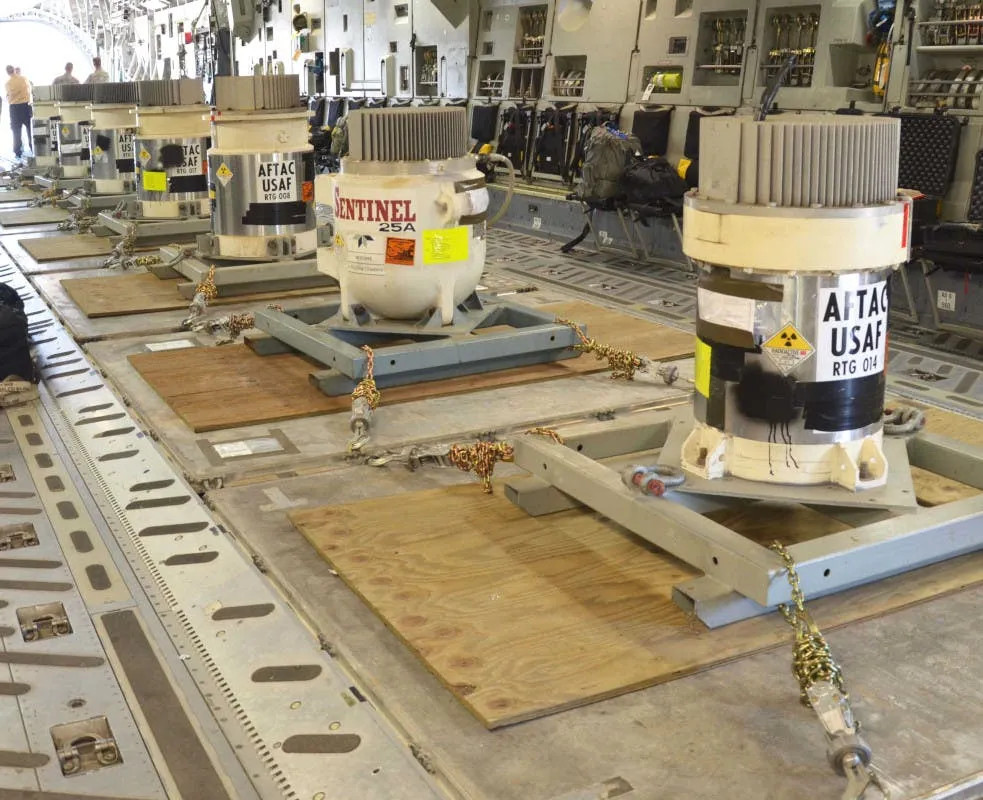
On top of being part of an important effort to advance new nuclear power technologies, Operation Windlord would be a great proof of concept that will inform future micro reactor airlift operations.
Contact the author: Tyler@twz.com
Loading comments…
Comments couldn’t be loaded. Please refresh the page.