

The U.S. Air Force general who oversees America’s intercontinental ballistic missile (ICBM) force sees a long future ahead for the new LGM-35A Sentinel after it eventually enters service. At the same time, he has acknowledged challenges surrounding the Sentinel program, which is still being restructured nearly two years after huge cost overruns triggered a full review. Northrop Grumman, the prime contractor for the missile, says it is now working with the Air Force to try to re-accelerate the program, which is now years, if not decades, behind schedule.
Air Force Gen. Stephen Davis, head of Air Force Global Strike Command (AFGSC), recently discussed Sentinel, as well as the existing Minuteman III ICBMs the new missile is set to replace, among other topics, with TWZ‘s Howard Altman. This was Davis’ first interview since taking command of AFGSC in November.
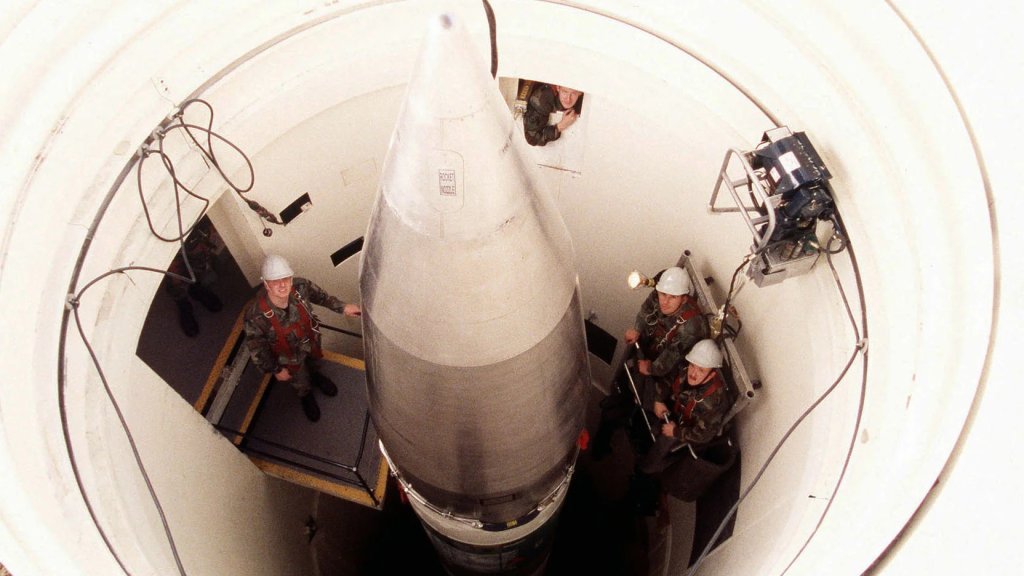
Today, there are 400 Minuteman IIIs loaded in silos spread across five states. The Air Force’s goal is to replace them, one-for-one, with new Sentinels. In 2020, the Air Force declared Northrop Grumman as the winner of the Ground Based Strategic Deterrent (GBSD) competition that led to Sentinel.

“Sentinel is probably the biggest program going on in the Department of War right now, certainly in the Department of the Air Force,” Davis said. “Sentinel brings some important new capabilities that we actually have to deliver for the warfighter, for USSTRATCOM [U.S. Strategic Command].”
Much about the new LGM-35A is classified. The Air Force and Northrop Grumman have talked broadly in the past about it offering greater range and improved accuracy, as well as reliability and sustainability benefits, over the aging Minuteman IIIs. The stated plan is for each Sentinel to carry a single W87-1 nuclear warhead inside a Mk 21A re-entry vehicle, but that loading may change in the future, as you can read more about here.

Gen. Davis also called attention to the benefits that are expected to come from Sentinel’s use of open-architecture systems and a supporting infrastructure that is more digital in nature. In general, open architectures, especially software-defined ones, are intended to make it easier to integrate new and improved capabilities and functionality down the line.
“I think Sentinel is going to be a bit easier with some of the things we’re designing into the program, the digital infrastructure, the open architecture,” Davis said. “I think it will make it easier to upgrade and keep that missile relevant. I don’t have any worries about being able to do that in the future.”
The Minuteman III, also known by the designation LGM-30G, first entered operational service in 1970. The missiles, as well as their supporting infrastructure, have received incremental upgrades since then. The design is an evolution of the earlier Minuteman I and II types that entered service in the 1960s. The Air Force did field a newer ICBM, the LGM-118 Peacekeeper, in the 1980s, but withdrew the last of those missiles from service in 2005 as a result of U.S.-Russian arms control agreements.

“We have the challenge of continuing to sustain Minuteman III until we can get Sentinel up online,” Davis said. “We’ve continued to modernize that to keep it relevant and will continue to sustain it until Sentinel comes on.”
The original program timeline for the Sentinel called for it to begin entering service in 2029. The Minuteman III would continue to serve into 2036 as the Air Force transitioned fully to the new missile.
What the current timeline for Sentinel is now is unknown. In 2024, delays and cost overruns triggered a formal legal requirement for a review of the program, referred to as a Nunn-McCurdy breach, as you can read more about here. This, in turn, prompted an effort to restructure the program that was expected to take 18 to 24 months. At that time, the Pentagon’s Office of Cost Assessment and Program Evaluation (CAPE) projected the total acquisition costs could soar to approximately $140.9 billion, an 81 percent increase over the original estimates, even with the restructuring.
Even then, it had begun to emerge that the bulk of the issues with the Sentinel program were tied to the ground-based infrastructure rather than the missile itself. It has since become clear that the Air Force did not have a full understanding of the magnitude of the physical construction that would be required. This has been compounded by the determination that reusing existing Minuteman III silos is no longer viable, and that entirely new silos will have to be built.
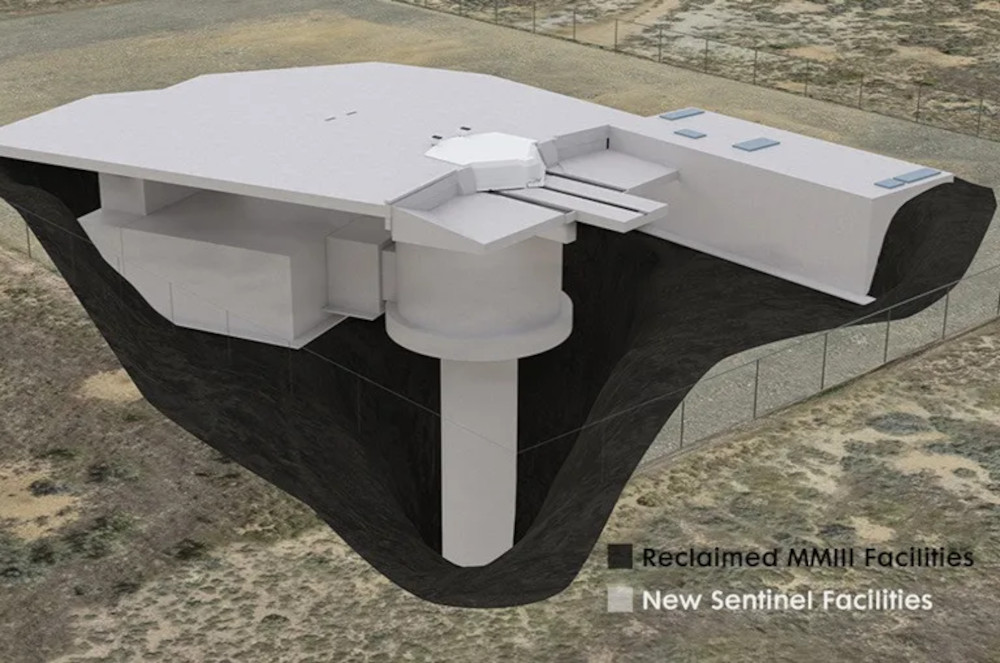
The understanding that it would be possible to reuse substantial parts of the existing Minuteman III infrastructure factored heavily into the original basing plan for Sentinel. The Air Force had considered and rejected a wide range of alternatives, including launchers positioned at the bottom of lakes or in tunnels.
With the Nunn-McCurdy breach, the timeline for replacing Minuteman III has fallen into limbo, at least publicly. Last September, the Government Accountability Office (GAO), a Congressional watchdog, released a report saying the Air Force was considering options for extending the service life of Minuteman III out as far as 2050.
During a quarterly earnings call today, Northrop Grumman CEO Kathy Warden discussed Sentinel and said that the restructuring effort is still underway, creating continued timeline uncertainty.
“We are in the middle of supporting the U.S. Air Force as they restructure the Sentinel Program,” Warden said. “Coming out of that, they will firm [up] a schedule that both locks in new time ranges for milestone B [entry into the engineering and manufacturing development phase], initial operating capability, final operating capability.”
“I don’t want to get ahead of the Air Force in talking about that, but certainly, as I have shared, and the Air Force has, as well, we are working to accelerate the timelines that were published coming out of the Nunn-McCurdy breach two years ago,” she continued. “So that is the goal, and we’re making good progress to identifying options to do so. We still believe that the program will be in development for several years and not transitioning into production until later in the decade, and that production will very much be guided by the milestone achievement during development.”

Overall, the Air Force and Pentagon leadership continue to view the Sentinel program as a top national security imperative. The announcement of the GBSD effort to replace Minuteman III and the selection of Northrop Grumman’s design had prompted new discussions about the utility of the ground-based leg of America’s nuclear triad. As it stands now, the primary purpose of America’s silo-based ICBMs is to act as a ‘warhead sponge’ that would force any opponent to expend substantial resources on trying to neutralize it in a future nuclear exchange. It also stands as the fastest nuclear response option in the Pentagon’s strategic portfolio. A the same time, the deterioration in the security situation around the globe, with China drastically expanding its nuclear arsenal and Russia at war with its neighbor in Europe, among other proliferation and strategic weapons development concerns, have bolstered the case for Sentinel and nuclear modernization as a whole.
As AFGSC’s Gen. Davis has now told us, the hope is also that the benefits the Sentinels will bring when they finally do enter service will ensure they remain on guard for decades to come.
Contact the author: joe@twz.com
Loading comments…
Comments couldn’t be loaded. Please refresh the page.