
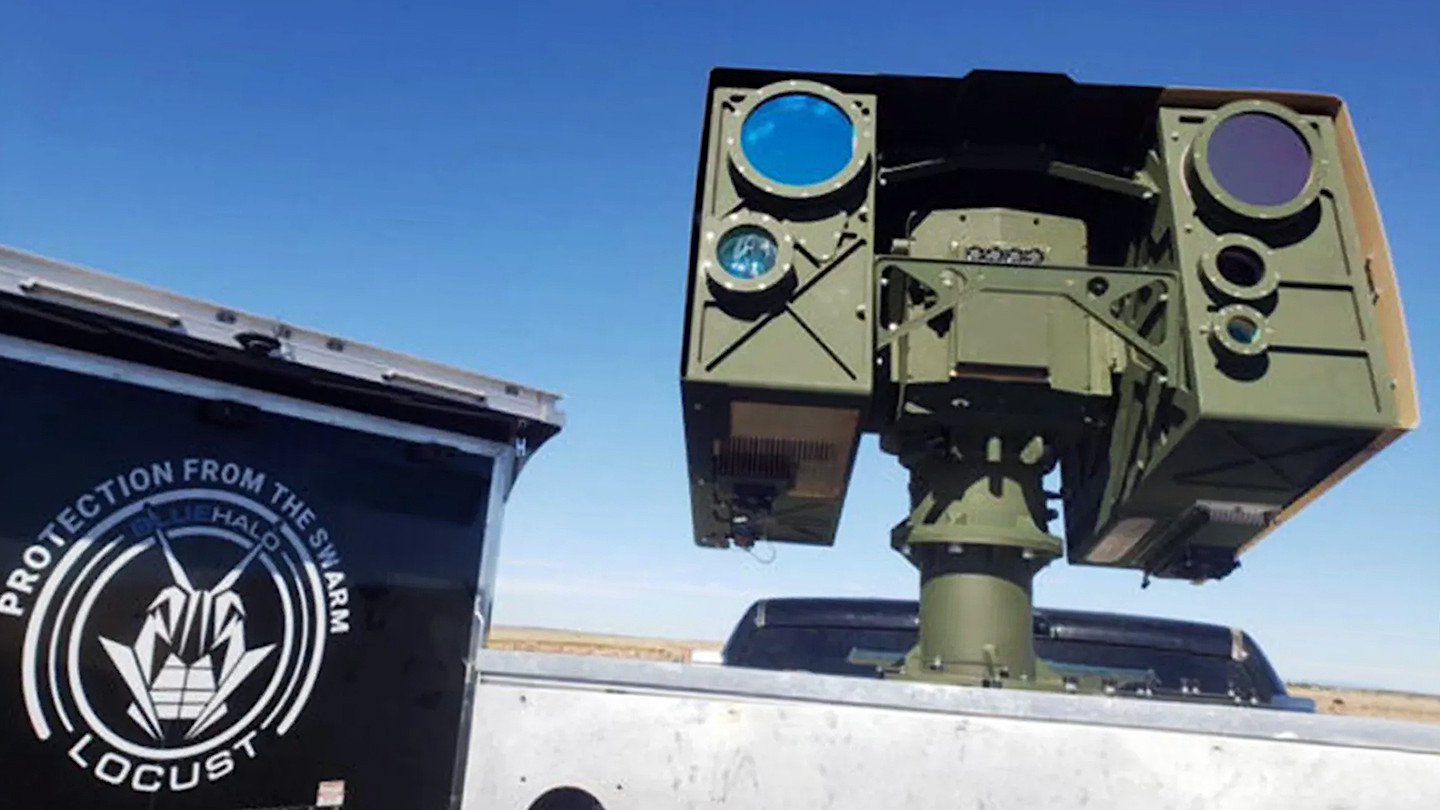
The U.S. military used a laser to shoot down a Customs and Border Protection (CBP) drone over southwest Texas earlier this week, U.S. officials confirmed to The War Zone. We now know that this drone was small in size and was engaged by AeroVironment’s LOCUST directed energy weapon. The friendly fire incident spurred expanded airspace restrictions over the Fort Hancock area that will last for four months. It also gives credence to the FAA’S concerns about the operational deployment of counter-drone laser weapons along the border. The same system was used to fire at suspected Mexican cartel drones flying across the southern border into Texas two weeks ago, which resulted in a large airspace closure, general confusion and major headlines.

Federal officials confirmed last night that some kind of incident occurred on Wednesday, although a joint statement held back from making a definitive conclusion on exactly what happened.
“This reported engagement occurred when the Department of War employed counter-unmanned aircraft system authorities to mitigate a seemingly threatening unmanned aerial system operating within military airspace,” the Defense Department, CBP, and the Federal Aviation Administration (FAA) said in their statement.
“The engagement took place far away from populated areas, and there were no commercial aircraft in the vicinity,” the statement added.
The Temporary Flight Restrictions (TFR) covered an area located roughly 50 miles southeast of El Paso, the scene of a drone incident earlier this month, and the U.S. Army base at Fort Bliss, a facility that has counter-drone operations as part of its training remit. The TFR lasts until June 24 and prevents most pilots from flying over the area. Emergency services, like medevac flights and search and rescue operations, will be allowed to fly in the area if they contact Albuquerque Center, which will coordinate with U.S. Northern Command’s Joint Task Force-Southern Border, which is overseeing military operations in this area.
In an earlier statement, the FAA noted that an incident had led to it expanding a temporary flight restriction that was already in place around Fort Hancock. The restriction was issued for “Special Security Reasons,” the FAA added, and did not impact commercial flights in the region.
An unnamed U.S. official previously told CBS News that a laser weapon was used to down the drone in the area of Fort Hancock, a small community located on the U.S.-Mexico border.
Democrat Representatives Rick Larsen, André Carson, and Bennie Thompson, all members of the House Committee on Transportation and Infrastructure, also issued a joint statement. “Our heads are exploding over the news that DoD reportedly shot down a Customs and Border Protection drone using a high-risk counter-unmanned aircraft system,” they said, criticizing an apparent lack of coordination between the agencies involved.
Earlier this month, CBP personnel reportedly used a laser directed-energy weapon to take down an object, which they assumed to be a drone operated by a Mexican drug cartel. Multiple reports said that the object turned out to be a Mylar balloon. A U.S. official told us at the time that the incident was the first time a laser weapon had been fired at drones in the continental U.S.
The system involved, identified by Reuters as an AeroVironment LOCUST laser counter-drone weapon, was lent to the CBP by the U.S. Army.
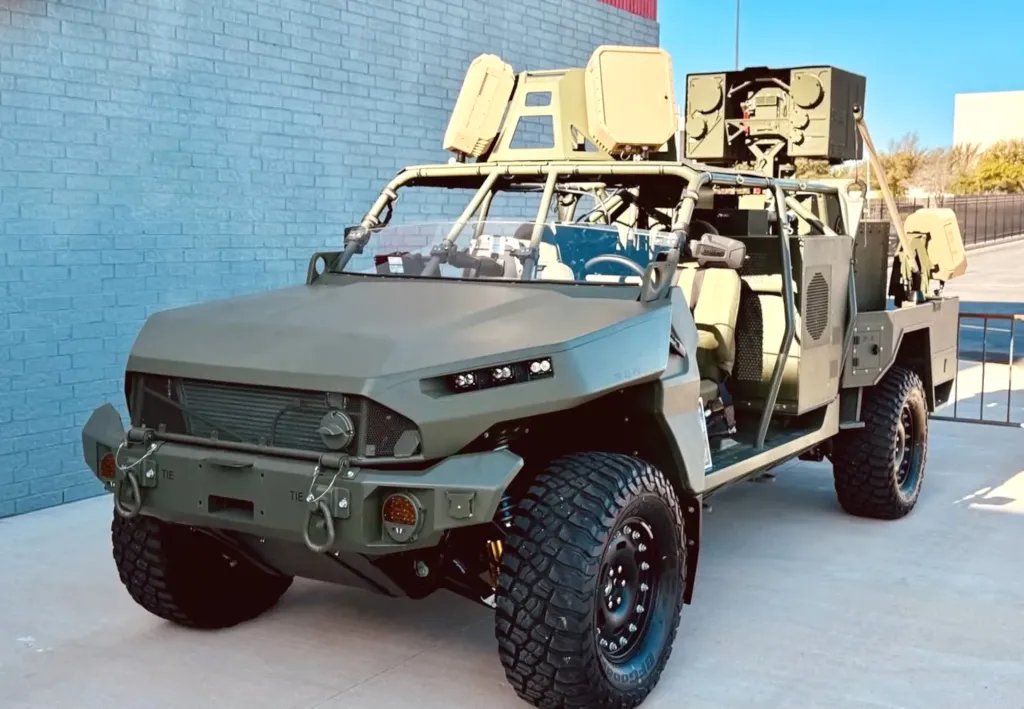
It was reported on that occasion that flight restrictions were imposed around El Paso as a result of a breakdown in coordination between the U.S. military and the FAA over the employment of a counter-drone system armed with a laser-directed energy weapon.
As we discussed at the time, the chaotic aftermath of the El Paso incident underscored the policy challenges and impediments the U.S. still faces in defending against drone incursions over the homeland. These are significant national security concerns that TWZ has been at the forefront of reporting on for years.
Under a federal statute commonly referred to as 130(i), “DoW can mitigate drone threats to protect military installations and missions inside the U.S., but it does not have general domestic airspace policing authority,” Scott Shtofman, Vice President & Counsel, Regulatory Affairs for the Association for Uncrewed Vehicle Systems International (AUVSI), told us in the wake of the El Paso incident.
Safety concerns about using directed energy weapons, and especially kinetic ones, to take down drones in the U.S. have been a major factor in why they haven’t been previously used in this role. A little less than a year and a half ago, officials at U.S. Northern Command (NORTHCOM), which has coordinating authority for counter-drone efforts in the U.S., said the use of such weapons was not yet on the table. The reason is that they can create dangerous or otherwise serious collateral effects that are less of a concern in a war zone.
While the details of this week’s incident are still to be established, it appears almost certain that this is the latest chapter in the ongoing saga of U.S. efforts to counter small drone incursions over the country.
Contact the author: thomas@thewarzone.com
Loading comments…
Comments couldn’t be loaded. Please refresh the page.