
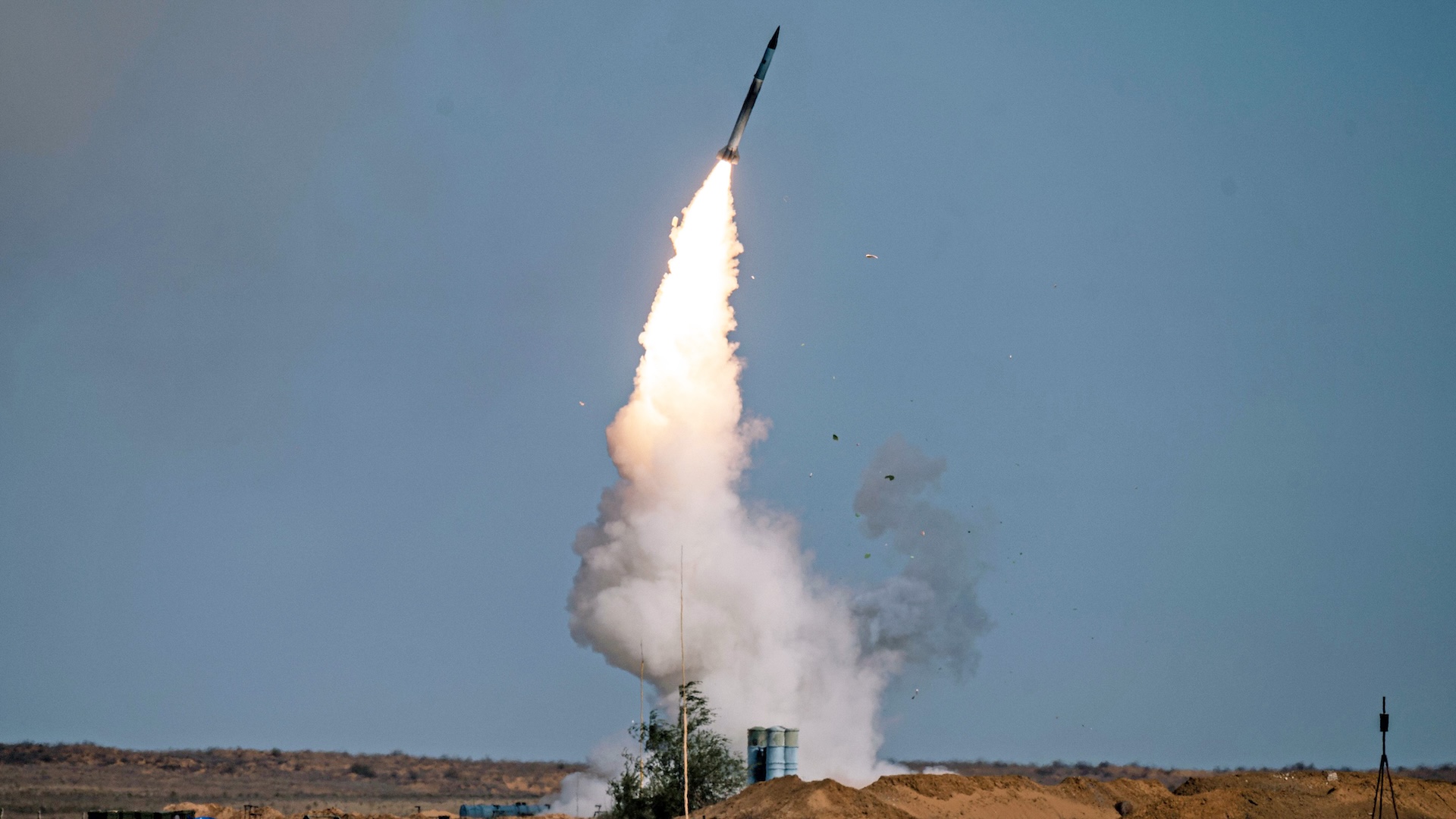
Russia’s heavy missile barrage directed against Ukraine on the night of January 20 appears to have involved the use of several new or unusual weapons. Various sources, unofficial and official, point to the possible use of a new version of the Iskander short-range ballistic missile (SRBM), as well as the rarely employed Zircon hypersonic cruise missile. Wreckage recovered in Ukraine also confirms, for the first time, Russia’s use of repurposed missile targets for air defenses in a land-attack role.
According to a report from the Ukrainian Air Force Command, a total of 34 missiles of various types were used in the raid, along with 339 drones, approximately 250 of which were Shahed/Geran-series types. Ukraine claims that 14 of 18 ballistic missiles launched from Iskander and S-300/S-400 systems, 13 of 15 Kh-101 cruise missiles launched from strategic bombers, and 315 of 339 long-range drones were destroyed.
Note: The missile shown at the top of this story is the S-400 surface-to-air missile, a weapon which is also used in a land-attack capacity.
Based on Ukrainian accounts, Russia used an improved version of the Iskander to strike at least one target in the Vinnytsia region, deep inside Ukraine, on the night of January 20. While this is yet to be independently confirmed, it has also been reported by Russian media.
Reports began to emerge last year that Russia was poised to start mass-producing a new version of the Iskander SRBM, with greater range and improved accuracy. The original 9K720 Iskander-M’s solid-fuel 9M723 ballistic missiles have, according to official figures, a range of 500 kilometers (310 miles), although there is evidence that they can fly further than that.
The new version, the name of which is unknown, is assumed to have a range of at least 1,000 kilometers (620 miles), resulting in it being unofficially dubbed Iskander-1000. Ukrainian authorities also refer to the new weapons as Iskander-I.
Regardless, the reported range would put the new missile in the medium-range ballistic missile (MRBM) category. MRBMs are categorized as ballistic missiles with maximum ranges between 1,000 and 3,000 kilometers (620 and 1,860 miles), while SRBMs can reach out to between 300 and 1,000 kilometers (190 and 620 miles).
This is, reportedly, the only known photo of the so-called Iskander-1000, taken during tests:
According to available reports, the longer-range Iskander uses a more powerful and efficient engine to increase its range; a reduced-size warhead would be another way to help achieve this, providing more space for fuel. Accuracy is meanwhile enhanced by a new navigation and guidance system. This is assessed to include a new inertial guidance system (INS), supplemented by Glonass satellite navigation, and perhaps a radar seeker for the terminal phase. This is said to provide for an accuracy of within 16 feet. No information is available on the warhead.
Like the earlier Iskander, the Iskander-1000 is likely to be able to perform high-G maneuvers in the terminal phase and to dispense decoys, to better evade air defenses.
Examples of the decoys deployed by the 9M723 ballistic missile:
Also relevant here is the emergence of reports about the Iskander-1000 after the termination by the United States of the Intermediate-Range Nuclear Forces Treaty (INF). This had previously prohibited the Soviet Union (later Russia) and the United States from fielding any ground-launched conventional or nuclear-capable missile of any type that can hit targets between 500 and 5,500 kilometers (310 and 3,420 miles) away.
The demise of INF frees Russia from such restrictions, including on versions of the Iskander. As such, the Iskander-1000 would not only have significance in the conflict in Ukraine (being able to strike targets in the west of the country) but also against NATO in Europe. If launched from the Kaliningrad exclave, the Iskander-1000’s range would cover almost the entire Baltic Sea region, all of Denmark, and most of Germany.
Speaking to the Russian daily newspaper Moskovskij Komsomolets, “military consultant” Anton Trutze said that the Iskander-1000 (coupled with the Oreshnik intermediate-range ballistic missile) ensured “superiority over Soviet capabilities in the class of operational-tactical missiles, which were once limited by the INF Treaty.” The result for Russia, he claimed, was “a serious argument in operational and political terms.”
Another theory is that the ballistic missile reported as the Iskander-1000/Iskander-I was something else altogether.
Ukrainian authorities state that Russia launched a Zircon hypersonic missile from occupied Crimea. This weapon, designed primarily for anti-shipping, has previously been combat-tested in Ukraine. According to the U.S. Strategic Command, the Zircon is capable of traveling at speeds of up to Mach 8.
In February 2024, evidence emerged that Russia had, for the first time, used the Zircon in attacks on at least one target in Ukraine. Ukrainian scientists showed a video of the Zircon wreckage — “fragments of the engine and steering mechanisms [with] specific markings,” seen below:
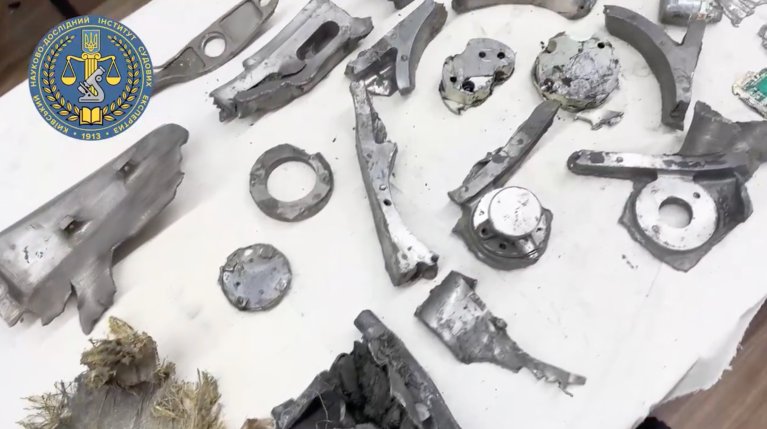
According to Ukrainian media reports, the Zircon was launched toward Vinnytsia. With this in mind, it’s possible that the Zircon was misreported as an Iskander-1000/Iskander-I, although these are very different weapons. By all accounts, the Iskander-1000/Iskander-I is a ballistic missile, while the Zircon, while still mysterious, is known to be a hypersonic cruise missile, likely with a ramjet powerplant. Such a mix-up would be puzzling, but it remains possible.
More concrete evidence is available concerning the use of another Russian missile on the night of January 20.
This is the RM-48U, which was developed as a target missile for the training of S-300 and S-400 air defense system crews. The RM-48U is fired from the same launchers and is based on reworked 5V55 or 48N6 missiles, as used by these systems, after they reach the end of their service lives.
Debris showing parts clearly marked as RM-48U was found after the raid, as seen in the composite below.
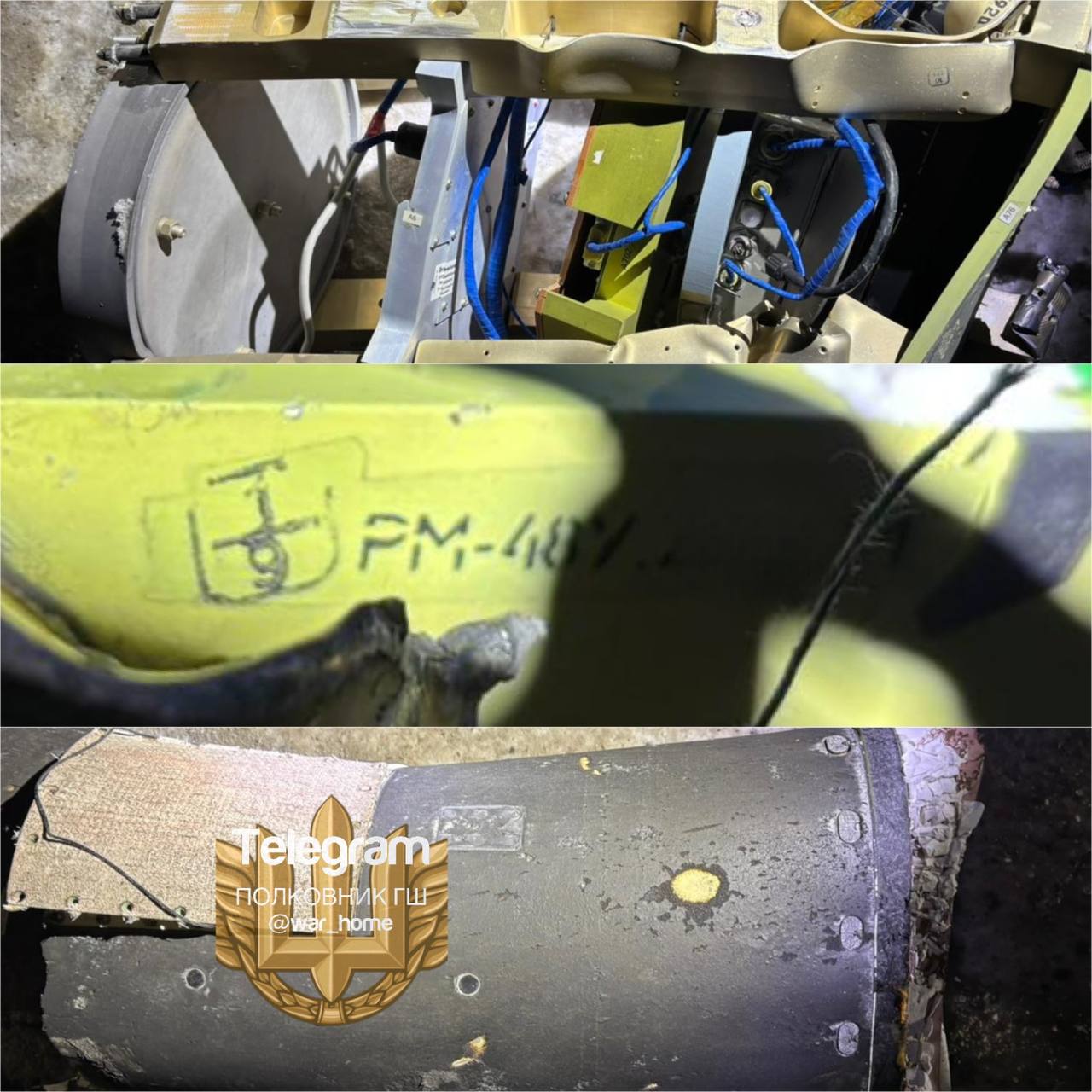
This is the first time since the start of the full-scale war that the RM-48U has been fired against Ukraine, according to the country’s Main Intelligence Directorate, which assesses that Russia currently has approximately 400 of these missiles in its inventory.
What’s unclear at this point is whether the target missile was fitted with a warhead, turning it into a true land-attack weapon, or if it was fired together with ballistic missiles as a decoy, helping to overwhelm Ukrainian air defenses.
According to Alexander Kovalenko, from Ukraine’s Information Resistance Group, the RM-48U missiles can have a range of between 30 and 120 kilometers (19 to 75 miles), depending on how they are modified.
Kovalenko assumes that the RM-48Us are retrofitted with warheads to make up for the lack of regular ballistic missiles, specifically Iskanders. Kovalenko said that Russia is likely capable of producing only around two 9M723 missiles (for the Iskander system) per day. Back in September 2022, Ukrainian intelligence sources claimed that only 13 percent of Russia’s pre-war stocks of Iskander ballistic missiles were left, forcing it to find other solutions.
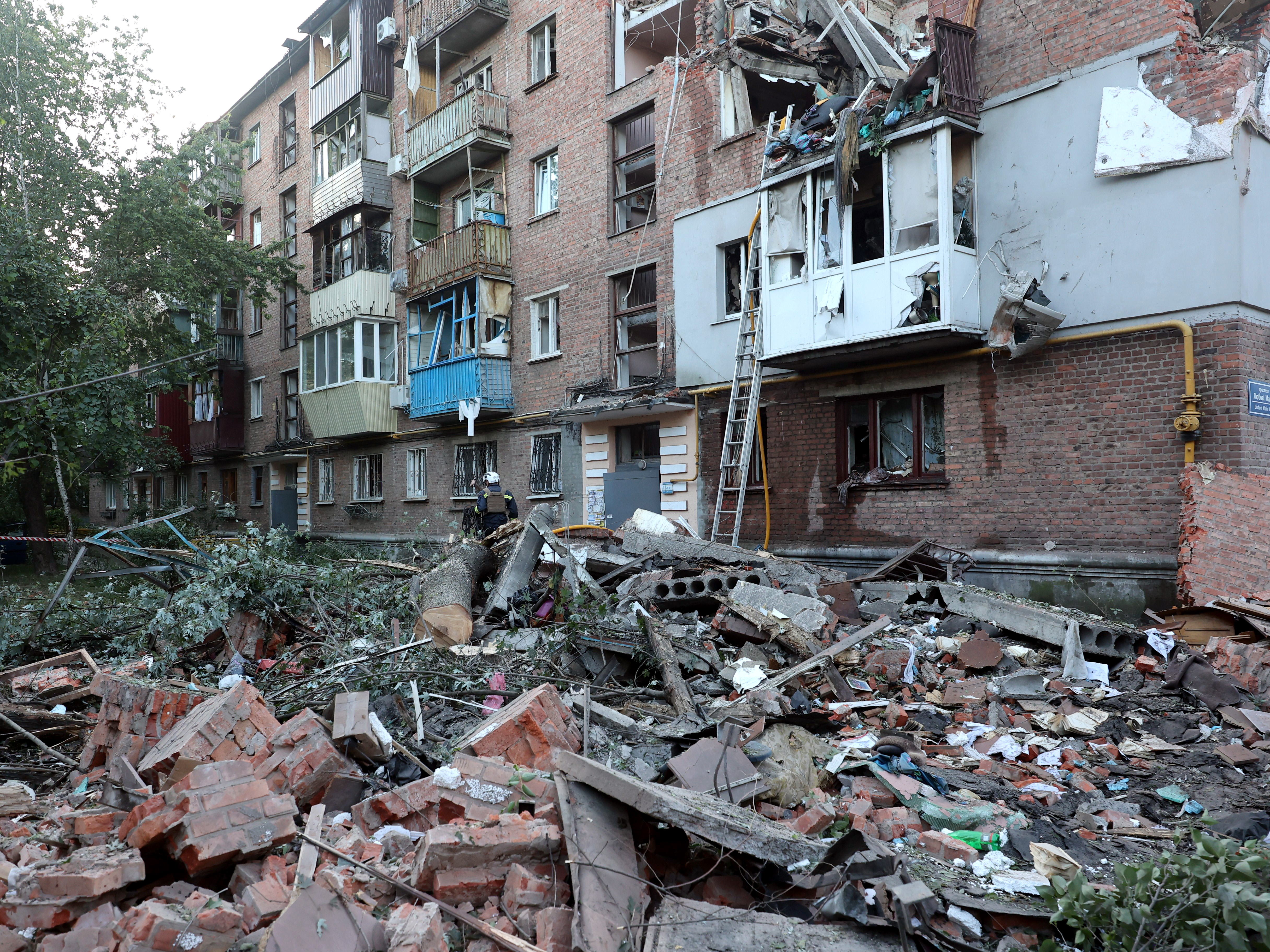
Based on the estimated range, however, even the higher-end figure, the RM-48U is hardly an adequate substitute for an Iskander. Also, considering their original role, the accuracy of the RM-48U is likely poor, making them only suitable for very short-range strikes against area targets — or as decoys.
Russia already makes use of missiles as decoys, including time-expired air-launched cruise missiles, with their previous nuclear warheads removed. You can read more about that trend here.
At the same time, there is also a long-established precedent for using S-300 and S-400 air defense systems to fire their standard surface-to-air missile effectors against ground targets in Ukraine. The S-300 does possess a little-known surface-to-surface capability, although it is far from accurate in this role.
Finally, the same missile barrage provided evidence of very recently manufactured Kh-101 cruise missiles, which are launched from Tu-95MS Bear-H and Tu-160 Blackjack bombers. At least one of the Kh-101s reportedly downed by Ukrainian air defenses indicates that it was manufactured in the first quarter of 2026. The use of such a recent missile further underscores how Russia has depleted its stocks of older weapons, a situation that we have discussed in the past and which is exacerbated by sanctions that have disrupted its ability to produce precision weapons at scale. Considering just how new the Kh-101 in question is, it shows that Russia is meanwhile using them in a ‘just in time’ fashion, as soon as they roll off the production line.
Taken together, these missile developments indicate that Russia is continuing to vary the mix of weapons (ballistic missiles, cruise missiles, drones), and also decoys, in its large-scale attacks on Ukraine. At the same time, the use of both brand-new missiles and repurposed target missiles points to general shortages of purpose-designed missiles and decoys.
For Ukraine, however, whether new or old, the sheer numbers of missiles and drones that Russia continues to bombard it with ensure that its hard air defenses remain very much under pressure. This is a particular concern when the supply of Western-supplied air defense systems remains strictly limited, and with the biting winter months making life especially difficult for its civilian population.
Contact the author: thomas@thewarzone.com
Loading comments…
Comments couldn’t be loaded. Please refresh the page.