
Jordan on Monday became the latest Arab nation to proclaim that it won’t let its territory be used in a war against Iran. Last week, we noted that Saudi Arabia and the United Arab Emirates also told the White House that their bases and airspace will be off limits for any attack on Iran. These decisions, if they hold, could greatly affect how the U.S. conducts any offensive actions against Iran. Meanwhile, reports have emerged that the U.S. and Iran might hold talks in Turkey on Friday. More on that later in this story.
“I held a phone call with His Excellency the Iranian Foreign Minister, Dr. Abbas Araghchi, discussing the situation in the region and the efforts being made to de-escalate tensions,” Jordan’s Deputy Prime Minister and Foreign Minister Ayman Safadi explained on X. “I emphasized the necessity of adopting dialogue and diplomacy as the path to reaching a peaceful resolution for the nuclear issue and ending the tension. I also reaffirmed Jordan’s steadfast position on the necessity of respecting the sovereignty of states, and that Jordan will not be a battlefield for any party in any regional conflict, or a launchpad for any military action against Iran, and it will confront with all its capabilities any attempt to breach its airspace and threaten the safety of our citizens.”
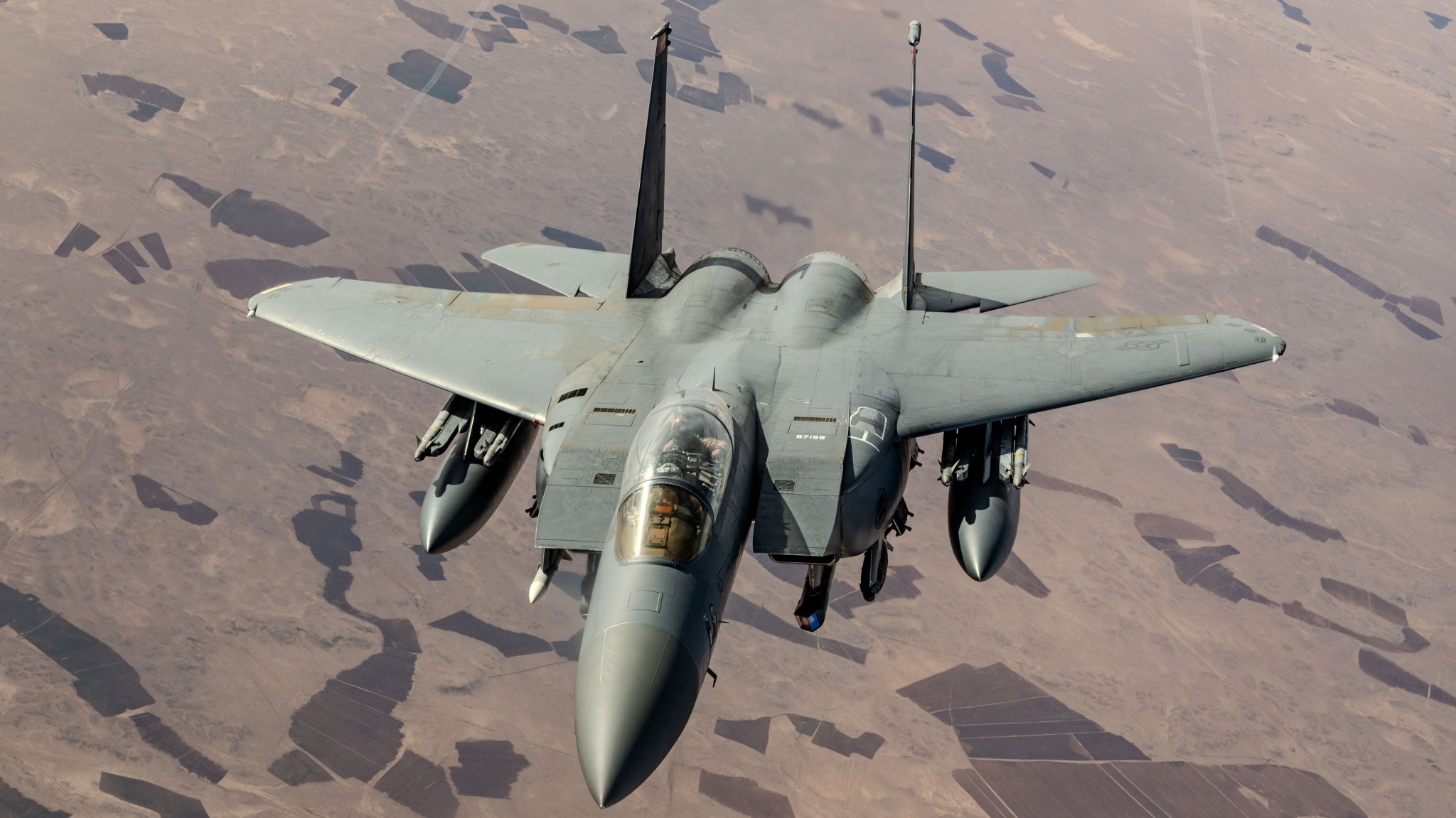
Such a move could further limit Trump’s military options in the region. Muwaffaq Salti, in central Jordan, has been a critical base housing U.S. tactical jets and other aviation assets for years. F-15E Strike Eagles based there played a key role in defending against a massive Iranian missile and drone barrage on Israel in April 2024. Over the past few weeks, Muwaffaq Salti has also seen an influx of at least 12 additional F-15E Strike Eagles and air defense systems amid mounting pressures with Iran. These join F-15Es already there, as well as A-10 Thunderbolt II close support jets and possibly American F-16 Vipers. Taking these assets out of the fight, or not allowing overflights by other aircraft, reduces the U.S. and allies’ ability to strike targets in Iran. It is unlikely to factor into the possibility of defending against the large number of missiles and drones Iran could fire in retaliation for any attack.
There is also the possibility that his statements are for consumption by a home audience wary of war with Iran, especially if that means fighting on the side of the Israelis. It’s also possible that messaging is intended to keep them from being struck by Iran in a massive retaliatory strike, but U.S. access to basing and airspace may be clandestinely allowed, even if to a limited degree. We just don’t know. Regardless, these are possibilities we suggested after Saudi Arabia and UAE made their comments about not getting involved.
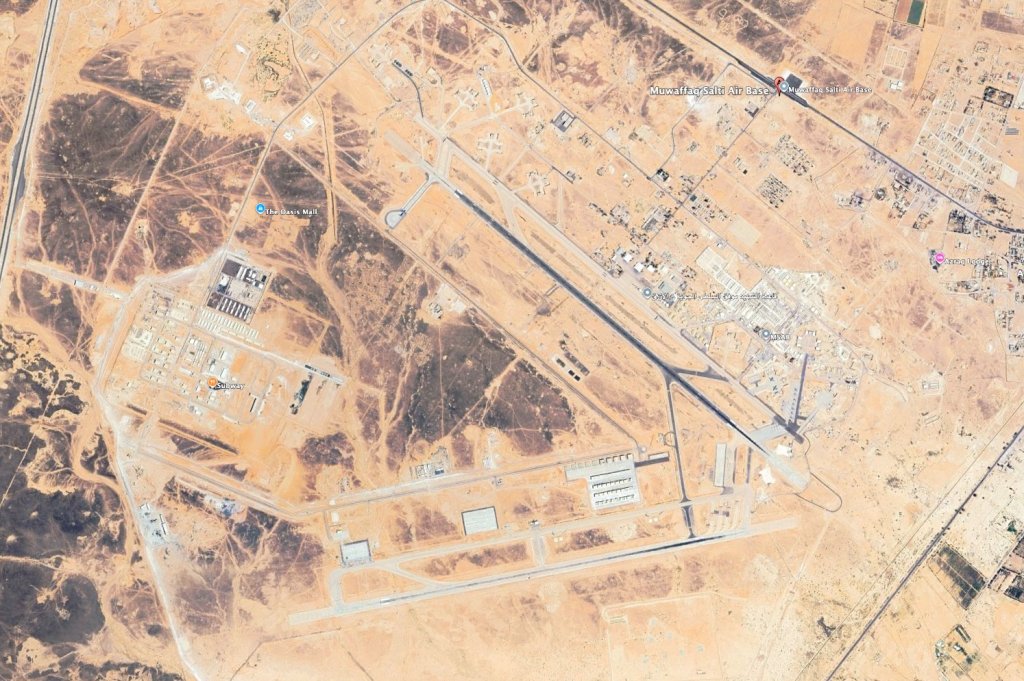
As we predicted, a flight of six E/A-18 Growlers landed at the Jordanian base on Jan. 31. They arrived after a journey from Puerto Rico, where they had taken part in the operation to capture Venezuelan dictator Nicolas Maduro. You can read more about what the Growlers would bring to the table for any conflict with Iran here.
The U.S. is sending additional Patriot and Terminal High Altitude Area Defense (THAAD) systems to the Middle East for increased protection from any Iranian attack, The Wall Street Journal reported. Now the flight appears to be heading from Kadena Air Base in Japan, which has an air defense unit operating Patriots. Online flight trackers suggest that the cargo jets are moving some of that equipment to the Middle East.
U.S. air defenses are far more limited in capacity than many realize and we have seen these exact kinds of reshuffling of assets unfold prior to a crisis erupting multiple times before in the region. You can read more about the limited supply of Patriot and THAAD batteries in our past report here and what measures are being taken to at least begin to rectify this problem here. Just how much airlift work it is to move these batteries around is pretty daunting in itself.
There also appears to be a flight of six Vermont Air National Guard F-35A stealth fighters headed to the region. The jets moved east from the Caribbean, where they also took part in the Maduro capture. We were the first to report that they landed in Lajes, Portugal, and were possibly slated to head to Jordan. However, the F-35s were diverted to Rota, Spain, and it remains unclear when they will leave or where they will go.
Even if the F-35s are bound for the East, there still has not been the kind of influx of tactical aviation needed to sustain any operation of scale. There also doesn’t appear to be any immediate bolstering of aircraft at Diego Garcia, as we have seen in prior tensions with Iran and its Houthi proxies in Yemen.
Recent satellite imagery shows three Air Force KC-135 Stratotanker aerial refueling jets, a Navy P-8A Poseidon maritime patrol jet, and perhaps two Air Force Special Operations Command MC-130J Commando IIs. Satellite imagery from today shows many of these assets have moved on or were on missions away from the base, with just what appeared to be a pair of P-8s and a heavy airlifter, possibly a C-5, present. However, the buildup at the Indian Ocean island could accelerate at any time.
Complicating the move of materiel to the Middle East, a KC-46 Pegasus aerial refueling tanker reportedly suffered a mishap at Moron Air Base in Spain. That jet was one of several refuelers scheduled to gas up the F-35s as they flew east. Videos emerged showing the crew aborting the flight shortly after.
The Pegasus appears to still be on the runway, which has backed up logistics. We have reached out to U.S. Air Forces Europe-Air Force Africa (USAFE) for more details about the mishap, the status of the aircraft, and the extent to which this is causing delays in getting military supplies to the Middle East.
The buildup of naval forces continues as well. Late last week, the Arleigh Burke class guided missile destroyer USS Bulkeley arrived in the eastern Mediterranean, a U.S. Navy official told us, joining the Arleigh Burke class USS Roosevelt in that body of water. The destroyers can serve as air and missile defense pickets against incoming Iranian missiles.
Last week, we were the first to report that the Arleigh Burke class guided missile destroyer USS Delbert D. Black arrived in the Red Sea, becoming the 10th ship in the CENTCOM region. It joins the aircraft carrier USS Abraham Lincoln and its three escort Arleigh Burkes, two independently deployed Arleigh Burkes, and three Littoral Combat Ships. You can read more about these moves and what they could mean for a possible attack on or from Iran in our story here.
The exact position of the Lincoln CSG is unclear at the moment; however, the Iranians have been flying one of their drones over the Strait of Hormuz and Gulf of Oman to surveil U.S. warships in the region.
While a lot of aircraft are heading toward the Middle East, it looks like there is one less E-11A Battlefield Airborne Communications Node (BACN) jet in the region. Last week, it was reported that a BACN was heading to Souda Air Base in Crete, a common route for deployments to the Middle East. However, flight trackers reported that another E-11A forward deployed to the Middle East has left.
There may be another E-11A heading to the Middle East now, though it is too early to say just where it might end up.
E-11As are highly specialized communications gateway nodes. You can find out more about BACN and its history in this past War Zone feature. It’s also worth mentioning that the BACNs spent many years exclusively deployed to the Middle East during the Global War on Terror.
Trump on Monday told reporters that talks with Iran were ongoing
“We have ships heading to Iran right now, big ones … and we have talks going on with Iran,” Trump told reporters at the White House. “We’ll see how it works out.”
Washington and Tehran are also still working toward negotiations. White House envoy Steve Witkoff and Iranian Foreign Minister Abbas Araghchi “are expected to meet on Friday in Istanbul together with representatives of several Arab and Muslim countries to discuss a possible nuclear deal,” Axios reported, citing sources. The talks, if they happen, mark a rare face-to-face exchange between the two sides in the wake of President Donald Trump’s threats against the Iranian regime.
The U.S. leader demands that Iran end its nuclear program and ship its enriched uranium out of the country, limit its ballistic missile capabilities, and sever ties with armed proxies in the Middle East. In return, the United States will not attack Iran and remove crippling sanctions.
The Istanbul summit “will focus on trying to put together a package deal that prevents war. The official stressed the Trump administration hopes Iran will come to the meeting ready to make the needed compromises,” Axios added.
Iran’s foreign ministry says it is reviewing the terms for resuming talks with the United States, after both sides signal readiness to revive diplomacy over the nuclear issue.
Iran may even agree to suspend or shut down its nuclear program to ease tensions, The New York Times reported.
Though they have expressed a willingness to negotiate, the Iranians have thrown up a major roadblock. Top Khamenei advisor Ali Shamkhani stated that Iran will not ship its stockpile of enriched uranium out of the country. That stance, if it holds, could render discussions moot.
One reason Iran may be open to talks is that it is “increasingly worried a U.S. strike could break its grip on power by driving an already enraged public back onto the streets, following a bloody crackdown on anti-government protests,” Reuters reported, citing six current and former officials. “In high-level meetings, officials told Supreme Leader Ayatollah Ali Khamenei that public anger over last month’s crackdown — the bloodiest since the 1979 Islamic Revolution — has reached a point where fear is no longer a deterrent.”
The unrest began in Iran on Dec. 28 over rising prices and a devalued currency that saw the rial crater now to basically nothing, as well as a devastating drought. The ongoing harsh treatment from the regime fanned the flames. By some estimates, as many as 30,000 protestors have been killed.
Khamenei is blaming the massive uprising against him on Trump, who last month urged that the protests continue and said, “help is on its way.“
“The fact that we call the recent sedition #American Sedition is not just because of the complex hidden security information; what makes it clear that this was an American move is the statements of the President of the United States himself,” he stated on X. “First, he referred to the few thousand rioters as the people of Iran. Then he said, ‘Go forward, go forward, I’m coming!'”
Meanwhile, the rhetoric from Khamenei’s military leaders continues to be heated.
The Islamic Republic “is fully prepared to confront and give a revengeful blow to the enemy, in case of any military mischief against the country’s sovereignty and territorial integrity,” Chairman of the Chief of Staff of Iran’s Armed Forces Major General Abdolrahim Mousavi said, according to official Iranian media. “Escalation in the region will have grave consequences for the US and its allies,” he added, emphasizing that “Iranian forces only think of victory, without any fear of the enemy’s rumbling and apparent arrogance.”
Still, Iranian authorities on Sunday walked back announced plans for live-fire exercises in the Strait of Hormuz, Reuters reported.
“The naval forces of Iran’s Revolutionary Guards have no plan to carry out as reported by some media outlets earlier this week,” an Iranian official told the news outlet.
The walkback happened after U.S. Central Command issued a warning to Iran over the exercise.
“CENTCOM will ensure the safety of U.S. personnel, ships, and aircraft operating in the Middle East,” the command stated on X. “We will not tolerate unsafe IRGC actions including overflight of U.S. military vessels engaged in flight operations, low-altitude or armed overflight of U.S. military assets when intentions are unclear, highspeed boat approaches on a collision course with U.S. military vessels, or weapons trained at U.S. forces.”
In Jerusalem, Israeli Prime Minister Benjamin Netanyahu said his country remains on high alert and is prepared for a strike from Iran.
Israel “is ready for every scenario,” Netanyahu said in a speech to the Knesset in response to Iranian threats. “Whoever attacks us will face unbearable consequences.”
While Trump has shown a willingness to negotiate, it should be noted that the White House was in talks with Iran ahead of last June’s Operation Midnight Hammer attack on Iran’s nuclear weapons facilities. It remains to be seen whether a new round of face-to-face negotiations takes place, but the buildup for a potential conflict does not seem to be stopping.
Contact the author: howard@thewarzone.com
Loading comments…
Comments couldn’t be loaded. Please refresh the page.