
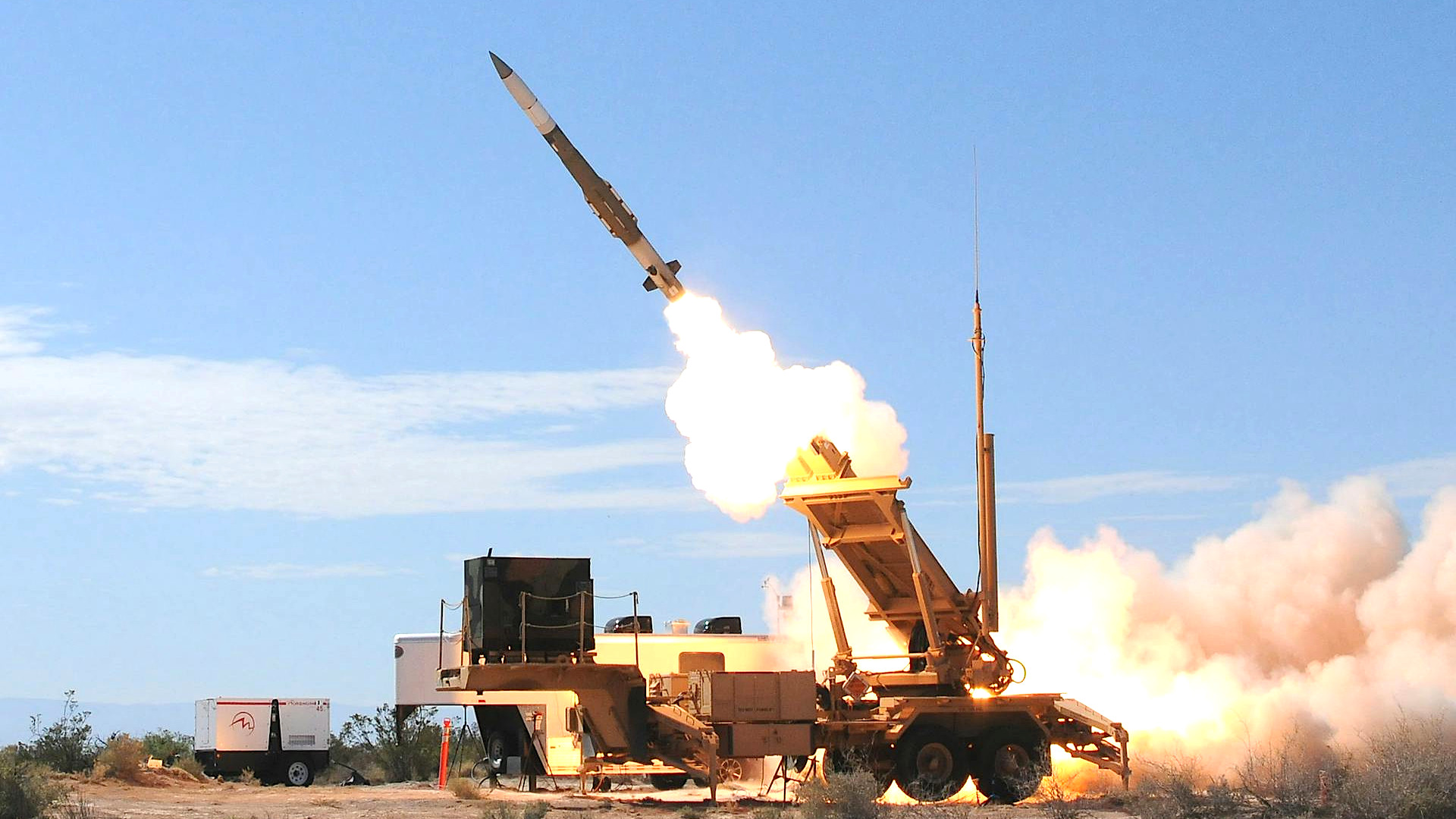
The U.S. Army plans to stand up four new Patriot surface-to-air missile system battalions in the coming years to help ease the strain on what it says is its “most stressed force element.” Doing so will grow the service’s overall Patriot force by roughly a quarter, and even more so when it comes to units that can be deployed operationally. The Army’s existing Patriot battalions have already been shown to be worryingly inadequate to meet heavy existing operational demands, something TWZ has been calling attention to for years now. The lack of capacity would be a huge problem if a large-scale conflict, such as one in the Pacific against China, were to erupt.
Vice Chief of Staff of the Army Gen. James Mingus talked at length about his service’s plans for the Patriot force, as well as broader efforts to expand its air defense capabilities and capacity, during a talk that the Center for Strategic and International Studies (CSIS) think tank hosted on July 2.

“It [Patriot] is our most stressed force element. We have 15 Patriot battalions in the Army, one of which is going through a major kind of redo. So, really, 14 that are available. We have three that are assigned in the Indo-Pacific, one that’s assigned at EUCOM [U.S. European Command], and the rest are service retained,” Mingus said. “And one of our air defense Patriot battalions that’s in CENTCOM [U.S. Central Command] has been there for close to 500 days. So, yes, very stressed force element.”
In his tally, Mingus did not count two additional Patriot battalions in the United States that are dedicated training units and are not deployable. A typical Patriot battalion has a headquarters element, along with between three and five firing batteries. Each of those batteries can have up to eight trailer-mounted launchers, as well as an AN/MPQ-65 multifunction phased array radar and other fire control, communications, and other support equipment. Current generation Patriot launchers can be loaded with a mix of interceptors optimized against various target sets, including cruise missiles and drones flying at lower altitudes and certain types of ballistic missiles in the terminal stages of their flight.
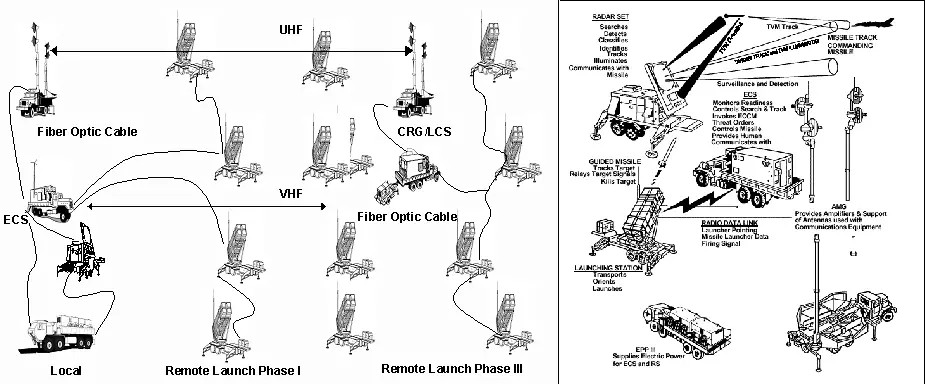
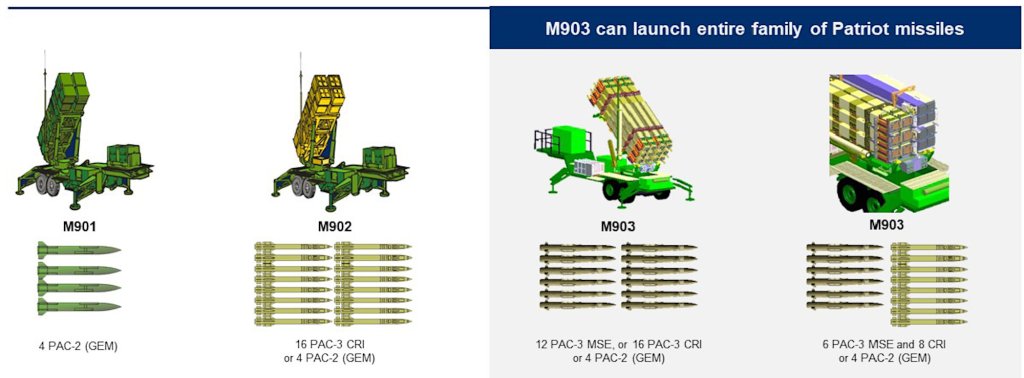
The Patriot battalion currently deployed in support of CENTCOM, which was notably moved there earlier this year from the Indo-Pacific region, helped shield Al Udeid Air Base in Qatar against incoming Iranian ballistic missiles on June 23, something Mingus highlighted during the talk. The Pentagon has said the defense of Al Udeid was the single largest salvo of Patriot interceptors ever.
“We know we have to grow that. We have plans on the table to build a 16th, 17th, and 18th,” Mingus continued, without providing a timetable for when those units might be established. “And that’s not to include the Patriot battalion that we’re going to put in Guam as part of the Guam defense system.”
Patriot is just one part of a greatly expanded air and missile defense architecture taking shape on the immensely strategic island of Guam in the Western Pacific, which will also include elements provided by other services, as you can read more about here.
At the CSIS talk earlier this month, Mingus also explained that the Army expects the effectiveness of each individual Patriot battalion to grow significantly from the introduction of the new Lower Tier Air and Missile Defense Sensor (LTAMDS) radar and the Integrated Battle Command System (IBCS) network.

“The other thing that … will fundamentally shift, and this is specific to, initially, the Patriot, but it will then apply to our other air defense formation, is the new radar and the battle command system that goes with it,” Mingus explained. “So if you’ve heard the term IBCS and LTAMDS, LTAMDS is the new radar. So instead of what we have today, with our Q-series [AN/MPQ-65] radars that have about a 270-view look, which grows – or, kind of negates how much coverage that you can have, the new LTAMDS is 360 [degrees].”
“It also goes from about 85 kilometers [close to 53 miles] up and 85 kilometers out to 300 by 300 [kilometers; around 186 miles]. So [it] greatly expands the range, the altitude, and it’s a 360,” the general continued. “So you could take those same 15 Patriot battalions we have today, give it [sic] IBCS and LTAMDS, and fundamentally when you operationally employ it, it’s, like, immediately doubling that capability. You would have the equivalent of about 30 Patriot battalions, because instead of having to deploy as batteries, you can break them up and disperse them in a much more tactical way.”

Upgrades continue to be made to the current slate of Patriot interceptors, though the Army announced last year that it had axed plans for an all-new addition to the system’s quiver.
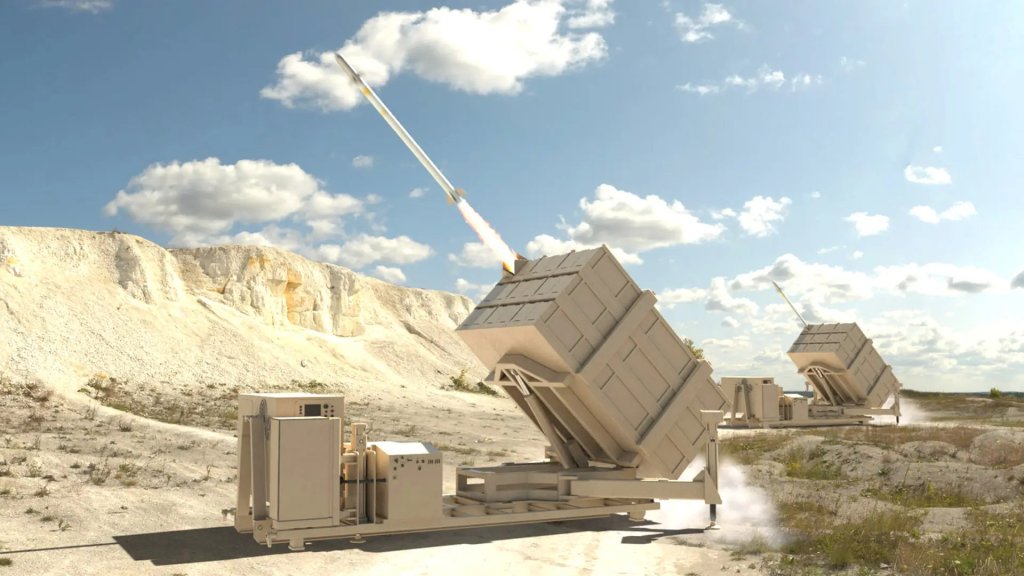
While speaking at CSIS, Mingus further discussed how the Army is looking to more directly augment its Patriot with its new Enduring Shield surface-to-air missile system, also known as the Indirect Fire Protection Capability (IFPC). Enduring Shield is its own highly significant development, being the service’s first middle-tier air and missile defense capability since the retirement of the Hawk system in the 1990s. IFPC’s primary interceptor, at least initially, is the AIM-9X Sidewinder. The Army is also looking to acquire a second option optimized against cruise missiles, and has said it is looking for a munition with capabilities more in line with those of the AIM-120D Advanced Medium-Range Air-to-Air Missile (AMRAAM), but the same form factor as the AIM-9X.
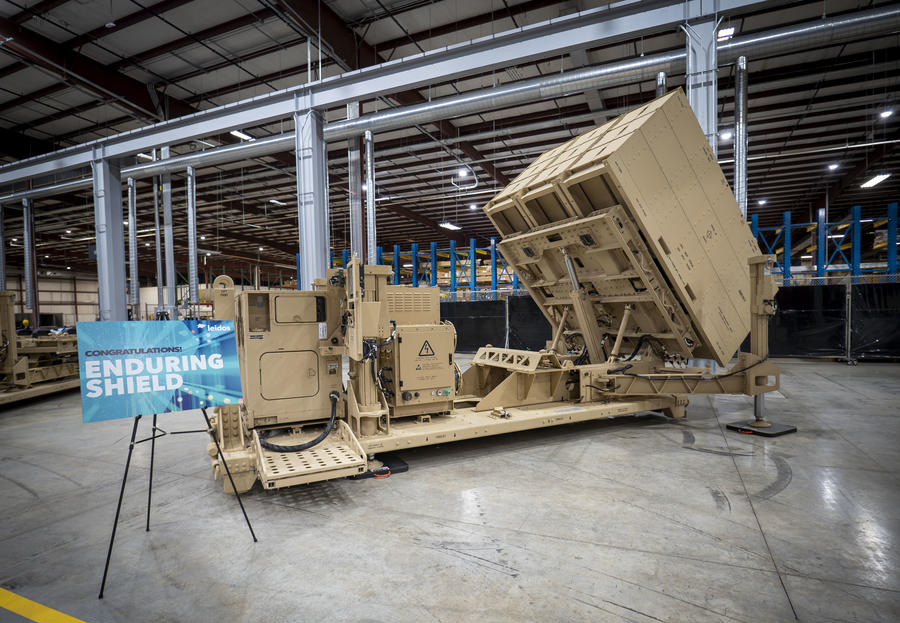
“The IFPC battalions that are coming online will help offset that [demand for Patriot] as well, even though it’s not quite the same capability,” the Vice Chief of Staff of the Army said. “In some environments, that [IFPC] actually is more appropriate to apply than a full-up Patriot battalion.”
Mingus also raised the possibility of future Army air defense battalions with a mix of Patriot and IFPC systems. This is all notably in line with comments from last year from Army Lt. Gen. Sean Gainey, head of that service’s Space and Missile Defense Command (SMDC).
“We have relied too long on the Patriot system as the centric system to air and missile defense,” Gainey said during a panel discussion at the Association of the U.S. Army’s (AUSA) main annual symposium in October 2024. “We are modernizing now with the short-range air defense and moving forward with our IFPC cruise missile defense, and our improvements to our current system[s], with the integration into IBCS, it will eventually start to relieve that significant stress.”
At the CSIS talk, Mingus made clear that the Army sees further enhancements to its air and missile defense capabilities on the horizon beyond the Patriot force expansion and the fielding of IFPC. He warned against the kind of complacency that has put his service in its current predicament, which is a product of what have turned out to be short-sighted post-Cold War air defense draw-downs further magnified by decisions during the Global War on Terror era. The Army Vice Chief of Staff explicitly highlighted the continued rapid evolution of drone threats, which is now on the cusp of a revolution driven by advances in artificial intelligence and machine learning, as a particularly significant additional factor in current and future air defense demands.
“I think we started prior to 9/11 at 33 [maneuver brigades], [and] we grew to 54. I know there were designs to go to 57. But one of the bill payers was the air defense structure,” Mingus said. “That cannot be part of the future. And so we are reintroducing that structure from the tactical level all the way up to the theater level, in the form of M-SHORAD [Maneuver Short Range Air Defense] battalions, and IFPC battalions, and additional Patriot battalions.”
M-SHORAD is an expanding ‘system of systems,’ the first of which is a mobile short-range air defense platform based on the 8×8 Stryker light armored vehicle. The M-SHORAD program also includes work on laser and microwave directed energy weapons, a replacement for the Stinger short-range surface-to-air missile, and potentially additional air defense vehicles. Electronic warfare and other capabilities are also part of the Army’s overall air and missile defense ecosystem plans.

“What we can’t lose sight of is even … after that [new force] structure is in, is two things. One, just because we started with this platform, that doesn’t mean that we’re stuck with that platform for the next 20 years. Because the rate in which things are changing, that M-SHORAD capability that we have today is going to have to be something different in four or five years from now,” Mingus said. “And then the second part is that even though we’re reintroducing air defense back into the Army force structure, layered protection – so even our maneuver formations that don’t have an air defense role are still going to have to perform those kind of functions, from one-way attack drones and other things that are coming at them.”
When it comes to drones, specifically, there is “no single solution. It’s got to be at every level. It’s got to be layered. Every squad’s got to be able to protect itself, all the way up to formations that provide higher-end capability,” he continued. “It’s going to be a combination of high-energy lasers … there may be high-powered microwaves that are there. It will be interceptors. We have the Coyote Block 2 Charlie, which is out there right now, our most effective interceptor that we have. But that’s not going to last. It’s going to have to be replaced.”
Coyote is one of the best-known dedicated counter-drone systems in U.S. Army service today. It is a combat-proven system that has been deployed in vehicle-mounted and fixed-site configurations, as you can read more about here.

“Interceptors that continue to come down in cost, so that the price point between shot and what the adversary is doing has to be in line. We can’t shoot [a] $130,000 missile at [a] $1,000 drone. We’ve got to get the price points down,” he added. “Proximity rounds. So, you know, an example of a – we’ve got these new 30-millimeter [cartridges] that have a small emitting radar on the front of it, goes out, comes within proximity of the drone itself, explodes, and, you know, takes the drone out. And so there’s going to be a multitude of solutions, long, short, and close in, that are out there. And once we think we’ve got it figured out, then the adversary is going to come up with something, and we need to be able to evolve. And so this is not going to be a static environment. It’s got to be something that’s moving at the rate in which the technology is moving on the other end.”
There are significant questions about the speed at which the Army will be able to implement any of its current air defense plans, many elements of which are already years in the making. Industrial base concerns are already particularly pronounced when it comes to Patriot and interceptors for the system.
Raytheon, the prime contractor for the Patriot system, as well as current-generation PAC-2 series interceptors, has already seen a major surge in demand globally in recent years. Lockheed Martin has a similar spike when it comes to its PAC-3 interceptors. This has all come largely on the back of the notably successful performance of Patriot in Ukraine, which is among those seeking more of these systems. The Ukrainian military’s existing Patriot force has benefited greatly from direct transfers of interceptors and other equipment from the United States, as well as several other countries. The Pentagon just recently pushed back on reports that sending Patriot interceptors to Ukraine had caused U.S. stockpiles to drop worryingly low.
The video below highlights various Western-supplied and other air defense systems in service in Ukraine, including Patriot.

Both Raytheon and Lockheed Martin are working to expand their respective production capacities, but when the Army might actually take delivery of a new Patriot battalion, let alone four, remains to be seen. There are similar questions about how long it might take to meet new requirements for interceptors. In its most recent budget request for the 2026 Fiscal Year, the service disclosed its intention to roughly quadruple its PAC-3 procurement plans, from 3,376 to 13,773. Last Year, Lockheed Martin received a contract from the Army to increase the annual production of PAC-3s from around 550 to 650.
The U.S. Navy is also pressing ahead with the development of a naval PAC-3 capability combined with the Mk 41 Vertical Launch System (VLS), which would create additional demand for those missiles.
Layering in lower-cost air and missile capabilities, and ones that can also be more rapidly produced at scale, where possible, is one option for the Army to help mitigate these supply chain and industrial base issues. This is underscored by the repeated highlighting of Enduring Shield as another aspect of efforts to reduce the strain on the Patriot force. Enduring Shield could eventually supplant Patriot entirely in certain lower-end scenarios, but high-end ones would still require at least a mix of both. Combining the two would also allow for Patriot interceptors to be considered for more challenging and/or threatening targets, with sensors networked via IBCS being able to improve discrimination and even help air defenders choose the most appropriate effector.
The Army, which is very much still playing catch-up on bolstering its air and missile defense capabilities and capacity at all levels, can ill afford to lose any more time on those efforts. The defense of Al Udeid Air Base last month, where at least one Iranian ballistic missile out of a relatively small barrage was able to reach its target despite combined efforts of U.S. and Qatari Patriot units, put yet another spotlight on that reality. U.S. forces would expect to see far larger volumes of diverse air and missile defense threats heading their way in any future high-end fight, especially one against China in the Pacific.
What is clear is that the Army is trying to move ahead with a major expansion of its heavily strained Patriot force, which the service acknowledges it sorely needs.
Contact the author: joe@twz.com
Loading comments…
Comments couldn’t be loaded. Please refresh the page.