
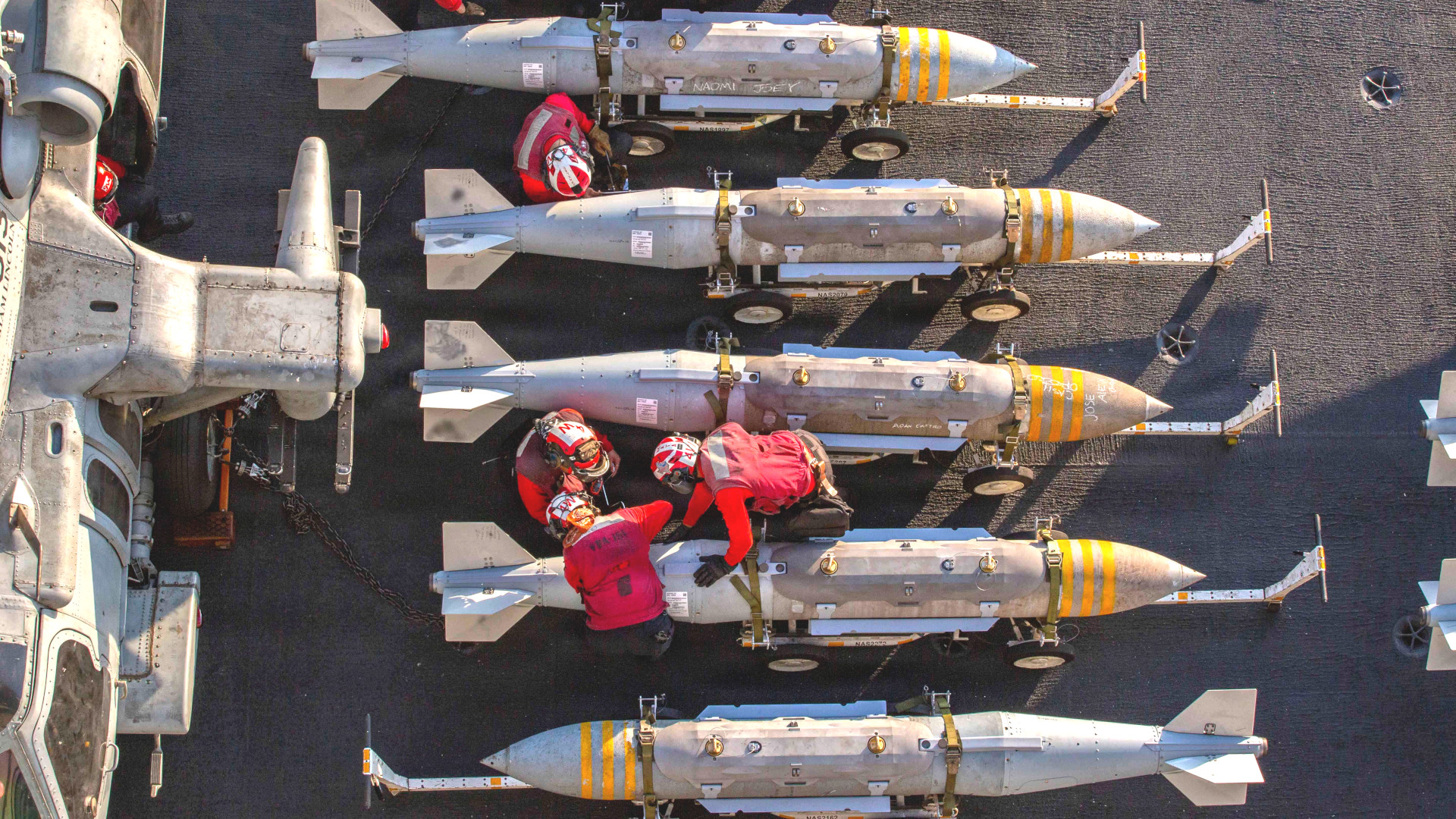
The joint U.S.-Israeli operation against Iran has entered day three. The Pentagon has now shared some new details in its first formal press briefing on the conflict since it began over the weekend.
Readers can catch up on the events of the first day of the war with our initial rolling coverage here, and the important events from day two here.
What the United States has dubbed Operation Epic Fury “was highly classified, so that at H-Hour [the start of the operation], the enemy would see one thing, speed, surprise, and violence of action,” Chairman of the Joint Chiefs of Staff U.S. Air Force Gen. Dan “Razin” Caine said at this morning’s press conference at the Pentagon. “The first movers were CYBERCOM [U.S. Cyber Command] and USSPACECOM [U.S. Space Command], layering non-kinetic effects, disrupting and degrading and blinding Iran’s ability to see, communicate, and respond.”
“At H-Hour, the beginning of major combat operations [1:15 AM Eastern Daylight Time on Saturday, February 28], 9:45 AM local Tehran time, as dawn crept up across the Central Command AOR [Area of Responsibility], the sky surged to life. More than 100 aircraft launched from land and sea – fighters, tankers, airborne early warning, electronic attack, bombers from the states, and unmanned platforms forming a single synchronized wave.”
“This was a daylight strike based on a trigger event conducted by the Israeli Defense Forces enabled by the U.S. intelligence community,” Caine added. “The first shooters at sea were Tomahawks [land attack cruise missiles] unleashed by the United States Navy. Closed in on Iranian naval forces and began to conduct strikes across the southern flank in Iran. On the ground, forces fired precision standoff weapons – measured, deliberate, precise, and lethal. This was a massive, overwhelming attack across all domains of warfare, striking more than 1,000 targets in the first 24 hours.”
“We are now roughly 57 hours into the operation,” Caine further explained. “In the initial phase, CENTCOM’s [U.S. Central Command] focus was systematic targeting of Iranians [sic] command and control infrastructure, naval forces, ballistic missile sites, and intelligence infrastructure designed to daze and confuse them. Coordinated space and cyber operations effectively disrupted communications and sensor networks across the area of responsibility, leaving the adversary without the ability to see, coordinate, or respond effectively.”
“The combined impact of these strikes – swift, precise, and overwhelming – has resulted in the establishment of local air superiority. This air superiority will not only enhance the protection of our forces, but also allow them to continue the work over Iran. Over the course of the last two days, the Joint Force has launched hundreds of missions from land and sea and delivered tens of thousands of pieces of ordnance. The effort continues to scale,” the Chairman continued. “This included American B-2 bombers, which, again, similar to [Operation] Midnight Hammer [against Iran in 2025], flew a 37-hour round-trip sortie from the continental United States, dropping precision, penetrating munitions on Iranian underground facilities across the southern flank, slightly deeper. Additionally, Israel has separately executed hundreds of sorties against hundreds of targets.”
“While we’ve prosecuted a relentless offensive campaign, our defense has been equally important across the theater,” Caine also said. “Operations have remained [inaudible] and disciplined. Once again, our integrated air and missile defense network is performing exactly as it’s intended. U.S. Patriot and THAAD [Terminal High Altitude Area Defense] batteries, along with ballistic missile defense-capable Navy destroyers, continue to coordinate and execute intercepts with vision and consistency.”
“I wish that every American could hear the voice communications like I have as these joint operation centers remain calm, focused, cool, while executing under fire over and over again. Collectively, these systems have intercepted hundreds of ballistic missiles targeting U.S. forces, our partners, and regional stability,” Caine noted. “The threat from one-way attack UAVs [uncrewed aerial vehicles] has remained persistent. Our systems have proven effective in countering these platforms, engaging targets rapidly. Each intercept represents hundreds of hours of training, readiness, and technology, all coming together to work as designed. We will remain vigilant in the counter-UAV fight, and the defense of the region is not ours alone. As the threat grew, our partners surged in beside us. Air defense batteries in Qatar, the UAE [United Arab Emirates], Kuwait, Jordan, and Saudi Arabia joined the fight, proof positive that years of training, trust, and, hard-earned integration pay off.“
Caine also said he was aware of the loss of three U.S. Air Force F-15E Strike Eagles, to apparent friendly fire over Kuwait, but declined to provide more details. All six crew members are safe, and you can read more about the incident here.
In addition to the aforementioned friendly fire incident, U.S. Central Command (CENTCOM) has now confirmed the death of a fourth U.S. service member. The individual in question “was seriously wounded during Iran’s initial attacks, [and] eventually succumbed to their injuries,” according to an official statement. Yesterday, the Pentagon confirmed that the three previously known fatalities of U.S. service members occurred during Iranian strikes on Kuwait.
We have concluded our rolling coverage in this piece. We will be back soon to continue our reporting.
UPDATE: 5:23 PM EST-
The IDF says it has destroyed the headquarters of state media outlet Islamic Republic of Iran Broadcasting (IRIB) in Tehran.
U.S. Central Command has denied that the Strait of Hormuz is closed and says there are no signs of any Iranian attempt to mine it, according to Fox News.
CNN is now reporting that the six U.S. service members confirmed to have been killed in action in support of Operation Epic Fury were all in the same “makeshift operations center” in Kuwait when it was hit during an Iranian attack.
In line with the earlier alert from the State Department, there are indications that the U.S. Embassy in Amman, Jordan, has come under attack.
The video below is said to show a U.S. Low-Cost Uncrewed Combat Attack System (LUCAS) kamikaze drone, based on the Iranian Shahed-136, recovered largely intact in Iraq. The drone’s beyond-line-of-sight satellite datalink can be seen detached and hanging by a cable. The U.S. military previously confirmed having employed these drones in the opening wave of strikes on Iran, as you can read more about here.
The U.S. State Department has issued a new call for Americans to depart 14 Middle Eastern countries “via commercial means due to serious safety risks.”
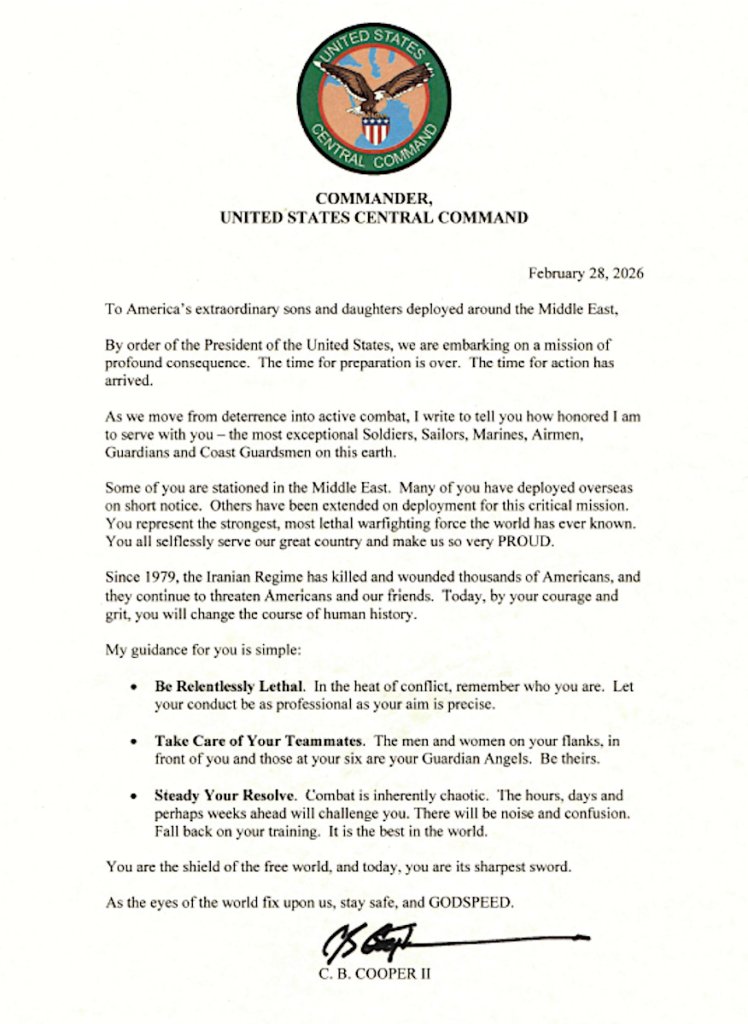
TWZ has obtained a letter from U.S. Navy Adm. Brad Cooper, head of U.S. Central Command, to forces in the region at the start of Operation Epic Fury.
“As we move from deterrence into active combat, I write to tell you how honored I am to serve with you – the most exceptional Soldiers, Sailors, Marines, Airmen, Guardians and Coast Guardsmen on this earth,” Cooper wrote. “Since 1979, the Iranian Regime has killed and wounded thousands of Americans, and they continue to threaten Americans and our friends. Today, by your courage and grit, you will change the course of human history.”
The full letter is reproduced below.
Secretary Hegseth has also now issued a video message to the joint force.
UPDATE: 4:32 PM EST-
Newly released pictures show that U.S. Navy Arleigh Burke class destroyers have fired more Tomahawk cruise missiles at targets in Iran today.
U.S. Central Command now also says that a total of six U.S. service members have been killed in the course of Operation Epic Fury.
“U.S. forces recently recovered the remains of two previously unaccounted for service members from a facility that was struck during Iran’s initial attacks in the region,” according to an official statement.
Israel has issued a warning about impending strikes on the Evin district of Tehran, where state media headquarters are located. There are also reports that strikes on the Iranian capital have targeted the area around the main parliament building. Quasi-state media reports had said the parliament building itself has not been hit.
Israel’s Channel 11 says Israeli and U.S. authorities believe Iran retains no more than 200 launchers for long-range missiles as a result of strikes so far. Iranian ballistic missile launchers have been heavily targeted in the current conflict.
The Israel Defense Forces (IDF) say they have also been very heavily focused on striking command and control nodes in Iran, according to The Times of Israel.
Israeli authorities conservatively estimate that 1,000 to 1,500 members of Iran’s Islamic Revolutionary Guard Corps and other elements of the country’s security forces have been killed in strikes, according to the Jerusalem Post.
The IDF also says it has targeted the Al-Qard Al-Hasan Association, a non-profit financial organization tied to Iranian-backed Hezbollah militants, in ongoing strikes on Lebanon.
In addition to F-16 fighters that arrived earlier today, Greece is also sending warships to help bolster the defense of Cyprus in the wake of Iranian attacks.
U.S. Secretary of State and acting national security advisor Marco Rubio has now reiterated arguments President Donald Trump made earlier today about the imperative of striking Iran.
“No matter what, ultimately, this operation needed to happen. That’s the question of why now,” according to Rubio. “Iran, in about a year or a year and a half, would have crossed the line of immunity, meaning they would have had so many short-range missiles, so many drones, that no one could do anything about it, because they could hold the whole world hostage.”
“They are producing, by some estimates, over 100 of these missiles a month. Compare that to the six or seven interceptors that can be built a month,” Rubio added. “While we would love to see a new regime, the bottom line is that no matter who governs that country a year from now, they’re not going to have these ballistic missiles and they’re not going to have these drones to threaten us. That’s the objective of this mission.”
UPDATE: 3:50 PM EST-
U.S. Central Command has now released video footage showing B-1 bombers taking off for strikes on Iran.
The U.S. military says it has struck more than 1,250 individual targets in Iran, according to Reuters.
The video below is said to show an Israeli combat jet evading an incoming Iranian missile.
The videos below are said to show a new strike on the Jannat Abad district in Tehran.
The pictures below are said to show debris of a U.S. Tomahawk cruise missile recovered in Iran’s western Markazi province.
Reuters, citing Iranian media reports, says that Iran’s Islamic Revolutionary Guard Corps has declared the Strait of Hormuz closed and that ships passing through will be fired upon. Online ship tracking data had already shown a massive drop in maritime traffic through the Strait amid the ongoing conflict.
Bloomberg has reported that the United Arab Emirates and Qatar are working urgently to bolster their air defense capacity amid concerns about remaining stocks of anti-air interceptors.
Kuwait says a member of its Navy was killed earlier today “while performing his duty as part of the national missions entrusted to the armed forces,” according to a machine translation of an official statement. Kuwait is among the countries that Iran has launched retaliatory attacks on.
Satellite imagery from Vantor is now circulating showing damage to oil infrastructure at Ras Tanura in Saudi Arabia. Saudi state oil company Aramco has reportedly shut down operations at the refinery in Ras Tanura following Iranian attacks.
QatarEnergy has also said it is halting natural gas production amid the ongoing fighting.
The Washington Post has reported that U.S. “defense personnel” were injured during an Iranian attack in Bahrain.
“Out of an abundance of caution, all personnel at the U.S. Embassy have temporarily departed the Embassy compound due to a threat,” according to a new alert from the U.S. Embassy in Amman.
“I don’t have the yips with respect to boots on the ground — like every president says, ‘There will be no boots on the ground.’ I don’t say it,” President Donald Trump has told The New York Post. “I say ‘probably don’t need them,’ [or] ‘if they were necessary.’”
“I think that the polling is very good, but I don’t care about polling,” Trump added. “I have to do the right thing. I have to do the right thing. This should have been done a long time ago.”
“I really commend what is happening here. Taking out Khamenei, taking out the nuclear capability in Iran, but also taking out the ballistic missile program in Iran,” NATO Secretary General Mark Rutte has said in an interview with Fox News. “And what I see in Europe – I spoke with all the key European leaders over the weekend – is widespread support for the President’s [Donald Trump] doing.”
Pakistani President Asif Ali Zardari has issued a strong condemnation of “the war being waged on Iran while negotiations were under way [sic],” and has “reaffirmed our support for the sovereignty and territorial integrity of our brotherly nation,” in an address to the country’s parliament.
UPDATE: 12:37 PM EST-
10 Iranian ships have been “knocked out” so far in the course of Operation Epic Fury, according to President Donald Trump. The President offered an update on the operation at the start of a ceremony marking the awarding of three Medals of Honor unrelated to the current conflict.
U.S. Central Command has separately confirmed the targeting of Iran’s Shahid Bagheri ‘‘drone carrier.’
“Today, the United States military continues to carry out large-scale combat operations in Iran to eliminate the grave threats posed to America by this terrible terrorist regime. Following our obliteration of Iran’s nuclear program in Operation Midnight Hammer, A short while ago, we warned Iran not to make any attempt to rebuild at a different location,” Trump also said at the ceremony. “They ignored those warnings and refused to cease their pursuit of nuclear weapons.”
“In addition, the regime’s conventional ballistic missile program was growing rapidly and dramatically, and this posed a very clear, colossal threat to America and our forces stationed overseas,” Trump added. “The purpose of this fast-growing missile program was to shield their nuclear weapon development and make it extraordinarily difficult for anyone to stop them.”
As noted, questions have been and continue to be raised about how imminent these threats posed by Iran may have been.
“Our objectives are clear. First, we’re destroying Iran’s missile capabilities, and you see that happening on an hourly basis, and their capacity to produce brand new ones,” per Trump. “Second, we’re annihilating their Navy.”
“Third, we’re ensuring that the world’s number one sponsor of terror can never obtain a nuclear weapon,” the President continued. And finally, we’re ensuring that the Iranian regime cannot continue to arm, fund, and direct terrorist armies outside of their borders.”
The total number of U.S. service members wounded in the course of Operation Epic Fury has risen to at least 18, according to CNN.
There are reports that Israel has begun conducting strikes right along Iran’s border with Iraq.
Authorities in Cyprus say that Greece has deployed four F-16 fighters to help bolster the country’s defenses. This follows the confirmation of Iranian attacks targeting RAF Akrotiri, a British airbase, in Cyprus.
Spanish authorities have confirmed that they are not allowing U.S. forces to use bases in the country to support continuing strikes on Iran. There had been indications that this was the case from online flight tracking data yesterday, which had shown U.S. Air Force tankers departing bases in Spain.
UPDATE: 11:32 AM EST-
Today’s Pentagon press briefing also framed the core objectives of Operation Epic Fury as centered on degrading Iranian military capabilities, particularly when it comes to the country’s missile arsenal, and its ability, by extension, to project power outside of its borders. In contrast to President Donald Trump’s previous statements, Secretary Pete Hegseth has now directly pushed back on characterizing the conflict as being at all focused on changing the regime in Tehran.
“We’re knocking the crap out of them. I think it’s going very well,” U.S. President Donald Trump has now also said in an interview with CNN. “We haven’t even started hitting them hard. The big wave hasn’t even happened. The big one is coming soon.”
“I don’t have present-day intelligence on what progress they had made toward rebuilding nuclear weapons since we bombed their facilities,” Senator Ted Cruz, a Texas Republican, had told CBS News’ Margaret Brennan yesterday. “I have no indication that they were anywhere close to getting nuclear weapons because our bombing [last year] was devastating.”
There are reports that B-1 bombers have now joined the air war against Iran, flying straight from Ellsworth Air Force Base in South Dakota. Axios’ Barak Ravid says this was confirmed to him by an unnamed U.S. official. There have also been signs of the B-1 sorties from online flight tracking data and other open sources.
There are reports from Iranian media of explosions heard in the city of Isfahan, including near the nuclear facility there. Iranian authorities also say that Israel targeted its nuclear facility at Natanz over the weekend. However, the International Atomic Energy Agency (IAEA) said earlier today that it was not aware of any damage to Iranian nuclear sites.
The Qatar Emiri Air Force (QEAF) has shot down two Iranian swing-wing Su-24MK Fencer combat jets, according to an official statement from the country’s Ministry of Defense.
Satellite imagery from Planet Labs is now circulating online showing damage to U.S. Navy facilities in Manama, Bahrain, following Iranian retaliatory attacks this weekend.
In the first 48 hours of conflict, Iran fired more than 1,200 “projectiles” at targets in the region, according to data compiled by Bloomberg from multiple sources. Iran has fired 541 drones, 165 ballistic missiles, and two cruise missiles, at least, at the United Arab Emirates, according to an official statement from that country.
UPDATE: 9:36 AM EST-
The Israeli military may be mulling a possible ground invasion of Lebanon, after Hezbollah launched missiles and drones toward Israel overnight, which would open up a major new front in the war. Those attacks from the Lebanese militants were in retaliation for the killing of Iran’s supreme leader, Ali Khamenei, over the weekend.
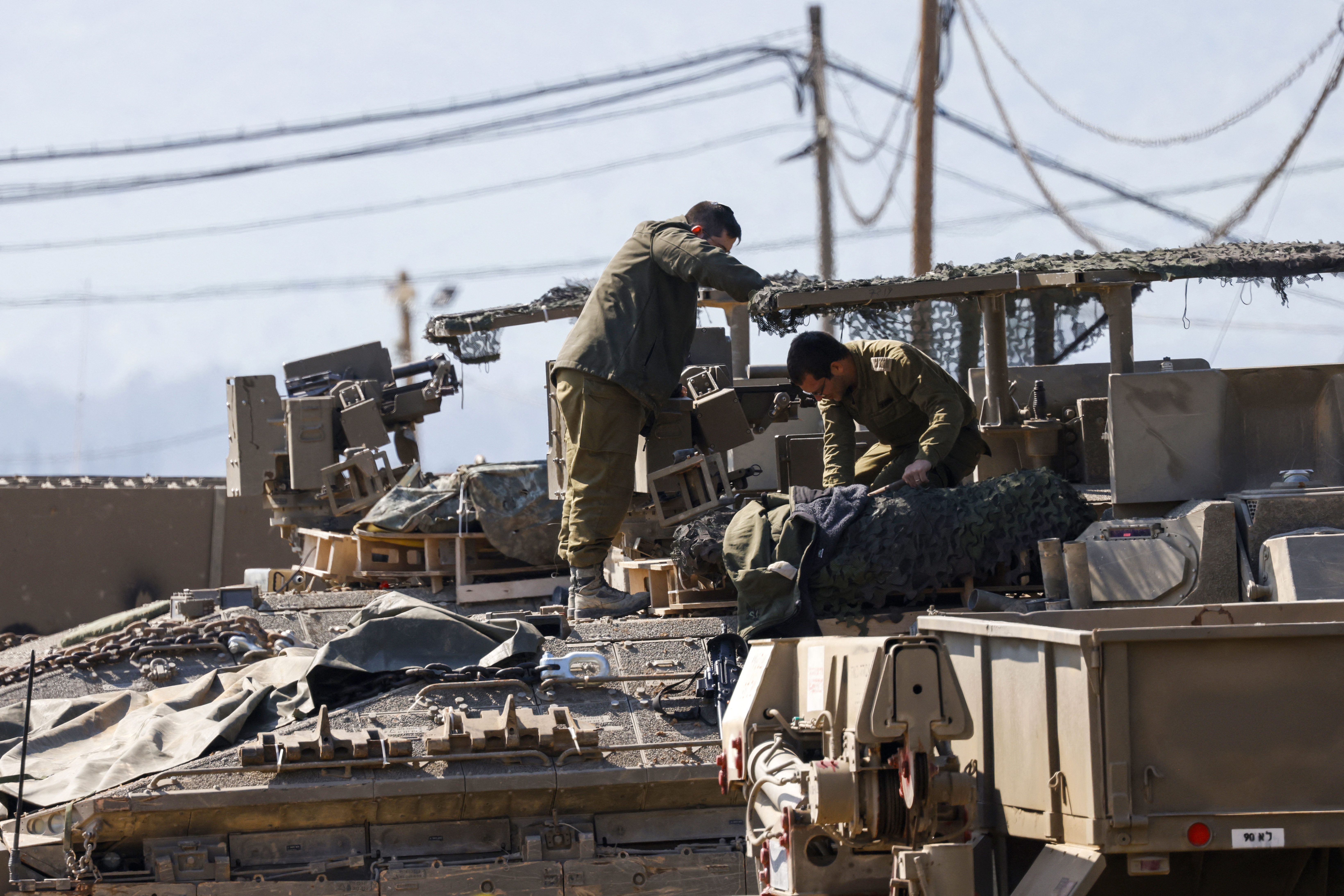
In a briefing to reporters in Israel, a military spokesperson was asked if the Israel Defense Forces (IDF) were preparing for a possible ground invasion of Lebanon. The spokesperson said, “all options are on the table,” and then said Hezbollah “made a very bad mistake” by choosing to strike Israel overnight.
“The IDF will react very swiftly, and they will pay a heavy price,” the spokesperson added. “Hezbollah opened fire at us last night. It knew exactly what it was doing.”
In a brief update on X, the IDF said today it “struck” a “senior terrorist” from Hezbollah in Beirut and will be providing more details in due course.
Subsequently, the Israeli military said it had killed Hezbollah’s intelligence chief, Hussein Makled, overnight. The IDF also claimed it killed Sayed Yahya Hamidi, who it described as Iran’s deputy minister of intelligence for ‘Israel affairs,’ and Jalal Pour Hossein, who it claimed was the head of the espionage division (at the ministry of intelligence).
Israeli airstrikes on Beirut and southern Lebanon today killed at least 31 people and injured 149, according to Lebanon’s health ministry.
A video from the IDF shows Israeli strikes overnight in Dahiyeh in Beirut:
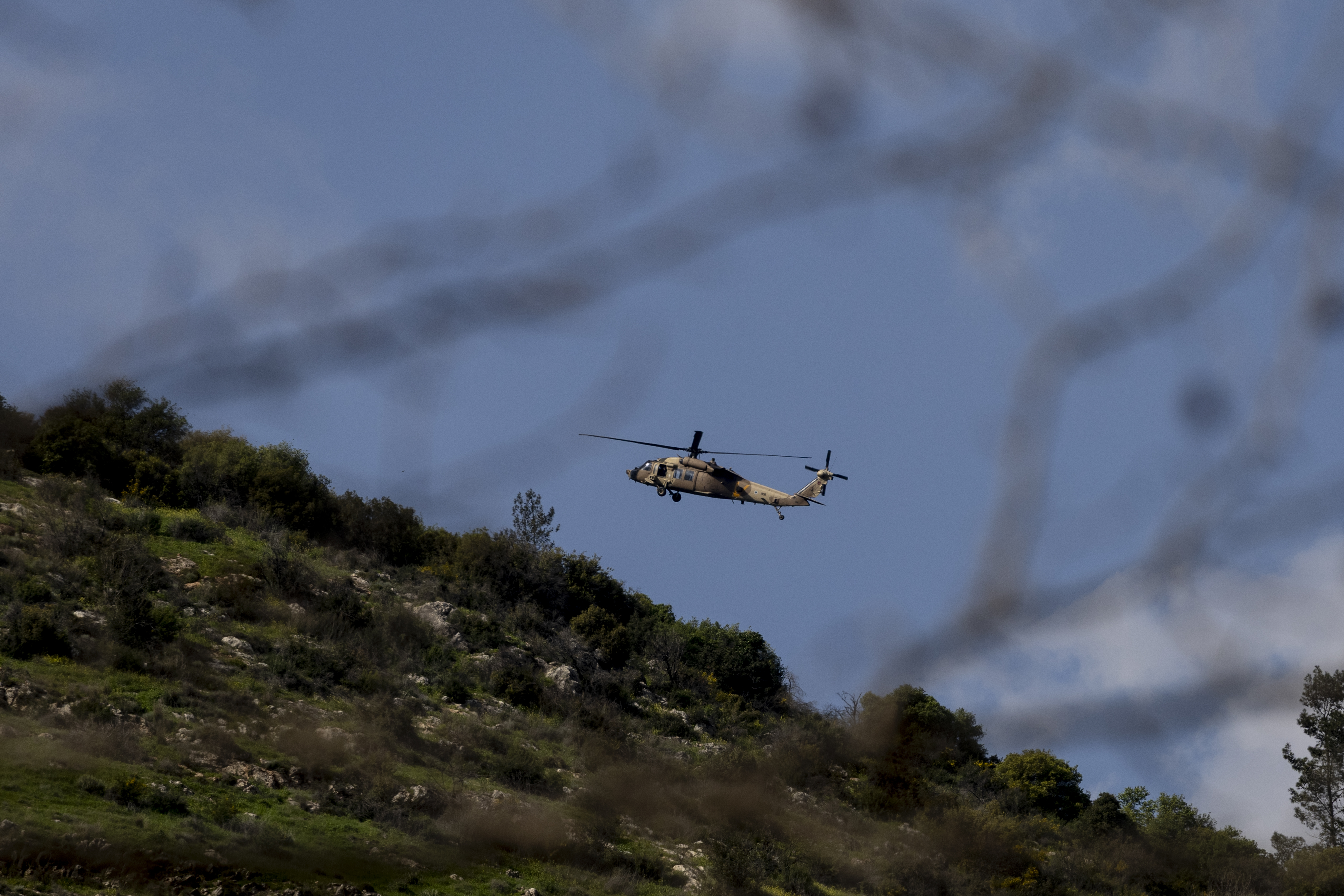
There are rumors of concern within the Pentagon, as well as other parts of the Trump administration, about the United States getting bogged down in a larger conflict. This comes now amid the prospect of Israel expanding operations against Lebanon.
Chief among the reported concerns of U.S. officials is the stockpile of suitable interceptors for air defense systems, especially as Iran continues to launch missiles and especially drones at targets across the region. The inventory of Iranian long-range one-way attack drones is something that the propaganda arm in Tehran is trying to capitalize on. This is something TWZ highlighted in an in-depth piece regarding questions hanging over any major new American air campaign against Iran shortly before the conflict erupted.
Another two Iranian drones heading toward the British airbase of RAF Akrotiri in Cyprus were “successfully intercepted,” according to a spokesperson for the Cypriot government. The incident comes after an Iranian drone reportedly struck the base last night. The incident is not thought to have caused any casualties and only limited damage.
Cypriot authorities have opened emergency shelters following the Iranian drone strike against RAF Akrotiri.
In a joint statement, the United States and six allied Gulf states — Bahrain, Jordan, Kuwait, Qatar, Saudi Arabia, and the United Arab Emirates — have condemned Iran’s “indiscriminate and reckless attacks” across the region. They blame Tehran for strikes that have “targeted sovereign territories, endangered civilians, and inflicted damage on civilian infrastructure.”
The statement continues: “Iran’s actions represent a dangerous escalation that violates the sovereignty of multiple states and threatens regional stability. Targeting civilians and non-combatant states is reckless behavior that undermines stability. We stand united in defense of our citizens, our sovereignty, and our territories, and we reaffirm our right to self-defense in the face of these attacks, while underscoring our commitment to regional security and commending the effective cooperation in air and missile defense that prevented greater loss of life and destruction.”
The statement confirms that, so far, attacks have occurred in Bahrain, Iraq, Jordan, Kuwait, Oman, Qatar, Saudi Arabia, and the United Arab Emirates. Cyprus can also be added to this list.
Of these, there have been notable reports in the last 12 hours of explosions in Dubai and Samha in the UAE, and in Doha, the capital of Qatar.
Among the high-profile targets to be hit is the Ras Tanura refinery in Saudi Arabia, one of the Middle East’s largest. Saudi Arabia’s energy ministry announced today that some operations at Ras Tanura have been halted, after an attack set fire to part of the complex. The ministry said that the refinery sustained “minor damage from falling debris” due to the interception of “two drones in the refinery’s vicinity.”
“Some operational units at the refinery were shut down as a precautionary measure, without any impact on the supply of petroleum products to local markets,” Saudi Arabia’s energy ministry said.
The International Atomic Energy Agency (IAEA), the United Nations nuclear watchdog, says there is no evidence that any of Iran’s nuclear facilities have sustained damage or have been hit in U.S.-Israeli strikes so far.
According to Iran’s ambassador to the United Nations nuclear watchdog, one of the targets of the strikes was the Natanz nuclear facility, the Reuters news agency reported. “Again they attacked Iran’s peaceful, safeguarded nuclear facilities yesterday,” Reza Najafi told reporters at a meeting of the IAEA board of governors.
The Natanz nuclear facility was among the sites struck in the U.S-Israeli airstrikes against Iran in June 2025.
The U.S.-flagged oil tanker Stena Imperative suffered at least two direct hits from a suspected Iranian projectile while in the Port of Bahrain, a maritime security official confirmed to TWZ.
It is unclear at the moment if the ship was struck by a missile or a drone, the official added.
Shortly before 5:30 a.m. Eastern, the United Kingdom Marine Trade Operations (UKMTO) organization, which is managed by the Royal Navy in the United Kingdom, stated that it “received a report of an incident in the Port of Bahrain. The Company Security Officer reported that the vessel had been struck by two unknown projectiles, causing a fire. The fire has been extinguished, and the vessel remains in port. All members of the ship’s crew are safe and have evacuated the vessel. Authorities are investigating.”
“Vessels are to remain cautious and report any suspicious activity to UKMTO,” the organization added.
It has been reported that the tanker is part of the U.S. Maritime Administration’s Tanker Security Program, which “exists to enhance U.S. supply chain resiliency for liquid fuel products.” The Tanker Security Program came into effect in 2021 and empowered the Department of Transportation to create an ad-hoc 10-ship expanded U.S.-flagged tanker fleet for use in a crisis.
Iran’s president, Masoud Pezeshkian, has appointed Revolutionary Guards general Majid Ebnelreza as acting defense minister after his predecessor was killed in an airstrike.
Contact the editor: thomas@thewarzone.com
Loading comments…
Comments couldn’t be loaded. Please refresh the page.