
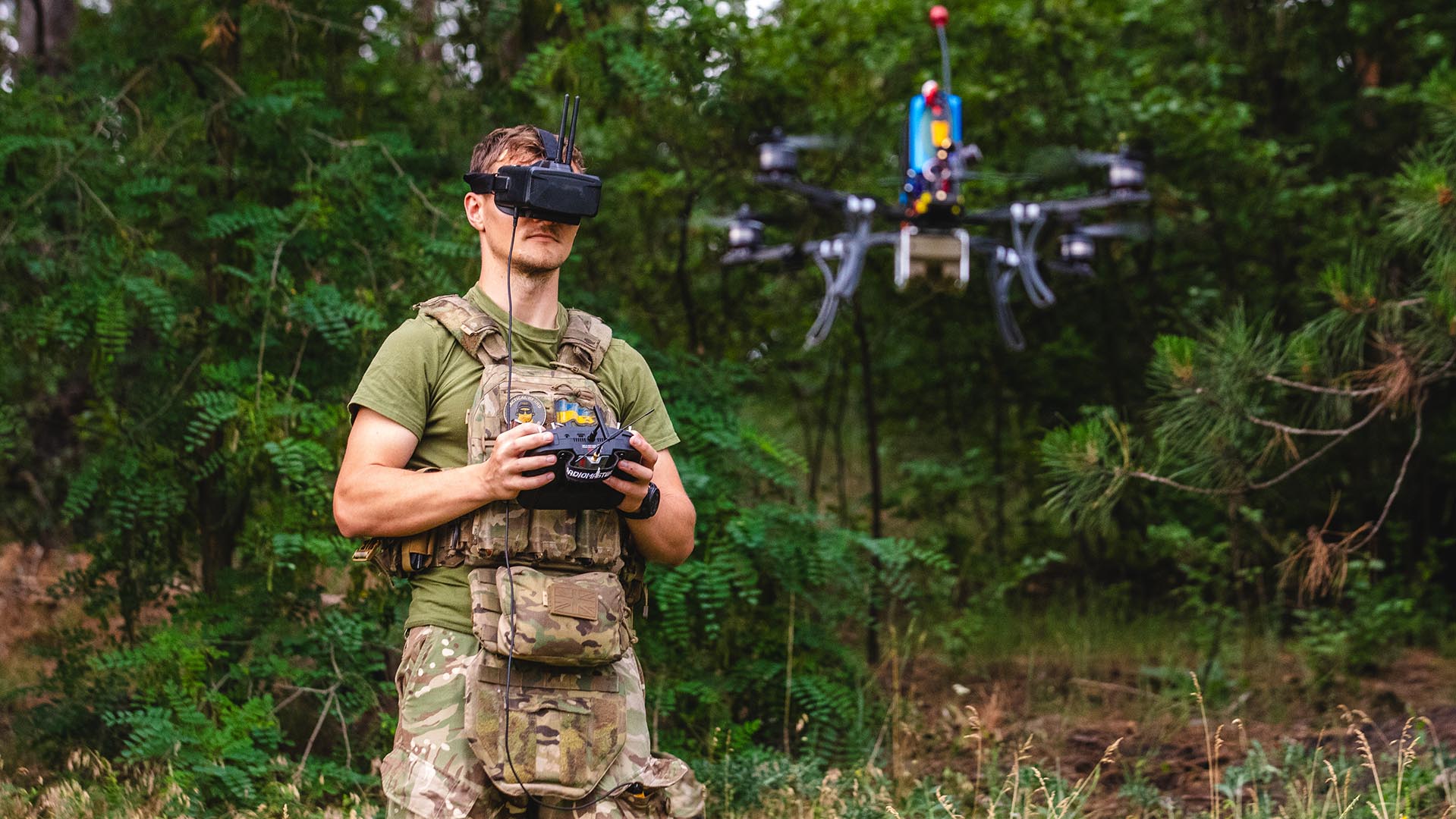
First-person view (FPV) attack drones have been so successful in Ukraine that now Mexican drug cartels are reportedly seeking first-hand lessons on best practices. Intelligence agencies in Kyiv and Mexico City are investigating whether cartel members – fighting on behalf of Ukraine – are doing so to learn more about how to operate FPVs against rivals, according to Intelligence Online, a French investigative news outlet. Learning how to operate and maintain FPV drones from the world’s leading practitioners could drastically speed up the learning curve for cartels, which are in the early stages of using these weapons.
The investigation centers on cartel members who allegedly joined Ukraine’s International Legion, created at the beginning of the all-out war to allow foreigners to fight against Russia.
Mexico’s National Intelligence Center (CNI) recently sent a memo to Ukraine’s SBU counter-intelligence service warning that some Mexican volunteers joining the International Legion were doing so to bring home working knowledge of how best to operate FPVs, the publication claimed.
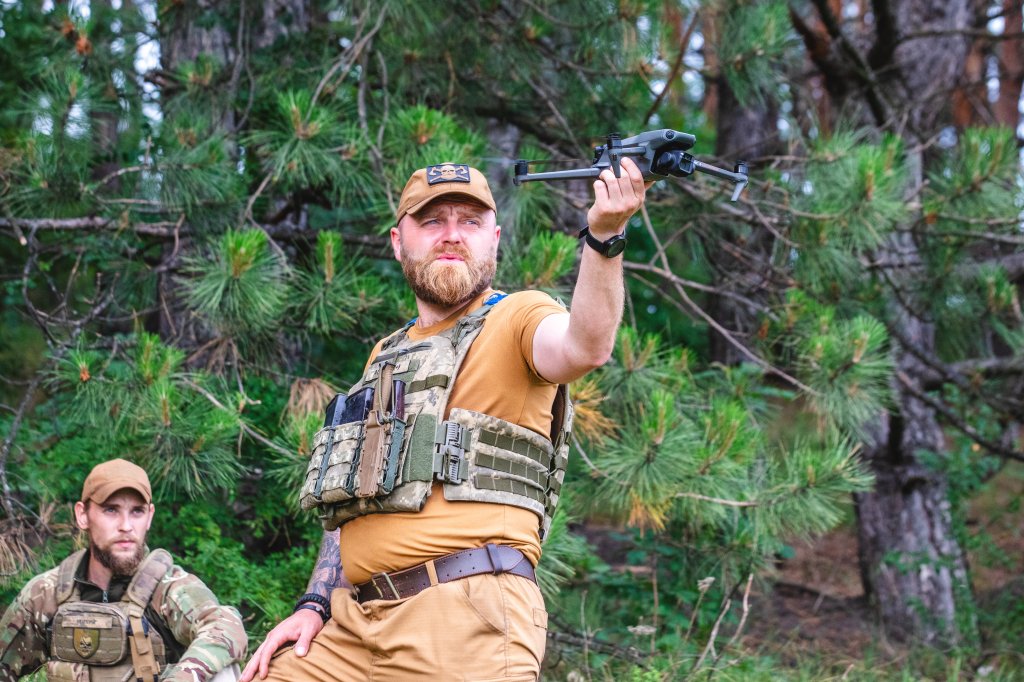
As a result, SBU and the Ukrainian Defense Intelligence Directorate (GUR) “launched an investigation … of several Spanish-speakers who had joined units attached to the second squadron of the GUR’s International Legion, including the Tactical Group Ethos, a semi-clandestine unit operating in the Donbas and Kharkiv oblasts.”
Intelligence Online also claimed that investigators are looking into whether members of the Revolutionary Armed Forces of Colombia (FARC) have joined the International Legion for similar purposes.
We reached out to SBU, GUR, and CNI for comment and will update this story with any pertinent information provided.
While The War Zone cannot independently verify Intelligence Online’s claims, it would fit directly with what we know about the cartels’ historic and ever-expanding use of weaponized drones. Evidence has emerged in recent months that Mexico’s drug organizations are using FPV drones against each other in their ongoing internecine wars. It marks the latest weapons evolution by these organizations. Mexico’s increasingly well-armed drug cartels began to use quadcopters equipped with small explosive devices about five years ago. They later graduated to using drones that dropped munitions on enemies and law enforcement.
FPV drones are now being used in a war between the Cártel de Jalisco Nueva Generación (CJNG) and Sinaloa cartels in coastal west central Mexico, the head of an intelligence firm tracking cartels told us back in April.
“This is something a lot of cartel observers were waiting for and it finally happened,” said Stefano Ritondale, chief intelligence officer for Artorias, an AI-driven intelligence company specializing in cartel violence in Mexico, Latin American affairs, and drug trade/organized crime.
Ritondale noted that sometime around March, a relatively intact FPV drone was found near the Nayarit State town of Ixtlán del Río. A short video of that appeared online on April 22. He explained that the consensus from his sources in the cartels is that CJNG carried out a failed attack using an FPV drone against Mayito Flaco, a Sinaloa cartel faction.
You can see a recovered cartel FPV drone in the following videos.
Additional videos of cartels using FPVs later emerged earlier this month.
“CJNG is definitely modernizing their capabilities, and this FPV use is a significant first step,” Ritondale suggested.
As we have frequently reported, fast, highly maneuverable FPV drones are now ubiquitous in Ukraine, where they are used against vehicles, small structures and personnel. The volume and capabilities of these drones have greatly affected mobility on both sides.
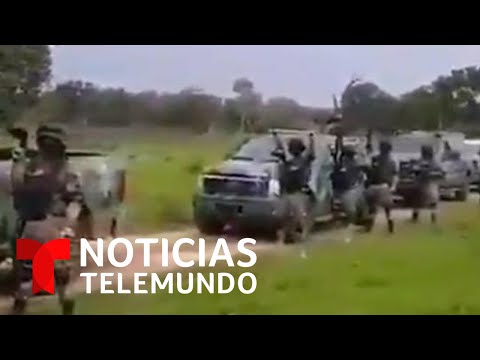
That lesson has not been lost on CJNG, which has been a pioneer of sorts for introducing uncrewed capabilities into Mexico’s drug wars. The cartel is known for being very well equipped and having organized military-style units, as can be seen in the video below.
“We know they are actively trying to use FPV drones kinetically and taking lessons from Ukraine on how to rig them for the desired effect,” a spokesman for a team of open source analysts with a focus on cartels & other non-state actors under the X handle @natsecboogie told us on Wednesday.
The use of FPV drones by cartels is still in the early stages, the spokesman noted.
“As they develop their [tactics, techniques and procedures] and [standard operating procedures] with FPV drones, we would imagine they would be used against more heavily defended positions (ie Jefe de Plaza ranches) to take out high-value persons from rivals.”
Having cartel foot soldiers gain experience from the Ukrainians will only expedite their learning curve.
“Flying FPV drones is not something that you can just pick up a pair of goggles and a controller and fly,” the cartel observer group spokesman explained. “It actually is more akin to flying an actual aircraft, unlike traditional quadcopters on the market, like a DJI drone. That is just to fly it. Now, you factor in employing it in conflict, it becomes even more difficult to maneuver and train correctly to ensure a successful strike.”
As we have previously reported, Ukraine has intensive courses of study to learn how to operate and maintain FPV drones in battlefield conditions. Several Spanish-speaking volunteers suspected of joining Ukraine’s FPV academies with ulterior motives have had their data cross-checked with Interpol and U.S. Drug Enforcement Agency files, Intelligence Online noted.
“Some are suspected of having a criminal record or of having belonged to narco-paramilitary militias active in Latin America,” the publication added.
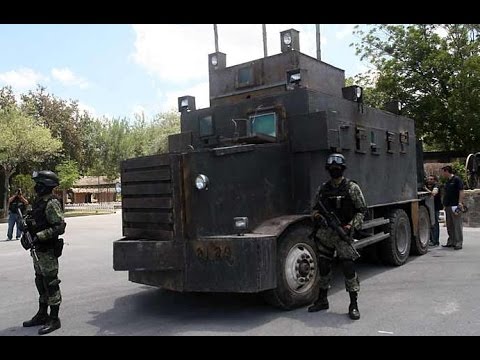
FPV drones would likely target so-called Narco tanks, also referred to locally as “monstruos” (monsters in Spanish), which have been a feature of Mexico’s drug wars for more than a decade now, the spokesman for the cartel open-source observation group suggested. Some cartels have previously added so-called cope cages to their vehicles to fend off drone attacks.
You can see a variety of Mexican monstruos in the following video.
In addition to targeting vehicles, the cartels could also use FPV drones to against personnel and to assassinate individuals. These weapons are so maneuverable that they frequently fly into windows in Ukraine, something operators there spend a lot of time learning how to do. You can see that in action in the following video.
Officials in Kyiv expressed outrage at the concept of cartel members seeking lessons about FPVs just to better use them on their rivals back home.
“We welcomed volunteers in good faith,” an SBU official told Intelligence Online. “But we must now recognize that Ukraine has become a platform for the global dissemination of FPV tactics. Some come here to learn how to kill with a $400 drone, then sell this knowledge elsewhere to the highest bidder.”
Contact the author: howard@thewarzone.com
Loading comments…
Comments couldn’t be loaded. Please refresh the page.