
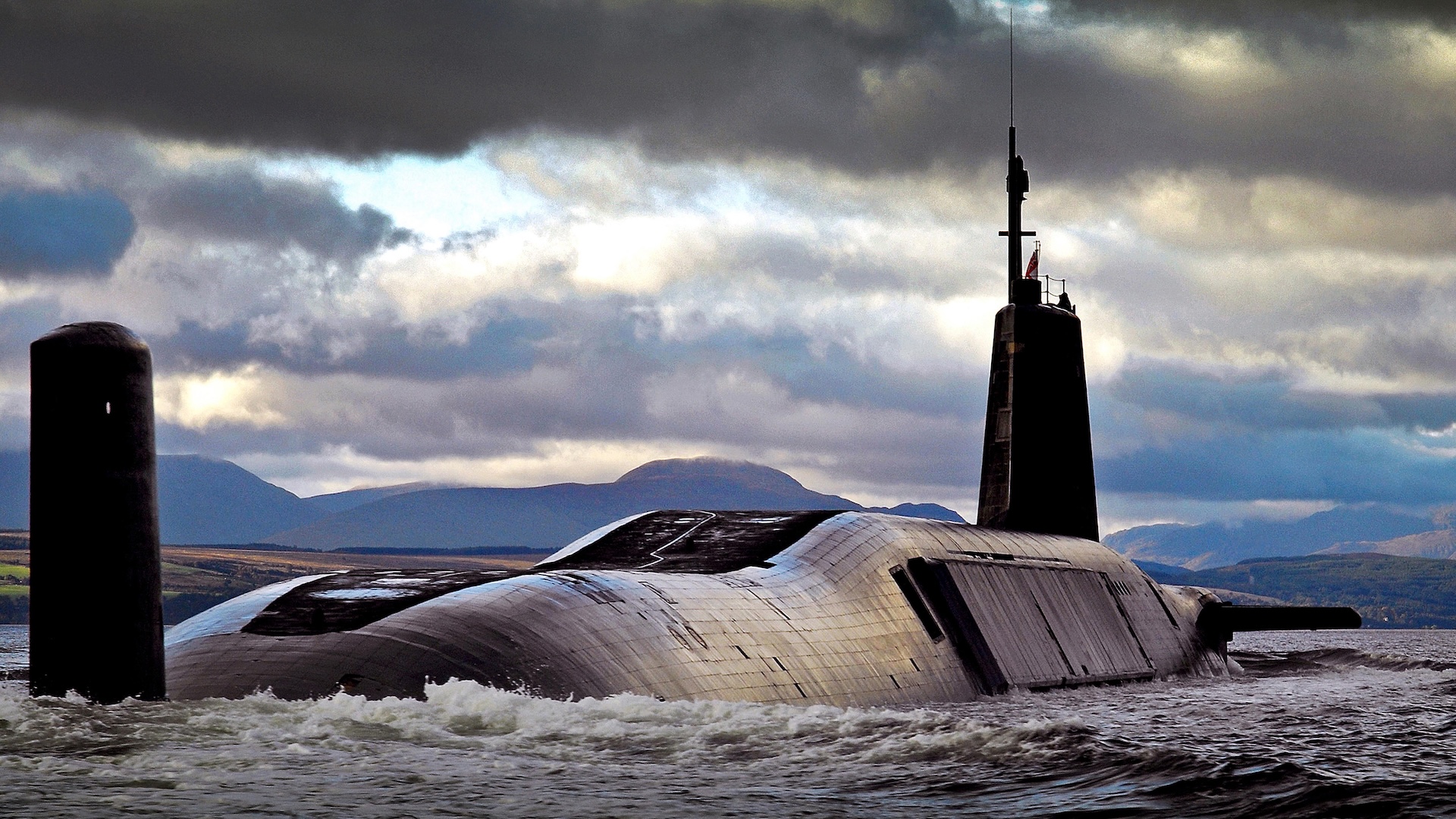
The United Kingdom and France have signed a landmark agreement that will see their nuclear deterrence forces “coordinated,” together with a declaration from the U.K. government stating that “there is no extreme threat to Europe that would not prompt a response by both nations.” The two countries’ decision to work closely together on nuclear deterrence is accompanied by plans to advance the development of new deep strike and anti-ship missiles and comes at a time when European NATO members, in general, are looking to bolster their nuclear and long-range strike capabilities.
The British government announced that the United Kingdom and France will, in the future, “work more closely than ever before on nuclear deterrence.” The nuclear partnership, signed by U.K. Prime Minister Sir Keir Starmer and French President Emmanuel Macron, outlines the fact that, for the first time, the nuclear deterrents of both countries “are independent but can be coordinated.”
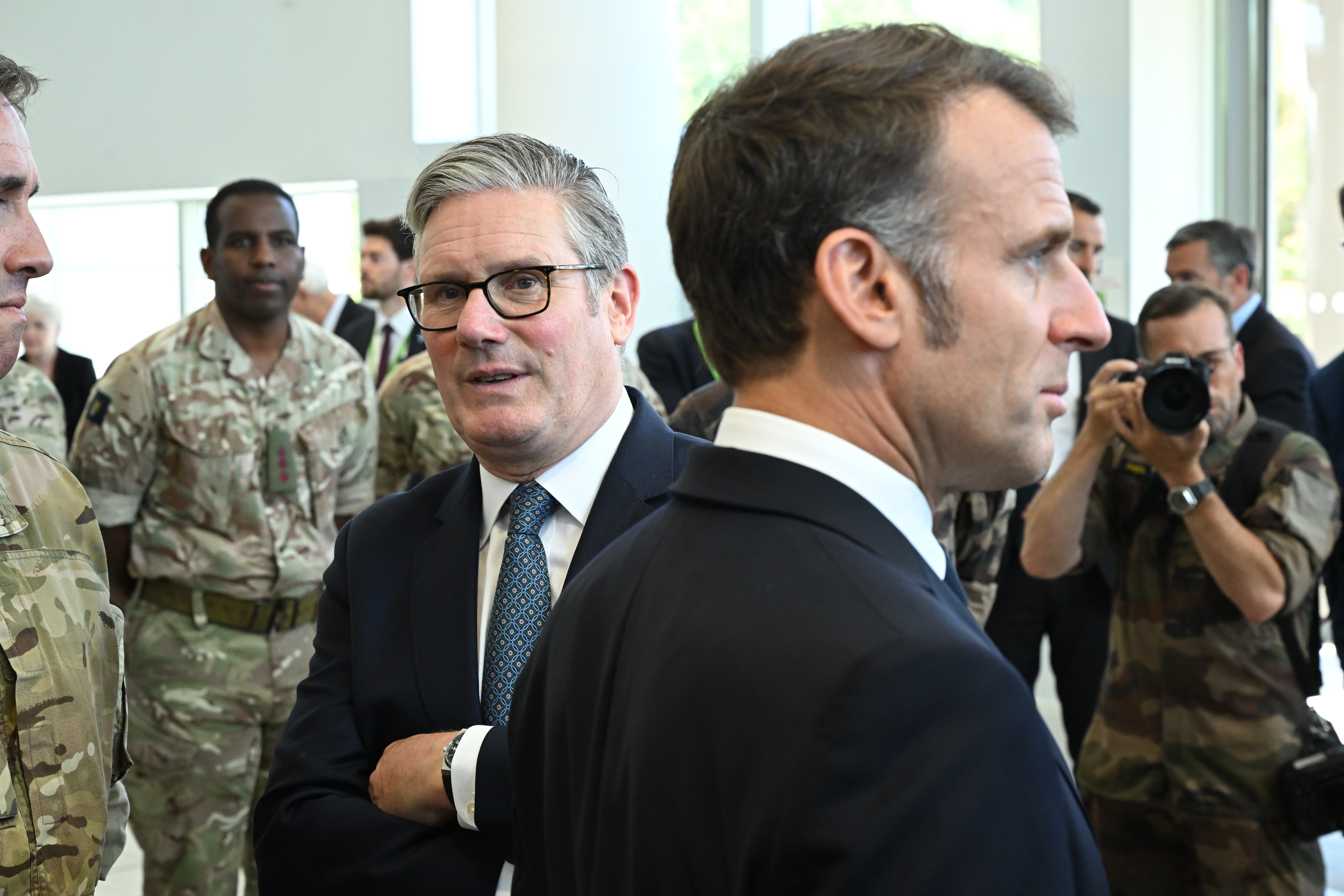
Prime Minister Starmer said: “From war in Europe, to new nuclear risks and daily cyber-attacks, the threats we face are multiplying… We stand ready to use our shared might to advance our joint capabilities — equipping us for the decades to come.”
Previously, the United Kingdom had announced that it had revised its strategic posture, including potentially using its nuclear deterrent in response to not only threats presented by weapons of mass destruction but also by other threats from “emerging technologies,” as you can read about here.
The United Kingdom and France are Europe’s only sovereign nuclear powers.
The French deterrent includes both submarine-launched ballistic missiles and air-launched nuclear missiles of its own design. More importantly, these weapons are technically independent of NATO nuclear planning, unlike the British nuclear deterrent, which is also closely intertwined with that of the United States.
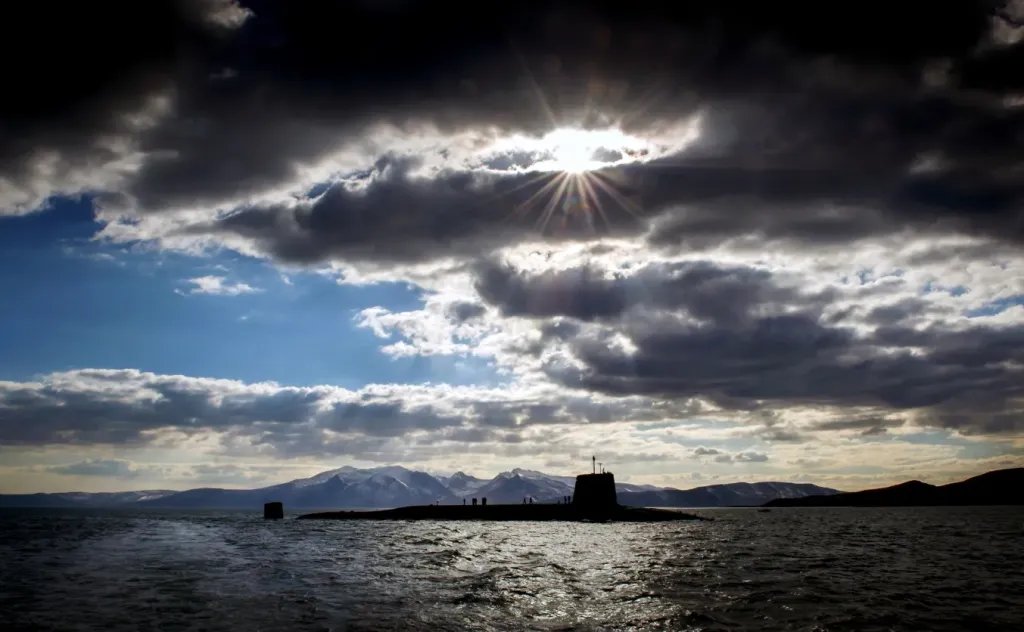
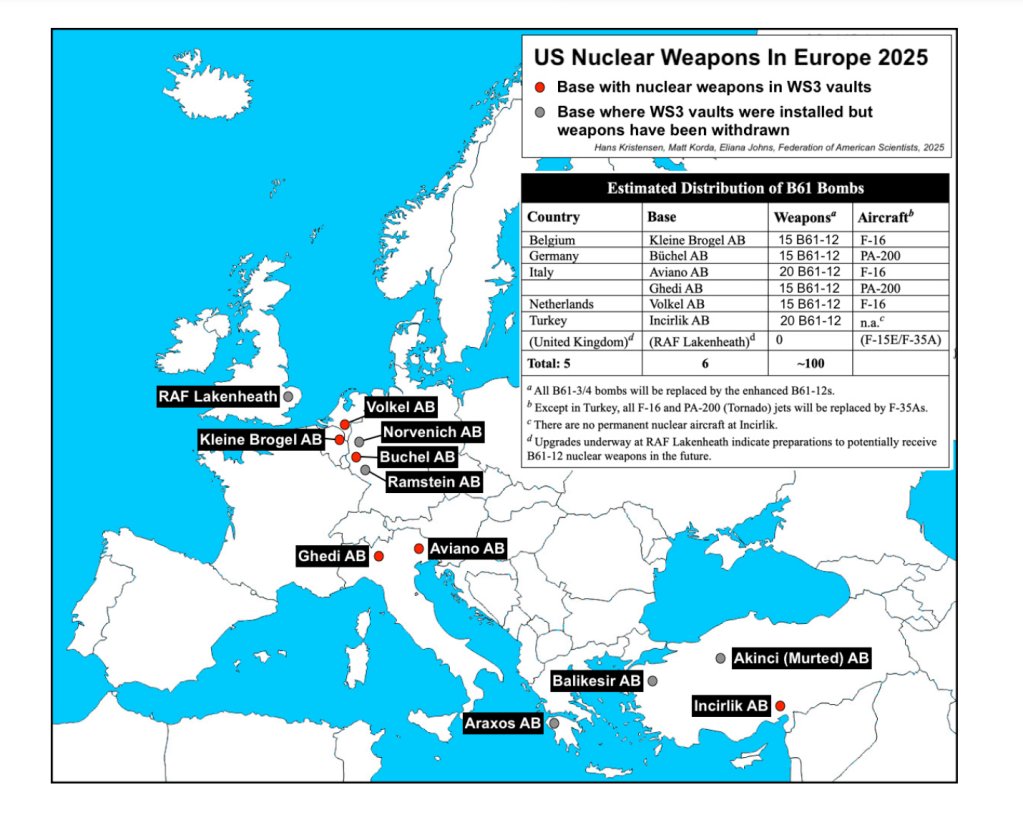
The British deterrent comprises submarine-launched ballistic missiles. The British government recently announced plans to acquire F-35A stealth fighters that will have the ability to deliver U.S.-owned B61-12 nuclear gravity bombs. While this will reinstate the United Kingdom’s air-launched nuclear capability, the use of those weapons has to be approved by the United States and the NATO alliance.
According to Chatham House, a U.K.-based international affairs think tank, the United Kingdom has around 225 nuclear warheads while France fields around another 290.
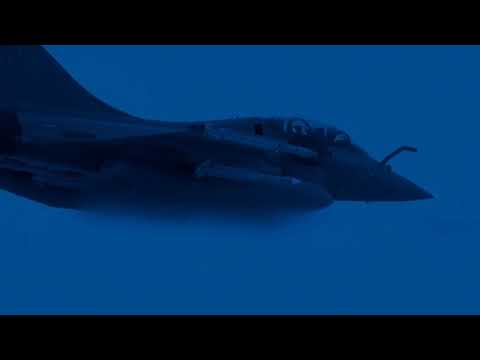
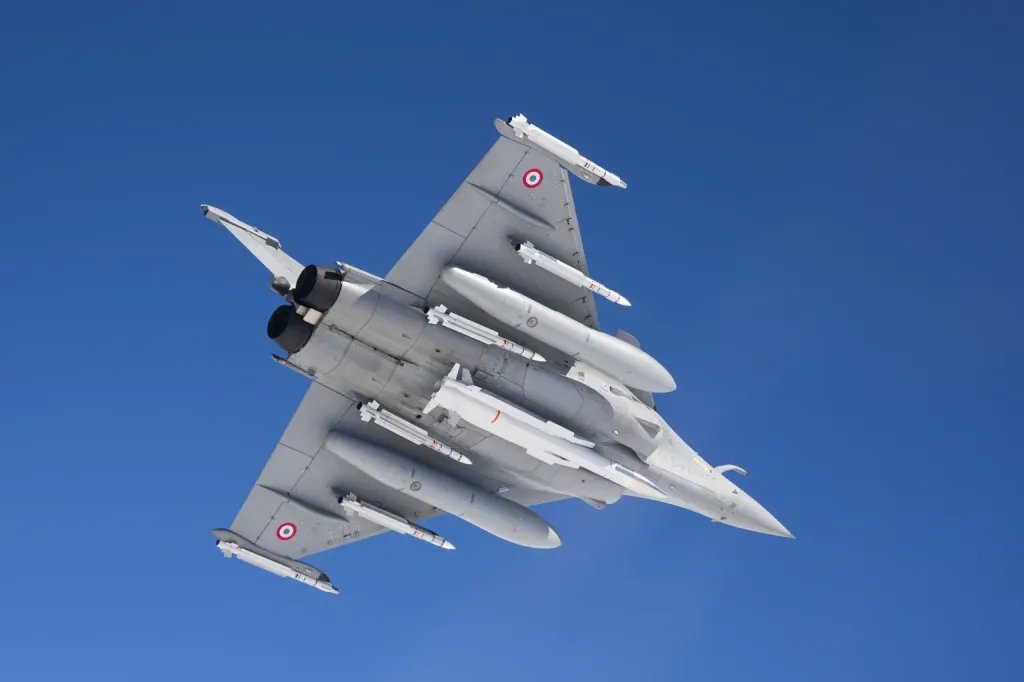
French Air and Space Force and French Navy Rafales are armed with nuclear-tipped ASMP-A supersonic missiles:
France’s completely independent nuclear posture has recently seen it take a leading role as Europe’s NATO powers look at ways of bolstering their nuclear deterrence capabilities independent of the United States. These discussions underline a growing rift in the transatlantic alliance under U.S. President Donald Trump, emphasized by calls from German leader-in-waiting Friedrich Merz for talks with his British and French colleagues about European “nuclear sharing or at least nuclear security.” Calling upon the United Kingdom and France to offer greater nuclear protection, Merz also warned that Washington’s “interest in Europe is decreasing.”
As a result of those concerns, it was reported earlier this year that France was looking at the possibility of deploying air-launched nuclear weapons to Germany. In the meantime, France has announced it will establish another nuclear-capable air base — its fourth — as you can read about here.
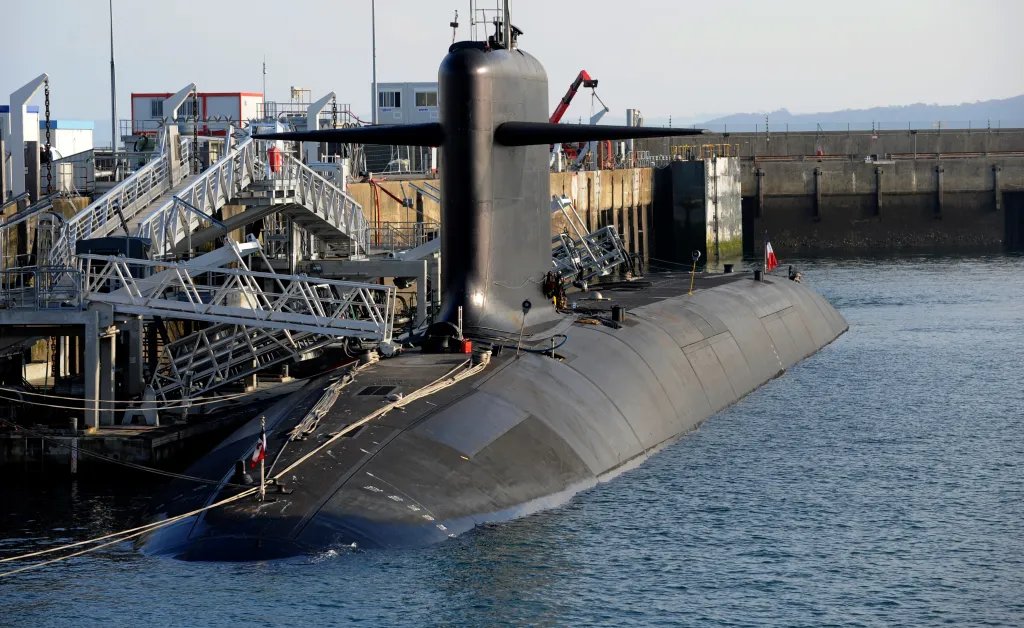
It’s unclear, however, exactly how the nuclear coordination might work in practice. In peacetime, it seems extremely unlikely that either country would stop its permanent at-sea deterrent in the form of at least one SSBN on patrol at any given time and instead rely on the other to provide this.
France’s air-launched deterrent offers the flexibility to have detachments of nuclear-capable jets operate from other bases on a temporary basis, although their nuclear weapons storage would remain tied to airfields in France.
In peacetime, it might be reasonable to expect that the two countries will help support each other’s at-sea deterrence operations by providing, for example, nuclear-powered attack submarines, frigates, and anti-submarine warfare capabilities, which are used to ensure the protection of SSBNs; they may also offer access to bases and other support. The air-launched legs of the deterrents could also benefit from joint support, especially in the form of aerial refueling tankers and defensive escort fighters. For both air and sea legs of the deterrent, there is also considerable scope for the United Kingdom and France to collaborate on intelligence, early warning, and other capabilities.
During a crisis on the continent, nuclear or otherwise, the United Kingdom and France would already be working closely together on a military level under the NATO alliance. There would seem to be only a very limited number of contingencies in which the British and French would call upon their nuclear capabilities to support one another outside of a broader effort involving the rest of the alliance.
With that in mind, it seems the primary thinking behind the nuclear coordination agreement is to show joint resolve, especially bearing in mind the growing threat from Russia and the concerns about the reliability of the United States as a guarantor of deterrence in Europe in the future.
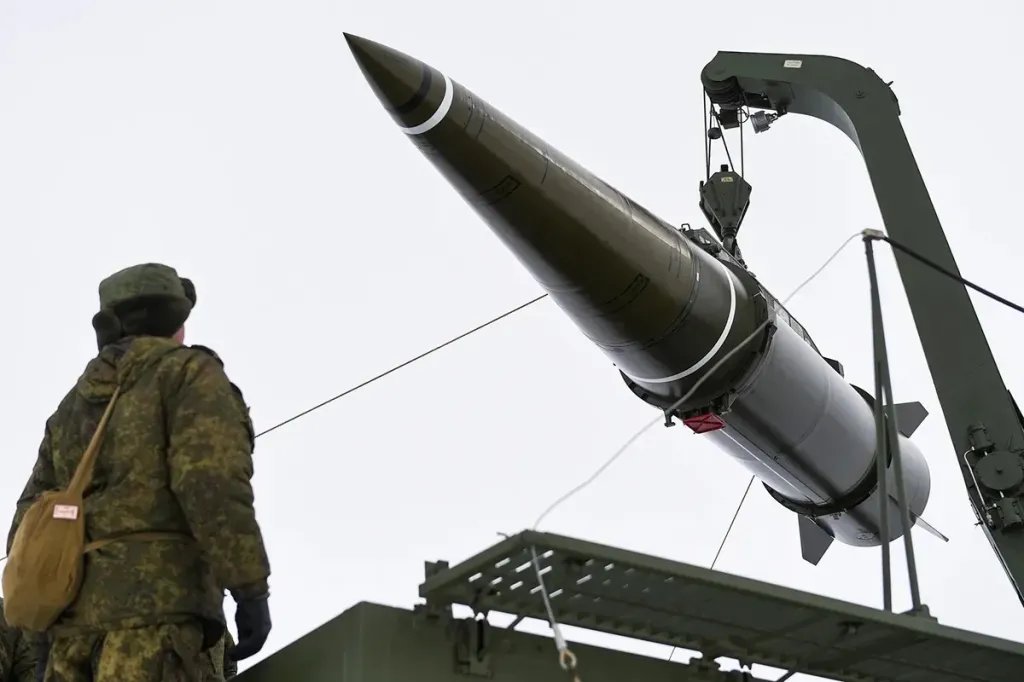
As the U.K. government’s statement makes clear, “Any adversary threatening the vital interests of Britain or France could be confronted by the strength of the nuclear forces of both nations.” Such an arrangement is therefore intended to underscore the resilience of the two countries’ deterrents, even without the support of the United States.
U.K. Defense Secretary John Healey said that the new partnership sends “a clear signal to our adversaries that we stand stronger, together.”
The alliance is also likely calculated to send a strong message to other NATO allies in Europe, some of which, like Germany, have voiced concerns about the future of nuclear deterrence on the continent.
By becoming more closely aligned with the French nuclear deterrent, the United Kingdom, in theory, also benefits from potential access to nuclear weapons that can be employed entirely independently of the United States. While the United Kingdom can launch its Trident II D5 submarine-launched ballistic missiles without U.S. approval, unlike France, it still relies upon U.S. technology for its nuclear weapons. The forthcoming B61-12 bombs, meanwhile, will be entirely U.S.-owned.
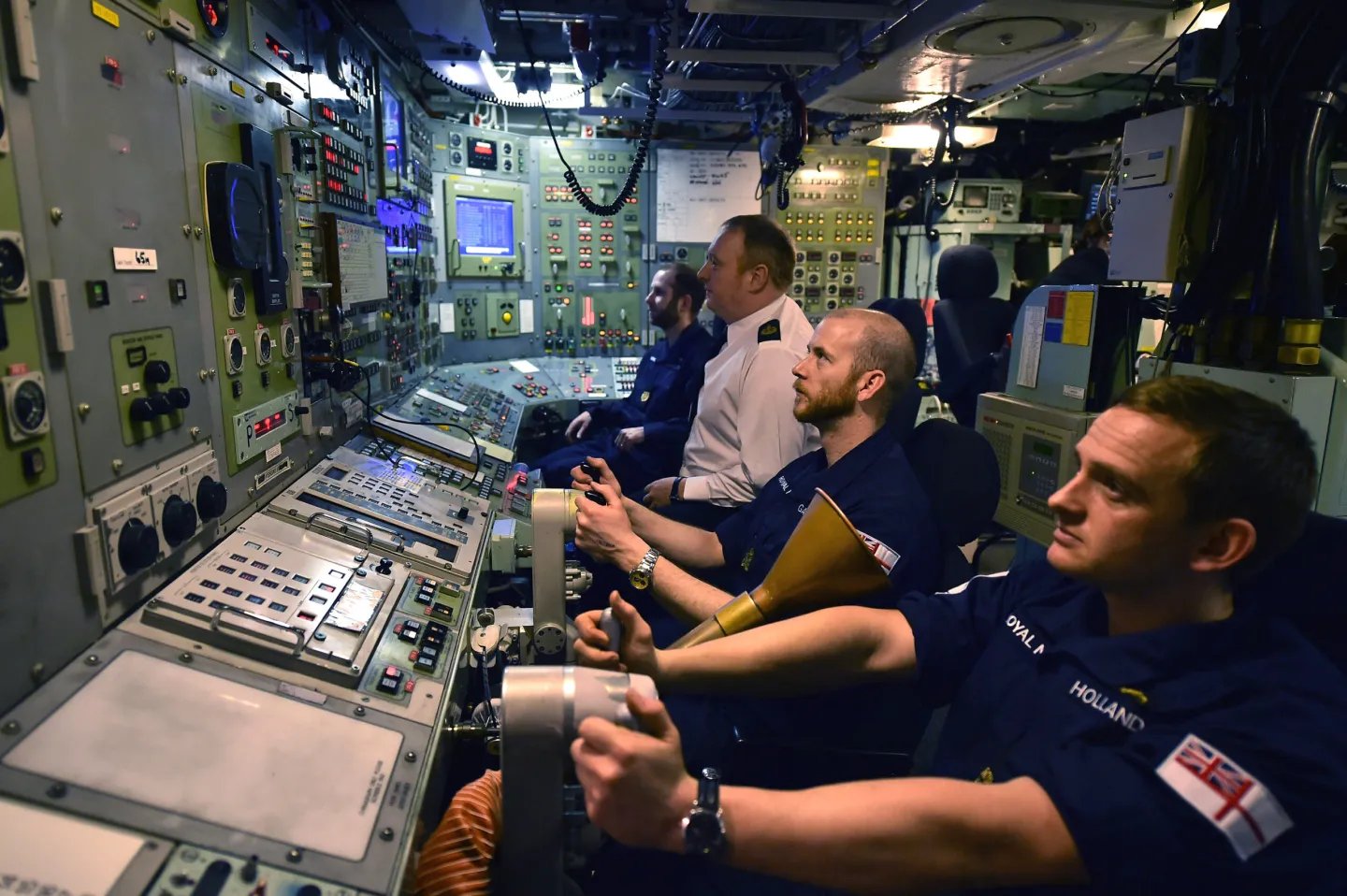
Aside from these factors, the coordination agreement also opens up more opportunities for nuclear warfighting planning, including targeting plans and training. On a technological level, the United Kingdom and France are now more likely to work together on nuclear research. Finally, by teaming up in this way, the two countries could have more leverage when it comes to working within the international non-proliferation architecture.
Potentially most interesting is how the agreement might develop in the longer term.
TWZ spoke to Dmitry Stefanovich, a research fellow at the Center for International Security, IMEMO RAS, who suggested that the next step for the British might involve the development of nuclear-armed deep strike weapons.
“This might be too ambitious to think about right now, but given that the air leg is returning to the British nuclear forces, there might be some interest in deploying something more capable than B61-12,” Stefanovich said. “Some sort of a nuclear-tipped air-launched cruise missile, jointly developed.”
In the background to this are European concerns that the United States might remove or scale back its critical role in the NATO nuclear-sharing arrangement. Under this, U.S.-owned B61 bombs are also housed in Belgium, Germany, Italy, the Netherlands, Turkey, and, in the future, the United Kingdom, and can be employed by tactical jet aircraft from approved member states. Turkey notably hosts B61s but is not among the countries that could employ them.

While the United Kingdom hasn’t so far openly discussed the development or fielding of an independent air-launched nuclear weapon, it is already working with France on other long-range strike weapons.
The agreement also included details of plans to jointly develop a replacement for the long-range Storm Shadow and SCALP EG air-launched cruise missiles. While these are conventionally armed, a potential successor could still emerge with at least the option of a nuclear warhead, which may be of interest to the United Kingdom, especially. France, for its part, is already working on the ASN4G, a next-generation air-launched standoff nuclear weapon.
Work on the ASN4G (Air-Sol Nucléaire de 4e Génération, or fourth-generation nuclear air-to-ground) missile began in 2016. The munition remains in the early stages of development, but it will be capable of hypersonic speeds — defined as speeds greater than Mach 5 — with a range in excess of 1,000 kilometers (621 miles). The ASN4G could provide the United Kingdom with a ready-made sovereign air-launched nuclear missile, should it choose to pursue that route, and one that is outside of the U.S. nuclear umbrella.
At this stage, the United Kingdom and France have committed to launching the next phase of a joint project for a new deep strike missile (replacing Storm Shadow and SCALP EG) and a new anti-ship missile, although the final designs are still to be selected.
In the meantime, the United Kingdom and France will order more Storm Shadow and SCALP EG missiles to bolster national stockpiles that have been depleted by combat use, as well as the transfer of the weapons to Ukraine after Russia launched its full-scale invasion of that country.

Crown Copyright
Separately, the United Kingdom and Germany have announced that they will team up to produce a “deep precision strike” weapon with a range of over 2,000 kilometers (1,243 miles). At this point, it’s unclear whether a ballistic or cruise missile — or perhaps both types — will be the preferred solution. Recent developments suggest that a nuclear payload capability, even if a latent feature, should perhaps not be ruled out for this weapon, too.
It remains to be seen how the practicalities of the Anglo-French nuclear coordination agreement might be worked out, but there are certainly many options on the table, ranging from mutual support and joint technical collaboration, all the way up to new nuclear warfighting plans.
Perhaps most important, at this stage, is the fact that France has, for the first time, agreed to coordinate on nuclear planning with one of its allies. The agreement between the United Kingdom and France could also open the door to other European NATO nations working together to help ensure mutual nuclear deterrence across more of the continent.
Contact the author: thomas@thewarzone.com
Loading comments…
Comments couldn’t be loaded. Please refresh the page.