
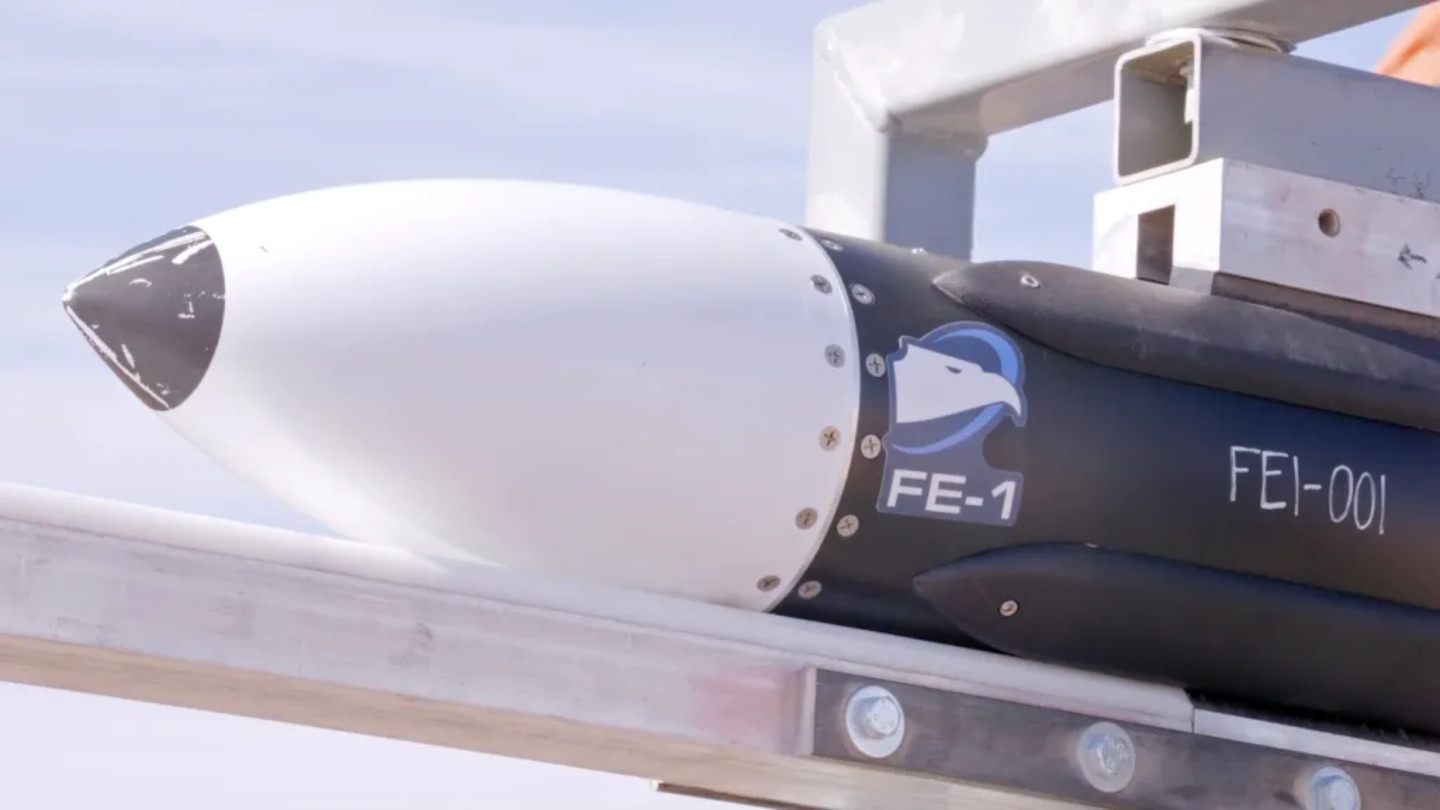
The U.S. Army has picked AeroVironment to supply a new anti-air interceptor, primarily to provide an additional layer of defense against longer-range one-way attack drones and other similarly-sized uncrewed aerial systems (UAS). Designed to be relatively low-cost and easy to produce, the Freedom Eagle-1 (FE-1) missile could also be employed against other aerial threats, including subsonic cruise missiles, in certain circumstances.
In a press release earlier today, AeroVironment announced that the FE-1 had been selected as the winning design for what the Army has been calling the Next-Generation C-UAS Missile (NGCM). The company has also now received a contract from the service valued at $95.9 million for FE-1s, which has come through a related effort called the Long-Range Kinetic Interceptor (LRKI).
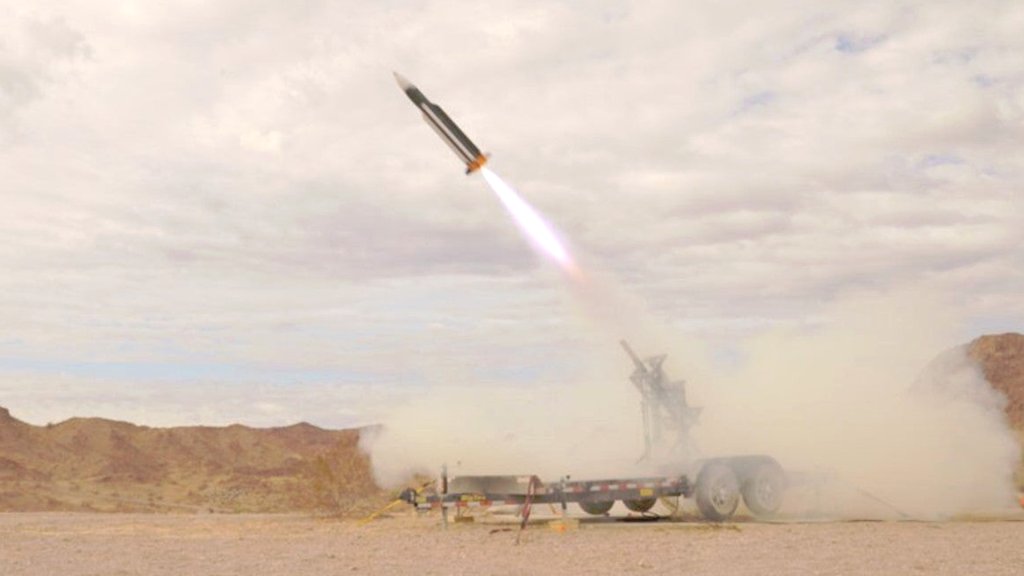
Raytheon had also competed for the NGCM deal with a version of its combat-proven Coyote counter-drone interceptor, Block 2 variants of which are already in Army service. AeroVironment had already been working to integrate the FE-1 into the Army’s existing Low, Slow, Unmanned Aircraft Integrated Defeat System (LIDS), which comes in mobile and fixed-site forms, and currently uses Coyote as its main effector. You can read more about LIDS and Coyote here.

The FE-1, which is between five and six feet long and has a main body that is six inches in diameter, only flew for the first time in January. The development of the FE-1 dates back to at least 2023, and the initial work was done by a company called BlueHalo. AeroVironment announced plans to acquire BlueHalo in November 2024, a process that was completed this past May.

“FE-1 is a low-cost, high-performance solution to neutralize Groups 2 and 3 UAS while maintaining residual capability against Group 1 UAS, fixed wing, and rotary wing aircraft with increased lethality, extended range, and rapid launch capabilities,” according to today’s release from AeroVironment. “It has already achieved several key development milestones, including a successful live-fire demonstration of its dual-thrust solid rocket motor, controlled test vehicle (CTV) launches, and warhead tests. These achievements demonstrate FE-1’s technological maturity and reduced technical risk in preparation for field deployment.”
The U.S. military breaks drones down into five categories, or groups. Designs that fall in Groups 2 and 3 have maximum gross takeoff weights of anywhere between 21 and 1,320 pounds, can operate at altitudes between 3,500 and 18,000 feet, and have top speeds of 250 knots or less. Group 1, the lowest category, covers smaller and less capable uncrewed aerial systems that fall below the Group 2 parameters.
The Iranian-designed Shahed-136 is a prime example of an uncrewed aerial system that falls within Group 3. The Shahed-136 has become something of a ‘gold standard’ for long-range one-way attack drones globally. It has also become a household name thanks to Russia’s heavy use of variants and derivatives, including ones it now produces domestically, in attacks on Ukraine.
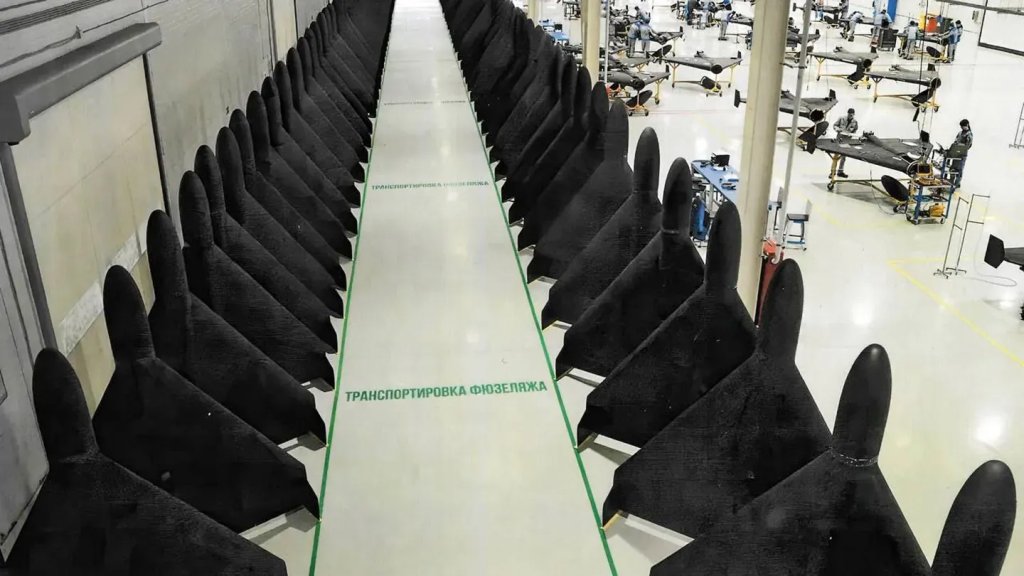
The design of FE-1 “is very much threat-driven,” Daniel Noland, Senior Director of Strategic Capture at AeroVironment, had told TWZ‘s Howard Altman on the floor of the Association of the U.S. Army’s (AUSA) main annual conference last week. “Obviously, as we’re seeing the Shahed-type drones evolve, they are now moving to more of, I’ll say akin to, a subsonic cruise missile type capability. They now have jet propulsion … they’re flying at higher altitudes, longer ranges.”
“NGCM was developed specifically to counter those types of threats, but also to expand the SHORAD [short-range air defense], I’ll say gap, that exists within the Army,” he continued. So, “also getting something that fills that gap between Group 2 and subsonic cruise missiles.”
For years now, TWZ has been calling attention to the U.S. military’s concerning SHORAD gap, especially as drone threats have continued to expand and evolve.
“Even though it’s [the] Next-Generation Counter-UAS missile, we accomplish [intercepts against] Group 2 through Group 3 [drones,] to fixed-wing, rotary-wing [aircraft], to also subsonic cruise missiles,” Noland added. “And that’s a very key point of the missile design, and we’re not just kind of stovepiped or being a one-trick pony, so to speak, as it relates to the threat space.”

When asked, Noland declined to provide specifics about FE-1’s engagement envelope.
“So the ranges are all CUI [Controlled Unclassified Information], but I’ll say that they fly out farther and higher than the existing interceptors, which are in prevalence today. It [FE-1] has a solid fuel rocket motor, which is different than the current system that is deployed, which means faster time off the rail and obviously longer range and distance,” Noland did say, appearing to refer, at least in part, to Coyote, which is powered by a small jet engine. “So we have a long, end-burn rocket motor that gets us out to the ranges and altitudes that are required.”
In terms of its mode of operation, FE-1 is designed to be cued to its target first by radars on the ground and then transition to an onboard radiofrequency-based seeker. The missile has a 20-pound blast-fragmentation warhead. Noland explained that there were cost factors behind the decision to go with an explosive warhead rather than a hit-to-kill design intended to neutralize its targets via sheer force of impact.
“The cost curve around the missile is one piece, but also the cost curve around the sensors that support those missiles is the other piece,” he said. “NGCM is a radar-agnostic interceptor. The reason it looks the way it looks, the reason for its size, is to be able to accomplish its mission with similar performance, with a less capable radar, a less costly radar.”
“Right now, the [LIDS] infrastructure is tied to KuRFS [Raytheon’s Ku-band Radio Frequency Sensor], which is a very expensive radar system, very exquisite, very high-performing radar,” he continued. “The view of this interceptor is not just to be integrated into FS-LIDS [the fixed-site version of the system] and FAAD C2 [the Forward Area Air Defense Command and Control network], but to also integrate into IBCS [the Integrated Battle Command System] and be set next to an [AN/MPQ-64] Sentinel, [AN/TP]Q-53 – whatever radar is out there in the field, and operate with similar performance.”

IBCS is an overarching air and missile defense-focused network architecture that the Army has been working to field in recent years, and that you can read more about here. A core principle behind IBCS is offering air defenders greater flexibility to choose the sensors and effectors best suited to respond to incoming threats.

The FE-1 is intended to be relatively low-cost itself. The target unit cost is between $150,000 and $200,000, according to Noland. For comparison, historically, the cost of a Stinger short-range surface-to-air missile has been put at between $100,000 and $120,000, but reports in recent years have said that current-generation versions, including ones optimized for use against drones, can run up to $400,000. Past reports have also put the unit price of a Block 2 Coyote at around $100,000, but FE-1 is offering a boost in capability.
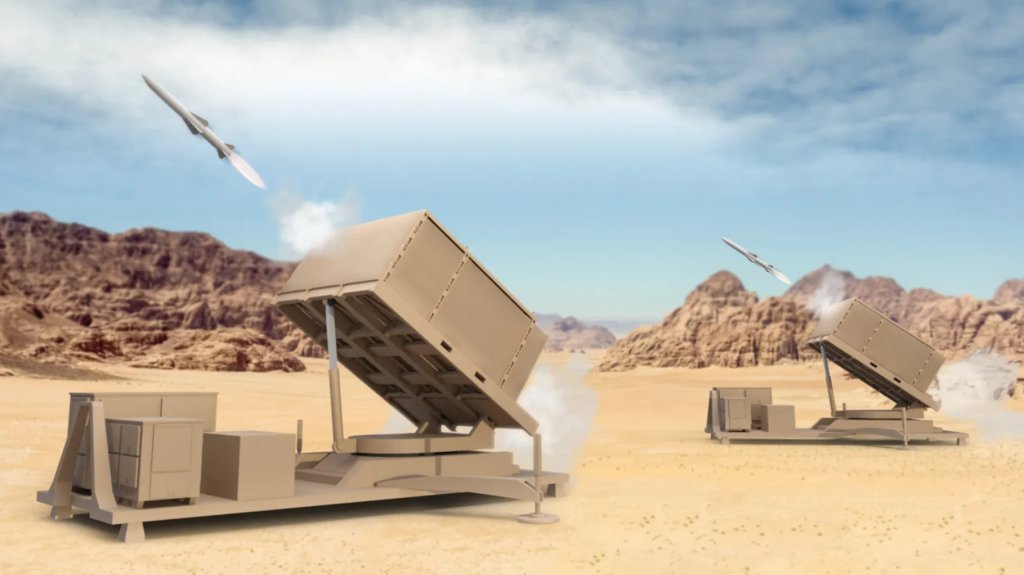
FE-1 is also exponentially cheaper than any of the interceptors available for the Army’s Patriot surface-to-air missile system, all of which cost several million dollars apiece. The service is also in the process of fielding a new middle-tier air defense system called Enduring Shield, which is presently configured to fire AIM-9X Sidewinders, each of which has a price tag around $500,000. Interestingly, AeroVironment is now partnered with Lockheed Martin on the development of a potential second interceptor for Enduring Shield, which is leveraging work already done on FE-1, as you can learn more about here.
It’s also worth noting that the Shahed-type drones that are central to the threat ecosystem that has been driving the Army’s NGCM effort are generally understood to have a cost range measured in tens of thousands of dollars.
NGCM is part of a larger Army push to expand the scale and scope of its air defense capabilities, with a particular focus on fielding new low-cost capabilities. The service also sees adding new layers of protection against aerial threats as key to reducing the strain on its Patriot force, which has been shown repeatedly to be worryingly inadequate to meet existing operational demands.
The integration of FE-1 into the existing LIDS architecture could open up additional opportunities. The U.S. Navy recently added Coyote launchers to a number of its Arleigh Burke class destroyers as part of its own efforts to expand counter-drone capabilities across its surface fleets. AeroVironment’s Noland also told TWZ that there have been some very nascent discussions about the potential for air-launching the FE-1, though the focus at present is squarely on the ground-launched mode.
When it comes to the Army’s air and missile defense force structure, no matter how it continues to evolve and expand, it will now include FE-1 interceptors to help tackle Shahed-type one-way attack drones and other threats.
Contact the author: joe@twz.com
Loading comments…
Comments couldn’t be loaded. Please refresh the page.