
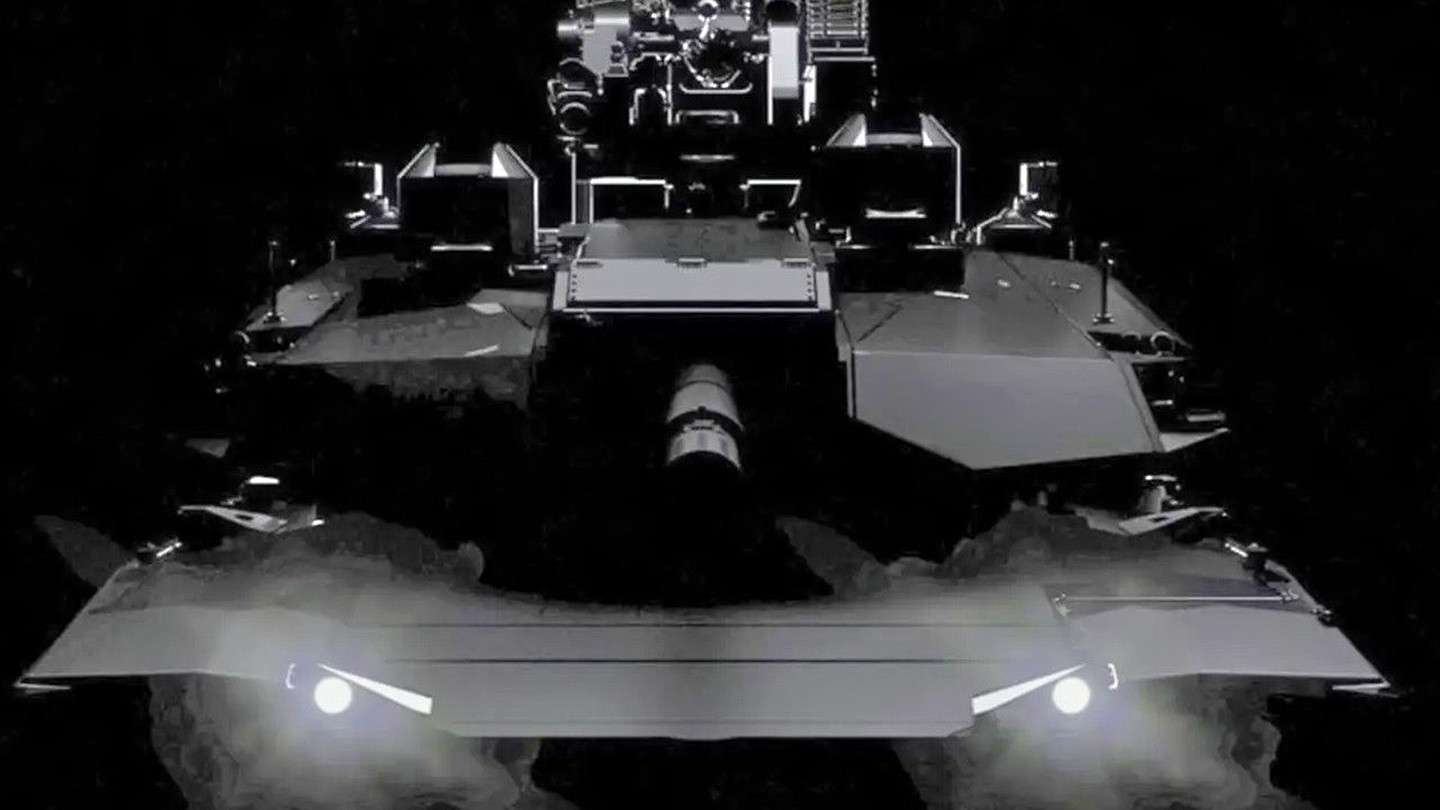
The U.S. Army is pushing to get a very early prototype of the next-generation iteration of the Abrams tank, or M1E3, before the end of the year. The M1E3 is expected to be substantially different from earlier versions of the Abrams, featuring a host of new defensive capabilities and other advanced technologies, as well as reduced weight and increased fuel economy.
Dr. Alex Miller, Chief Technology Officer and Senior Advisor for Science and Technology to the Chief of Staff of the Army, talked about the state of the M1E3 effort in a live interview today with Defense News‘ Jen Judson from the floor of the Association of the U.S. Army’s (AUSA) main annual conference. TWZ‘s Howard Altman was among those in attendance and had a chance to follow up with Miller afterward.
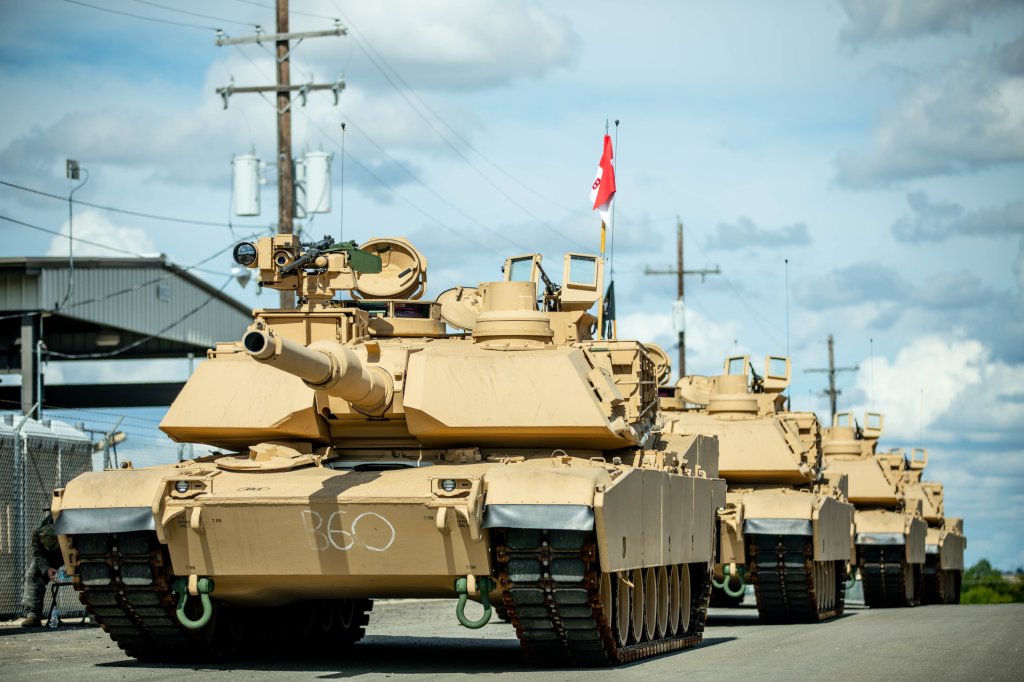
In 2023, the Army announced it was scrapping plans for more incremental upgrades to the existing M1A2 Abrams model in favor of the M1E3. General Dynamics Land Systems (GDLS), the current prime contractor for the Abrams, received an initial M1E3 design contract last year. The Army’s Program Executive Office for Ground Combat Systems (PEO-GCS), situated at the service’s Detroit Arsenal in Michigan, is leading the effort.
“Very long story short, when we went – when the Chief [of Staff of the Army Gen. Randy George] and I went to Detroit, 18 months ago, the PEO team, at the time, said that we would not see the M1E3 until 2032,” Miller told Defense News‘ Judson. “And we said no.”
There have been reports since April that the Army has been looking to accelerate work on the M1E3.
“[We] gave them [PEO-GCS] a challenge, gave General Dynamics a challenge,” Miller continued. “I want a tank by the end of the year, and we need a platoon by the end of next year. We understand there’s a lot of process things that we, the government, impose. So things like critical design review, things like final design review, those are government processes.”
But “if it is not a risk to a soldier’s life, limb, or eyesight, or hearing, we should be able to move those processes faster,” he added. There are “absolutely things we must do, but the process of just sort of staring at the problem for three or four years is asinine, and it is no longer acceptable.”
The Army’s chief technologist says that Col. Ryan Howell, who has managed the Abrams program for years and is now the acting deputy head of PEO-GCS, has assured the service’s leadership that a “pre-prototype” M1E3 will be delivered sometime in December.
“He has told me several times, the paint will still be wet,” Miller said. “It will be very fresh.”
“The way that we move that faster, was we focused on commercialization,” he added. “So rather than building a bespoke power plant and a bespoke transmission, and a bespoke integration cell, we said, hey, there are other companies that do this.”
Miller indicated that Caterpillar will be providing the powerplant for the early prototype and said that the transmission will come from SAPA. A core aspect of the future M1E3 will be some form of hybrid propulsion to offer a more economical alternative to the fuel-hungry gas turbine powerplant found on current Abrams tanks.
“It’ll be hybrid. It will not be fully electric,” Miller said after the interview with Judson. “We don’t want fully electric, because there’s no place to charge. You need the liquid fuel to actually generate power. But what we’re seeing, and I have not put this to the test, so this is just sort of the math behind it, is the way that they’re going to deliver it, it’ll be about 40 percent more fuel efficient.”
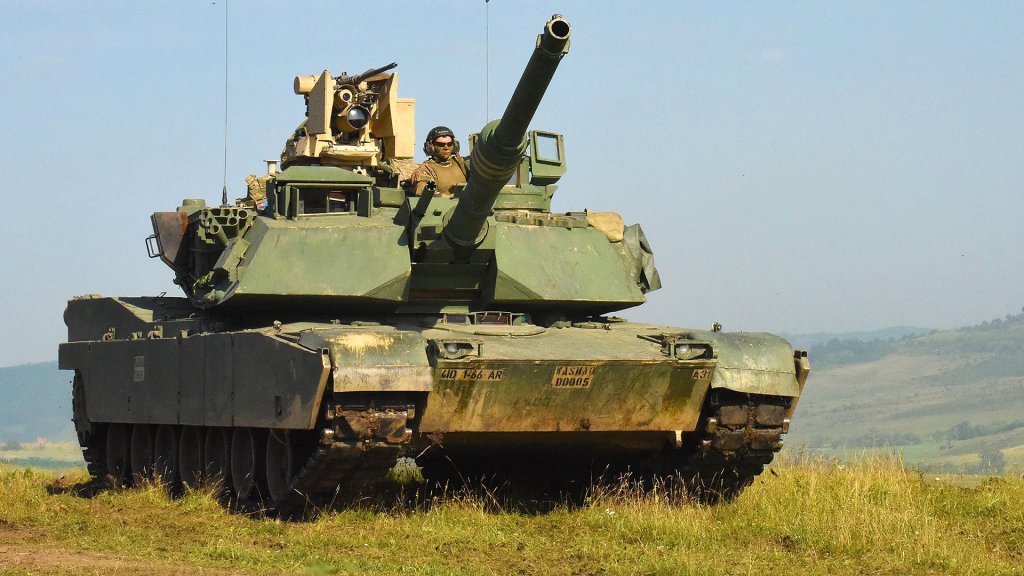
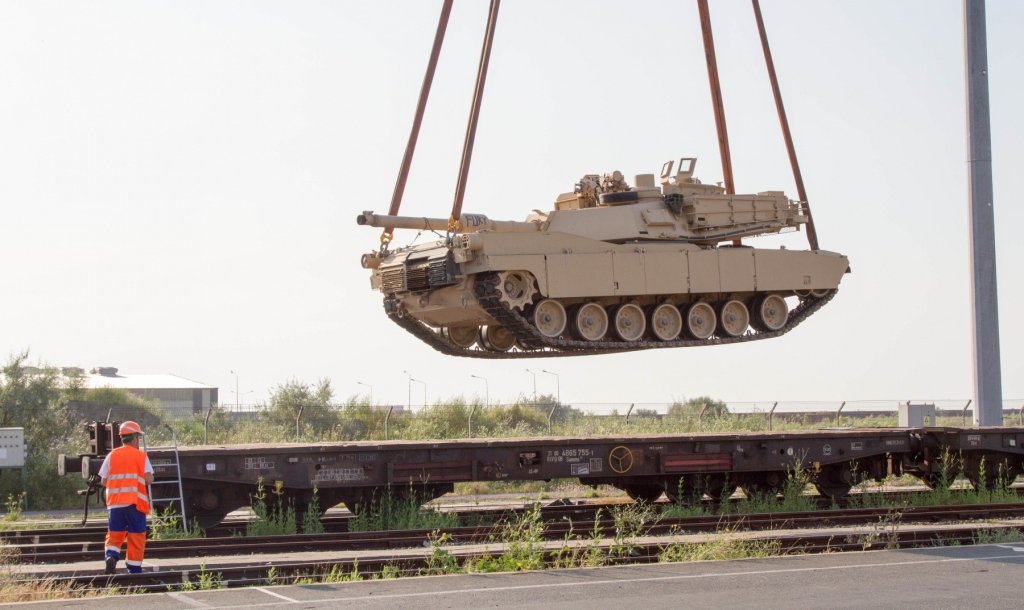
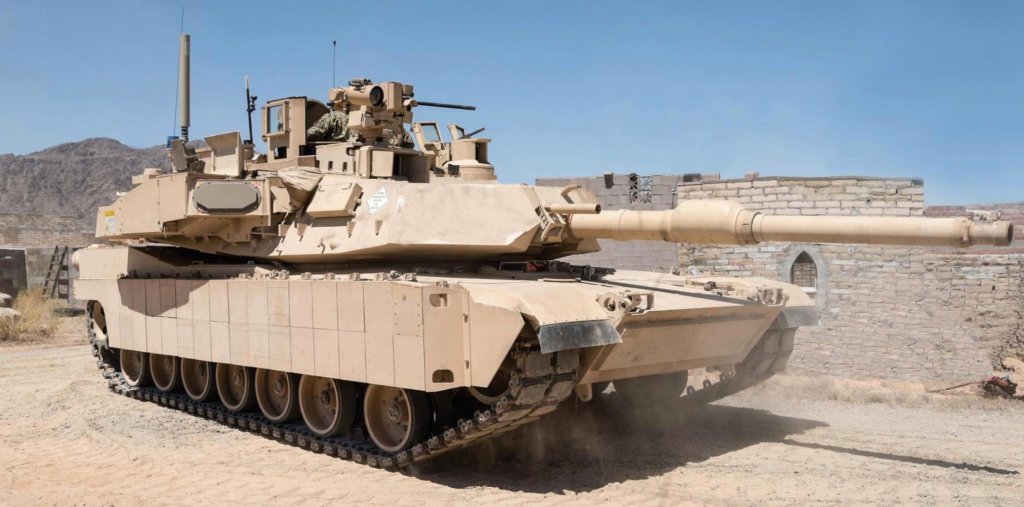
The Army has also said previously that it is targeting a gross weight goal of 60 tons. With a full combat load, the latest M1A2 System Enhanced Package Version 3 (SEPv3) variant is some 78 tons. Weight creep has been a major issue for the Abrams family since the original version entered service in the 1980s.
The Army has also stressed that an integrated active protection system (APS) will be another key feature of the M1E3. The service has already integrated the Israeli-designed and combat-proven Trophy APS onto a portion of its existing Abrams tanks. Trophy is a so-called hard-kill APS that uses a burst of kinetic projectiles to defeat or at least disrupt incoming anti-tank guided missiles (ATGM), as well as other types of infantry anti-armor weapons, such as shoulder-fired rockets and rocket-propelled grenades. A version of the system now exists that also offers protection against drones.

A new system that is more streamlined and otherwise better optimized for the M1E3 could offer benefits when it comes to power and weight requirements, as well as the design of the tank’s physical structure. Regardless, hard-kill APSs are only expected to become more important for tanks and heavy armored vehicles going forward, including as an added layer of anti-drone defense, something The War Zone previously explored in an in-depth feature.
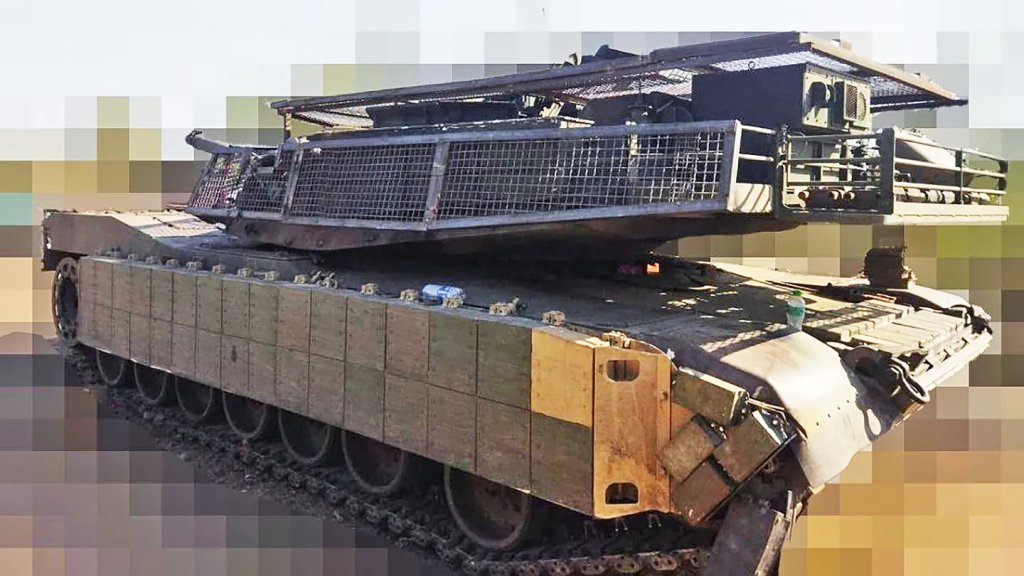
The Army is already looking into installing add-on armor kits to its existing Abrams and other heavy armored vehicles to give them increased protection against top-down attacks from drones and, to a lesser extent, ATGMs. This kind of up-armoring first appeared on Russian tanks in the lead-up to the all-out invasion of Ukraine, and has now become a fixture on armored and unarmored vehicles on both sides of the ongoing conflict. This armoring trend has also been steadily appearing elsewhere globally.
The possibility has been raised that the M1E3 might also feature a larger caliber or otherwise more advanced main gun compared to the 120mm type found on current generation Abrams variants. Whatever weapon is chosen, the Army is looking at coupling it with an autoloader, something the U.S. military and many other armed forces in the West have historically eschewed in their tank designs.
The Abrams four-person crew currently includes an individual whose main job is to load the 120mm gun. Automating that process would allow for a reduced crew size on the future M1E3, which could, in turn, translate to more significant changes to the design of the turret and other aspects of the tank. A smaller turret would lower its profile and help reduce weight.
The armament package on the M1E3 could differ from that of previous Abrams variants in ways beyond the main gun. At the AUSA conference this week, GDLS unveiled a launcher system called the Precision Effects & Reconnaissance, Canister-Housed (PERCH), which is capable of firing Switchblade 300 and 600 loitering munitions from AeroVironment. The company says PERCH is currently designed to be integrated onto existing M1A2 tanks, as well as Stryker wheeled light armored vehicles.
The M1E3 is expected to feature a host of other advancements, including in terms of targeting capabilities and other onboard sensors, as well as networked communications systems. The Army’s current push to accelerate work on the next-generation tank puts heavy emphasis on modularity and open architectures to make it easier to integrate and refine capabilities during the development process, as well as incorporate improvements down the road.
Overall, how indicative of an actual production M1E3 the pre-prototype example might be remains to be seen. It is also worth noting that GDLS rolled out an AbramsX next-generation demonstrator back in 2022, which had many of the features the Army says it is interested in for the future M1E3.

In speaking to TWZ‘s Howard Altman today, Miller, the Army’s chief technologist, explained that the goal of getting a full platoon of pre-prototypes next year is directly tied to answering many of these questions.
“The reason we want to get the platoon out earlier is because we want the armor brigades to be able to tell us what works and what doesn’t,” he said. “And then, rather than wait three or four more years, do [sic] some feedback then, allow GD [General Dynamics] to make those changes, and then get the next iteration out the next year.”
“What we didn’t want to do is the first time that a tanker sees the new tank is [when] it’s done, you can’t change anything, and it’s six years from now,” he continued. We want to “get feedback for the seats. Get feedback for the gunnery. Get feedback for the autoloader.”
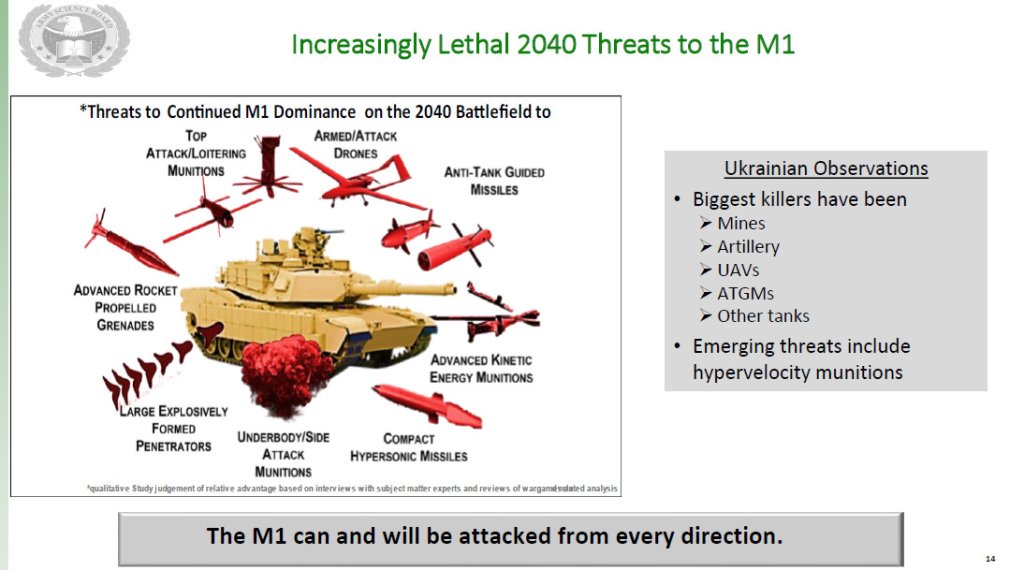
It’s also worth noting here that the final M1E3 design may well reflect a broader shift in view on the role of tanks and other heavy armored vehicles on future battlefields. An unclassified Army Science Board study published in 2023 came to the conclusion that future variants or derivatives of the Abrams would not be a dominant presence on a high-end battlefield in the 2040s due to the evolving and expanding threat ecosystem. The U.S. Marine Corps has already divested all of its M1s in line with new expeditionary and distributed concepts of operations.
Amid a larger reshuffling of priorities, the Army also announced earlier this year that it had axed the M10 Booker, a tracked light tank-like armored fire support vehicle with a 105mm main gun developed by GDLS and intended to support dismounted infantry units. The service had originally planned to acquire just over 500 Bookers and had already been in the process of fielding the first examples to operational units.

Regardless of how the Army’s larger tank force structure plans might evolve in the future, the service is looking to further jump-start work on the next-generation M1E3 with the delivery of the pre-prototype in December.
Contact the author: joe@twz.com
Loading comments…
Comments couldn’t be loaded. Please refresh the page.