
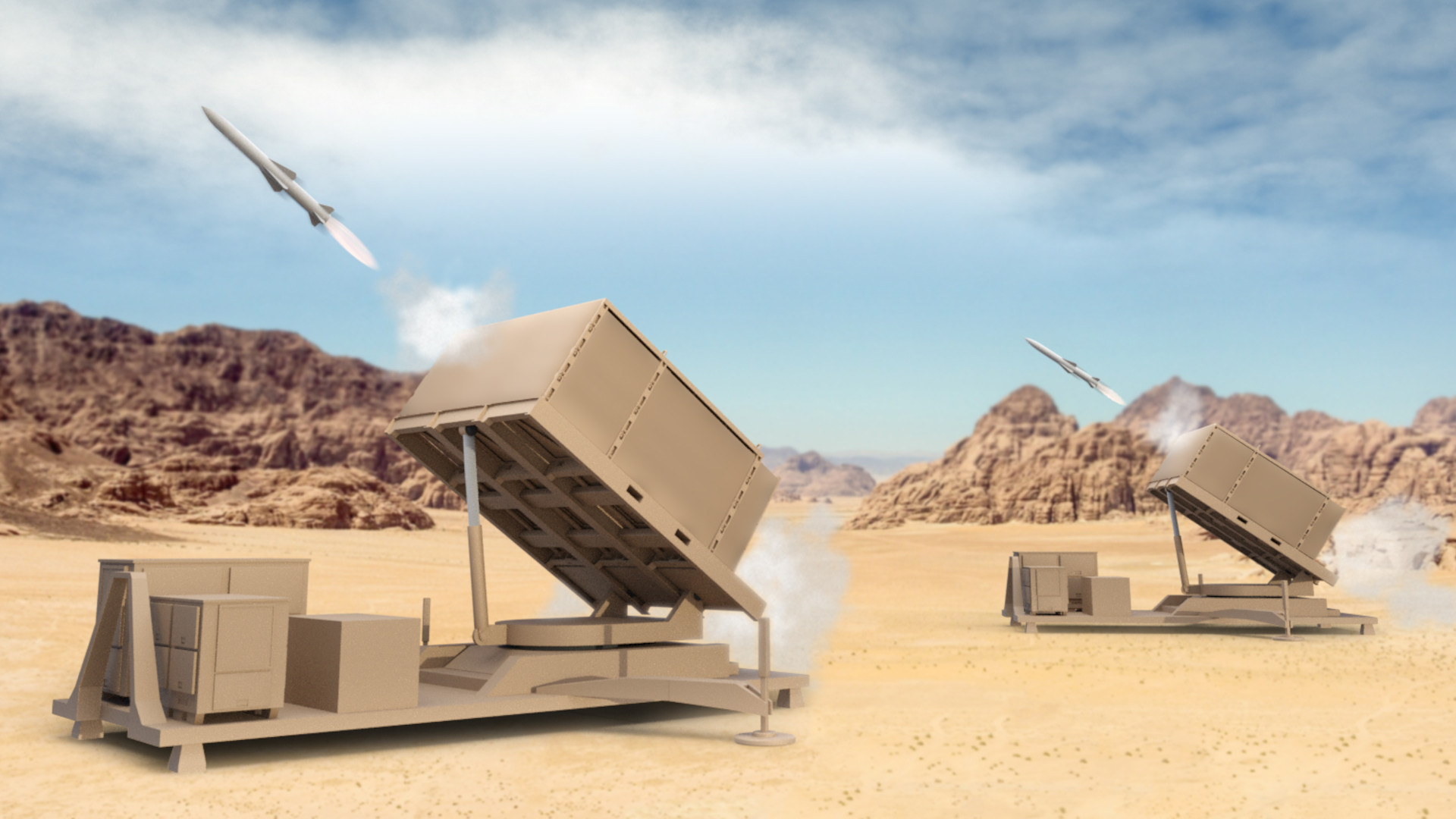
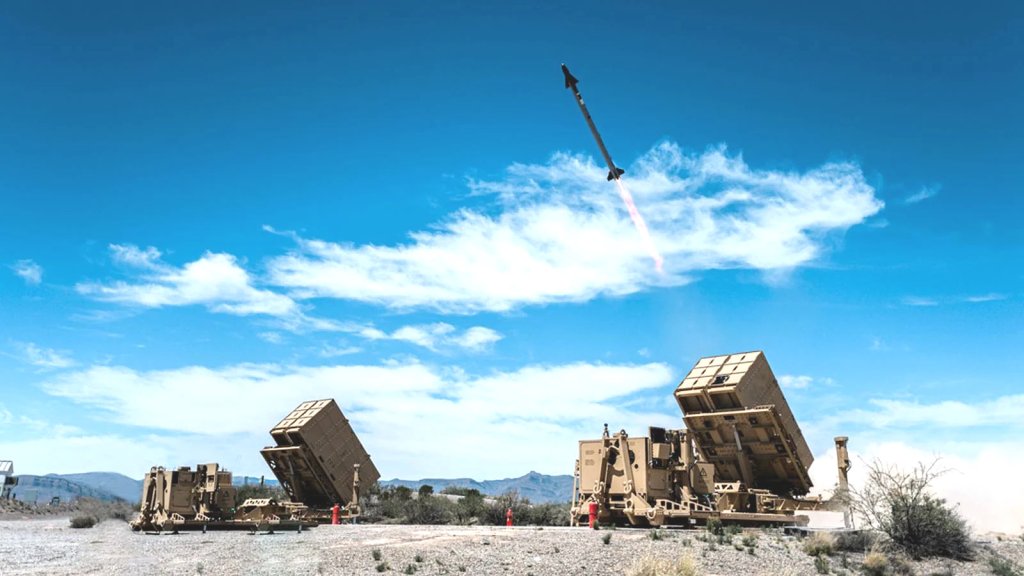
Lockheed Martin is among those to have gotten the go-ahead to move forward in a competition to design a second interceptor for the U.S. Army’s middle-tier Enduring Shield air defense system. Enduring Shield systems are in the process of being fielded now, armed with the AIM-9X Sidewinder. The Army has long expressed interest in another interceptor option, particularly to provide increased capability against incoming cruise missiles.
The news that Lockheed Martin had secured an Other Transaction Authority (OTA) Project Agreement relating to its as-yet-unnamed second interceptor offering for the Enduring Shield system, also known as the Indirect Fire Protection Capability (IFPC), came yesterday. The announcement was made around the Association of the U.S. Army’s (AUSA) main annual conference this week, at which TWZ was in attendance.
“We were one of several [companies] that competed. We were pulled – it’s an OTA – so we were pulled out of the basket,” Chris Murphy, senior manager of Business Development for Integrated Air and Missile Defense Advanced Programs at Lockheed Martin’s Missiles and Fire Control division, told TWZ‘s Howard Altman on the show floor at AUSA. “We’ve negotiated the SOW with the Army, the statement of work, and the award has been finalized, and so we were starting work.”
OTA is a mechanism the U.S. military typically uses to support rapid prototyping and other research and development work while side-stepping more traditional and often more drawn-out contracting processes. Boeing also shared back in March that it had been chosen to proceed in the competition for the IFPC second interceptor, but has not yet released imagery of or significant details about its design.
In terms of the design Lockheed Martin is developing to meet the IFPC second interceptor requirements, “it’s not new. There are technologies that we already have that we’re leveraging,” according to Murphy. “But the requirements for the missile are such that they’re going to be new technologies, and there’s going to be some level of development in order to get those integrated.”
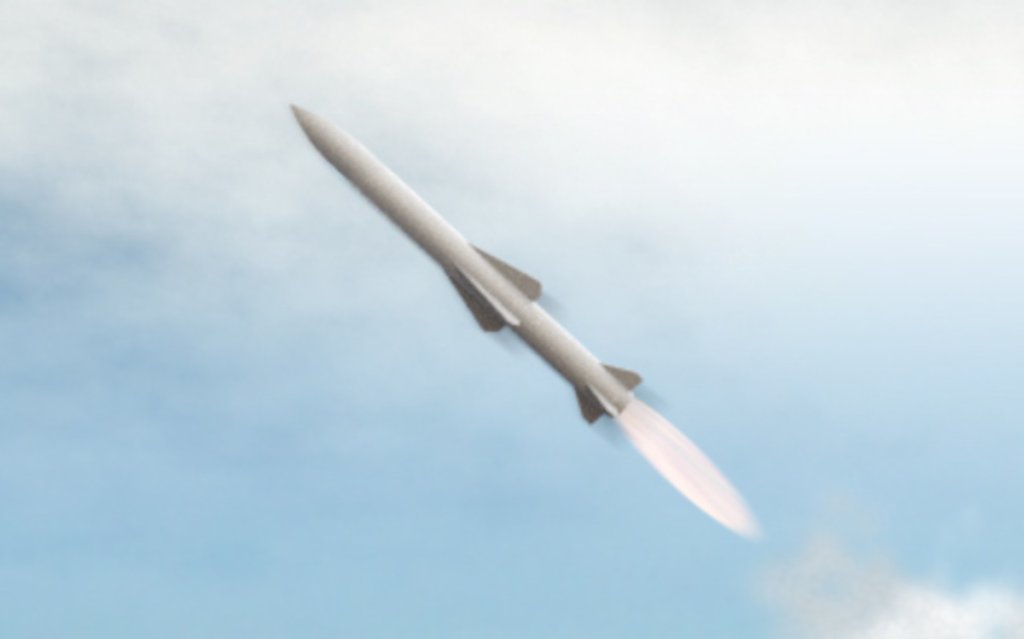
A rendering Lockheed Martin shared along with its announcement about the OTA deal shows a missile that is visually reminiscent of a previous design called Cuda. The company promoted Cuda in the early 2010s as a compact air-to-air missile, but it had largely disappeared from its marketing materials by the end of the decade. However, when asked, Murphy said there is no relationship between Cuda and Lockheed Martin’s IFPC second interceptor design.
“We are happy to be working with the company AV, formerly Blue Halo, that also has a missile that’s for counter-UAS [uncrewed aerial systems],” Murphy shared. “We’re leveraging that work, and work that we’re doing on other programs, to bring new capability and get there as quickly as the Army wants us to.”
AeroVironment (AV) announced in May that it completed its acquisition of BlueHalo. AV is now continuing with the development of BlueHalo’s Freedom Eagle-1 (FE-1) interceptor for the Army’s separate Next-Generation C-UAS Missile (NGCM) program. Lockheed Martin’s rendering of its IFPC second interceptor shows a design that is visually distinct from the FE-1.

“So you know that our [PAC-3] MSE missile is a hit-to-kill system, right? We have great confidence in that technology,” Murphy added when asked whether Lockheed Martin’s IFPC second interceptor design would have a warhead or not. “We also work [on] blast-frag[mentation warheads] on other programs. So we will look at everything. That’s part of the trade space the Army has asked us to look at.”
It is worth noting that the PAC-3 Missile Segment Enhancement (MSE) mentioned here, which is the latest interceptor for the Patriot surface-to-air missile system, is presented as hit-to-kill, which typically refers to a weapon designed to destroy its target through sheer force of impact. However, as TWZ has explored previously, PAC-3 MSE is something of a hybrid design that includes a “lethality enhancer” high-explosive charge to increase its chance of scoring a hit, as you can read more about here.

Otherwise, details about the new Lockheed Martin interceptor design remain limited. The Army has said in the past that it wants the second interceptor for Enduring Shield to have capabilities akin to those found on the AIM-120D Advanced Medium-Range Air-to-Air Missile (AMRAAM), but with the same form factor as the AIM-9X. The latter point is key since the new missile has to fit inside the system’s existing palletized launchers, which can be loaded with up to 18 Sidewinders in individual canisters.
As noted, the Army’s primary stated reason for wanting the second interceptor for Enduring Shield at all is to expand the system’s ability to engage increasingly more capable adversary cruise missiles, especially supersonic types, and do so at longer ranges. The system is also intended to provide short-to-medium range defense against other aerial threats, including drones.
Whatever mix of interceptors are ultimately integrated into Enduring Shield, the system as a whole presents a very important development for the Army. The service has not had any middle-tier air defense capability since it retired the Hawk surface-to-air missile system in the 1990s. Hawk has continued to serve elsewhere globally, including now in Ukraine, where it is being used actively to help protect against Russian cruise missile and long-range kamikaze drone attacks.

The Army’s lack of capacity in this regard has contributed to the severe strain on its Patriot surface-to-air missile systems. The service’s Patriot force has been repeatedly shown to be worryingly inadequate to meet existing operational demands, which would only grow if a large-scale conflict, such as one against China in the Pacific, were to erupt.
“The IFPC battalions that are coming online will help offset that [demand for Patriot] as well, even though it’s not quite the same capability,” Vice Chief of Staff of the Army Gen. James Mingus said back in July. “In some environments, that [IFPC] actually is more appropriate to apply than a full-up Patriot battalion.”

In addition to the reality that not every aerial threat requires the capabilities of a system like Patriot, Enduring Shield also offers a new, lower-cost option for getting after targets within its engagement envelope. The unit cost of a current-generation AIM-9X is around $500,000. The different interceptors currently used in the Patriot system all cost several million dollars apiece. The exact price point for Enduring Shield’s second interceptor remains to be seen, but it is still expected to be substantially cheaper than the ones available for Patriot. As mentioned, the Army is also pursuing even less expensive interceptors, like the FE-1 and a successor to the venerable Stinger, for shorter-range point defense against drones and other aerial threats.
“We have relied too long on the Patriot system as the centric system to air and missile defense,” Lt. Gen. Sean Gainey, head of the Army’s Space and Missile Defense Command (SMDC), had also said at the annual AUSA gathering last year. “We are modernizing now with the short-range air defense and moving forward with our IFPC cruise missile defense, and our improvements to our current system[s], with the integration into IBCS, it will eventually start to relieve that significant stress.”
IBCS here refers to the Integrated Battle Command System (IBCS), a new air and missile defense-focused network architecture the Army has been working to field in recent years, and that you can read more about here. The service has said in the past that a typical Enduring Shield platoon, several of which would be found within a full battalion, would consist of four launchers linked to at least one AN/MPQ-64 Sentinel-series radar using IBCS. The network would also help with layering in Enduring Shield with Patriot and other air defense assets, including the new Lower Tier Air and Missile Defense Sensor (LTAMDS) radar.

In working on the second interceptor design for Enduring Shield, “one of the important steps for us is integrating into the architecture that the Army has, the Integrated Battle Command System, IBCS,” Lockheed Martin’s Murphy had told our Howard Altman at AUSA. “So that’s a big step that the Army needs to make sure that they have that integrated capability. And so not only do we deliver a missile that’s going to give them new capability, we will also help them with integration into IBCS.”
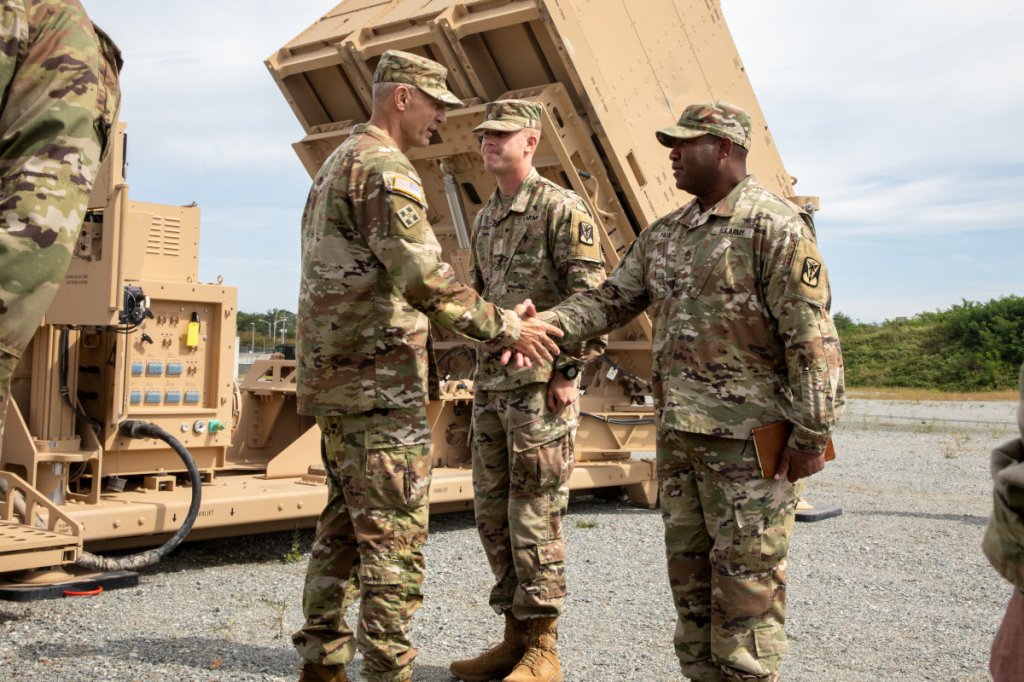
In September, the Army released pictures from a visit by Chief of Staff of the Army Gen. Randy George to South Korea showing an Enduring Shield launcher, as well as personnel from 6th Battalion, 52nd Air Defense Artillery Regiment. 6-52nd Air Defense Artillery is a Patriot battalion. Whether Enduring Shield is now operational in South Korea or if this is a temporary deployment of some kind is unclear.
The Army does still appear to be years away from integrating a second interceptor of any kind into the Enduring Shield system. “The Army plans to tentatively select companies to advance to the prototype development phase of the competition next year,” Boeing had said in its press release in March.
At the same time, the newly announced deal with Lockheed Martin shows that the competition to give Enduring Shield a second interceptor option, adding to the already important new tier of air defense capability the system offers the Army, is moving ahead.
Contact the author: joe@twz.com
Loading comments…
Comments couldn’t be loaded. Please refresh the page.