

A key Russian airbase in occupied Crimea has been targeted by a Ukrainian drone strike, according to Ukraine. Authorities in Kyiv claim that drones hit a MiG-31BM Foxhound interceptor, as well as elements of an S-400 air defense system, at Belbek Air Base, near Sevastopol.
The Security Service of Ukraine (SBU), the government’s main internal security agency, reported that a successful drone strike operation was carried out overnight by forces from its Special Group “Alpha.” Russian officials, including the governor of Sevastopol, claim that the attack was repelled with 11 drones downed and resulted in no damage.
The SBU has published a series of video stills showing the attack, with footage taken from the perspective of the long-range one-way attack drones heading toward their targets. Based on the imagery, the drones could well be the same fiber-optic types that have been launched from Ukrainian drone boats.
Further videos were posted to social media by residents of Crimea, showing explosions and attempts by Russian troops to shoot down the drones. At this point, it should be noted that, without the full videos of the strikes, we cannot be sure whether the drones detonated or the degree of damage they might have caused.
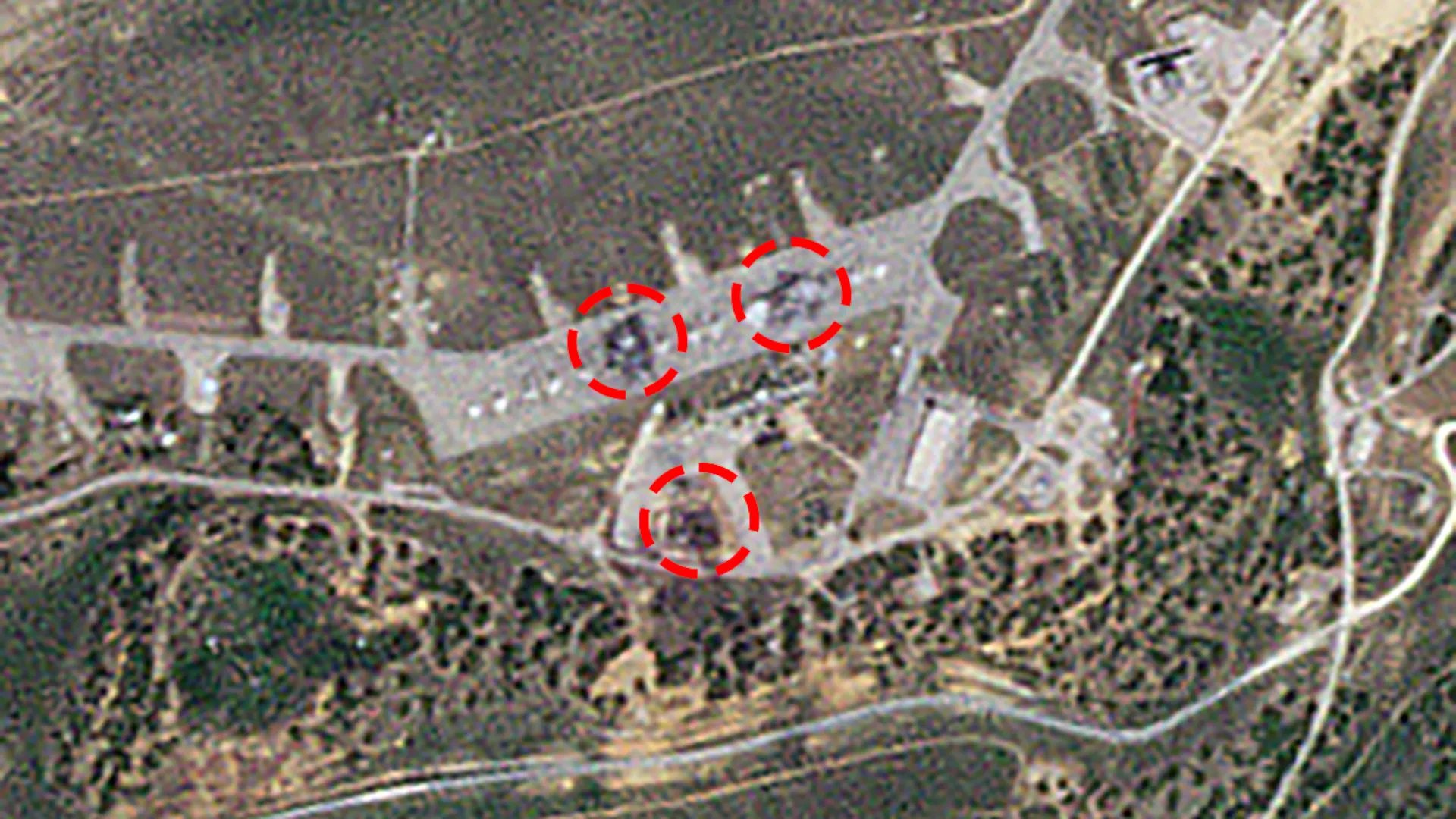
According to the SBU, damage was recorded to a MiG-31, a 92N6 (NATO reporting name Grave Stone) long-range multifunction radar that is part of the S-400 system, two Nebo-SVU long-range surveillance radars, and a Pantsir-S2 surface-to-air missile system.
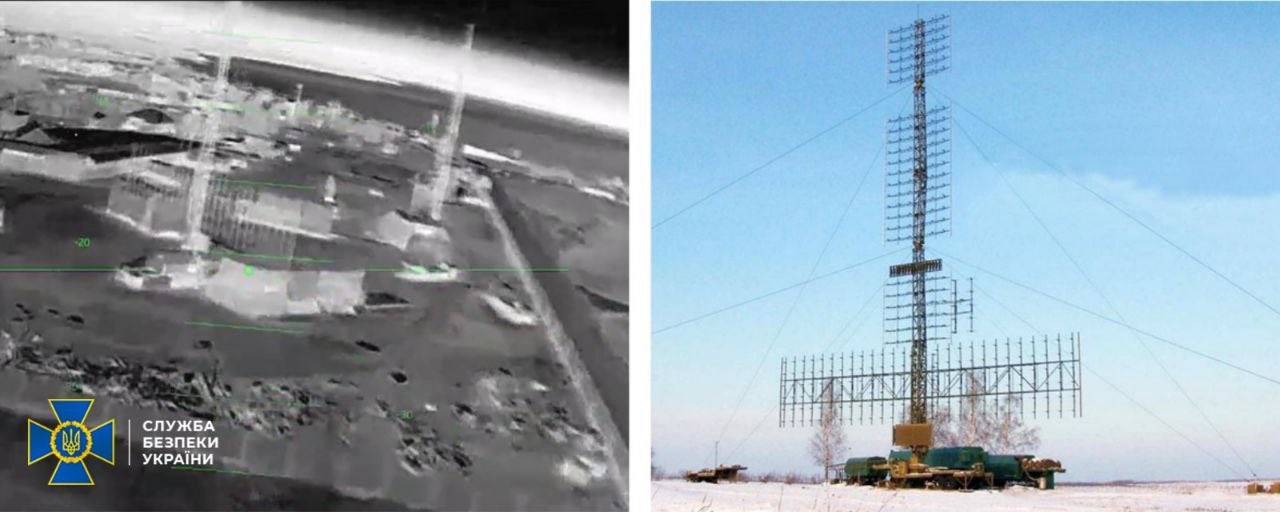
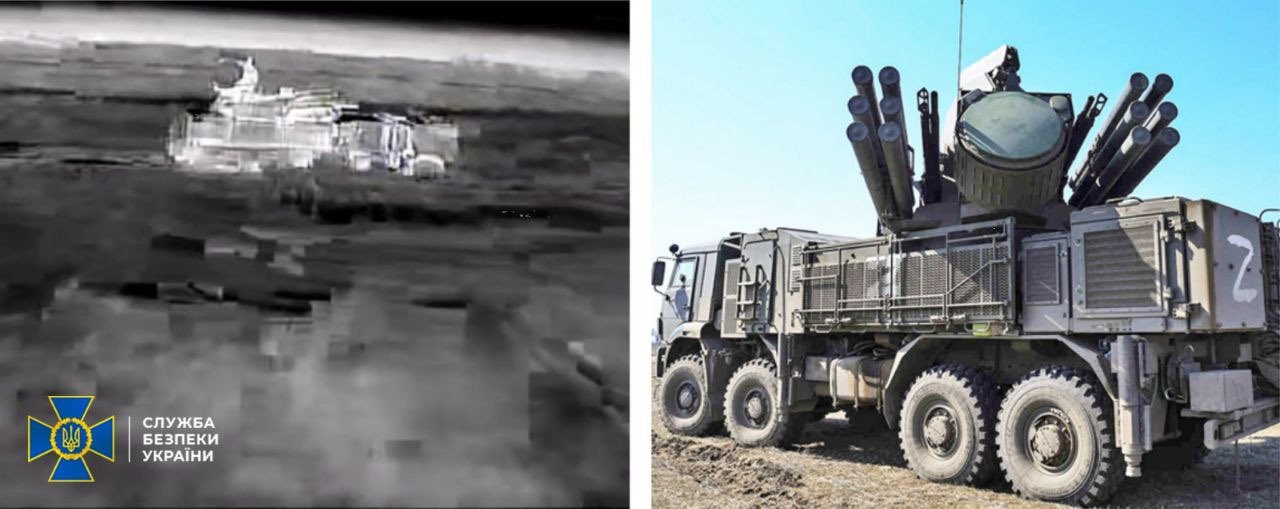
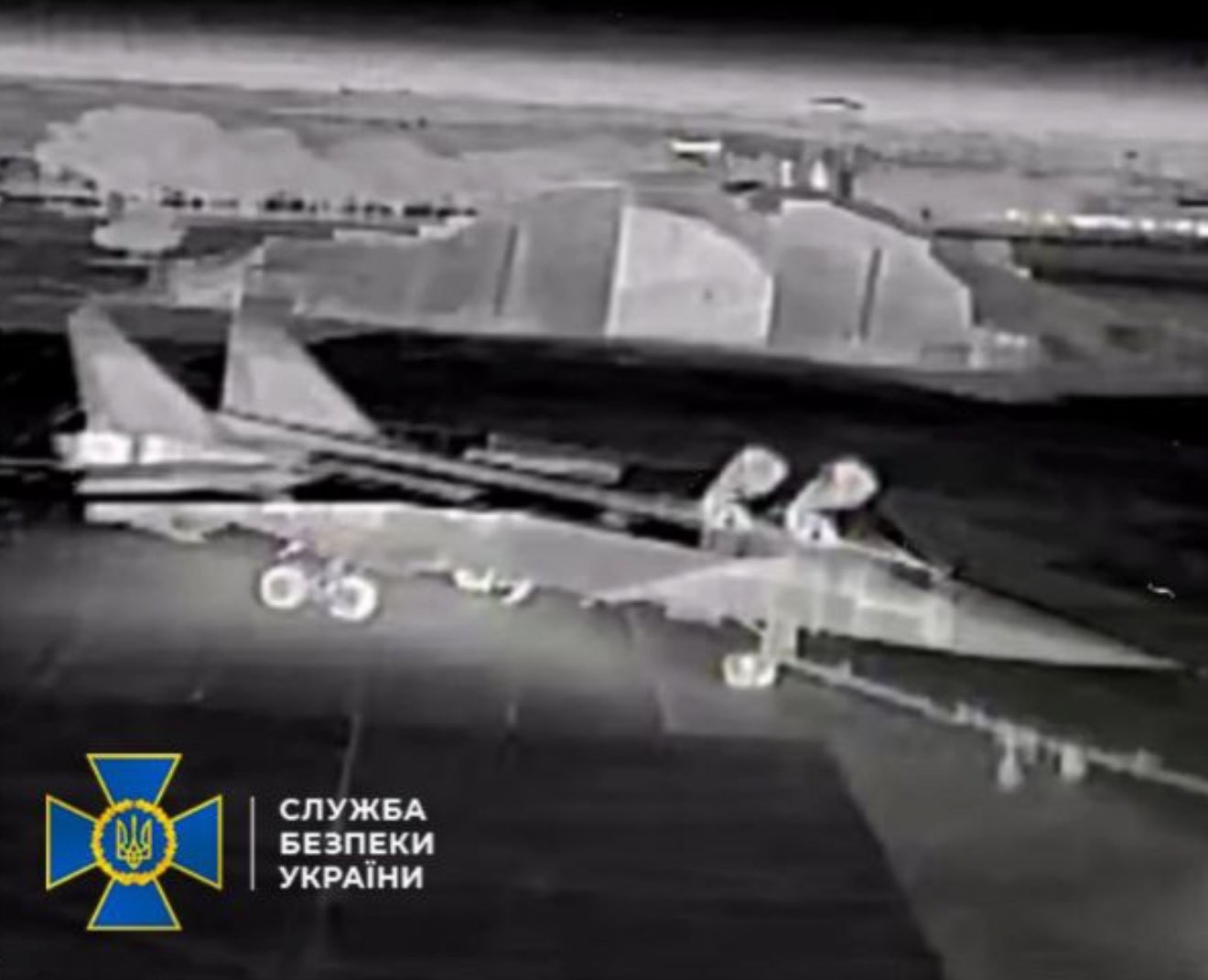
Ukraine claims that the targeted MiG-31 was carrying a full combat load, although the available video reveals that it carries no armament under its wings. Potentially, it carries air-to-air missiles below the fuselage, but the forward-mounted examples are also not visible. While it looks like a real aircraft rather than a decoy, it remains possible that it may have been a non-operational example. However, recent satellite imagery assessed by TWZ shows a MiG-31 sporadically at the base in recent weeks, sometimes sitting out in the open.
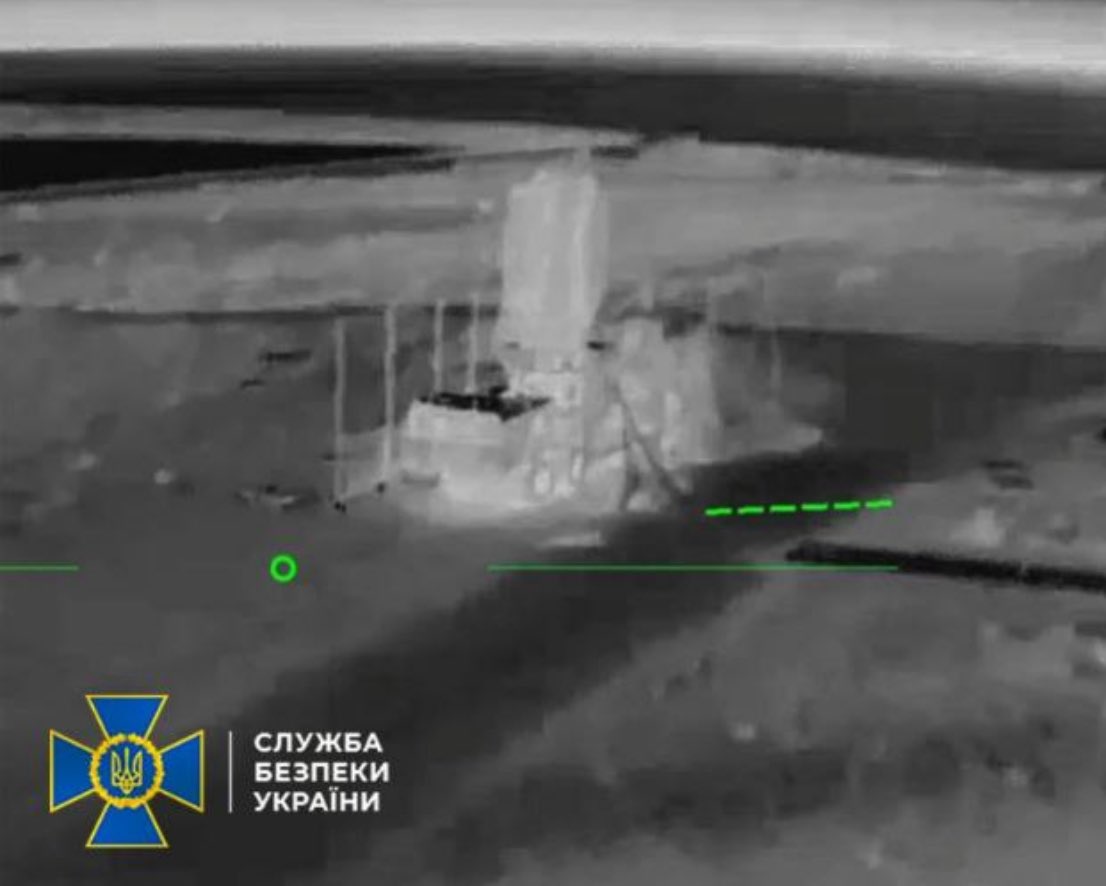
It’s worth noting, too, that the reported 92N6 system (seen below) was covered with camouflage and/or anti-drone netting, making its positive identification harder. It could also have been a 96L6 (Cheese Board) all-altitude detection radar, also associated with the S-400 air defense system.
As to the estimated value of these items of equipment, the SBU put a figure of $30-50 million on the MiG-31, depending on configuration and armament, $30 million on the 92N6, $60-100 million for each of the Nebo-SVUs, and $12 million for the Pantsir-S2.
“The SBU continues its effective work to destroy air defense systems in Crimea that cover important military and logistical facilities of the occupiers,” the agency said in a statement on its Telegram channel. “The elimination of components of this echeloned system significantly weakens the enemy’s defense and military capabilities in the Crimean direction.”
Belbek plays a key role in Russia’s war in Ukraine and, as such, has been targeted by Ukraine in the past.
The significance of the airbase, in particular, lies in the fact that its aircraft and air defenses help extend coverage deeper into Ukraine, as well as providing critical screening for the nearby Russian naval base at Sevastopol, and also extend this coverage far out into the Black Sea.
Belbek Air Base was used by Ukraine before Russia annexed Crimea in 2014. Today, it is home to the 38th Fighter Aviation Regiment (38 IAP, in Russian nomenclature), a unit that you can read more about here. When Moscow launched its full-scale invasion of Ukraine, Belbek received an influx of additional combat aircraft deployed from units in Russia. These have included examples of the Su-30SM and Su-35S, as well as Su-34 Fullback strike fighters, and MiG-31s.
MiG-31s, together with the very long-range air-to-air missiles they carry, have been a particular threat to the Ukrainian Air Force.
In October 2022, during take-off from Belbek, a MiG-31BM departed the runway, crashed, and was completely burned out. The navigator/weapons system officer ejected successfully from the rear cockpit, while the pilot was killed.
The airbase’s value means that it has received new hardened aircraft shelters and additional construction to help shield aircraft from drone attacks and other indirect fire. This is part of a broader push by the Russian military to improve physical defenses at multiple airfields following the launch of the full-scale invasion of Ukraine.

Notably, the MiG-31 was targeted while standing in the open, unprotected. Its twin cockpit canopies were open, suggesting it was being prepared for a sortie or had recently returned from one.
As well as previous drone attacks, Ukrainian forces have employed U.S.-supplied Army Tactical Missile System (ATACMS) short-range ballistic missiles with cluster munition warheads against the base, with a notably destructive ATACMS barrage in May of last year. That attack resulted in two MiG-31s being burnt out, confirmed in post-strike satellite imagery. Since then, however, the use of hardened aircraft shelters at Belbek will have made the resident aircraft less vulnerable to the effects of ATACMS armed with cluster munitions, in particular.
The Russian Aerospace Forces began the current conflict with around 130 MiG-31s in active service, a small number of them adapted to carry Kinzhal aero-ballistic missiles. The two aircraft destroyed previously at Belbek are the only confirmed combat losses, though that might change when more details of the latest drone strike become available.

The same attack on Belbek in May 2024 saw the Russians lose elements of an S-300 or S-400 air defense system, including what looked to be another 92N6 radar.
The targeting of Belbek again overnight, which Ukraine claims caused significant damage to prized air defense assets, shows that Ukraine is continuing to apply pressure on Russian forces in Crimea and is using a variety of weapons to achieve this.
Contact the author: thomas@thewarzone.com
Loading comments…
Comments couldn’t be loaded. Please refresh the page.