
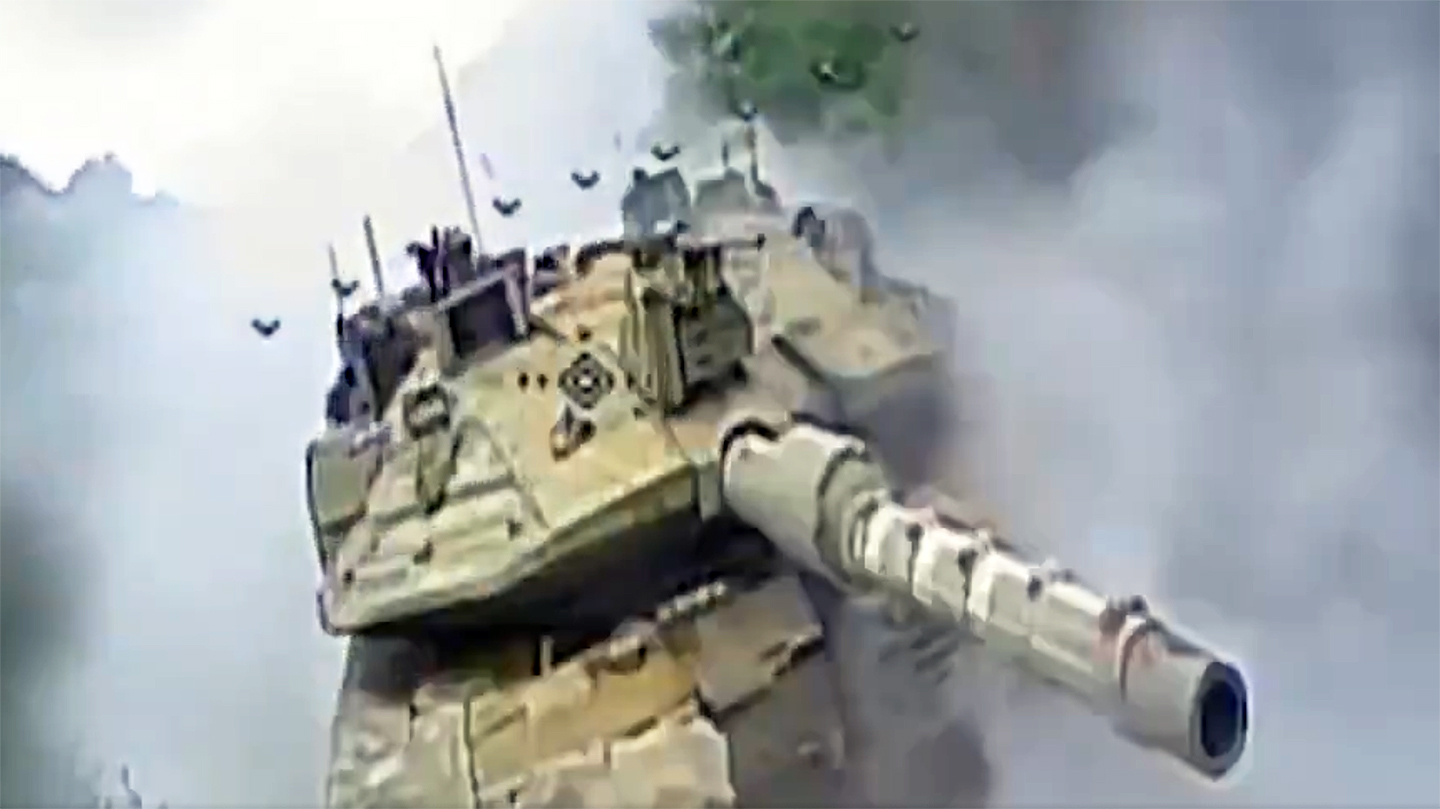
As Israel continues its ground offensive into Lebanon, it appears that Hezbollah is increasing its first-person view (FPV) drone strikes on IDF armor and personnel. The uptick in these attacks is the latest example of how the use of the small, fast and easy to maneuver weapons has proliferated from the war in Ukraine to battlefields across the globe.
While the militant Lebanese group has used FPV drones against Israel since 2024, it has ramped up these attacks for a couple of different reasons, according to Ryan Brobst, Deputy Director of the Foundation for Defense of Democracies (FDD)’s Center on Military and Political Power.
“The IDF is currently operating further north with more troops than in previous operations, which increases the number and proximity of targets for Hezbollah to strike,” Brobst told us. In addition, there are indications that the Iranian proxy has followed additional lessons from the Ukraine war using fiber optic cables to guide the drones. As we have frequently reported, fiber optic cables mitigate the effect of electronic warfare efforts to jam radio signals as well as some of the limitations imposed by geographical features that can impede the line-of-sight radio connection between drone and operator.
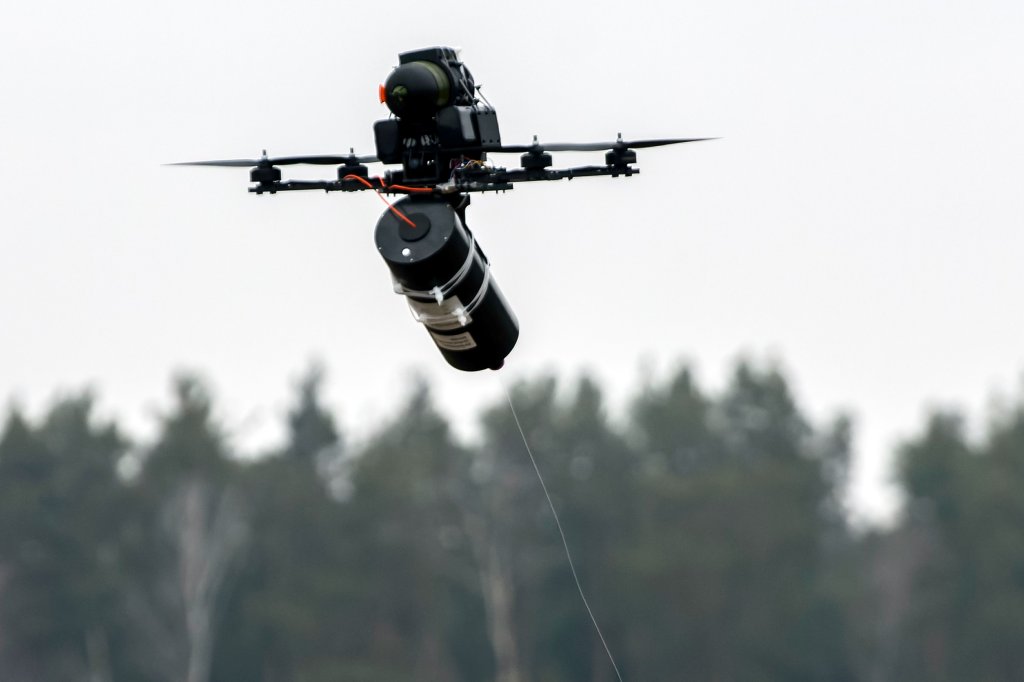
“One additional consideration may be the rising availability of fiber optic drones,” Brobst explained. “Just to be clear, I am not certain the extent to which Hezbollah has switched to fiber optics vs radio, or that radio models are totally ineffective. But it seems quite unlikely Hezbollah had significant numbers of fiber optics in 2024, given that Russia and Ukraine were just starting to deploy them that year. They are much more available now.”
Several videos recorded by Hezbollah recently have emerged on social media claiming to show its use of fiber optic-controlled FPV drones.
One video claims to show a compilation of Hezbollah FPV strikes that hit two Merkava Mk.4 main battle tanks, a D9 Caterpillar armored bulldozer, and what appears to be a Namer heavy infantry fighting vehicle (IFV).
The extent of the damage is not fully clear from these videos. The feeds end as soon as the drone strikes the target. Unlike both Ukraine and Russia, it would appear that Hezbollah does not have additional drones flying overhead to record the aftermath of these attacks, at least in select instances.
Another video shows claimed fiber-optic controlled FPV drone strikes on the open hatch of a Merkava as well as on an Eitan Armored Personnel Carrier parked behind a building. Again, there is no clear indication of any damage to either vehicle.
In a scene also reminiscent of the fight in Ukraine, Hezbollah used a fiber-optic controlled FPV drone to fly into a building. This is a tactic that both Ukrainian and Russian troops regularly train on and a skill they repeatedly hone.
While no cables are visible in the drones used in any of these videos, the lack of degradation in their video feeds, even as they approach low to the ground is a good indication of a fiber-optic connection.
It is difficult to know the full extent of Hezbollah’s use of FPV drones of any kind or what damage they are inflicting. Much of the evidence of the attacks, Brobst notes, comes from the release of Hezbollah videos.
“There is evidence that Hezbollah had used FPVs by at least 2024, but significantly fewer videos exist from that time period,” he explained. “If Hezbollah had conducted successful attacks previously, they would likely have been releasing videos of them for propaganda effect, as they are doing now.”
The following video shows one of those Hezbollah FPV drone attacks from September 2024.
Getting a full picture on the extent of the damage caused is difficult given the IDF’s strict censorship policies.
“The IDF has not released hard numbers on this unfortunately,” Brobst stated.
While the IDF does not acknowledge these events, its operational updates for March 26 “include a reference to several soldiers of the 7th Brigade sustaining injuries, one of whom was killed,” FDD stated. “It is not clear whether these casualties were the result of a Hezbollah FPV attack, but their unit is an armored brigade known to operate Israel’s Merkava 4 tank.”
A senior IDF official told The War Zone these videos show Hezbollah using FPV drones “with accurate manual control and sensible targeting (top of vehicles, weak points), the clips do show genuine strike capability, and some hits are probably real.”
However, “the videos cannot prove actual damage to a Merkava Mark IV…Footage is selectively edited, so success rates are likely overstated.”
The bottom line, he added is that “FPVs are a credible and growing technical threat, but the clips are evidence of capability — not proof of consistent effectiveness or system failure.”
Israel does have some means of countering drone attacks on armor. In addition to fielding electronic warfare equipment designed to jam drone radio signals (which does not work against fiber optic FPVs), some Israeli military vehicles are equipped with the combat-proven Trophy active protection systems (APS). The system uses radar detect and trigger small hit-to-kill projectiles at incoming threats. It was built mainly to defeat anti-tank missiles and RPGs, but new upgrades of the system have counter-drone capabilities, as well. You can read more about this emerging feature set and its potential here. It is unclear if any of Israel’s armor in Lebanon have this newer active protection system enhancement or if upgrades to earlier systems can also provide some of this capability.

Israel is not alone in being with FPV drones fired by Iranian proxies. As we reported last month, FPV drones targeted a U.S. military Black Hawk helicopter and a critical air defense radar at an American base in Iraq. Khataib Hezbollah, a group separate from the similarly named Lebanese group, is suspected of being behind the attack. This was one of a number of FPV attacks in Arab countries where U.S. forces are based.
You can see one of the drones hit the Black Hawk in the following video.
The widespread use of FPV drones, both radio- and fiber-optic-controlled, has made maneuver warfare in Ukraine exceedingly difficult for either side. Meanwhile, both Russia and Ukraine have been making improvements to extend the range of their FPV drones, especially those controlled by fiber optic cables. This includes bigger spools allowing longer ranges as well as additions of things like wings to improve aerodynamics which also increases range. Both sides are also using a variety of drones as relays to increase the range of their radio-controlled drones.
You can see one example of a winged Ukrainian FPV drone in the video below.
At the moment, there is no indication that Israel has any plans to cease its invasion of southern Lebanon, which has emerged as a main sticking point in negotiations to end the war against Iran. On Thursday, Israeli Prime Minister Benjamin Netanyahu announced that there was no ceasefire with Hezbollah.
How Hezbollah’s FPV capabilities will impact Israeli operations isn’t clear at this time, but if anything else, they are another sign of the proliferation of these capabilities and the challenges of defending against them.
Contact the author: howard@thewarzone.com
Loading comments…
Comments couldn’t be loaded. Please refresh the page.