
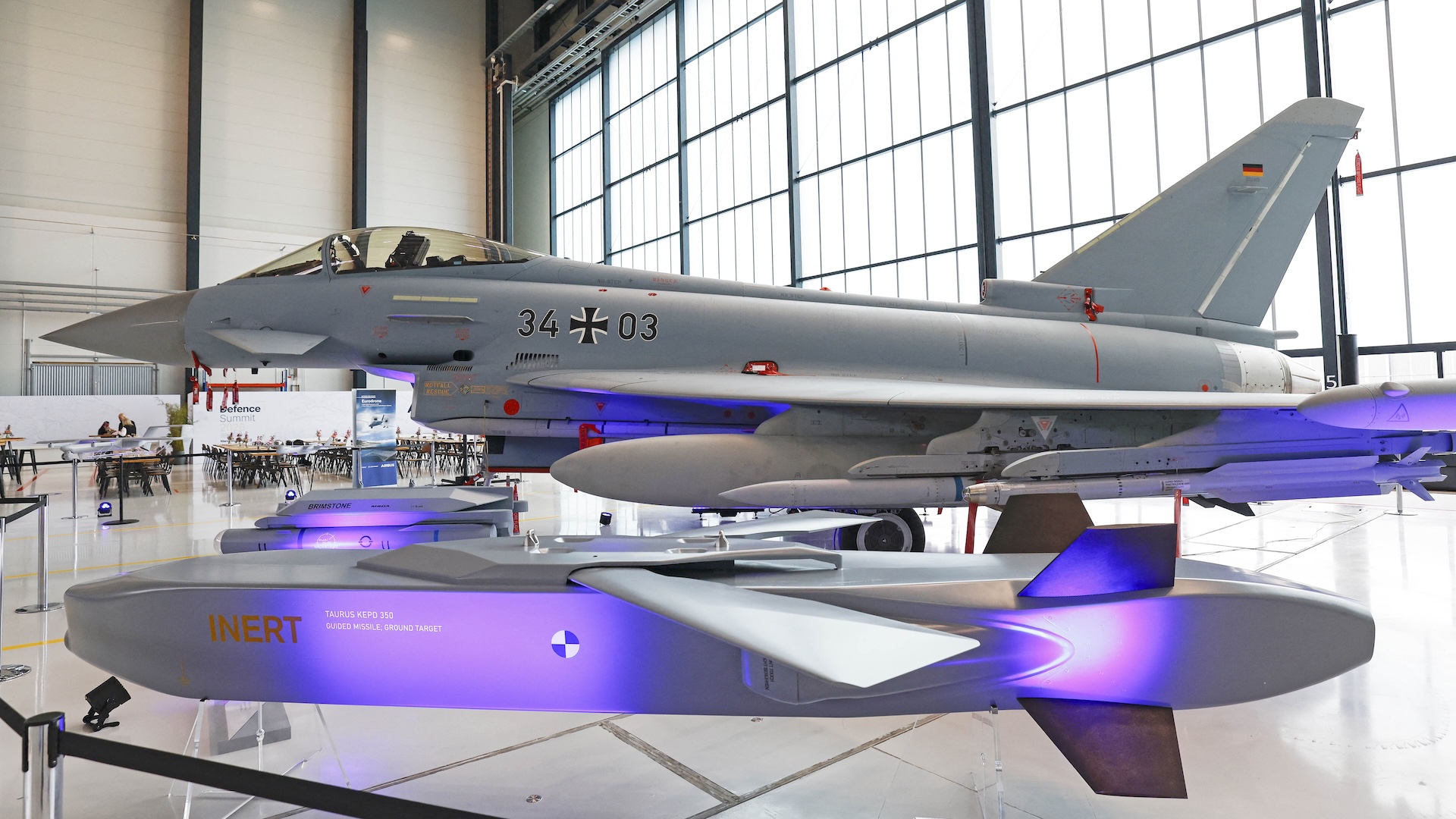
The new Tranche 4 Eurofighter for Germany has been unveiled by Airbus Defense & Space. The appearance of the jet comes at a time when the pan-European multirole fighter is enjoying renewed momentum, bolstered by upgrades that include advanced radars and new weapons. At the same time, the Eurofighter’s importance to Germany, especially, is becoming greater as questions grow about the future of the sixth-generation Future Combat Air System (FCAS) program, at the heart of which is supposed to be the crewed New Generation Fighter (NGF).
The initial German Tranche 4 Eurofighter to be shown in public was presented at Airbus Defense & Space’s Manching site near Munich today, as part of the Airbus Defense Summit. The aircraft, a single-seater, has the production number GS0115 and the service registration 34+03. At this point, no German Tranche 4 has flown, but the company says it has already completed several examples at Manching. Flight testing is scheduled to begin in the coming weeks.
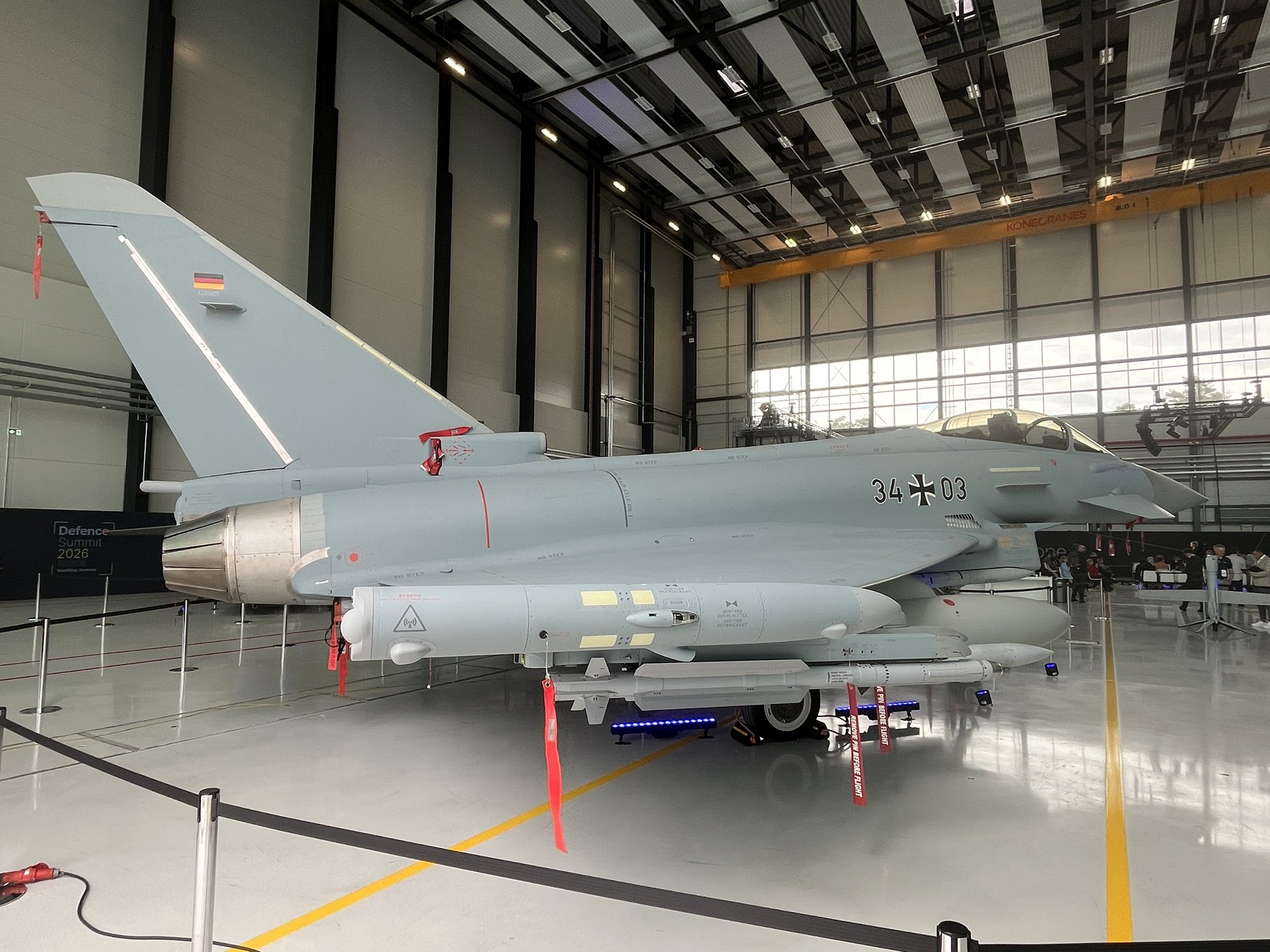
Under Project Quadriga, Germany ordered 38 Tranche 4-standard aircraft in November 2020. Originally planned to be delivered between 2025 and 2030, 31 of the aircraft will be single-seaters, and seven will be two-seaters. The total also includes replacements for two Eurofighters lost in accidents.
This is part of a broader push to enhance the capabilities of the Luftwaffe. While the Tranche 4 jets are slated to replace the Luftwaffe’s early Tranche 1 aircraft, which have far more limited capabilities, Berlin also plans on buying another 55 Eurofighters as a partial replacement for the Tornado swing-wing combat jet. As well as these 93 Tranche 4 Eurofighters, Germany has ordered a batch of 20 Tranche 5 Eurofighters, with a contract for these signed late last year.
The German requirement has been made more complex by the need to replace a portion of the Tornados operating in the nuclear strike role. This has led to a decision to purchase 35 F-35As that will be able to carry B61-12 free-fall nuclear bombs. However, the F-35As will also have an important role within Germany’s expanding conventional long-range strike arsenal, including using the Joint Strike Missile (JSM) cruise missile.
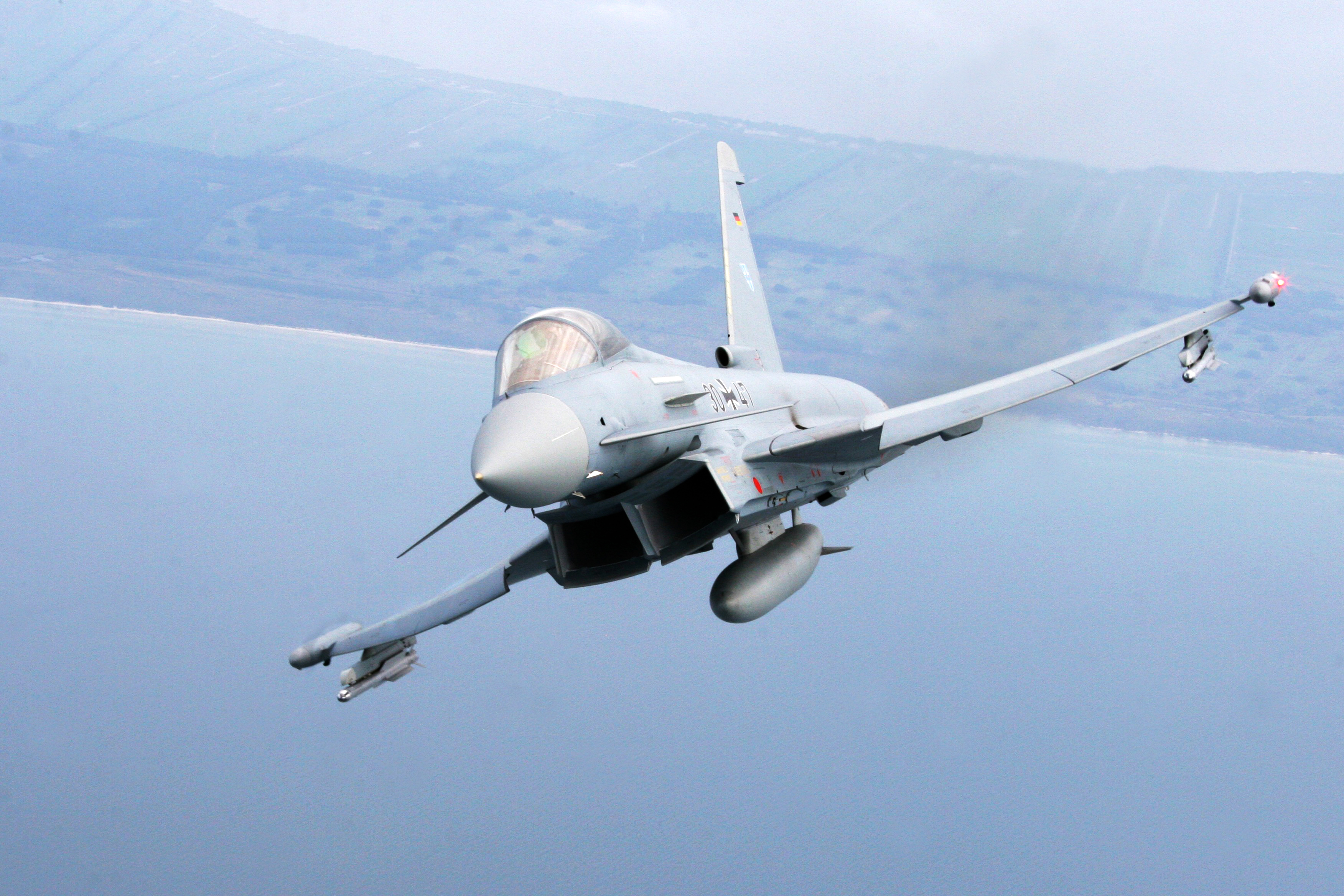
Currently, the Luftwaffe has around 138 Eurofighters in service, which includes a mixture of Tranche 1, 2, and 3 variants.
While the Tranche 4 Eurofighter looks much the same as the earlier (Tranche 1 to 3) jets operated by the Luftwaffe, it is a notably different aircraft underneath the skin.
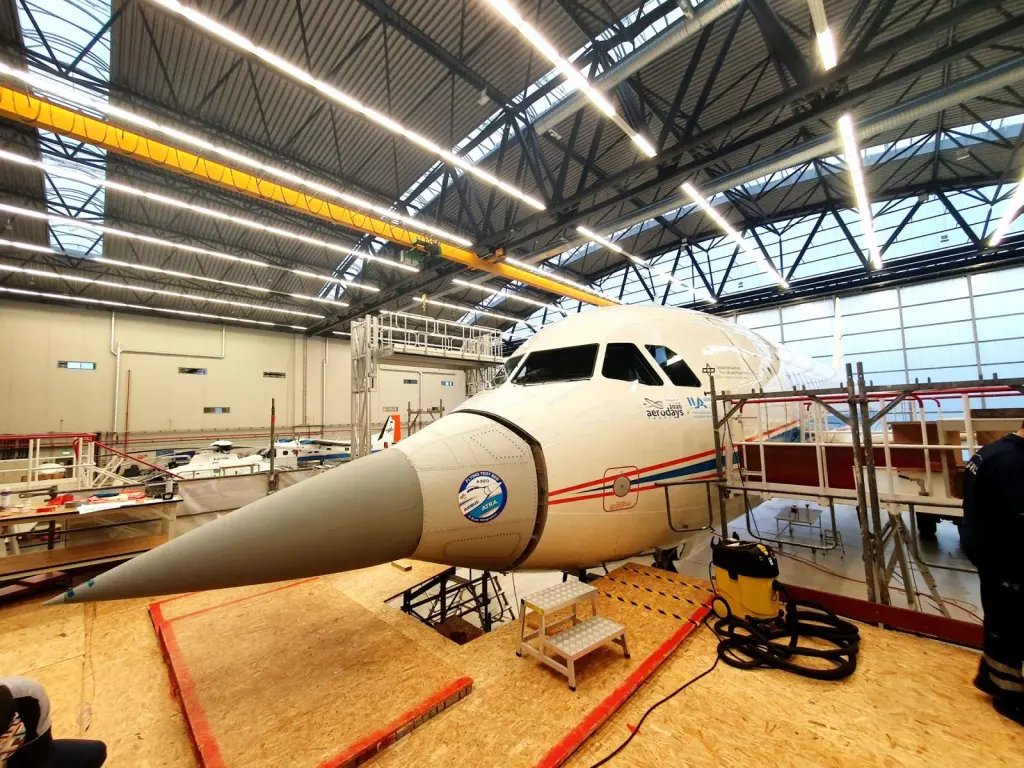
Significantly, the Tranche 4 Eurofighter is fitted with the ECRS Mk 1 active electronically scanned array (AESA) radar, supplied by Hensoldt. The new radar has already been trialled in a specially configured Eurofighter test aircraft, and using a modified Airbus A320 testbed, the so-called Advanced Technology Research Aircraft.

An AESA radar was long a glaring absence from the Eurofighter and has been in the works for many years.
The European Common Radar System (ECRS) story is a long and complicated one, involving Leonardo in the United Kingdom and Italy, Indra in Spain, and Hensoldt in Germany. Ultimately, it has spawned three discrete AESA radar versions, based on differing requirements and timelines.
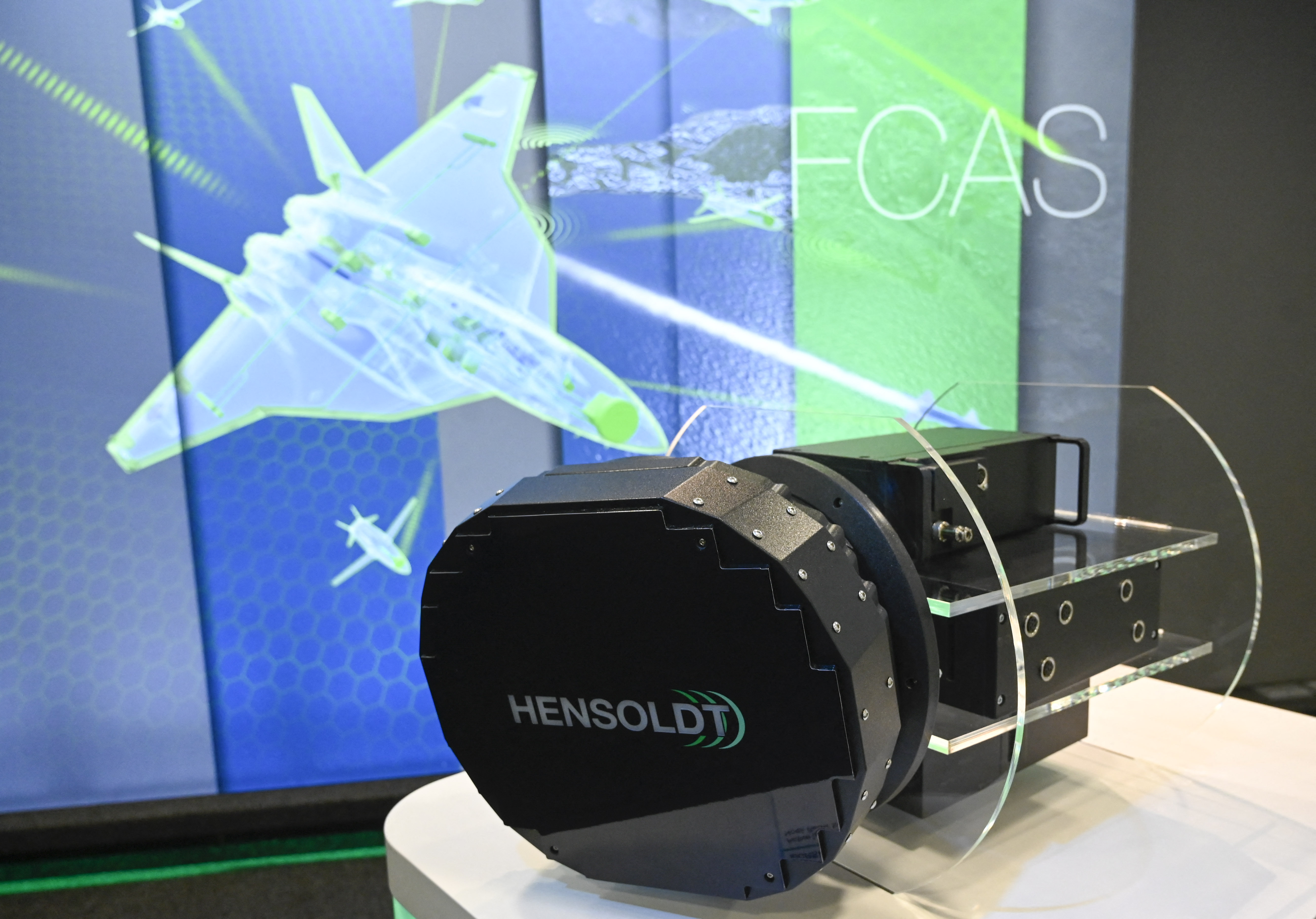
As such, the ECRS Mk 0 is fitted in aircraft for Kuwait and Qatar. The Mk 1 is the definitive standard for Germany and Spain, with the German Tranche 4s being delivered with the so-called ECRS Mk 1 Step 0 configuration (effectively, a Mk 0 with a new antenna). In a second development phase, the Mk 1 Step 1 configuration will be installed in the Quadriga aircraft from mid-2027.
Meanwhile, the United Kingdom gets the more advanced ECRS Mk 2, which you can read about here.
Despite the differences, all these sensors combine traditional radar functions, such as search and targeting, with electronic warfare tasks, a growing area of interest for Typhoon operators, as well as high-speed communications tasks.
Overall, any kind of AESA radar brings some major advantages to modern combat aircraft. In contrast with traditional mechanically scanned array technology, an AESA can find and track a target at a much greater range, more quickly, and with a greater degree of accuracy. This also applies to smaller threats, including those with limited radar signatures or flying at very low levels, which older radars find much harder to detect. This is especially relevant when tackling drones or cruise missiles.
With their increased power output, AESA radars also typically offer a higher standard of target discrimination and multi-target tracking capabilities, and are more resilient to hostile jamming. They are also considered a lot more reliable, primarily due to having far fewer moving parts than mechanically scanned arrays.

Longer range means that AESA radars are a significant advantage when employing beyond-visual-range air-to-air missiles, like the Meteor that arms the Eurofighter.
More enhancements for the Tranche 4 jets are expected to be incorporated under the Long-Term Evolution (LTE) program, which focuses on the aircraft’s avionics architecture. The work includes developing a new cockpit featuring a large-area display, as well as new flight-control and mission computers, communications equipment, and armament control systems. However, it’s not clear what Germany will pick from this ‘menu’ of improvements. Different Eurofighter customers choose specific configurations; notably, the Tranche 4 aircraft unveiled today still lacks the PIRATE (Passive InfraRed Airborne Track Equipment). The important forward-looking infrared and infrared search and track sensor was omitted by Germany, originally on budget grounds.
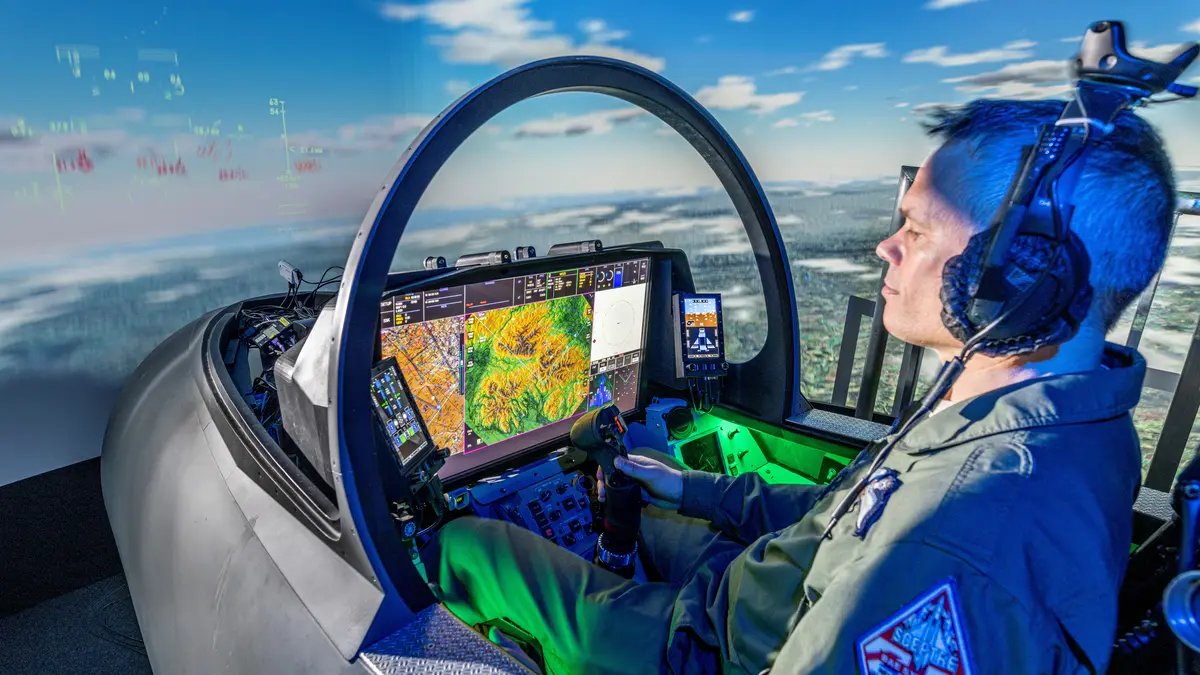
Connected with LTE, work has also been underway for some time on a Large Area Display for the Eurofighter. Measuring 12 x 22 inches, the Large Area Display replaces the previous three 6 x 6-inch multifunction head-down displays (MHDDs) and makes it easier for pilots to handle vast quantities of information better. This is especially useful when working with AESA, or during crewed-uncrewed teaming, for example.
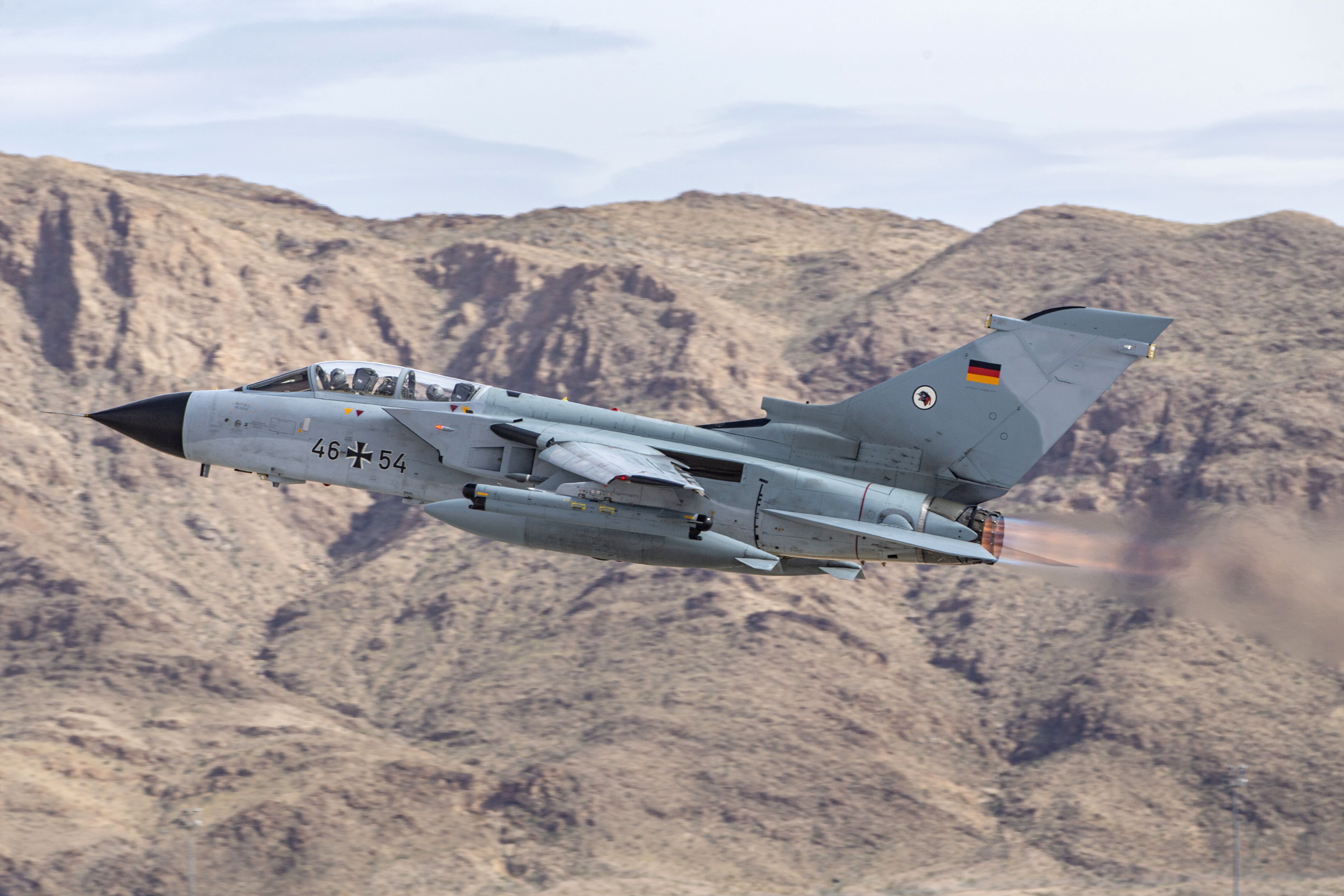
Falling outside the scope of Project Quadriga, but just as important for the Luftwaffe, is the plan to transform 15 existing Eurofighters into electronic warfare aircraft. The resulting Typhoon EK jets will feature an Arexis electronic warfare suite from Saab and be able to employ AGM-88E Advanced Anti-radiation Guided Missiles to suppress and destroy enemy air defenses. The EKs will replace Germany’s Tornado ECR jets that have been serving in this role since the 1990s and will give the Luftwaffe an important capability boost.
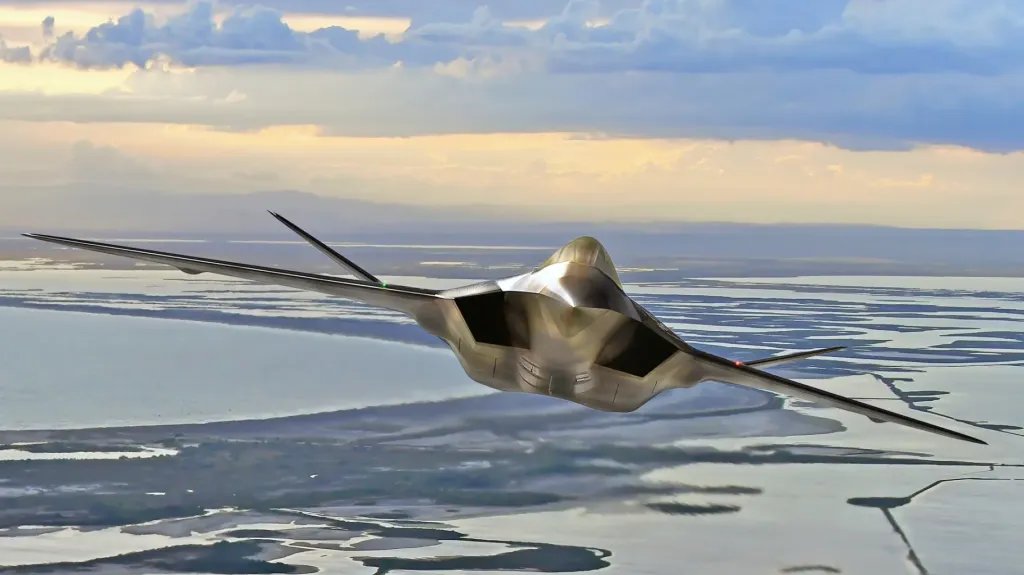
At one stage, it looked as if the Eurofighter’s central role within the Luftwaffe would start to diminish after around 2040, when the FCAS was expected to come online and replace these combat aircraft with a new ‘system of systems,’ including a crewed fighter, the NGF.
But for a long time now, there have been cracks in the FCAS program, with France and Germany, the two major partners, at loggerheads. German defense officials are apparently unhappy with French demands to have a disproportionate share of the program and are now said to be looking at other options, including how it might separate itself from France in the program.
Whatever happens with FCAS, the chances of a sixth-generation crewed fighter entering service on the given timeline are increasingly unlikely.
As a result, the Eurofighter is set to be an even more important Luftwaffe asset, and for longer. It will almost certainly be operated in the future alongside ‘loyal wingman’-type drones, which now feature prominently in German military ambitions.
Contenders for this requirement, which calls for capabilities to be fielded around 2030, include the stealthy XQ-58A Valkyrie drone, which Airbus and Kratos are pitching to Germany. At the same time, Airbus has also been working on a stealthy CCA-like concept of its own, known as Wingman. Meanwhile, Boeing Australia has teamed up with Rheinmetall, the largest arms manufacturer in Germany, to offer the MQ-28 Ghost Bat drone to the German military.
Last year also saw the emergence of another possible contender for the Luftwaffe CCA, when German defense startup Helsing unveiled its CA-1 Europa.
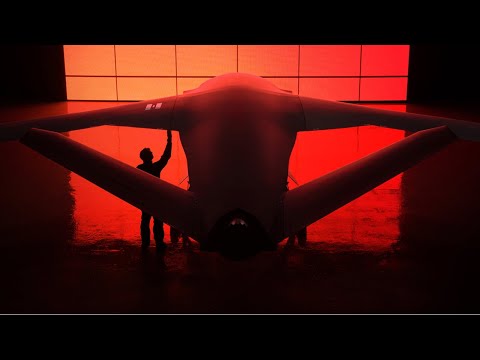
More extensive investments in the Luftwaffe reflect a significant shift in priorities for the German military, which is now increasingly orienting itself toward a potential future conflict with Russia.
In response to Russia’s 2022 invasion of Ukraine, the German Armed Forces are undergoing their biggest transformation since the Cold War. There is now a broader effort underway to reconfigure the German military from a low-readiness, expeditionary force to a high-readiness, territorial military focused on operations on NATO’s eastern flank. At the same time, long-range strike capabilities, neglected since the Cold War, are suddenly a major area of concern.
Just as important is investing in new equipment, and the unveiling of the Tranche 4 Eurofighter in Bavaria today is a very visible demonstration of this trend.
Contact the author: thomas@thewarzone.com
Loading comments…
Comments couldn’t be loaded. Please refresh the page.