
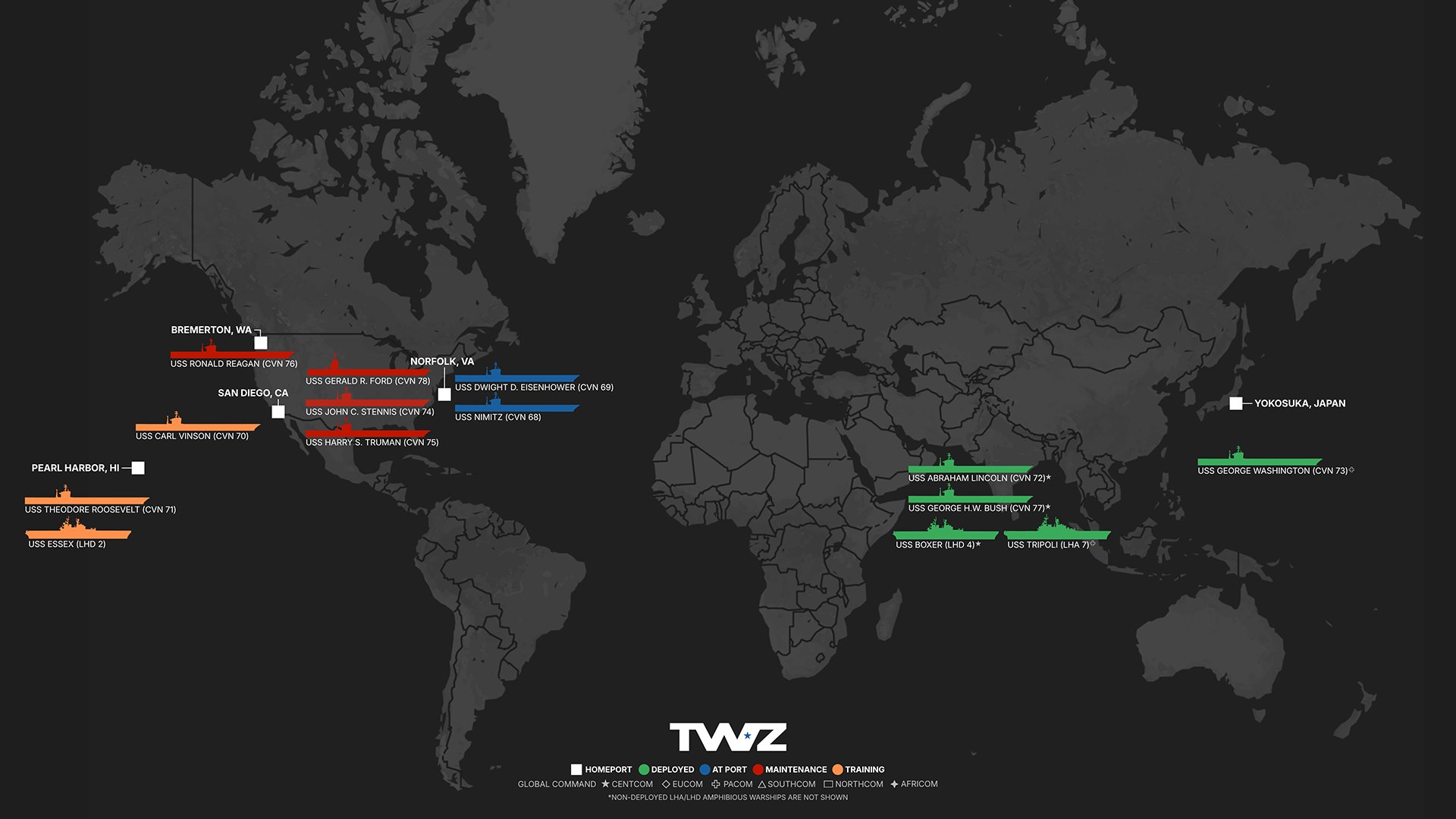
Here’s TWZ’s weekly carrier tracker monitoring America’s flattop fleet, including deployed Carrier Strike Groups (CSG) and Amphibious Ready Groups (ARG), using publicly available open-source information. Check out last week’s report here.
The U.S. blockade is back on beginning tomorrow. “We are reinstating the Iranian blockade,” President Donald Trump wrote on Truth Social today after days of escalatory tit-for-tat exchanges between the U.S. and Iran while negotiations falter. Following the President’s announcement, U.S. Central Command (CENTCOM) released a statement with additional information, stating the blockade would begin on July 14 at 4:00pm eastern time. “CENTCOM forces will enforce the blockade against vessels transiting to or from Iranian ports and coastal areas. The U.S. military continues to support traffic flow through regional waters for all vessels not violating the blockade.” During the first blockade from April 13 to June 18, the Navy redirected more than 140 compliant commercial vessels and kinetically disabled nine that were non-compliant.
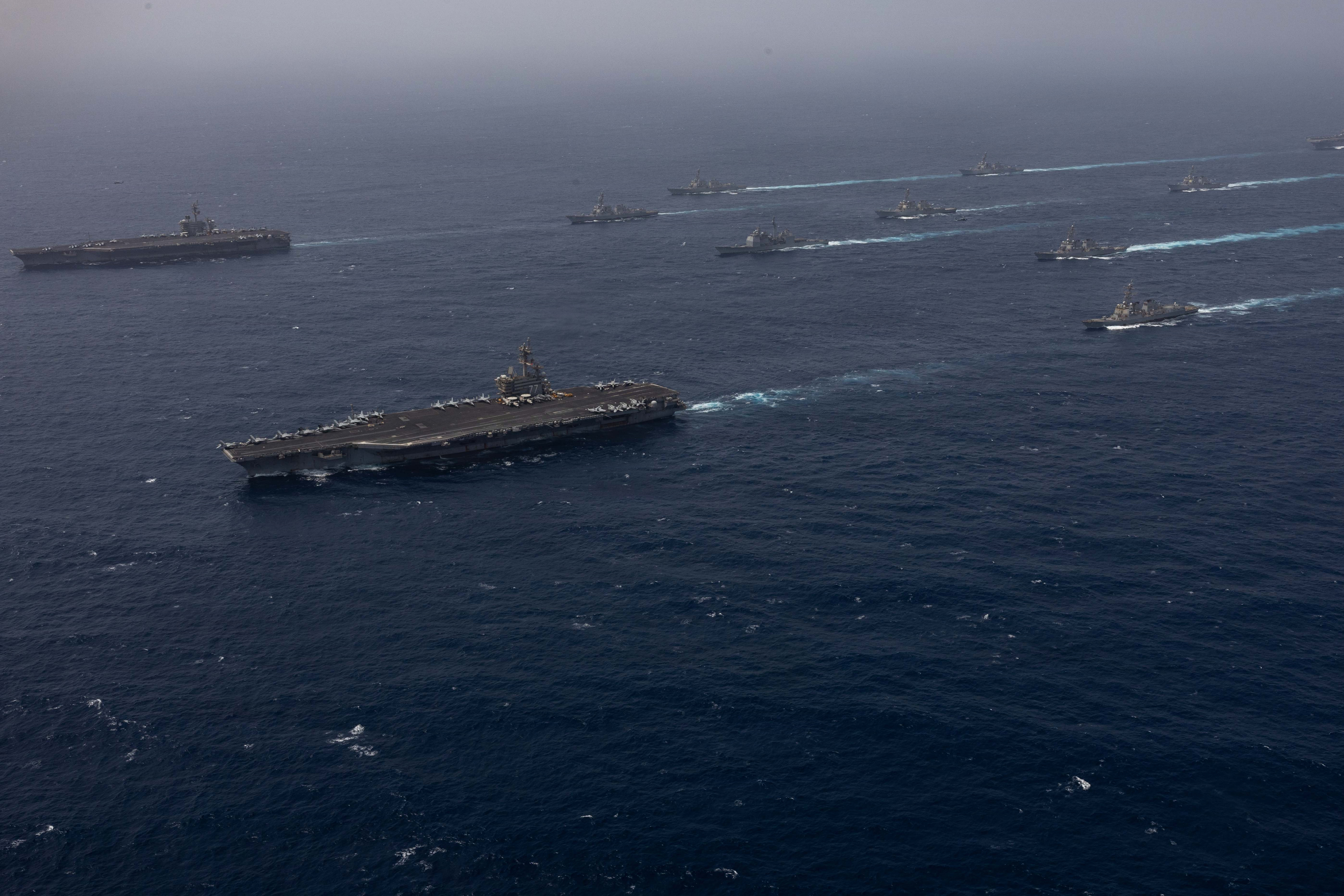
CENTCOM recently confirmed that more than 20 U.S. Navy ships are operating in the Middle East. On June 30, the majority of that force, including USS Abraham Lincoln, USS George H.W. Bush, and USS Tripoli, were pictured together in a photo exercise (PHOTOEX) and massive show of force with 16 other ships in the northern Arabian Sea. Two flights of 14 aircraft each from Carrier Air Wings (CVW) 7 and 9 conducted a flyover. Abraham Lincoln passed the 200 consecutive days at sea mark on the same day.
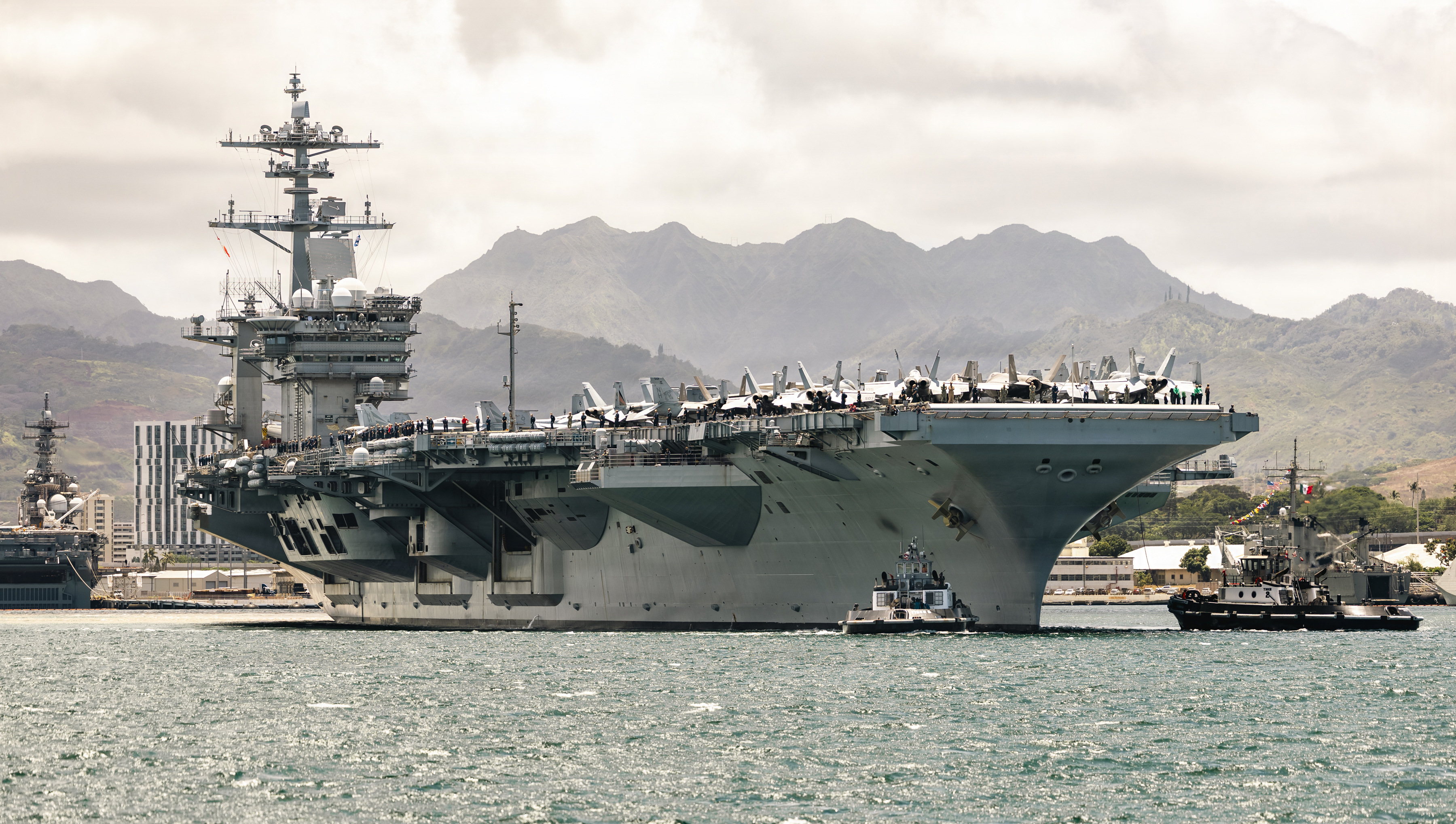
Thousands of miles away, the sea phase of the biennial exercise Rim of the Pacific (RIMPAC) 2026 is underway. USS Theodore Roosevelt, amphibious assault ship USS Essex, and the other U.S. and international ships participating, steamed one by one out of Pearl Harbor last week. “The world’s largest international maritime exercise, RIMPAC provides a unique training opportunity while fostering and sustaining cooperative relationships among participants critical to ensuring the safety of sea lanes and security on the world’s oceans.” In the opening days, Roosevelt conducted flight operations with embarked Super Hornets and Hawkeyes, carried out general quarters drills, small boat operations, a refueling-at-sea evolution with USNS Guadalupe south of Oahu, and embarked partner navies including the Philippines, South Korea, New Zealand, Poland, Germany, and more. During the large-scale exercise, which runs through the end of the month, the decommissioned Ticonderoga class cruiser ex-USS Mobile Bay and amphibious warship ex-USS Peleliu will be sunk by U.S. and partner forces.
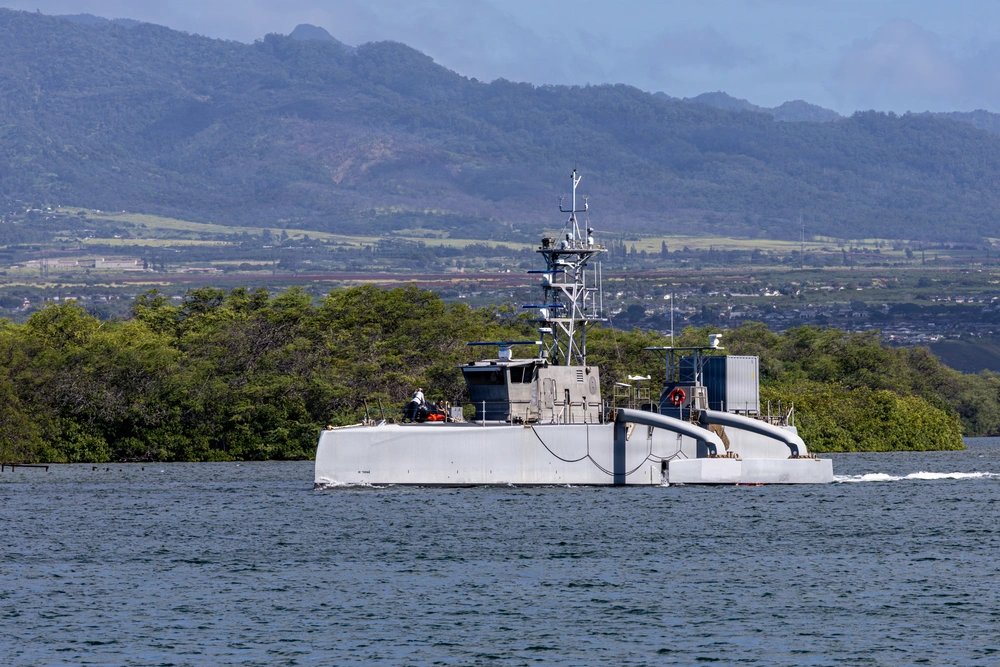
Notably, medium displacement unmanned surface vehicle (MDUSV) Sea Hunter was spotted leaving Pearl Harbor on July 7 (albeit with a manned crew). Sea Hunter, made by Leidos, is the sister ship of Seahawk, which worked up with the Roosevelt CSG during COMPTUEX training in April. Both are actively training and it’s possible one could deploy with the CSG, which would mark the first hybrid manned-unmanned CSG, but these are older test assets that were not initially built for long deployments. Roosevelt sits at the leading edge of the Navy’s “tailored force pairing” concept, which could include integrating naval drones into CSG operations, but the MDUSV selected to deploy with the group has not been announced.
The nearly 3,000 Sailors aboard USS Nimitz arrived at Naval Station Norfolk on July 9, marking the completion of a four-month transit and homeport shift. Nimitz left Naval Base Kitsap-Bremerton, Washington, in March and circumnavigated South America, participated in Southern Seas and embarked officials from multiple countries, sailed in Fleet Exercise (FLEETEX) 250, and pulled into New York Harbor for the International Naval Review 250 and July 4 celebrations. “Nimitz will be permanently homeported in Naval Station Norfolk, training Naval Aviation’s next generation of warfighters, while standing ready to answer the Nation’s call as it has for the past 51 years.” Nimitz, back in Norfolk for the first time in nearly 40 years, was slated to be taken offline this year but her service life was extended before expected decommissioning in 2027.
![Sailors spell out “I [Heart] NY” on the flight deck of Nimitz-class aircraft carrier USS Nimitz (CVN 68) after the ship departed New York Harbor following its participation in International Naval Review 250, July 7, 2026. Nimitz is underway in the U.S. 2nd Fleet area of responsibility as part of a scheduled homeport shift to Norfolk, Virginia. (U.S. Navy photo by Mass Communication Specialist Seaman Alyssa Boling)](https://www.twz.com/wp-content/uploads/2026/07/9797605.jpg?strip=all&quality=85&%3Bw=1024)
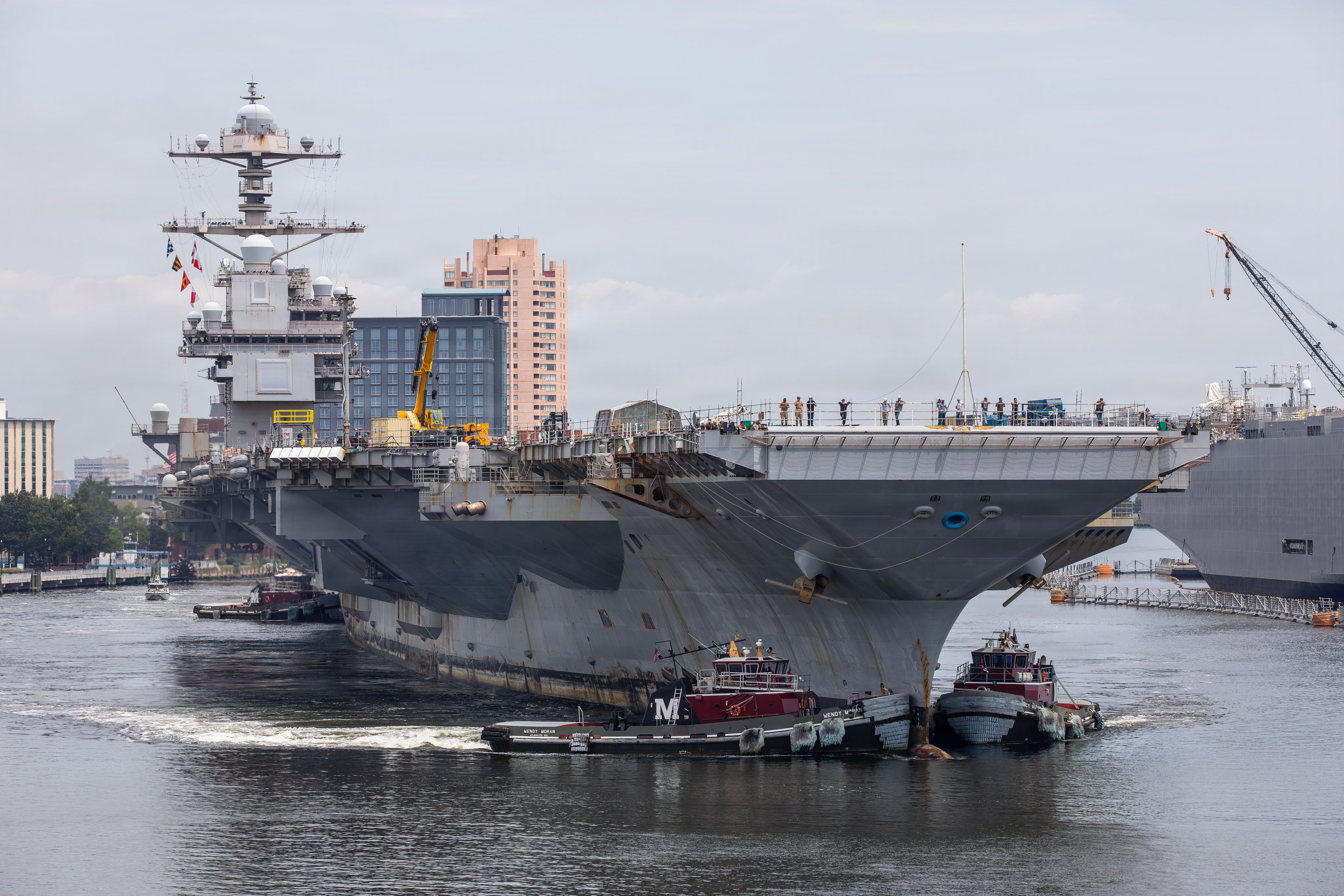
USS Gerald R. Ford, which returned home in May following a historic 11-month deployment, entered Norfolk Naval Shipyard (NNSY) in advance of her Planned Incremental Availability (PIA). This is Ford’s first scheduled availability at a public shipyard and comes after a twice-extended combat deployment. “A PIA is a scheduled period for an aircraft carrier to undergo extensive maintenance, repairs and modernization to meet future operational demands, spanning a wide array of overhauls and inspections. Additionally, a concurrent availability will be conducted to restore spaces damaged during a fire aboard the then-deployed carrier in March 2026.” Ford’s arrival at NNSY follows the early PIA completions for Nimitz-class aircraft carriers USS Dwight D. Eisenhower in April 2026 and USS George H.W. Bush in November 2024, according to a statement by U.S. 2nd Fleet.
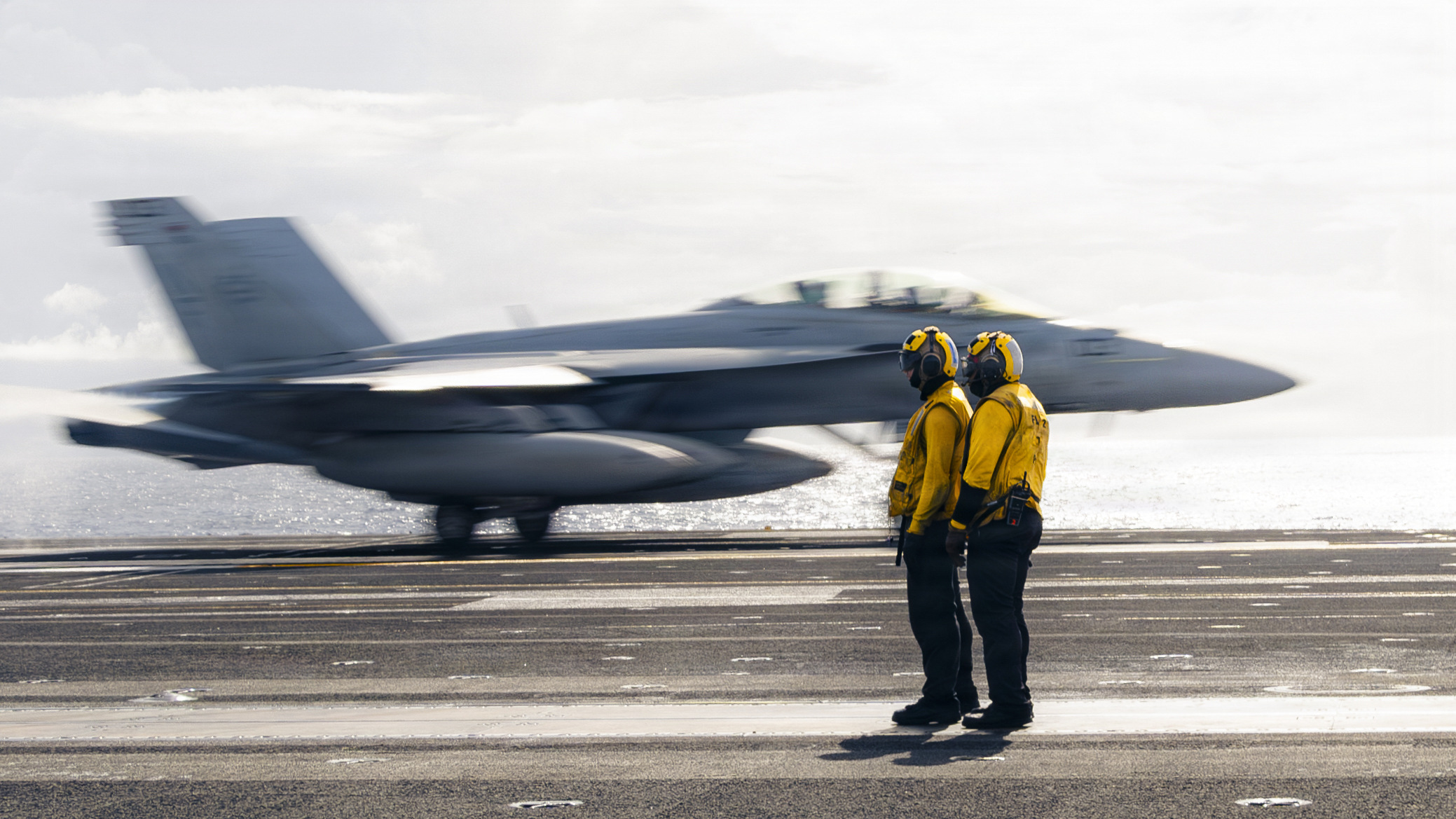
USS George Washington, America’s only forward-deployed aircraft carrier, is conducting flight operations in the Philippine Sea. Washington carried out a replenishment-at-sea evolution with USNS Earl Warren while underway in the Western Pacific on July 9, and recently participated in exercise Valiant Shield, teaming up with Japan, New Zealand, and Australia to sink a decommissioned amphibious warship. The ex-USS Juneau absorbed several hits from Washington’s air wing, including F-35Cs and F/A-18s, as well as long-range anti-ship missiles (LRASM) fired by U.S. Air Force B-2 bombers, and air and sea-launched effects shot by allied forces. “George Washington is the U.S. Navy’s premier forward-deployed aircraft carrier, a long-standing symbol of the United States’ commitment to maintaining a free and open Indo-Pacific, while operating alongside allies and partners across the U.S. Navy’s largest numbered fleet.”
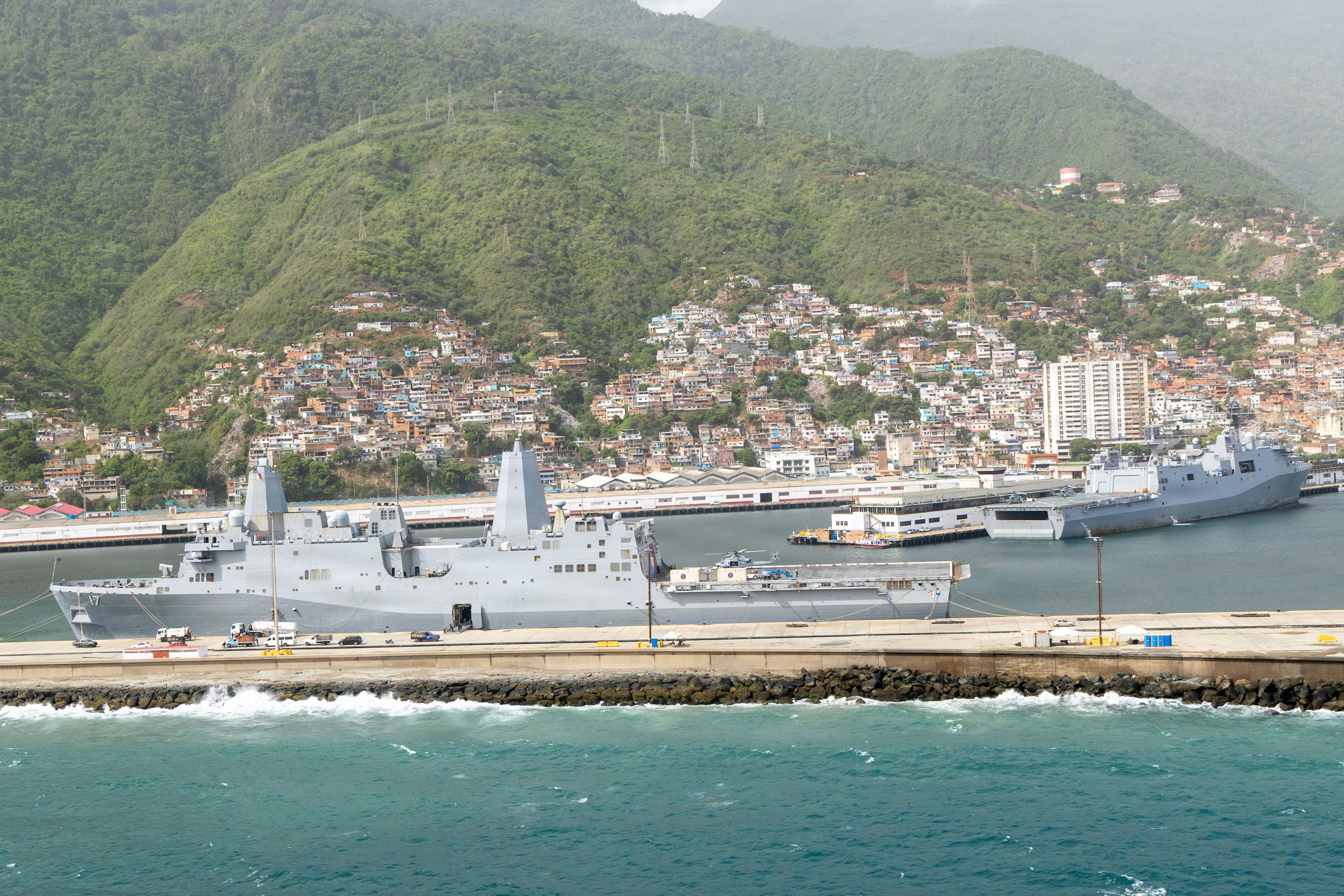
On the amphibious front, the Boxer ARG arrived in the U.S. Central Command area of responsibility (AOR) in early July. “Boxer is deployed to the U.S. 5th Fleet area of operations to support maritime security and stability in the Middle East,” according to U.S. 5th Fleet. USS Tripoli, which has been the sole ARG in CENTCOM since March, participated in the PHOTOEX with the two carriers and has since moved farther east in the Indian Ocean, crossing into the U.S. Pacific Command (PACOM) AOR. Boxer may have relieved Tripoli, which has been there for more than four months, or Tripoli could be heading for a port call, emergent repairs, or, potentially, back home. Tripoli’s latest position via AIS and satellite imagery is unknown. Three additional amphibious assault ships have been operating and training around the United States: USS Kearsarge, USS Makin Island, and USS Essex. Two-thirds of the Iwo Jima ARG (less the flagship USS Iwo Jima), amphibious transport dock ships USS Fort Lauderdale and USS San Antonio, are back in the Caribbean and were recently docked pierside in La Guaira, Venezuela, to support the earthquake relief mission.
Overall, three U.S. carriers are deployed, three are training or in port in various states of readiness, four are in maintenance, and one is being used primarily for training. Two amphibious ready groups are deployed, four are working up or in port, and three are getting wrenched on.
Note: Positions are general approximations. Non-deployed LHA/LHD amphibious warships are not shown.
Contact the author: ian.ellis-jones@teamrecurrent.io
Loading comments…
Comments couldn’t be loaded. Please refresh the page.