
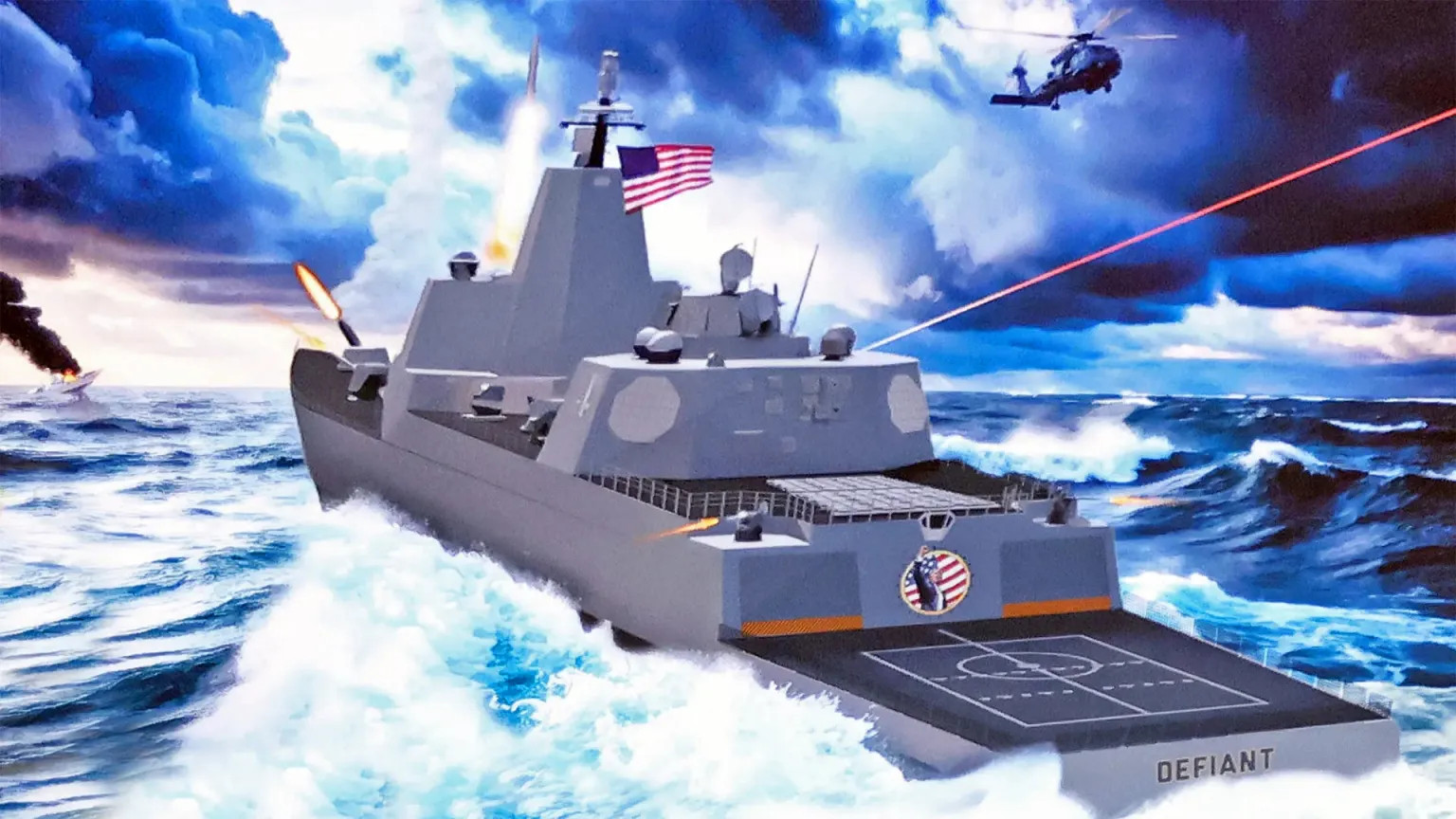
The U.S. Navy’s near-total abandonment of surface combatants with nuclear propulsion after the end of the Cold War is “one of the largest mistakes” it’s ever made, according to the service’s top officer. Chief of Naval Operations Adm. Daryl Caudle made this remark today while voicing support for the recently announced decision that the future Trump class battleships will be nuclear-powered. He also explicitly highlighted challenges the Navy has faced when it comes to fueling conventionally-powered ships taking part in operations against Iran, something TWZ recently reported on in detail.
Adm. Caudle, as well as Acting Secretary of the Navy Hung Cao and Commandant of the Marine Corps Gen. Eric Smith, testified before members of the House Armed Services Committee today. The focus of the hearing was on the Department of the Navy’s 2027 Fiscal Year budget request. The Navy disclosed that it had decided the Trump class warships will feature nuclear propulsion in its latest long-term shipbuilding plan, which was released on Monday.
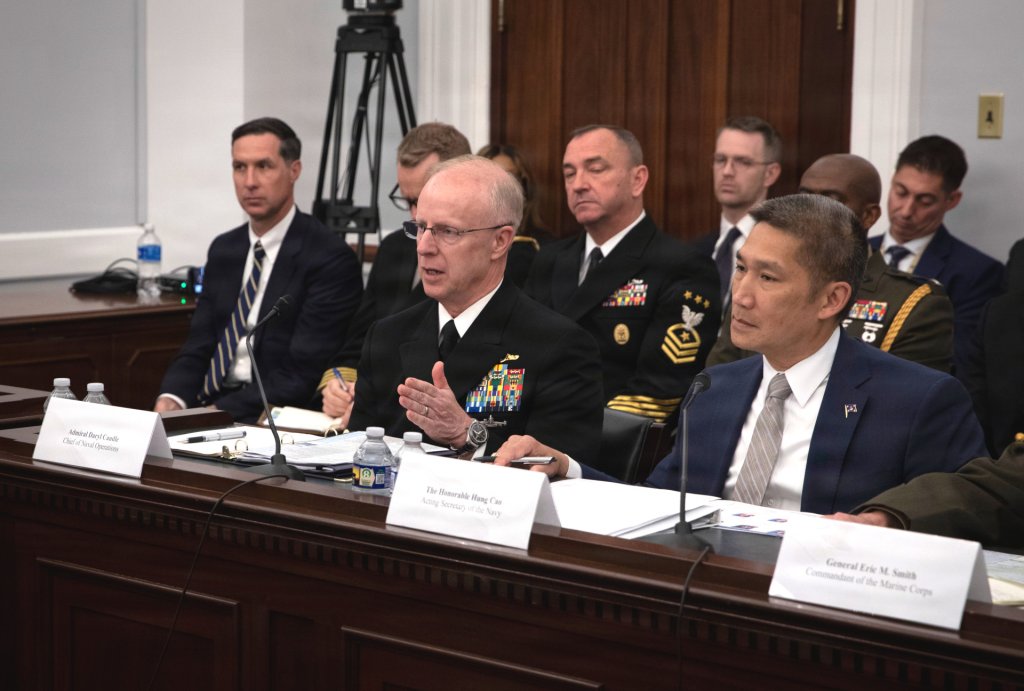
“I know there have been many conversations and questions over the past few days regarding the news that the Trump class battleship will be nuclear powered. And, as you know, Virginia has a long history of nuclear shipbuilding. What specific design plans can you share at this point and can [you] speak to how nuclear power would enable this system to be successful?” Rep. John McGuire, a Virginia Republican and former U.S. Navy SEAL, asked Adm. Caudle directly.
“Sir, we walked away from surface nuclear power decades ago, and that was one of the largest mistakes the Navy ever did, and we’re bringing it back,” the Chief of Naval Operations said in response. “We need nuclear-powered surface ships to sustain combat operations with our nuclear-powered aircraft carriers.”
Though a major operator of nuclear-powered submarines, the Navy’s aircraft carriers are currently its only nuclear-powered surface ships. The service previously had a mixture of nuclear-powered surface combatants. This included three one-of-a-kind ships, the cruiser USS Long Beach, the destroyer USS Truxtun (later recategorized as a cruiser), and the frigate USS Bainbridge. There were also two California class and four Virginia class cruisers, the latter not to be confused with the subsequent Virginia class of attack submarines. All of these ships entered service in the 1960s and 1970s. Expensive and complex to operate compared to similar conventionally-powered ships, they were all retired in the 1990s as part of post-Cold War drawdowns across the U.S. military.
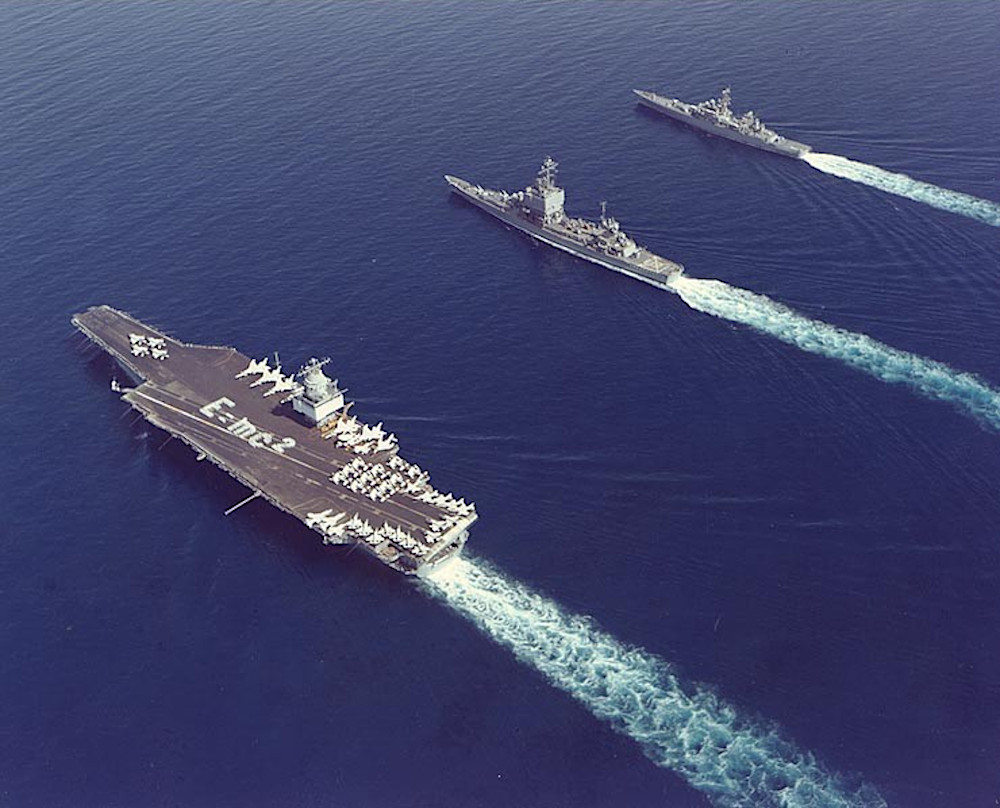
As Caudle highlighted, the central benefit of nuclear propulsion is functionally unlimited range since naval reactors can operate for decades without needing to be refueled. In the context of modern ships packed with ever-more advanced weapons and other systems, it can also offer an important boost in onboard power generation. As noted, this does come at a cost. Today, Russia is the only country anywhere in the world with a nuclear-powered surface combatant, the Kirov class battlecruiser Admiral Nakhimov. In terms of nuclear-powered surface naval ships of any kind, the French aircraft carrier Charles de Gaulle is the only other example. Russia also has several nuclear-powered icebreakers, but these are operated by the state-run nuclear company Rosatom.
“Imagine what that would have looked like in the Arabian Gulf if I’d had a nuclear-powered battleship there to give the air and defense and fires [sic] power that it could sustain – rotate ships that roll, that need gasoline around it,” Caudle continued today in his response to Rep. McGuire’s question. “So the imperative for this is crucial to develop that level of payload capacity.”
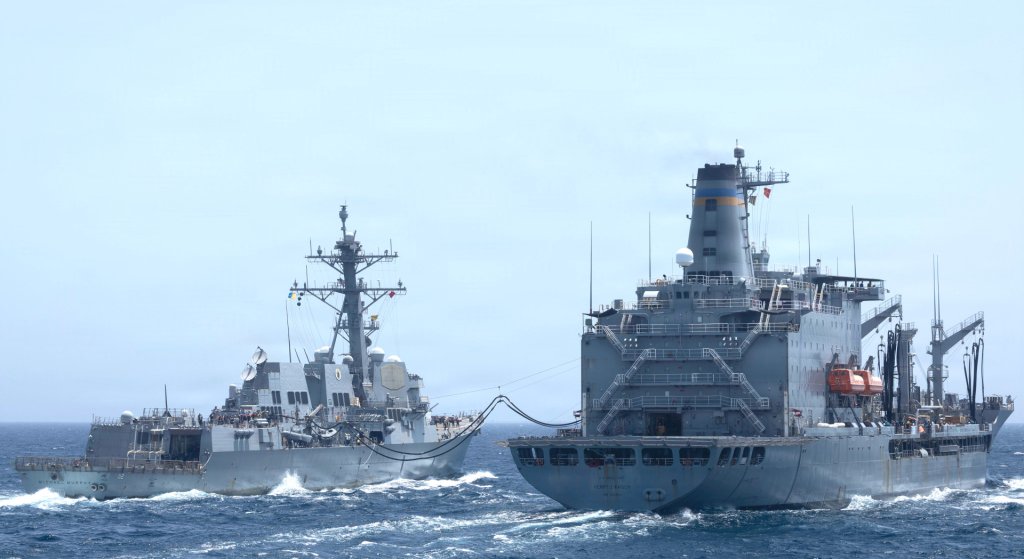
Navy officials have already acknowledged that Iranian attacks on friendly countries in the Middle East in the course of recent operations significantly disrupted established logistics chains. In particular, this impacted how the service delivered fuel to conventionally-powered warships in the region, as you can read more about here.
Threats to fuel supplies would be something the Navy would have to take into account in any future conflict, especially a high-end fight against China across the broad expanses of the Pacific. There are other logistics requirements that nuclear ships do still have in common with their conventionally-powered counterparts, as well, such as food for the crew and fuel for any embarked aircraft. Even with nuclear propulsion, maintenance and other requirements mean that ships cannot stay at sea indefinitely.
“We intend to, with all we can do, use pull-through technologies, [including] things from that we’ve worked on with DDG(X),” the Navy’s top officer added, speaking about the plans for the Trump class specifically. “It will have the SPY-6 radar. It will have the Baseline 10 Aegis combat system. It will pull through, of course, the A1B Ford class reactor plant and all the design that goes with that. The only thing inherently new to it will be the actual hull itself, and so most of the fixtures in it. And I would say the directed energy [weapons] and up gunning, that will also be new.”
Caudle had first shared the A1B reactor detail at another budget-related hearing earlier this week. It was previously known that the Trump class battleship program would leverage prior work done in relation to the now-defunct DDG(X) next-generation destroyer.
Multiple types of laser-directed energy weapons, as well as an electromagnetic railgun, are core elements of the planned armament package on the future Trump class warships. They are also set to be loaded with a mix of nuclear and conventional missiles, including hypersonic types, in several large vertical launch system (VLS) arrays, and have a pair of traditional 5-inch naval guns.
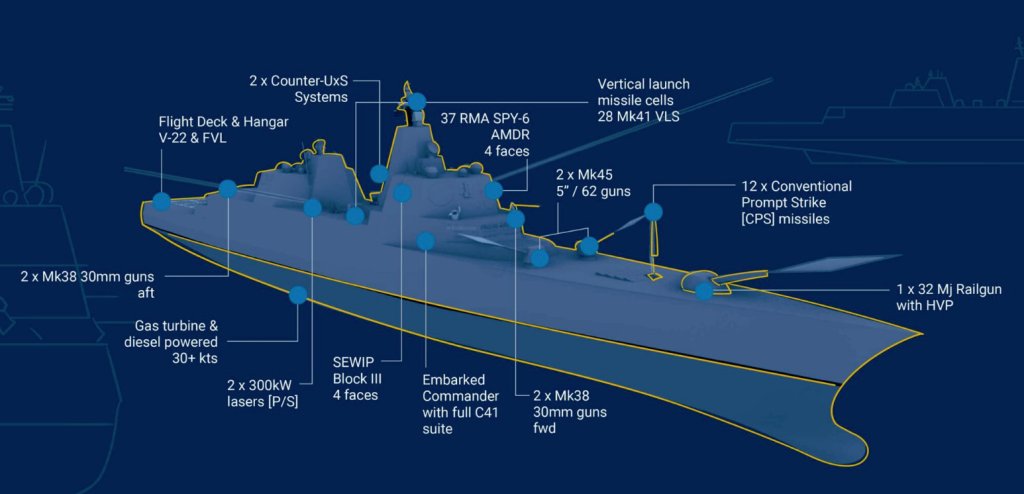
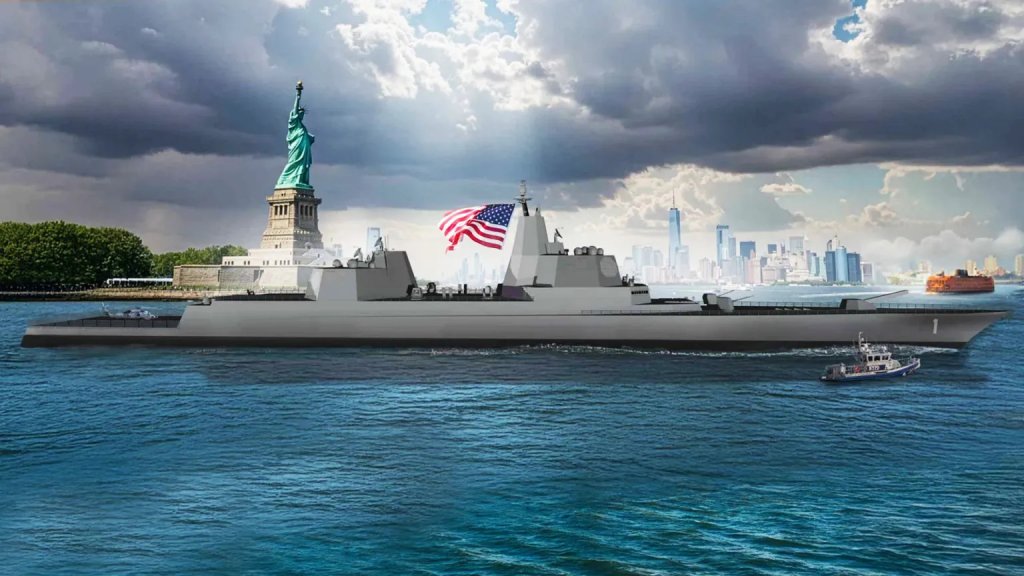
The Navy has previously stated that the battleships, now also referred to as BBGNs, will displace approximately 35,000 tons. This is very roughly three times that of the newest Flight III subvariant of the Arleigh Burke class destroyer. The Trump class vessels are expected to be between 840 and 880 feet long, have a beam (the widest point in the hull) between 105 and 115 feet, and be able to reach a top speed greater than 30 knots, as well.
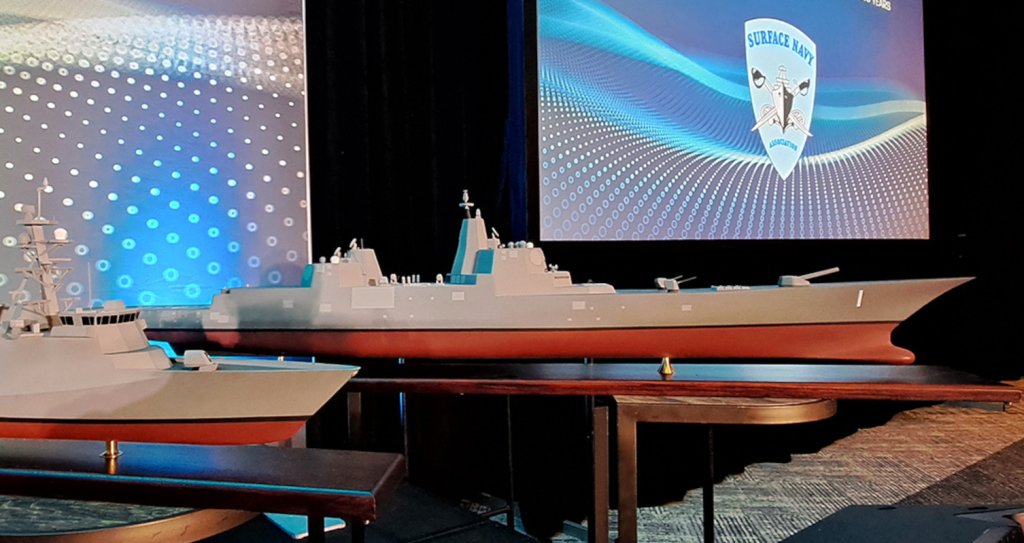
It is worth noting here that Caudle’s comments today represent a huge change in tone from how he had previously talked about the prospect of nuclear propulsion for the Trump class. Speaking to the press at the Surface Navy Association’s (SNA) main annual symposium back in January, he had notably appeared to downplay the possibility.
“I think it’s a logical question to think, hey, here’s a big capital ship. It’s going to be carrying a lot of load, you know, in places that we don’t necessarily need a strike enforcement air wing as a large ship there that’s in command of a flotilla,” he said at that time. “Wouldn’t it be logical to be nuclear powered? And that brings a tail to the construction of that that [sic] just really fell outside the scope of what we want to do on the speed to get this thing in the water. And so what you trade off with, with persistency that only nuclear power can do, is you end up having, you know, the ability to go produce that — it pushes the battleship into a timeframe that just didn’t meet the operational need of the ship.”
Just last month, former Secretary of the Navy John Phelan had also said making the Trump class ships nuclear-powered was unlikely, citing the need to balance cost and complexity against aggressive schedule demands. Phelan was fired unexpectedly just two days after making those comments. There have been reports that disagreements over plans for the battleships, specifically, as well as other friction within the Trump administration, factored into his dismissal.
“He’s a very good man. I really liked him, but he had some conflict with, not necessarily with [Secretary] Pete [Hegseth], but with some other[s],” President Trump said about Phelan while speaking to the press on April 23. “He’s a hard charger, and he had some conflicts with some other people, mostly as to building and buying new ships. I’m very aggressive in the new shipbuilding.”
As it stands now, the Navy still does not expect to order the first Trump class battleship until Fiscal Year 2028 and or see that ship enter service before Fiscal Year 2036. The first example, at least, currently has an estimated unit cost of around $17 billion, which is considerably more than the projected price tag of any of the next four Ford class aircraft carriers.
Even before the nuclear propulsion decision was announced, TWZ had raised numerous questions about the plans for these warships, including their exact operational utility, as well as the costs and risks involved. Caudle’s comments today about leveraging pull-through notwithstanding, nuclear-powered ships are inherently complex and expensive, which are the tradeoffs for the aforementioned boost in capability. A specialized workforce and supply chains are required to build such vessels. Newport News Shipbuilding in Virginia, a division of Huntington Ingalls Industries, is the only yard in the United States currently building surface ships with nuclear propulsion, in the form of new Ford class carriers, all of which have suffered delays.

There are two more yards in the country that make nuclear-powered submarines, both of which are already under strain to meet Navy demands. There is a particular need to keep on schedule with the new Columbia class nuclear-powered ballistic missile submarines to avoid any gap in capacity when it comes to the sea leg of America’s nuclear deterrent triad. Additional plans now to supply Virginia class submarines to the Royal Australian Navy, which Adm. Caudle said today he vehemently supports, can only further add to that workload.
The U.S. naval shipbuilding industry, collectively, has other demands to keep churning out conventionally-powered warships like Arleigh Burke class destroyers, as well. This is an industry that has contracted to a worrisome degree, overall, since the end of the Cold War, especially when compared to the completely opposite trend that has been observed in China. Efforts to reinvigorate America’s shipyards, and the continued challenges the Navy is facing in doing so, were key points of discussion at today’s House Armed Services Committee hearing.
Adm. Caudle’s broad statement of support today for a nuclear-powered surface Navy raises the additional question now of whether the service might be interested in expanding this capability beyond the Trump class. Some of the Navy’s prior nuclear-powered surface combatants were derived from conventionally-powered designs. At the same time, any such decision would run up against the same shipbuilding capacity and other questions facing the new battleships.
Just when it comes to the Trump class, the plans for the ships could easily still evolve further, or even come to an end entirely. The timeline laid out now has the battleship program continuing well into the next presidential administration, where the fortunes of a new nuclear-powered surface navy could change dramatically.
Contact the author: joe@twz.com
Loading comments…
Comments couldn’t be loaded. Please refresh the page.