
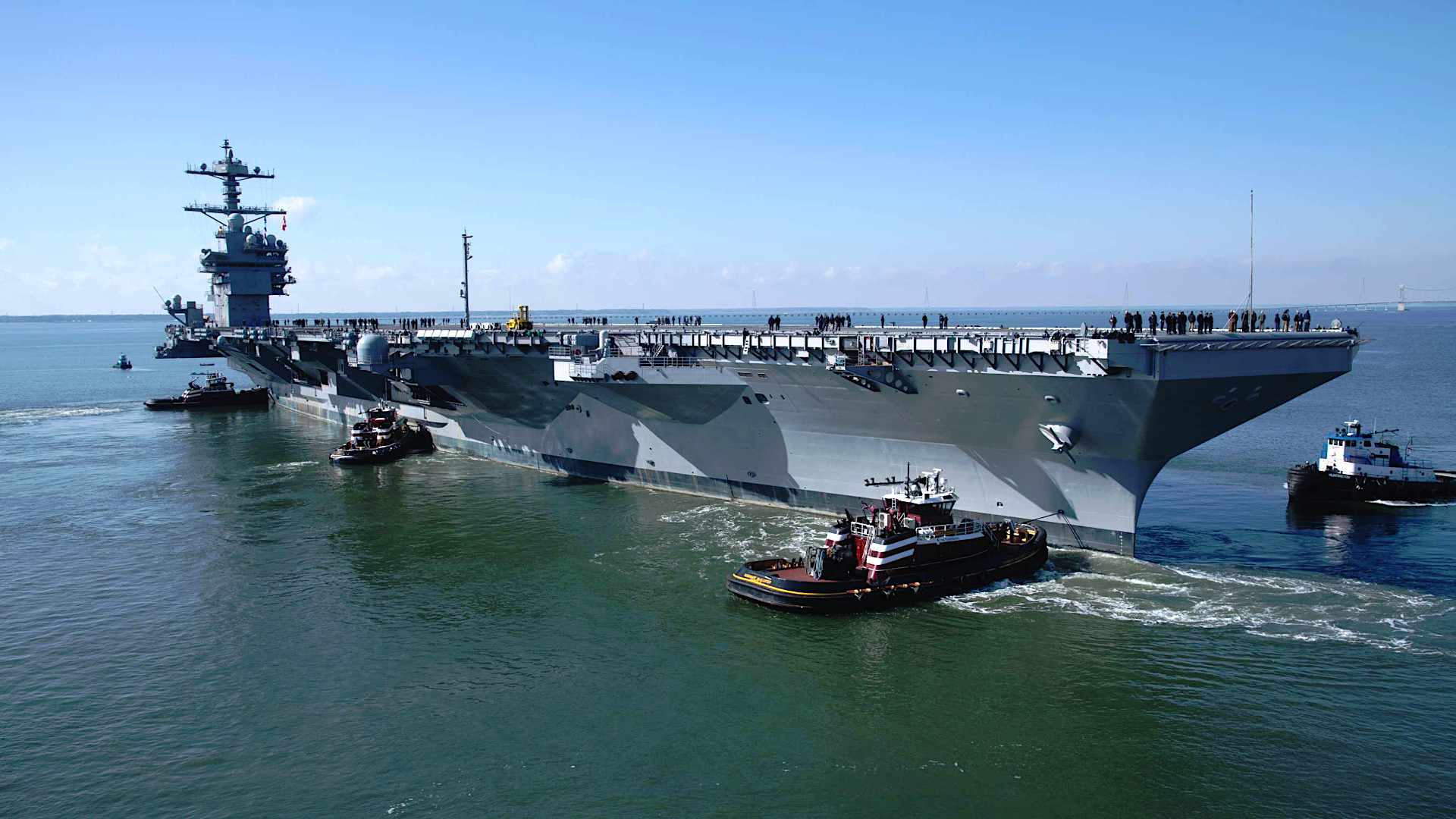
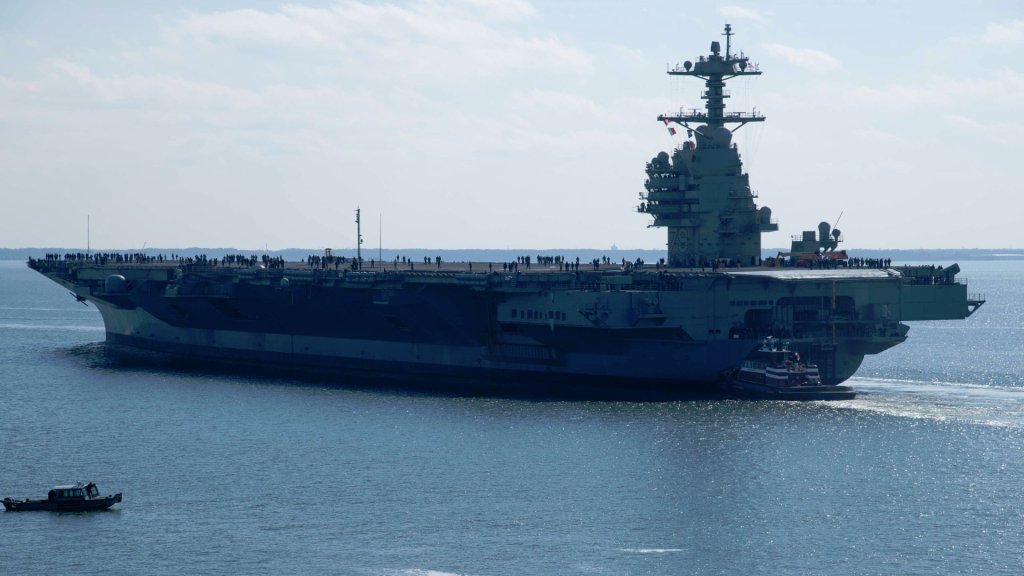
The future USS John F. Kennedy, the second Ford class aircraft carrier for the U.S. Navy, has begun its initial sea trials. The Navy is slated to take delivery of the ship in 2027 after years of delays.
Huntington Ingalls Industries (HII) announced that Kennedy, also known by the hull number CVN-79, had left port in Newport News, Virginia, earlier today to start initial sea trials.
“These trials will test important ship systems and components at sea for the first time,” HII wrote in posts on social media. “This huge milestone is the result of the selfless teamwork and unwavering commitment by our incredible shipbuilders, suppliers and ship’s force crew. We wish them a safe and successful time at sea!”
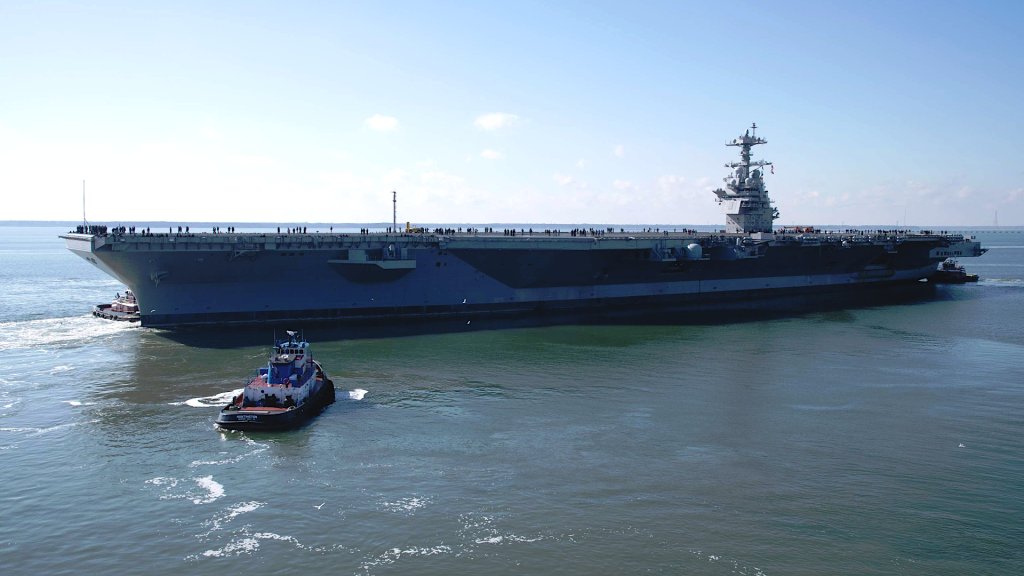
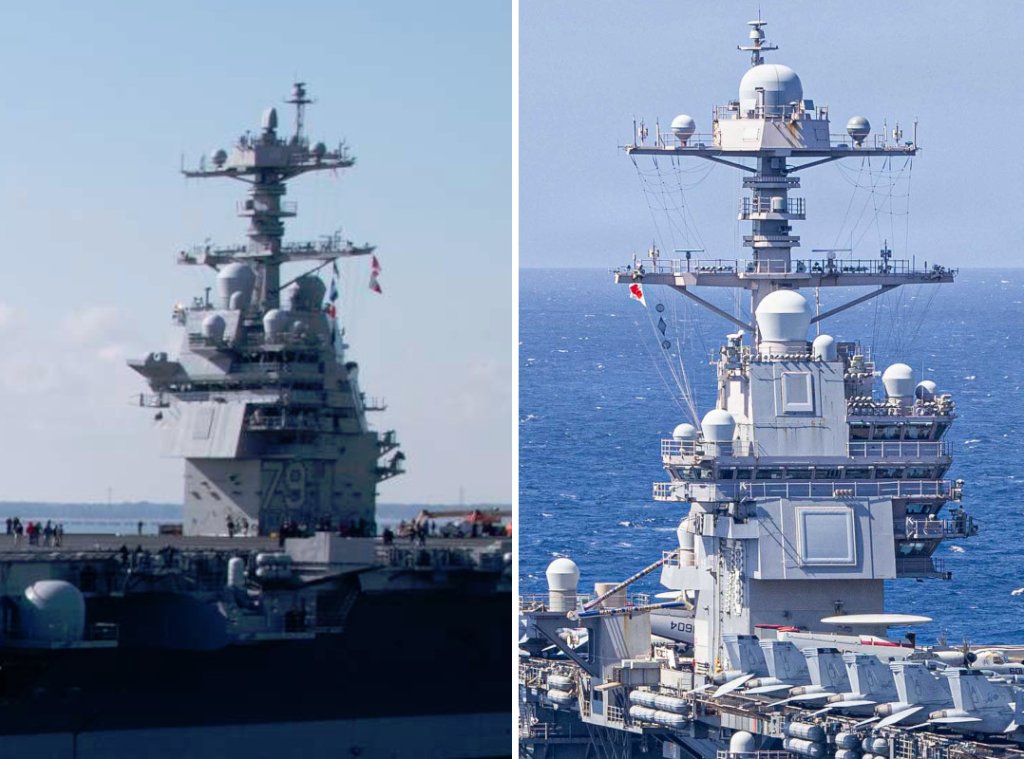
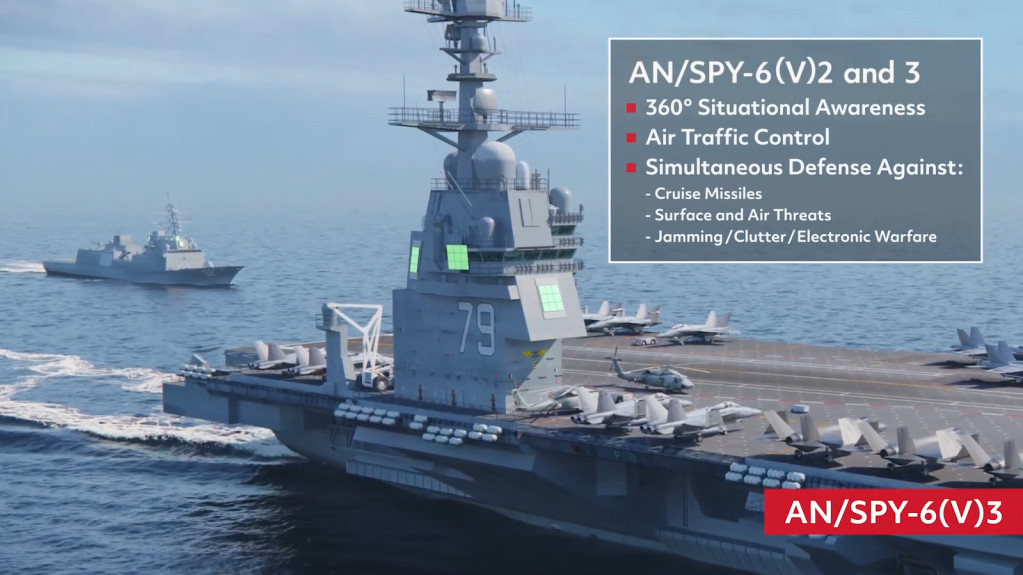
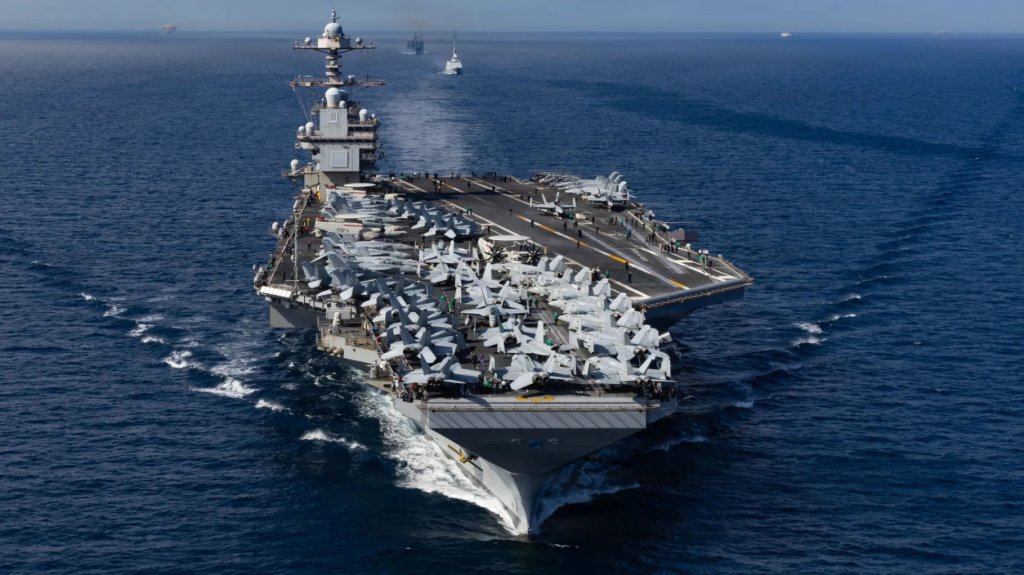
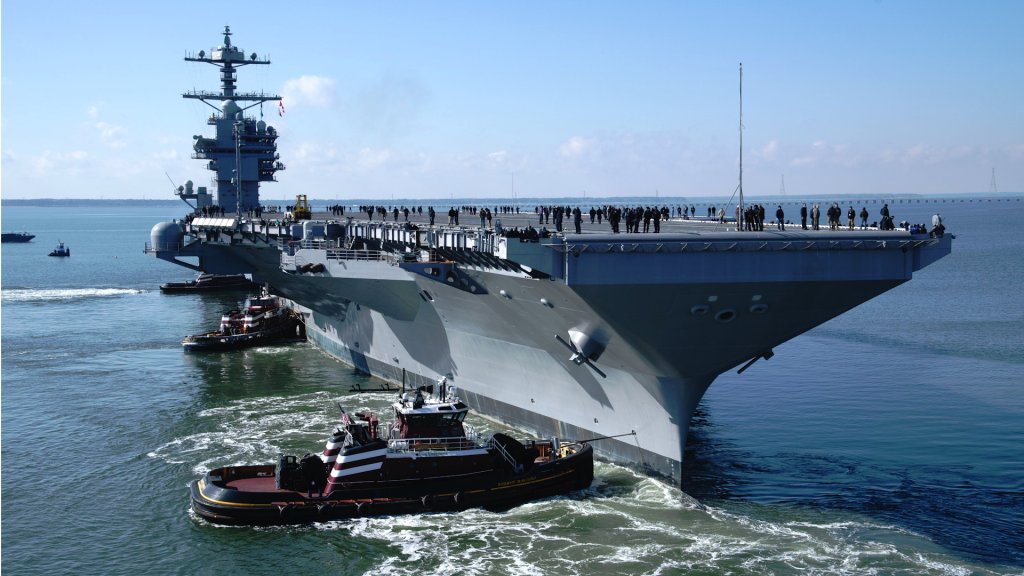
The extent to which Kennedy has been fitted out is unclear, but the carrier is set to be delivered with some notable differences from the first-in-class USS Gerald R. Ford (CVN-78). This most notably includes an AN/SPY-6(V)3 radar, also known as the fixed-face version of Raytheon’s Enterprise Air Surveillance Radar (EASR), in place of Ford‘s Dual Band Radar (DBR). The DBR has proven immensely troublesome over the years, as you can read more about here. Pictures that HII released today show a number of differences between Kennedy‘s island and the one on Ford, due at least in part to the radar change.
Ford has suffered from a laundry list of other issues over the years, and HII and the Navy have working to leverage those lessons learned in work on all of the future ships in the class.
It is worth noting here that this is not the Navy’s first USS John F. Kennedy, an honor held by a unique subvariant of the Kitty Hawk class carrier design, which served from 1968 until 2007. One of America’s last conventionally powered carriers, it was subsequently sold for scrap despite attempts to turn it into a museum ship.
The Navy ordered the new Kennedy in 2013, and it was laid down at HII’s Newport News Shipbuilding division in 2015. The ship was launched four years later, at which time the goal was for it to be delivered in 2022. The Navy had originally pursued a dual-phase delivery schedule for the carrier, in which it would arrive initially still lacking certain capabilities. A Congressional demand for the carrier to be able to support F-35C Joint Strike Fighters at the time of delivery contributed to an initial slip in that schedule to 2024. At the time of writing, Ford has yet to set sail on an operational cruise with F-35Cs aboard.
The Navy subsequently shifted the timetable for Kennedy again from 2024 to 2025, ostensibly to complete work that normally would be done during a Post Shakedown Availability (PSA) after delivery. Last year, the service revealed that it pushed the delivery schedule further to the right, to March 2027. The Government Accountability Office (GAO), a Congressional watchdog, separately reported that the Navy might not have the carrier in hand until July 2027.
“The CVN 79 delivery date shifted from July 2025 to March 2027 (preliminary acceptance TBD) to support completion of Advanced Arresting Gear (AAG) certification and continued Advanced Weapons Elevator (AWE) work,” according to the Navy’s Fiscal Year 2026 budget request, which it began releasing in June 2025.
“Construction challenges affected CVN 79 and CVN 80 [the future USS Enterprise] delivery schedules. Continuing delays to Advanced Weapons Elevators construction put CVN 79’s July 2025 delivery at risk, according to program officials,” GAO said in its report, which came out that same month. “They said that, while this construction improved since CVN 78, they may postpone noncritical work like painting until after delivery to avoid delay.”
Problems with the AWEs on Ford became a particular cause celebre during President Donald Trump’s first term office, but the Navy said it had effectively mitigated those issues by 2021. The AWEs are critical to the carrier’s operation, being used to move aircraft munitions and other stores between the ship’s magazines and the flight deck.

Ford has also faced persistent issues with its AAG, as well as the Electromagnetic Aircraft Launch System (EMALS) catapults, though the Navy says it has made progress in addressing those, as well. EMALS and AAG are how Ford class carriers get planes into the air and recover them afterward.


“Program officials attributed this delay [in work on CVN 79 and CVN 80] to construction material availability and persistent shipyard workforce issues that the program is working to mitigate with revised schedules and worker incentives,” GAO’s June 2025 report also noted. “The program reported it has not assessed the carrier industrial base for potential manufacturing risks but officials said that they plan to leverage other industrial base initiatives. This includes those related to submarines and within the Navy’s new Maritime Industrial Base program office.”
It’s not immediately clear how much all of this has added to Kennedy‘s price tag. Back in 2018, the Congressional Research Service (CRS) pegged Kennedy‘s cost at around $11.3 billion. A new CRS report published in December 2025 said the ship’s estimated acquisition cost had grown to $13.196 billion, citing Navy budget documents, but it is unclear if that accounts in any way for inflation. The Navy continues to estimate that future ships in the Ford class will cost even more, with CVN-81, the future USS Doris Miller, still expected to come in at around $15 billion. The Navy expects to acquire six more Ford class carriers, two of which have already been given names, the future USS William J. Clinton (CVN-82) and USS George W. Bush (CVN-83).
Acquiring more Ford class carriers is a critical priority for the Navy, which has been looking to start retiring its aging Nimitz class carriers for years now. If the Navy removes the USS Nimitz from active service this year as planned, the total size of the service’s carrier force will drop to 10 hulls until Kennedy arrives. There is a standing legal requirement for the Navy to have no less than 12 carriers in service, which is reflective of the high demand for these ships, especially in times of crisis.
The Navy has been voicing its own concerns about carrier capacity, and the readiness of the force it does have, for years now. This has only been compounded in the past two years or so by the strain from steady demand for deployments to respond to contingencies in and around the Middle East, and more recently, the Caribbean.
“I think the Ford, from its capability perspective, would be an invaluable option for any military thing the president wants to do,” Chief of Naval Operations Adm. Daryl Caudle told TWZ and other outlets on the sidelines of the Surface Navy Association’s (SNA) annual symposium. “But if it requires an extension, it’s going to get some pushback from the CNO. And I will see if there is something else I can do.”
“To the financial and readiness aspects, we have maintenance agreements and contracts that have been made with yards that are going to repair the ships that are in that strike group, including the carrier itself,” Caudle noted. “And so when those are tied to a specific time, the yard is expecting it to be there. All that is highly disruptive.”
Caudle was responding to a question about whether Ford could be tasked to support a new potential U.S. operation against Iran. The carrier is currently sailing in the Caribbean Sea, where it has been operating for months now. Earlier this month, it took part in the operation to capture Venezuelan dictator Nicolas Maduro. Since the CNO offered his comments at SNA, the Navy has sent the Nimitz class carrier USS Abraham Lincoln and its strike group from the Pacific to the Middle East.
As an aside, CVN-79 is expected to be the first Ford class carrier homeported on the West Coast. Ford‘s homeport is Norfolk, Virginia, on the East Coast.
The Navy is now at least one step closer to taking delivery of the future USS John F. Kennedy.
Contact the author: joe@twz.com
Loading comments…
Comments couldn’t be loaded. Please refresh the page.