
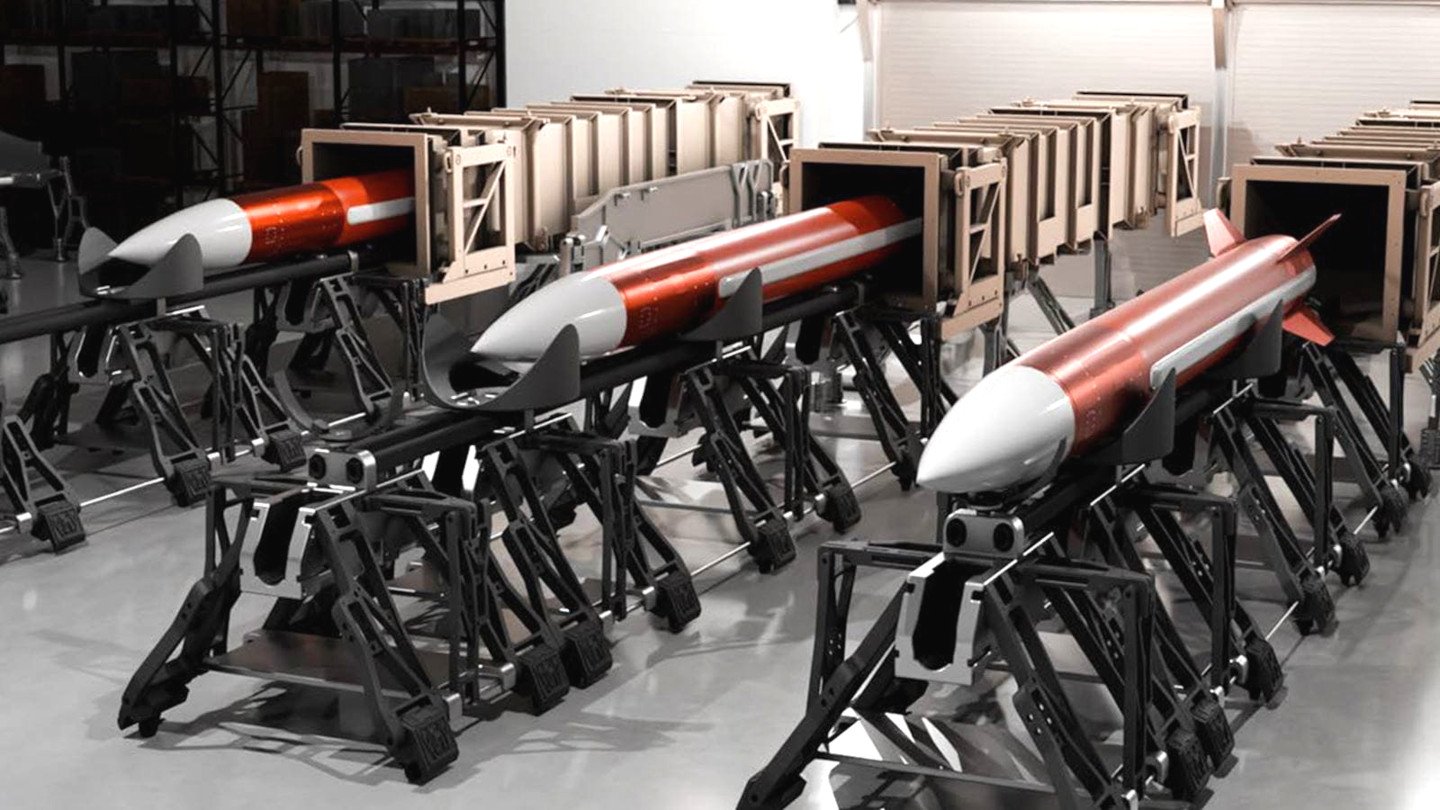
Raytheon has touted a new domestic order for PAC-2-series interceptors for the Patriot surface-to-air missile system. This is the first time the U.S. military has bought any new PAC-2s in more than 30 years, according to the company. This comes amid persistent concerns about the sufficiency of American stockpiles of high-end anti-air interceptors and other critical munitions, with alarm bells now ringing very loudly due to the conflict with Iran. Global demand for Patriot systems and interceptors for them, in general, is at a high point, driven heavily by fighting in the Middle East and the ongoing war in Ukraine. Patriot has been seeing a broader renaissance in recent years amid an evolving threat ecosystem, emanating especially from Russia and China.
Patriot was an important topic of discussion during a Raytheon quarterly earnings call this morning. Raytheon is the prime contractor for the Patriot system and the PAC-2 interceptor. Lockheed Martin is the prime contractor for the separate PAC-3 family of interceptors for Patriot.
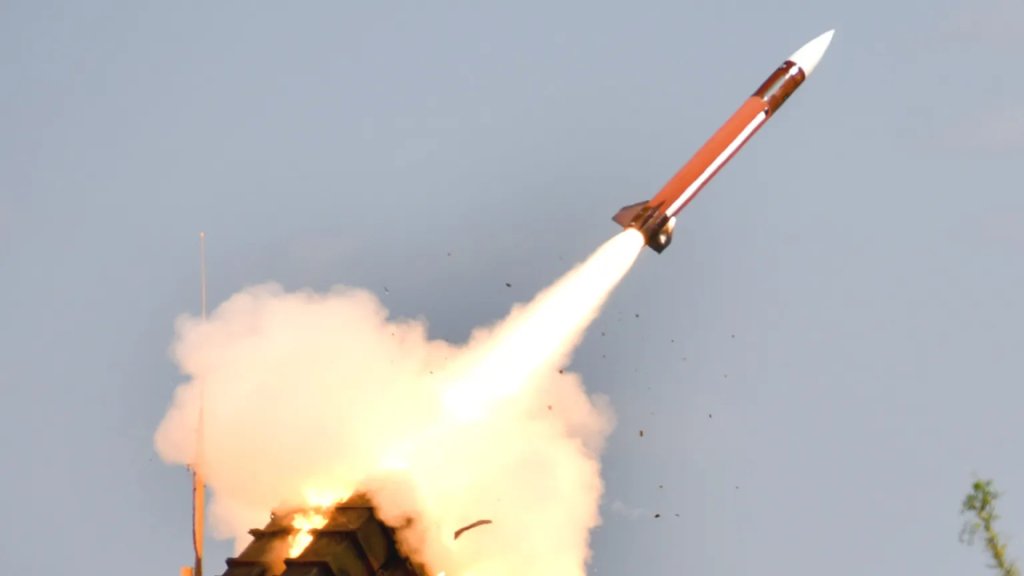
“Raytheon booked nearly $20 billion of awards, resulting in a book-to-bill [ratio] in Q2 [second quarter of the 2026 fiscal year] of 2.4[%],” Christopher Calio, President and CEO of Raytheon (now formally called RTX), said on today’s call. “These bookings included over $5 billion of GEM-T Patriot effectors, driven by international customers, and our first domestic GEM-T production order in over 30 years.”
Calio did not elaborate on the domestic order, but this appears to be a reference to a contract the U.S. Army quietly awarded back in April. That deal was valued at $441.6 million and was said to be in support of Operation Epic Fury against Iran.
GEM-T stands for Guidance Enhanced Missile-Tactical. The GEM-T configuration, which has received various upgrades over the years, is the only version of PAC-2 still in production today.
Before the contract in April, it’s not entirely clear when the U.S. Army last ordered any new-production PAC-2 series interceptors, and the nomenclature here can be a little confusing. Raytheon began production of the baseline Guidance Enhanced Missile (GEM) variant, also designated the MIM-104D, in the mid-1990s. Compared to earlier versions of the PAC-2, GEM had improved engagement capability against smaller targets or ones otherwise with smaller radar cross-sections thanks to a new seeker. Changes were also made to the missile’s fuze to improve effectiveness against fast-moving ballistic missiles. A GEM+ configuration was subsequently developed, offering even better accuracy, performance, and reliability.
The U.S. Army subsequently sent stocks of baseline GEM and other older PAC-2 interceptors back to Raytheon to be brought up to the GEM+ standard. The resulting missiles were collectively designated MIM-104Es, with deliveries starting in the early 2000s. The GEM-T moniker was originally applied to MIM-104Es rebuilt from MIM-104Ds, which were further optimized against tactical ballistic missiles in the process. You can read more in detail about the PAC-2 lineage, as well as that of the separate PAC-3 series, in this previous TWZ piece.
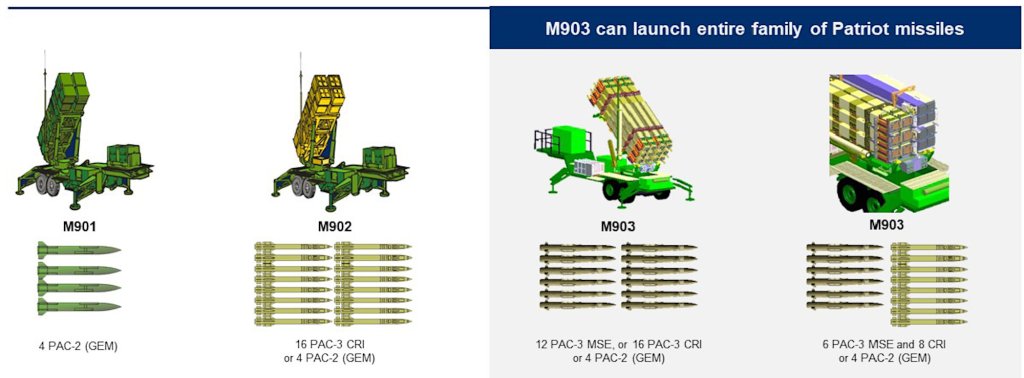
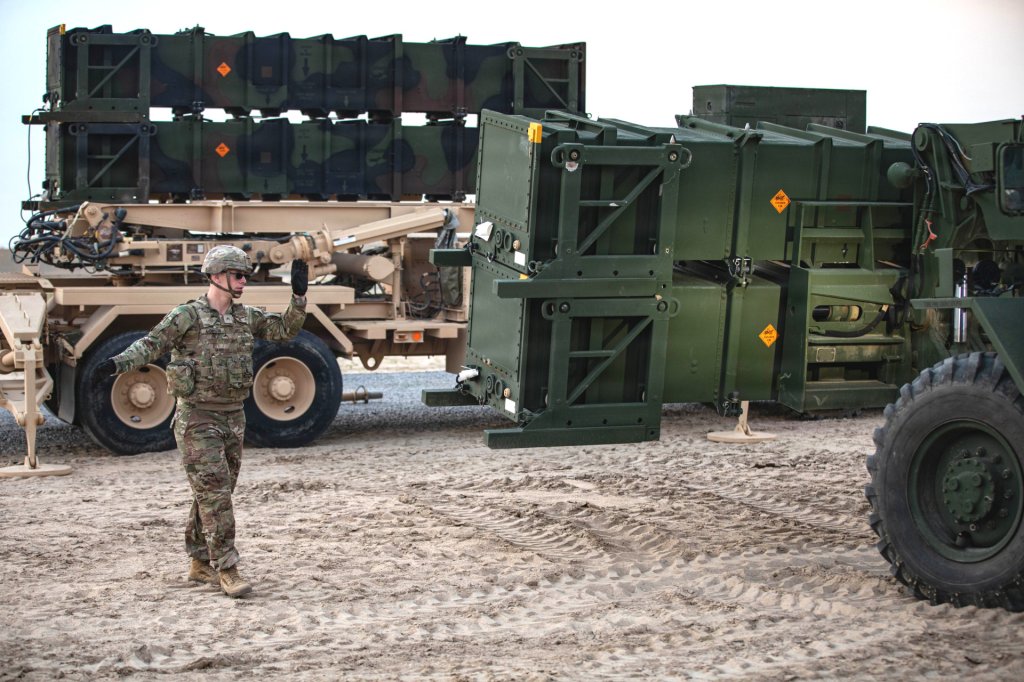
Whether or not the new U.S. order for GEM-T interceptors is entirely for American military use, or includes purchases on behalf of allies and partners, is unclear. GEM-T remains in active U.S. Army service, as well as with other Patriot operators globally, even as newer PAC-3 interceptors have arrived. Current-generation trailer-mounted Patriot launchers can be loaded with mixtures of PAC-2 and PAC-3-series missiles at the same time, increasing their flexibility against different threats. PAC-2 missiles are distinctly larger than PAC-3 types.
However, as Raytheon has highlighted today, the U.S. military had not placed any orders for new-production GEM-Ts in decades. Members of the House Armed Services Committee notably questioned this logic just in June, in a report accompanying a draft of the annual defense policy bill, or National Defense Authorization Act, for Fiscal Year 2027.
“The committee supports the Army’s continued investment in Integrated Air and Missile Defense (IAMD) to address the spectrum of current and future aerial threats and notes the ongoing efforts to address munitions production capacity within the domestic defense industrial base,” per that report. “The committee further notes that the Army’s procurement of Patriot interceptors in recent budget requests has been for the Patriot Advanced Capability-3 Missile Segment Enhancement (PAC-3 MSE), and not for the PAC-2 Guided Enhanced Missile-Tactical (GEM-T), which has complemented the MSE in real-world engagements.”
At that time, the House Armed Services Committee also asked for the Secretary of the Army to provide a briefing, no later than March 1, 2027, on Patriot interceptor inventories. Lawmakers specifically asked for the briefing to include the following:
- “An overview of the capabilities and limitations of both PAC-2 and PAC-3 interceptors against current and emerging theater ballistic missile and air breathing threats.”
- “Current stockpile levels for PAC-2 and PAC-3 interceptors, planned deliveries of both types across the Future Years Defense Plan (FYDP), and an assessment of inventory sufficiency relative to approved force growth, and remaining shelf-life.”
- “A description of the Army’s Total Munitions Requirement for the Patriot family of interceptors.”
- “Any recommendations to address shortfalls in inventory, to include additional procurement of PAC-2 interceptors, modernization of the PAC-2 missile, and development of a new interceptor for the Patriot system.”
Whether or not the committee was aware at that time of the GEM-T contract earlier this year is unclear. When missiles from that order are expected to start arriving is also unknown. PAC-2 and PAC-3 interceptors are long-lead-time items, and it typically takes years for deliveries to come after a contract award.
All of this speaks to the larger issues around Patriot interceptor stockpiles, which become something of a poster child for munitions supply chain concerns more broadly. Questions surrounding munitions expenditures in the course of fighting against Iran this year were front and center at a Senate Appropriations Committee hearing just yesterday. The Trump administration is currently seeking $67.1 billion in supplemental funding to help cover the costs of the conflict, including replenishing stockpiles of critical munitions.
Just how many Patriot interceptors the U.S. Army has expended in the course of operations related to Iran this year is unknown. A detailed report the Center for Strategic and International Studies (CSIS) think tank published in May estimated the figure to be somewhere between 1,060 and 1,430. Those numbers were not further broken down between PAC-2 and PAC-3 variants.
The U.S. Army, as well as the armed forces of Israel and Gulf Arab states, have fired even more Patriot interceptors in the course of a succession of crises in and around the Middle East in the past few years. The Ukrainian military has been another heavy user of Patriot in its ongoing fight against Russia. In all of these instances, demand for Patriot, specifically, has been heavily driven by ballistic missile threats, which is exactly what PAC-2 GEM-T is optimized against. For Ukraine, in particular, Patriot systems loaded with PAC-2 and PAC-3 interceptors are its primary answer to incoming barrages of Russian ballistic missiles.
Concerns have been raised for years now about the impacts this is having on stockpiles of Patriot interceptors in the U.S. and elsewhere globally. There have been efforts to address this surging demand. This includes Raytheon’s establishment of a first-of-its-kind production facility for GEM-T missiles in Germany in cooperation with MBDA Deutschland.
Lockheed Martin has separately been working to dramatically ramp up production of PAC-3 interceptors. This week, the company also unveiled a new PAC-3 variant, called the Adapted Capability Effector (ACE), designed to be lower cost and easier to produce.
Earlier this month, U.S. President Donald Trump said he would grant Ukraine a license to domestically produce PAC-2 and/or PAC-3 interceptors. However, there has been no clarity yet on what the timeline might be for any such deal to be finalized. Though this would be a boon for Ukraine, especially in the long-term, it is years away at best from yielding fruit, as TWZ previously explored in detail.
The U.S. Army has also put forward its own requirement for a new interceptor compatible with Patriot with a unit cost of no more than $1 million. For comparison, the price of a single current-generation PAC-3 MSE variant is $5.3 million, according to the Army’s 2027 Fiscal Year budget request. With a lack of U.S. orders for GEM-Ts for years now, the price point for those missiles has become more opaque, but it has been reported to be at least in the $2 million range, if not much more expensive.
In the meantime, strain on existing Patriot interceptor supply chains, as well as for complete Patriot surface-to-air missile systems, has created problems for current and future customers. Switzerland notably saw its orders for new Patriot batteries deferred last year due to demand from Ukraine. In April, Swiss authorities raised the prospect of canceling the deal altogether due to the delays. Concerns have been raised about the ability of Raytheon and Lockheed Martin to meet even Ukraine’s needs. Earlier this year, Lockheed Martin also reportedly warned Germany, Japan, Poland, the United Arab Emirates (UAE), and Saudi Arabia about potential uncertainty surrounding PAC-3 deliveries.
The U.S. Army’s first PAC-2 GEM-T order in decades makes clear that domestic need for Patriot interceptors is now pushing American authorities to other sources of supply, and toward maxing out production of PAC-2 and PAC-3 types. Though perhaps less capable than the latest PAC-3 MSE variant, GEM-Ts are clearly still operationally relevant, and represent an additional avenue to bolster stockpiles. Not every target necessarily requires the employment of the highest-end interceptor, either. This is something Lockheed Martin has been stressing around its announcement of the new ACE variant of the PAC-3, which is explicitly stated to be less capable than the MSE version.
With this in mind, the first U.S. GEM-T order in decades is a significant development, but one that also speaks to the immense strains on stockpiles and supply chains, which could take years to fully address.
Contact the author: joe@twz.com
Loading comments…
Comments couldn’t be loaded. Please refresh the page.