
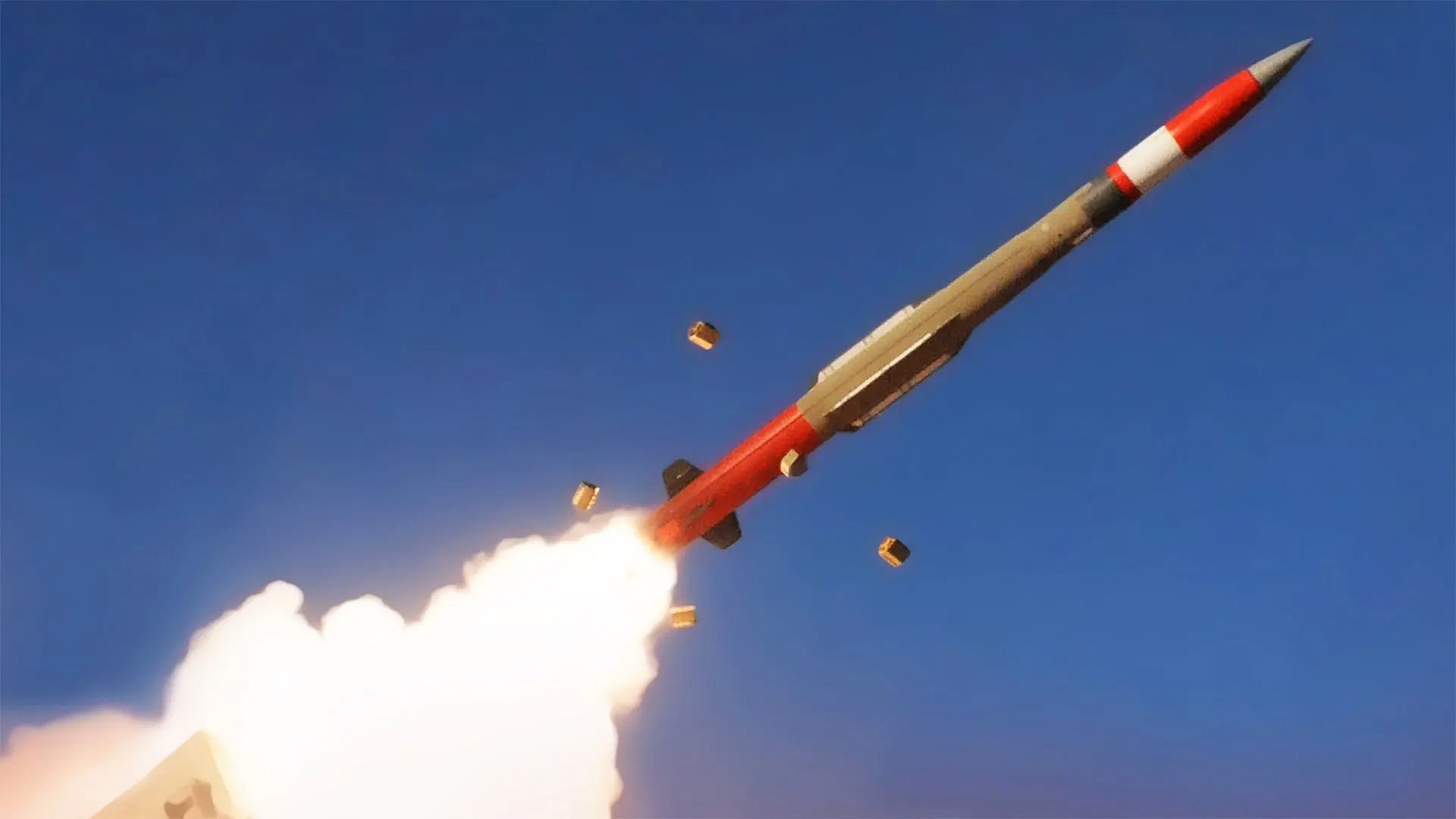
Two days after Ukraine said it couldn’t down any Russian ballistic missiles because of a dearth of Patriot surface-to-air missile (SAM) interceptors, President Donald Trump on Wednesday told Ukrainian President Volodymyr Zelensky that he would provide Kyiv with a license to build its own.
The vow, made during a bilateral meeting at the NATO Summit in Ankara, Turkey, was a rare feel-good moment between two world leaders who have frequently butted heads. However, turning that offer into a reality that can help Ukraine in the near-term isn’t realistic. It would take many months, at least, for the first missiles to roll off the production line for a whole host of reasons we will delve into later in this story.
“That’s pretty cool,” Trump told Zelensky after making his license offer. “This way, you can’t complain that we’re not giving them enough. I said, ‘Make them yourself.’”
Trump added a telling caveat.
“We haven’t informed the company of that yet, but that’ll work out all right,” he said. We’ve reached out to Lockheed Martin and Raytheon, which make variants of these weapons, for more details.
“We don’t have an immediate comment on the president’s announcement,” a spokesperson for RTX, Raytheon’s parent company told us. However, the spokesperson noted that RTX “has a long history of co-producing critical defense systems in Europe, with major suppliers in Poland, Germany, Switzerland and Greece to name a few.”
The American leader also suggested that Ukraine would not need much time before it is able to place domestically produced Patriot interceptors into launchers.
“I think they can produce them pretty quickly,” Trump posited. “They have a great ability to produce weapons.”
As we noted earlier in this piece, that’s unlikely at best, even though Ukraine has been at the forefront of weapons production dating back to when it was part of the Soviet Union.
First of all, such a deal could face bureaucratic and regulatory hurdles, like getting Congressional approval. That’s the least of the issues, however.
For instance, even Lockheed Martin, one of the world’s biggest arms makers, currently produces only about 650 PAC-3 MSE interceptors a year, or just shy of two per day. However, under a contract with the Pentagon inked in January, Lockheed is committed to boosting Patriot annual production to 2,000 in the years to come.

“Every PAC-3 MSE interceptor carries a production lead time of 24 months for the missile and 30 months for the solid rocket motor,” the Foreign Policy Research Institute (FPRI) explained in a recent analysis. “Such timelines are due to physical industrial constraints, such as the lengthy curing time required for solid rocket motors and the complex, multi-year process of qualifying any new component supplier.”
The primary bottleneck “sits one level below the prime contractor,” FPRI added. “Boeing produces the active radar seeker for every PAC-3 MSE from a single facility in Huntsville, Alabama, and in 2025 it delivered only around 650 to 700 seekers. Recognizing this choke point, the Pentagon signed a framework in April 2026 to triple seeker production, an admission that final assembly capacity is irrelevant if the sub-tier cannot keep up. The same logic applies to the missile’s solid rocket motor, manufactured by L3Harris’s Aerojet Rocketdyne.”

Given those issues, whether Ukraine can obtain these components even if it does have a license to build the interceptors is a huge question. It is one that Kyiv is trying to answer for the line of interceptors it is trying to produce at home.
Fire Point, the Ukrainian company that makes several drones as well as the FP-5 Flamingo cruise missile, is working on a domestically designed and produced “anti-ballistic shield.” The backbone of this system is the company’s FP-7.x interceptor missile. In February, the company demonstrated tests of the weapon, which is based on its FP-7 ballistic missile.
That shield “is aerodynamically ready, but still not combat-capable without full integration,” the Kyiv Post noted earlier this month. “Chief designer Denys Shtilerman said the system depends on radars, command centers, a secure data link, and a European-developed seeker head. The company is working with partners to combine these elements into a functioning missile defense network.”
You can see the FP-7 missile in the following video.
As we have previously noted, between U.S. usage in recent Middle East conflicts, sustained consumption by Ukraine and commitments to nearly 20 other nations that are facing increasing threats, the supply of Patriot interceptors is a major problem. Even before Ukraine gained the system and the multiple flare-ups in the Middle East, the depth of the global Patriot missile arsenal and the ability to build enough interceptors in a crisis was concerning. Now demand has exploded and rationing is occurring, with some customers being told their orders are going to be diverted to replenish U.S. stocks. This practice even predates the second Trump administration, with the Biden White House telling allies their orders will be diverted to Taiwan and Ukraine.
All of these interceptors for various buyers will need the same long-lead, highly specialized components that Ukraine would need for domestic production of these weapons.
Even if Ukraine can round up all the components, it still needs a place to put them all together into a workable weapon. Given that it faces constant missile and drone barrages from Russia, Ukraine disperses a lot of its weapons production to avoid having one point of failure in the event of a devastating attack. However, that might not be optimal for the production of enough Patriot interceptors to provide an adequate defense against these threats. Any large facility purpose-built or converted for this effort — which could take years — would be a prime target and likely attacked very quickly.
Should Ukraine find a suitable, secure location, perhaps underground, it still needs people to do the work. That raises another level of concern, according to David Shank, a retired Army colonel who served as Commandant of the Air Defense Artillery School at Fort Sill, Oklahoma, and as the 10th Army Air Missile Defense Commander in Europe.
“From my perspective, I am absolutely 100% concerned about the Ukrainians and anyone they let in those facilities,” Shank noted. “And of course that brings into play how much information and capability we are willing to share for the Ukrainians to build Patriot interceptors.”
Shank’s concerns are well-founded. Security around these weapons and their components is very high. The chances that data or hardware could find its way into enemy hands is a problem in a country at war with its neighbor, and those risks are greater with the more advanced variants of these weapons like the PAC-3 family.
As Raytheon noted in its response to our inquiry, licensed production of Patriot interceptors is a concept not without precedent. Japan also has a contract with Lockheed Martin to produce about 30 Patriot interceptors per year. Plans to boost that number hit a snag in 2024 over supply chain issues, Reuters reported at the time. Meanwhile, a new MBDA-Raytheon facility in Europe built to make GEM-T Patriot missiles is due to open later this year, according to the Financial Times.
In addition to that, plans were announced during the NATO Summit to build a European Patriot PAC-3 maintenance facility.
Also unknown is how Ukraine will pay for all this, though it is likely European nations will help foot the bill.
All things considered, it will be a while before Ukraine can defend its skies with homegrown Patriot interceptors.
“I do think there will be bureaucratic hurdles to get over,” Shank surmised. “But ultimately I believe the tech transfer and supply chain will drive the pace. I am sure Ukraine has already identified the big ticket items needed to make this happen. I believe the supply chain of the intricate components, chips, and circuit cards could slow the process.”
In addition to promising he would give Ukraine a license to build Patriot, Trump also said he would provide an undisclosed number of additional ones from existing U.S. stocks.
There’s a long way to go before Ukraine can procure the Patriot interceptors it needs.
According to Ukraine’s Defense Intelligence Directorate (GUR), “Russia’s military-industrial complex plans to deliver up to 700 9M723 ballistic missiles for the Iskander operational-tactical missile system in 2026, the same number as last year,” Ukrainska Pravda reported. “Monthly production rates remain at 55-60 missiles.”
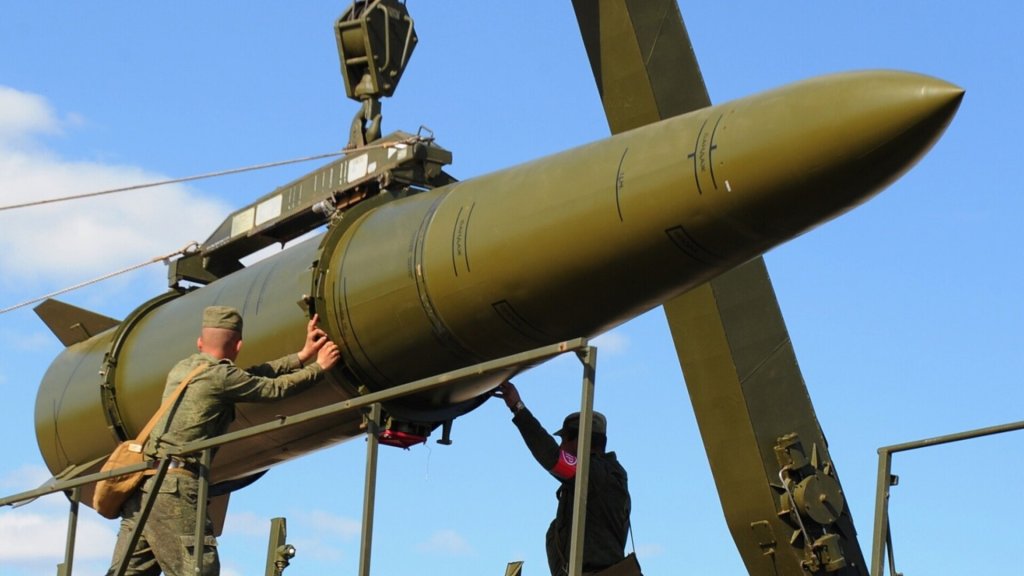
In addition, “the Russians have more than doubled production of RM-48U missiles for S-300PM and S-400 air defense systems, which they use to strike ground targets,” the publication added. “Over 480 such missiles are planned to be delivered in 2026, compared with more than 200 in 2025. The current monthly production rate is up to 50 missiles.”
The number of ballistic missiles Russia builds per year exceeds the current pace of high-end Patriot interceptor production, which is telling when it comes to how many interceptors the U.S. can supply Ukraine on a sustained basis under the current production rates.
So, Trump’s offer, if it comes through, won’t solve Ukraine’s urgent need for interceptors. However, becoming a Patriot producer, even after the war, would be a huge win for Kyiv. Developing its own stockpile would give Ukraine a level of security it does not currently enjoy. Being able to potentially co-export some of the interceptors it assembles would also add a boost to its economy that Ukraine badly needs. In addition, it would cement Ukraine further as a high-end weapons manufacturer. Considering the voracious global appetite for these weapons, there would be no shortage of customers.
UPDATE: 3:19 PM EDT July 9-
Lockheed Martin responded our query:
“Lockheed Martin remains focused on supporting the U.S. government and its partners and allies. Further questions on the President’s comments are best addressed by the White House.”
Contact the author: howard@twz.com
Loading comments…
Comments couldn’t be loaded. Please refresh the page.