
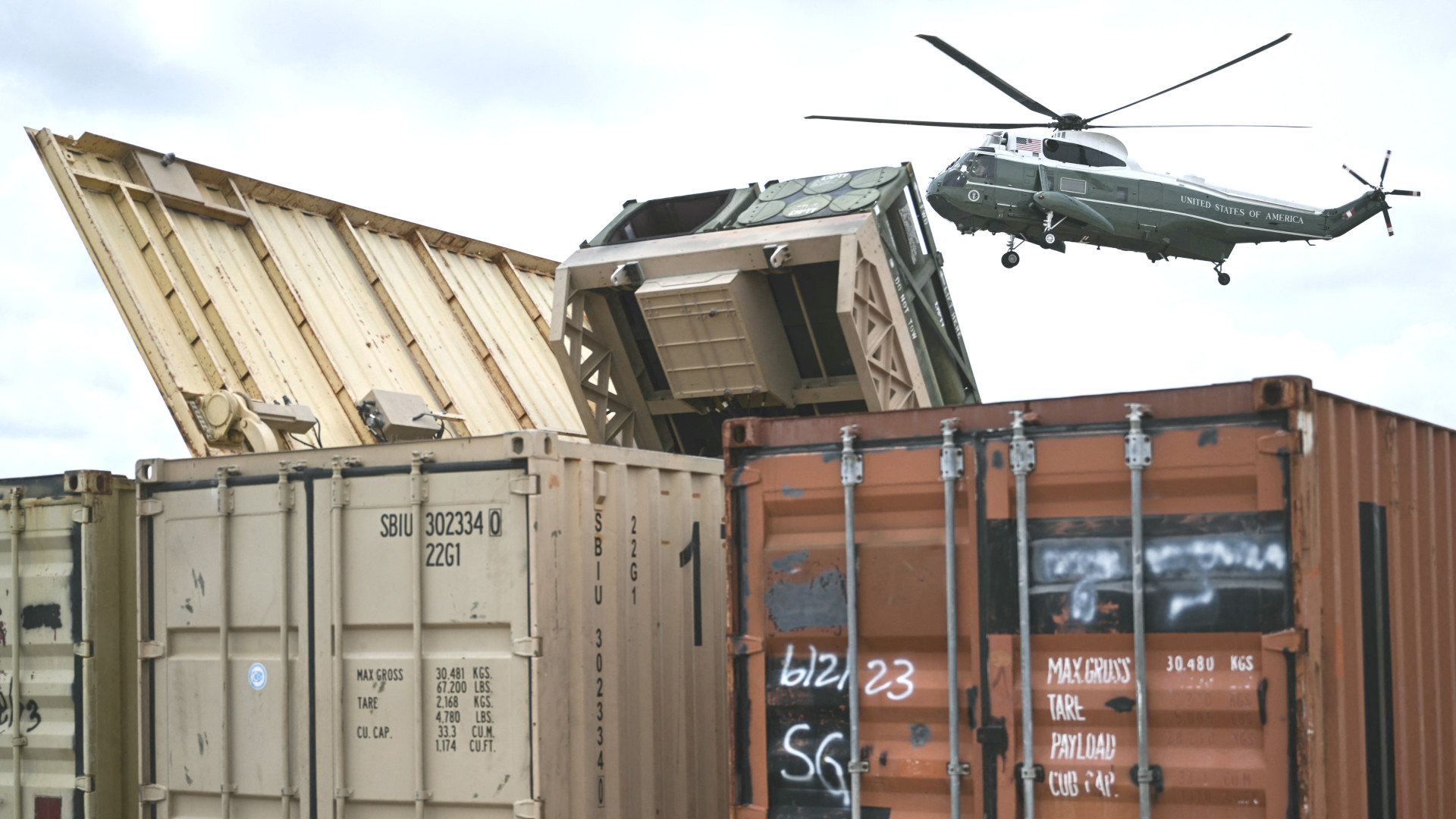
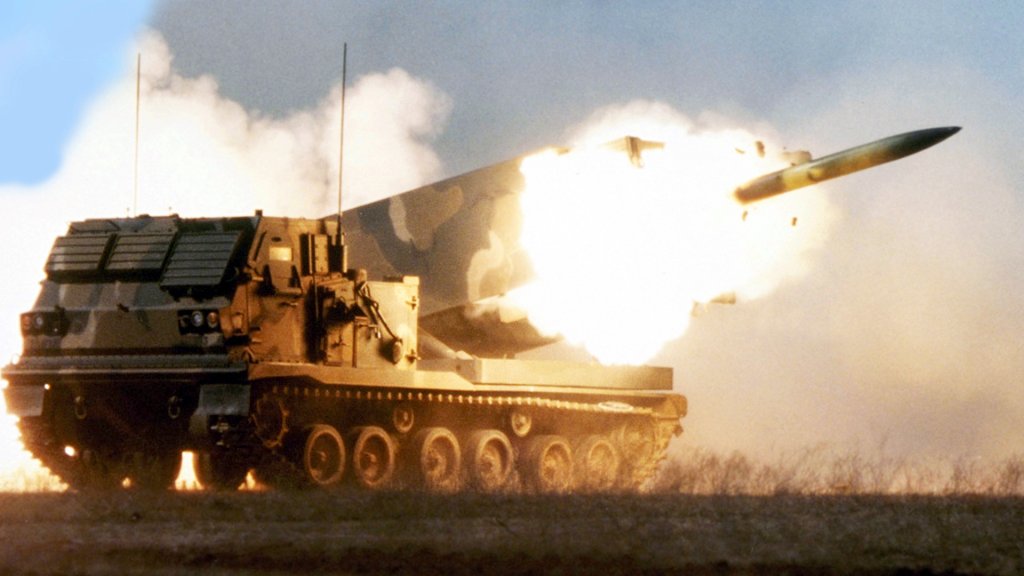
An unknown containerized launcher able to fire the same suite of artillery rockets and ballistic missiles as the M270 Multiple Launch Rocket System (MLRS) and M142 High Mobility Artillery Rocket System (HIMARS) seen at the U.S. Army’s Fort Bragg earlier this year has been identified. This comes as the Army’s top general in the Indo-Pacific region has highlighted the value of “boxes of rockets” hiding in plain sight as part of a broader strategy that “gives our adversary pause.”
As for the launcher seen at Bragg, it is a prototype launch system developed as part of the Palletized Field Artillery Launcher (PFAL) project that is said to currently belong to U.S. Special Operations Command (SOCOM). PFAL presents a harder-to-spot and otherwise flexible strike capability, especially for launching ballistic missiles, which could be of interest to the regular Army if the service is not pursuing something in this vein already.
TWZ was the first to report on the container with the launcher inside at Fort Bragg after spotting it in videos, one of which is seen below, of President Donald Trump’s visit to the base back in June. Bragg is the Army’s main special operations hub, and is also home to the 82nd Airborne Division, among other units.
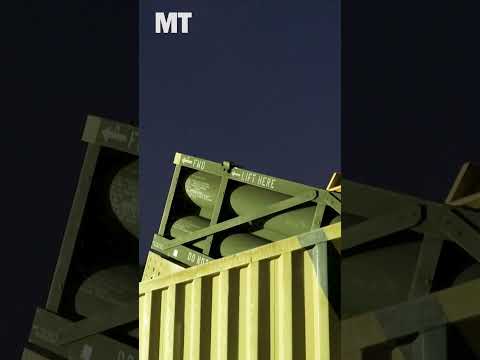
Last year, Military Times also published a very brief video of the PFAL, seen below, but did not name the launcher and provided no further details.
This is “the Palletized Field Artillery Launcher or PFAL. These are prototype launcher platforms owned by SOCOM,” Darrell Ames, an Army spokesperson, told TWZ. “This is not MLRS and the platform in the picture is not fielded to the Army. The prototype does launch the current MLRS family of munitions [MFOM] with the exception of PrSM.”
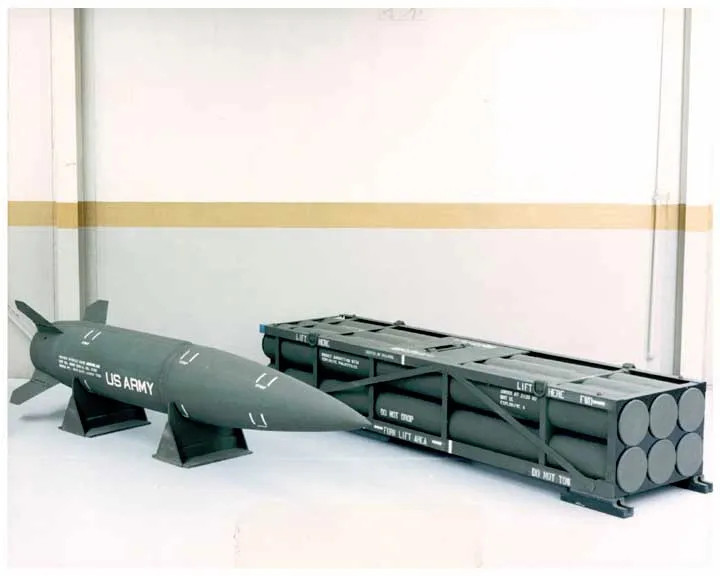
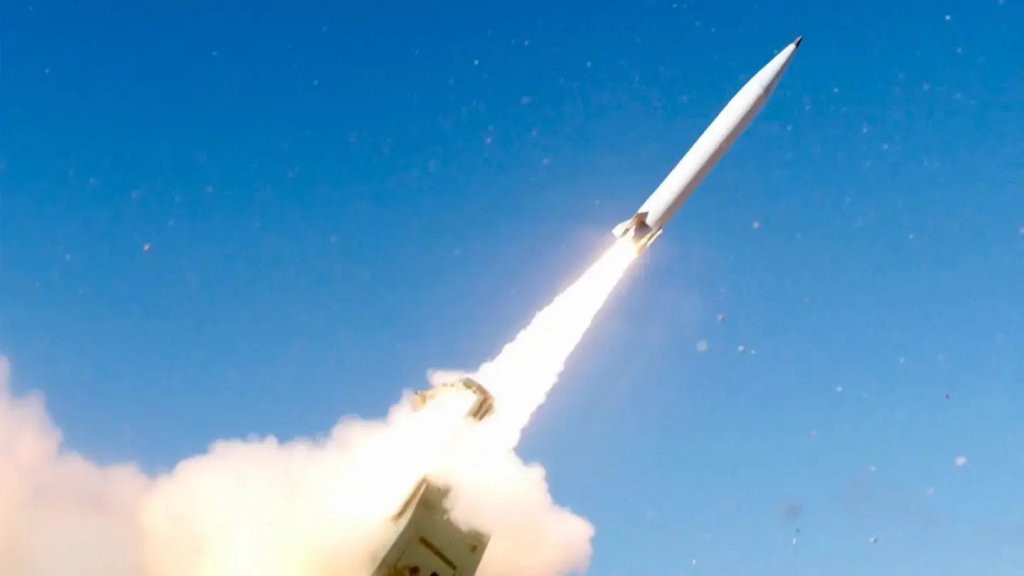
MFOM currently includes 227mm guided artillery rockets, as well as an Army Tactical Missile System (ATACMS) and Precision Strike Missile (PrSM) short-range ballistic missiles, the latter of which the Army is in the process of fielding now. All the munitions come in standardized ‘pods’ that can each hold six rockets, a single ATACMS, or two PrSMs. The PFAL launcher can accommodate two of these pods at once.
Current-generation 227mm artillery rockets in the Army’s inventory have a maximum range of some 50 miles (around 80 kilometers), and extended-range types that can reach out to just over 93 miles (150 kilometers) are now in production. The longest-range variant of the ATACMS short-range ballistic missile in Army service today can fly out to 186 miles (300 kilometers). The baseline version of PrSM has a demonstrated range of 310 miles (500 kilometers), but the Army is already looking at multiple future versions with greater reach.
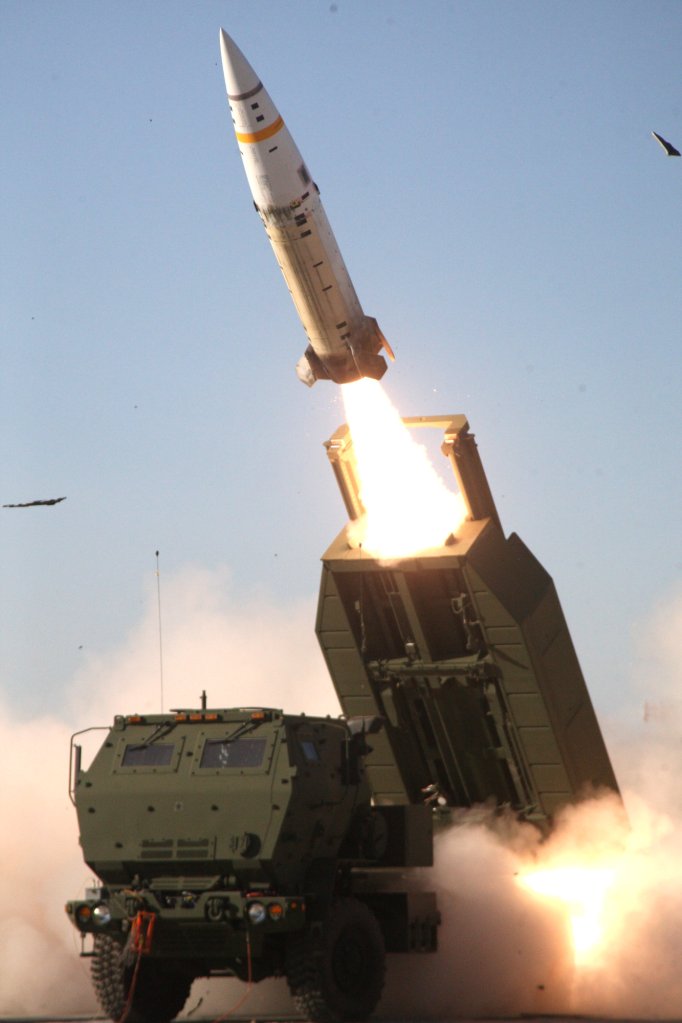
PFAL dates to at least 2020 and directly evolved from a demonstration program called Strike X, which the Pentagon’s Strategic Capabilities Office (SCO) had run. Strike X also included work on potential upgrades for ATACMS, including a seeker that would enable the missile to hit moving targets on land or at sea, a capability now in development for PrSM.
Since its creation in 2012, SCO has been focused on advanced and otherwise novel development efforts, often leveraging existing platforms and munitions. Prime examples are the Long Range Strike-Bomber (LRS-B) effort that led to the B-21 Raider stealth and the transformation of the SM-6 surface-to-air missile into a multi-purpose weapon able to also strike targets on land and at sea. SM-6 has now further evolved into an air-to-air missile, as well.
“PFAL is a palletized erectable launcher that provides alternatives to deliver near-term innovative long-range strike capabilities to improve operational effectiveness for Combatant Commanders,” according to past Army budget documents. “The PFAL launcher is capable of firing from a fixed ground position, Palletized Load System (PLS) trailer, or maritime vessel.”
The budget documents also say the intent, at least, was to eventually certify the PFAL to fire PrSM.
The only funding the Army looks to have requested and received for the PFAL effort was $20.175 million that came in Fiscal Year 2021. Last year, the service said it had leveraged work on PFAL in the development of an uncrewed derivative of the HIMARS launcher vehicle called the Autonomous Multi-domain Launcher (AML). Unlike HIMARS, AML can be loaded with two MFOM pods at once rather than just one. The M270 MLRS is also a two-pod launcher.

When SOCOM acquired its prototype PFALs, and what its plans for those launchers are currently, are unclear. Explicit mention of the system does not appear to be present in any of the command’s budget documentation. TWZ has reached out for more information.
Generally speaking, as TWZ noted in our initial reporting on what is known to be a PFAL prototype:
“Being able to launch this array of rockets and missiles already gives M270 and M142 immense flexibility. A containerized launcher would open up additional possibilities, including the ability to turn any truck that can carry a standard shipping container into a platform capable of firing long-range guided rockets and missiles. This, in turn, could help the Army more readily expand its available launch capacity as required.”
“The containerized launchers could also be deployed in a fixed mode, offering forward operating bases the ability to hold targets at risk dozens, if not hundreds, of miles away. This can include providing an on-call form of organic air/fire support for troops operating far from the forward base. The launcher inside the container cannot traverse laterally, but an array of them could be positioned in such a way to provide maximum coverage in all directions.”
“Being a container-based design, whether deployed in a truck-mounted or fixed configuration, they would be readily relocatable from one location to another. The containerized launchers could also be loaded on rail cars and/or employed from ships with sufficient open deck space.”
“In any of these modes, the launcher would benefit from its unassuming outward appearance. This would present challenges for opponents when it comes to detection and targeting, since any container could potentially be loaded with rockets or ballistic missiles.”
Trump’s visit to Fort Bragg in June, where the PFAL made its appearance, also came just over a week after Ukrainian forces had demonstrated the value of concealed launch capabilities, in general, with the unprecedented covert drone attacks on multiple Russian air bases. Several other countries, including Russia, China, and Iran, have also been developing launchers for artillery rockets and/or missiles concealed inside shipping containers.
All of this underscores the potential interest that SOCOM, specifically, might have in the capabilities that a containerized system like PFAL has to offer, coupled with its discreet appearance. The idea of special operations rocket artillery may appear unusual at first glance. However, regular Army HIMARS units, in particular, have been an important supporting asset for forward-deployed special operations forces for years now, especially in Syria. Special operators are also known to have made use of HIMARS batteries to execute targeted strikes on high-value individuals or groups thereof in Afghanistan.

The explicit mention in the past Army budget documents of potentially employing PFAL from a “maritime vessel” is also especially interesting to consider in the context of special operations missions. Special operations forces regularly operate from sea base ships and other types with open deck space for containerized capabilities. This includes the secretive Ocean Trader, itself designed to have an outwardly civilian-looking appearance to aid in its use as an unassuming launch platform for covert and clandestine operations.
PFALs, or a similar design, could be employed by regular ground units in support of non-special operations missions, as well. It could also give any ship with sufficient deck space an add-on precision strike capability.
While the current status of the PFAL project is unclear, there are clear indications that the Army remains actively interested in a launcher that can be concealed among standard shipping containers for the same general reasons stated earlier in this story. Containerized launchers could be particularly relevant in future expeditionary or distributed operations, especially across the broad expanses of the Pacific during a future major conflict with China, or for trying to deter one.
“I think, again, it aligns to our ability to operate in multiple domains,” Army Gen. Ronald Clark, head of U.S. Army Pacific (USARPAC), said in response to a question about containerized launch capabilities at an event that the Center for Strategic & International Studies (CSIS) think tank in Washington, D.C., hosted on June 27. “Our ability to target our adversaries at scale and our ability to be able to be literally ubiquitous with boxes of rockets at different places, that look like boxes of something else, really gives our adversary pause, because it’s in real time providing deterrence.”
That same day, the Army put out a contracting notice outlining a potential family of uncrewed launcher vehicles, building on the prototype AML. The Common AML (CAML) ‘system of systems’ might include a ‘heavy’ type based on the 10×10 M1075 Palletized Loading System (PLS) truck, which in turn could point to plans for a new containerized launcher. The CAML-H would be designed to fire munitions beyond the ones that come in MFOM pods, including Tomahawk land-attack cruise missiles and Patriot Advanced Capability-3 Missile Segment Enhancement (PAC-3 MSE) surface-to-air missiles.
It is also worth noting here that the Army is already fielding the Typhon missile system, which includes tractor-trailer launchers capable of firing Tomahawks and SM-6s. The Army has been looking at smaller launchers that are easier to deploy as companions to Typhon. Typhon’s existing launchers have a containerized design, but do not have the outward look of an unmodified shipping container like PFAL.
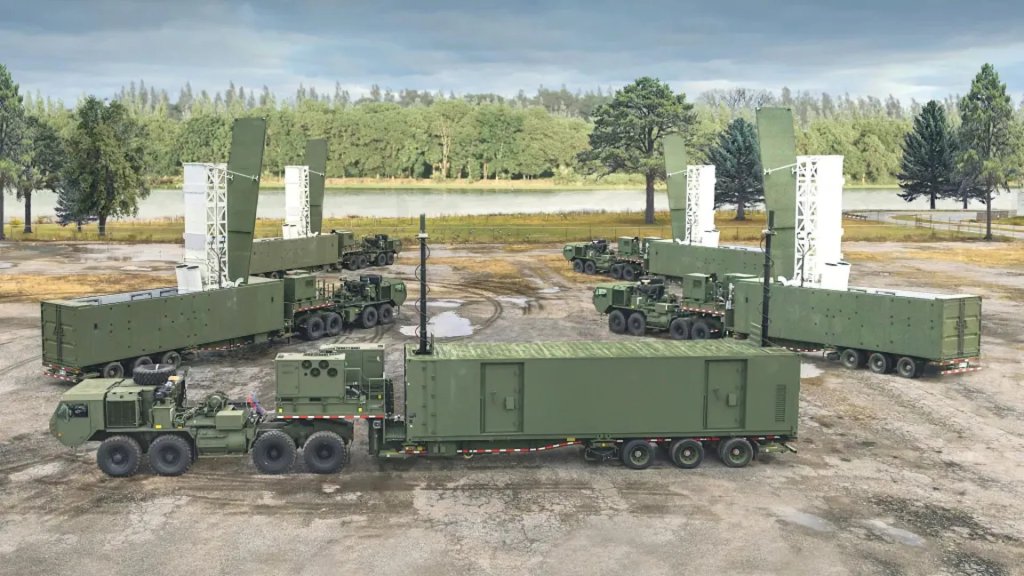
Other services might be interested in the capabilities that PFAL, or a further development of that design, offers. The Navy does already have its own containerized launchers for firing Tomahawks and SM-6s that are extremely similar, but not identical to the Army’s Typhon design. The U.S. Marine Corps also just recently announced its intention to axe a planned ground-based Tomahawk cruise missile capability in its latest budget request. The Marines made the decision after determining that the complete Long Range Fires (LRF) system, which includes uncrewed launcher vehicles derived from the 4×4 Joint Light Tactical Vehicle (JLTV), could not be effectively used as part of its new expeditionary and distributed concepts of operations.
If nothing else, SOCOM still has at least one PFAL in its inventory sitting at Fort Bragg.
Howard Altman contributed to this story.
Contact the author: joe@twz.com
Loading comments…
Comments couldn’t be loaded. Please refresh the page.