
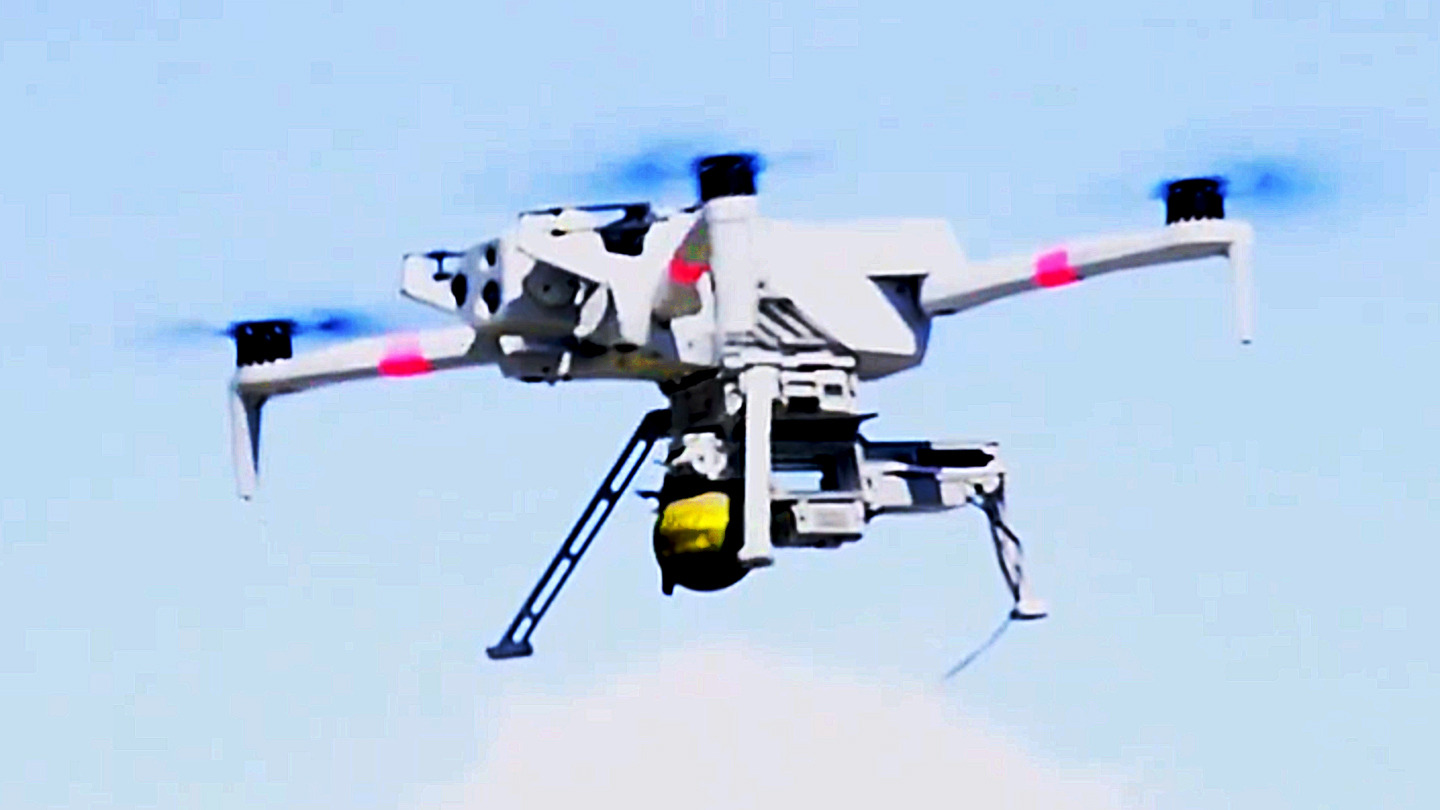
A U.S. Army video meant to laud the service’s work on fielding small armed drones instead highlights just how much it and the rest of the U.S. military continue to lag behind global trends.
“Have you ever seen a drone drop a GRENADE?” a now-deleted post earlier today from the official U.S. Army account on X read. “Watch Soldiers from @7thATC [7th Army Training Command], the Joint Multinational Training Group-Ukraine [JMTG-U] and @173rdAbnBde [the 173rd Airborne Brigade] execute the Army’s first live-grenade drop from an unmanned aircraft system in Grafenwoehr Training Area, Germany.”
The accompanying video, which continues to circulate online, as seen below, shows Army personnel loading standard M67 fragmentation hand grenades, as well as inert M69 practice types, onto small quadcopter-type drones fitted with purpose-built mechanisms for dropping them. The system is designed to pull out the safety pin on the unmodified grenade as it is released.
“It was the first live ordnance drop from a small UAS for [the] conventional Army,” Army Maj. Philip Draper, a brigade aviation officer with the JMTG-U, says in the video. “That’s a big step for 7th ATC [and the] 173rd [Airborne Brigade], who we partnered with.”
“Really, the purpose of this training is more of innovation, it’s to do things we’ve not done before, to extend ourselves beyond what we’re currently capable of doing,” Army Col. Donny Hebel, head of the JMTG-U, also says in the clip. The JMTG-U was first created in 2015 to train and advise the Ukrainian armed forces, and the unit was situated inside the country until Russia’s all-out invasion in 2022.
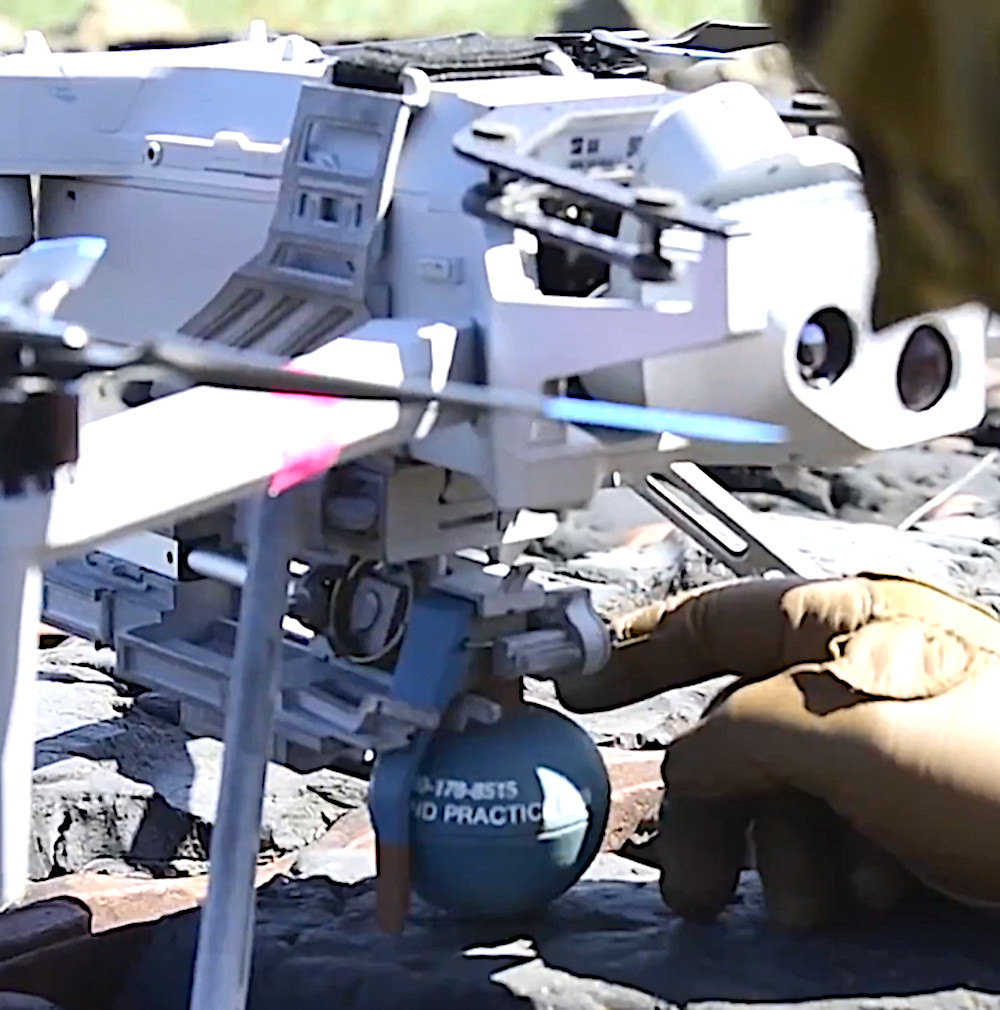
The stated goal is to conduct additional trials of this capability at Grafenwoehr, which is the Army’s largest training facility in Europe, and then pass along lessons learned to higher authorities within the “Army enterprise,” according to Draper.
There is a deep disconnect between the very tone of the social media post, as well as what is seen in the video and the comments therein, and the global reality when it comes to small armed drones.
The answer to the “have you ever seen a drone drop a GRENADE?” is a resounding ‘yes’ for anyone who has watched this area of development over the past decade. ISIS terrorists very prominently began using exactly this capability during the Battle of Mosul in Iraq in 2016 and 2017, something TWZ noted at the time was a clear sign of things to come. We had predicted exactly this kind of application for commercially available drones for years prior.
In the years that followed, ISIS and other militant organizations also used drones to drop small munitions, including on American forces, in Syria. The threat of weaponized commercial drones, including types carrying improvised explosive payloads designed to just smash into their target and detonate, migrated to Afghanistan, as well. This all led U.S. military leaders themselves to acknowledge a significant shift in the character of modern warfare years ago.
“First, as we think about this problem, I’ve been in the Army for 38 years, and in my entire time in the Army on battlefields in Iraq, in Afghanistan, Syria, I never had to look up,” now-retired Army Gen. Richard Clarke, then-head of U.S. Special Operations Command (SOCOM), said at the annual Aspen Security Forum in 2022. “I never had to look up because the U.S. always maintained air superiority and our forces were protected because we had air cover. But now with everything from quadcopters – they’re very small – up to very large unmanned aerial vehicles [UAV], we won’t always have that luxury.”
Top Stories This Week
“The cost of entry into this, particular for some of the small unmanned aerial systems, is very, very low,” Clarke added at the time. “I think that this is something that’s gotta continue to go up in terms of our priority for the protection, not just of our forces that are forward today – that’s the current problem – but what’s gonna come home to roost. Some of these technologies could be used by our adversaries on our near abroad or even into our homeland.”
Clarke’s comments notably came before Russia launched its all-out invasion of Ukraine, a conflict that has now fully driven the significance of drones, especially small weaponized types, into the mainstream consciousness. The members of the JMTG-U should be especially well aware of this reality.
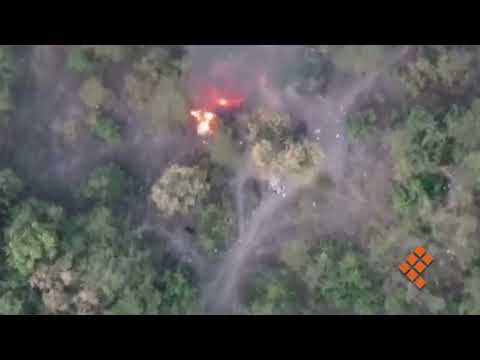
Various nation-state armed forces and non-state actors around the world, including drug cartels in Mexico, now regularly employ small armed drones.
The recent live grenade drops from drones at Grafenwoehr aren’t even the first time the U.S. Army has demonstrated this capability.
“For the first time, U.S. Army personnel dropped live grenades straight from an UAV [uncrewed aerial vehicle],” an Army press release in 2023 triumphantly declared. “Our eyes in the sky, now the RQ-28A, a [small quadcopter] UAV manufactured by Skydio, will be a force for the Sky Dragons across the [XVIII Airborne] Corps.”
Last year, our sister site Task & Purpose highlighted the Army’s Fort Bragg in North Carolina, then named Fort Liberty, formally becoming the “first installation” where soldiers could train to use small drones to drop live munitions. Fort Bragg is home to the XVIII Airborne Corps, which includes the 82nd Airborne Division, and is also a hub for Army special operations forces.
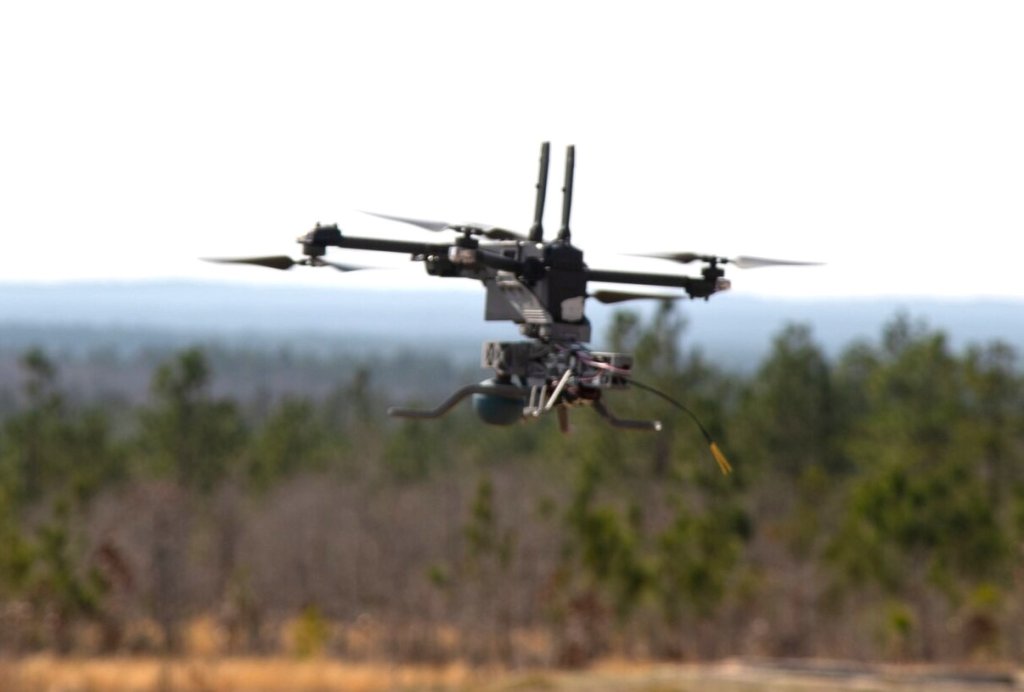
The U.S. Marine Corps has also been active and outspoken about incorporating small armed drones into its arsenal.
On top of all this, the very real threat posed now by uncrewed aerial systems has been driving parallel demand for systems to defeat them, another area where TWZ regularly highlights how the U.S. military is worryingly lagging behind. Again, this is a reality that extends beyond nation state armed forces to non-state actors. For example, the use of weaponized commercial drones has become so prevalent in fighting between drug cartels in Mexico that at least one improvised armored truck, also commonly referred to as a “Narco Tank,” has emerged with an anti-drone armor screen on top of its cab. This kind of add-on protection first appeared on Russian tanks in the lead-up to the war in Ukraine and has since become a fixture on armored and unarmored vehicles on both sides of that conflict, as well as emerged with other armed forces globally. The U.S. Army is just now looking to give its own M1 Abrams tanks and other armored vehicles new top protection against these threats.
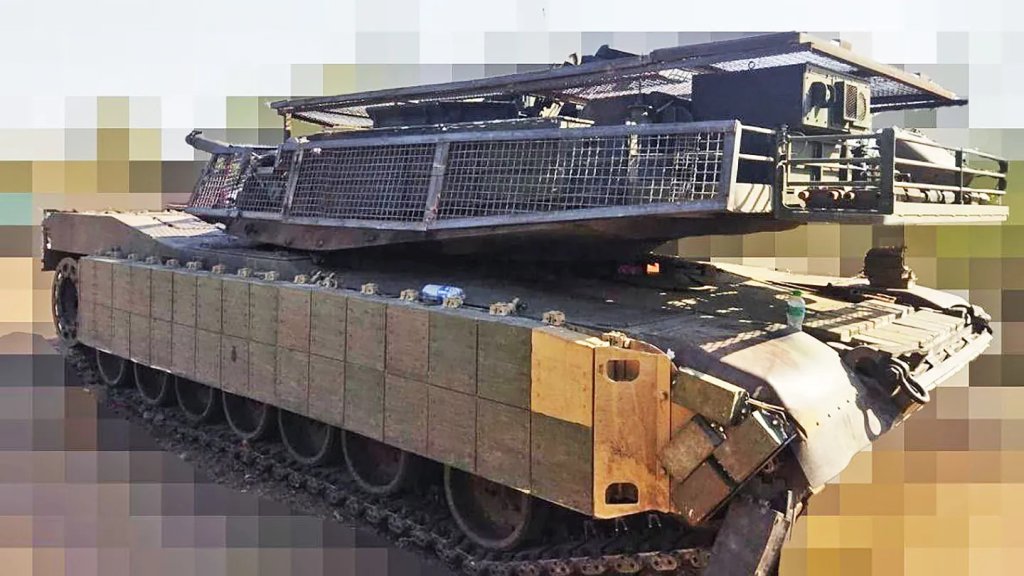
A new section on counter-drone tactics recently added to an Army tank warfare manual drew its own criticism for being behind the times, especially based on observations from Ukraine. Recommendations for tank commanders to stand in open hatches and use hand signals to signal other friendly forces of incoming enemy drones, to rapidly disperse off established paths (and potentially into nearby minefields), and to use M1028 canister rounds (essentially very large shotgun shells) from the M1’s 120mm main gun as the prime anti-drone weapon struck many as not just unlikely to be effective, but also adds risk.
The Pentagon did just recently announce sweeping policy changes intended to finally move the Army and the rest of the Department of Defense beyond seemingly endless testing of weaponized drones and actually field those capabilities, especially among smaller ground units. You can read more about these efforts aimed at “Unleashing U.S. Military Drone Dominance” here.
For now, the Army’s “Have you ever seen a drone drop a GRENADE?” video shows the service is still moving at the same pace as it has been, despite weaponized drones having become a fixture in active conflict zones worldwide, as well as years of its own relevant work.
Contact the author: joe@twz.com
Loading comments…
Comments couldn’t be loaded. Please refresh the page.