
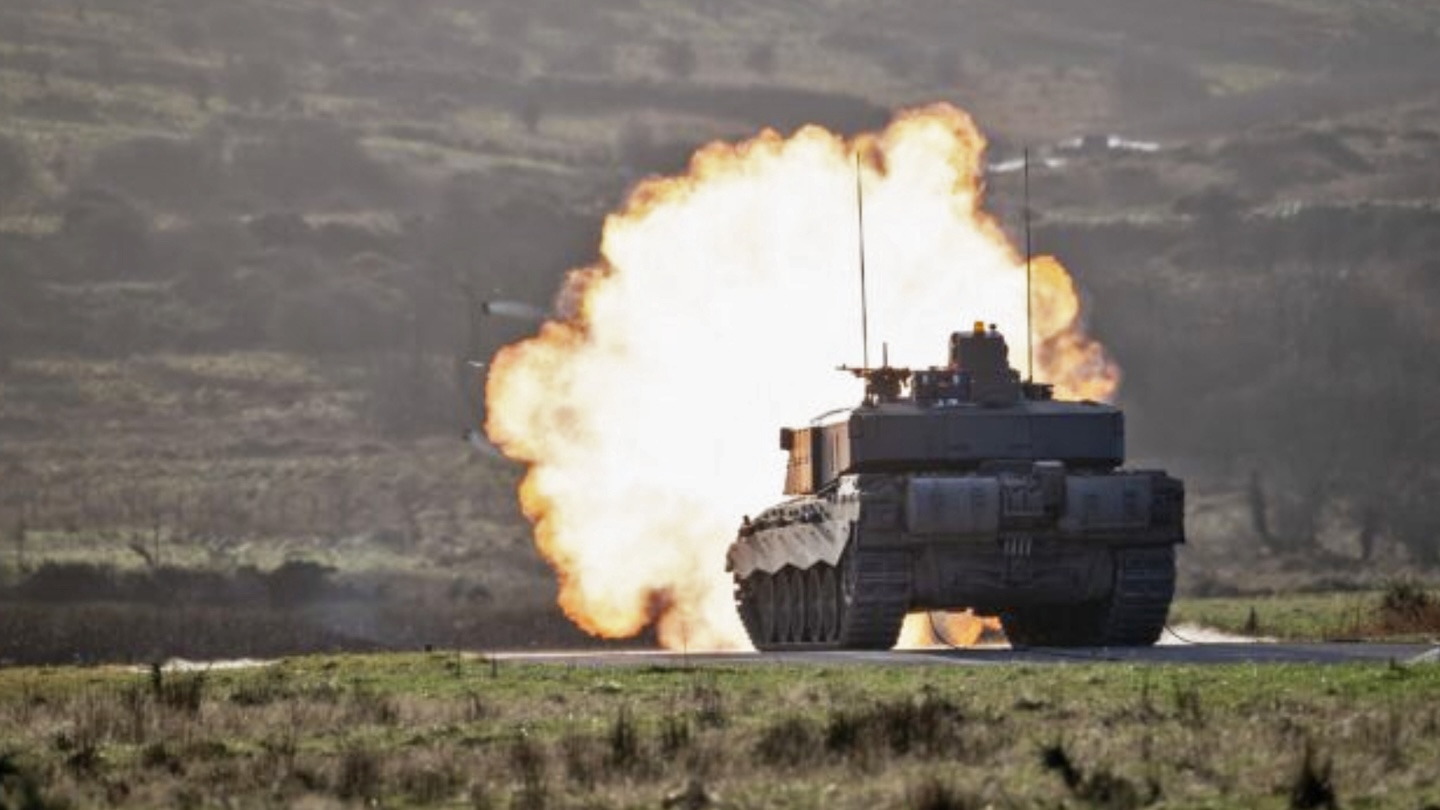
The British Army’s next main battle tank, the Challenger 3, has successfully fired its main gun for the first time. The new tank is planned to enter service in 2027 and is further evidence of the pivot back toward armored warfare — in Europe, especially — in response to the growing threat from Russia, after many years of stagnation.
Indeed, it has been so long since the British Army last had any kind of new main battle tank in development that the previous time that such firing trials took place was more than 30 years ago.
The milestone was announced by the Defense Equipment and Support (DE&S) branch, which handles procurement for the U.K. Ministry of Defense. The trials took place at an unnamed firing range in the United Kingdom, with the tank fully crewed.
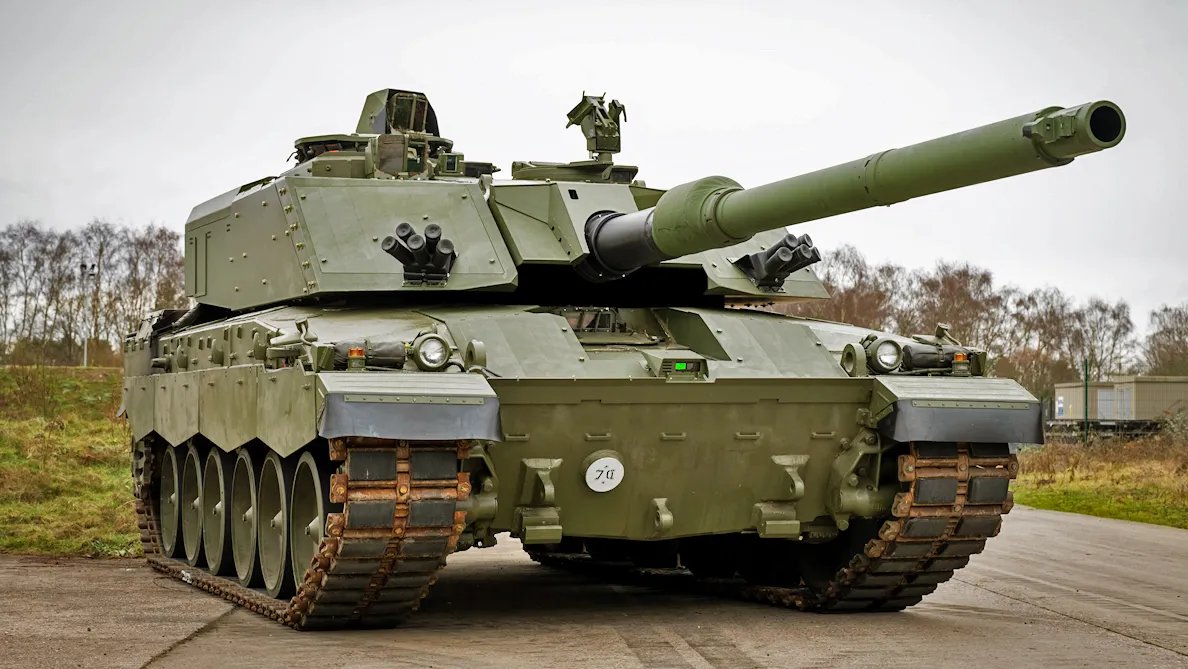
Responsible for the campaign was Rheinmetall BAE Systems Land (RBSL), a joint venture between Germany’s Rheinmetall and Britain’s BAE Systems, which is developing the new tank. The gun itself is a product of Rheinmetall Waffe Munitions. This is a 120mm smoothbore L55A1 cannon that can fire both kinetic-energy anti-armor rounds and programmable multipurpose ammunition.
Ahead of the crewed trials with the Challenger 3 and RBSL personnel, the company, together with the British Army and DE&S, had undertaken remote firing of the L55A1 gun.
“Firing the vehicle first remotely and then with a crew in the turret reflects the enormous amount of work that has gone into ensuring the design is safe, robust, and ready,” explained Rebecca Richards, the managing director of RBSL.
“Seeing Challenger 3 fire successfully with a crew in the turret demonstrates just how far the program has progressed and marks a proud moment for U.K. armored vehicle development,” Richards added.

The new gun replaces the L30A1 rifled gun, of the same caliber, found in the current Challenger 2. This new weapon provides a notably greater muzzle velocity since the projectile leaves the barrel faster, it ensures an improved degree of penetration and, in some cases, extends the range.
As we have described in the past:
The gun fires single-piece ammunition, rather than the two-piece rounds that are used in the Challenger 2. A wide range of NATO-standard smoothbore ammunition is therefore available, including the DM63 and DM73, Rheinmetall’s armor-piercing fin-stabilized discarding sabot (APFSDS) rounds. These types of ammunition feature a long dart penetrator, which uses kinetic energy to penetrate enemy armor.
Potentially, the Challenger 3 could also fire the U.S.-made M829A4 round, another APFSDS type, but one that features a depleted uranium (DU) penetrator, denser than many penetrators made of more conventional metals, for improved armor-piercing performance. Currently, the British Army uses a DU round in the Challenger 2, the L27A1 CHARM 3.
While NATO-standard ammunition will bring logistics and cost advantages, the space requirements of the single-piece ammunition mean that the total number of rounds carried is 31, compared to 49 in the Challenger 2. The ammunition is stored in an isolated bustle compartment, at the rear of the turret, to improve survivability if the tank takes a hit.
As well as the new main gun, the Challenger 3 introduces a new optical/targeting package of the same kind that’s used in the British Army’s troubled Ajax tracked infantry fighting vehicles. This comprises the Thales Orion and Day/Night Gunner and Panoramic Sight (DNGS T3). These are part of what the manufacturer describes as a digitized turret, with an open-architecture concept, so that hardware and software upgrades will be easier to install than in the past.
In terms of protection, the Challenger 3 is equipped with a new modular armor (nMA). Using a modular system means that specific parts of the armor can be quickly removed and replaced. It also means the United Kingdom doesn’t need to buy full sets of armor for all its Challenger 3s, equipping individual tanks with nMA when they need to deploy. The nMA package includes appliqué armor for the sides of the hull and the belly.
Further protection can be provided with an active protection system (APS), although, like the nMA package, this won’t always be installed on the tanks. The United Kingdom chose the Israeli-made Trophy APS for the Challenger 3, a system that employs a radar to detect incoming projectiles before firing intercepting projectiles at them; you can read more about the system here. It is hard to envisage the Challenger 3 ever being deployed for combat without the Trophy, which would provide defense against anti-tank guided missiles and rocket-propelled grenades. It could also potentially be used in the future to counter lower-end drones.
Finally, the Challenger 3’s mobility is addressed through the Heavy Armor Automotive Improvement Project (HAAIP), which includes retrofitting an improved engine (although with no increase in power output), a new suspension, a hydraulic track tensioner, an electric cold start system, and an improved cooling system.
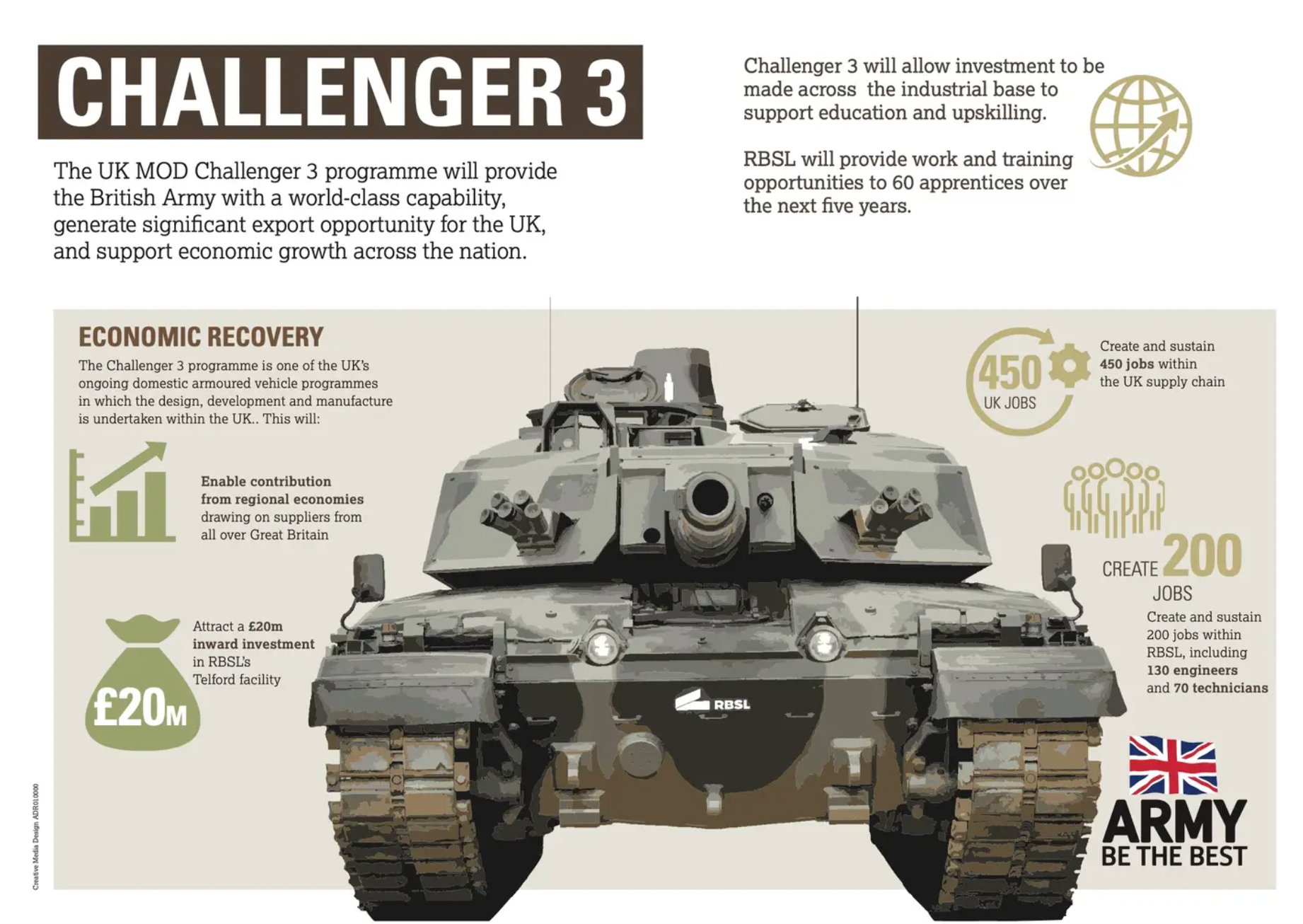
The Challenger 3 is being manufactured by RBSL in Telford, England, as part of a contract worth over £800 million (around $1 billion). In early 2024, it was announced that the first prototype of the tank had been completed at Telford, as TWZ reported at the time.
More trials will now follow, including further crewed firing activity and reliability testing, planned for later this year.
DE&S describes the Challenger 3 as the “centerpiece of the British Army’s armored modernization program” and says that it will “deliver a step change in lethality, survivability, and digital integration.”
Other elements of this modernization program have not been proceeding entirely smoothly, however.
Earlier this year, we reported on how the British Army had suspended the use of its new Ajax fighting vehicles after dozens of soldiers became ill after riding in them. The U.K. Ministry of Defense confirmed that “around 30 personnel presented noise and vibration symptoms” following an exercise involving the tracked vehicles.
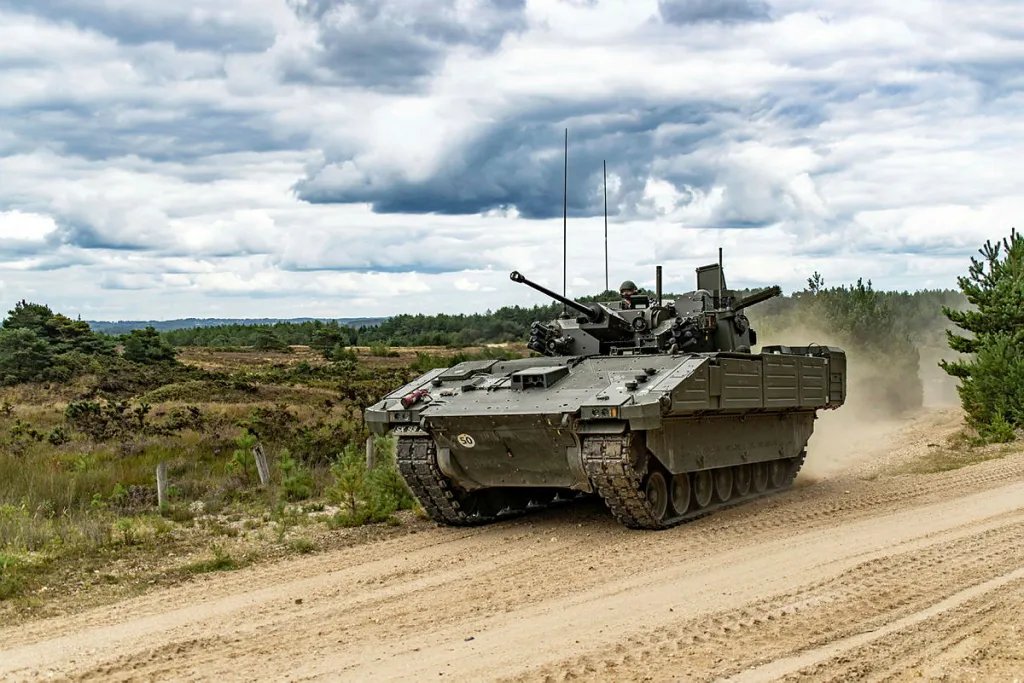
Aside from technical issues with the Ajax, there are broader concerns about how the vehicle will be operated in relation to the Challenger 3.
In 2021, a damning report into Ajax from the Royal United Services Institute (RUSI), a British defense and security think tank, stated the following:
“If grouped within the Heavy Brigade Combat Teams alongside Challenger 3, Ajax cannot deliver infantry to the objective and cannot perform the divisional reconnaissance function. Alternatively, if made part of the Deep Recce Strike Brigade Combat Team, Ajax will struggle to be sustained operating independently. Ajax’s inability to peer-to-peer recover also makes it a poor independent unit, while its weight, complexity, and size make it hard to deploy with lighter forces, despite the British Army seeking to operate further afield with greater frequency.”
The Brigade Combat Team is the core around which the British Army will be organized, based upon wide-ranging structural changes that call for a “lethal, agile, and lean” force of around 72,500 personnel by 2025, down from 76,000 in 2021.
Deployable Brigade Combat Teams will also include Boxer wheeled armored personnel carriers and AH-64E Apache attack helicopters, among others.
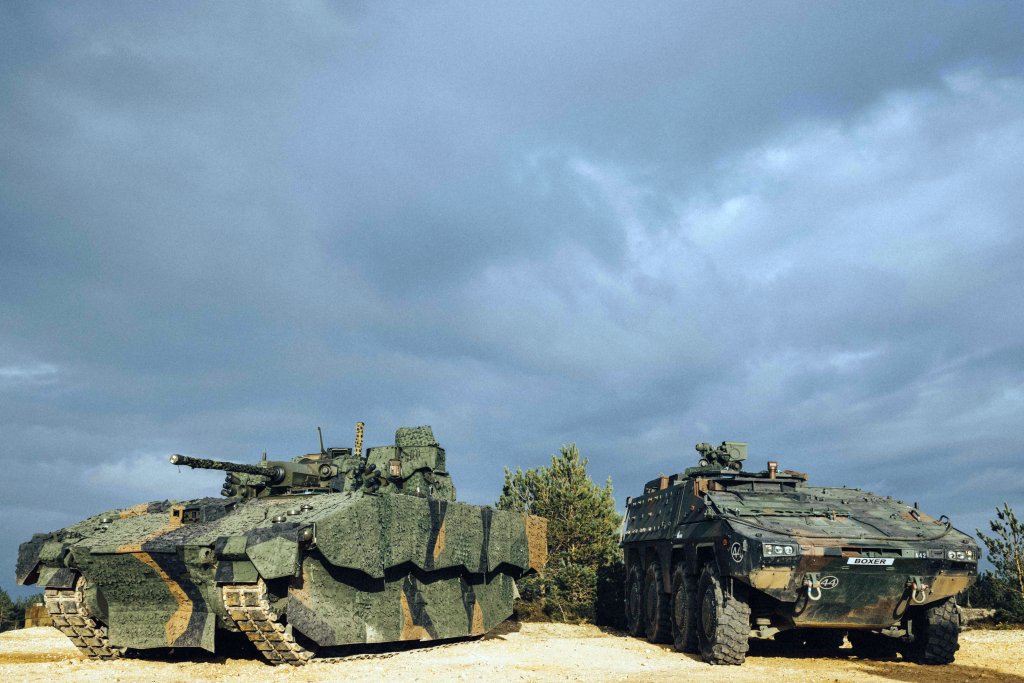
Regardless of how the British Army fields the Ajax — provided that controversial program survives — it is also worth noting that only a relatively small number of Challenger 3s are currently envisaged. This raises questions about the British Army’s ambitions to use the tanks as a “digitized backbone” that will connect combat across the Brigade Combat Team, allowing data to be shared with different platforms in real time.
The United Kingdom currently plans to convert just 148 of its older Challenger 2s into the new version, including eight prototypes. In the past, RBSL has said that it’s technically possible to build new Challenger 3s if required.
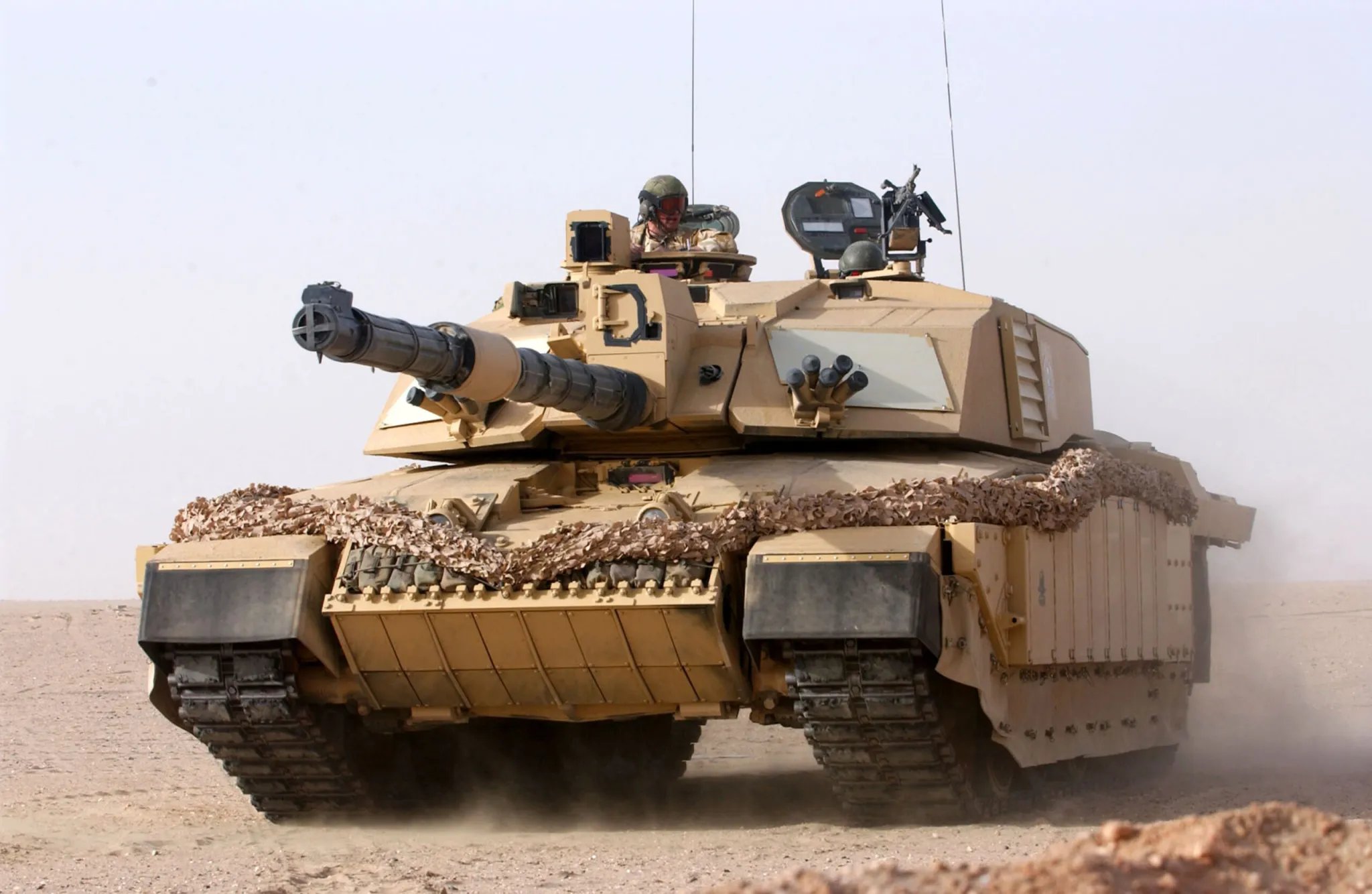
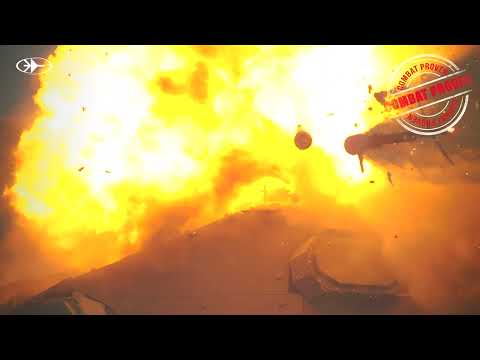
The Challenger 2 entered British Army service in 1994 and has since been involved in combat operations in the former Yugoslavia and Iraq, without loss to enemy action, according to the British Army. However, at least two examples that have been provided to Ukraine by the United Kingdom have been knocked out on the battlefield.
A video showing the first evidence of a Ukrainian Challenger 2 destroyed in Ukraine:
While significant armor losses in the war in Ukraine and the emergence of new threats, such as low-cost first-person-view (FPV) drones, have raised questions about the future of the tank on the modern battlefield, it’s notable that most NATO nations have been driven to reinforce their fleets. Some countries have even returned to tanks after giving them up.
However, there have been specific concerns about the serviceability and operational readiness of the Challenger 2 fleet, which could well port over into the Challenger 3.
The Challenger 2 has long had issues regarding excessive weight. The Challenger 2 weighs 82.7 tons with add-on armor modules, compared to 73.6 tons for the U.S. Army’s M1A2 SEPv3. The Challenger 3 will be heavier than its predecessor, but its engine won’t be more powerful.
Prior to Russia’s full-scale invasion of Ukraine, there was speculation that the British Army might lose its tanks altogether. With that in mind, even a relatively small number of Challenger 3s ensures that the United Kingdom remains in the tank game out to at least 2040, according to current plans.
Contact the author: thomas@thewarzone.com
Loading comments…
Comments couldn’t be loaded. Please refresh the page.