
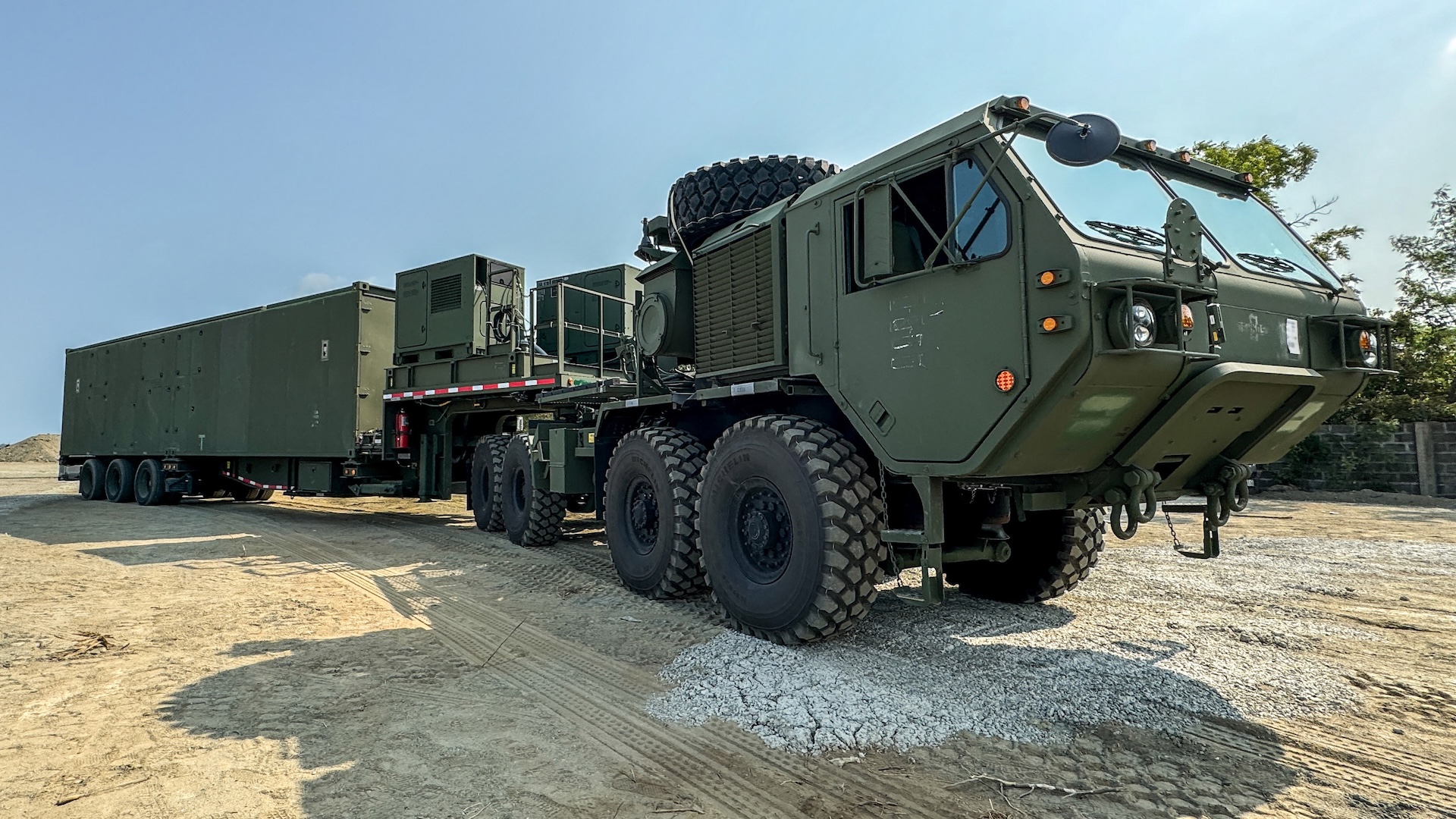
The German Ministry of Defense today appeared to push back on reports that the United States will no longer be sending Europe a long-range fires battalion equipped with various conventionally armed standoff missiles. Meanwhile, relations between Berlin and Washington remain frosty, after the United States announced it would reduce its military presence in Germany by 5,000 soldiers.
The U.S. move was a response to disagreements with Germany over the Iran war as well as ongoing tariff tensions. In particular, German Chancellor Friedrich Merz had said the United States was being “humiliated” by the Iranian leadership and had criticized U.S. President Donald Trump’s handling of the conflict.

Over the weekend, multiple outlets reported that the Pentagon had decided to abandon plans to deploy a U.S. Army long-range fires battalion, the 2nd Multi-Domain Task Force (2MDTF), to Germany. On Saturday, Republican leaders of both Armed Services Committees in Congress said they were “very concerned” about the troop withdrawal, as well as referencing the missile plans.
Senator Roger Wicker of Mississippi and Representative Mike Rogers of Alabama said the decision risked “undermining deterrence and sending the wrong signal to Vladimir Putin.” The Republican lawmakers added that they were “very concerned” about the troop withdrawal.
Today, however, the defense ministry in Berlin said that there had been no “definitive cancellation” of the missile deployment by the United States. According to Reuters, a ministry spokesperson added that the weapons were “meant to be stationed [on German soil] and may well still be.”
At the same time, the defense ministry spokesperson said that plans were underway by European nations to procure weapons systems that would fill the gap, should the U.S. missiles not arrive. While European NATO allies have long been looking to field more standoff conventional strike capabilities, this had previously been seen as a longer-term plan, with the 2MDTF fulfilling this role in the interim.
In July 2024, we reported on plans, laid under the previous Biden administration, for “episodic deployments” to Germany, followed by “longer-term stationing” of various types of long-range missiles in the same country. At the time, this was set to begin in 2026.
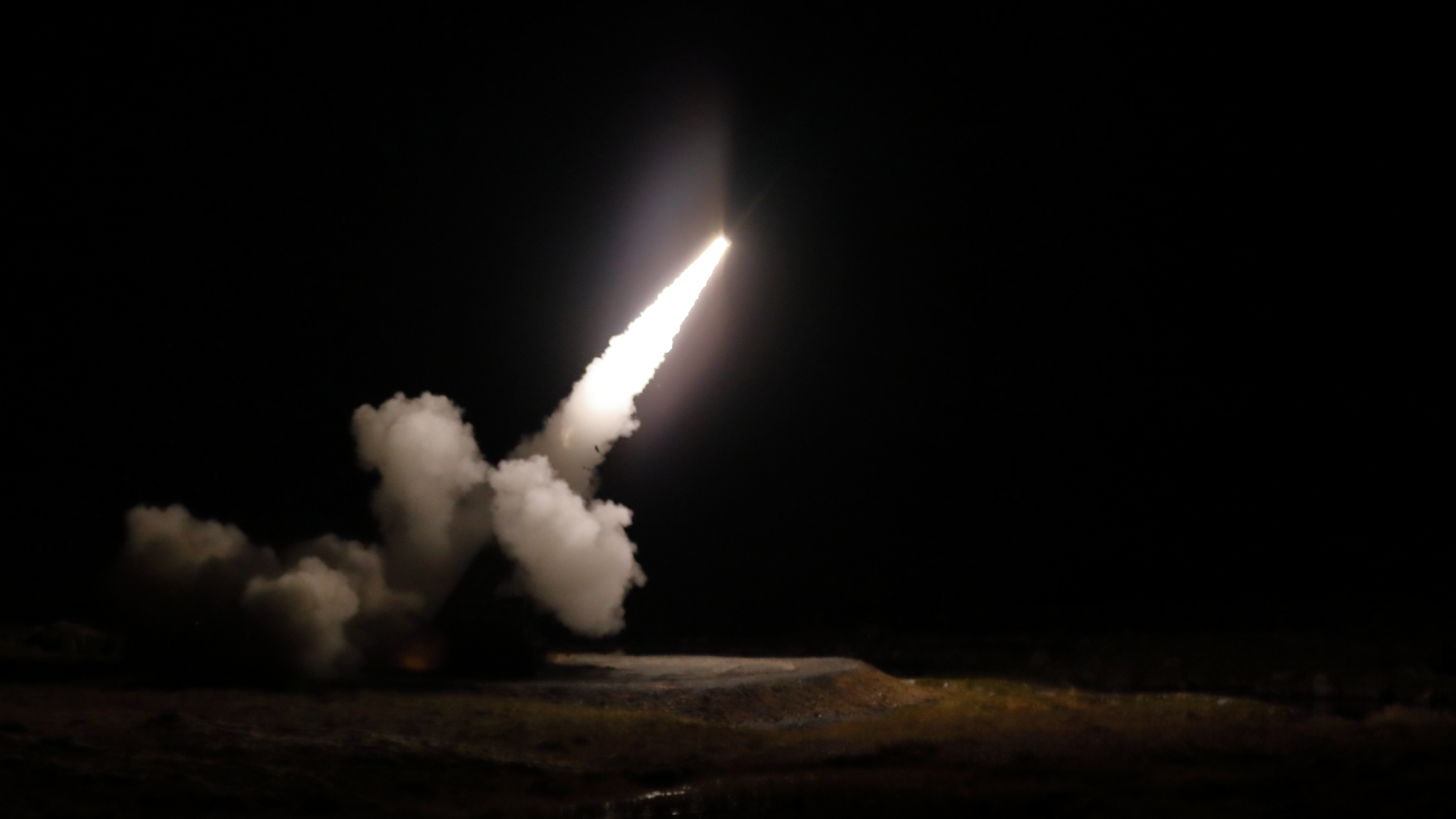
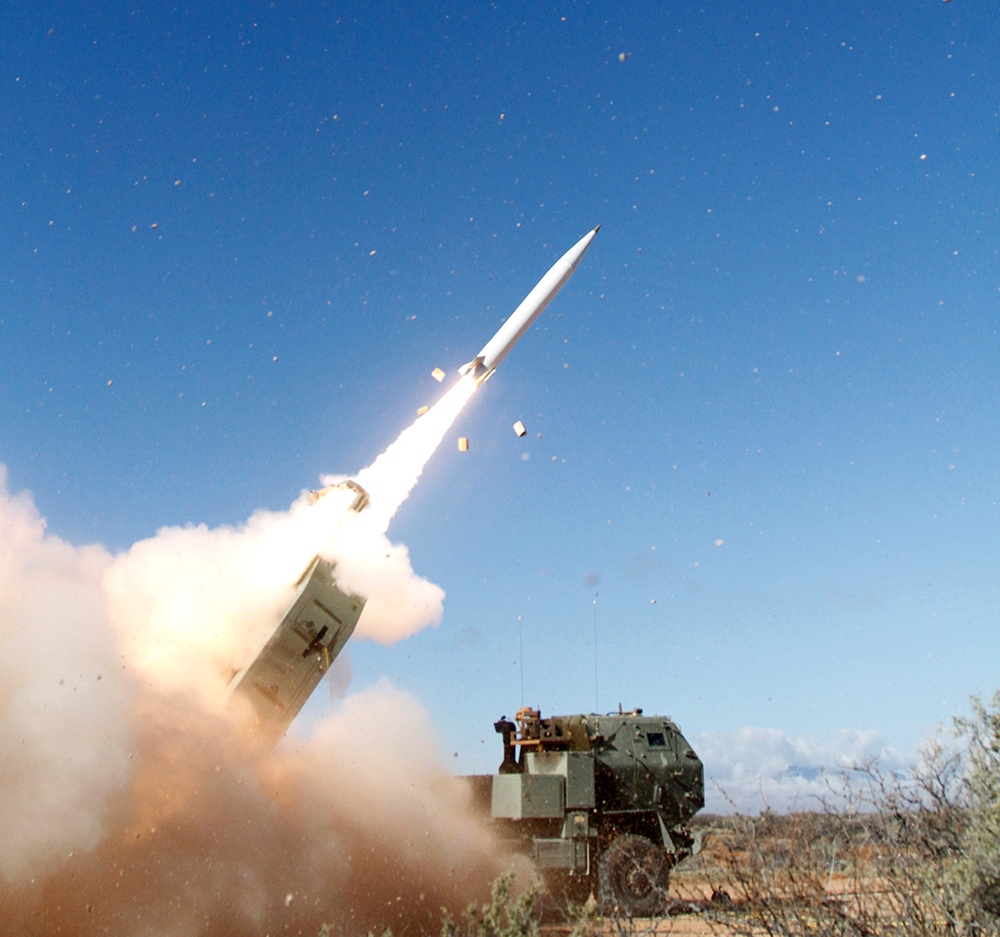
The United States said it would deploy to Germany a range of advanced ground-launched weapons, including the SM-6 multi-purpose missile and Tomahawk cruise missile, as well as “developmental hypersonic weapons” — a reference to the Dark Eagle and potentially others, like the Operational Fires (OpFires) ground-launched hypersonic missile system and the Precision Strike Missile (PrSM) short-range ballistic missile. Of these, the PrSM has since entered operational service and has been used in combat against Iran.
Back in 2024, the United States and Germany said the deployment of the long-range weapons would “demonstrate the United States’ commitment to NATO and its contributions to European integrated deterrence.” The weapons deployed would have “significantly longer range than current land-based fires in Europe,” the statement added.
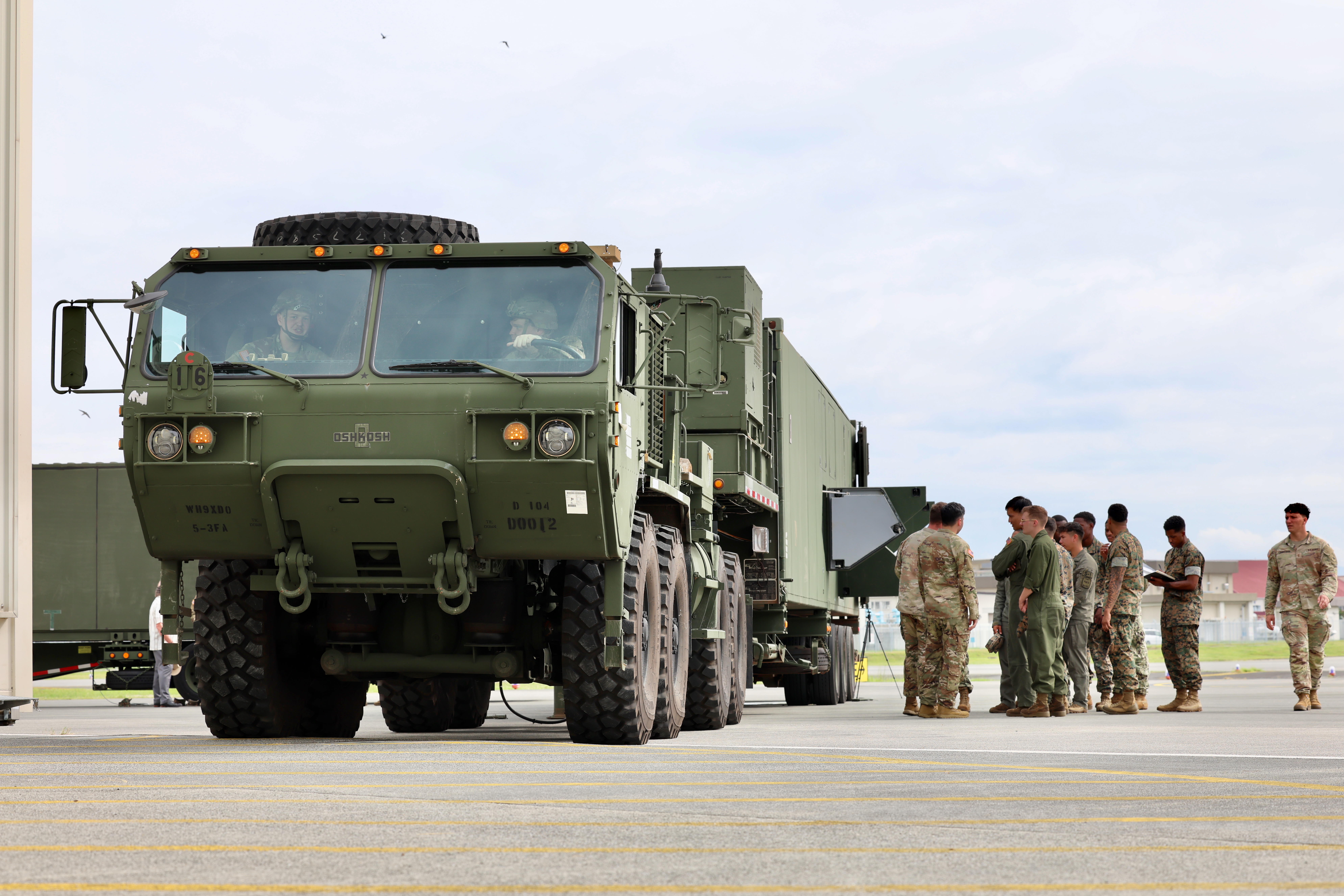
The Army uses the Typhon system to fire SM-6 and Tomahawk missiles. Of these, the SM-6 was originally designed as a sea-launched surface-to-air weapon and now has also found an air-launched application. When ground-launched, the SM-6 can be used as a quasi-ballistic missile for land attack. Estimates suggest the SM-6 has a range of up to 290 miles in this mode, although an extended-range version is also in the works, expected to offer significantly greater reach (and greater speed). The Army has previously described its ground-launched SM-6 as a “strategic” weapon system to prosecute higher-value targets like air defense assets and command and control nodes, but it’s essentially a short-range ballistic missile (SRBM). It can also strike targets at sea.
The ground-launched version of the iconic Tomahawk cruise missile is able to hold targets on land and at sea at risk at a range of roughly 1,000 miles from where it is deployed.
Meanwhile, the PrSM, in its baseline Increment 1 version, has demonstrated its ability to hit targets at least around 310 miles away. The Army has a stated goal to eventually extend that out to around 400 miles, if that has not already been achieved, and is also working toward an even longer-range version able to fly out to at least 620 miles.
As we have reported in the past, the Dark Eagle, also known as the Long-Range Hypersonic Weapon, or LRHW, is planned to be able to strike targets at least 1,725 miles away. The Dark Eagle comprises a large rocket booster with an unpowered hypersonic boost-glide vehicle on top. Once the boost-glide vehicle has been propelled to the desired speed and altitude, it separates and hurtles down toward its target along an atmospheric flight trajectory, at a speed of up to Mach 17.
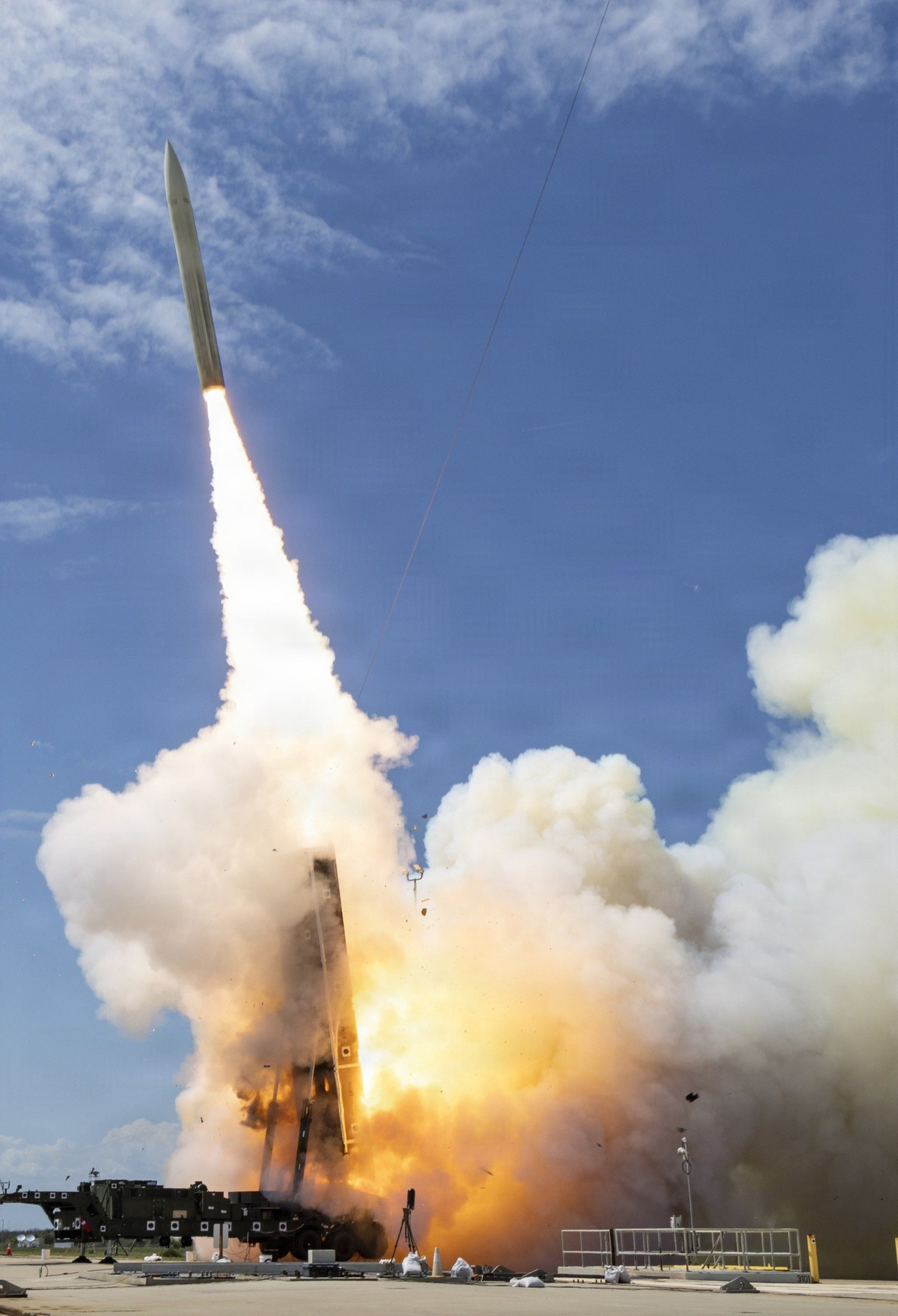
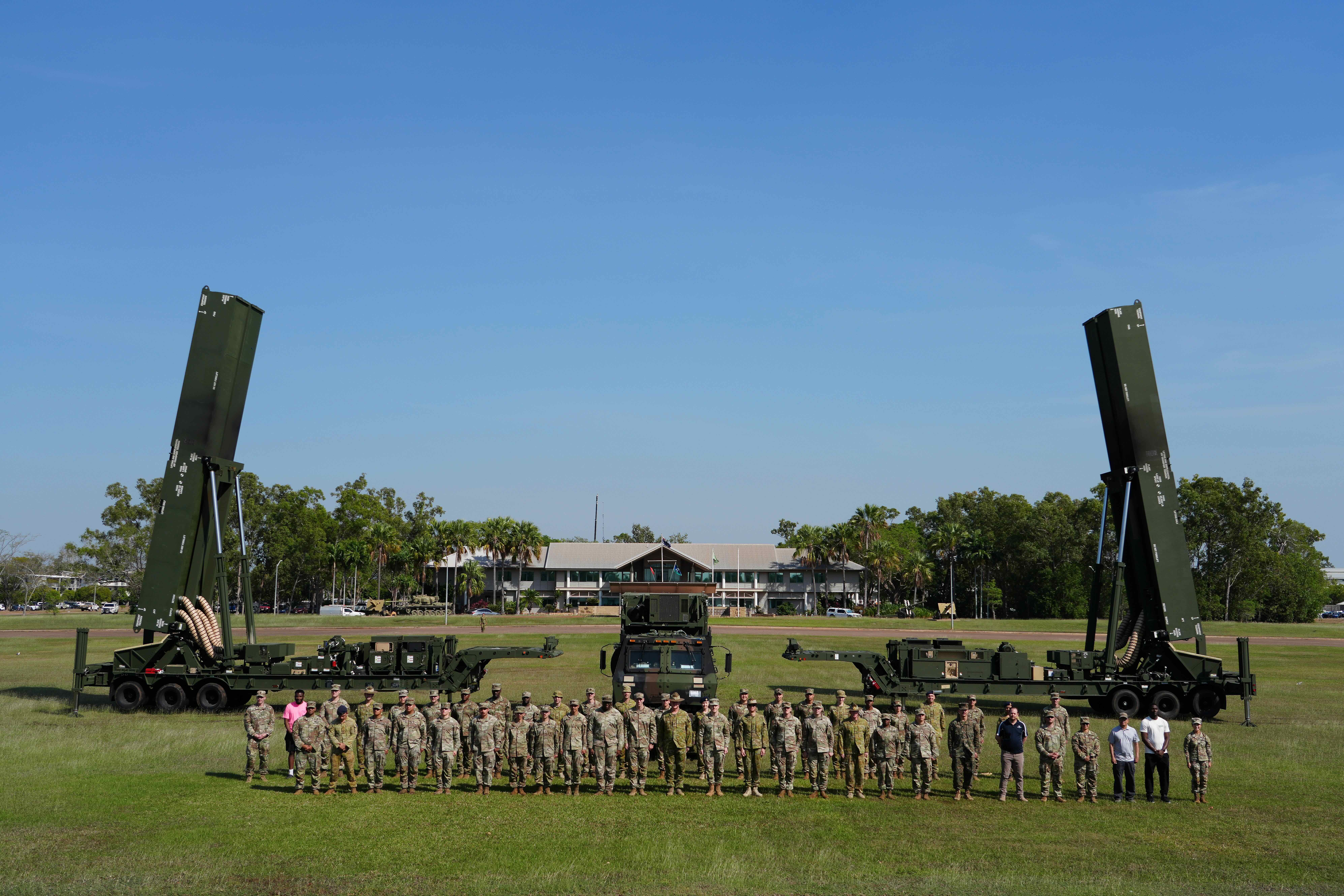
All of these weapons mark a significant increase in range over the Army Tactical Missile System (ATACMS) short-range ballistic missile. This is currently the Army’s longest-range ground-based missile system deployed in Europe, and it can only reach targets out to approximately 186 miles. Between them, they combine to offer a powerful conventional deterrent, and some of them have the ability to reliably pierce the most capable air defenses deep inside Russia.
Under the Intermediate-Range Nuclear Forces Treaty, or INF, signed in 1987, at the height of the Cold War, the Soviet Union (later Russia) and the United States were prohibited from deploying nuclear or conventionally armed ground-based cruise and ballistic missiles with ranges between 310 and 3,420 miles.
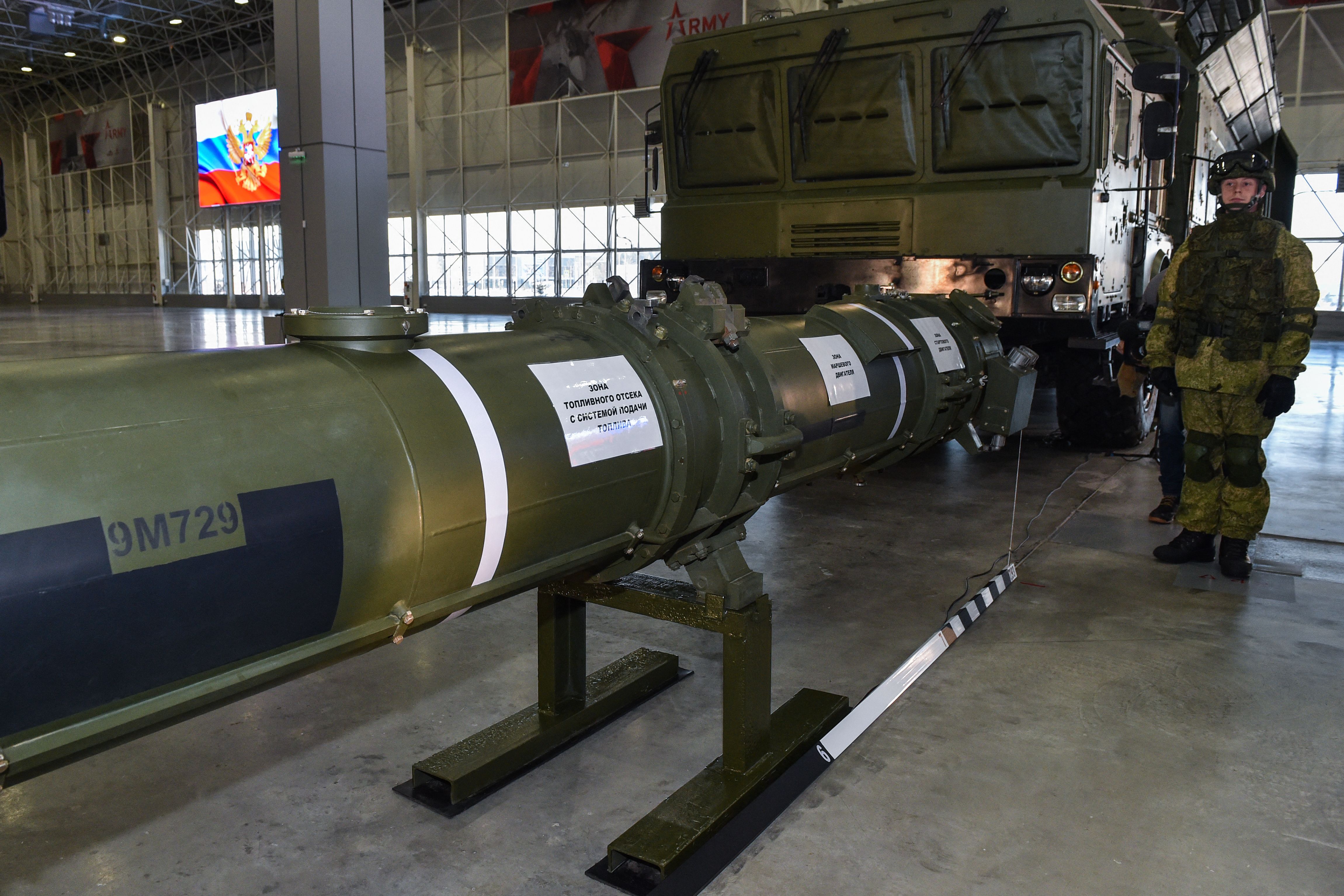
During his first term in office, President Trump formally withdrew from the INF Treaty in 2019, ostensibly over Russia’s fielding of a prohibited ground-based cruise missile system, the 9M729 (SSC-8 Screwdriver), something the Kremlin continues to deny it has done.
This is all academic now, since Russia also withdrew from the treaty last summer.
Even before then, Russia was discussing the production and deployment of equivalent INF-busting missiles as a response to U.S. deployments of similar.
Meanwhile, Putin made nuclear threats and presided over related drills that were made in an effort to dissuade Western involvement in the war in Ukraine.
Illustrating the emerging tit-for-tat missile race in Europe, Russia employed its Oreshnik intermediate-range ballistic missile in an unprecedented attack on Ukraine in November 2024. The Pentagon states that the Oreshnik is based on the RS-26, a mysterious strategic weapon system, the development of which was supposedly halted in 2018.
More significantly, the Oreshnik adds a new dynamic to the European theater. While the weapon used against Ukraine is conventionally armed, a nuclear-capable Oreshnik would have the range to strike most Western European capitals as well as key military targets.
Russia has apparently also used Ukraine as a crucible in which to test its 9M729, the long-range cruise missile that prompted Trump to walk away from the INF Treaty back in 2019.
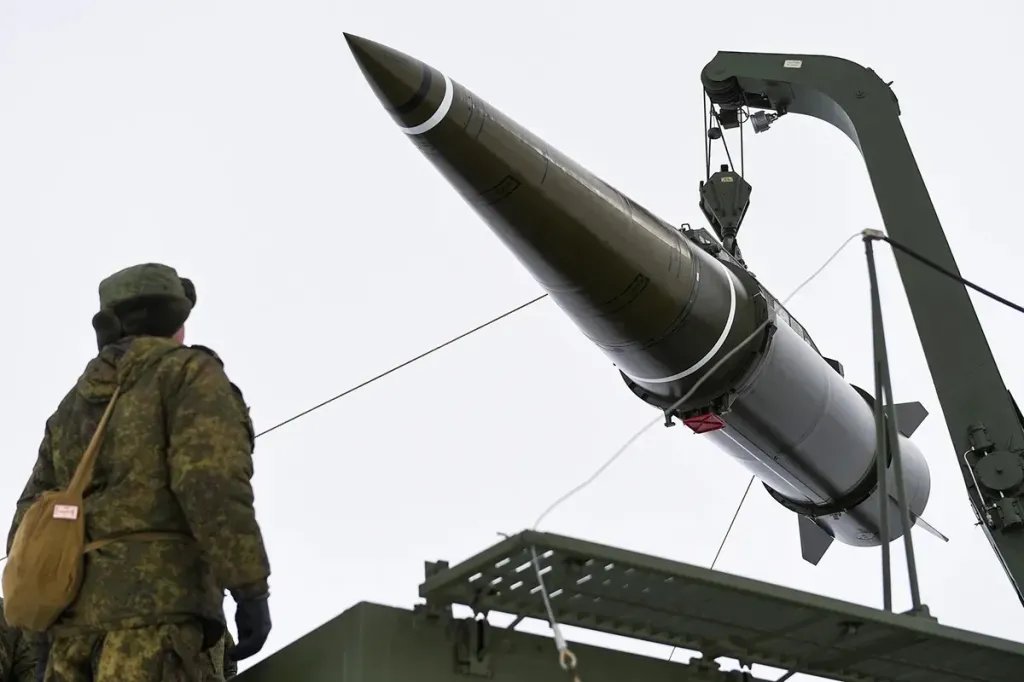
There have also been rumors of Russian plans to field a “land-based intermediate-range hypersonic missile system,” which some analysts have identified as a ground-launched derivative of the Zircon naval hypersonic missile, which has apparently also been used in Ukraine, or possibly an upgraded Iskander-M short-range ballistic missile.
Other nuclear-capable systems have been moved closer to Western Europe, too, including ground-launched Iskander missiles and MiG-31 Foxhound jets equipped with Kinzhal air-launched missiles in the Baltic enclave of Kaliningrad, and the deployment of tactical nuclear warheads — or at least their delivery systems — to Belarus.
While confusion over the status of the 2MDTF to Germany reigns, it seems clear that the rift between the two nations will see the withdrawal of around 5,000 U.S. troops from the country. The Pentagon has said this will be done over the next six to 12 months. The figure represents 14 percent of the total 36,000 U.S. military personnel stationed in Germany.
Pentagon spokesman Sean Parnell said that the “decision follows a thorough review of the Department’s force posture in Europe and is in recognition of theater requirements and conditions on the ground.”
At the same time, Trump has long talked of reducing the U.S. military presence in Germany and has more recently leveled criticism at NATO allies for their refusal to assist Washington in the war with Iran. This has included musings on walking away from the alliance altogether.

For the time being, it’s unclear if or when we will see the 2MDTF in Germany, or elsewhere in Europe, although the European Council on Foreign Relations (ECFR), a pan-European think tank, considers it likely that the battalion will “remain assigned to the European theater and its long-range fires battalion could eventually turn up in another European country.”
Whatever happens, the situation will surely see European NATO nations double down on their efforts to field their own long-range weapons and to do so quickly.
Bearing in mind the nature of the Russian threat, long-range one-way attack drones will not provide the full solution.
Interim programs, as the ECFR notes, could involve range-extension boosters for existing air- or sea-launched cruise missiles, such as Storm Shadow/SCALP-EG, Taurus, or the French Naval Cruise Missiles (MdCN). France recently announced it would restart the production of the last of these weapons.
Additional off-the-shelf long-range missiles could be sourced from South Korea or Turkey, or even from Ukraine, provided it has the capacity.
For the longer term, we may well see additional efforts to accelerate the European Long-Range Strike Approach (ELSA) effort. ELSA involves France, Germany, Italy, Poland, Sweden, and the United Kingdom, and calls for the development of a new capability for “long-range strikes.” It could involve a new cruise or ballistic missile, or both.
Previous announcements state that the French-led ELSA project is intended to provide a missile with a range of between 1,000 and 2,000 kilometers (621 and 1,243 miles) and that it should be in service by the 2030s. This timeline might now need to be reassessed.
Germany and the United Kingdom have also unveiled plans to jointly produce a “deep precision strike” weapon with a range of over 2,000 kilometers. At this point, however, no industrial framework has been agreed on.
Between them, these projects reflect growing ambitions among European NATO members to field long-range strike capabilities, faced by a growing Russian threat on the alliance’s eastern flank.
The latest spat between the United States and Germany hammers home the point that, without the deployment of U.S. missiles, NATO allies in Europe are outnumbered and outranged by Russia’s long-range strike capabilities. The problem is compounded by the slow pace of European defense programs, as well as the growing difficulties in securing U.S. arms exports, with the Pentagon needing missiles for its own conflicts and for future contingencies.
Contact the author: thomas@thewarzone.com
Loading comments…
Comments couldn’t be loaded. Please refresh the page.