
Russia has fielded a new version of the Shahed-136 kamikaze drone armed with a single R-60 air-to-air missile. In principle, the heat-seeking R-60 would give the one-way attacker a way to engage Ukrainian fixed-wing aircraft and helicopters, and creates a deterrent threat, but the effectiveness of this combination is unclear.
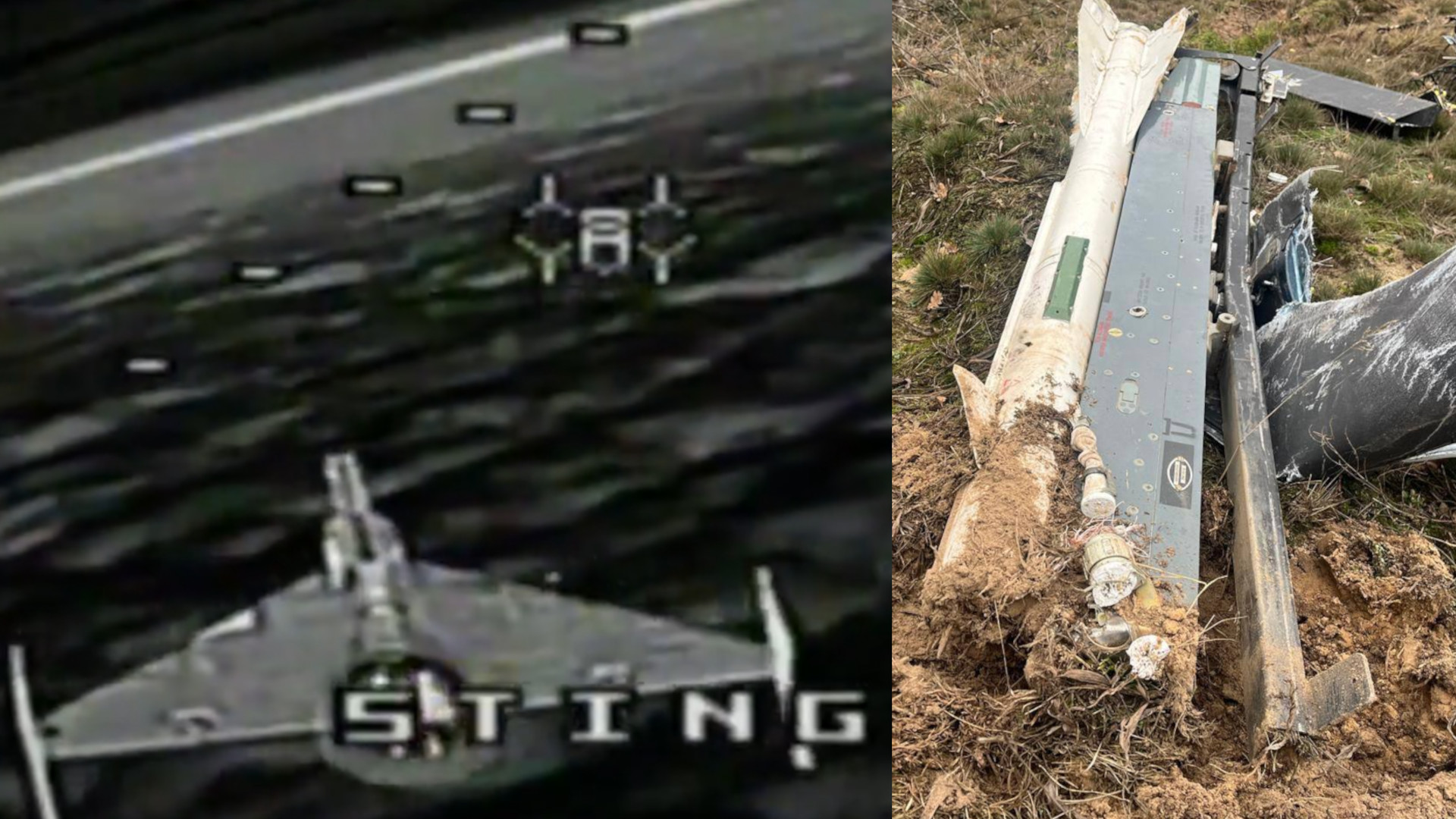
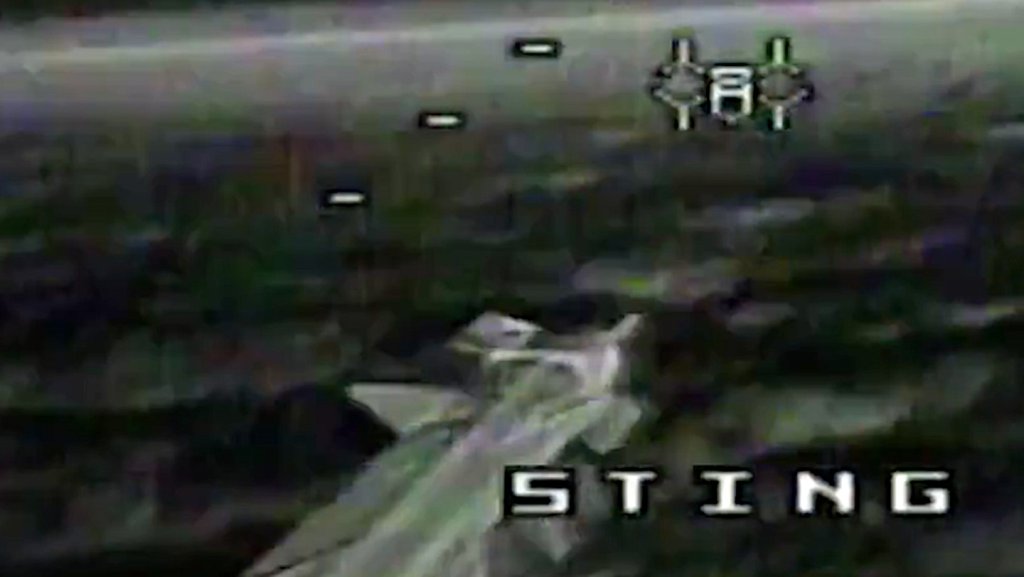
The Sternenko Community Foundation, a Ukrainian non-governmental organization with a stated mission to help supply the country’s armed forces with uncrewed aerial systems, shared a video online today showing an air-to-air intercept of an R-60-armed Shahed-136. The Russian one-way attack drone is said to have been taken down by a Sting anti-drone interceptor, which was developed in Ukraine by the Wild Hornets Charitable Fund, partly with funding from the Sternenko Community Foundation. The footage shows the R-60 loaded on a launch rail installed right on top of the drone’s nose.
Also known in the West as the AA-8 Aphid, the R-60 is a Soviet-era heat-seeking design, the baseline version of which began to enter operational service in the early 1970s. Variants remain in use in many countries globally, including both Russia and Ukraine. At nearly seven feet long and just under 100 pounds in weight, the R-60 is a notably compact missile for its type. It is shorter and lighter than the R-73 that followed it in the Soviet Union, and also remains in widespread service around the world, and Western analogs like the AIM-9 Sidewinder family. As another point of comparison, the Shahed-136 is around 11 feet long.
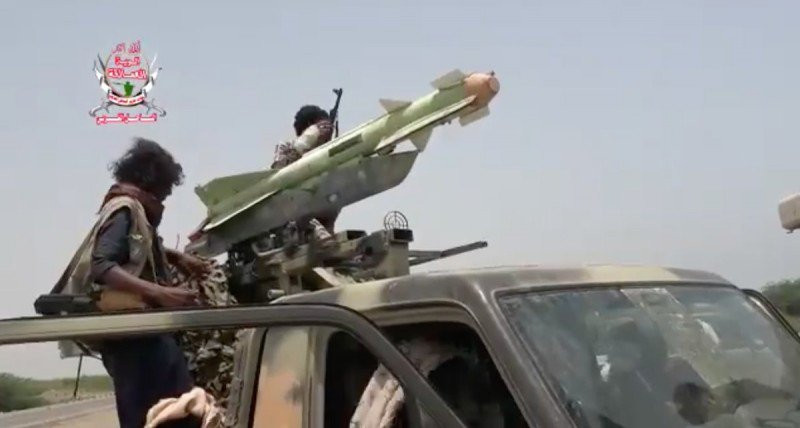
It’s also worth noting here that there have been several instances of R-60s being employed as surface-to-air weapons, including reportedly on Ukrainian uncrewed surface vessels (USV), as well as by Iranian-backed Houthi militants in Yemen. Ukraine has also integrated R-73s and AIM-9s onto its USVs, all to similarly pose a threat to Russian fixed-wing aircraft and helicopters sent to intercept them. In addition, Ukrainian forces make significant use of short-range air-to-air missiles adapted for use in the surface-to-air role on land.
The appearance of the video online came after Ukrainian electronic warfare expert Serhii “Flash” Beskrestnov shared pictures showing what he said was the wreckage of a Shahed-136 that had been carrying an R-60 on his channel on the Telegram social media network. The images show the missile still attached to its launch rail, which looks to be of a standard design intended for use on fixed-wing tactical jets.
“Today, for the first time, an R-60 air-to-air missile was detected on Shahed,” Beskrestnov wrote in a brief post accompanying the images, per a machine translation. “This combination is designed to destroy helicopters and tactical aircraft that hunt Shahed.”
The exact mode of operation of the air-to-air missile-armed Shahed-136 is currently unknown, but it is a near certainty that it leverages a man-in-the-loop (MITL) control capability that Russia has implemented on some of these drones. Versions of the Shahed-136 with cameras and cellular modems first began appearing in early 2024, which strongly pointed to MITL control for shorter-range operations, as TWZ explored in detail at the time. A line-of-sight datalink would be used to connect the drone to an operator, with cellular networks offering additional connectivity when available. Airborne signal relays could help extend the range at which MITL missions could be conducted.
Mounting the R-60 right at the nose of the Shahed-136 would help with target acquisition and engagement, with the operator having to point the drone directly at the target. The missile could then be fired after a signal has been sent that indicates a lock-on has been achieved.
At the same time, even newer versions of the R-60 still have limited all-aspect engagement capability. The Shahed-136 is also a slow and not especially maneuverable launch platform that was not designed with air-to-air combat in mind. How mounting the R-60 on the drone further impacts its maneuverability and overall stability is unknown.
It’s also unclear how the drones would find aerial threats in the first place. It’s possible their operators could be cued or otherwise directed by information from offboard assets, or simply operate in a purely reactive mode to Ukrainian intercept attempts while also searching for targets of opportunity.
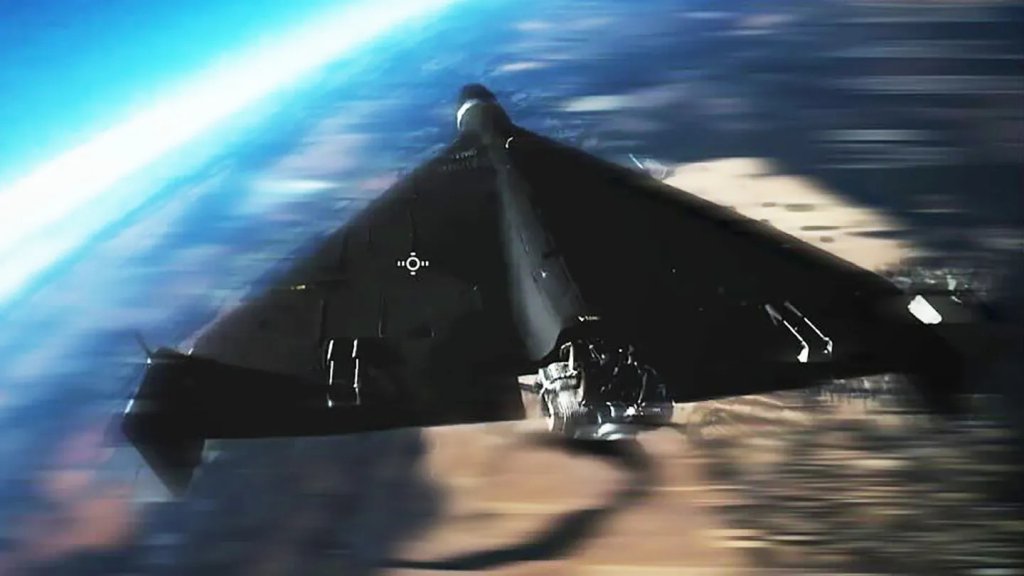
“Countering such [operator-controlled] Shaheds is even more challenging, as they are piloted in real time, allowing the operator to react to the current situation and even attempt to engage our aircraft or helicopters in the air,” Lt. Col. Yurii Myronenko, Ukrainian Deputy Minister of Defense for Innovation, had notably told Business Insider for a story published just last week. “It’s not just cutting reaction time for defenders; it is creating a whole new set of headaches.”
Business Insider‘s piece did not elaborate on how Russian Shaheds were attempting to hunt their hunters. In addition to the newly emerged R-60-armed version, operators could also try to just steer the one-way attackers into Ukrainian aircraft directly. Even relatively small kamikaze drones already present a notable risk to lower and slower-flying helicopters, which also have more limited maneuverability compared to faster-flying tactical jets. Ukraine regularly uses Mi-8/Mi-17 Hip series armed transport helicopters, as well as Mi-24 Hind series gunships, along with fixed-wing aircraft, on counter-drone patrols.
There is already a general precedent for arming drones with air-to-air missiles, and the deterrent effect that doing so can have. In at least one instance in 2002, a U.S. Air Force MQ-1 Predator drone fired a Stinger heat-seeking anti-air missile at an Iraqi MiG-25 Foxbat fighter that was trying to shoot it down, which can be seen in the video below. Iraqi forces had been increasingly harassing American Predators patrolling no-fly zones over parts of that country in the lead-up to the U.S.-led invasion in 2003, which had prompted the integration of Stingers onto them in the first place. Though the Foxbat survived the 2002 encounter, the Iraqis reportedly made no further attempts to down U.S. drones.

Russia modifying Shahed-136s to carry R-60s reflects a similar deterrent playbook, even though how credible a threat this combination presents is not currently known. Ukrainian fixed-wing aircraft and helicopters play key roles in helping to blunt attacks involving these drones, and would have no way of knowing in advance whether their targets are toting air-to-air missiles. Shahed-136s in the new anti-air configuration could be employed more independently, especially behind the front lines to help deter pop-up attacks by the Ukrainian Air Force, as well as layered in with other versions as part of larger strikes.
Whether the integration of the R-60 onto the Shahed-136 might be a stepping stone to Russia adding other anti-air capabilities to those drones also remains to be seen. As mentioned earlier, the R-60’s form factor presents benefits when it comes to integration onto uncrewed aircraft.
The R-60-armed Shahed-136 further underscores Russia’s broader efforts to evolve and expand on the original design, which is Iranian in origin. Multiple variants and derivatives of the Shahed-136, including a jet-powered type, are now produced in large numbers in Russian factories. They are known locally by the name Geran, the Russian word for geranium. A degree of autonomous dynamic targeting capability, fueled in part by the steady proliferation of advances in artificial intelligence and machine learning, may also be on the horizon for the drones, if it has not been implemented already, to at least a limited degree.
Only time will tell how long it might be before a Russian Shahed-136 might attempt to engage a Ukrainian fixed-wing aircraft or helicopter with an R-60, which would increase the credibility of the threat. Regardless, the prospect that any Russian Shahed-136 might now be armed with an air-to-air missile presents an additional risk factor that Ukrainian forces will have to take into account.
Contact the author: joe@twz.com
Loading comments…
Comments couldn’t be loaded. Please refresh the page.