
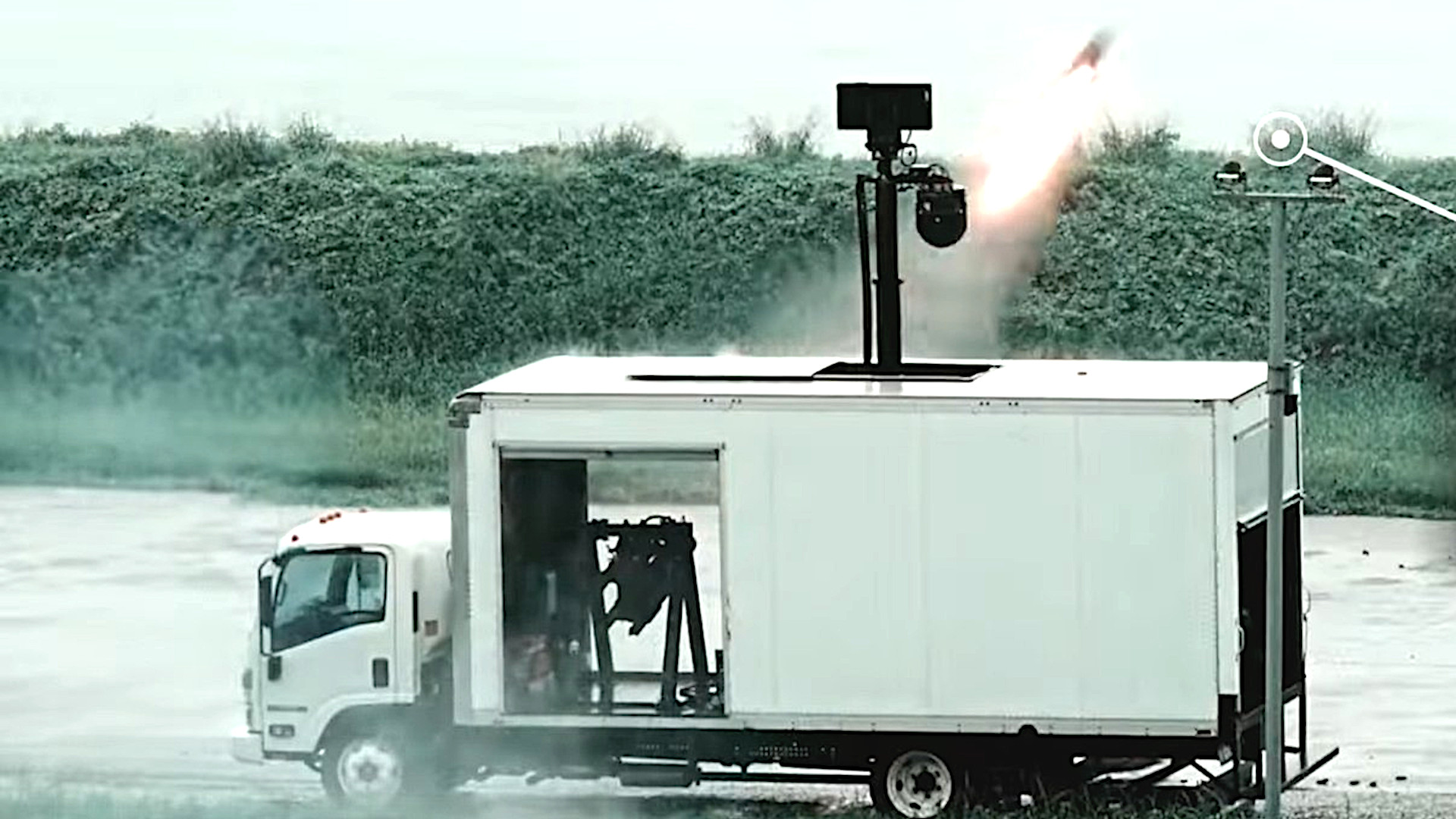
Taiwan’s armed forces have developed a launch system for AGM-114 Hellfire missiles concealed inside what otherwise looks to be a civilian truck. Taiwanese authorities say the truck-mounted launcher could provide a valuable new means of employing Hellfires, especially if its AH-1W and AH-64E attack helicopters are faced with heavy air defense threats. It also offers a mobile strike capability that is more difficult for an opponent to spot, and that could be particularly useful for bolstering shore defenses in the face of a Chinese amphibious operation.
The truck-mounted Hellfire launcher was showcased in a video, seen below, put out today by the Military News Agency, an official outlet of Taiwan’s Ministry of National Defense (MND). The 209th Arsenal, part of the MND’s Armaments Bureau, was responsible for crafting the launch system.

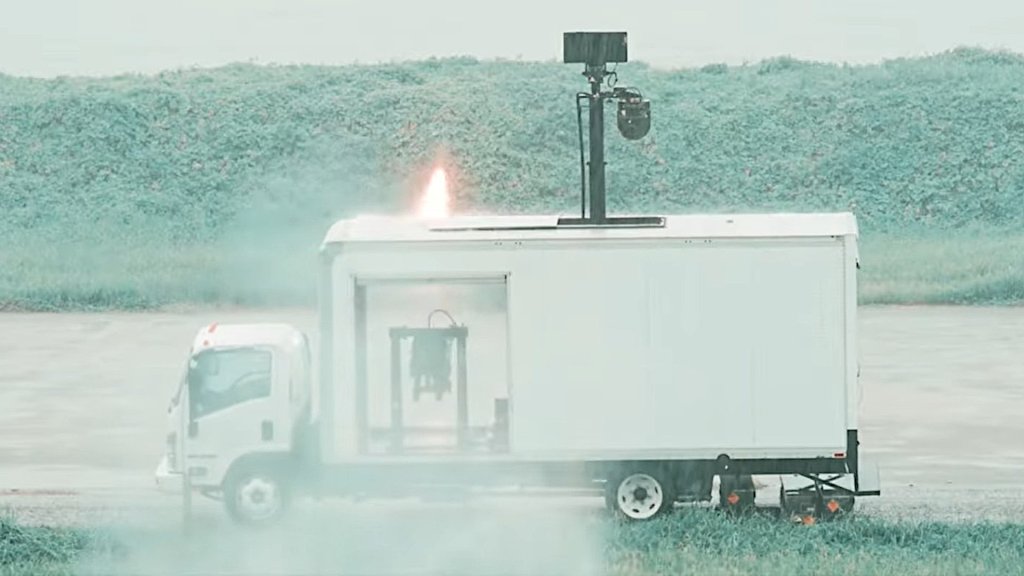
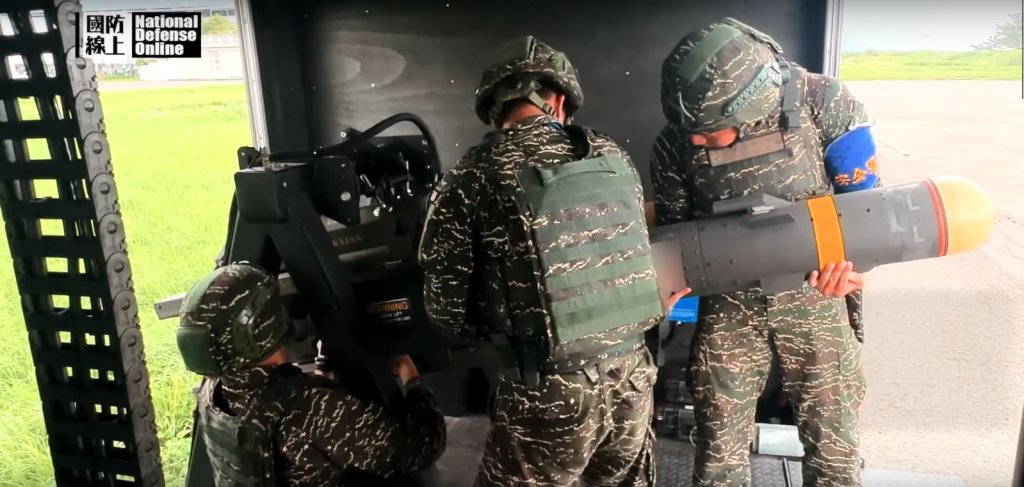
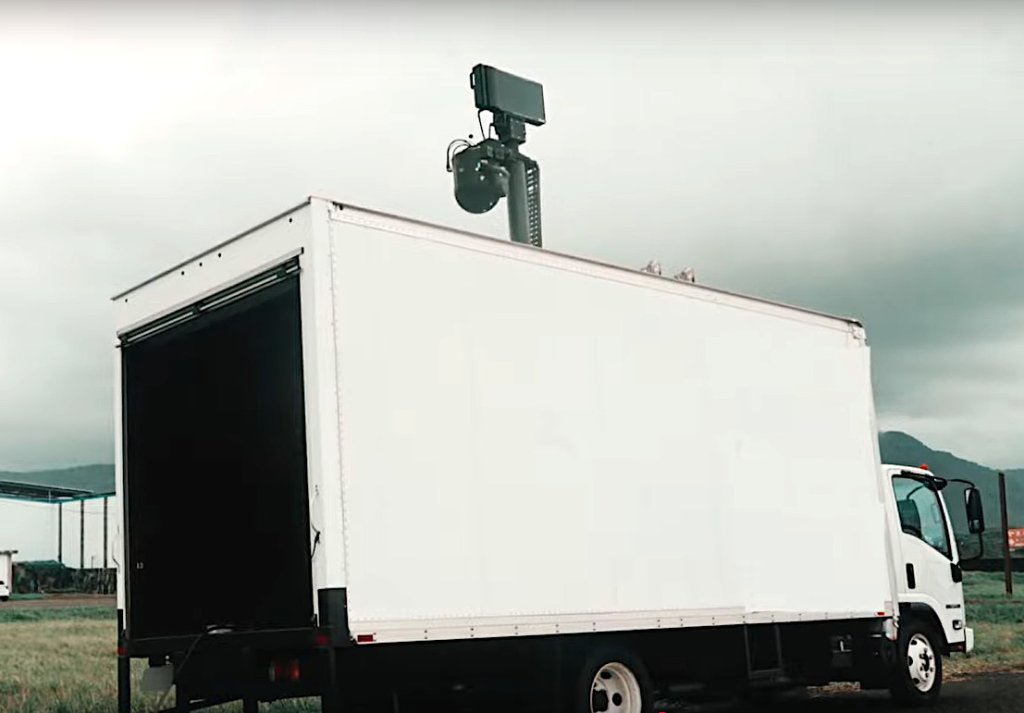
The system consists of a standard twin-rail Hellfire launch rack on a mount inside the main body of the truck. Roll-up doors on either side of the body open to allow the missiles to fire out the right side and the backblast to vent the other way.
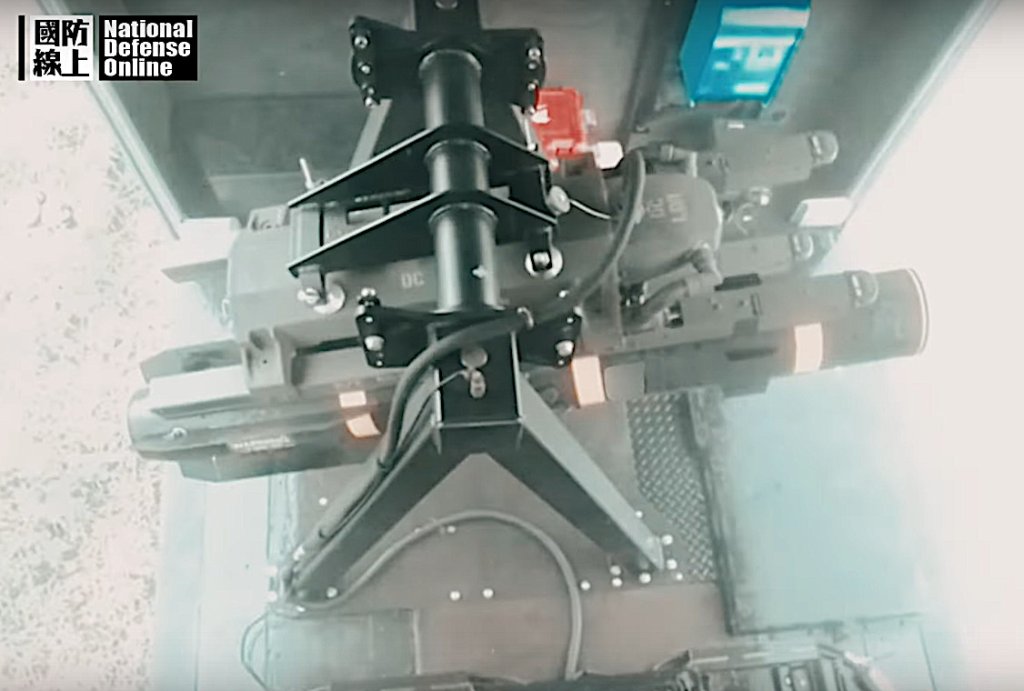
In addition, there is a sensor mast that extends through a sliding hatch on the roof of the truck’s body. Mounted on top is what looks to be a small radar, as well as a ball-type sensor turret, which are typically equipped with a mix of electro-optical and infrared cameras. The turret may also contain a laser designator. Typical laser-guided Hellfires are seen at one point in the Military News Agency video, but millimeter-wave radar-guided AGM-114L Longbow variants are seen actually being test-fired. The system could be able to employ Hellfires from Taiwan’s stocks with either type of guidance.
“The vehicle-mounted missile system is designed for asymmetric warfare,” a member of the 209th Arsenal, identified only as Colonel Su, says in the video, according to a machine translation. “In wartime, we may face enemy air threats in anti-armor missions. We’ve integrated the air-based Hellfire missile into a land-based Hellfire system.”
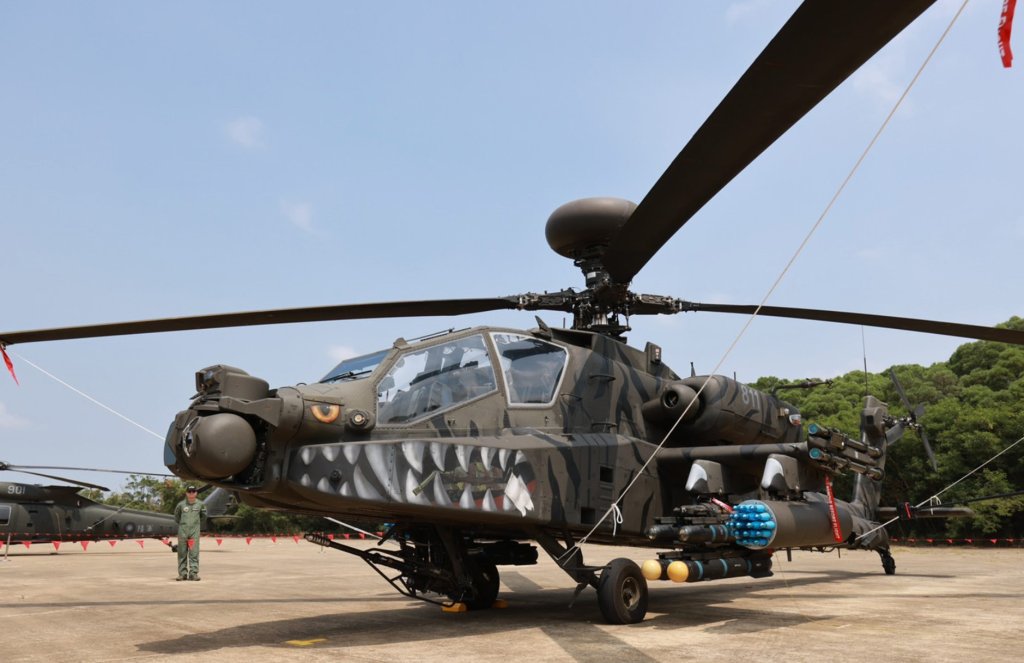
As noted, Taiwan’s primary means of employing the Hellfire currently are its AH-1W Super Cobra and AH-64E Apaches. As TWZ has increasingly called attention to, in general, attack helicopters continue to have relevance on modern battlefields, but their survivability and employability are increasingly in question. For Taiwan, its most pressing threat scenario is an invasion of the island from the mainland by China’s People’s Liberation Army (PLA), which would bring major anti-air capabilities to bear, as well as heavily target established operating bases for helicopters and fixed-wing aircraft.
On top of the additional flexibility they offer by being road mobile, Hellfire launchers concealed inside what outwardly look to be civilian trucks would present targeting challenges for enemy forces. Any sufficiently-sized truck could potentially be a missile launch platform. They could also use shoot-and-scoot tactics to further increase their surivability. Broadly speaking, camouflage, concealment, and deception tactics are already an important part of the Taiwanese armed forces’ repertoire, especially when it comes to urban warfare. Purpose-built military vehicles disguised as civilian construction cranes and concealed in junk piles have appeared publicly in past large-scale exercises.
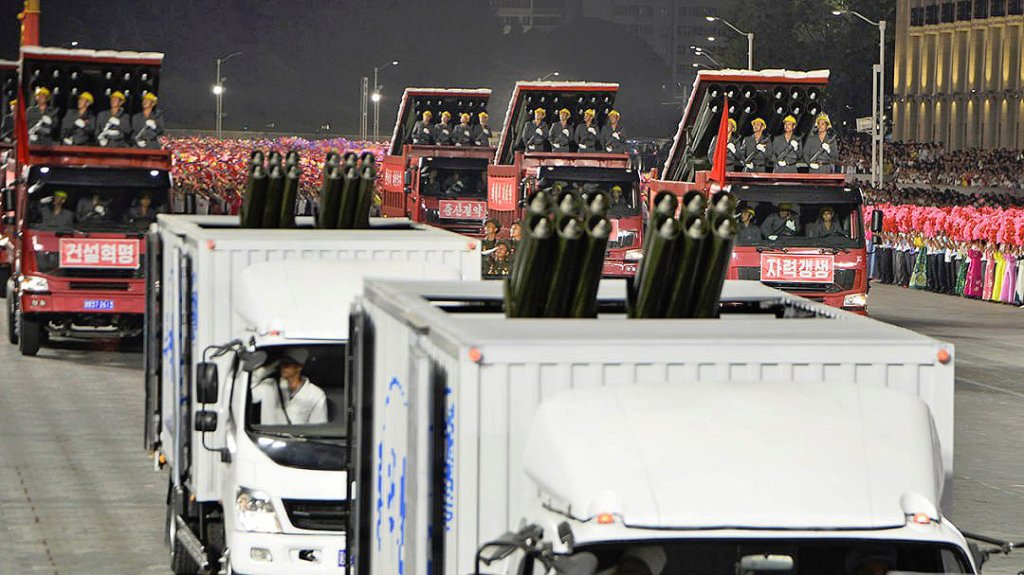
Missile and rocket artillery launchers hidden in plain sight inside civilian-style trucks, as well as unassuming shipping containers, have become something of a trend globally in recent years. China, Iran, North Korea, Russia, and even the United States have all been developing and/or fielding systems that fall into these categories. Terrorists and other non-state actors have also employed improvised concealed launch systems over the years.
In a more directly relevant example, Ukraine’s armed forces fielded launch systems for the Hellfire-derived Brimstone missiles concealed inside civilian-style trucks soon after Russia launched its all-out invasion back in February 2022. This was a capability rushed to the battlefield with the help of the United Kingdom. Though the core concept behind the system for Ukraine is very similar to what Taiwan has now shown, Brimstone has dual millimeter-wave radar and laser guidance modes, as well as an ability to autonomously search targets after arriving in a designated area, features not found on known Hellfire variants.
In the Military News Agency video, Colonel Su from the 209th Arsenal did acknowledge certain limitations with the new truck-mounted Hellfire launcher, at least in its current guise.
“Once mounted on the ground, it’s affected by terrain and topography. How do we lock onto our target? During launch, we may need to modify the firing logic to ensure accurate impact,” he said, again according to a machine translation. “This is a key technical challenge we must overcome.”
Attack helicopters employing laser or radar-guided Hellfires have the inherent benefit of being elevated sensor platforms, offering better fields of view to spot targets and then cue missiles to them. The elevated mast on Taiwan’s truck-mounted launcher is clearly designed to help with when it comes to firing the missiles from the ground. The vehicle’s mobility could also help it get into more ideal firing positions to begin with. The footage released today shows the truck emplaced near a beach and firing missiles at a shipping container target floating offshore. Engaging incoming landing craft and amphibious vehicles during an invasion scenario would certainly be one use case for this new ground-based Hellfire capability. Taiwanese forces already train to use vehicle-mounted and man-portable anti-tank guided missiles in this role.
It is also worth noting that ground-based Hellfire launch systems have existed for decades. This includes the Hellfire Shore Defense System (HSDS), also known as the RBS-17 or ‘Robot 17’ in Swedish service, again highlighting its value in this particular role. Sweden has supplied RBS-17s to the Ukrainian armed forces, who have used them in combat against non-maritime targets.
Separately, the radar-guided AGM-114L has emerged in recent years as a useful air and surface-launched anti-air weapon, especially against lower-end drones. This might open the door to Taiwan employing concealed truck-mounted Hellfire launchers in an air defense role.
For Taiwan, the truck-based Hellfire system reflects a larger ongoing debate about the correct mix of traditional high-end military capabilities and more asymmetric ones to challenge the much larger and increasingly advanced PLA. For some time now, U.S. officials have been pressuring Taiwanese authorities to focus more on things like kamikaze drones, which can be acquired in large quantities relatively quickly and cost-effectively, rather than more exquisite assets like main battle tanks and attack helicopters. This has most recently taken the form of a concept commonly referred to as Hellscape, which envisions filling the airspace and waters around the island with huge numbers of uncrewed systems to try to overwhelm invading Chinese forces.
Overall, Taiwan’s new concealed Hellfire launch system still looks in the early stages of development, but presents attributes that would clearly be attractive to the island’s armed forces, especially in the event of an invasion from the mainland.
Contact the author: joe@twz.com
Loading comments…
Comments couldn’t be loaded. Please refresh the page.