
Key Takeaways
- MV-75A Cheyenne II offers modular flexibility. The tiltrotor can be reconfigured for MEDEVAC missions using kits, unlike the purpose-built HH-60 Black Hawk.
- Enhanced speed and range for MEDEVAC missions. The MV-75’s increased speed and range improve casualty evacuation, crucial during the ‘golden hour’ after injuries.
- Streamlined acquisition and fielding process. The modular design aids in simplifying production and reduces the need for single-purpose aircraft.
- Operational flexibility for commanders. Commanders can adjust aircraft configurations between MEDEVAC and assault roles based on mission needs.
Bottom line: The MV-75A Cheyenne II's modular design allows for flexible mission configurations, enhancing operational capabilities and streamlining acquisition. This adaptability supports rapid reconfiguration for MEDEVAC missions, offering significant flexibility over existing 'dustoff' Black Hawks.
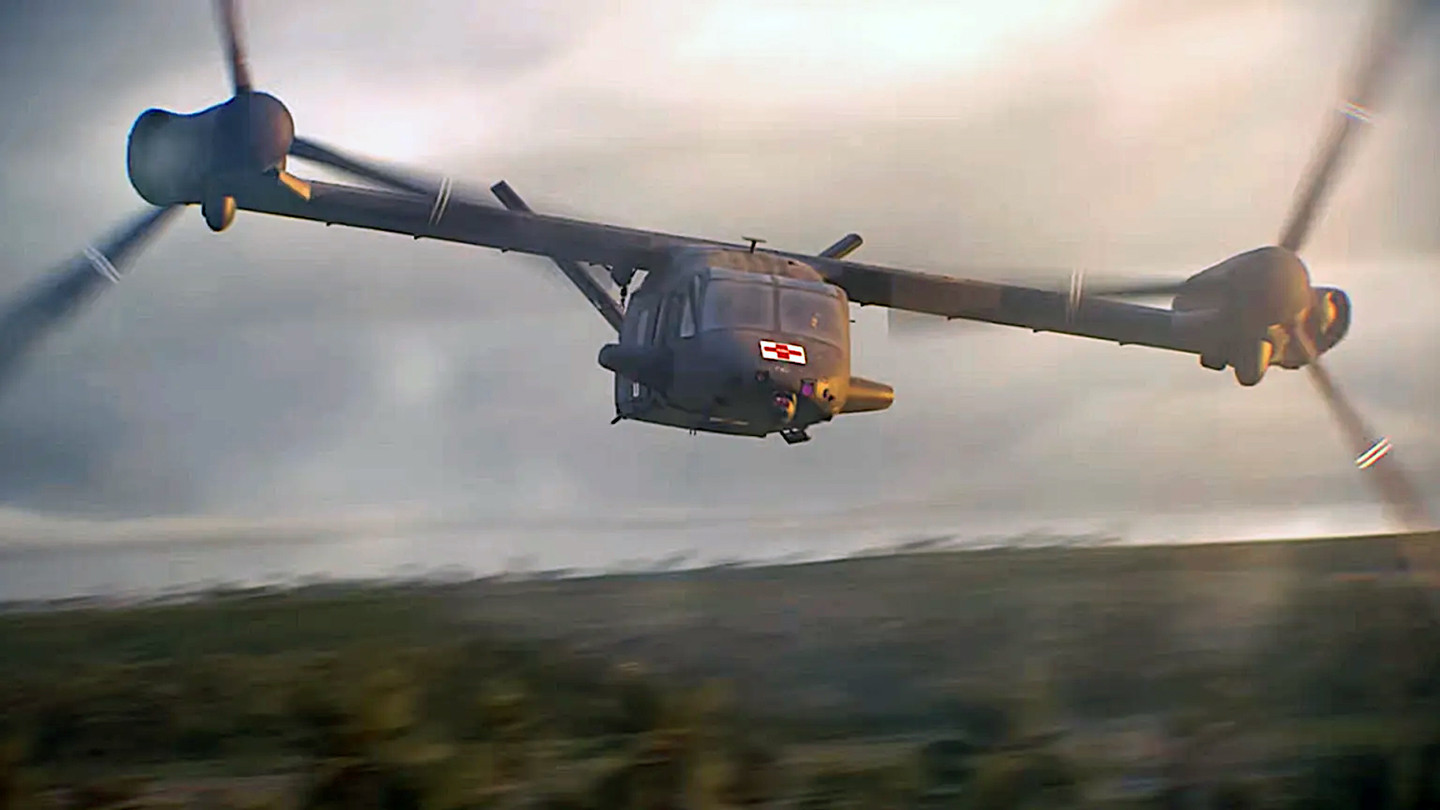
U.S. Army officials say the modular design of the service’s new MV-75A Cheyenne II tiltrotor will make it easier to reconfigure baseline versions for the medical evacuation (MEDEVAC) mission. This also means that the aircraft can be readily restored to a configuration optimized for the air assaults. The Army currently operates HH-60 Black Hawk MEDEVAC helicopters purpose-built for this role. The service says the Cheyenne II will give commanders in the field important new flexibility, as well as help streamline the acquisition and fielding of the tiltrotors.
Army officials have touted the MV-75’s modularity in the context of the MEDEVAC role, also commonly referred to as the “dustoff” mission, on several occasions this week at the Army Aviation Association of America’s (AAAA) 2026 Warfighting Summit. TWZ has been in attendance at the conference, which wraps up today.
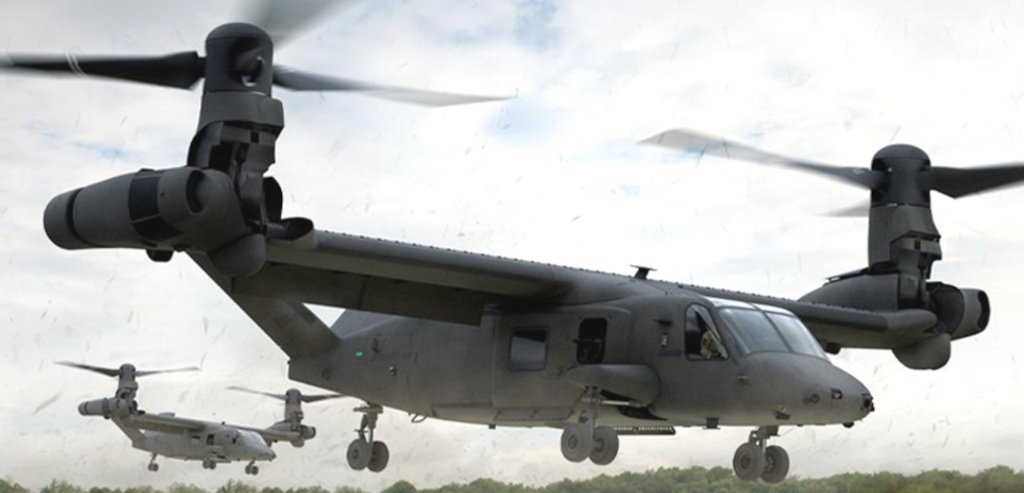
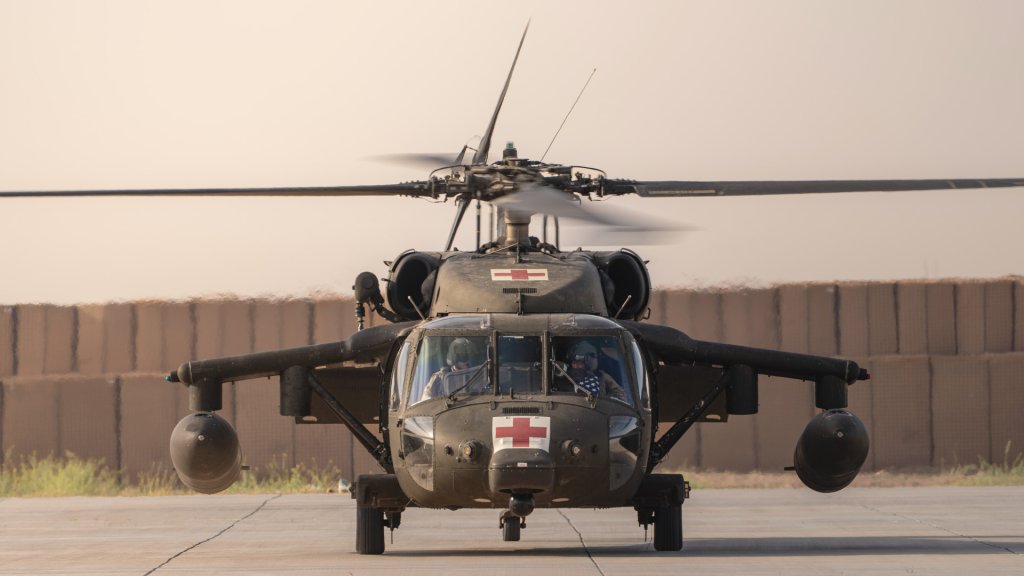
The Army plans to supplant a significant portion of its existing H-60 Black Hawk helicopters with MV-75s in the coming years. A subset of the service’s current Black Hawk fleet consists of the aforementioned HH-60 variants outfitted for the MEDEVAC role. Standard UH-60 transports can also be used to retrieve casualties, but are not equipped with the same array of specialized features found on the “dustoff” variants, which you can read more about here.
There are also plans for a special operations-specific configuration of the Cheyenne II, which TWZ has already explored separately.
The “MV-75, as I mentioned, that’s our signature system. Unmatched range. Unmatched speed. Unmatched mission flexibility,” Army Maj. Gen. Clair Gill, the Program Acquisition Executive for Maneuver Air, told attendees at AAAA on Wednesday. “We’re going to build a modular aircraft that we can use for multiple purposes. So it’s going to have a capability that we can put a MEDEVAC ‘plug’ into it, and generate medical capability for the warfighter.”
With MV-75, “we’re no longer going to have a purpose-built [MEDEVAC] variant. It’s going to be what we like to call a configuration. No longer is ‘tail number 25’ coming off the product line going to be the special operations variant, or the medical evacuation variant,” Army Maj. Thomas Barth further explained during a panel discussion at AAAA yesterday. “You can input what that is via the A kit, and then a B kit – for MEDEVAC, that being the patient handling system, the sensor, and the hoist.”
Barth is leading the integration of MEDEVAC capabilities onto the Cheyenne II and has personal experience as a “dustoff” helicopter pilot.
It should be noted that Army officials separately said at AAAA this week that they expect all MV-75s to be equipped with a hoist.
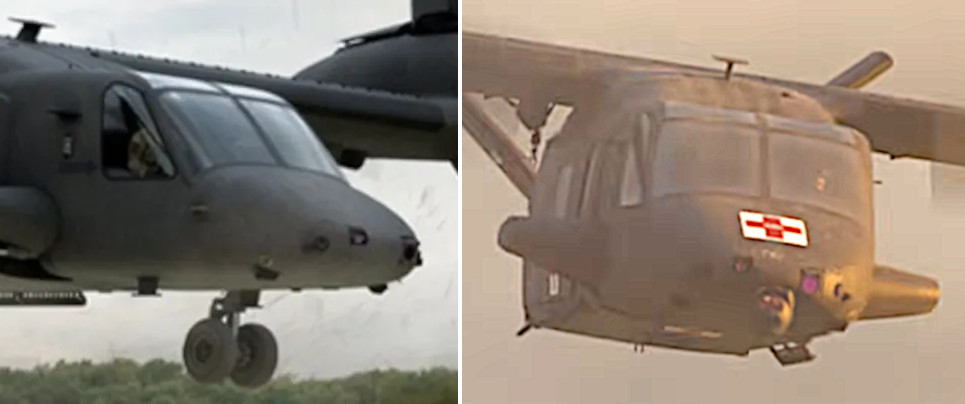
At the panel discussion, Barth did not elaborate on the “sensor” that will be included in the MEDEVAC configuration. However, existing Army HH-60s do have a sensor turret under their noses that contains electro-optical and infrared video cameras. This is something not found on the service’s standard UH-60s. Bell, the MV-75’s prime contractor, also released a computer-generated video this week, seen below, which depicts a MEDEVAC version of the Cheyenne II with a sensor turret under the nose. Depictions, at least so far, of the baseline MV-75 configuration do not include this sensor turret.

“Being able to have that capability from the beginning of the platform is going to be great. And I really look at modularity from a tactical perspective for MEDEVAC,” Barth added. “Let’s say I have to provide MEDEVAC, and I have an aircraft or a patient handling system that goes down, but I have an aircraft that has a perfectly good patient handling system in it, but that aircraft’s in maintenance. I can now modularly reconfigure my fleet internally to be able to meet the needs of the commander.”
The MV-75 will also offer a massive leap in capability over existing HH-60s, just on account of its increased speed and range. Those attributes have always been among the most attractive elements of the aircraft, and especially so for the MEDEVAC mission. The time it takes to get casualties, especially ones with very serious injuries, to higher levels of care can easily mean the difference between life and death. Medical professionals regularly use the term “golden hour,” which refers to the first 60 minutes after a serious injury occurs, where the chances of saving that person’s life or otherwise preventing serious permanent damage are highest.
Army officials see the added operational flexibility that the Cheyenne II offers going beyond just the MEDEVAC mission.
“Providing flexibility for the warfighter, and really for the commander, is the most important to us. So the aircraft is modular from birth,” Army Col. Jeffrey Poquette, who is managing the Future Long-Range Assault Aircraft (FLRAA) program under which the MV-75 is being developed, also said, while speaking alongside Barth at AAAA. “The commander can maybe take a day to say we need more MEDEVAC aircraft, or we need more assault aircraft.”
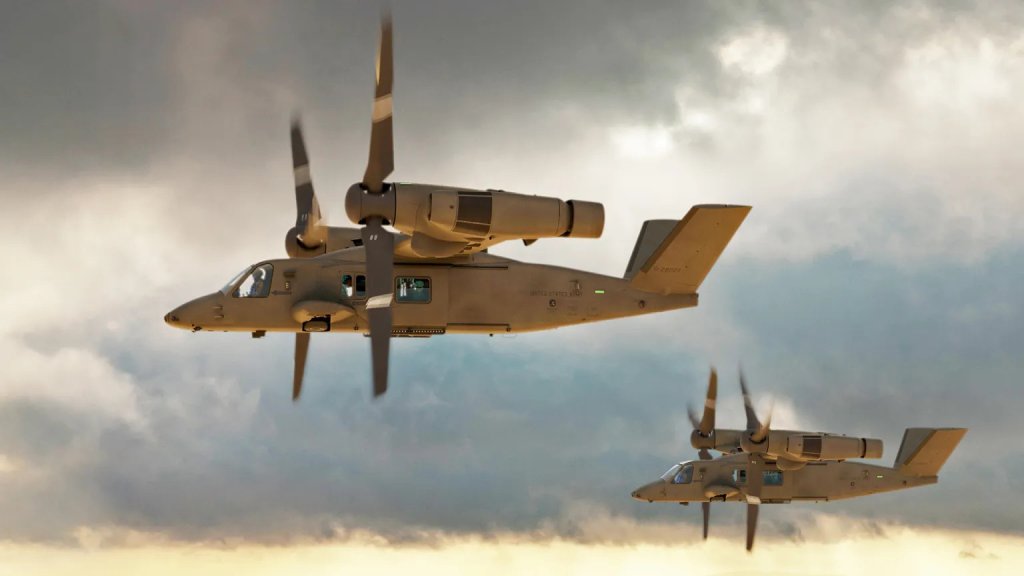
“We’re going to let our land component commanders tell us how much of that [MEDEVAC capacity] they need so they’ve got options,” Maj. Gen. Gill had also said on Wednesday. “Maybe in a defense [sic], they want to maximize MEDEVAC capability, put all the plugs in, go heavy MEDEVAC. If not, if they can strip that out, [and] we’ve got more assault capability. So we’re pretty excited about that.”
All of this does raise personnel, training, and force structure questions, especially when it comes to the MEDEVAC role. The Army currently assigns HH-60s to dedicated air ambulance units. “Dustoff” crews specifically train for this mission set and have developed a relevant institutional knowledge base in the process. The Army has already been exploring how MEDEVAC tactics, techniques, and procedures will adapt to its new tiltrotors using surrogate test articles on the ground.
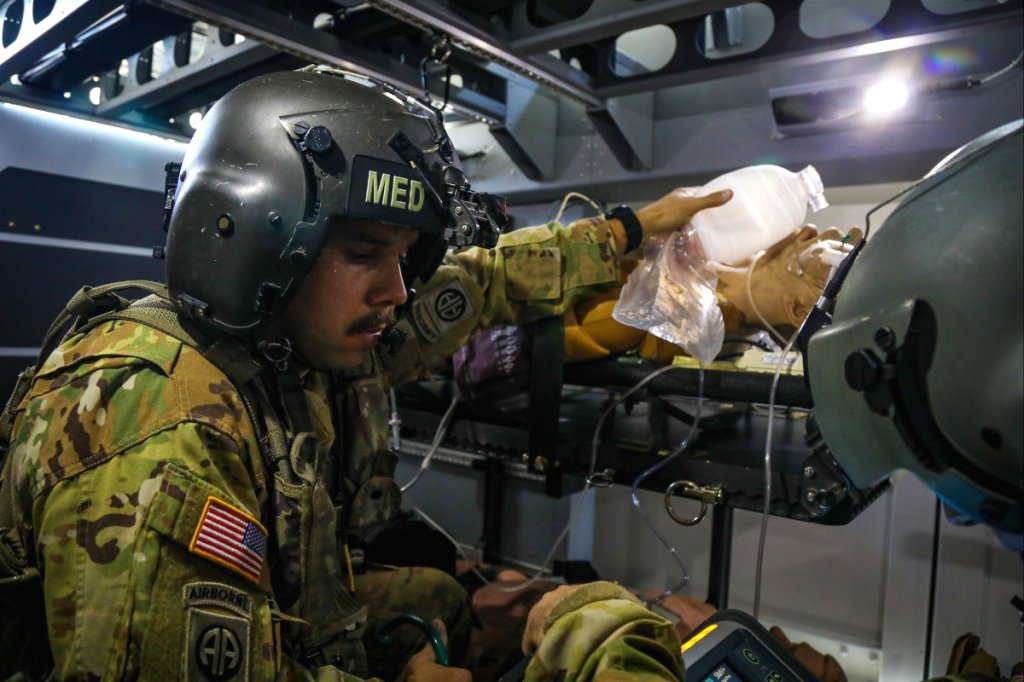
With the MV-75, “we’re delivering a platform that – it’s an a la carte menu of sorts, and there’s certainly some limitations there,” Army Col. Jacob Whiteside, who was also on the panel alongside Poquette and Barth, said yesterday. “That’s the conversation that we use freely and regularly to make sure that we deliver this flexibility to the warfighter, and that’s our job is to consistently advocate for that.”
Whiteside is currently the Director for Transformation and the Lessons Learned Manager at the Transformation and Integration Directorate within the Army’s Aviation Center of Excellence.
As Maj. Barth noted when talking about the A and B kits for the MV-75, the Army also sees the focus on modularity as offering advantages just for acquiring the aircraft in the first place by helping streamline the production line.
“Frankly, this is going to be a very expensive airplane that we’re going to buy, so we can’t have single-purpose aircraft,” Maj. Gen Gill had also said during his talk at AAAA. “So we’re thinking about how we incorporate modularity.”
Gill pointed out at that time that those discussions around modularity are already extending to other capabilities for the MV-75, including aerial refueling. That, in turn, might lead the service to acquire its own fleet of uncrewed tankers, as TWZ has previously reported.
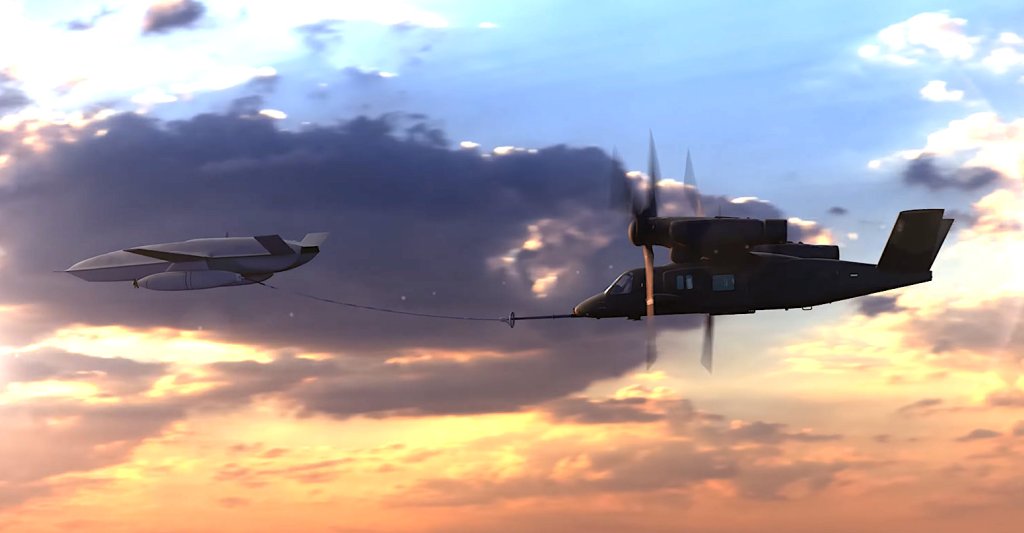
The current estimated unit cost of the MV-75A in any configuration is unclear. We do know that Bell’s winning bid in the FLRAA competition was priced out at just over $8 billion, in total. This was roughly twice the price point for the competing bid from a team made up of Sikorsky and Boeing, which had submitted an advanced compound helicopter design, as you can read more about here.
There are questions now about the Army’s planned schedule for fielding the MV-75, as well as when the first flight of the aircraft will occur. The service has walked back from pronouncements made as recently as January that it would start delivering Cheyenne IIs to operational units next year. Those statements had reflected a larger effort to accelerate the program dramatically.
“It’s going to happen when it’s going to happen. So we are moving as fast as we can,” Army Maj. Gen. Clair Gill, the Program Acquisition Executive for Maneuver Air, had said. “If I was king, and I had all the money in the world and all the engineers, and there were no limits, we probably would be able to do it in a matter of months.”
Regardless of when the first operational aircraft arrive, the Army’s clear goal is to leverage the aircraft’s modular design to begin integrating the MEDEVAC capability into the fleet in short order thereafter.
Contact the author: joe@twz.com
Loading comments…
Comments couldn’t be loaded. Please refresh the page.