
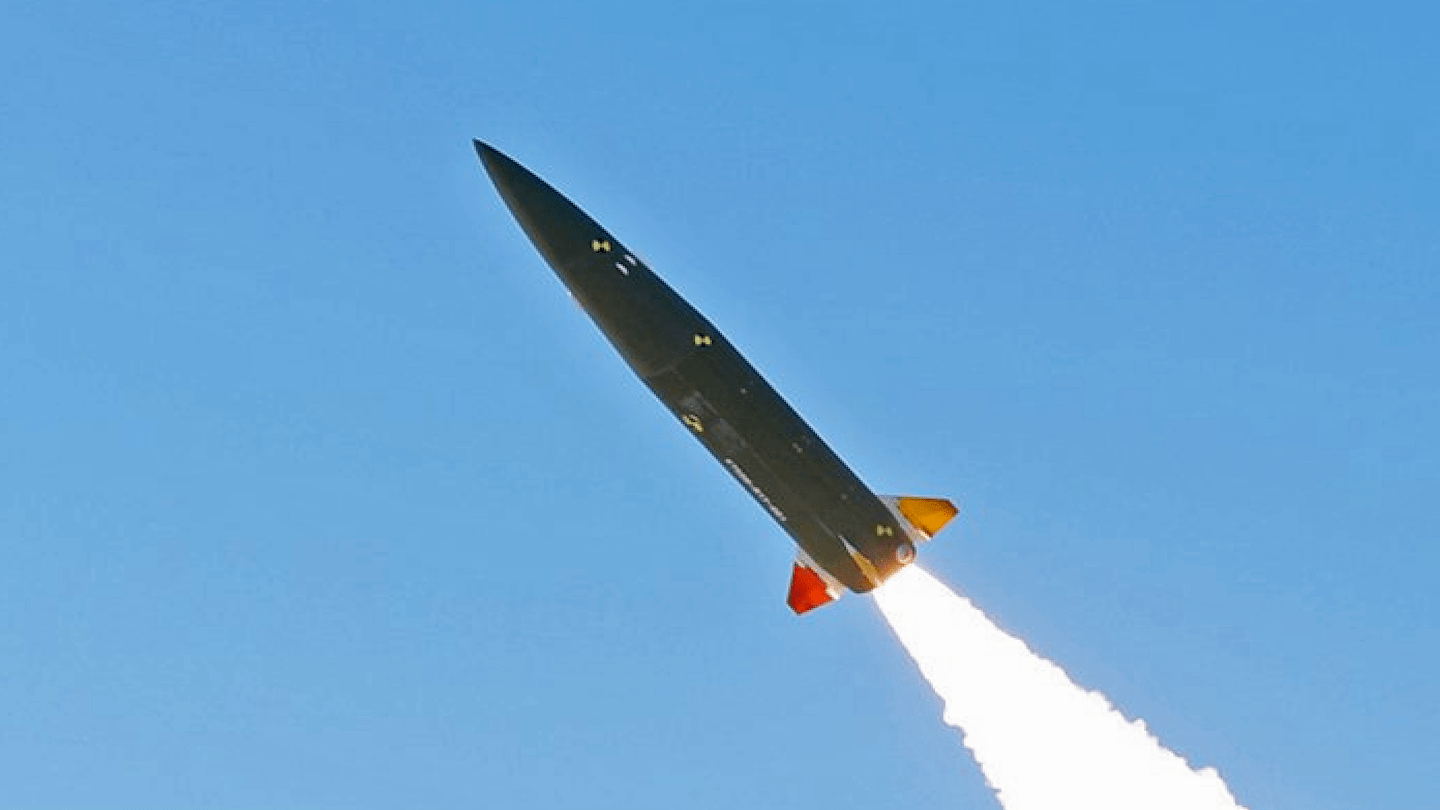
South Korea is looking to develop a new air-launched ballistic missile (ALBM), joining a group of nations that are looking to introduce this capability, or which already have weapons of this kind in operational service. If successful, the program could see the missile fielded on South Korea’s locally developed KF-21 fighter jet, an aircraft you can read more about here.
The Republic of Korea Air Force (ROKAF) submitted data about the air-launched ballistic missile program last week to lawmaker Yoo Yong-won, a member of the National Assembly’s National Defense Committee, the Dong-A Ilbo newspaper has reported. Yoo is a member of South Korea’s main opposition People Power Party.
The ROKAF submission confirms that the service is looking seriously at a “hypersonic air-to-ground guided missile,” as well as what’s described as a “long-range blackout guided missile.”
The hypersonic missile is a reference to an ALBM, since this kind of weapon — like many ballistic missiles — arrives at its target with a hypersonic or near-hypersonic terminal velocity. Meanwhile, the other program refers to a weapon that’s engineered to disable power distribution. To achieve this, such missiles are normally loaded with carbon fiber strands.
Returning to the ALBM initiative, Dong-A Ilbo reports that the missile would be capable of speeds “exceeding Mach 10,” although the precise performance parameters are unclear. Hypersonic speed is typically defined as anything above Mach 5. Potential targets for the weapon outlined in the newspaper report include nuclear and missile facilities. These would certainly be high on the list of objectives South Korea would want to knock out in the early phase of a conflict with North Korea.
There has been speculation that South Korea might use its KTSSM (Korean Tactical Surface-to-Surface Missile), a short-range ballistic missile (SRBM), as the basis for the ALBM, although other options are available, including adaptations of other surface-launched missiles, or a ‘clean-sheet’ design.
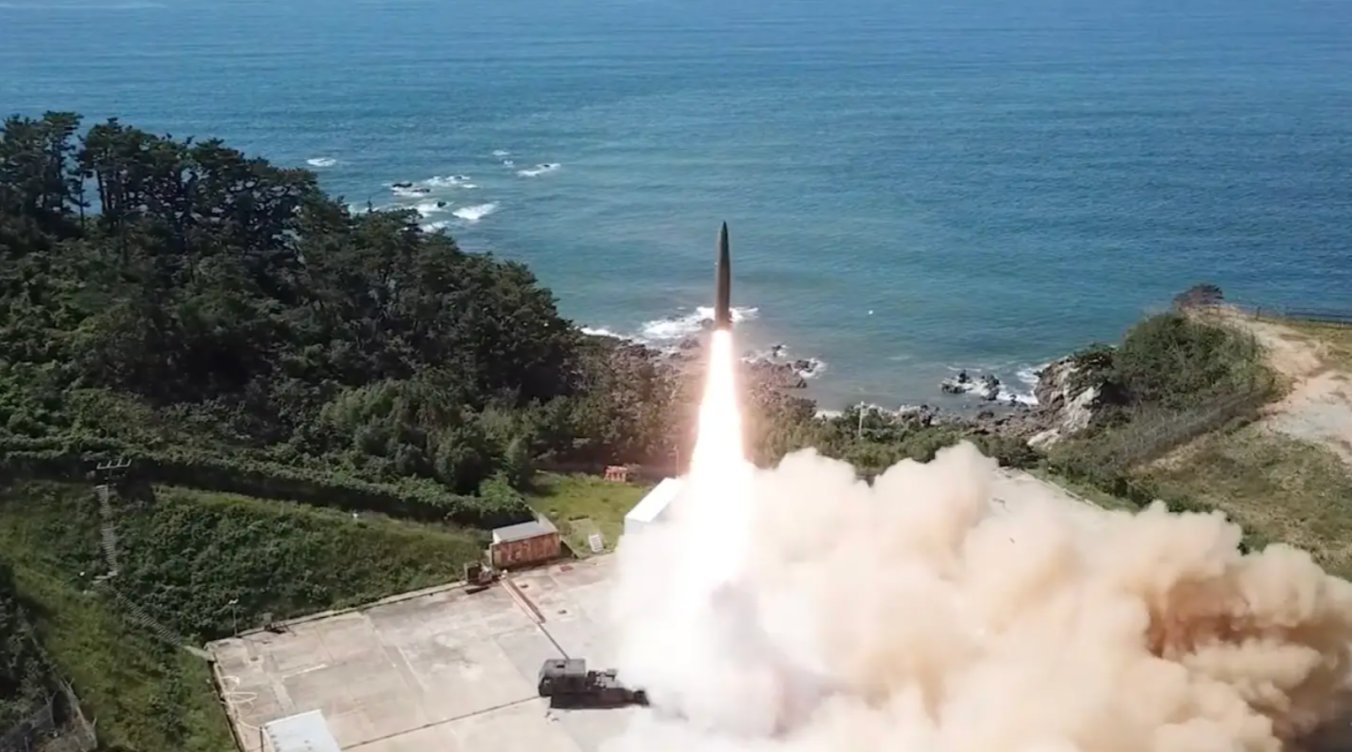
The Dong-A Ilbo report draws a parallel between the Russian Kinzhal ALBM, an adaptation of the Iskander SRBM, which has been used in the war in Ukraine, although there are other ALBMs also in operational service, notably in China. Meanwhile, Israel has developed several air-launched versions of SRBMs and artillery rocket designs.
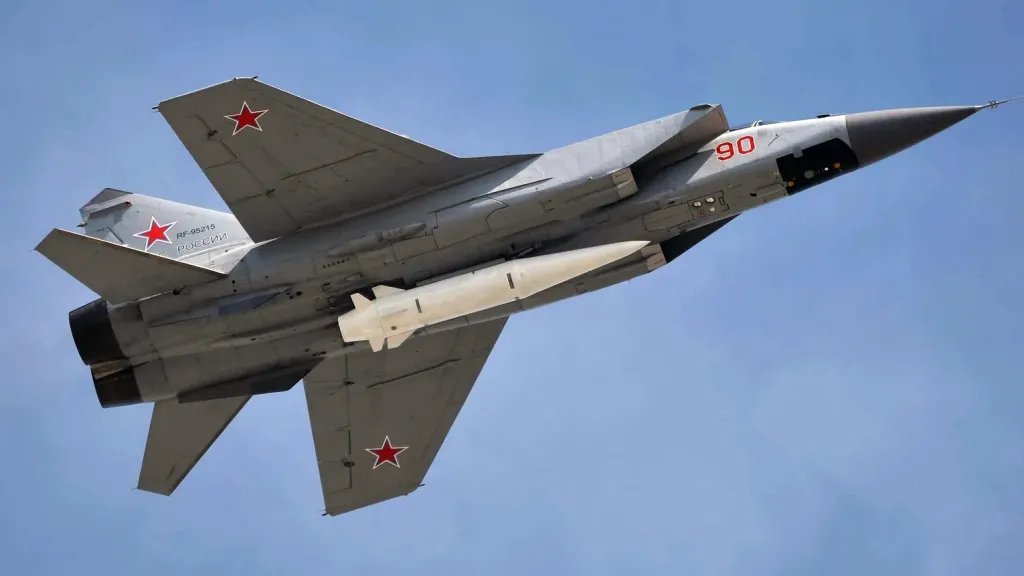
Overall, an ALBM offers significant benefits for carrying out standoff strikes, especially against highly defended, time-sensitive, and hardened targets. These are very much the kinds of targets that the ROKAF would be expected to prosecute in a shooting war with North Korea.
In the past, TWZ has looked in more detail at the specific advantages that an ALBM can provide:
Ballistic missiles, in general, reach high-supersonic, if not hypersonic speeds (above Mach 5) in the terminal phase of flight. That speed increases the capacity of these weapons to burrow down into hardened targets and also reduces their overall flight time, making them particularly well-suited to striking hardened and/or time-sensitive threats. Fast-flying ballistic missiles are also very challenging to intercept and otherwise give opponents limited time to react in any way.
Many modern ballistic missiles also have some ability to maneuver during portions of their flight, which can be used to help reduce the chance of interception. The ability to follow a so-called “porpoise” or “skip-glide” trajectory, which involves the missile abruptly pulling up at least once, but potentially multiple times, which then creates an equal number of downward “steps,” is a prime example of this kind of capability.
With a range of surface-launched ballistic missiles and artillery projectiles already being produced by South Korea, this could offer a relatively quick path to acquiring ALBM capabilities. As long as North Korea continues to develop its nuclear capabilities as well as harden other critical military infrastructure, South Korea’s need for such a weapon is likely seen as increasingly critical.
There is already speculation that the likely launch platform for the ALBM would be the KF-21, which would ease the process of integration, since this can be done locally, without the involvement of a foreign original equipment manufacturer. Alternatively, the ROKAF also operates the F-15K Slam Eagle, which has a prodigious load-carrying capability and would also lend itself to being armed with ALBMs, provided that Boeing and the U.S. government supported this effort. There is also the large ROKAF fleet of F-16s, which could also be used for launching small-to-medium-sized ALBMs.

At this point, it’s worth noting that Israel has made extensive use of its F-15s and F-16s to launch weapons in this class against critical targets around the Middle East, especially against Iran, where they knocked out air defenses and struck other highly-defended sites at long distances. Israel has an expanding armory of ballistic missile and artillery rocket designs adapted for air launch, including the Israel Military Industries (IMI) Rampage, based on a long-range artillery munition, and the Rafael Rocks was developed from Israel’s line of Sparrow ballistic missile test targets. More recently, Israel Aerospace Industries (IAI) unveiled an air-launched version of its LORA (Long Range Artillery), an SRBM originally developed for surface launch.
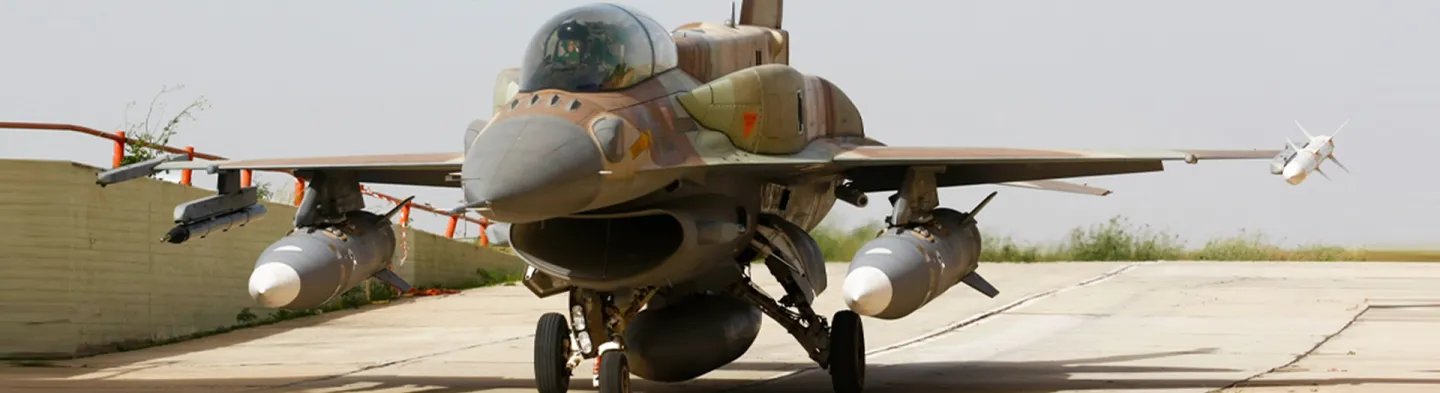
Already, the KF-21 has been identified as the launch platform for a locally produced ‘bunker-busting’ air-launched cruise missile (ALCM), which would provide another means to attack targets deep within North Korea. You can read more about that initiative here.
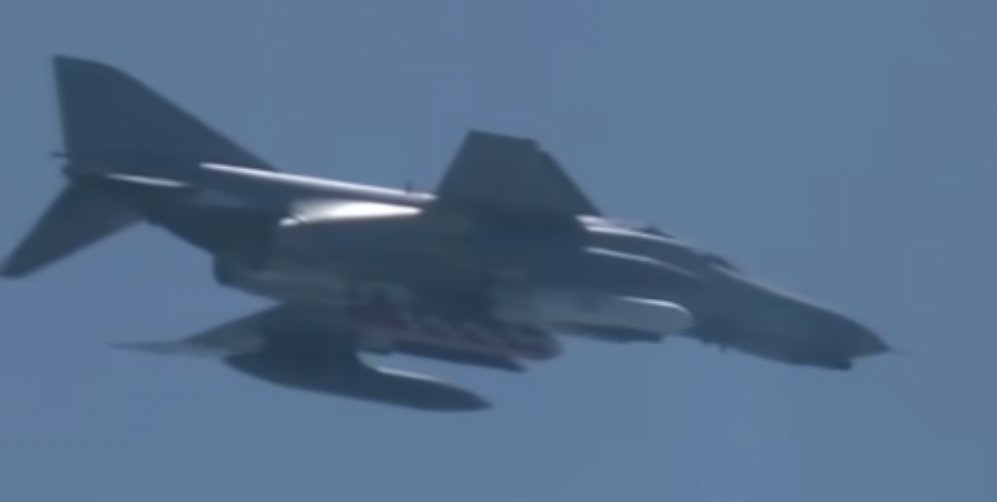
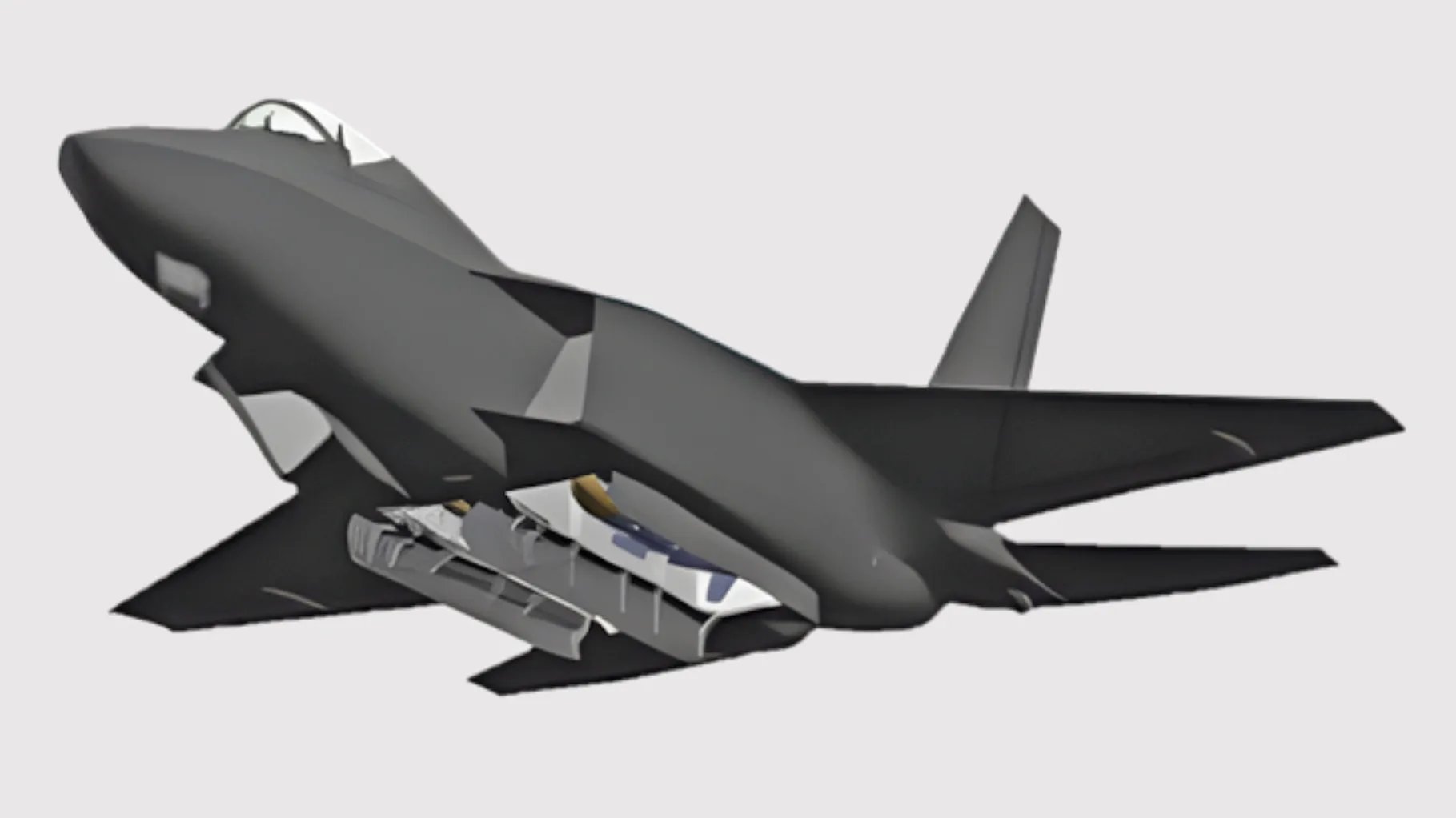
The size of an ALBM would rule out internal carriage in the planned stealthier version of the KF-21, known as the KF-21EX, which you can read more about here. While internal weapons carriage is the distinguishing feature of this aircraft, the basic KF-21 would rely instead on the ALBM’s standoff range to ensure it can survive in the face of ever more capable North Korean air defense systems. This is an area in which Pyongyang’s capabilities appear to be increasingly aided by Russia, in return for North Korean support for its war in Ukraine.
As well as the ALBM and previously known ALCM, the ROKAF is also eyeing the aforementioned “long-range blackout guided missile.”
According to the Dong-A Ilbo report, such a weapon would be primarily used to knock out the power supplies for North Korean “strategic facilities such as substations supporting national command posts.” The weapon would also have a standoff range, so it could be launched from outside the range of air defenses around the heavily defended targets.
The U.S. military has a relatively long history of using these kinds of weapons against power infrastructure.
In 1991, the U.S. Navy fired so-called “Kit-2” Tomahawk Land Attack Missiles (TLAM) into Iraq. These dropped spools of highly conductive carbon fiber wire over power stations and distribution nodes, causing short circuits. Though there are few other available details about this configuration, the missiles were reportedly responsible for decimating Iraqi power generation during the conflict.
In 1999, F-117 Nighthawk stealth fighters did the same thing in Serbia, but this time using special cluster bombs full of BLU-114/B submunitions. The press quickly dubbed these previously undisclosed weapons, each full of graphite filament, ‘soft bombs’ and ‘blackout bombs.’ South Korea clearly sees the potential of weapons of this kind to be used against North Korea, and the concept is very much in keeping with its wartime plans against its neighbor, which would rely on disabling Pyongyang’s military communications and command systems, effectively blinding its military and regime and breaking its decision cycle.

Notably, South Korea has been working on these kinds of weapons for some time. According to reports, Seoul’s Agency for Defense Development (ADD) has been developing ‘blackout bombs’ since 2012. The implication is that an existing free-fall bomb in this class would be provided with standoff range by combining it with the propulsion system from a Cheonryong ALCM. This is a relatively small cruise missile, which can be launched from an FA-50 light combat aircraft (as seen in the video below), and which could also arm the KF-21.

As well as using wires or filaments, these kinds of weapons can also employ directed energy, an area in which the U.S. military has been active. In 2012, the Counter-electronics High Power Microwave Advanced Missile Project, or CHAMP, emerged. Unlike the earlier weapons, this standoff cruise missile features a powerful microwave emitter that can knock out electronics with its pulsing beam. South Korea might also look to develop a payload in this class. This should produce more consistent and repeatable effects, as well as narrowing the focus of an attack closer to the target itself, and otherwise limit any collateral impact.

While an ALBM and a ‘blackout’ bomb would be important additions to the ROKAF armory, it’s also worth noting that they could both be compelling export products at a time when the South Korean defense industry is winning ever more high-profile orders. If both these weapons can be integrated on the KF-21, that would also make the aircraft even more attractive for export customers, provided that Seoul releases these technologies for sale to foreign nations.
Thanks to @mason_8718 for bringing details of this development to our attention.
Contact the author: thomas@thewarzone.com
Loading comments…
Comments couldn’t be loaded. Please refresh the page.