
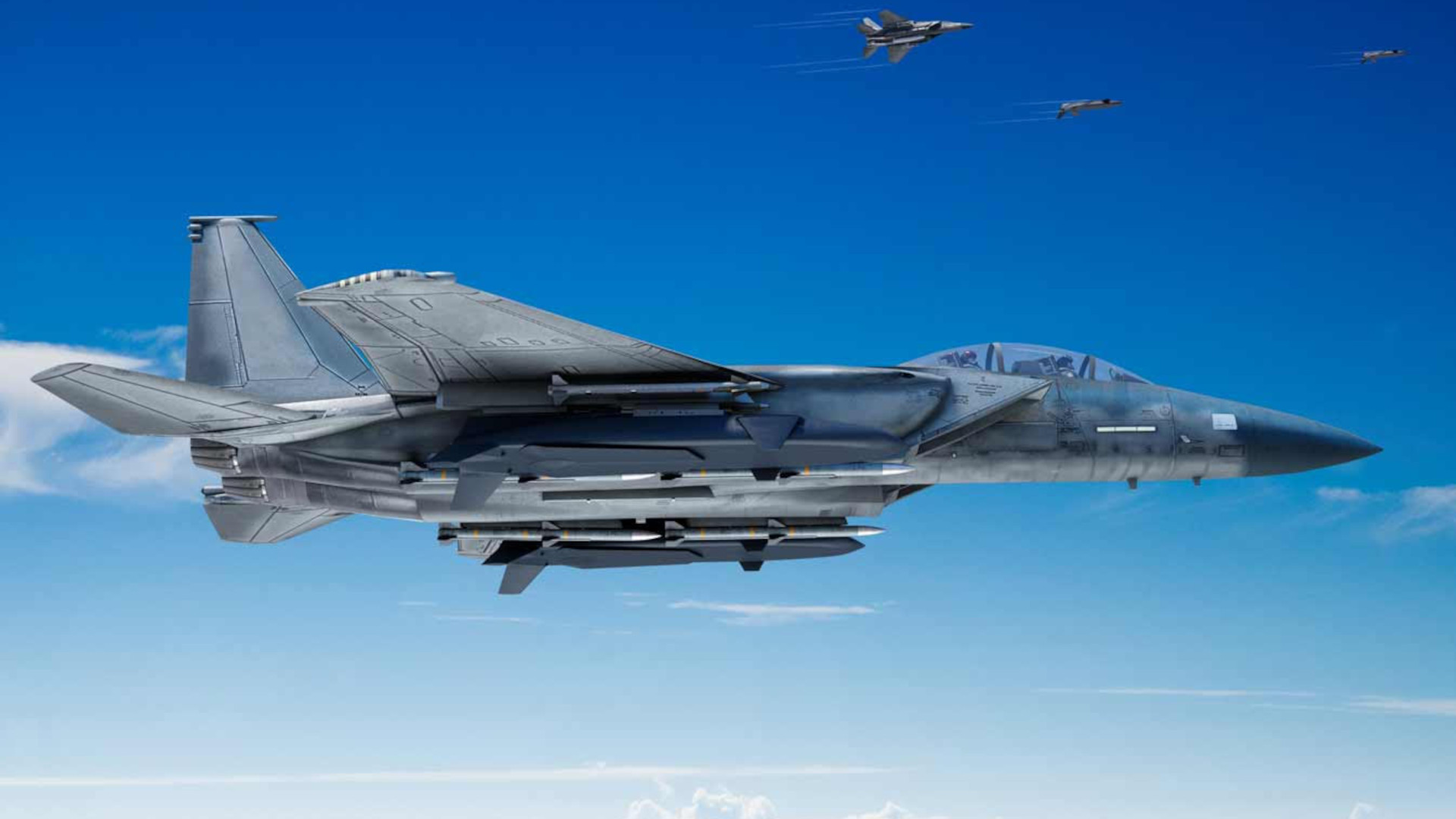
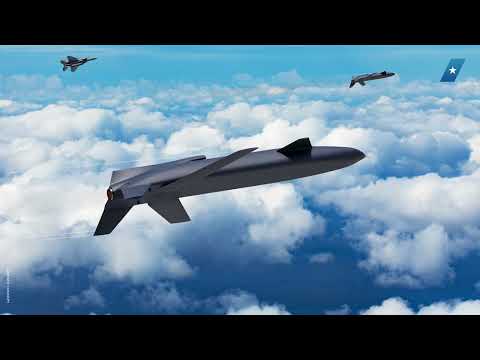
Renderings from General Atomics offer new looks at how its air-launched LongShot drone might be employed from F-15 fighters, as well as B-52 bombers and C-17 cargo aircraft. LongShot is a Defense Advanced Research Projects Agency (DARPA) program exploring the concept of an uncrewed aircraft capable of firing air-to-air missiles that can be deployed in mid-air, which would extend the reach and reduce the vulnerability of the launch platform, among other benefits.
DARPA awarded contracts to General Atomics, as well as Lockheed Martin and Northrop Grumman, for initial work on LongShot concepts in 2020. General Atomics alone was chosen to continue work on its design in 2023. The company has told TWZ that wind tunnel testing is now underway ahead of an expected first flight next year. DARPA had originally hoped LongShot would fly before the end of 2023. As of March 2024, that schedule had already slipped to some time in Fiscal Year 2025, which comes to a close at the end of this month.
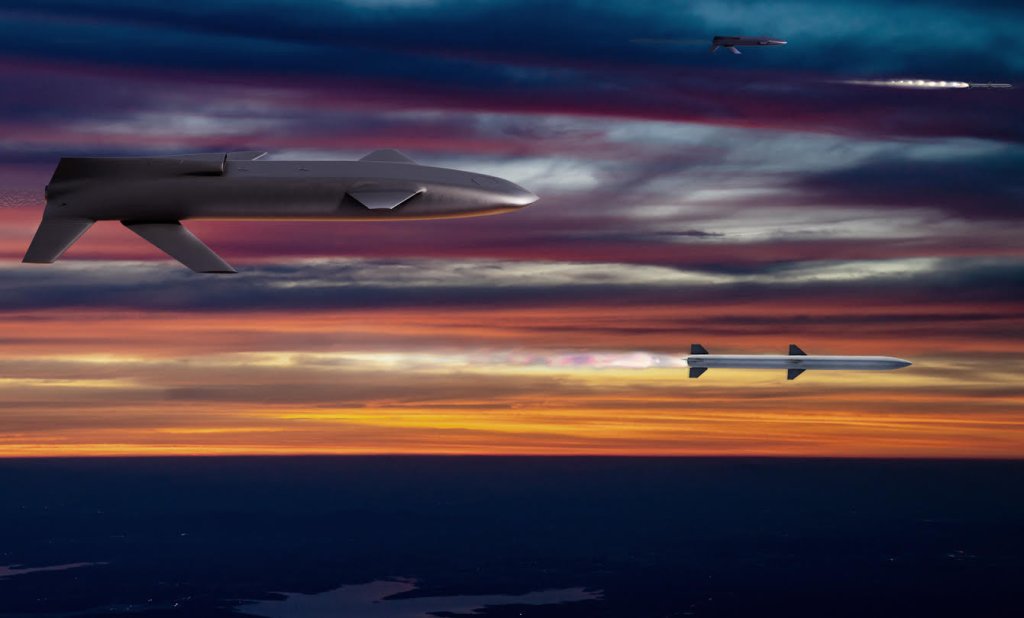
The LongShot drone seen in the latest renderings from General Atomics is fully in line with what the company has shown in recent years. The design has evolved since 2020, as you can read about more in our past reporting.
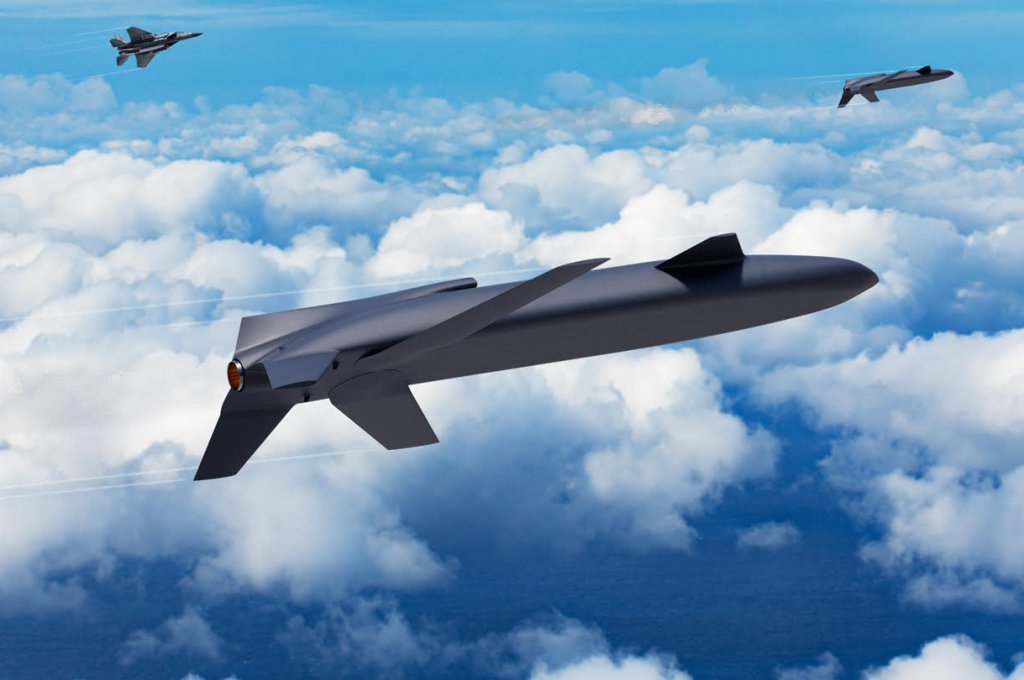
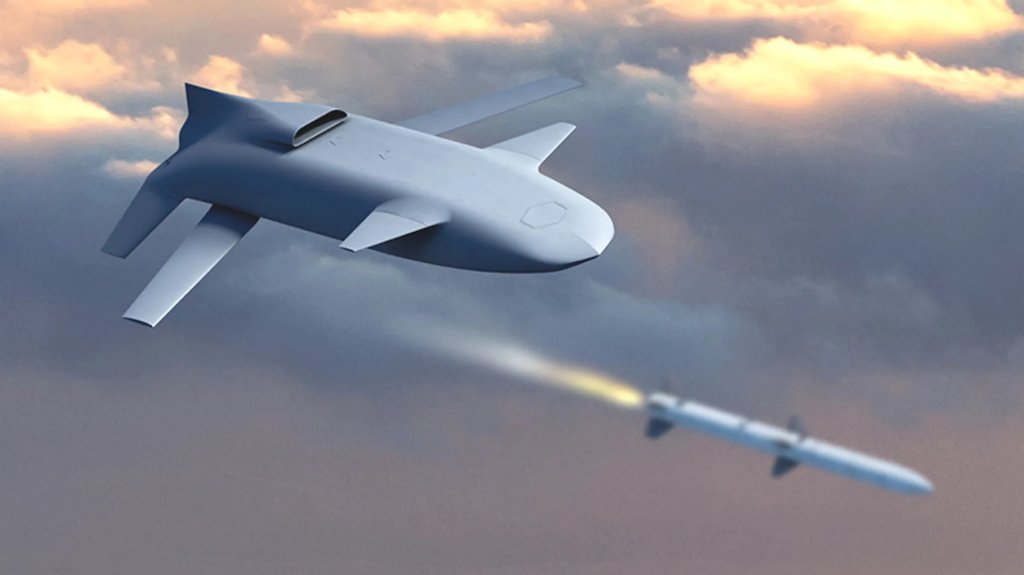
The current design features an elongated fuselage and a chined nose. There are small canards at the front and reverse-swept main wings toward the rear. It has an inverted V-shaped twin-tail configuration, as well as a streamlined tail-like extension sticking up just slightly from behind the top-mounted dorsal engine air intake. The new renderings confirm that the main wings pop out, something TWZ has pointed out in the past as likely being the case, and that the canards pop up from a folded-down position after launch.
Details about LongShot’s expected specifications and capabilities otherwise remain limited.
“This system will capitalize on a slower speed, fuel-efficient air vehicle for ingress, while retaining highly energetic air-to-air missiles for end-game target engagements, which provides several key benefits that increase weapon effectiveness,” according to the entry for the program in the Pentagon’s most recent budget request for the 2026 Fiscal Year. “This program will address the stability and control challenges of launching air-to-air missiles from a relatively small uninhabited system in an operational environment.”
“LongShot is intended for conflict. In combat scenarios, recovery isn’t really practical, and the price point doesn’t make it necessary,” C. Mark Brinkley, a General Atomics spokesperson, did tell TWZ today in response to questions about the drone’s reusability. “However, for test and training, it is recoverable, and we have options for that.”
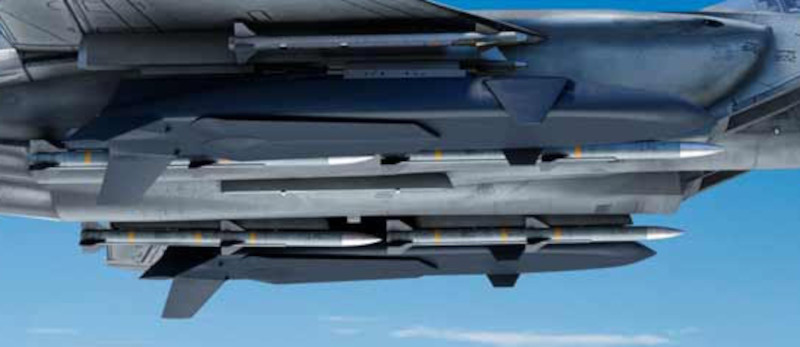
Previous General Atomics LongShot renderings have depicted the drones being launched from two-seat F-15 variants in the extended Strike Eagle family, which now includes the U.S. Air Force’s F-15EX Eagle II. We now have a look at how they might actually carry them, one under each wing. In the image seen at the top of this story and in part below, an F-15 is shown armed with AIM-120 Advanced Medium-Range Air-to-Air Missiles (AMRAAM) and AIM-9X Sidewinders, in addition to a pair of LongShots. The significant range and payload capacity offered by the F-15E and now the EX, as well as their ability to carry outsized payloads, are regularly touted as making these jets particularly important to current and future operations.
How many air-to-air missiles a LongShot itself can carry at a time is unclear. Renderings to date have shown the drones each being able to launch at least one AIM-120 from an internal bay.
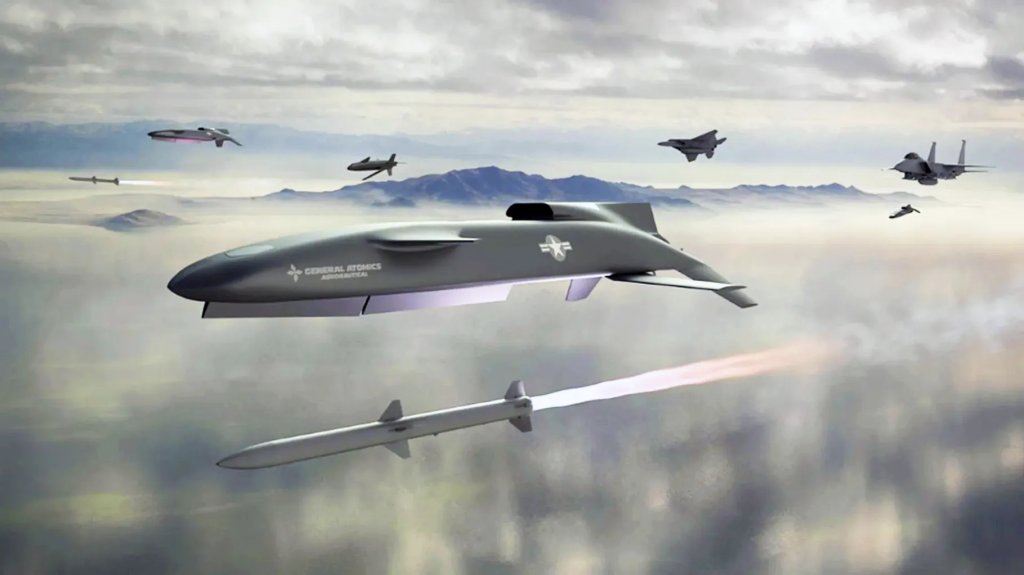
As noted, LongShot is intended to extend the range at which a launch platform can fire on targets, which, in turn, helps keep them further away from threats. The drones can fly forward into higher-risk areas before launching their own missiles. As designed, LongShots also simply expand the total area in which a launch platform, especially a tactical jet like an F-15, can engage threats.
LongShot drones could also leverage targeting data from sources other than their launch platforms. This would rely on, but also take immense advantage of long-range ‘kill web’ architectures in development now. As those kill webs expand in scale and scope, the likelihood of munitions engaging targets outside the range of a launch platform’s organic sensors will only grow. You can read more about these developments here.
We now have additional renderings showing B-52 bombers launching LongShots from their underwing pylons, as well as C-17s deploying them using the Rapid Dragon palletized munitions system. Rapid Dragon is a separate development effort that the U.S. Air Force is currently pursuing, primarily as a means of enabling C-17s, as well as other cargo aircraft, to act as additional launch platforms for cruise missiles.
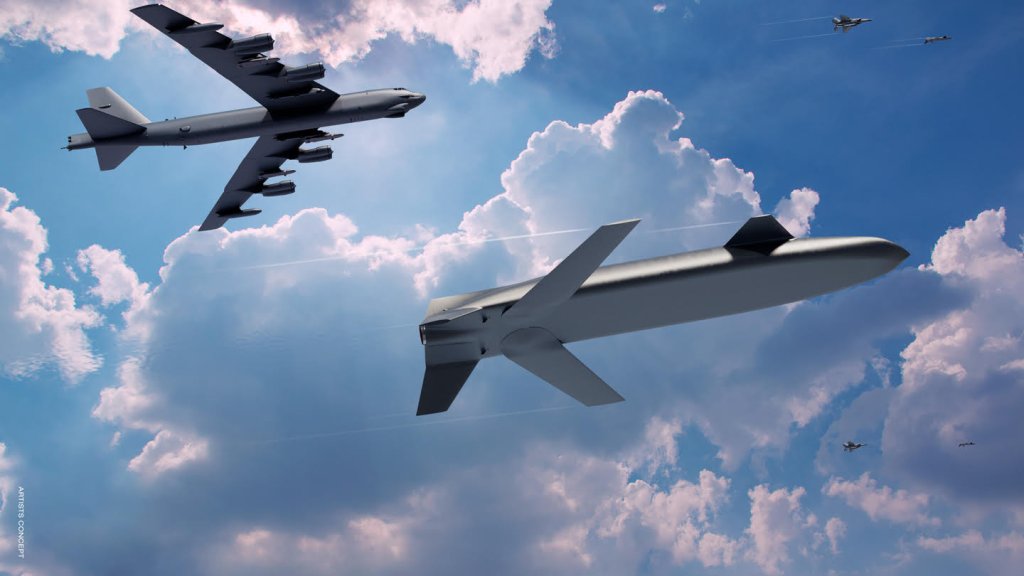
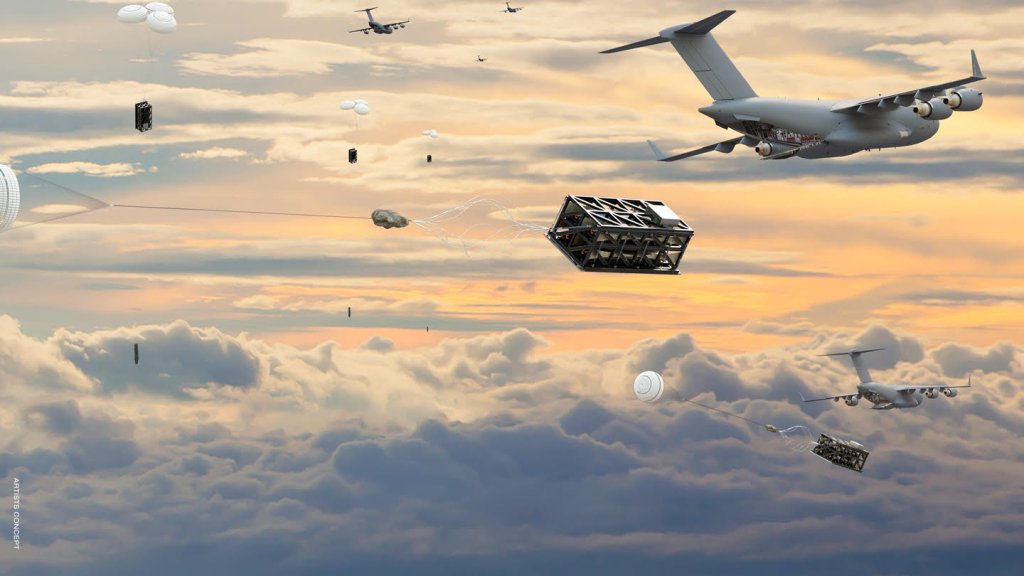
A single bomber or cargo aircraft could launch a much larger number of LongShots at once than a tactical jet, helping to more quickly saturate a particular section of the battlespace with air-to-air assets. This could allow for the rapid deployment of a temporary counter-air screen. The drones might remain close to larger and more vulnerable launch platforms to provide additional localized defense, and could be deployed only as necessary, all of which would help to reduce strain on escorting assets.
Control of these drones could potentially come via a number of avenues, from a command module on the launching platforms, to forward assets like fighters and bombers, to airborne command and control platforms in the battlespace. They could also be controlled from much farther away by relaying their communications via a platform equipped with a beyond-line-of-sight datalink capability. So the downstream potential is pretty wide, but for now it seems, as they’re intended to be controlled primarily by their launching platforms. Depending on their level of autonomous capability, LongShots could potentially operate in a more independent manner, as well.

DARPA has also explicitly talked about the possibility of launching LongShots from bombers via their internal bays. The drone’s folding wings and canards might allow for its deployment via rotary launchers that can be installed in the bomb bays of the Air Force’s B-52s, as well as its swing-wing B-1s and stealthy B-2s. Depending on how the program progresses, LongShot could be an option for internal carriage on the service’s forthcoming B-21 Raider stealth bombers.
In addition to the Air Force, DARPA has said the Navy could be a “transition partner” for these air-launched drones in the future, as well.
TWZ has also noted in the past that LongShot might feed into other efforts, especially the Air Force’s Collaborative Combat Aircraft (CCA) drone program. Air Force officials have not ruled out the possibility that future CCA fleets could include air-launched types. The U.S. Marine Corps and the U.S. Navy also have their own CCA plans that are intertwined with the Air Force’s program.
“We’ve got a program right now with DARPA that we’re working on. It’s called LongShot. And that effort is really, if you think about it’s about an air-launched fighter,” Patrick “Mike” Shortsleeve, Vice President of DoD Strategic Development for General Atomics Aeronautical Systems, Inc (GA-ASI), told TWZ‘s Jamie Hunter in an interview at the Air & Space Forces Association’s 2025 Air, Space, and Cyber Conference this week. “So, we’re talking about a smaller UAS [uncrewed aerial system], … but it also will be able to carry air-to-air missiles and be brought into the fight in mass when needed. So LongShot represents sort of another iteration of what we’re doing for disruption, to help the Air Force change or revolutionize the way air dominance is being done.”
“There is a next generation of UAS that is under work that is much, much more survivable, much more autonomous, much more cognitive,” Mike Atwood, Vice President of Advanced Aircraft Programs at General Atomics Aeronautical Systems, Inc. (GA-ASI), had also said on an edition of The Merge podcast back in June 2024. It lives inside the DARPA LongShot program… We can’t talk too much turkey on it, but it’s essentially taking all the principles that we’ve talked about today to I think an extreme – affordability, survivability, and cognitive autonomy – and it’s exciting.”
Per the Pentagon’s most recent proposed budget, current goals for the program include completing “fabrication and checkout of wind tunnel ground test vehicle and continue fabrication of flight test vehicles” and conducting “full-scale wind-tunnel test to exercise critical mechanisms and subsystems, gather structural dynamics data, gather unsteady aerodynamic data, and derive scaling corrections for transonic aero data” before the end of Fiscal Year 2025. “Continue airworthiness certification and host aircraft integration” and “conduct pit drop testing of missile mass simulant from LongShot ground test vehicle” are also among the stated program objectives.
The budget documents further confirm plans to begin a range of flight testing activities in Fiscal Year 2026 following “integration on a tactical platform.” The stated program goals for the upcoming fiscal cycle also include conducting live-fire demonstrations.

More details about LongShot and its capabilities, as well as how it might be employed and from what platforms, may now begin to emerge as General Atomics and DARPA move closer to kicking off the flight test campaign.
Contact the author: joe@twz.com
Loading comments…
Comments couldn’t be loaded. Please refresh the page.