
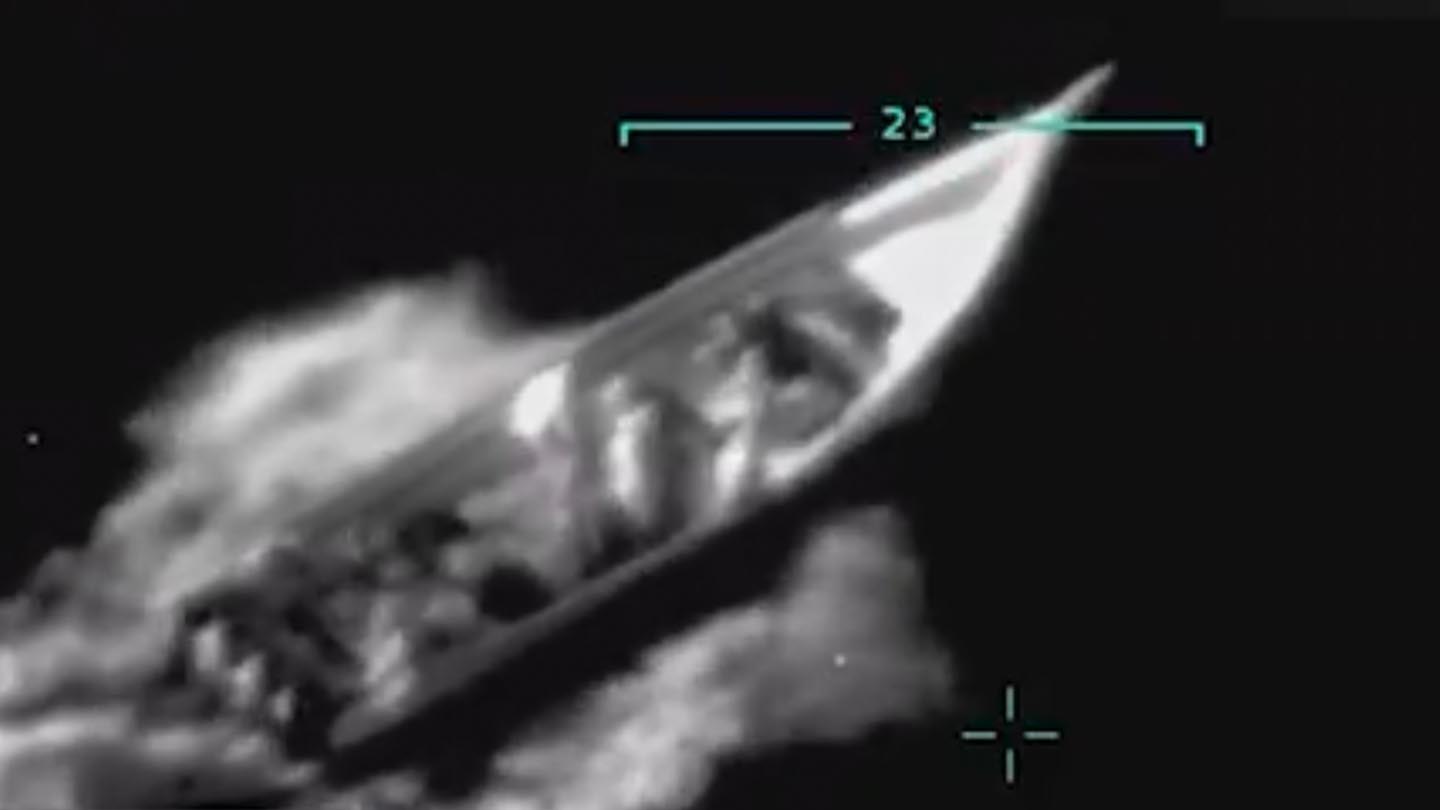
The U.S. will continue to carry out lethal attacks against people belonging to drug cartels designated as narco-terrorists, U.S. Defense Secretary Pete Hegseth said this morning. His comments came a day after the U.S. made a deadly strike on what President Donald Trump said was a drug boat operated by the Tren de Aragua (TDA) cartel, which is closely tied to Venezuelan dictator Nicolas Maduro. You can catch up on our reporting about that incident here.
“It won’t stop with just this strike,” Hegseth told Fox News about the attack he said is a “very clear” message to the cartels. “Anyone else trafficking in those waters who we know is a designated narco-terrorist will face the same fate. It’s important to the American people to protect our homeland and protect our hemisphere.”

The strike, which Trump said on Truth Social killed 11 TDA members, is the first fatal U.S. attack on cartels since he ordered vessels to head to the south Caribbean. The action marks a huge escalation in U.S. efforts to stem the flow of drugs into the country.
In March, Trump issued an executive order declaring TDA a “Foreign Terrorist Organization” and in July signed a still-secret directive ordering the Pentagon to use military force against some Latin American drug cartels he has labeled “terrorist” organizations.
Video Trump released yesterday afternoon on Truth Social shows a drone view of a four-engine speedboat plying through the waters of the south Caribbean. The video then shows the boat being hit by some kind of weapon and exploding. The method of attack remains publicly unknown.
Hegseth was asked by Fox whether the attack was carried out by a drone or an AGM-114 Hellfire missile fired from a helicopter. On Tuesday, The New York Times reported that “a Special Operations aircraft — either an attack helicopter or an MQ-9 Reaper drone — carried out the attack.” The newspaper cited an anonymous senior U.S. official.
The defense secretary declined to offer details.
“I can’t disclose precisely how this went down,” Hegseth explained. “I can tell you it was precision. It was very well understood exactly what assets would be used in order to achieve the effect. So that’s classified how it was done. But you can see publicly a lot of the assets that we have in the region, to include an [Amphibious Readiness Group/Marine Expeditionary Unit] which holds 2,200 combat infantry Marines and has plenty of its own organic assets. So we’ve got assets in the air, assets in the water, assets on ships, because this is a deadly serious mission for us.”
Hegseth dismissed concerns about China’s growing influence in Venezuela. Last month, as Trump ordered warships to head toward Venezuela, China’s Foreign Ministry condemned the U.S. for violating the South American nation’s internal affairs. That followed a meeting between Maduro and Lan Hu, China’s ambassador to Venezuela. Lan has previously criticized American “unilateral coercive measures.”
“The only person that should be worried is Nicolas Maduro, who is effectively a kingpin of a drug narco state, not actually elected and indicted for $50 million by the United States,” Hegseth posited. “We know he’s involved in the types of drug running that has affected the American people directly. So China and other countries are going to say certain things, and that’s their prerogative. What we have there in the Caribbean is a clear demonstration of military might.”
Maduro was indicted in a New York federal court in 2020, during the first Trump presidency. He and 14 others, including several close allies, were hit with federal charges of narco-terrorism and conspiracy with the Colombian FARC insurgent group to import cocaine.
Hegseth deferred questions about removing Maduro from office to the White House, but said that the Pentagon is ready to carry out any orders issued by Trump.
“That’s a presidential decision,” he pointed out when asked if regime change was the goal of the ongoing military maneuvers in the region. “We would prefer that he would just give himself up. But that’s a presidential-level decision, and we’re prepared with every asset that the American military has.”
While the counter-narcotics operations in the south Caribbean are ostensibly aimed at stopping the flow of drugs, an official with direct knowledge of the operations told us last week that these deployments are also directly aimed as a message to Maduro.
At least eight ships, their aircraft, as well as a number of land-based aircraft, are taking part in the mission.
As we were the first to report, the Wasp class amphibious assault ship USS Iwo Jima and San Antonio-class amphibious transport dock ships the USS San Antonio and USS Fort Lauderdale are operating off the coast of Puerto Rico as sailors and Marines from the 22nd MEU take part in an amphibious landing training exercise on the southern part of that island.
In addition to those vessels, which belong to the ARG/MEU, the U.S. has at least five other warships in the region.
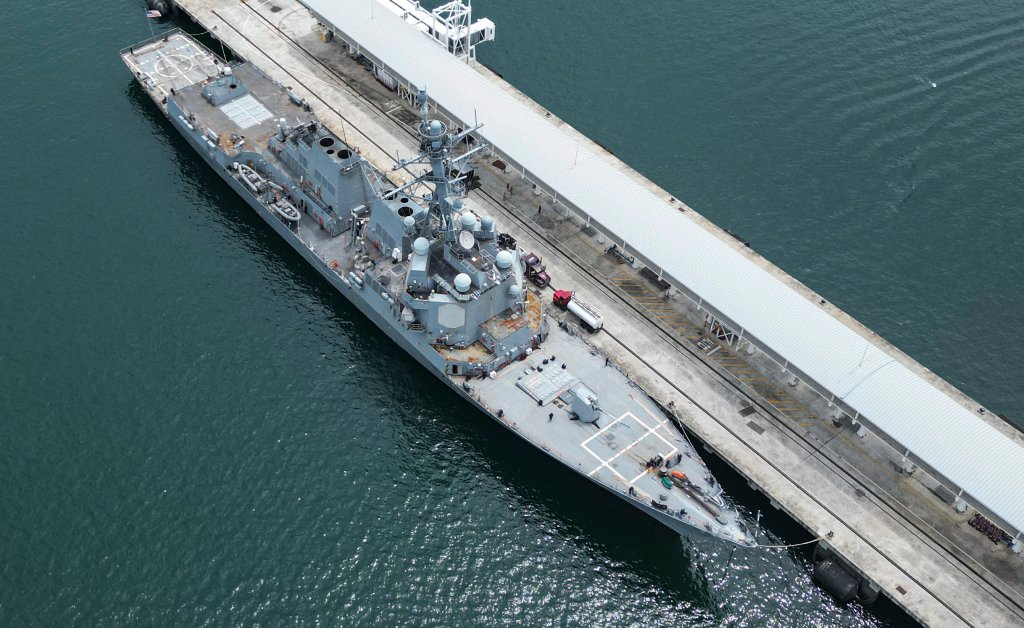
The Arleigh Burke class guided missile destroyers USS Gravely and USS Jason Dunham are underway in the southern Caribbean, a Navy official told us on Tuesday. Meanwhile, at least two Navy warships have reached or transited the Panama Canal. The Ticonderoga class guided missile cruiser USS Lake Erie recently passed through the canal from the Pacific to the Caribbean. The Panama Canal opens up into that body of water about 600 miles southwest of Venezuela.
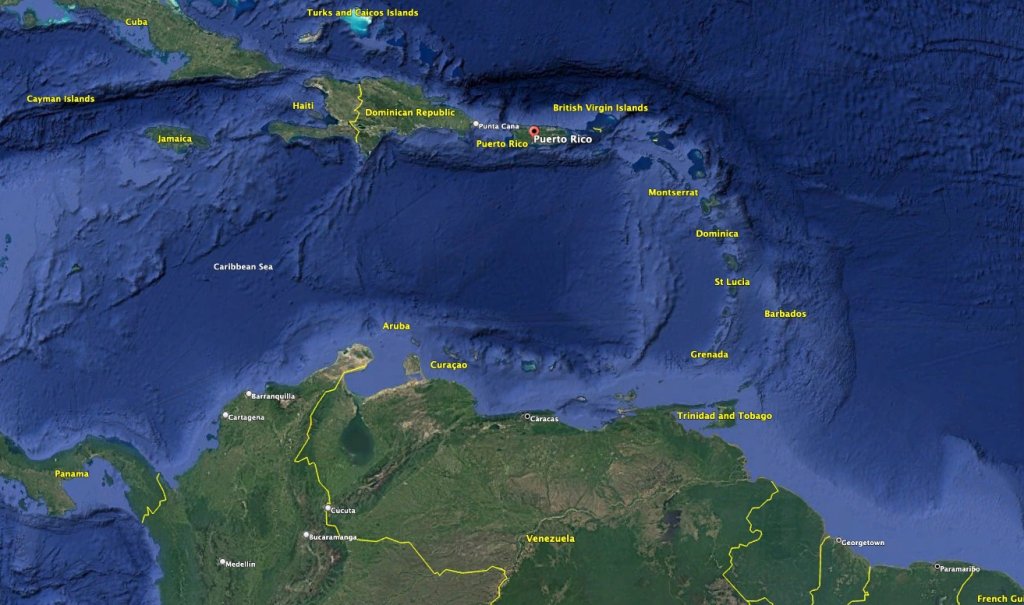
The Arleigh Burke class guided missile destroyer USS Sampson is docked on the Pacific side of the canal, the Navy official added. Citing Navy policy against publicly disclosing the location of its submarine force, the official would not comment on the whereabouts of the Los Angeles class fast attack submarine USS Newport News, also part of this effort.
Colombian President Gustavo Petro, who is also fighting constant battles against narco-terrorists, took to X to decry the attack on the boat as “murder,” pointing out that these kinds of vessels are usually interdicted, with their drugs seized and crews arrested.
While Trump has authorized military action against TDA and other groups designated as foreign terrorist organizations, it is unclear from the video he shared what drugs were aboard or in what quantity. We asked the Pentagon and White House for details. The Pentagon deferred us to the White House, which has yet to respond to those questions. We will update this story with any pertinent details provided.
Regardless, this mission against the cartels, which the Pentagon told us has yet to be named, has crossed the threshold into deadly kinetic action. As we stated in our report yesterday, it appears that the new operating procedure will be, at least in some circumstances, to destroy these vessels without the typical policing actions of stopping, boarding, arresting and seizing that we have seen for many years in the past. It seems outright clear that this is meant to send a major chill through the cartels and act as a deterrent going forward. How much it will actually impact the flow of narcotics across the Caribbean, or if it will expand further to strikes on other kinds of targets, is yet to be seen.
Update: 6:28 PM Eastern –
The Trump administration offered justifications for why it carried out a lethal strike against the drug boat instead of just interdicting it and arresting those on board.
Secretary of State Marco Rubio said previous U.S. interdiction efforts in Latin America failed to stop the flow of drugs.
“What will stop them is when you blow them up, when you get rid of them,” Rubio said on a visit to Mexico.
Earlier in the day, Trump said he was sending a message to the cartels.
“On the boat there were massive amounts of drugs,” the president told reporters in the Oval Office. “We have tapes of them speaking. There was massive amounts of drugs coming into our country to kill a lot of people, and everybody fully understands it. But you see it, you see the bags of drugs all over the boat, and they were hit. Obviously they won’t be doing it again. And I think a lot of other people won’t be doing it again. When they watch that tape, they’re going to say, ‘Let’s not do this.'”
Contact the author: howard@thewarzone.com
Loading comments…
Comments couldn’t be loaded. Please refresh the page.