
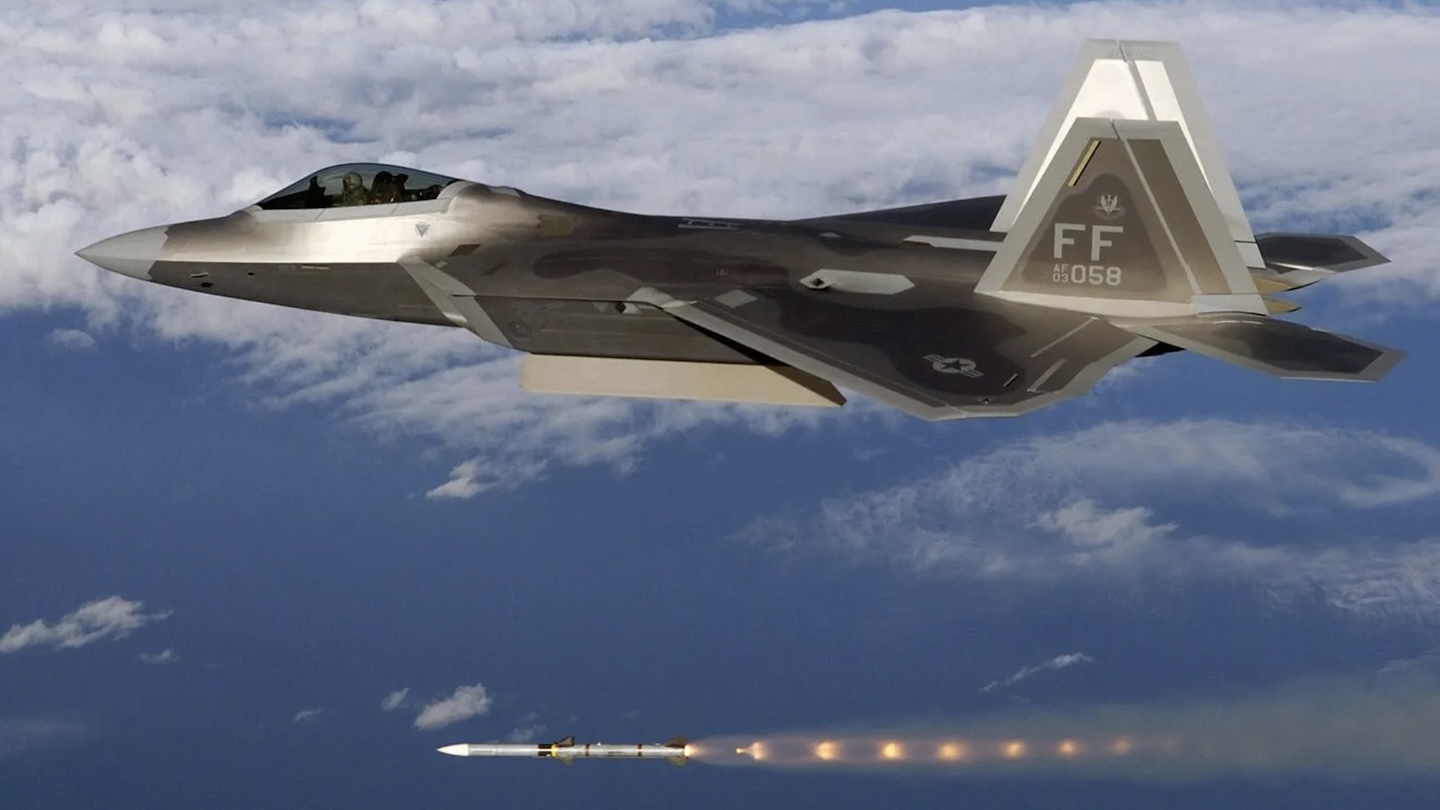
A U.S. Air Force F-22 Raptor has achieved what is, according to missile manufacturer Raytheon, the longest known AIM-120 Advanced Medium-Range Air-to-Air Missile (AMRAAM) shot. Exactly how far away the fighter was from its target when it fired the radar-guided weapon is unclear, but the milestone points both to the continued development of the AMRAAM’s capabilities as well as the growing focus, across the U.S. military, on extended-range air-to-air missiles to keep pace with developments in China and Russia.
Raytheon, part of RTX, announced today that the record AMRAAM shot had been achieved during a series of tests in airspace near Eglin Air Force Base, Florida, in the fall of 2024. The tests, according to Raytheon, “demonstrated AMRAAM’s extended time-of-flight capability, proving the munition can significantly increase the lethality of fifth-generation aircraft.”
The test was likely conducted somewhere over the waters of the Gulf of Mexico, where the vital Gulf Range Complex provides over 130,000 square miles of training airspace, allowing both large-scale air combat training and sustained flying at supersonic speeds.
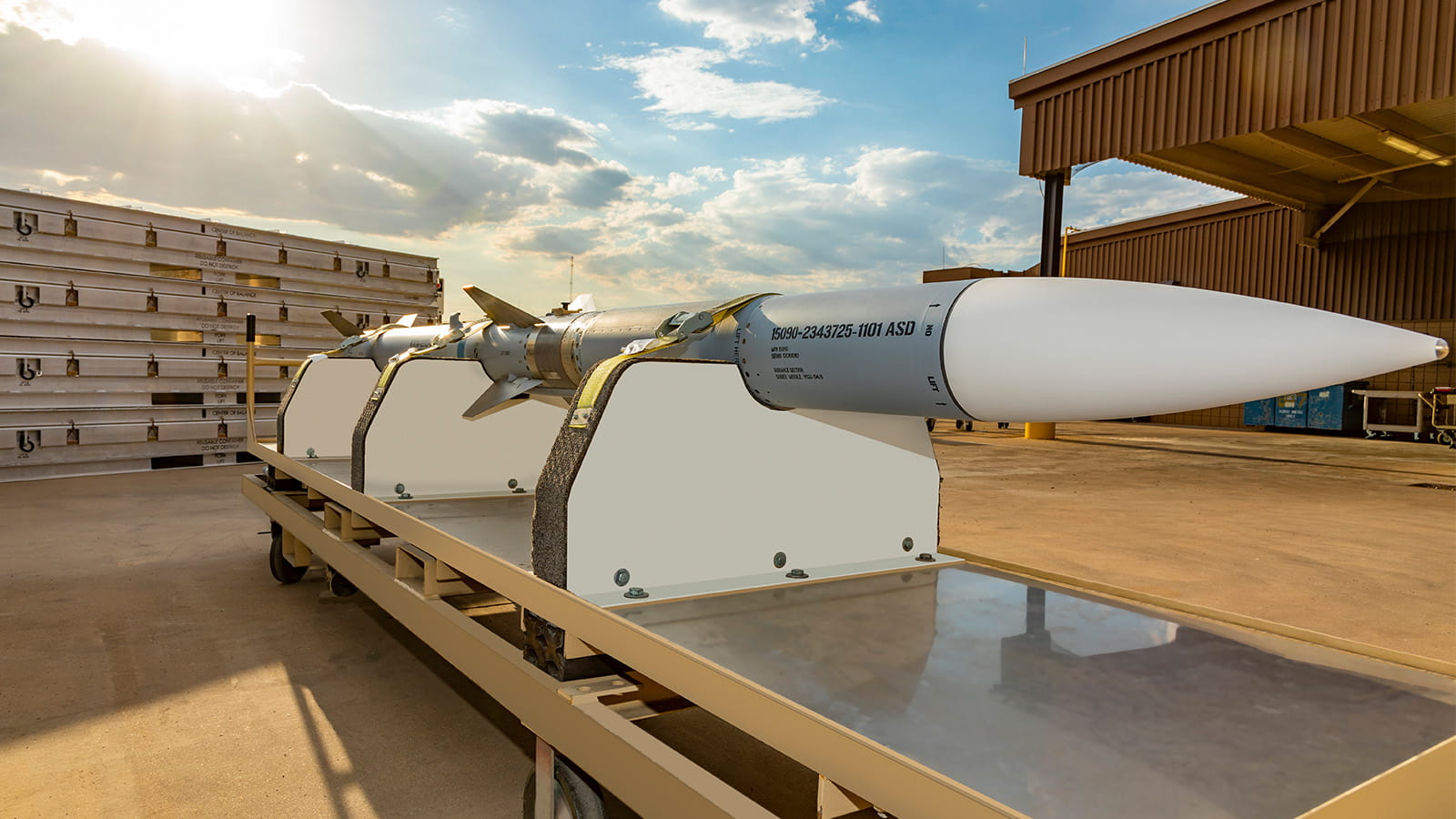
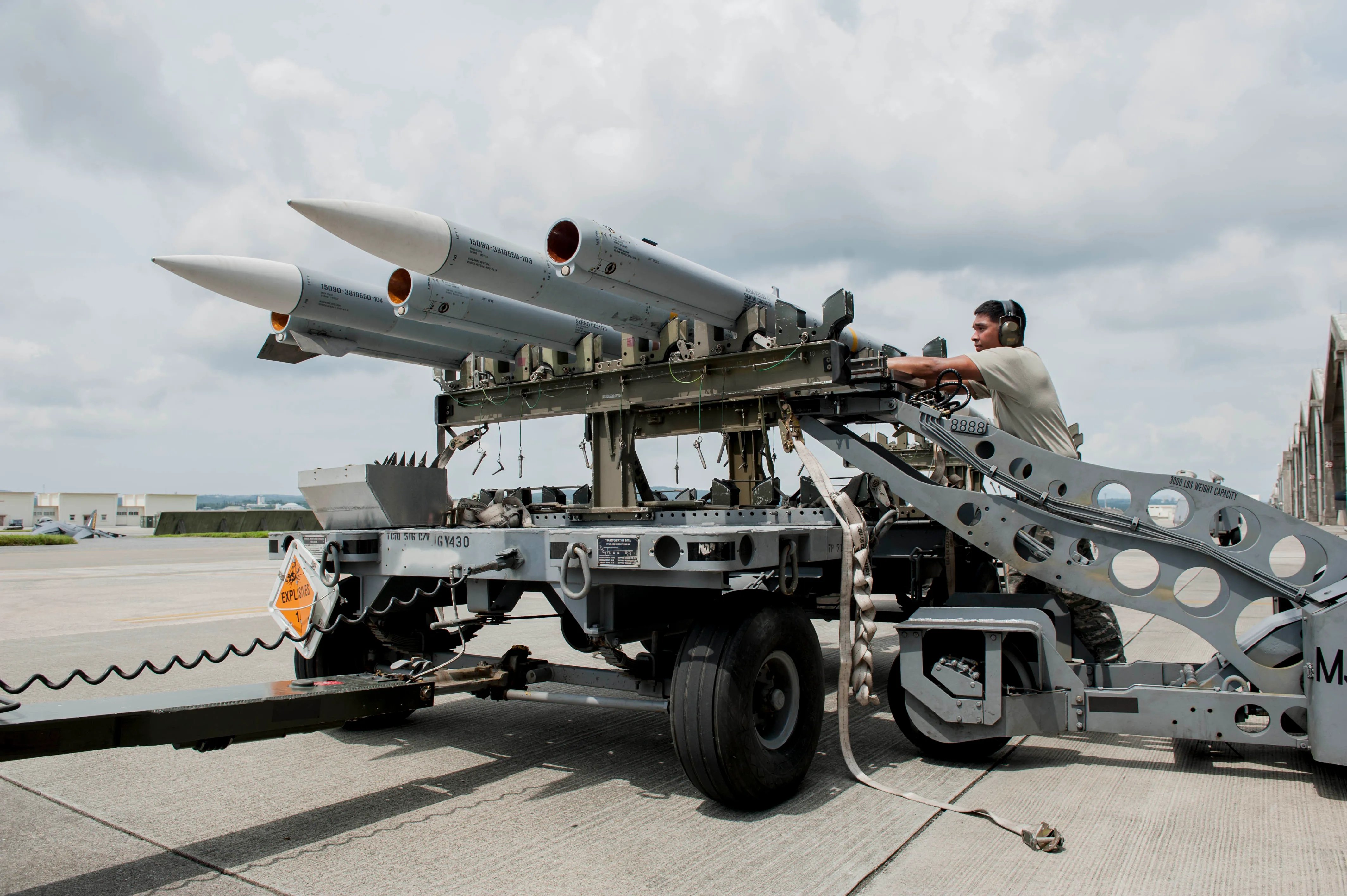
The version of the AMRAAM used was the F3R, developed for the U.S. Air Force. F3R stands for form, fit, function refresh, and is primarily intended to eke out more performance from the missile, as you can read more about here. This is important since, although its AIM-260 successor approaches operational service, the AMRAAM will remain in widespread service for decades.
An earlier promotional video from Raytheon includes footage of a separation launch of the latest-generation AMRAAM F3R from a Navy F/A-18F Super Hornet:

The F3R program was developed for the existing AIM-120C-8 and AIM-120D-3 AMRAAMs, which already represent the ‘top of the line’ for these missiles. Of these, the D-model already offers some significant advantages, including a two-way datalink with third-party targeting capabilities.
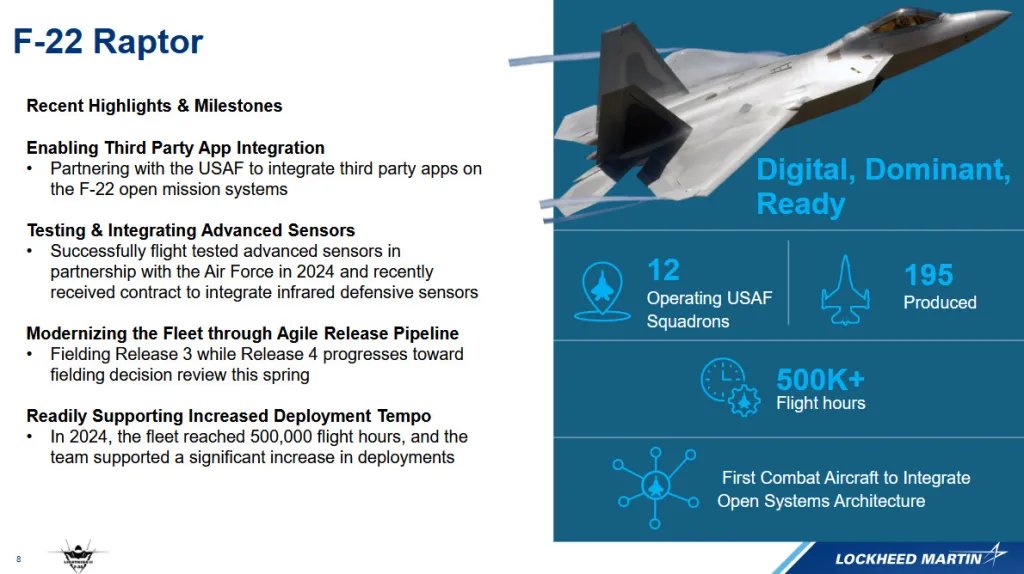
The test shot also points to continued efforts to enhance the F-22. There is already a significant effort underway to add new capabilities to the Air Force’s small, but highly capable and much-in-demand Raptor fleet. There are a number of upgrades in progress to help keep the F-22 on the front line and relevant, potentially into the 2040s. These include a new Infrared Defensive System (IRDS), as well as other additional sensors and stealthy range-extending drop tanks.
We have reached out to the Air Force and to Raytheon for more details of the F-22 shot, but even with the limited details so far, it makes an interesting contrast with a test announced in 2021, when an F-15C Eagle destroyed a target drone out of Tyndall Air Force Base in Florida. That earlier test was described by the Air Force as “the longest known air-to-air missile shot to date.”
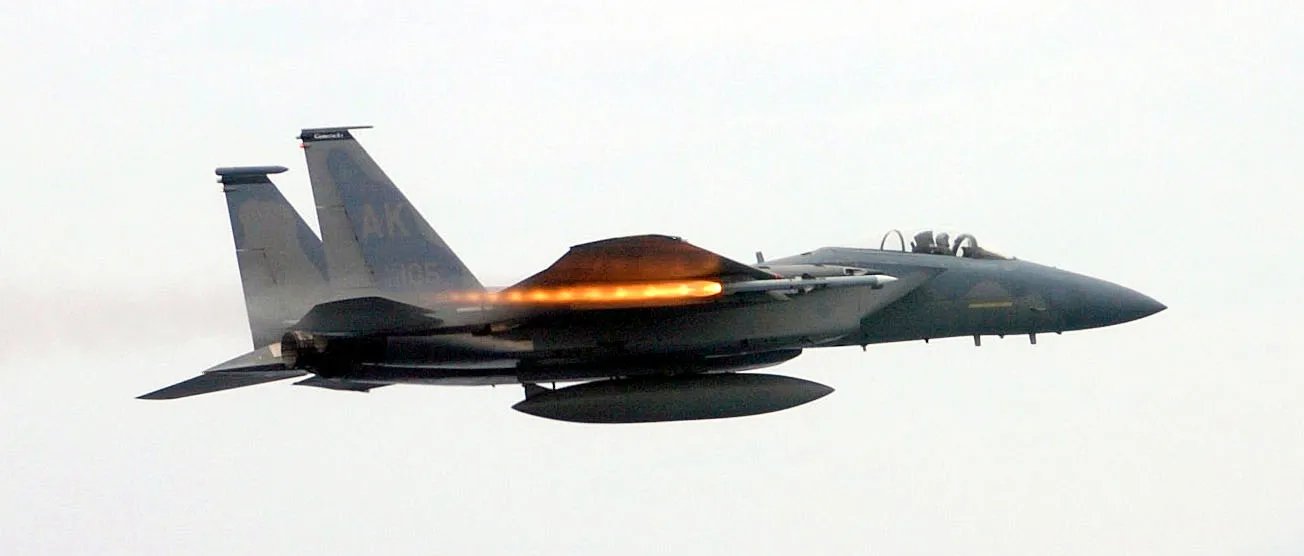
The model of AMRAAM used in the Tyndall test was the latest AIM-120D. While it looks outwardly like one of the earlier AMRAAMs, the D-model offers considerably more range. While official performance figures are classified, it is generally assumed to be able to hit targets at a distance of between 75 and 100 miles. However, when it comes to practical usage, a wide range of factors impact a missile’s range, especially the energy and altitude state of the launching aircraft and the target.
In an F-22 context, longer-range air-to-air missile engagements benefit from the power of the launch aircraft’s active electronically scanned array (AESA) radar, which, in the case of the F-22, is an AN/APG-77.
The Air Force in general is increasingly employing networking and third-party sensors to provide additional targeting data, including for engagements in which the launch aircraft doesn’t lock the target up itself, which can be advantageous. Meanwhile, ‘kill chain’ concepts are an important part of achieving air dominance at extended range, as you can read about in this past post of ours, and they also require longer-legged missiles to get the most out of them.
When it comes to both of those milestone AMRAAM tests, it’s somewhat unclear how they compare to the longest-range historic U.S. Navy air-to-air missiles.
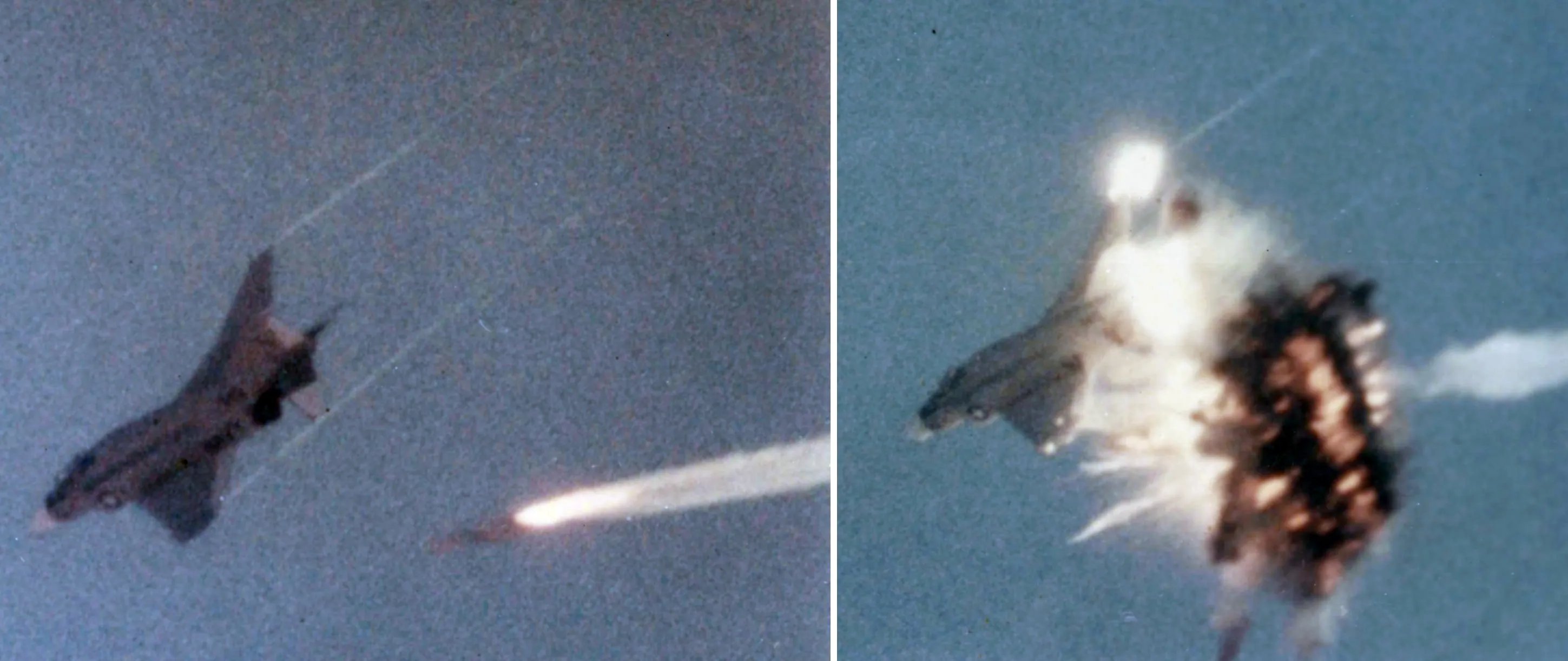
As we have reported in the past, there’s evidence of at least two extremely long-range AIM-54 Phoenix shots dating from the 1970s. One apparently involved a target drone downed at just over 126 miles after the missile was launched from an F-14A Tomcat. The other, reportedly achieved during a training exercise in Iran in January 1979, saw an AIM-54 hit a target drone at a range of 132 miles.
In terms of foreign designs, there are several current air-to-air missiles that should supposedly achieve maximum ranges that outstrip even these.
Much of the U.S. military’s drive toward fielding longer-range air-to-air missiles comes from developments in China and Russia.
In the past, the Air Force has publicly said that the emergence of the Chinese PL-15 air-to-air missile is a key driver in developing longer-range weapons. The Royal United Services Institute (RUSI) defense and security think tank determines that the PL-15 out-ranges the AIM-120D.
The PL-15 is already in widespread service, and China is also working on further-reaching weapons, including the much bigger PL-17, a very long-range missile that may well be intended primarily to target high-value assets, like tankers and airborne early warning aircraft. You can read more about this missile here.
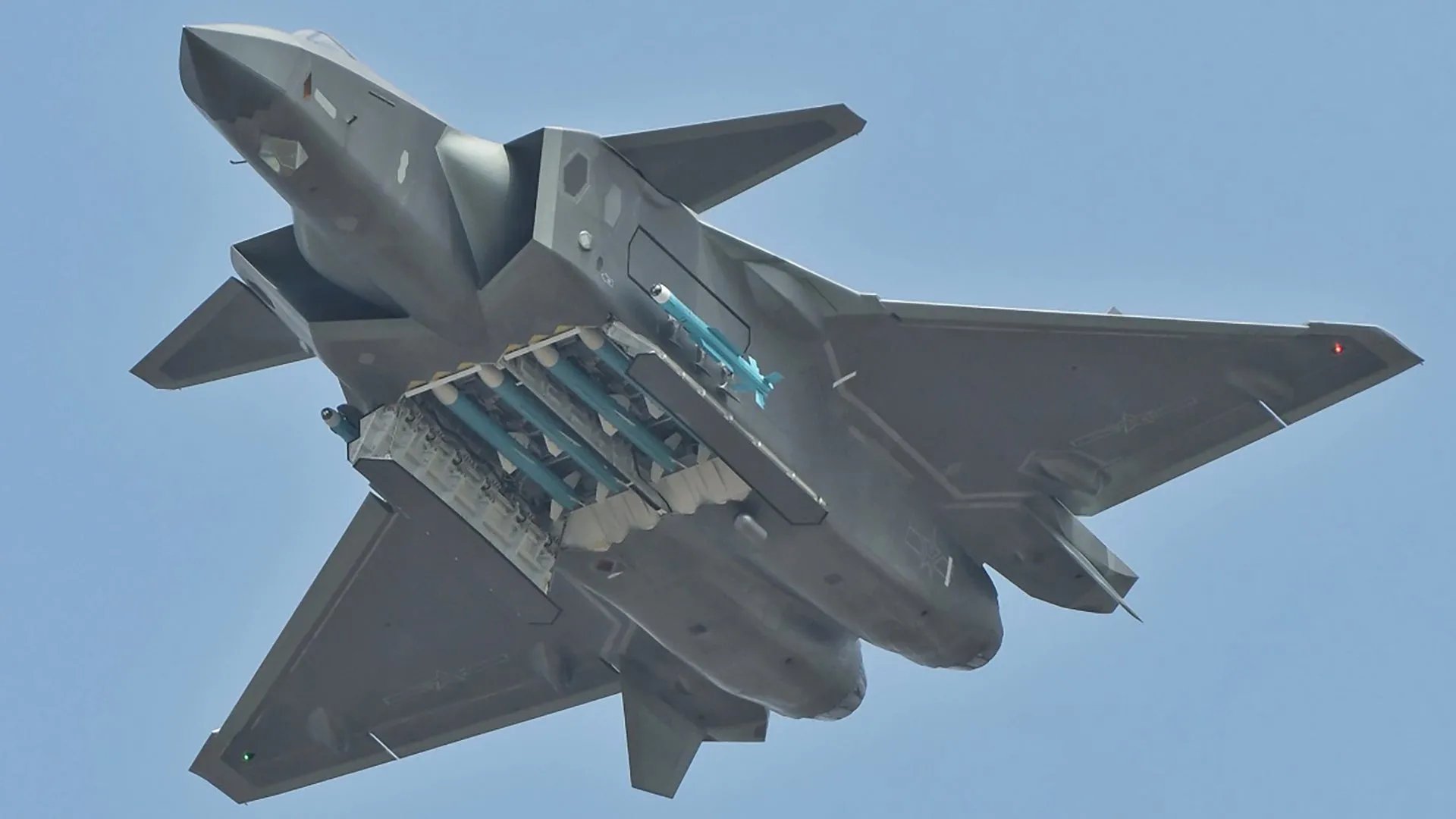
Then there is the missile currently dubbed PL-16, which appears to have been developed to allow the Chinese J-20 fighter to accommodate six longer-range missiles internally (as opposed to the four PL-15s currently carried).
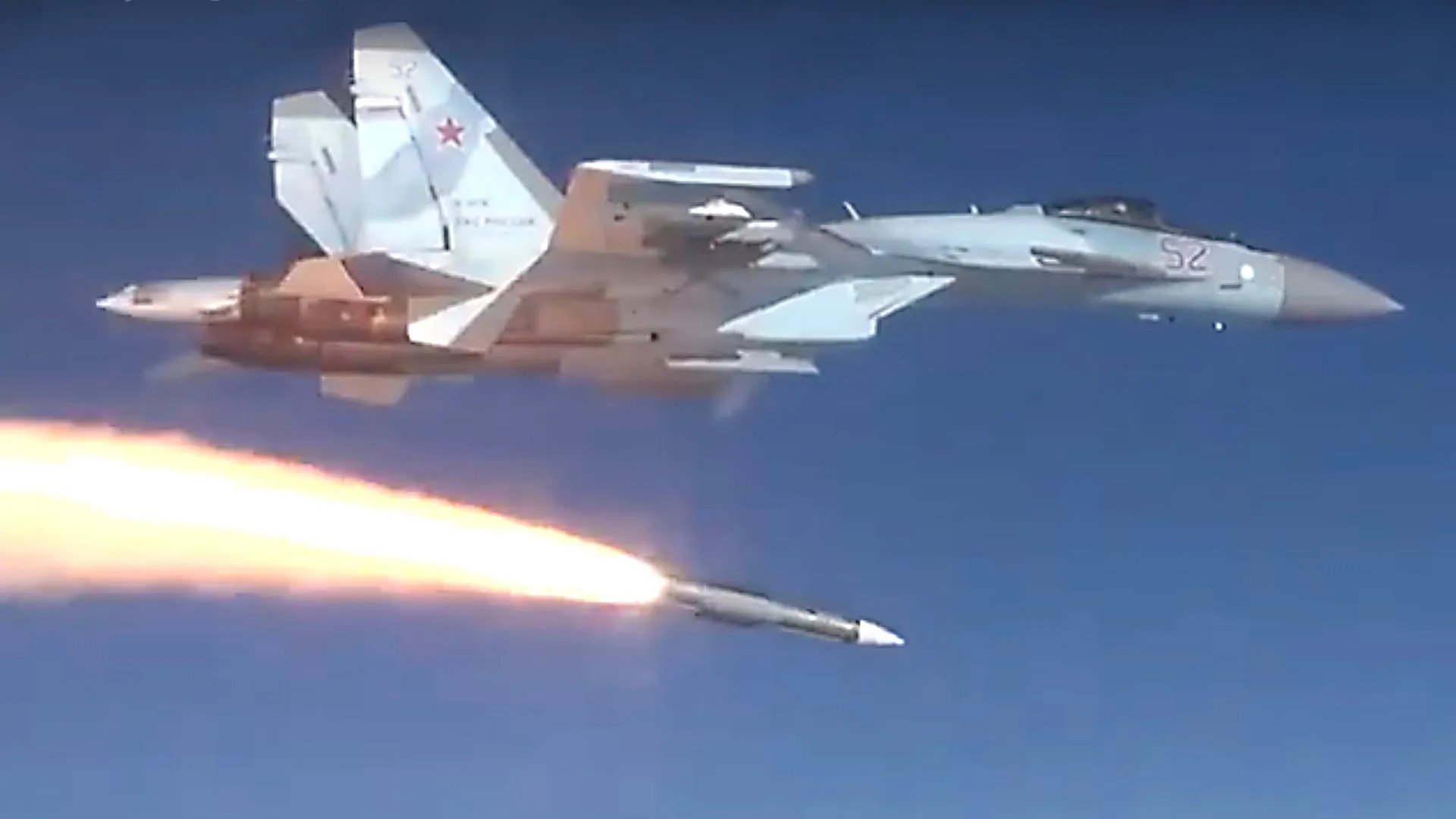
While the actual ranges offered by Chinese and Russian air-to-air missiles are broadly unknown, Russia claims that its R-37M (AA-13 Axehead), at least in its export form, can defeat “some types” of aerial targets at a range of up to 124 miles. This likely refers to only larger, less agile aircraft targets and is very much a “sales brochure figure,” with all the caveats that entail. Nevertheless, the R-37M has apparently achieved notable long-range combat kills over Ukraine and is clearly a concern for NATO, too.
The Pentagon assesses that the threat will only grow. In the past, TWZ has reported on how the Air Force expects that, by 2050, there will be counter-air missiles that can hit aircraft at ranges as great as 1,000 miles — a huge advance in anti-access capabilities compared to the distances air defense missiles can reach today.
In the meantime, there are various very long-range air-to-air missile programs known to have been in the works in the United States. The best known is the joint Air Force/Navy AIM-260, which will offer much greater range than the current AMRAAMs, as well as other new and improved capabilities, but will put these in a missile with similar dimensions to the AIM-120.
In recent months, the U.S. Navy has introduced, at least on a limited level, an air-launched version of the Standard Missile-6 (SM-6) under the AIM-174B designation. The range of this weapon is classified but should be far in excess of that of the AIM-120D, probably at least double and perhaps even triple the range, against large targets.

As for the AMRAAM, Raytheon is justifiably proud that this weapon has so far been integrated on 14 platforms in 43 countries and has completed more than 6,000 successful live fires.
While the basic design of the missile is now old — it got its first kill back in 1992 — the long-range test involving an F-22 demonstrates that, even if it might be outmatched by newer designs, the AMRAAM still has a lot to offer, including in terms of further extending its reach.
Contact the author: thomas@thewarzone.com
Loading comments…
Comments couldn’t be loaded. Please refresh the page.