
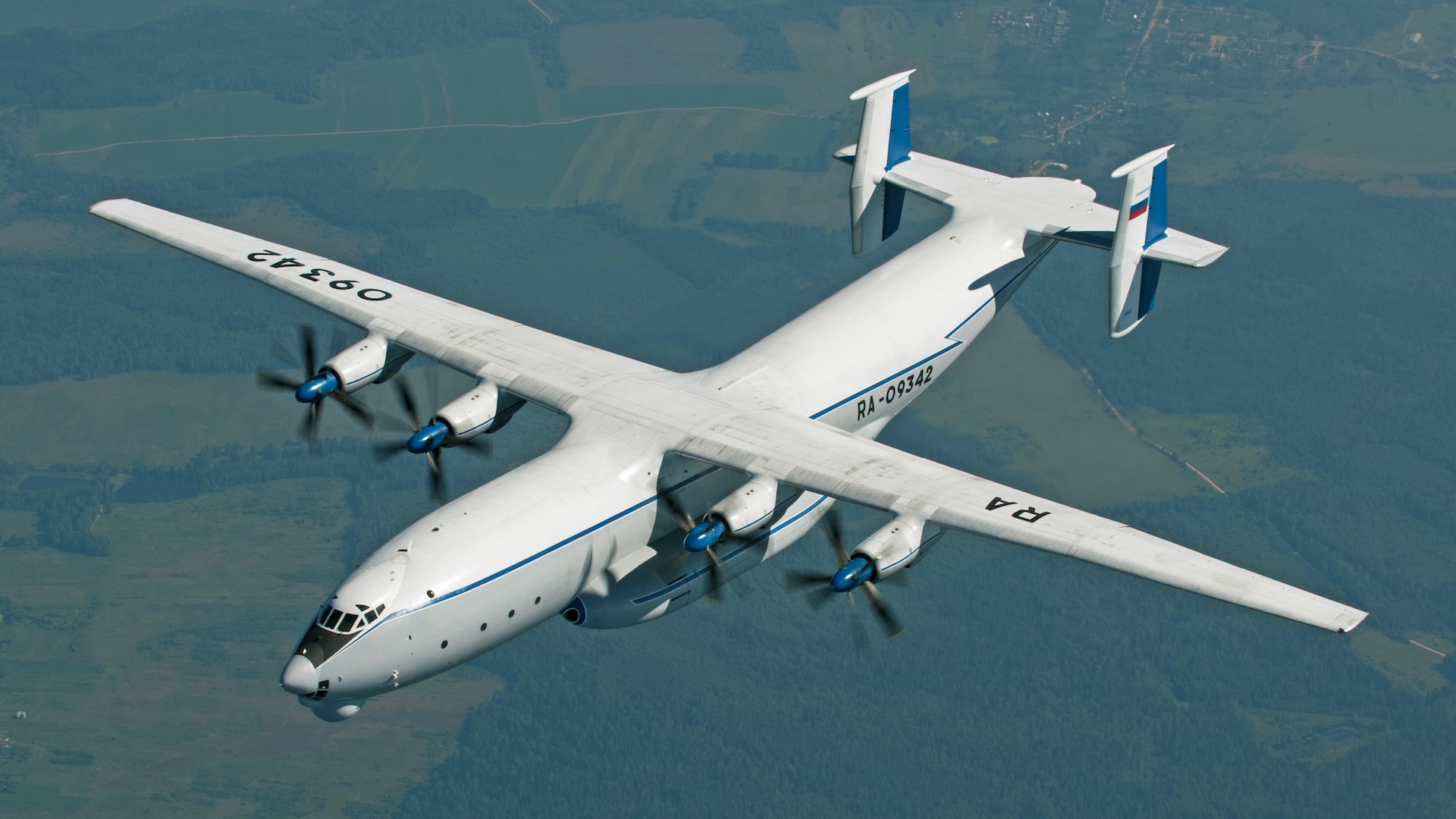
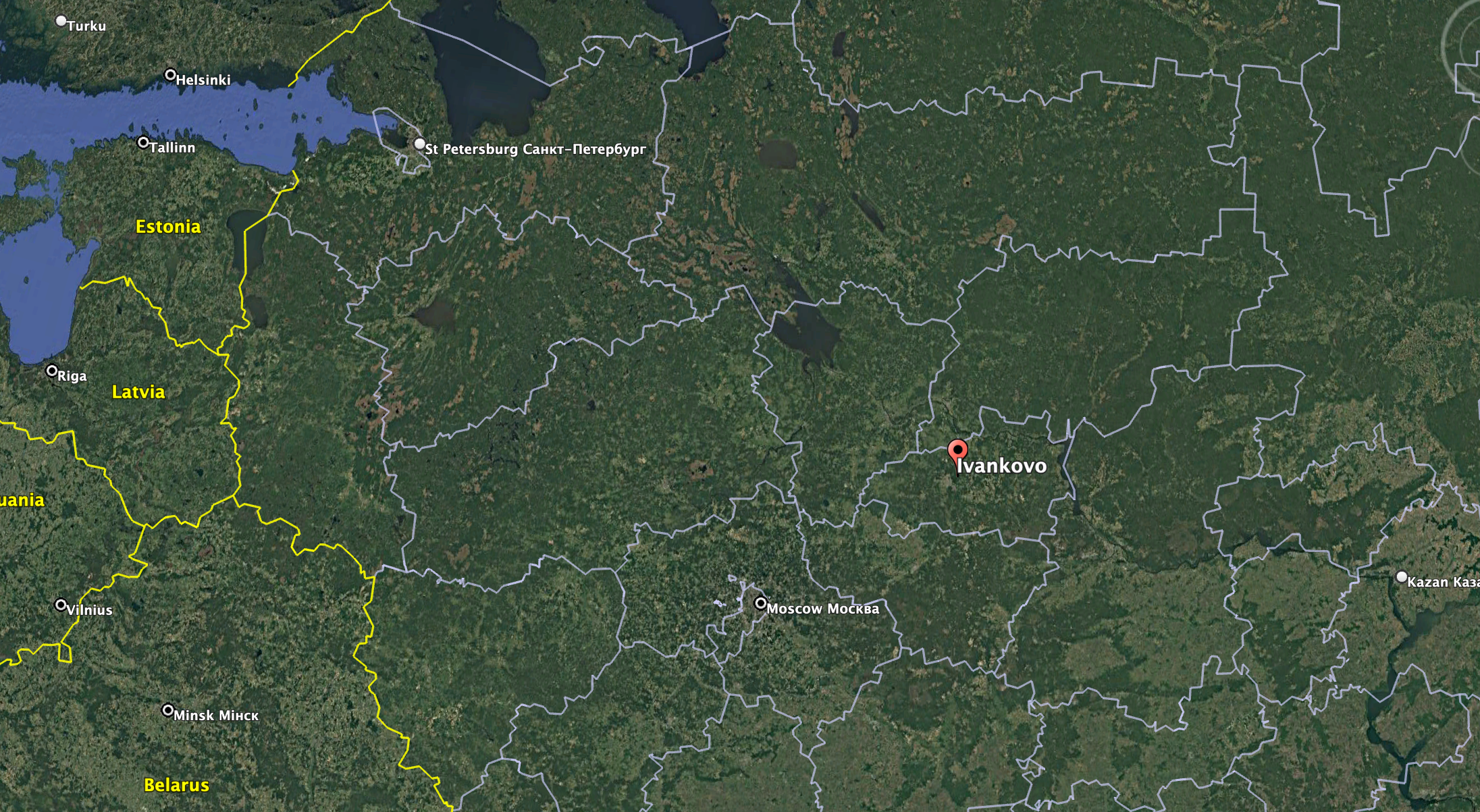
A Russian military Antonov An-22 Cock heavy transport aircraft crashed in the Ivanovo region, around 125 miles northeast of Moscow today, killing the entire crew. The incident is notable especially for the fact that the Soviet-era plane had been widely reported as retired, roughly 18 months ago. Exactly why the aircraft was still flying is unclear, but it does raise some questions about the overall status of the Russian Aerospace Forces’ transport arm.
According to the Investigative Committee of Russia, the country’s main federal investigating authority, the turboprop-powered airlifter went down near the village of Ivankovo. Eyewitnesses reported seeing the An-22 breaking apart in mid-air, with parts of the fuselage falling into a reservoir near the village. A video posted to social media purportedly shows a salvage team removing fragments of the aircraft from the Uvodskoye Reservoir.

The Investigative Committee of Russia has so far not disclosed how many people were on board, although the state-run TASS news agency puts the number at seven, and unconfirmed reports on social media provide names for each.
Russian state media quoted the Russian Ministry of Defense as saying that the An-22 was undergoing a test flight “following repairs” when it crashed, suggesting it was in the process of being returned to service.
The Russian Ministry of Defense confirmed that search crews were deployed to the crash site and an investigation was opened into the accident.
Citing anonymous sources, the Kommersant business newspaper reported that the accident was likely caused by a technical malfunction.
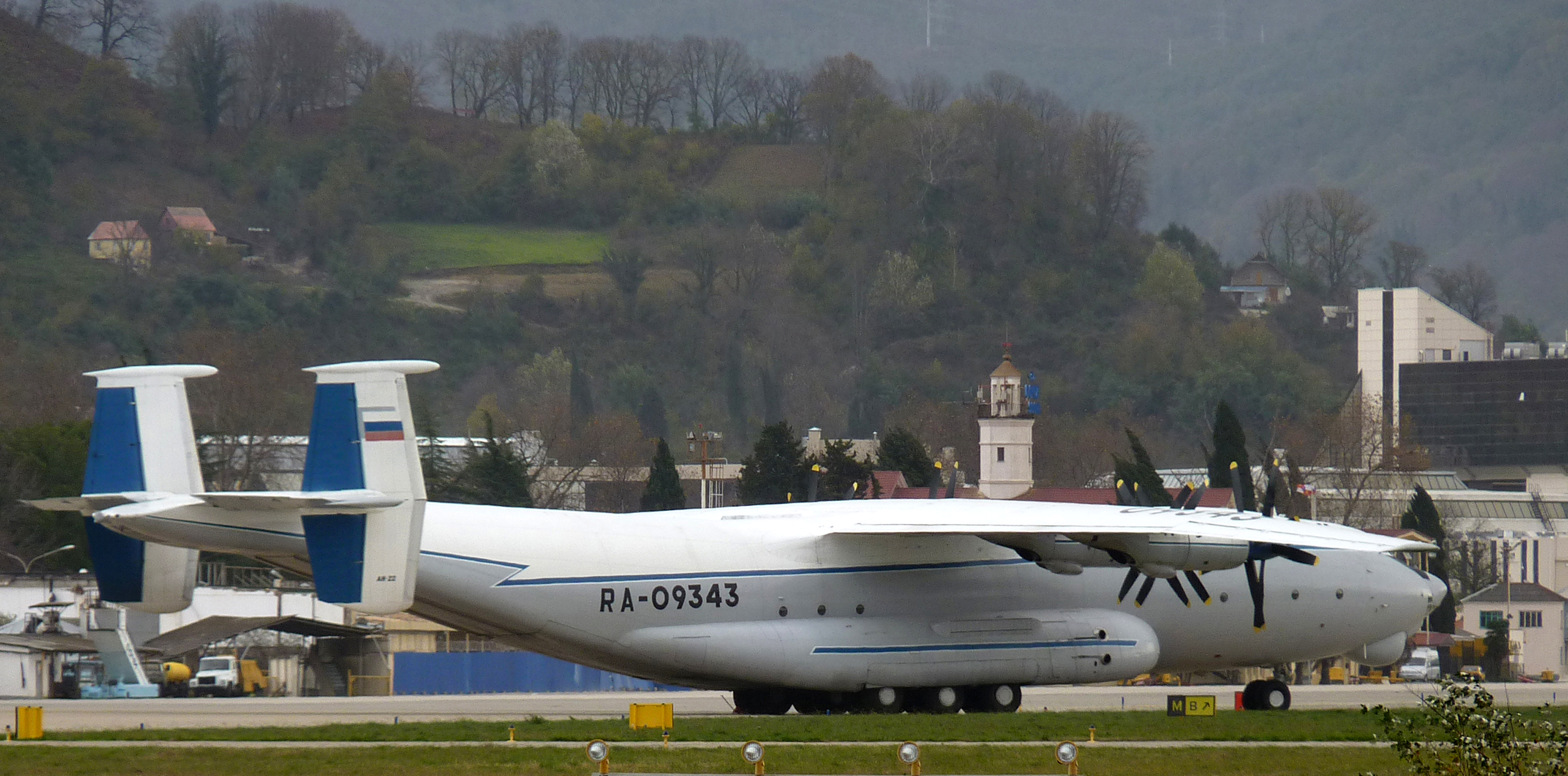
Back in August of last year, there were unconfirmed reports that Russia had finally ceased operations of its An-22 fleet altogether. At this time, it was suggested that the last example, registration number RF-09309, built in 1974, was flown from its home base of Migalovo in the Tver region of western Russia, to Yekaterinburg in the Ural Federal District on August 16, 2024. It was expected to be put on permanent display at the military museum in Verkhnyaya Pyshma. However, no An-22 is visible in recent satellite imagery of the collection, suggesting those plans may have changed.
Potentially, RF-09309 is the same aircraft that crashed today, or it could have been one of the other four An-22s that were reportedly still active with the Russian Aerospace Forces’ 196th Military Transport Aviation Regiment as of June 2024.
At that point, Gen. Vladimir Venediktov, the commander of Military Transport Aviation, told Russia’s state-owned VGTRK broadcaster that the An-22 was headed for retirement before the end of that year.
That the An-22 survived that long, let alone that an example was still flying as of today, is somewhat remarkable.
As you can read about in detail here, the An-22 was designed and built by the Antonov company based in Kyiv, in what was then the Ukrainian Soviet Socialist Republic. The prototype flew on February 27, 1965, at which point it was the world’s heaviest aircraft.
In common with the Tupolev Tu-95 Bear bomber, the An-22 was powered by four huge Kuznetsov NK-12MA turboprops, each rated at more than 14,805 horsepower and driving eight-blade contra-rotating propellers, more than 20 feet in diameter.
The powerplant gave the An-22 a distinctive mechanical roar, as heard in the video below.

In all, 68 An-22s were completed, including two prototypes, between 1966 and 1976.
Service entry with the Soviet military was in January 1969, and the aircraft was especially valued for its ability to accommodate outsized loads.
Up to more than 132,000 pounds of cargo could be carried. Alternatively, the An-22’s cargo hold had space for 151 paratroopers or 292 standard troops, carried on two decks. However, the main cargo hold was not pressurized, except for a forward cabin with seating for 29 personnel.
Items of cargo included complete missile systems, as well as large and heavy military vehicles, via the large loading ramp at the rear. The aircraft could also operate from austere airfields if required.
By the early 2000s, it already looked like the An-22’s career was nearly over, with just nine airworthy examples at Migalovo. It was now outnumbered by the far more capable, jet-powered An-124 Condor, which had entered service in the 1980s as the world’s heaviest production transport aircraft, capable of carrying a normal load of 300,000 pounds.

However, the Russian military chose to keep the An-22, even in limited numbers, since it was cheaper to operate than the An-124, but had a much bigger hold than the Ilyushin Il-76 Candid.
Plans to modernize the surviving An-22s failed, however, with the result that the active Russian Aerospace Forces’ fleet dwindled to five.
A sixth was still operated by the Antonov Design Bureau in Kyiv until it was reportedly damaged beyond repair during fighting at Hostomel Airport at the beginning of the full-scale Russian invasion.
The fact that at least one An-22 was apparently being prepared to return to active service with the Russian Aerospace Forces appears to paint a bleak picture of its air transport arm.
While it still operates significant numbers of Il-76s, in terms of heavy transports, Russia has also failed to reinstate production of the An-124. The main problem has been a lack of suitable engines — the original D-18T turbofan is manufactured by Motor Sich at its plant in Zaporizhzhia, Ukraine. Meanwhile, Motor Sich is also the only company capable of overhauling these engines, reducing the availability of the Russian An-124 fleet. This factor also may have driven the An-22’s planned return to service.
Plans to develop an all-new, all-Russian successor to the Ukrainian-designed An-124 have so far also failed to materialize.
Overall, the Russian transport aircraft fleet is aging fast, and this may also have contributed to other recent accidents.
In July of this year, a civilian-operated Antonov An-24 Coke twin-turboprop regional airliner crashed near Tynda in the Amur region of eastern Russia. All 42 passengers and six crew members on board died. The aircraft, long obsolete, had been manufactured in 1976.
In the same month, two people were killed after an An-2 Colt utility transport crashed in southern Russia’s Krasnodar region. The An-2 was first flown in 1947, and the Soviet Union and Russia have collectively failed to develop a suitable successor for a type that remains in widespread use.
There have also been other Russian transport aircraft losses that may or may not be connected to the conflict in Ukraine, as well as pinpoint attacks on these aircraft by long-range Ukrainian drone strikes.
At the same time, the fleet, in general, is likely suffering from the effects of sanctions, especially when it comes to readiness levels.
With the war in Ukraine still raging, the Russian military’s demand for heavy-lift air transport is only going to continue. Whatever the reason for today’s crash, it is a blow to the Russian Aerospace Forces. Apart from the slim possibility that a contractor might try and obtain the remaining aircraft to exploit their unique capabilities, it seems altogether unlikely that the An-22 will find a way back into regular service after this latest incident.
Contact the author: thomas@thewarzone.com
Loading comments…
Comments couldn’t be loaded. Please refresh the page.