
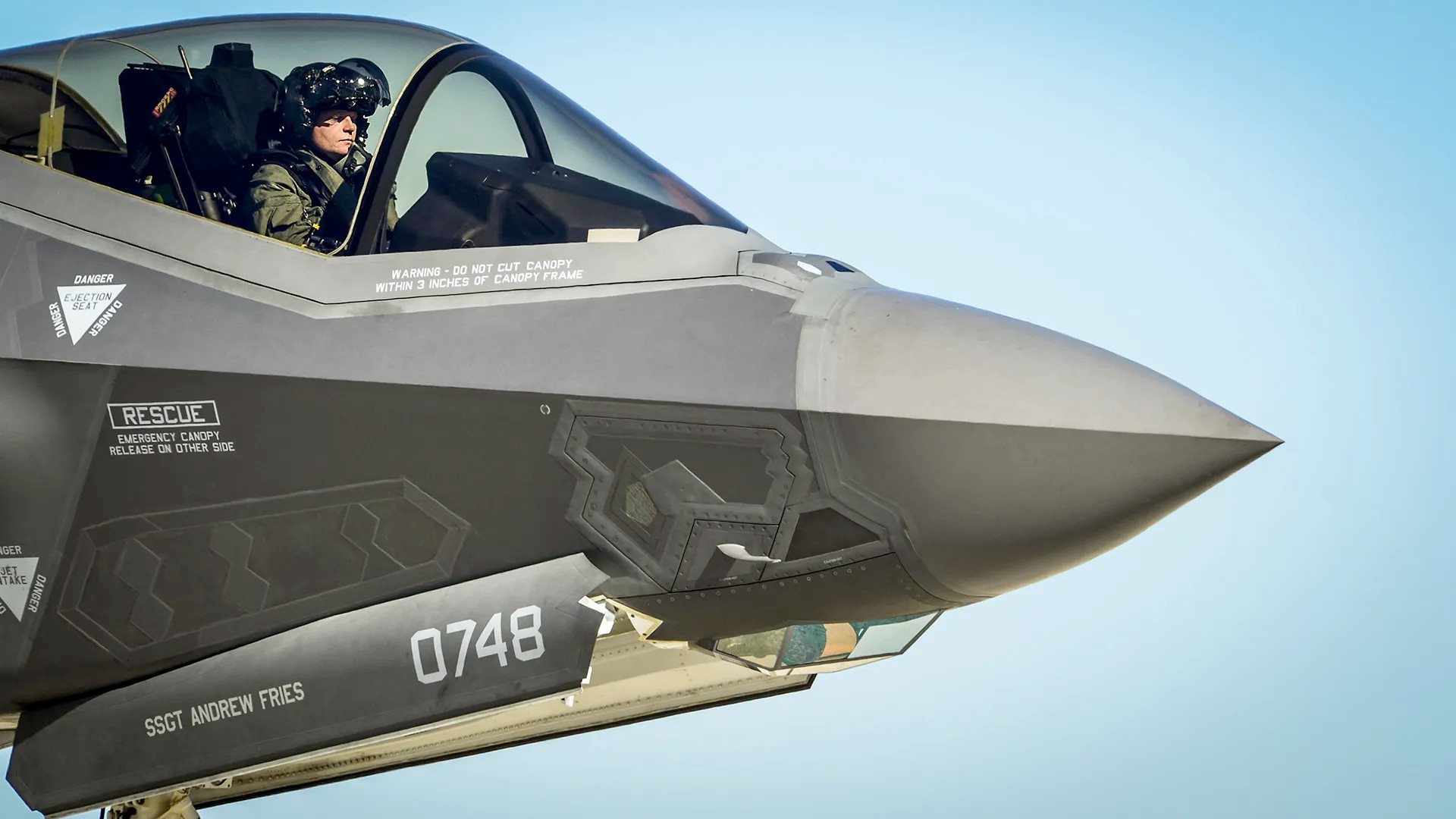
The F-35 Joint Program Office has declined to confirm or deny a report that Joint Strike Fighters are being delivered to the U.S. military without radars due to chronic issues with a key upgrade program. However, other confirmed publicly available information does seem to very strongly point to that being the case. The new AN/APG-85 radar is a critical element of the larger Block 4 upgrade package for all variants of the F-35, which has been mired in cost growth and delays.
The U.S. Air Force has now responded to this report. You can find a full follow-up here.
Defense Daily first reported that the U.S. military had received F-35s with no radars last week, citing an unnamed source. Deliveries of radar-less F-35s were said to have started in June 2025, with all A models for the U.S. Air Force arriving since then, at least, affected. The story does not elaborate on how the decision to accept jets in this configuration was arrived at. Foreign customers, all of whom are still currently acquiring jets fitted with the older AN/APG-81 radar, have reportedly not been impacted.
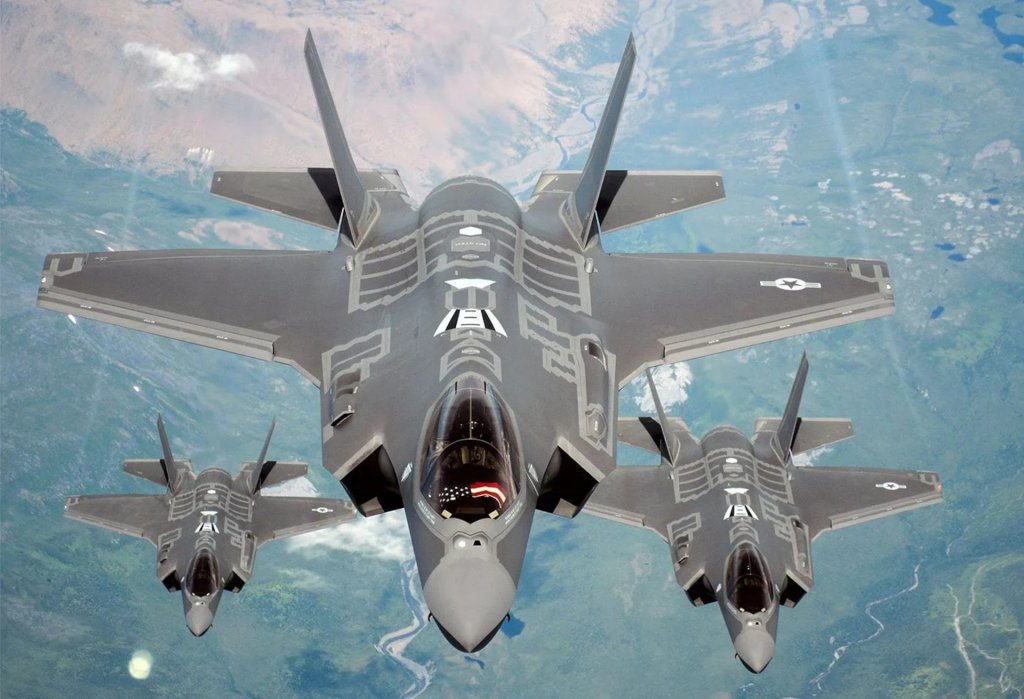
“F-35 Lightning II aircraft are being built to accommodate the F-35 advanced radar (APG-85) for [the] U.S. Air Force, Navy, and Marine Corps,” a spokesperson for the F-35 Joint Program Office (JPO) told TWZ today in response to our queries in light of the Defense Daily report. “Initial fielding for some F-35 aircraft is planned for Lot 17, which began delivery in 2025 and continues through September 2026.”
“Due to program security reasons, we are protecting any additional information with enhanced security measures.”
TWZ also reached out to Lockheed Martin, the prime contractor for the F-35, which deferred to the JPO. Northrop Grumman, which is developing the APG-85 radar, also declined to comment.
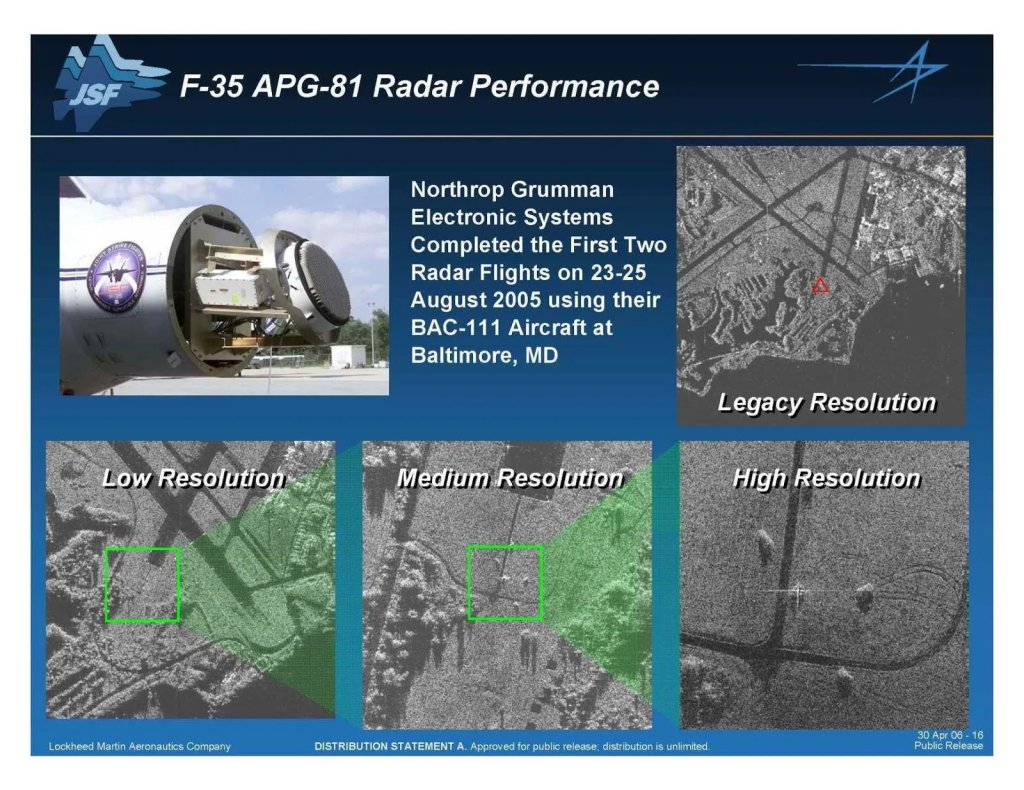
Specific details about APG-85’s capabilities remain limited. Like the APG-81 before it, the new radar is an active electronically scanned array type with air-to-air and air-to-ground modes. As is the case with its predecessor, the APG-85 is also expected to have a synthetic aperture mapping, or SAR mapping, capability. This allows it to produce high-resolution images that can be used for target acquisition and identification, as well as general reconnaissance purposes.
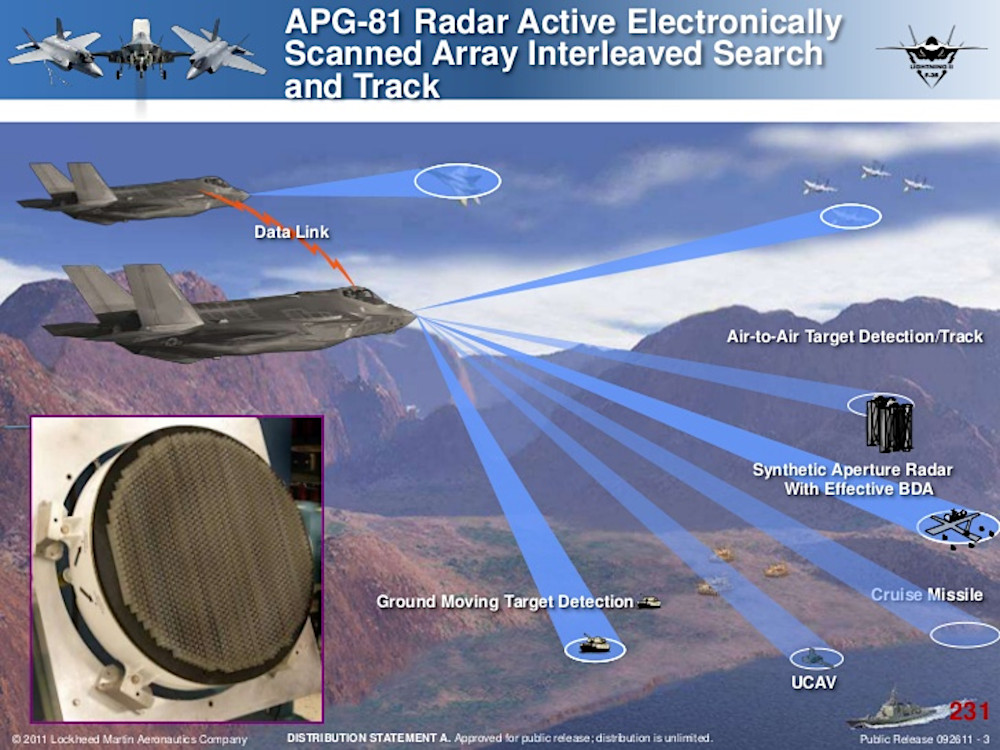
Low probability of intercept/low probability of detection (LPI/LPD) features would also be important for the APG-85 when paired with the stealthy F-35. This would help make the radar harder to detect and jam. Signal emissions can offer opponents another way to spot and track stealthy combat aircraft. In addition, the existing APG-81 is deeply integrated with the F-35’s extensive electronic warfare suite, as well as other sensors and facets of the design, and the same will be the case for the new radar. A new electronic warfare package is also on the horizon for the Joint Strike Fighter.
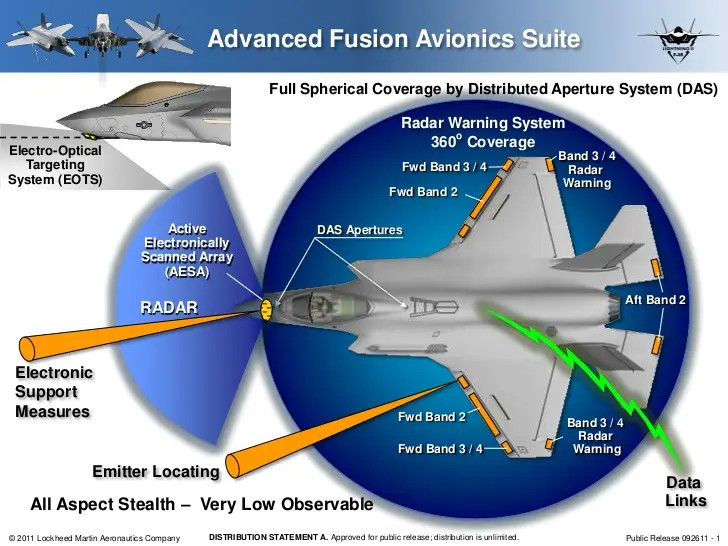
If nothing else, the APG-85 will just be able to leverage decades of additional general technological advancements. The use of gallium nitride (GaN) has had a particularly pronounced impact on modern radar developments when it comes to physical size, weight, and power demands. The APG-81 traces its roots back to the 1990s.
As noted, while we cannot confirm at this time that F-35s are being delivered to the U.S. military without radars, an array of separately confirmed details does provide substantial circumstantial evidence.
For one, the JPO has confirmed that F-35s “are being built to accommodate” the APG-85 and that it has been receiving Lot 17 jets from Lockheed Martin since last year. The stated plan has been and continues to be that Lot 17 jets will be the first to receive the APG-85, which is still in development.
Furthermore, Rep. Rob Wittman, a Virginia Republican, has confirmed that the integration of the APG-85 requires some degree of physical alteration to the F-35’s design. Wittman is currently Vice Chairman of the House Armed Services Committee and Chairman of its Tactical Air and Land Forces Subcommittee.
“The bulkhead configuration is key because for both of the radars, they are very different,” Wittman told Defense Daily in an interview on February 3. “Remember, the bulkhead configuration allows the placement of the radar towards the attitude of the array, and the attitude of the array makes all the difference in the world about how the radar operates.”
“I know all about it, but the delivery of the aircraft is classified,” Wittman also told that outlet last week. “I can’t speak to the condition of the aircraft, so you’ll have to go to the Air Force, the customer, and ask them about that.”

In addition, Defense Daily reported that a mount that can accommodate both the new APG-85 and older APG-81 inside the F-35’s nose does not currently exist and would take two years to develop, citing its anonymous source. However, a separate story that Breaking Defense published last June, the same month that deliveries of F-35s without radars reportedly began, lends credence to that detail.
“To mitigate potential delays [with the APG-85], Lockheed is proposing redesigning the aircraft’s forward fuselage to be capable of accommodating either the aircraft’s incumbent radar, the APG-81, or the new radar,” Breaking Defense had reported, citing a letter it had obtained, written by Lockheed Martin CEO Jim Taiclet and addressed to then-Air Force Chief of Staff Gen. David Allvin. “The fresh fuselage design could enter service in the program’s Lot 20 production.”
Deliveries of Lot 20 F-35 aircraft are estimated to begin between 2027 and 2028, or roughly two years from now.
“If a decision is made to extend this [fuselage] design to all Partners and Foreign Military Sales (FMS) countries, we would have a common structure for Partner and FMS aircraft with their APG-81 radars,” Lockheed Martin’s Taiclet also wrote in the letter, according to Breaking Defense. At the time of writing, the United States and 19 other countries either operate variants of the F-35 or are in the process of acquiring them.

The full extent of any impacts from the U.S. military’s acceptance of F-35s without radars is unclear.
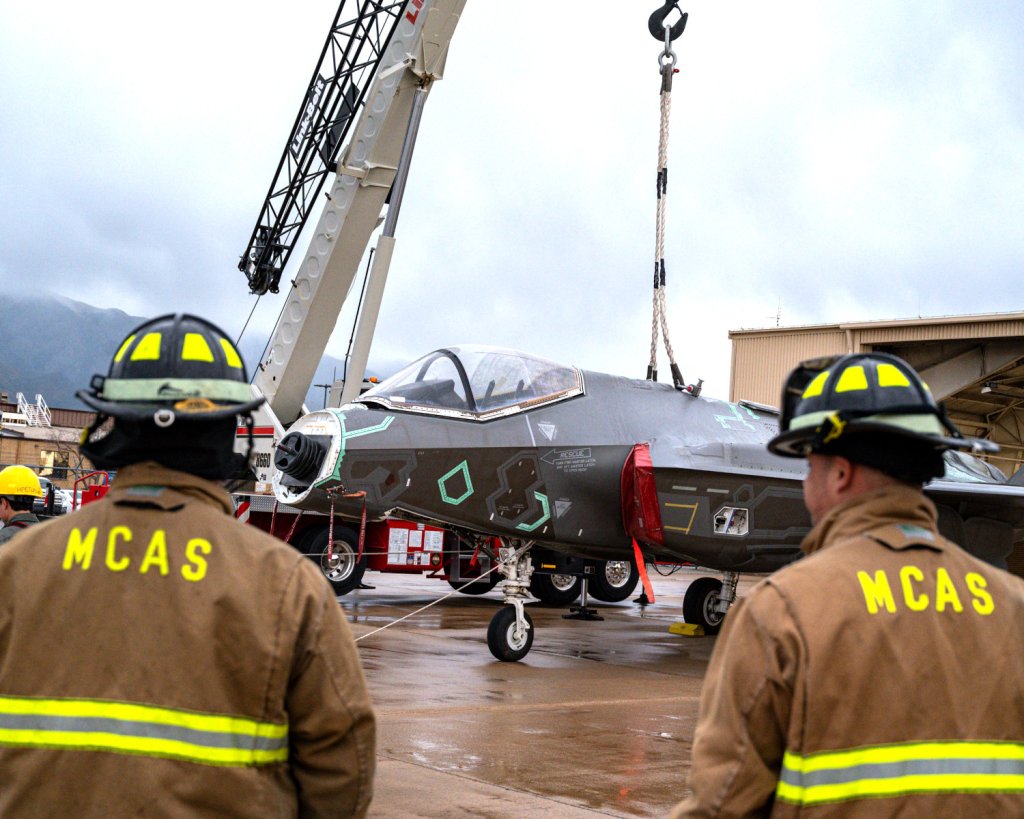
“Without a radar, there had to be additional weight added in the nose for aircraft balance during flight,” according to Defense Daily‘s source. “Radar-less F-35s have been able to fly, as long as they are accompanied by other F-35s, data linked and equipped with the APG-81.”
As an aside, pictures, including the one below, showing an F-35A with no nose radome and weights in place of a radar, have begun circulating online recently. However, these show an airframe being used in an aircraft recovery training exercise back in 2024.
As long as one F-35 in a formation has a radar, all of the other aircraft in said group should be able to benefit from the data it provides via their Multifunction Advanced Data Links (MADL). As such, even without a radar installed, a Joint Strike Fighter would not be without F-35-derived radar data if at least one other was flying cooperatively with it within MADL’s transmission reach.
It is possible that radar-less jets could be sent into combat, at least in an emergency scenario, though doing so would still require accepting greater risks. It would limit tactical flexibility, as well, since remaining linked together with other radar-equipped jets would be key. Those jets would also have to rely on using their radars more heavily, which can be a vulnerability. The F-35 also has a host of passive sensors that it can rely on for battlespace information, although none are capable of replacing the radar’s functionality. Data from other platforms transmitted via Link 16 is also available to all F-35 pilots.
Maybe one of the biggest issues with having no radar is that it is a major part of the jet’s electronic warfare suite. Its ability to transmit narrow, extremely powerful beams of energy adds to the jet’s potent electronic attack capability. So, without the radar, its ability to defend itself and others by leveraging the electromagnetic spectrum is also curbed.

So, are an F-35’s capabilities degraded without a radar? Yes. As is a formation of F-35s. But is it ‘blind’ and useless? No.
Regardless, the F-35 JPO does have a long history at this point of taking delivery of jets missing certain key features, with plans to integrate them later on. The F-35 program had been heavily defined, at least in the past, by a process known as “concurrency,” wherein the Pentagon approved the start of low-rate production while aspects of the design were still being finalized. Presented as a cost and time-saving measure, that decision created massive disruptions due to the total number of resulting aircraft configurations, with certain parts not even necessarily interchangeable between jets supposedly of the same generation. The negative downstream impacts are still being felt today, especially when it comes to maintenance and logistics, as TWZ previously explored in an in-depth feature that you can find here.
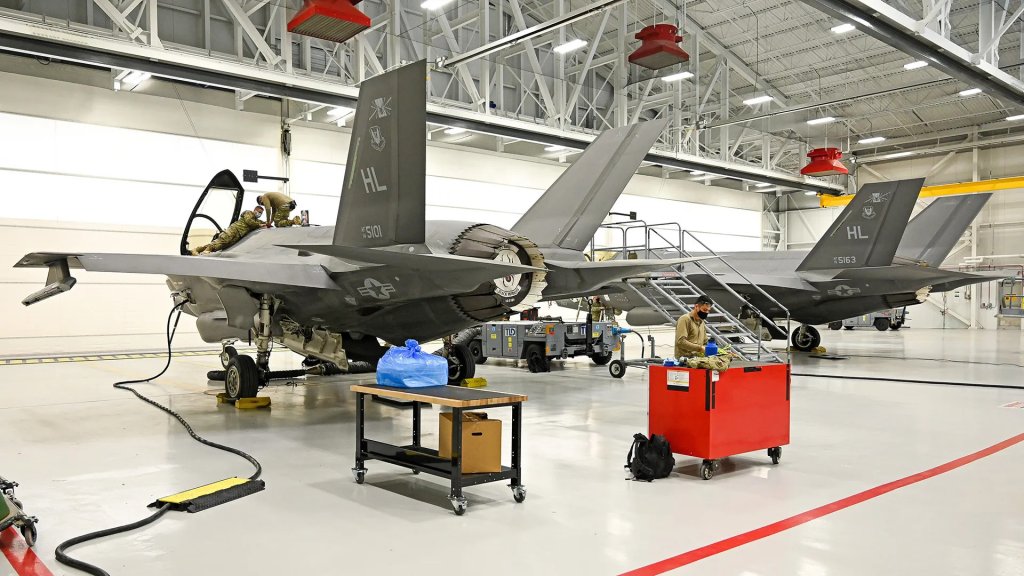
As mentioned, the Block 4 upgrade package, as well as a tangential hardware and software refresh (called Technology Refresh-3, or TR-3) necessary to support it, have been beset by their own delays and cost growth. The issues are not at all limited to the APG-85. In September 2025, the Government Accountability Office (GAO), a Congressional watchdog, published a report saying the Block 4 effort’s price tag had risen by $6 billion and was at least five years behind schedule. All of this was in spite of a decision to truncate the initial batch of upgrades to try to accelerate their fielding.
How this all might impact the final composition of the Block 4 package, and when jets considered to be fully upgraded might begin flying, is unclear. Beyond the APG-85 radar and the aforementioned updates to the electronic warfare suite, Block 4 is also supposed to eventually include replacements for the jet’s existing AN/AAQ-37 Distributed Aperture System (DAS) and Electro-Optical Targeting System (EOTS), as well as a host of other new data-sharing, navigation, computer processing, and thermal cooling capabilities. The new electronic warfare package has been described as a top priority in the past. The goal had previously been for jets with a complete suite of Block 4 improvements to begin arriving this year.
When the APG-85, specifically, will even be ready for integration onto the F-35, let alone installed on any jets, remains to be seen. This is compounded by broader challenges facing the Joint Strike Fighter program, namely the current auxiliary power-generation capabilities of the F135 engine and the associated thermal cooling requirements. Back in 2023, the F-35 JPO admitted publicly that it had under-specced the engine requirements for the jets from the outset, which had contributed to the aforementioned increased maintenance and logistics requirements. An engine upgrade program, at least for some variants of the F-35, is underway now, but is also running behind schedule.

“The arrays on it [the APG-85] give it much more power which is why we have to upgrade the engine,” Wittman, the Virginia congressman, also told Defense Daily last week. “I think we need about 82 kilowatts of power versus what it’s producing right now.”
Though foreign operators may not currently be impacted by issues surrounding the APG-85, it could raise new questions about their long-term plans for the jets. There have already been reports in the past that certain countries may be considering skipping the Block 4 upgrade package altogether.
More generally speaking, while the F-35 customer base has continued to grow in recent years, friction between President Donald Trump’s administration and certain U.S. allies has created a degree of additional turbulence for the program. Canada, for instance, is now reviewing its F-35 acquisition plans in light of trade disputes and other recent rifts in relations between Ottawa and Washington. In the meantime, Canadian authorities have continued to finance the order for 88 Joint Strike Fighters they agreed to back in 2023.
When it comes to the APG-85, to reiterate, we cannot definitively say at this time that jets are being delivered, or have been delivered, to the U.S. military without radars, but there is compelling evidence that this has been happening. No matter what, though, difficulties with the new radar are just one aspect of the many challenges still facing the critical Block 4 upgrade package for the F-35.
Contact the author: joe@twz.com