
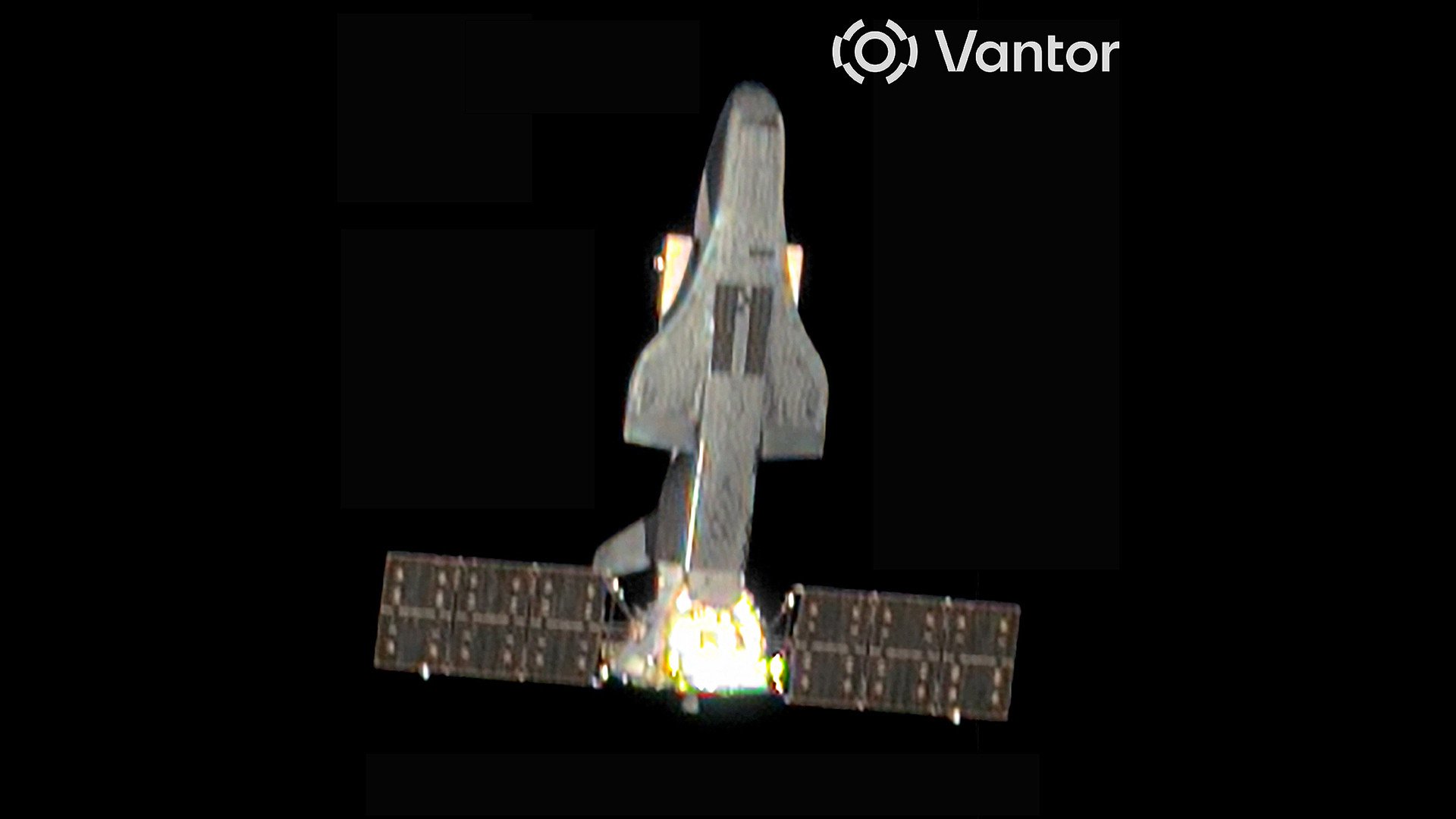
The U.S. Defense Intelligence Agency (DIA) has confirmed that an image that has been circulating online for years does indeed show an experimental Chinese reusable spaceplane in orbit. A newly released higher-resolution copy of the image underscores that the design is nearly a dead ringer for the X-37B miniature space shuttles now operated by the U.S. Space Force.
DIA included the higher-resolution image of the Chinese spaceplane in a new unclassified report on global security challenges outside of the Earth’s atmosphere, which was released yesterday. A satellite belonging to Maxar Technologies (now Vantor) captured the image, but when exactly remains unclear. It does have a 2024 copyright date.
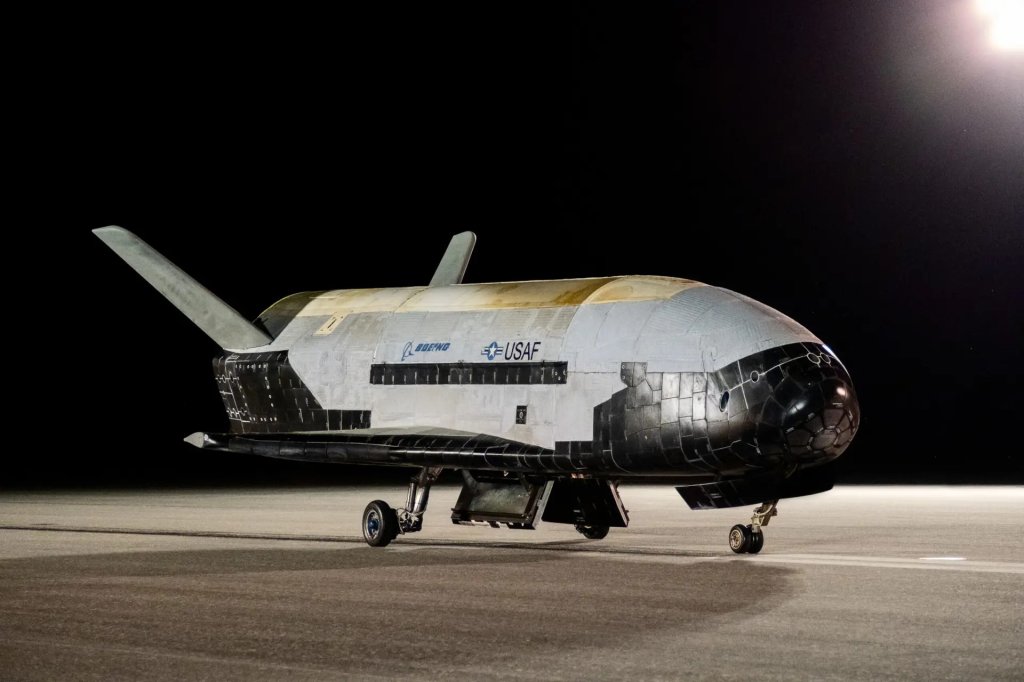
The image shows a miniature space shuttle-like design with small wings and twin vertical tails. It also has upward-opening doors above a central payload bay. There is also an extension at the tail end with solar panels seen deployed on either side. There are what look to be side-by-side ventral bays, which are likely for the main gear in a tricycle landing gear configuration. Overall, the core design is extremely similar to that of the U.S. X-37B, which also features tricycle landing gear and can also be fitted with an extended payload module at the tail. One major difference is that the wings on the Chinese design have a much longer chord compared to the X-37B.
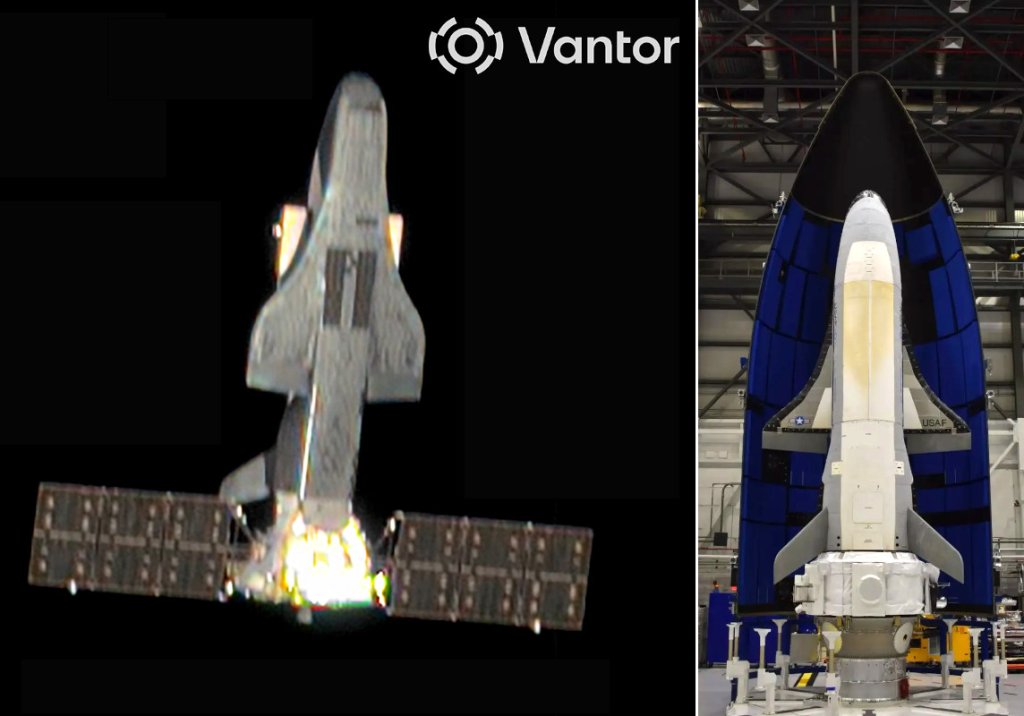
“A key capability for reusable space activities are spaceplanes like this PRC [People’s Republic of China] Spaceplane captured by Maxar. Spaceplanes can launch into orbit to place objects in space or even test them and return to earth [sic],” reads the caption to the picture in DIA’s report.
As noted, the basic fact of the existence of this image is not new. U.S. Space Force Col. John Patrick, then head of U.S. Space Forces-Korea (SPACEFOR-KOR), included a much lower-resolution version in a presentation at the Open Space Forum in South Korea in 2024. It was also not immediately clear at that time whether or not the picture simply showed an X-37B. TWZ had reached out at the time to the U.S. Space Force and Maxar for more information, and both had declined to comment. Two X-37Bs were built, and they have been sent on eight orbital missions, in total, since 2010. The Orbital Test Vehicle 8 (OTV-8) mission was launched on August 22, 2025.
China is understood to have conducted four separate orbital spaceplane missions using the same experimental vehicle since 2020. Three of those missions had concluded before Col. Patrick gave his presentation. The most recent launch occurred on February 7 of this year, and the vehicle has not yet returned, at least as far as we are aware.
On the third mission, which lasted from December 14, 2023, to September 6, 2024, the Chinese spaceplane was observed releasing multiple smaller objects into orbit. What those payloads may have been remains unknown, but they could have been released from the main payload bay, which is seen open in the on-orbit image. The bay could have opened without any subsequent release of objects on either of the two prior missions, as well.
As an aside, the spaceplane appears to have released at least one more object earlier this year in the course of its latest mission.
A secretive airbase in the northwest end of China, sporting one of the longest runways in the world at 16,400 feet, looks to be where the spaceplane has landed after missions. The facility, which has been expanded massively in recent years, is now loosely akin to America’s top-secret proving ground at Area 51, and has been the site of other advanced aviation test efforts.
DIA’s report also says that “China has two primary spaceplane models: the Shenlong and Tengyun,” but does not specify which one is seen in the image. The name Shenlong has been commonly used to refer to the spaceplane China has been experimenting with to date. Images said to show a prototype or test article of this design slung underneath an H-6 bomber for testing purposes had emerged in 2007.

The state-run China Aerospace Science and Industry Corporation (CASIC) unveiled the Tengyun design in 2016 as part of a so-called two-stage-to-orbit system that uses a mothership aircraft flying within the atmosphere as part of the launch method rather than a traditional space launch rocket. As of 2020, CASIC was aiming for a live test of Tengyun in 2025, but it is not immediately clear whether or not that occurred.
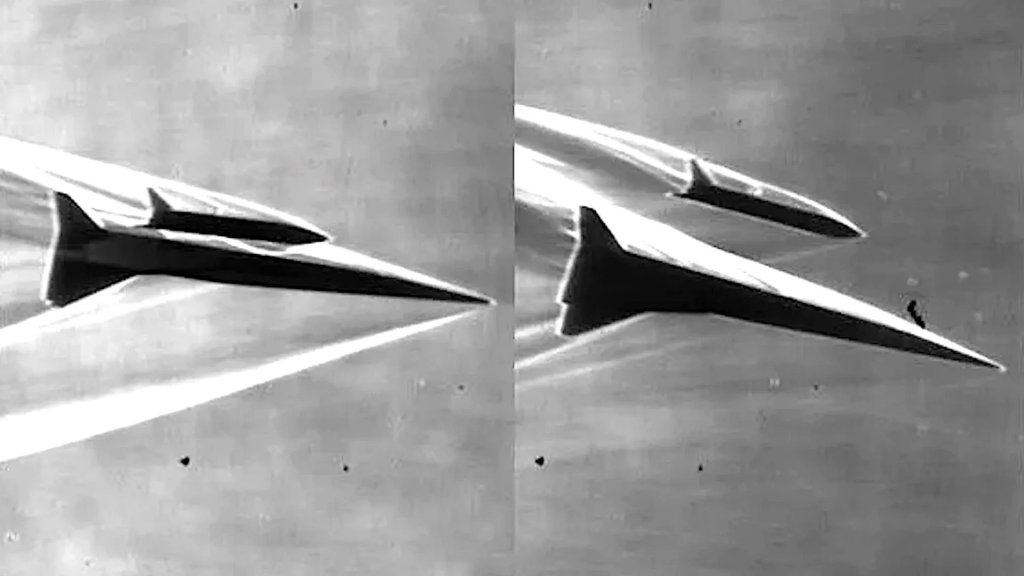
There have been other spaceplane developments in China in recent years. This includes designs from the China Aerospace Science and Technology Corporation (CASC) and Aviation Industry Corporation of China (AVIC) subsidiary Chengdu. The design from Chengdu is called Haolong and has been in development officially as an option for resupplying the country’s Tiangong space station.
In general, “spaceplanes are … reusable and feature enhanced maneuverability, making them more suitable for certain missions than traditional satellites,” DIA’s report notes.
TWZ has highlighted in the past how reusable space shuttle-like vehicles offer ideal platforms for rapidly deploying small satellites and any other payloads into orbit. In this way, they can be critical assets for space-based experimentation, as well as operational activities. This could include intelligence gathering, and even on-orbit attacks, areas of clear interest to the Chinese government.
As we often mention in the context of the X-37B, spaceplanes also have distinct advantages when it comes to rendezvousing with and maneuvering very close to other objects in space. They can execute course changes and other maneuvers in ways that traditional satellites cannot. All of this only underscores their potential as weapon systems, as well as for gathering intelligence. The fact that a Maxar (now Vantor) satellite took an on-orbit picture – a service the company is known to offer – of a Chinese spaceplane further highlights the kind of cat-and-mouse games that are increasingly emerging in space. The general risks posed by these kinds of activities were recently thrust into the public eye by the unprecedentedly close shadowing of a commercial radar imaging satellite tied to Ukraine by another satellite belonging to Russia.
China has been making massive investments, in general, in new space-based intelligence and other capabilities in recent years. Chinese space developments have now also extended into reusable space launch rocket boosters. Space launch company LandSpace became the first in China to achieve a successful recovery of a reusable space launch rocket booster on land in August. That followed CASC’s successful recovery of a reusable space launch rocket booster at sea using a specially configured ship the month before.

In general, “access to space traditionally requires expendable spacecraft: single-use launch vehicles, satellites, and one-time use capsules designed to maximize performance. Reliance on expendable vehicles has made access to space expensive and exclusive,” DIA’s report explains. “Reusable technologies, while even more difficult and expensive to develop and build, stand to greatly reduce the cost of spaceflight by recovering, refurbishing, and reusing rocket stages, fairings, and capsules.”
Chinese spaceplanes, one of which we have not definitively gotten a view of in orbit, look set to become an increasingly important part of this growing ecosystem.
Update: 6:32 PM ET –
Vantor has now provided an additional copy of the image of the Chinese spaceplane, elements of which look to be redacted, and some additional details. The company has confirmed it was taken on May 28, 2024, by the WorldView-3 satellite at a range of just under 56 miles (90 kilometers).
“There is a separate satellite docked to the aft section of the vehicle whose structure and solar arrays are visible,” Vantor also told us. “The spacecraft’s payload bay doors are visibly open.”
Contact the author: joe@twz.com
Loading comments…
Comments couldn’t be loaded. Please refresh the page.