
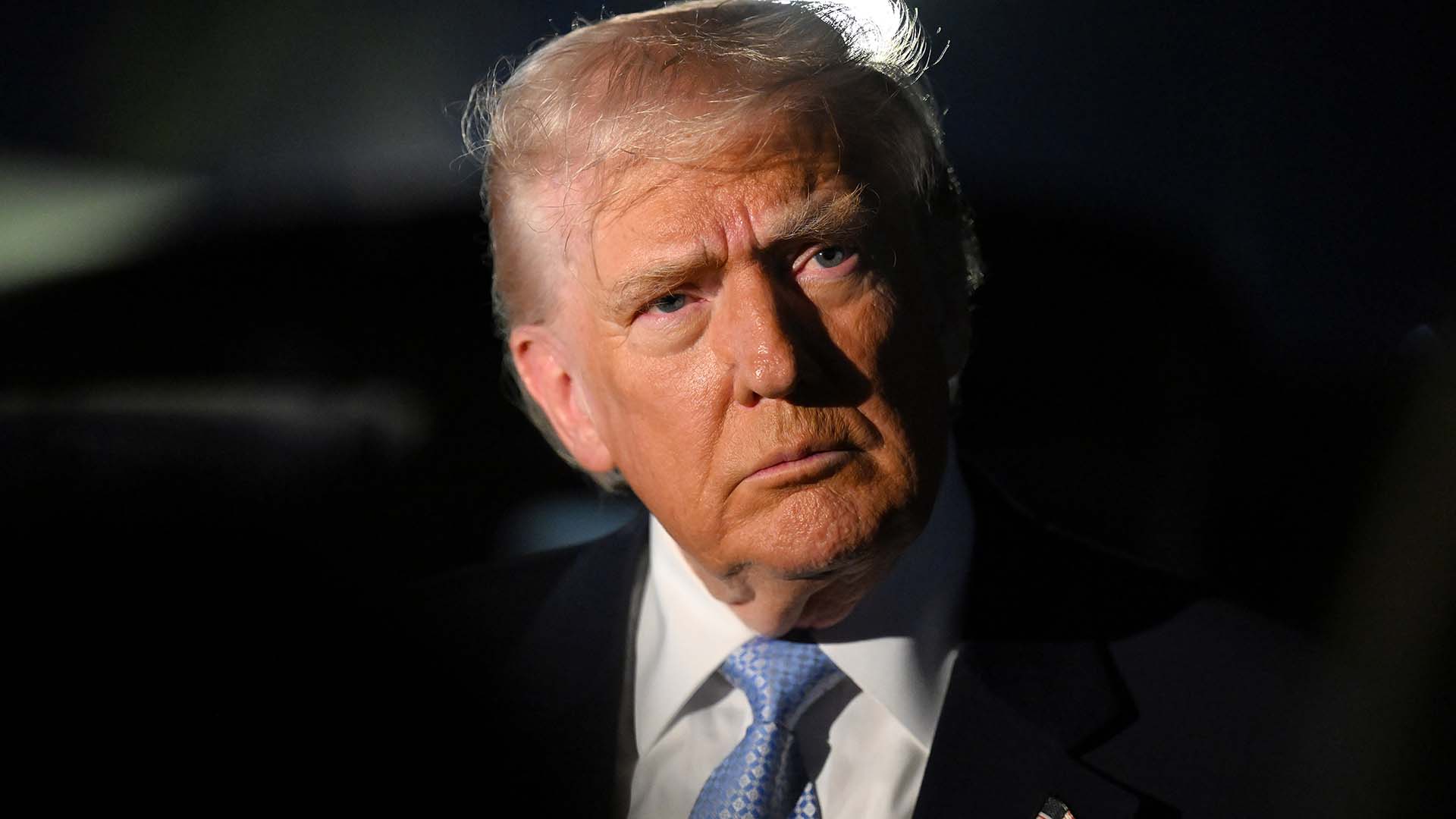
President Donald Trump has acknowledged that he recently spoke with Venezuelan dictator Nicolas Maduro, but offered no details about the conversation. Reports from multiple outlets claim the conversation hit a wall, along with details about the nature of the exchange. Meanwhile, the White House on Monday admitted the Pentagon carried out a second strike Sept. 2 on a suspected drug boat but insisted it was legal under the law of armed conflict. The incident, which reportedly killed two survivors clinging to the side of the boat, has sparked a bipartisan Congressional investigation.
The Maduro-Trump call, first reported by The New York Times, “quickly reached an impasse as it became clear that the two sides’ positions were far apart,” The Miami Herald reported. “Washington demanded that Maduro and his top allies leave Venezuela immediately to allow the restoration of democratic rule, while regime leaders proposed handing political control to the opposition but retaining command of the armed forces.”
According to the sources, the publication added that “the U.S. message to Maduro was direct: Safe passage would be guaranteed for him, his wife Cilia Flores, and his son only if he agreed to resign right away.”
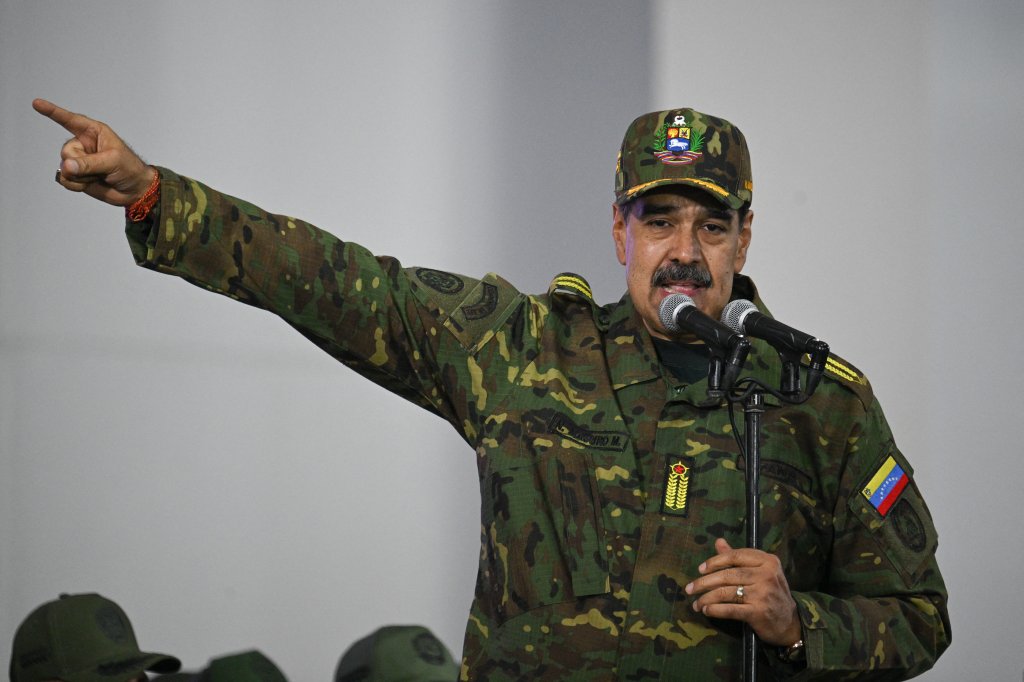
The call was viewed as a last-ditch effort to “avoid a direct confrontation,” The Herald reported, adding that it stalled over two issues in addition to Maduro wanting to retain control of his troops. Maduro wanted amnesty for any crimes he committed and he wanted to delay his departure. All three requests were denied, the newspaper claimed. The New York Times story said the two leaders discussed a possible meeting, although there aren’t plans for this to happen at this time.
We cannot independently verify the topics of discussion in the Trump-Maduro call and have reached out to the White House for further details.
Trump, as we noted earlier in this story, acknowledged the call but declined to answer questions about the topic or tenor.
“I don’t want to comment on it. The answer is yes,” Trump told reporters aboard Air Force One on Sunday when asked if he held a phone call with Maduro. “I wouldn’t say it went well or badly. It was a phone call.”
An ultimatum to turn over power and leave Venezuela would fit with the Trump administration’s ‘maximum pressure’ campaign on the regime. The U.S. currently does not have anything near the force size deployed to the region that would be required for an invasion of Venezuela, although tiers of air strikes and special operations raids are likely should the crisis go kinetic. Still, we cannot confirm that this was indeed the messaging being conveyed on the call.
On Monday, White House spokesperson Karoline Leavitt addressed questions about statements attributed to War Secretary Pete Hegseth ordering U.S. forces to kill two survivors of one of the dozens of attacks on suspected drug smuggling boats. The Sept. 2 follow-up attack was strongly condemned by various parties, saying such a move could constitute war crimes. Leavitt on Monday admitted a second attack on that boat took place, but denied that it was a war crime.
“With respect to the strikes in question, on Sept. 2, Secretary Hegseth authorized Adm. [Frank] Bradley [current head of U.S. Special Operations Command, who was Joint Special Operations Command leader at the time] to conduct these kinetic strikes,” Leavitt told reporters. “Adm. Bradley worked well within his authority and the law, directing the engagement to ensure the boat was destroyed, and the threat to the United States of America was eliminated. And I would just add one more point to remind the American public why these lethal strikes are taking place, because this administration has designated these Narco terrorists as foreign terrorist organizations, the President has a right to take them out if they are threatening the United States of America and if they are bringing illegal narcotics that are killing our citizens at a record rate, which is what they are doing.”
Leavitt added that Hegseth was in touch with Congressional leaders over the weekend about the strike.
Leavitt’s comments come as members of the Senate Armed Services Committee are preparing to investigate the incident.
“We will be conducting vigorous oversight to determine the facts related to these circumstances,” Senate Armed Services Committee Chairman Roger Wicker, R-Miss., and ranking member Jack Reed, D-R.I., said in a joint statement on Monday. House Armed Services Committee leaders announced a parallel review, saying they are seeking “a full accounting” of the operation, Fox News noted.
Last week, The Washington Post reported that “Hegseth gave a spoken directive” about killing the survivors of the Sept. 2 boat strike, one of about two dozen that have killed more than 80 people. “The order was to kill everybody,” the newspaper wrote, citing an anonymous source. Hegseth has denied saying that and Trump said he believes his war secretary. In a social media posting on Friday, Hegseth blasted the Washington Post report and said that strikes on these boats are justified because the cartel Maduro allegedly leads was designated as a foreign terror organization.
“The declared intent is to stop lethal drugs, destroy narco-boats, and kill the narco-terrorists who are poisoning the American people,” Hegseth stated on X. “Every trafficker we kill is affiliated with a Designated Terrorist Organization.”
Hegseth in his posting does not specifically address ordering a strike on survivors; however Trump told reporters on Sunday that the war secretary denied authorizing it.
Asked by a reporter aboard Air Force One on Sunday if a second strike against survivors would be illegal, Trump said he didn’t know what happened. ‘I wouldn’t have wanted that, not a second strike,’ he said,” according to Politico. “The initial strike on the boat ‘was fine,’ he added, ‘and if there were two people around — but [Hegseth] said that didn’t happen. I have great confidence in him.’”
In October, Adm. Alvin Holsey, the commander of U.S. Southern Command, announced an early retirement. Speculation quickly arose that it was over concern about the boat strikes.
“It was unclear why Admiral Holsey is suddenly departing, less than a year into what is typically a three-year job, and in the midst of the biggest operation in his 37-year career,” The New York Times noted at the time. “But one current and one former U.S. official, both of whom spoke on the condition of anonymity to discuss personnel matters, said that Admiral Holsey had raised concerns about the mission and the attacks on the alleged drug boats.”
Last month, SOUTHCOM’s senior judge advocate (JAG) reportedly raised concerns that the boat strikes could amount to extrajudicial killings and legally expose American service members involved.
On Sunday, Hegseth seemed to downplay concerns about the legality of the strikes in a post on his personal X account. It showed a mock children’s book cover featuring Franklin the Turtle firing at drug-laden boats with the headline “Franklin Targets Narco Terrorists.”
Meanwhile, Trump will meet this afternoon in the Oval Office to lay out the administration’s next moves regarding Venezuela, Leavitt confirmed, adding that it was one of several topics that will be discussed. Asked if a U.S. troop presence on the ground in Venezuela is an option, Leavitt said “there’s many options at the President’s disposal that are on the table, and I’ll let him speak on those.”
The Monday afternoon meeting follows Trump’s dismissal of the significance of comments he made on social media last week that he was ordering the closure of airspace over and near Venezuela. Those comments sparked wide concern that a strike on Venezuela could be imminent and forced several airlines to cancel flights to and from the South American nation.
“Don’t read anything into it,” he told reporters Sunday aboard Air Force One. “We consider Venezuela to be not a very friendly country.”
For his part, Maduro complained to the Organization of the Petroleum Exporting Countries (OPEC) that Trump is not going after drugs, but is trying to steal Venezuela’s oil.
“Venezuela denounces, through a letter sent by President Nicolás Maduro to the Secretary General of OPEC and to the OPEC and OPEC Plus member countries, that the U.S. intends to seize the vast oil reserves of our country, the largest in the world, through the use of military force, which would seriously affect the balances of the global energy market,” the country’s Foreign Minister Yvan Gil Pinto said Sunday on Telegram. “Venezuela will remain firm in the defense of its natural energy resources. Nothing will stop us! We will continue to be free and sovereign!”
Regardless of what he decides, Trump has amassed the largest military presence in the Caribbean since the 1962 Cuban Missile Crisis. That includes 11 Navy surface vessels, a special operations mothership, a wide range of aviation assets and about 15,000 troops. On Monday, one of those vessels, the aircraft carrier USS Gerald R Ford, made its first port call since entering the Caribbean on Nov. 16.
“The Sailors in our carrier strike group team have been extremely adaptable, taking our U.S. Southern Command tasking as priority number one and each doing their part to support the defense of our Homeland,” Rear Adm. Paul Lanzilotta, commander of Carrier Strike Group Twelve, said in a statement. “Our port visit in St. Thomas gives us the rest and recuperation we need to continue the mission of upholding law and order across the Western Hemisphere in support of the President’s priorities.”
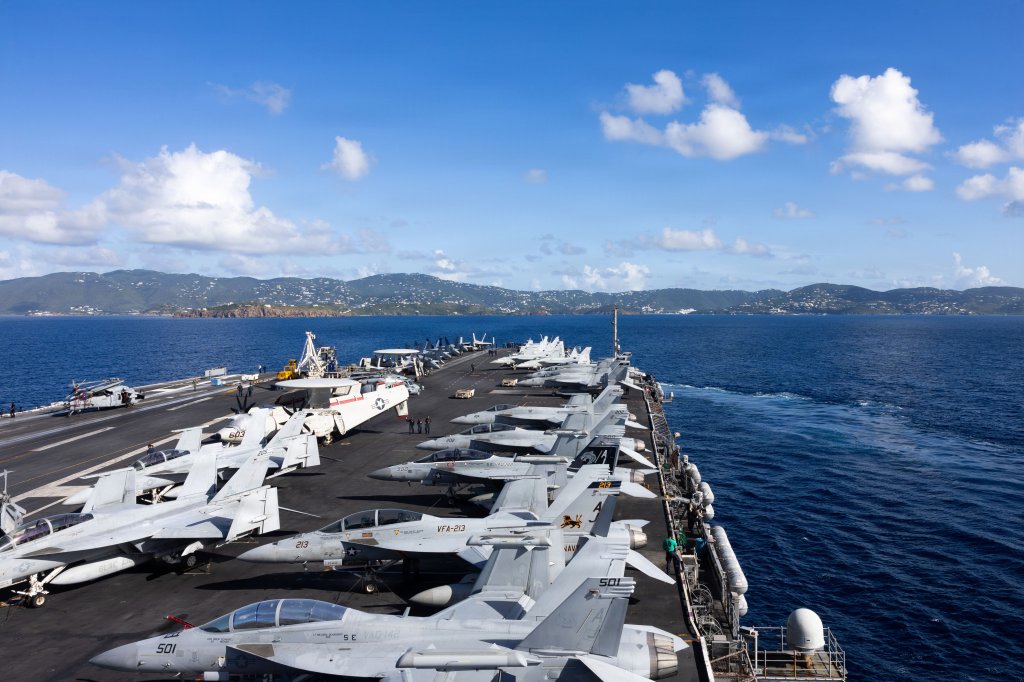
The Ford’s port call highlights that the ongoing effort dubbed Operation Southern Spear places a strain on troops and the equipment amassed. Meanwhile, as Trump continues to mull over his options, the world awaits his ultimate decision.
Contact the author: howard@thewarzone.com
Loading comments…
Comments couldn’t be loaded. Please refresh the page.